
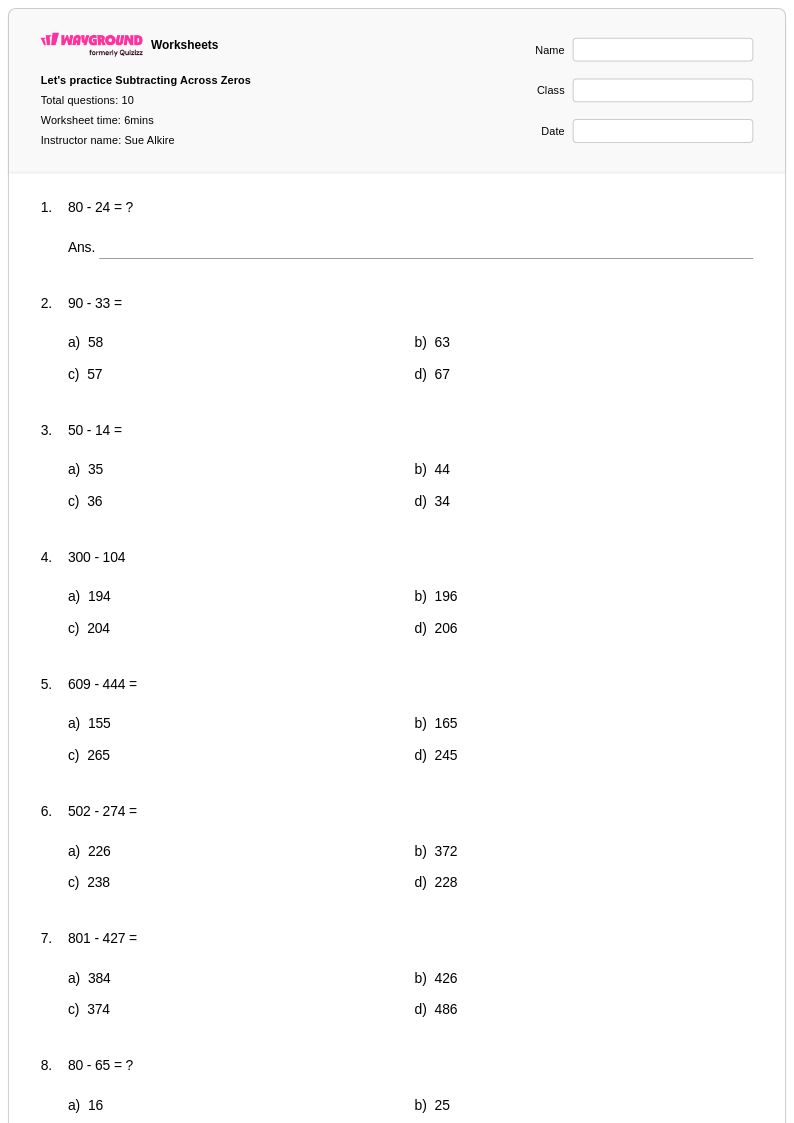
10 Q
2nd - 4th
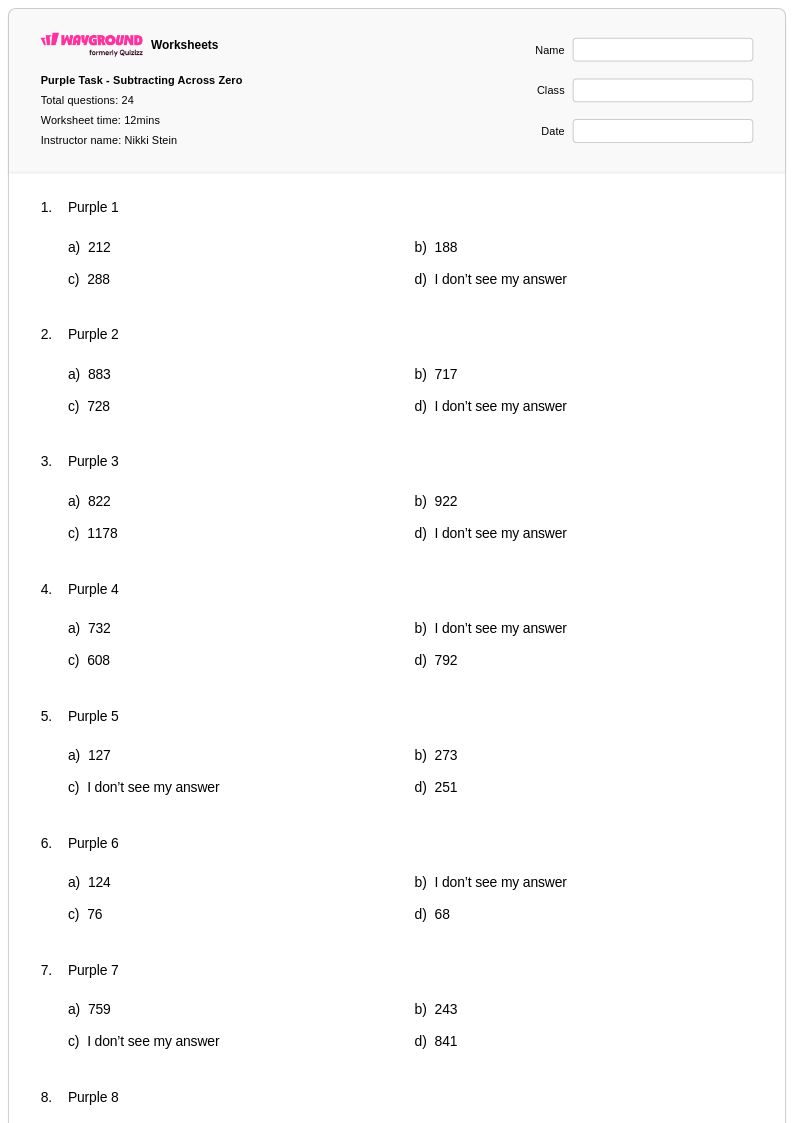
24 Q
2nd - 3rd
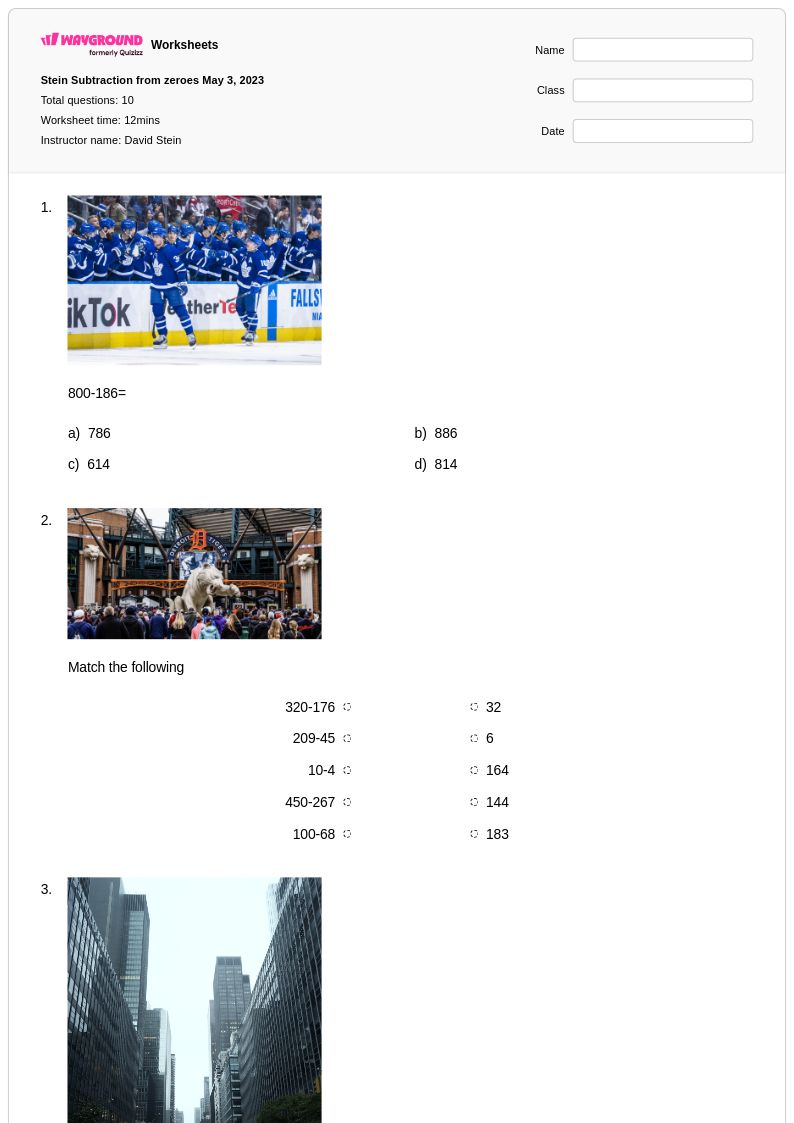
10 Q
2nd
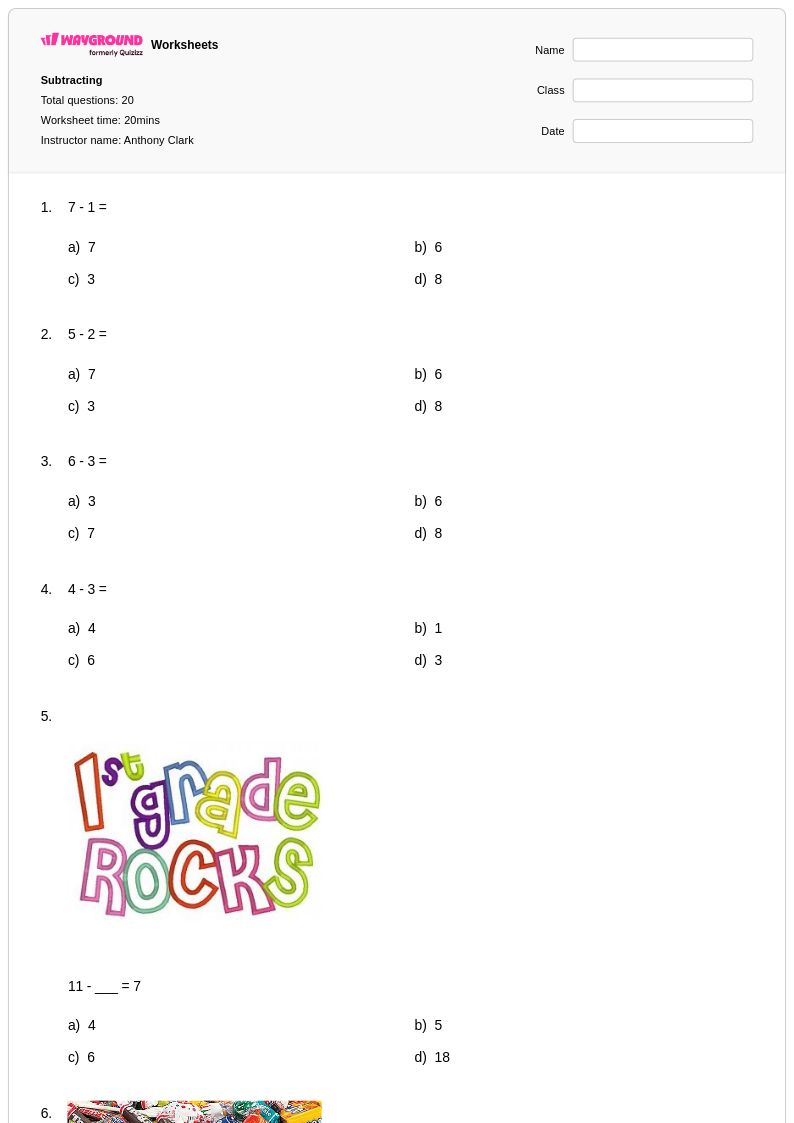
20 Q
1st - Uni
12 Q
2nd - 4th
26 Q
2nd
20 Q
2nd - Uni
20 Q
2nd
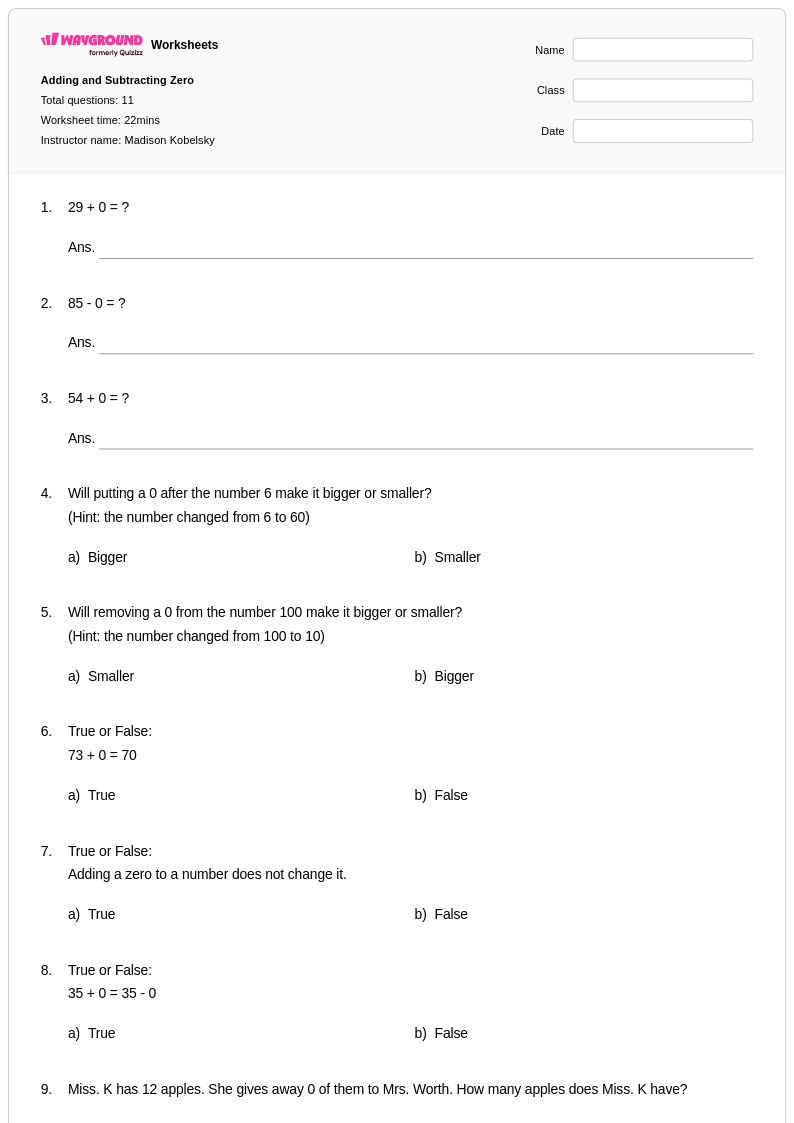
11 Q
2nd
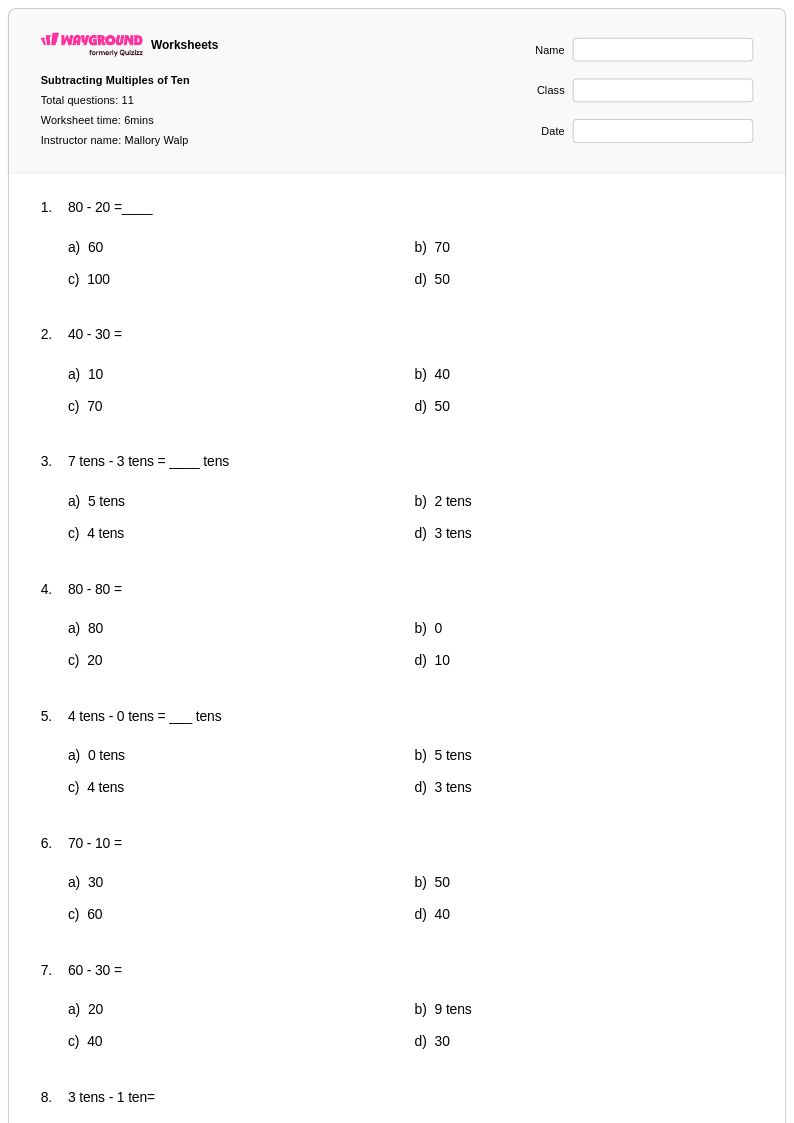
11 Q
1st - 2nd
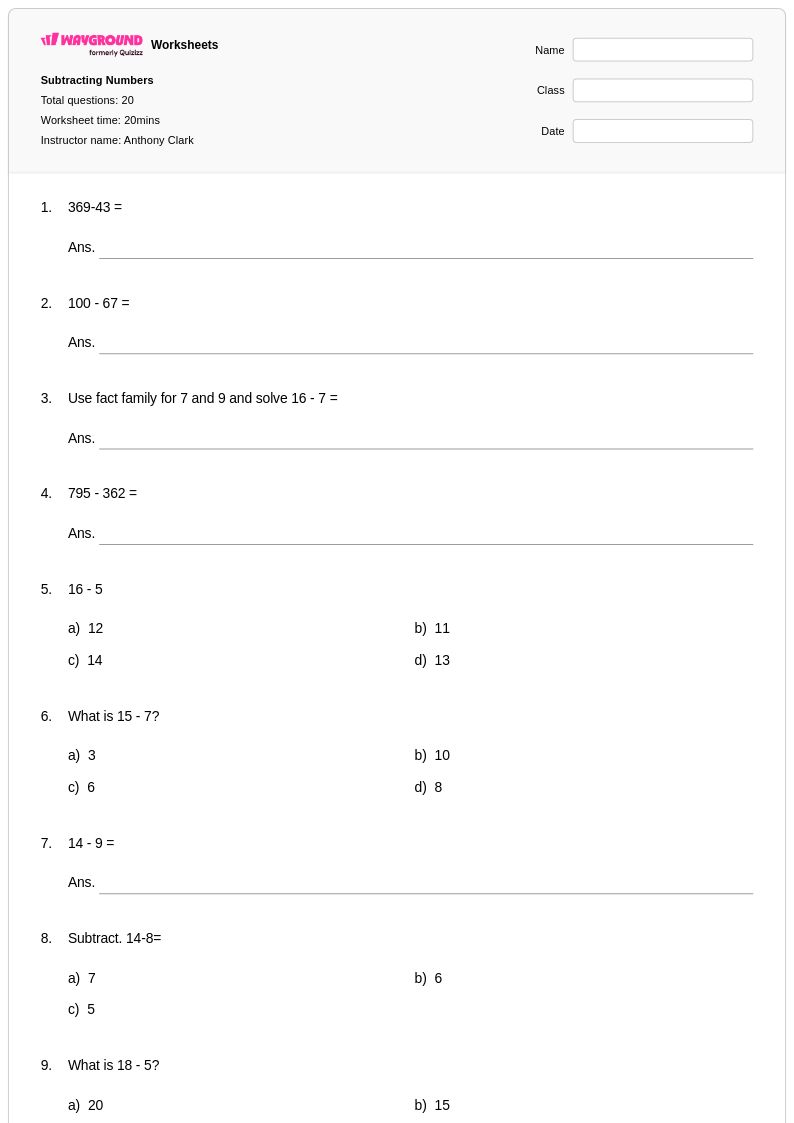
20 Q
2nd - Uni
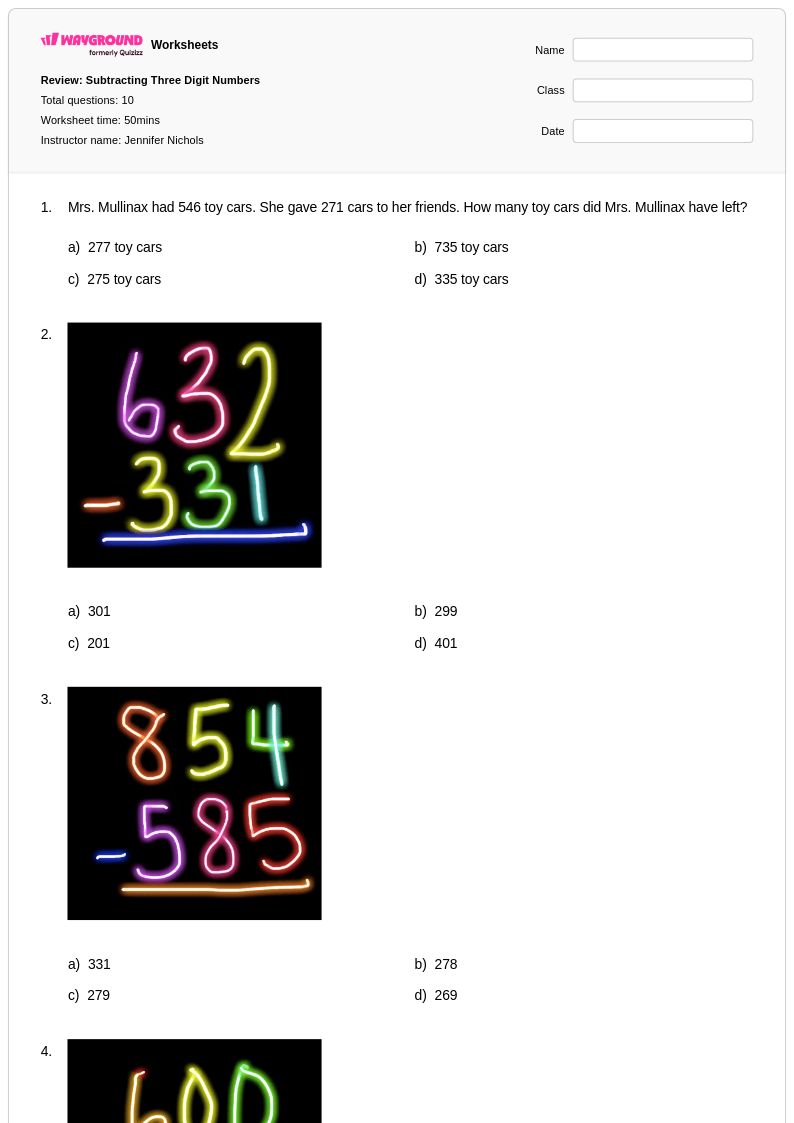
10 Q
2nd
10 Q
2nd
20 Q
2nd - Uni
15 Q
2nd - Uni
9 Q
1st - Uni
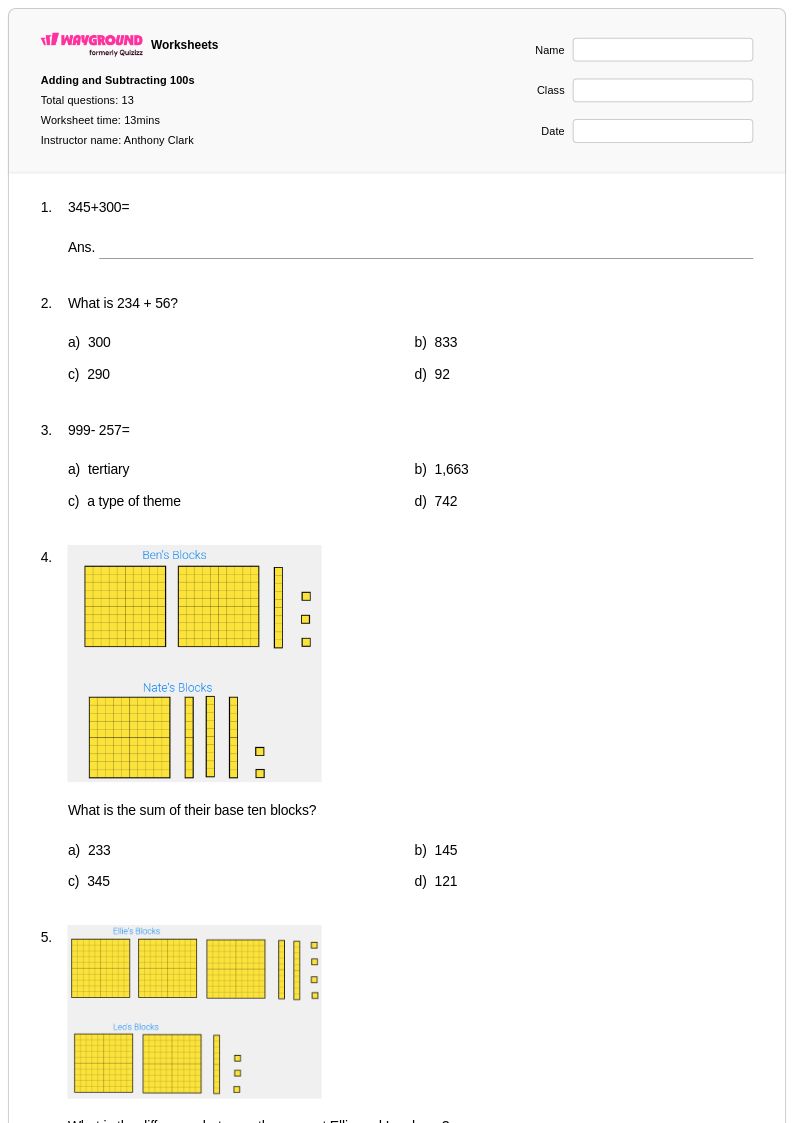
13 Q
2nd - Uni
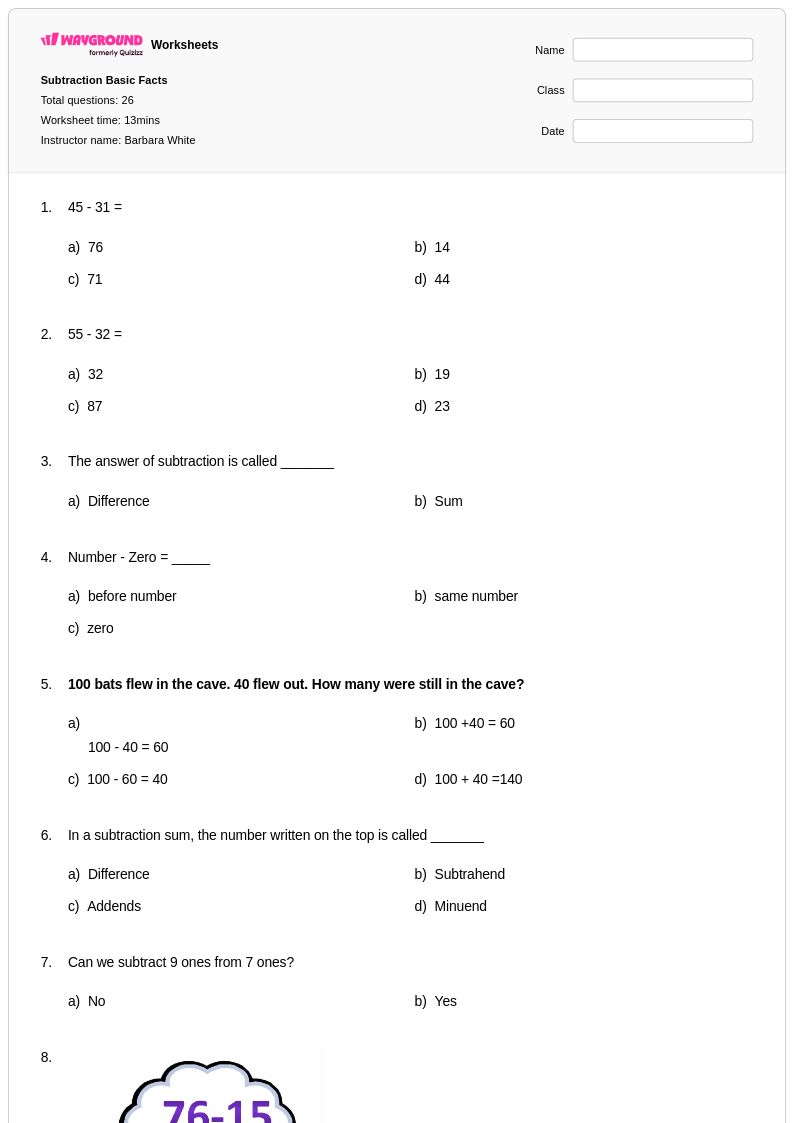
26 Q
2nd
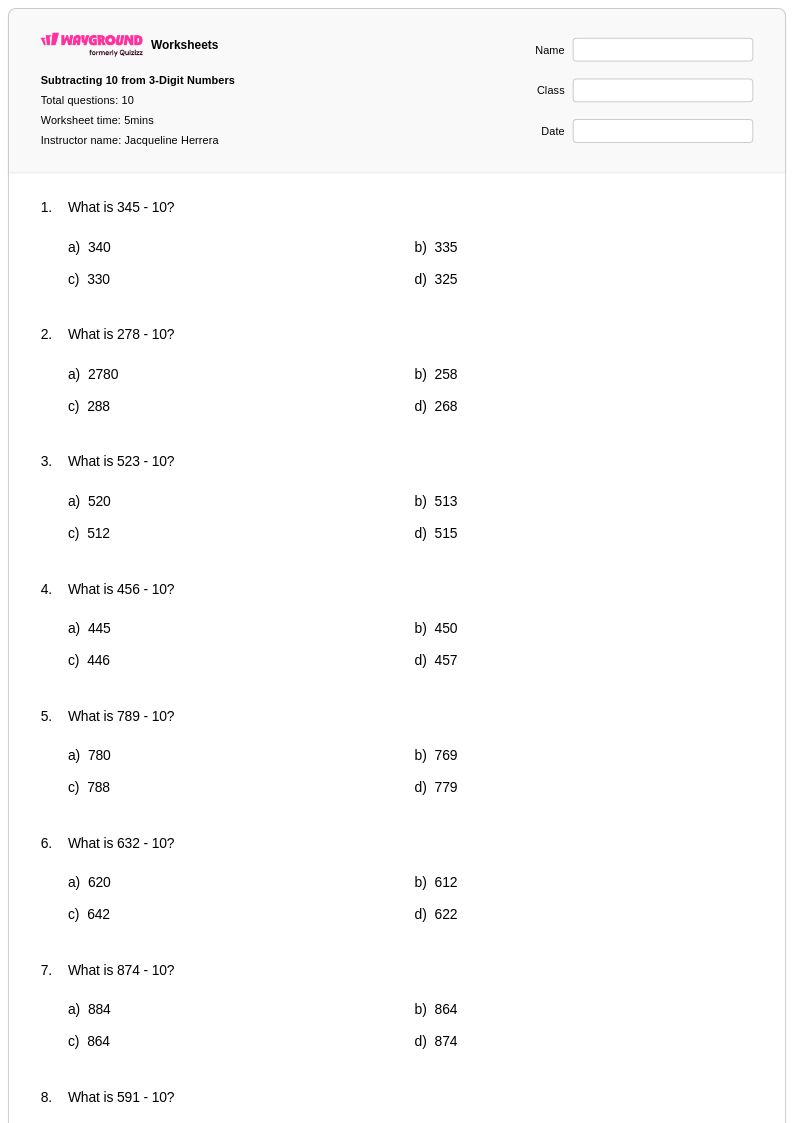
10 Q
2nd
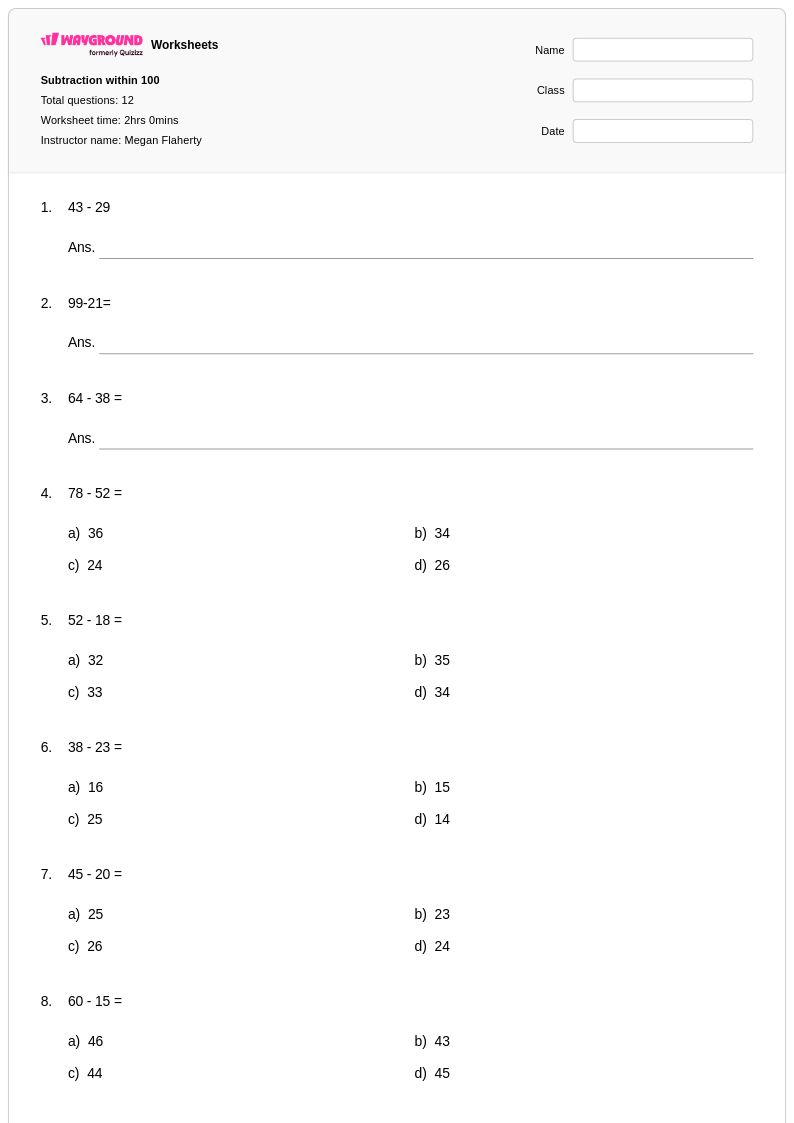
12 Q
2nd
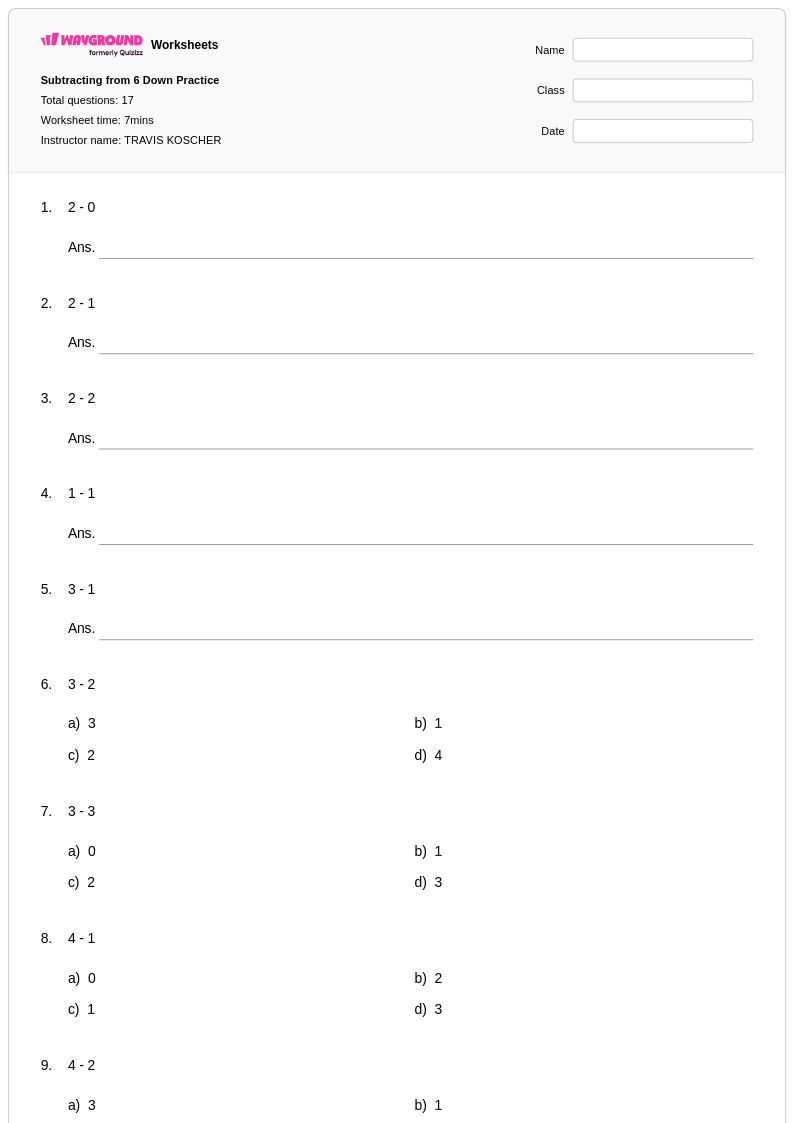
17 Q
1st - 5th
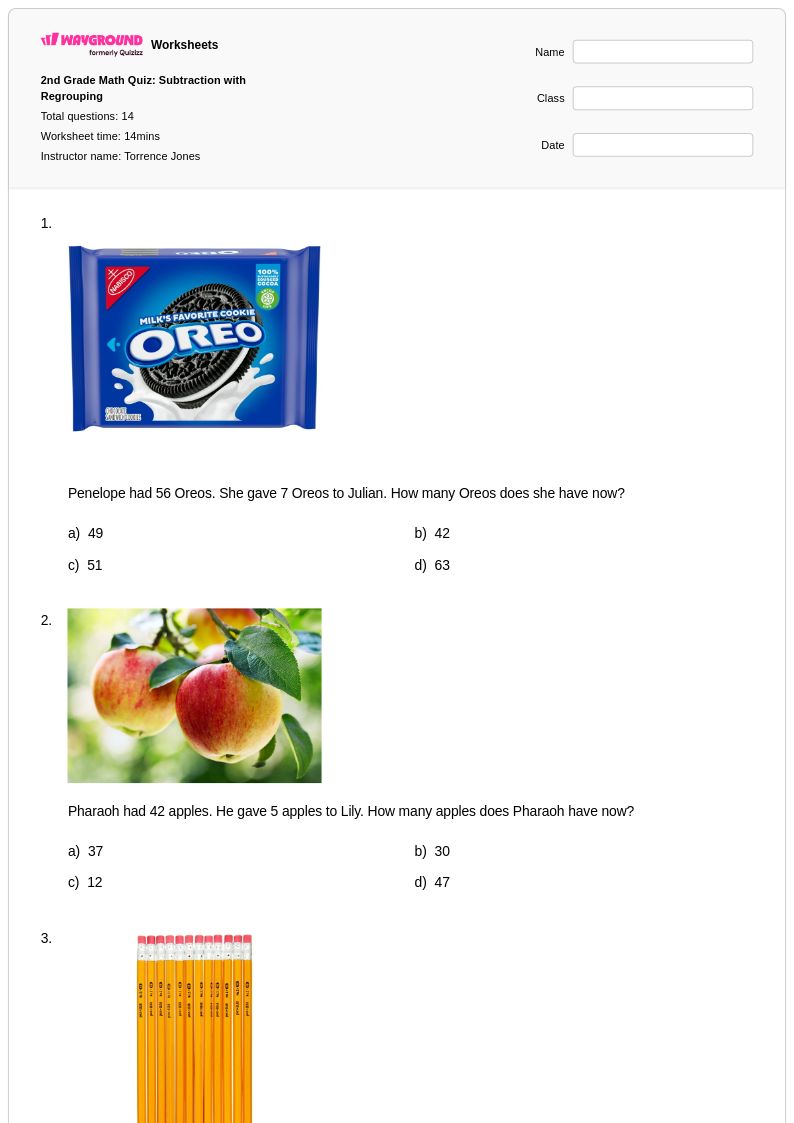
14 Q
2nd
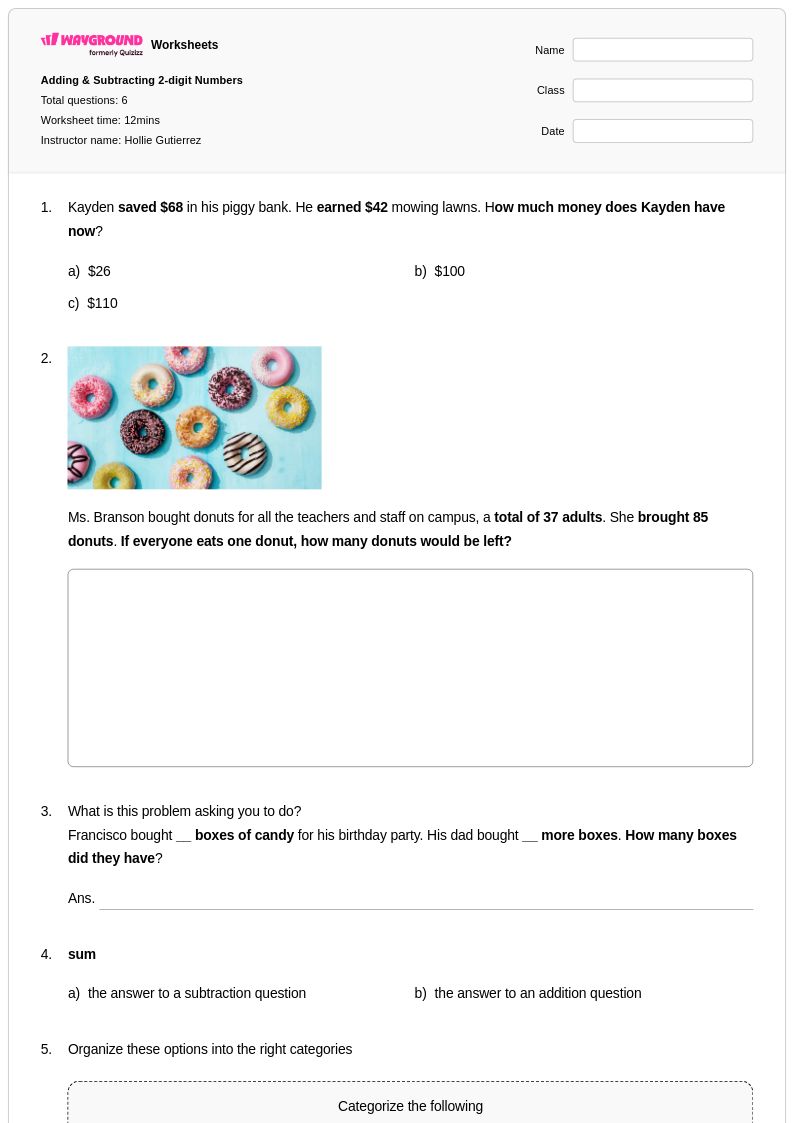
6 Q
2nd
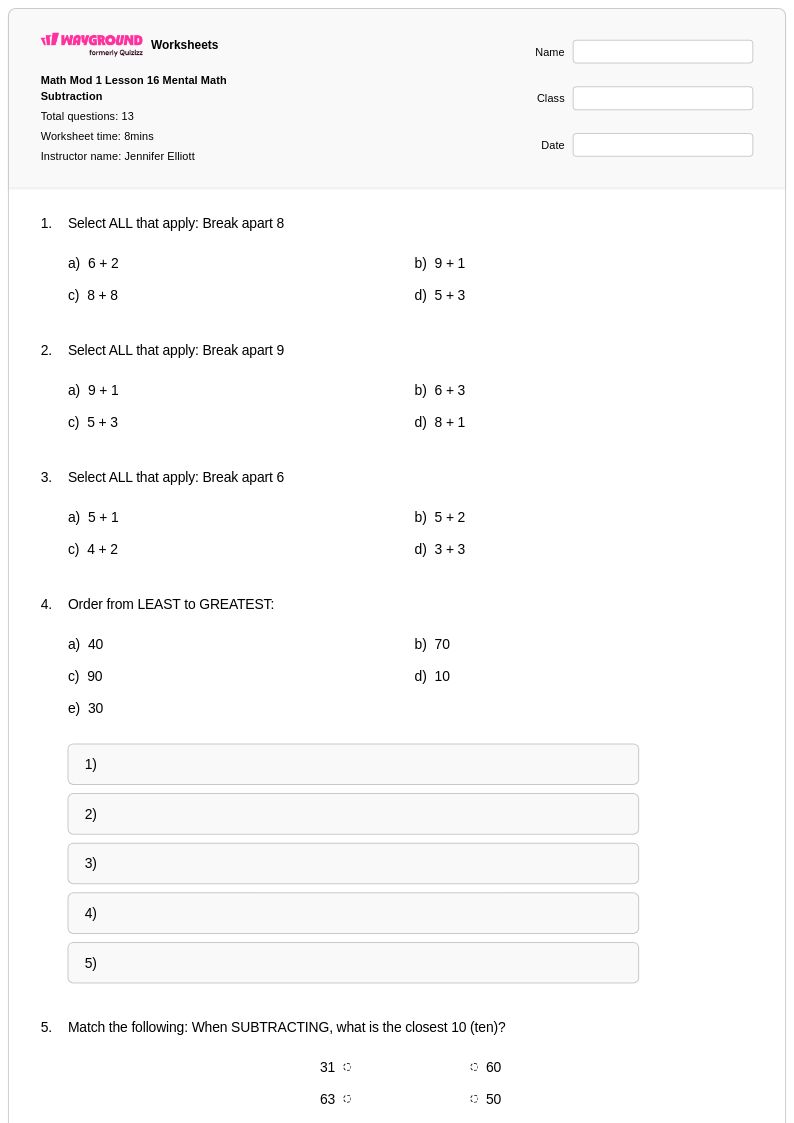
13 Q
2nd
Explore Subtracting from Zero Worksheets by Grades
Explore Other Subject Worksheets for class 2
Explore printable Subtracting from Zero worksheets for Class 2
Subtracting from zero presents a fundamental mathematical concept that Class 2 students must master as they build their foundational arithmetic skills. Wayground's comprehensive collection of subtracting from zero worksheets helps young learners understand this unique subtraction scenario where any number subtracted from zero results in a negative number, or in elementary contexts, reinforces the concept that you cannot take away more than what you have. These carefully designed practice problems strengthen students' number sense, logical reasoning, and understanding of mathematical impossibilities in real-world contexts. Each worksheet comes with a detailed answer key and is available as free printables in convenient pdf format, making it easy for educators to provide consistent practice opportunities that build confidence in this challenging subtopic.
Wayground, formerly Quizizz, empowers teachers with millions of teacher-created resources specifically designed for subtracting from zero instruction, featuring robust search and filtering capabilities that allow educators to quickly locate grade-appropriate materials aligned with mathematics standards. The platform's differentiation tools enable teachers to customize worksheets based on individual student needs, whether for remediation support or enrichment challenges, while the flexible format options provide both printable pdf versions for traditional classroom use and digital formats for interactive learning experiences. These comprehensive worksheet collections streamline lesson planning by offering ready-to-use practice materials that support systematic skill development, allowing educators to focus on targeted instruction while ensuring students receive adequate practice with this essential mathematical concept through varied problem types and progressive difficulty levels.
FAQs
How do I teach subtracting from zero in Grade 2?
What practice problems help second graders understand zero in subtraction?
What mistakes do Grade 2 students make with subtraction involving zero?
How can I use this Grade 2 worksheet for practice or assessment?
How does subtraction with zero fit the Common Core Grade 2 curriculum?
How can I support Grade 2 students with different learning needs?
Should Grade 2 students know that zero minus a positive number is negative?