
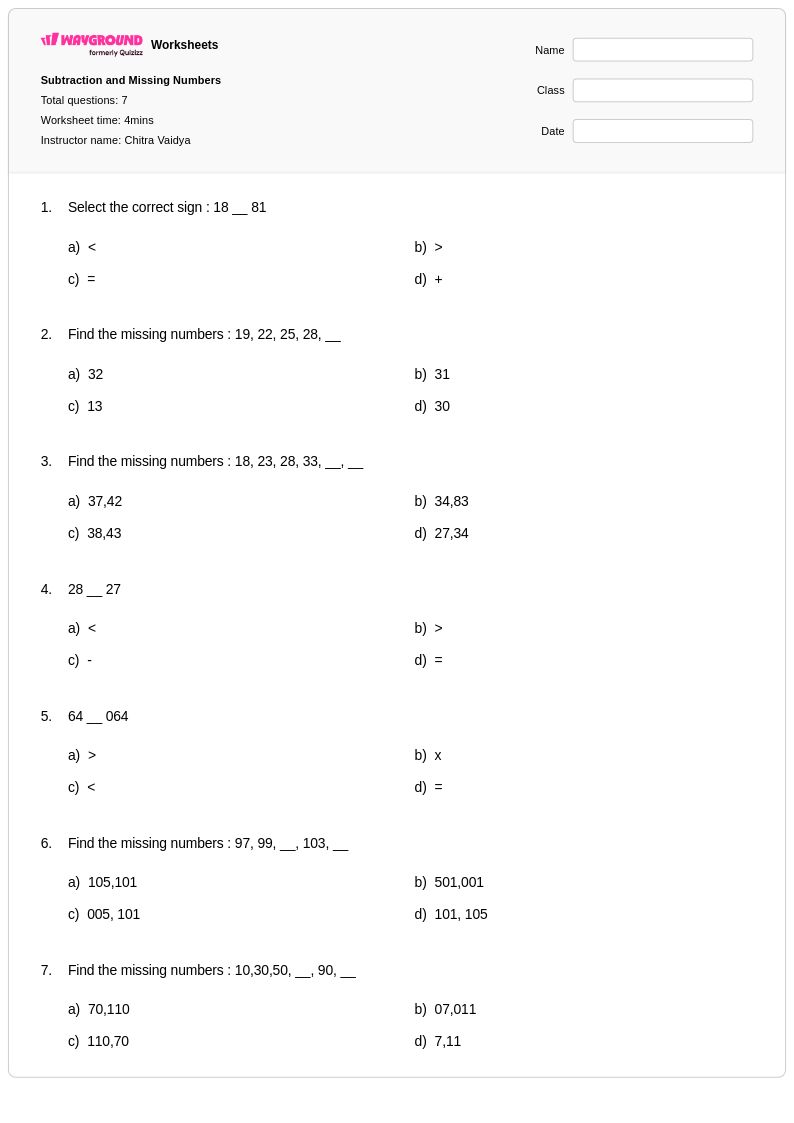
7 Q
2nd - 3rd
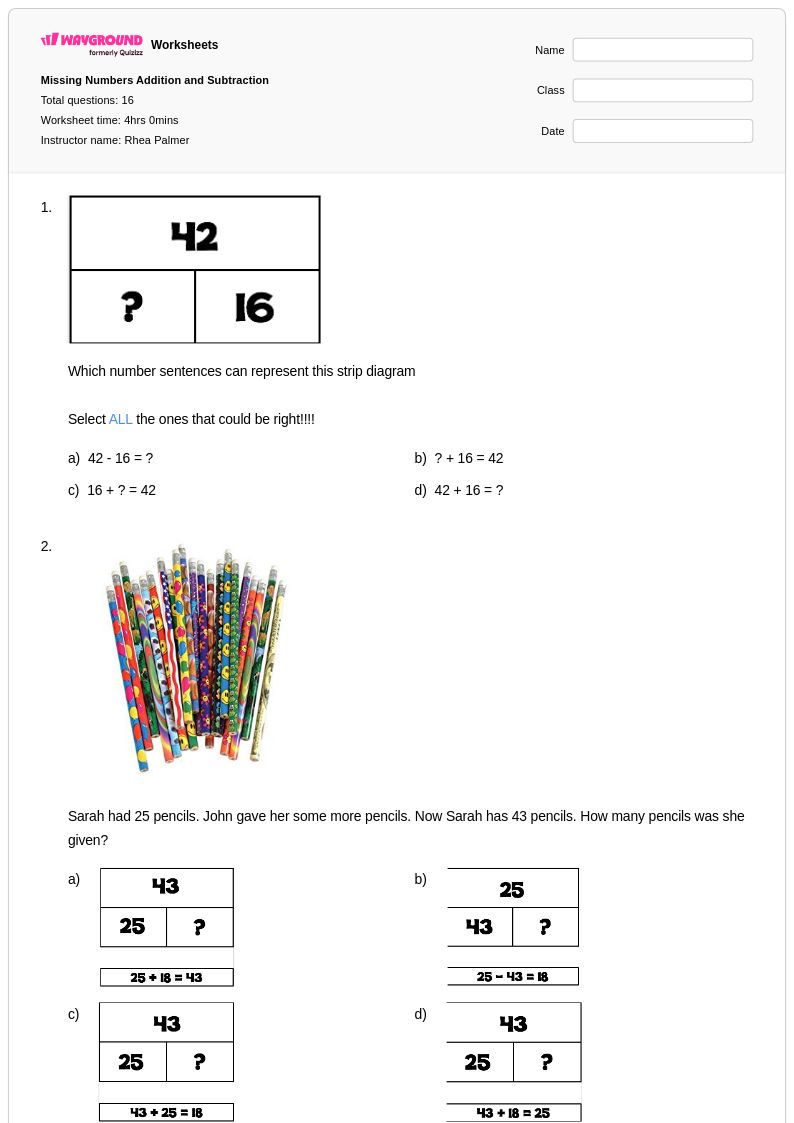
16 Q
2nd
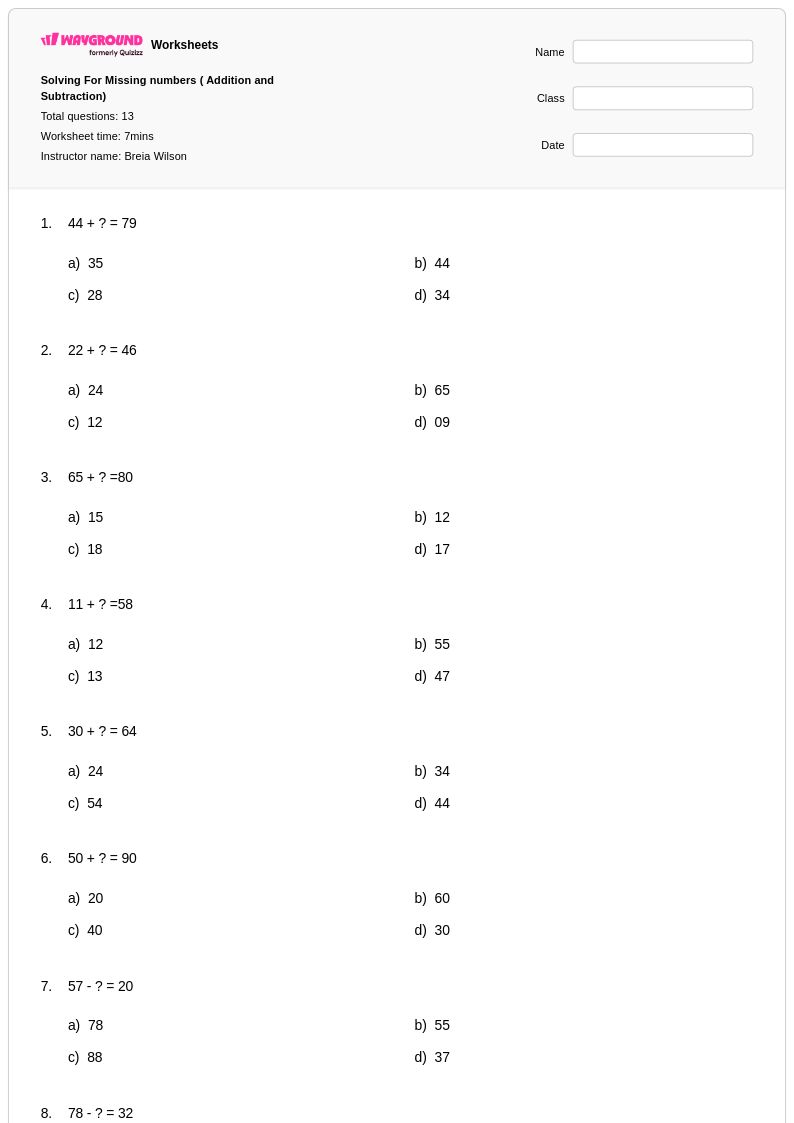
13 Q
1st - 3rd
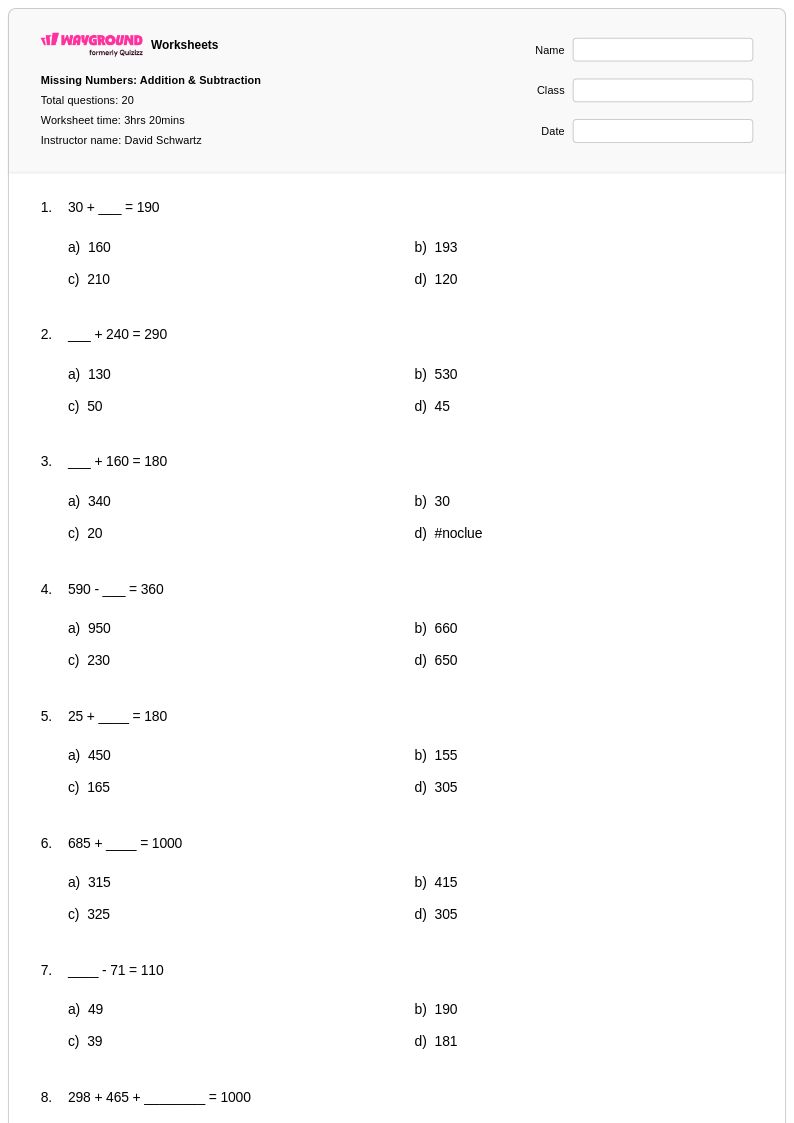
20 Q
5th
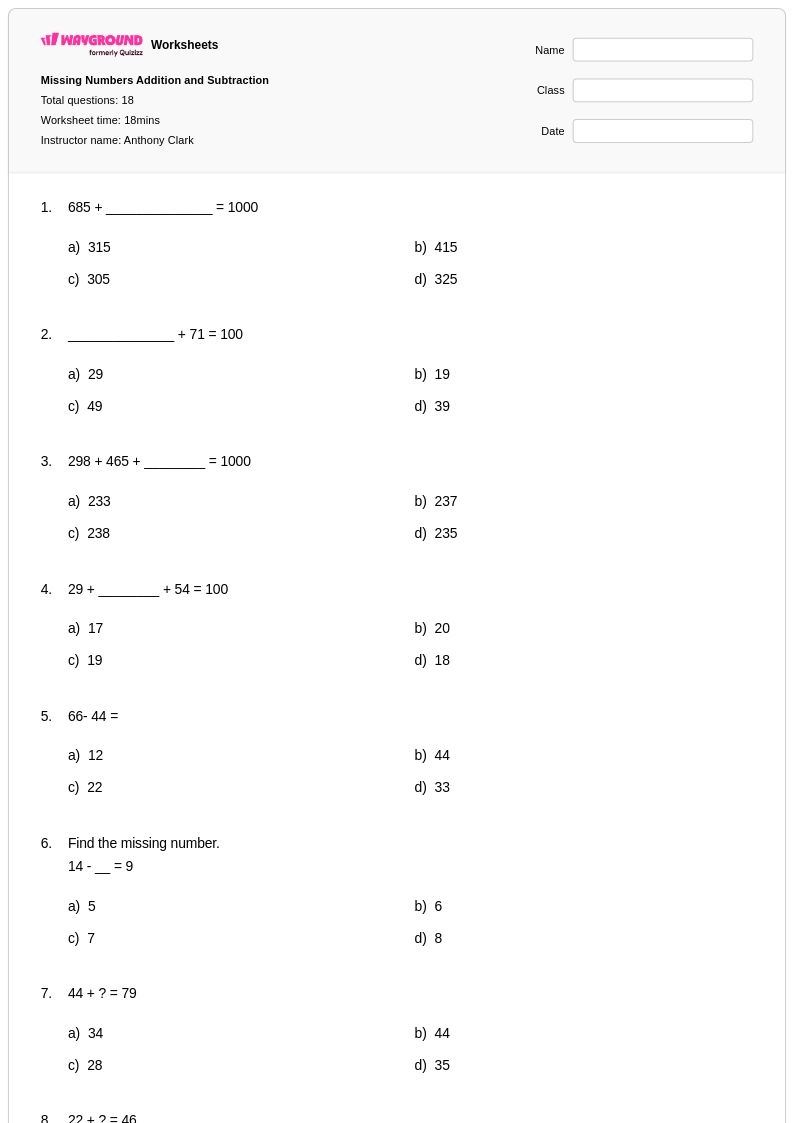
18 Q
3rd - Uni
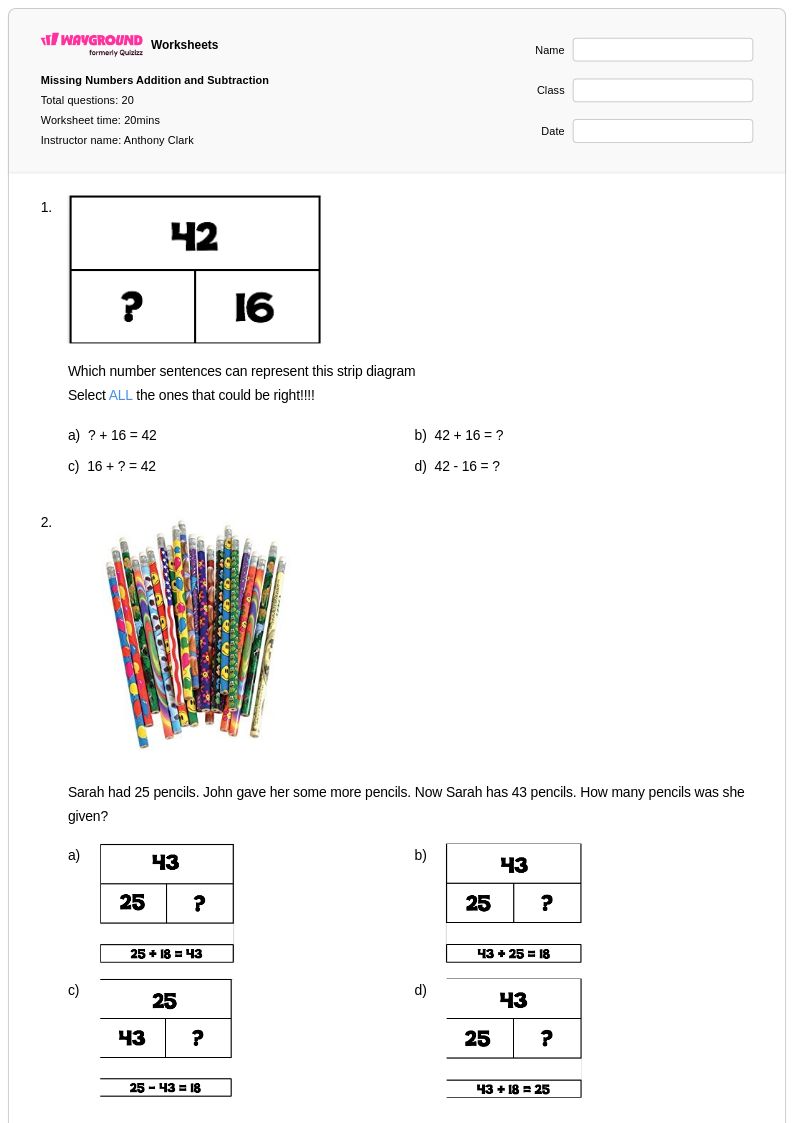
20 Q
3rd - Uni
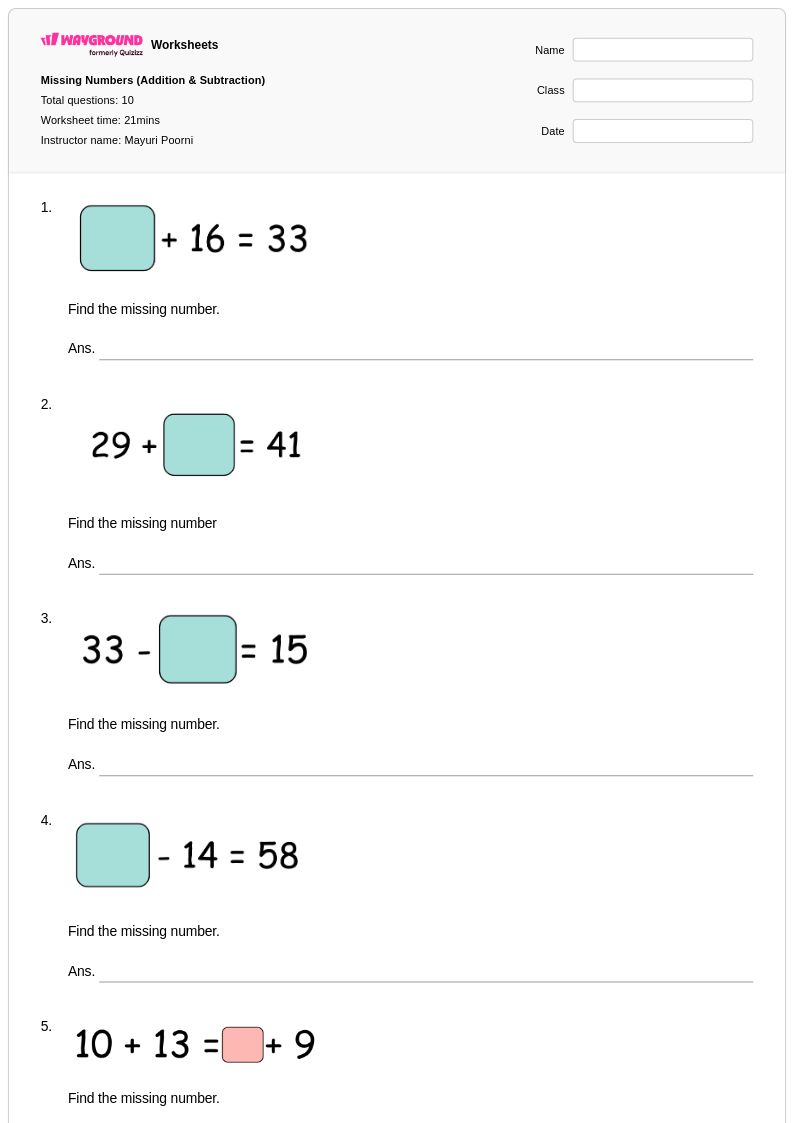
10 Q
1st - 3rd
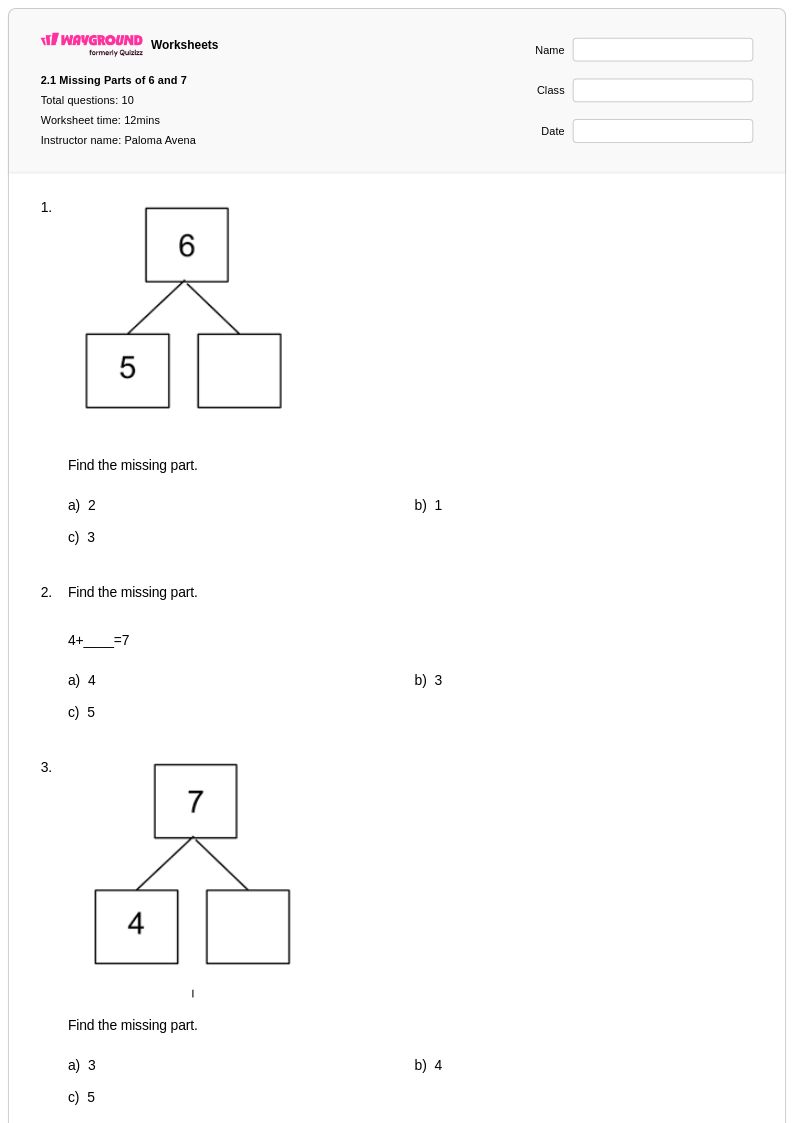
10 Q
1st
20 Q
7th
10 Q
1st - 2nd
20 Q
1st
12 Q
5th
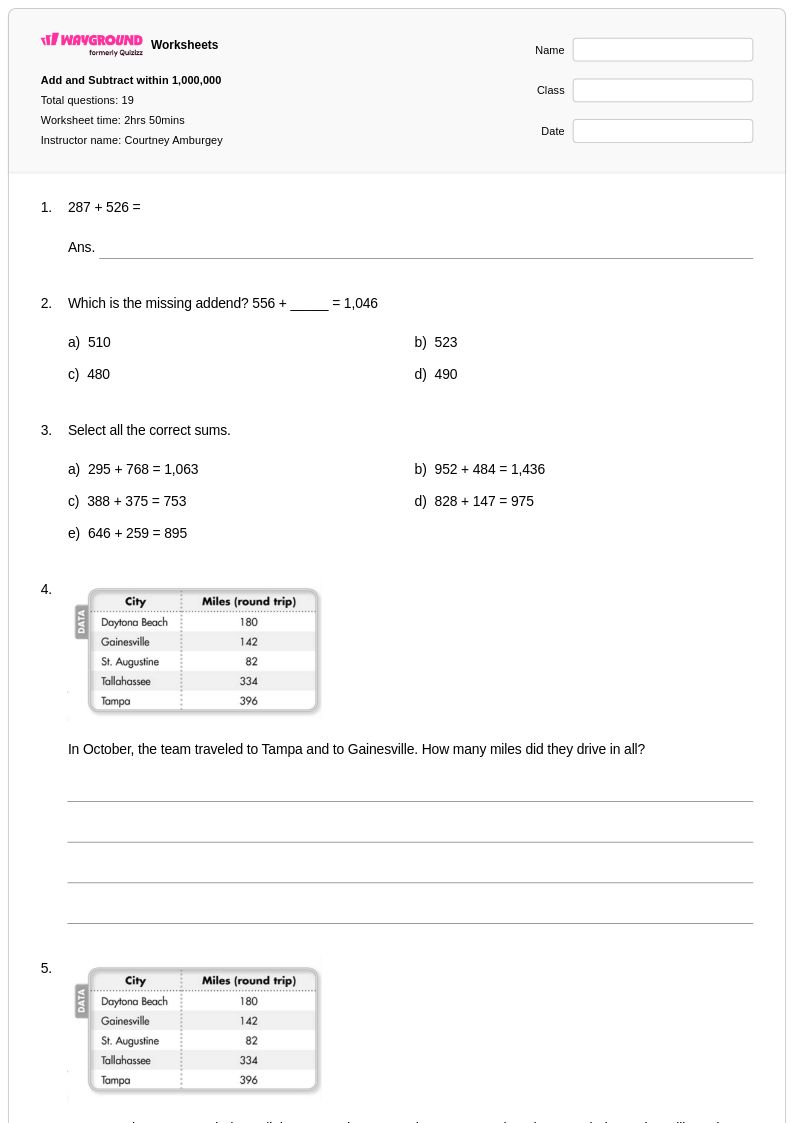
19 Q
4th
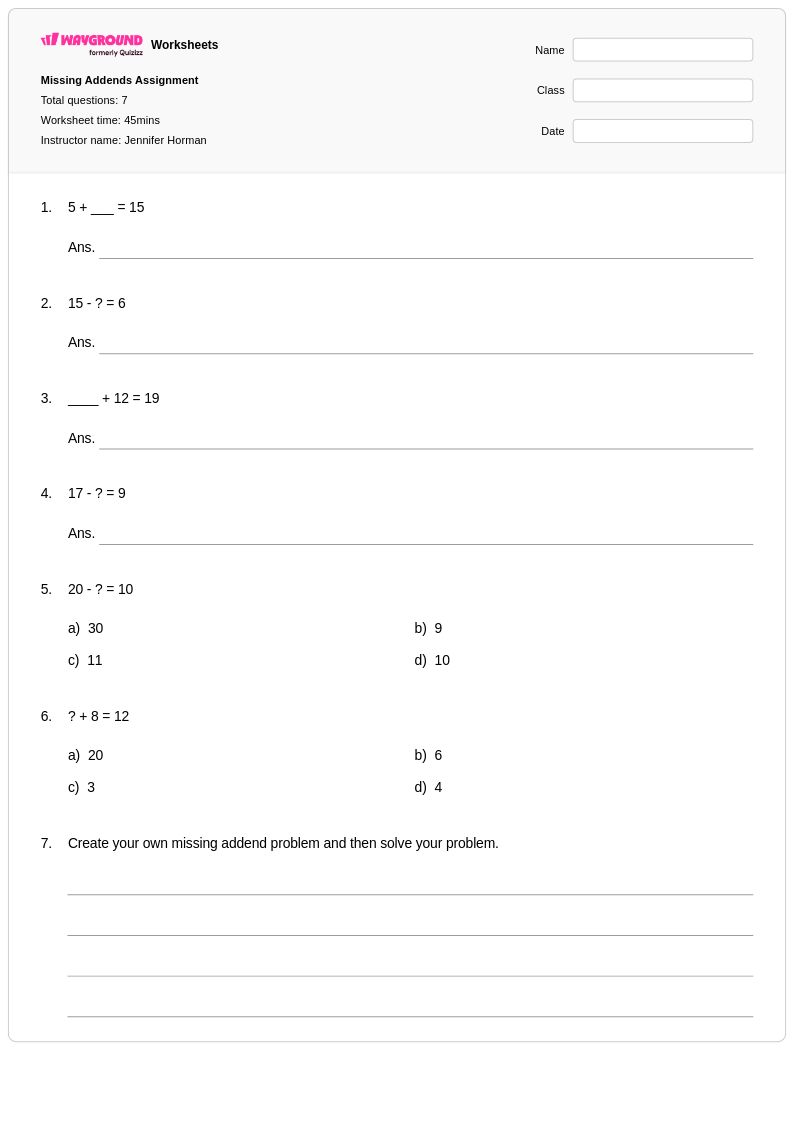
7 Q
1st
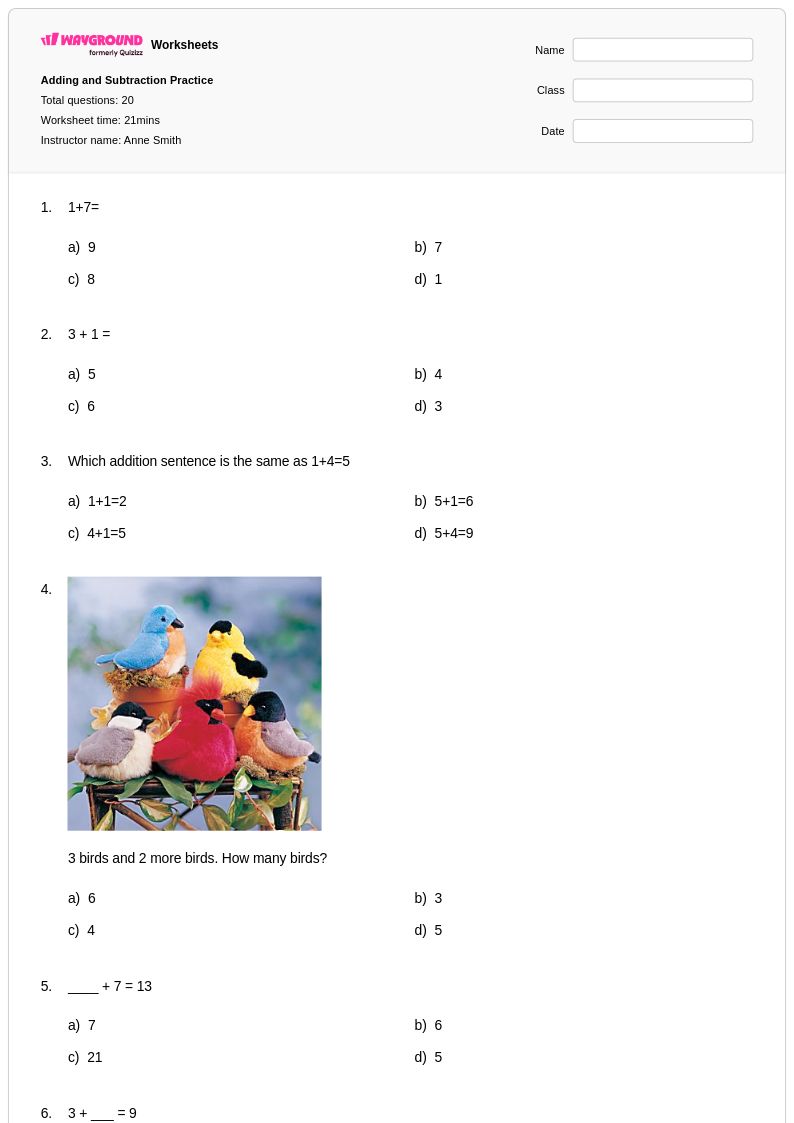
20 Q
1st
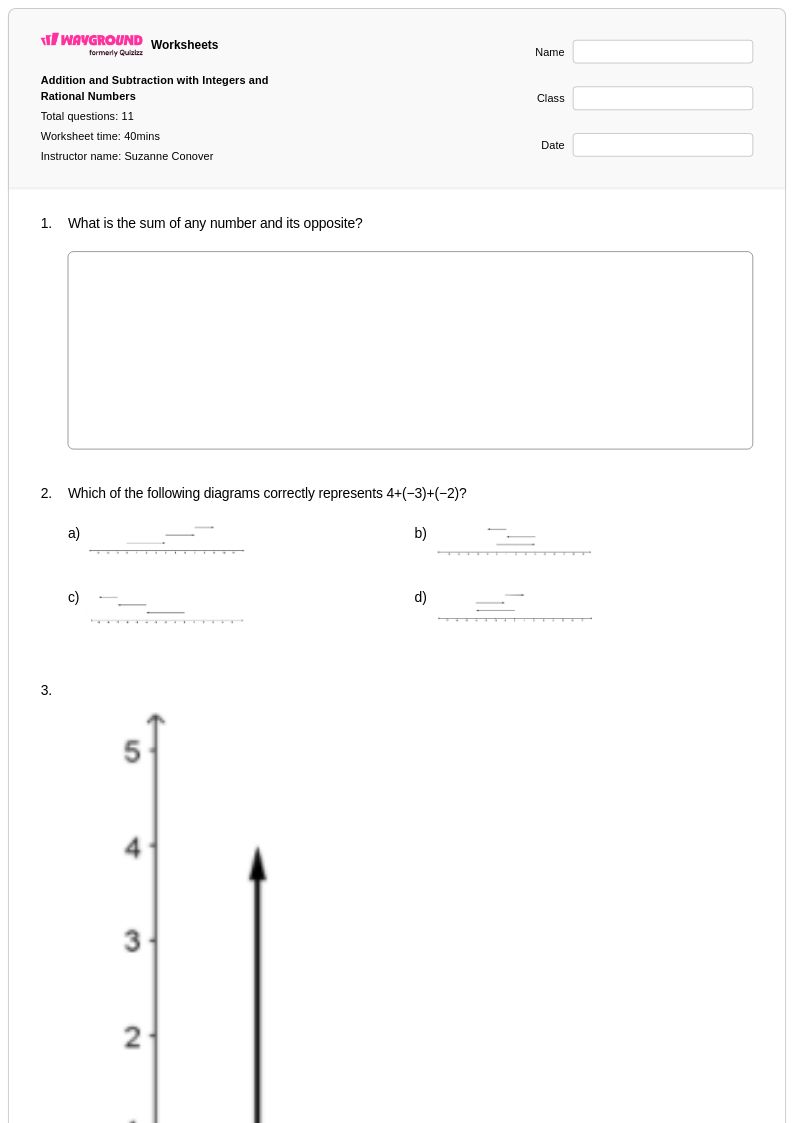
11 Q
7th
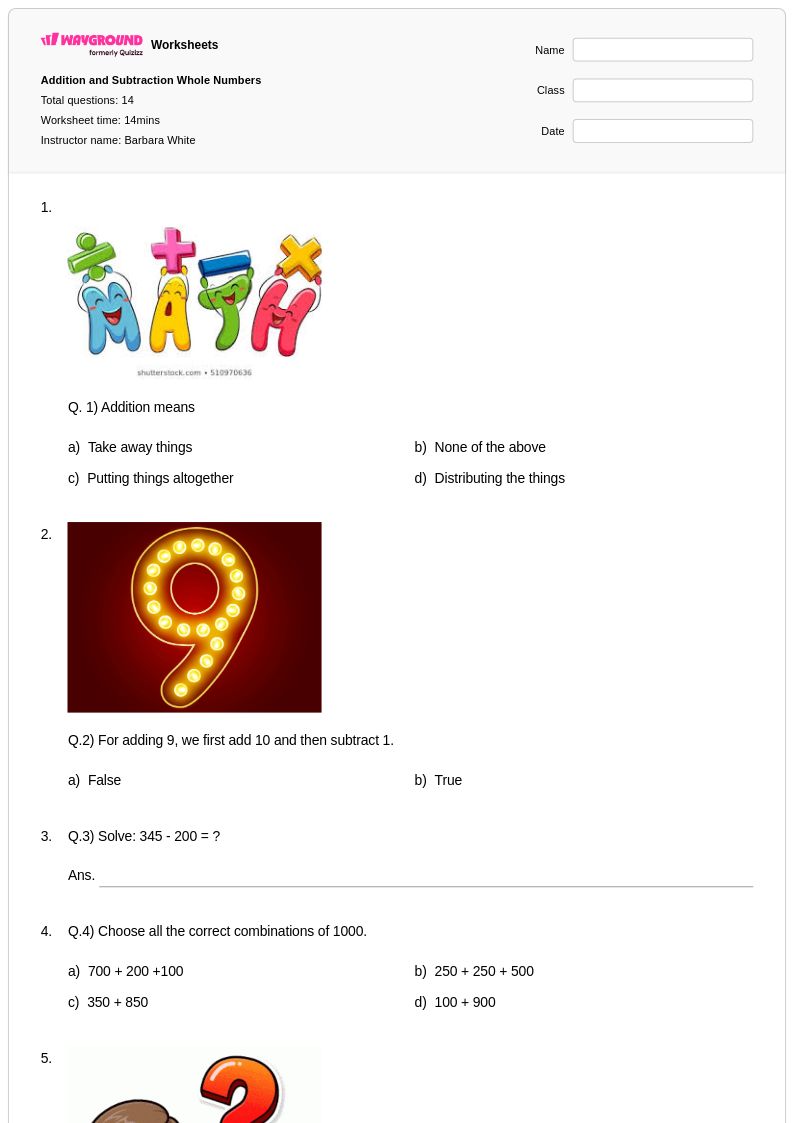
14 Q
3rd
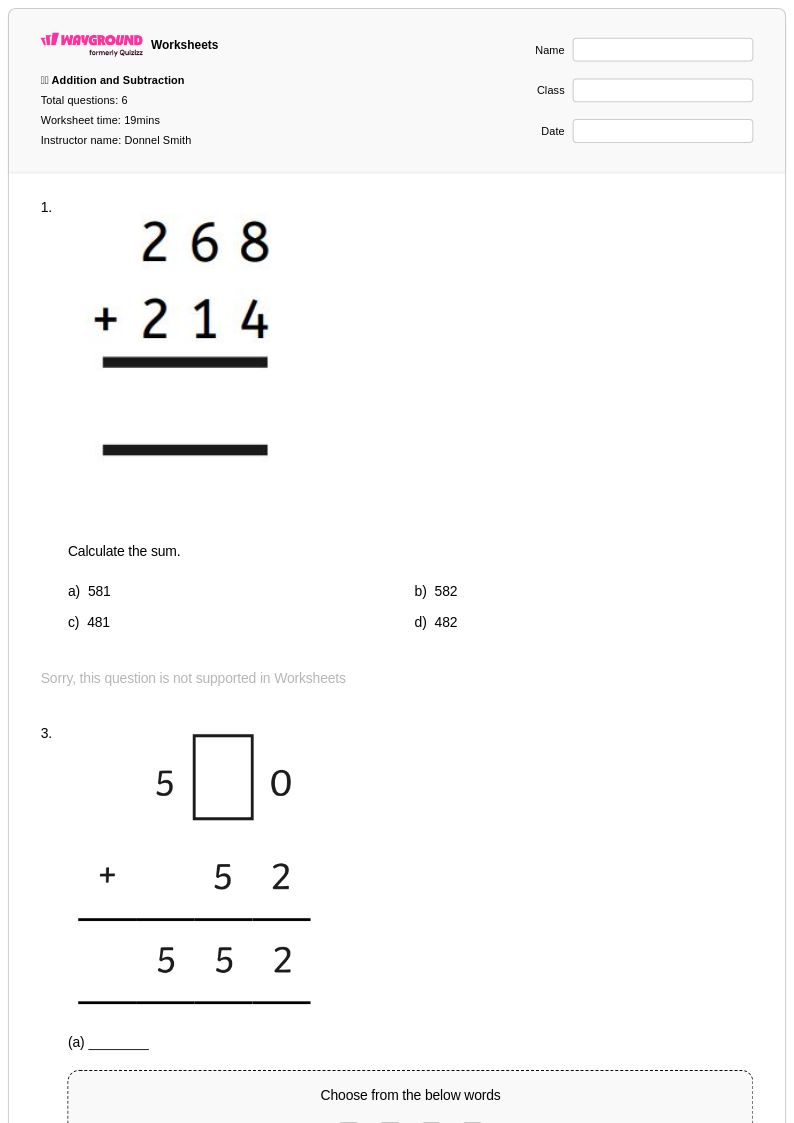
16 Q
4th
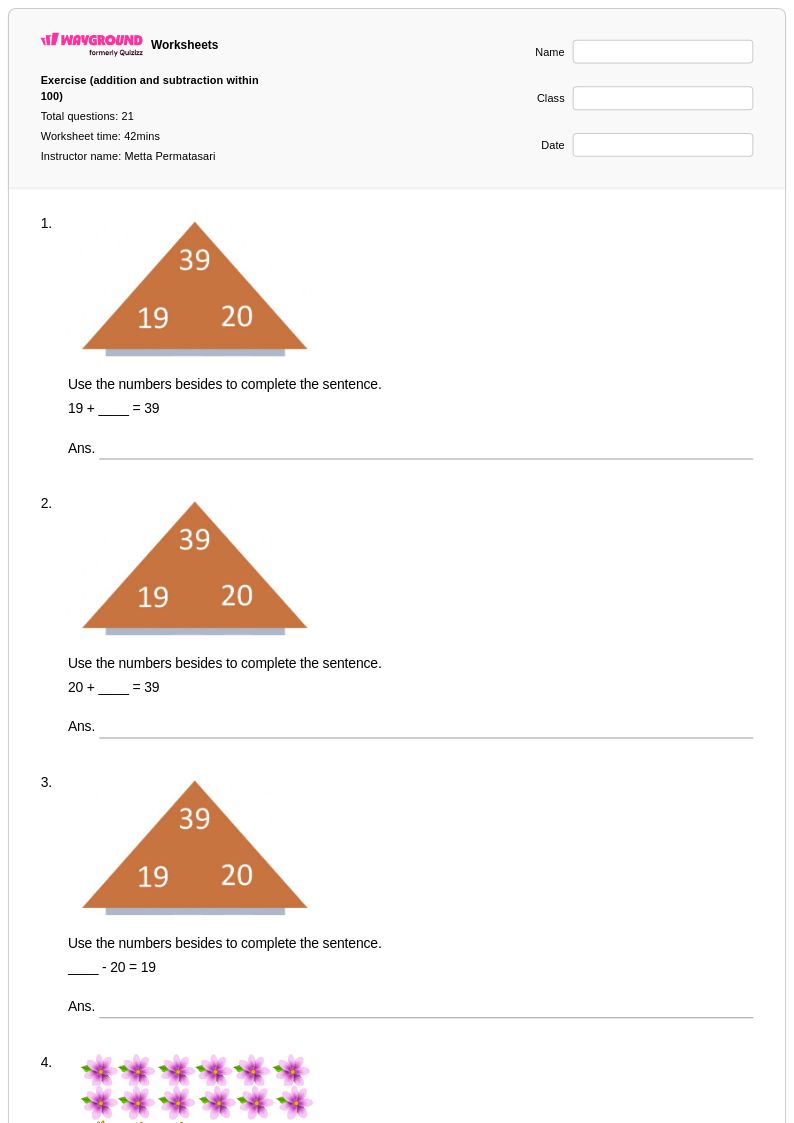
21 Q
2nd
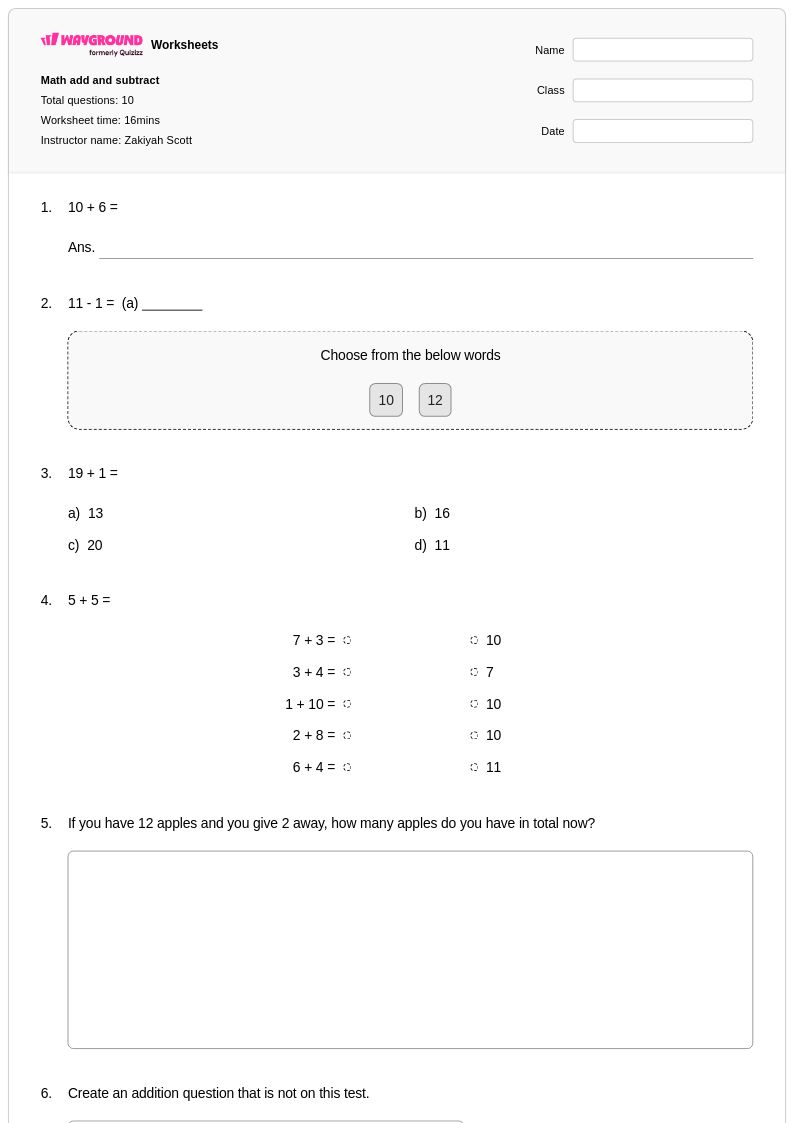
10 Q
1st
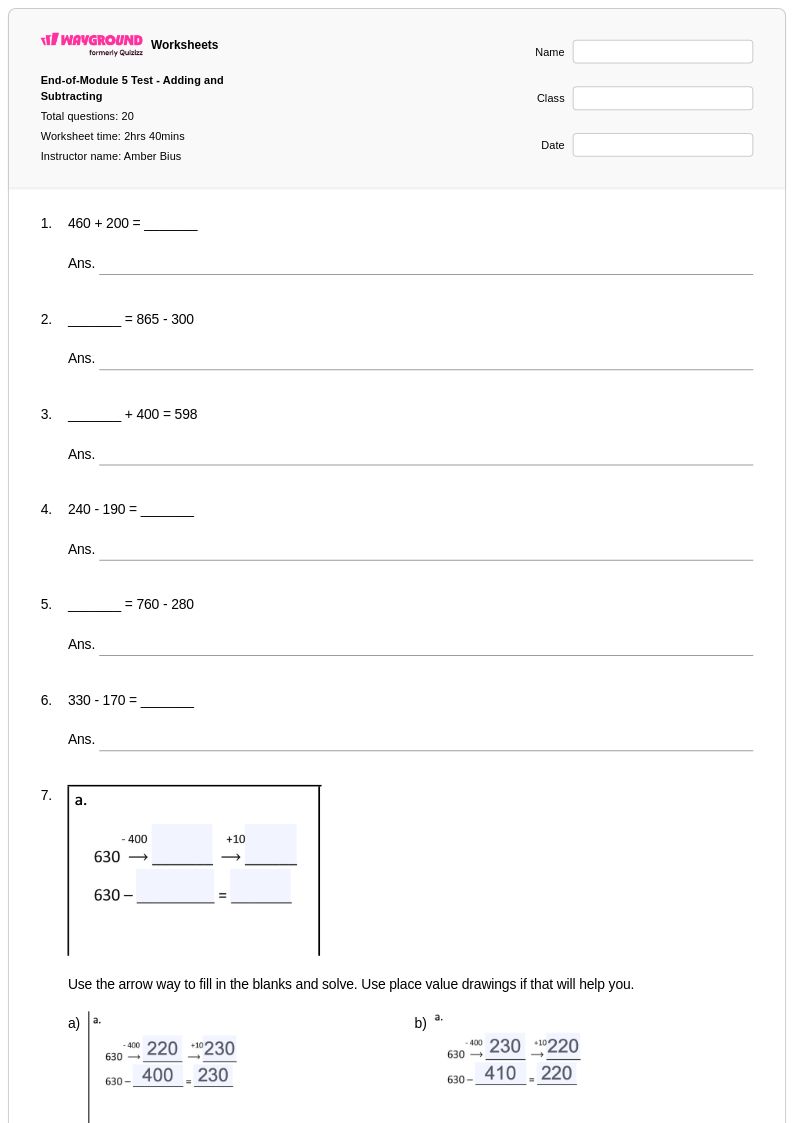
20 Q
2nd
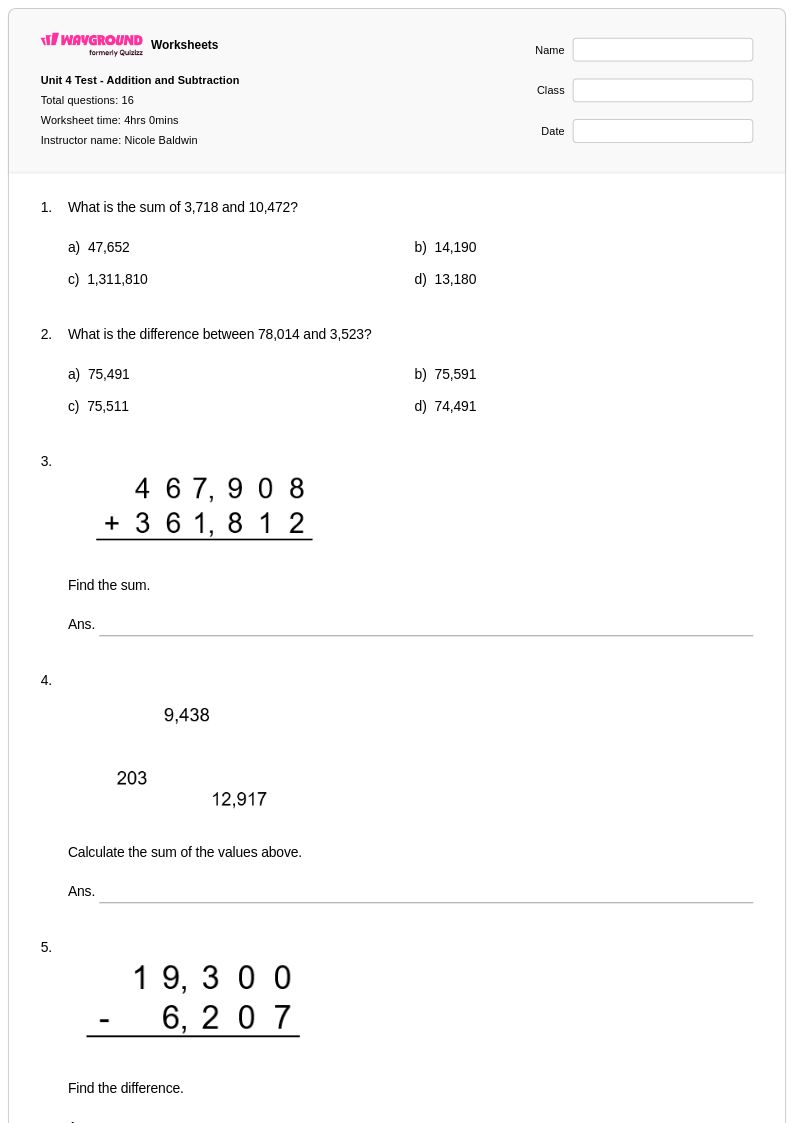
16 Q
4th
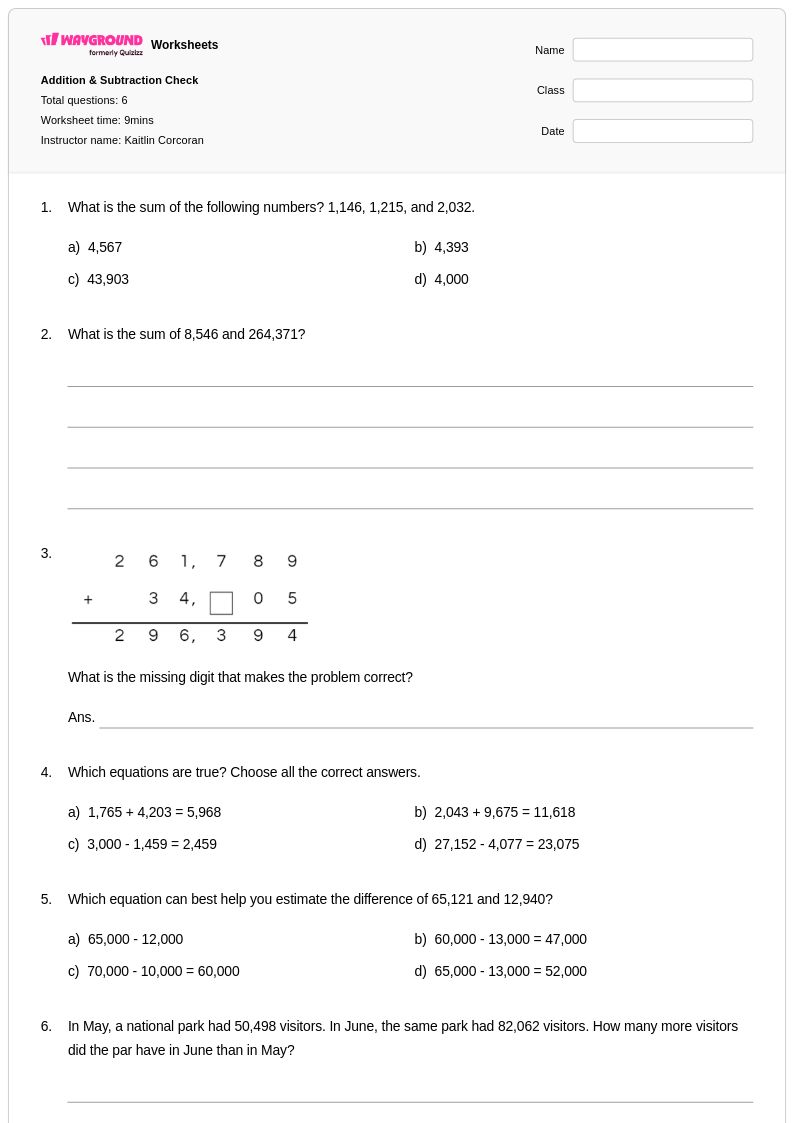
6 Q
4th
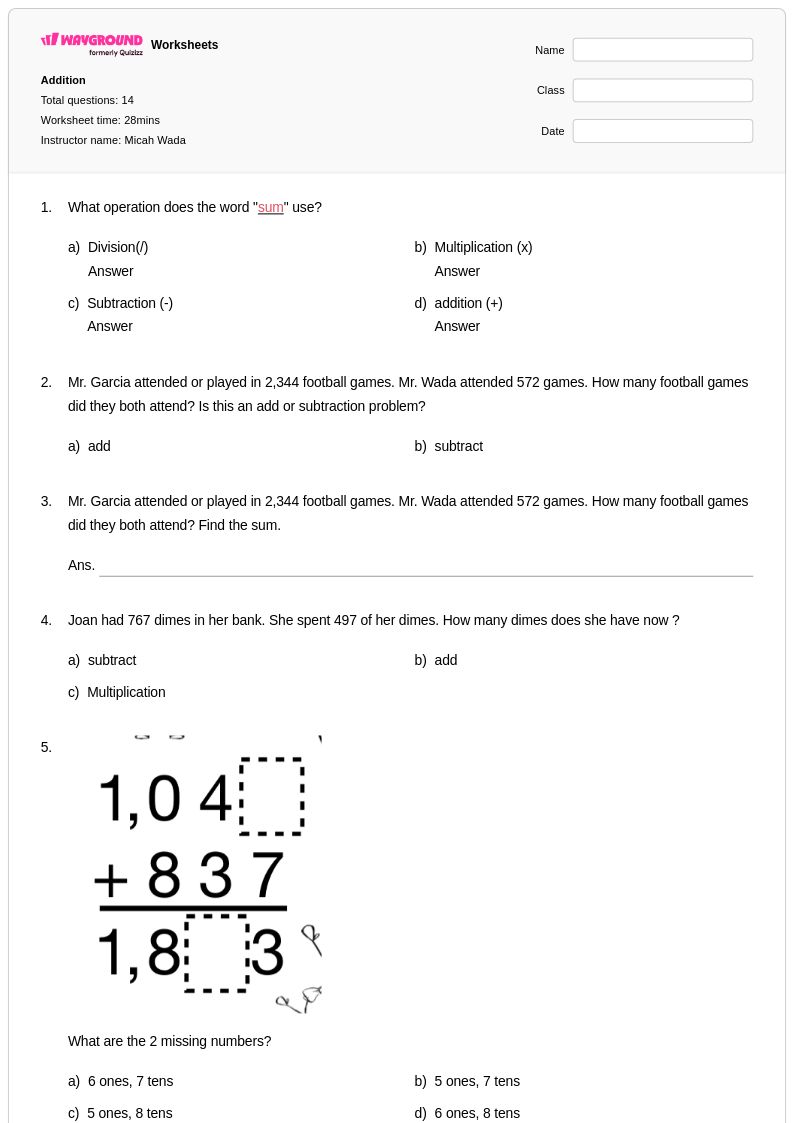
14 Q
4th
Explore Subtraction and Missing Numbers Worksheets by Grades
Explore Other Subject Worksheets for kindergarten
Explore printable Subtraction and Missing Numbers worksheets for Kindergarten
Subtraction and missing numbers worksheets for kindergarten students through Wayground (formerly Quizizz) provide essential foundational practice in early mathematical reasoning and problem-solving skills. These carefully designed printables help young learners develop number sense by working with simple subtraction problems where they must identify what number has been taken away or determine the result of a subtraction operation. Each worksheet strengthens critical thinking abilities as students analyze visual representations, count backwards, and use manipulatives or drawings to solve problems involving numbers typically ranging from 0 to 10. The free pdf resources include comprehensive answer keys that allow teachers and parents to quickly assess student understanding while providing immediate feedback on practice problems that build confidence in basic arithmetic operations.
Wayground (formerly Quizizz) supports educators with an extensive collection of millions of teacher-created subtraction and missing numbers worksheets specifically aligned with kindergarten learning standards and developmental expectations. The platform's robust search and filtering capabilities enable teachers to locate age-appropriate materials that match their students' current skill levels, while differentiation tools allow for seamless customization of difficulty and presentation style. These versatile resources are available in both printable and digital pdf formats, making them ideal for classroom instruction, homework assignments, intervention sessions, and enrichment activities. Teachers can efficiently plan targeted skill practice, identify students needing additional support through systematic remediation, and challenge advanced learners with more complex missing number scenarios, all while maintaining alignment with curriculum objectives and assessment goals.
FAQs
How do I teach missing numbers in subtraction to kindergarten students?
What activities help kindergarteners practice subtraction and missing numbers?
What mistakes do kindergarteners make with missing-number subtraction?
How can I use these kindergarten subtraction worksheets?
How does kindergarten missing-number subtraction connect to Common Core math?
How can I adapt these worksheets for kindergarten learners who need extra support?
What grade level are these subtraction and missing numbers worksheets for?