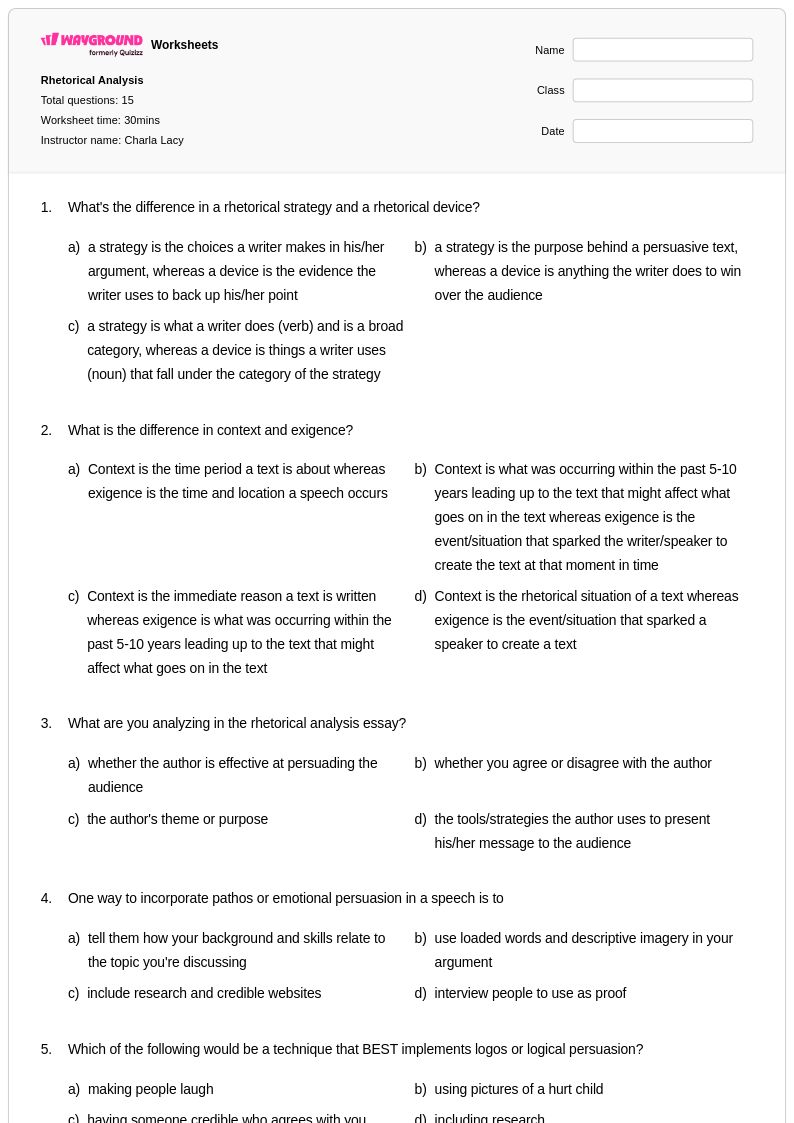
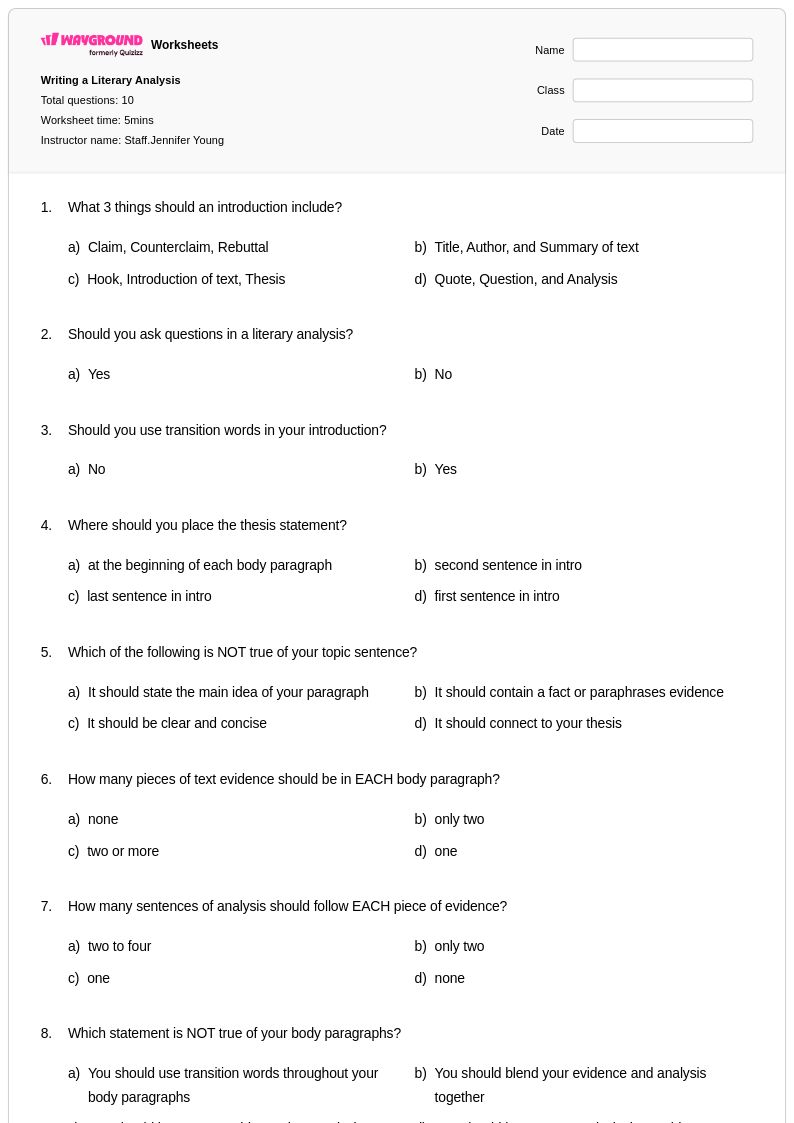
Enhance students' text analysis skills with Wayground's comprehensive collection of free reading comprehension worksheets, featuring printable PDF practice problems and detailed answer keys to develop critical thinking abilities.
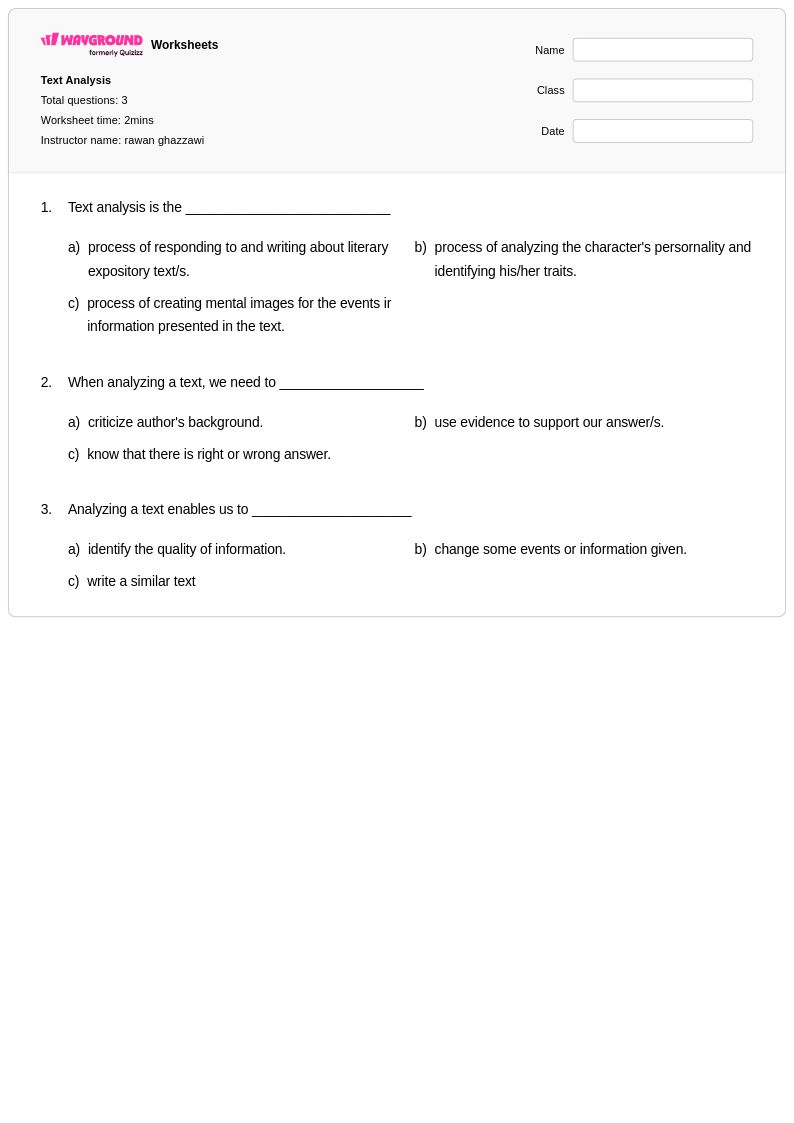
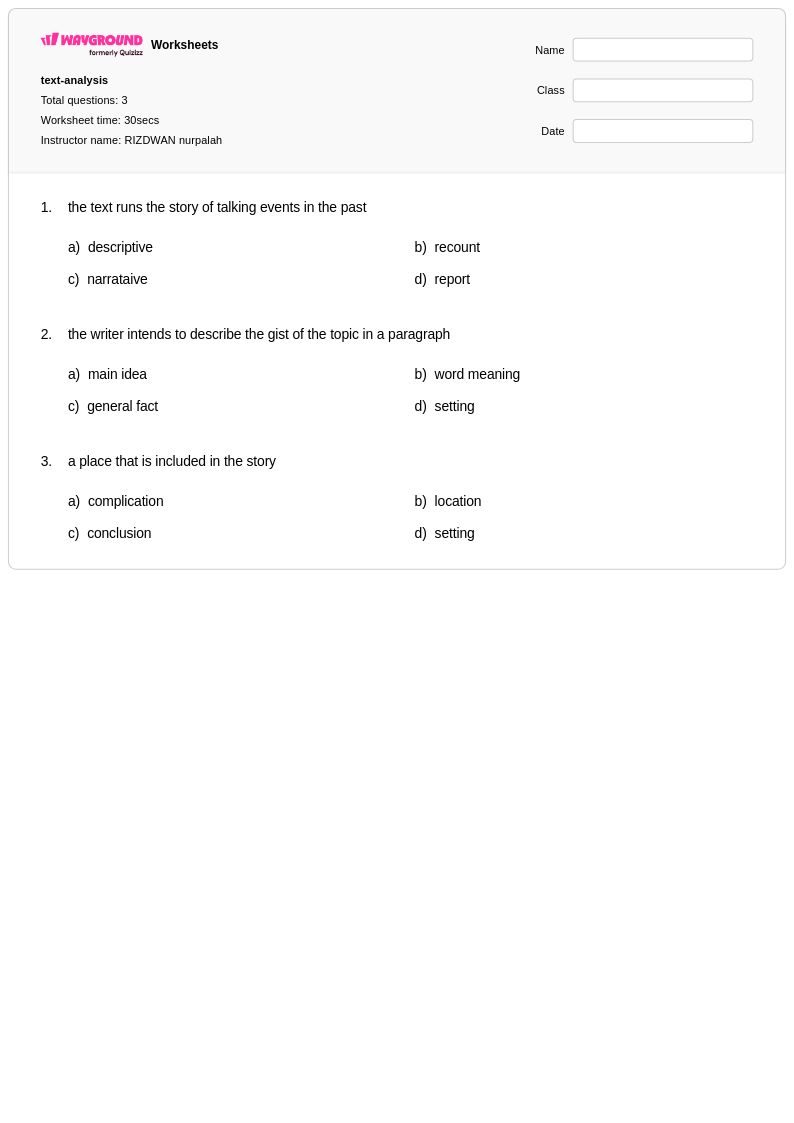
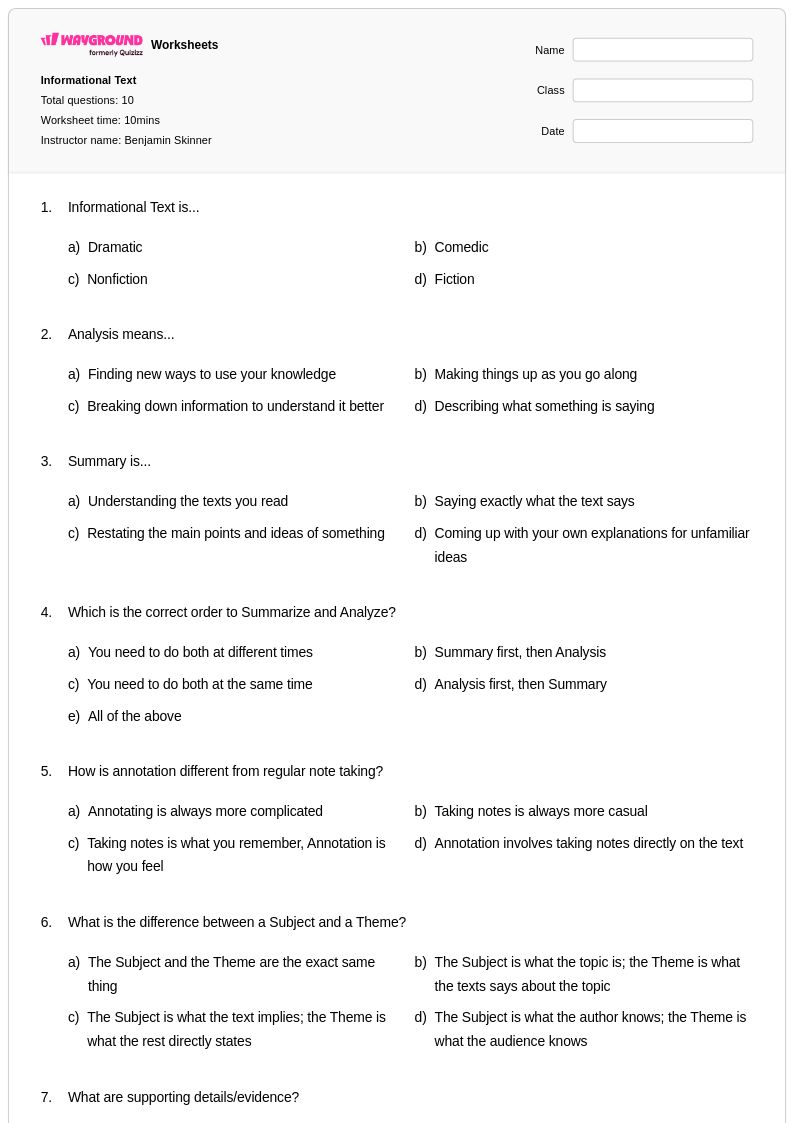
Text analysis worksheets available through Wayground (formerly Quizizz) provide comprehensive practice opportunities for students to develop critical reading comprehension skills through systematic examination of written passages. These educational resources focus on teaching learners how to identify literary devices, analyze character development, evaluate themes, examine text structure, and draw evidence-based conclusions from various reading materials. Each worksheet includes carefully crafted practice problems that guide students through the analytical process, from basic identification tasks to complex interpretation exercises, with complete answer keys provided to support both independent study and classroom instruction. The printable pdf format ensures easy access for teachers and students, while the free availability of these resources makes high-quality text analysis practice accessible to all learning environments.
Wayground (formerly Quizizz) supports educators with millions of teacher-created text analysis worksheets that can be easily searched, filtered, and customized to meet diverse instructional needs. The platform's robust collection includes materials aligned with educational standards, allowing teachers to quickly locate resources that match their curriculum requirements and student ability levels. Advanced differentiation tools enable instructors to modify content complexity, adjust question types, and personalize learning experiences for individual students or small groups. These flexible worksheets are available in both printable and digital formats, making them ideal for traditional classroom instruction, homework assignments, remediation sessions, and enrichment activities. Teachers can seamlessly integrate these resources into their lesson planning to provide targeted skill practice, assess student progress, and reinforce text analysis concepts across various reading genres and complexity levels.
FAQs
How do I teach text analysis to students who struggle with reading comprehension?
Start by modeling the analytical process explicitly — show students how to annotate a short passage by identifying the author's purpose, key vocabulary, and structural choices before asking them to interpret meaning. Scaffolded practice works best: begin with guided tasks like labeling literary devices or identifying the main idea, then gradually release responsibility to students as their confidence builds. Short, focused passages are more effective than long texts when introducing analytical frameworks, because they allow students to practice the full analytical process without losing focus.
What exercises help students practice text analysis skills?
Effective text analysis practice involves tasks that move students from surface-level reading to interpretive thinking — for example, identifying how a specific word choice affects tone, tracing how a character changes across a passage, or evaluating whether textual evidence supports a given claim. Worksheets that progress from identification tasks to open-ended analysis questions are particularly useful because they build analytical habits incrementally. Practice problems with structured sentence frames or evidence-based response prompts help students internalize the vocabulary and logic of literary analysis.
What are the most common mistakes students make when analyzing a text?
The most frequent error is summarizing instead of analyzing — students often retell what happened rather than explaining how or why a textual element functions. A related mistake is citing evidence without connecting it to a claim, which produces answers that are descriptive but not analytical. Students also commonly confuse theme with topic, identifying a subject like "friendship" rather than a thematic statement like "true friendship requires sacrifice." Targeted practice with answer keys showing model responses helps students recognize and self-correct these patterns.
How can I differentiate text analysis instruction for students at different reading levels?
Differentiation in text analysis can be achieved by adjusting the complexity of the passage, the number of analytical steps required, or the level of scaffolding provided in the questions. On Wayground, teachers can apply student-level accommodations such as Read Aloud, which provides audio reading of questions and passages for students who need it, and Reduced Answer Choices, which lowers cognitive load for struggling readers without changing the core task. Extended time settings can also be configured per student, ensuring that pacing differences do not penalize students who need more processing time.
How do I use Wayground's text analysis worksheets in my classroom?
Wayground's text analysis worksheets are available as printable PDFs for traditional classroom use and in digital formats for technology-integrated environments, making them flexible enough for in-class instruction, homework, or hybrid learning. Teachers can also host worksheets as a live quiz on Wayground, enabling real-time student responses and immediate progress feedback. Each worksheet includes a complete answer key, so they work equally well for independent student practice, small-group work, or teacher-led review sessions.
How do I assess whether students have mastered text analysis skills?
Look for evidence that students can consistently distinguish between evidence and interpretation, identify how specific textual choices contribute to meaning, and construct claims that are supported by cited passages rather than general impressions. A reliable assessment task asks students to analyze an unfamiliar text independently, which reveals whether they have internalized analytical strategies rather than memorized responses to a specific passage. Reviewing student work against model answers in a structured answer key helps teachers identify exactly which analytical steps still need reinforcement.