
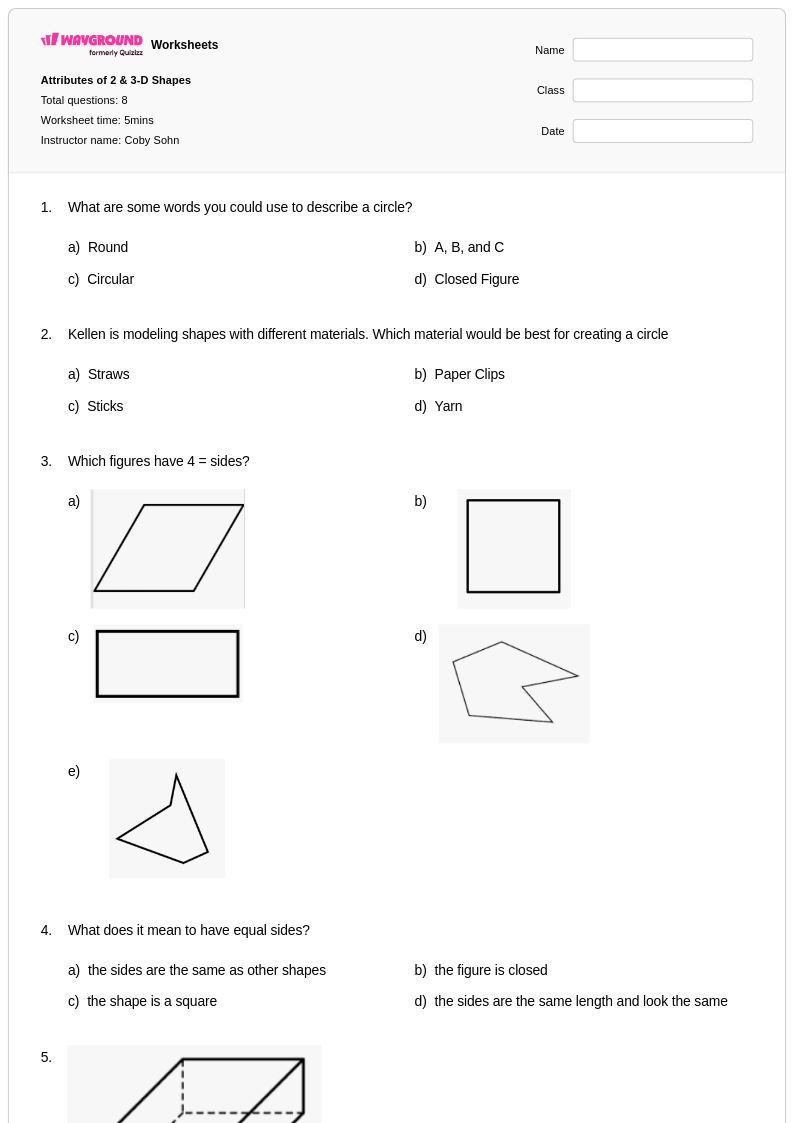
8 Q
1st
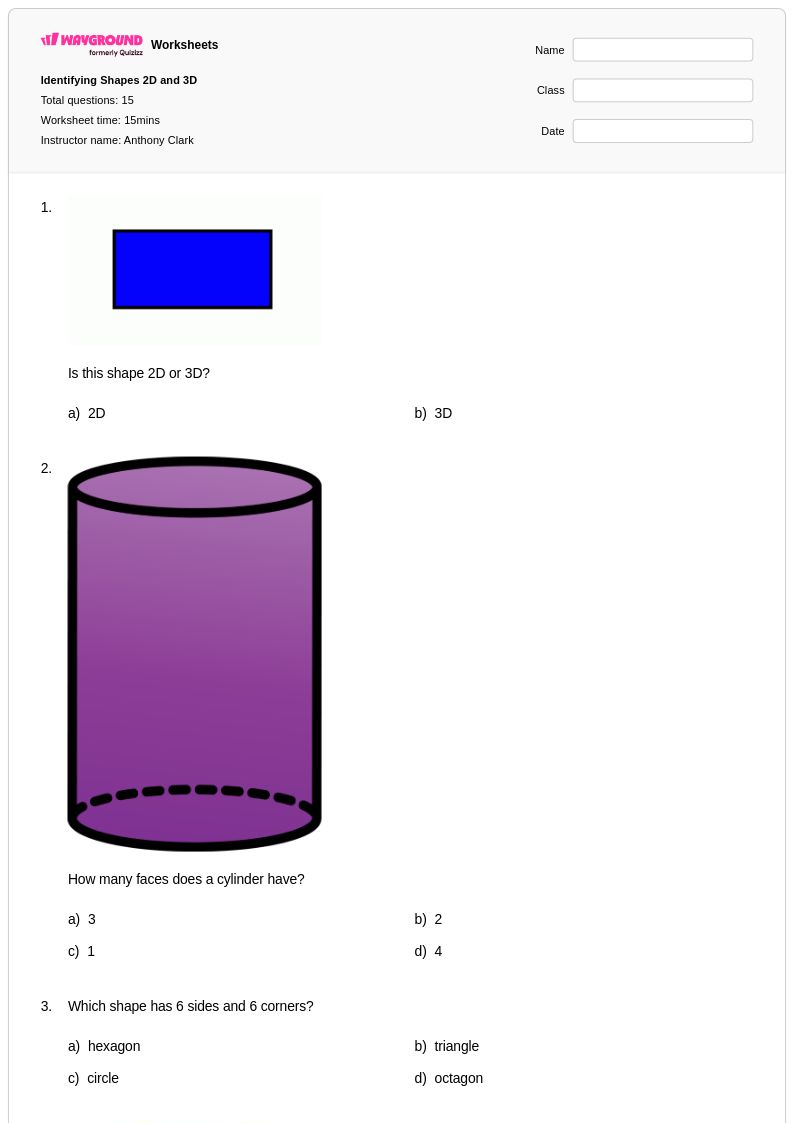
15 Q
1st - Uni
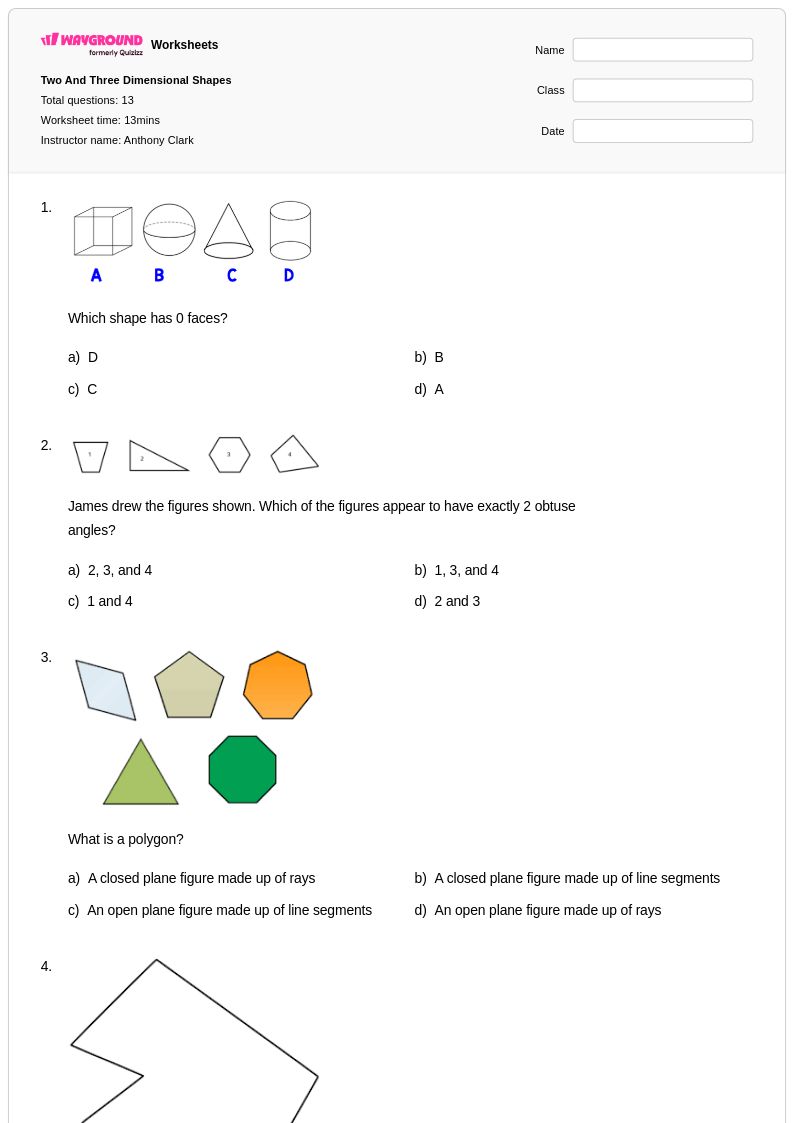
13 Q
1st - Uni
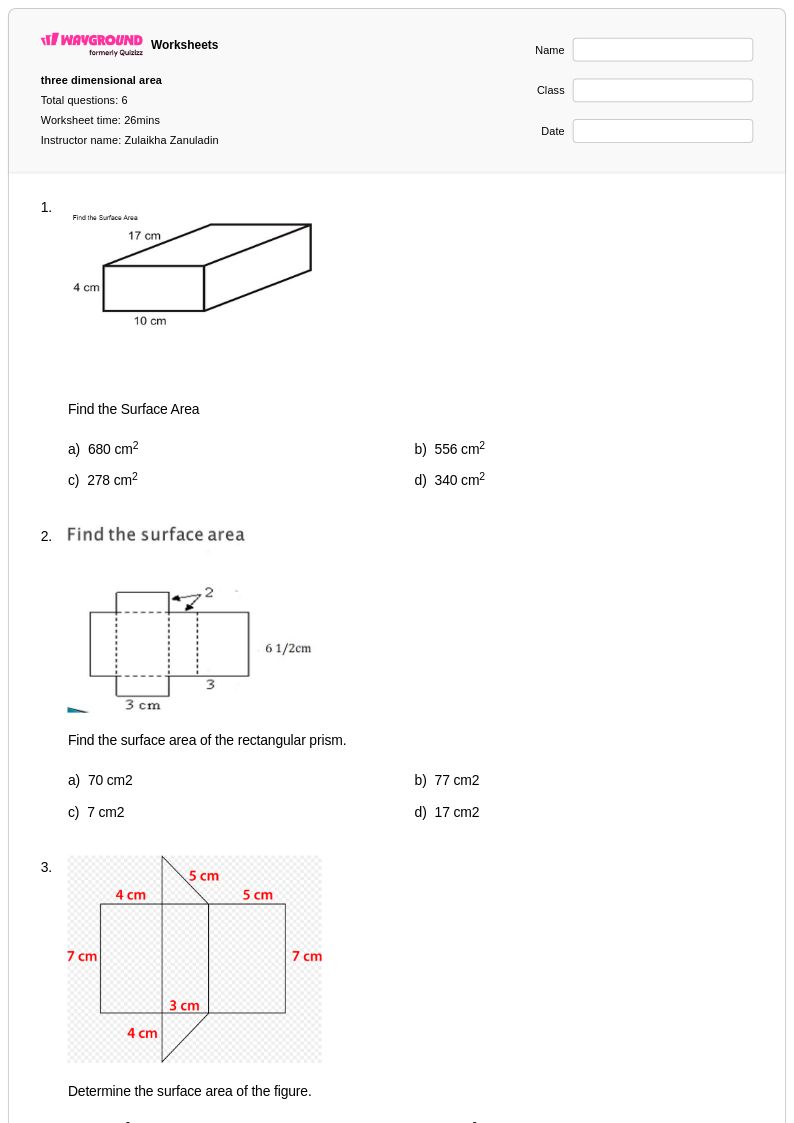
6 Q
1st
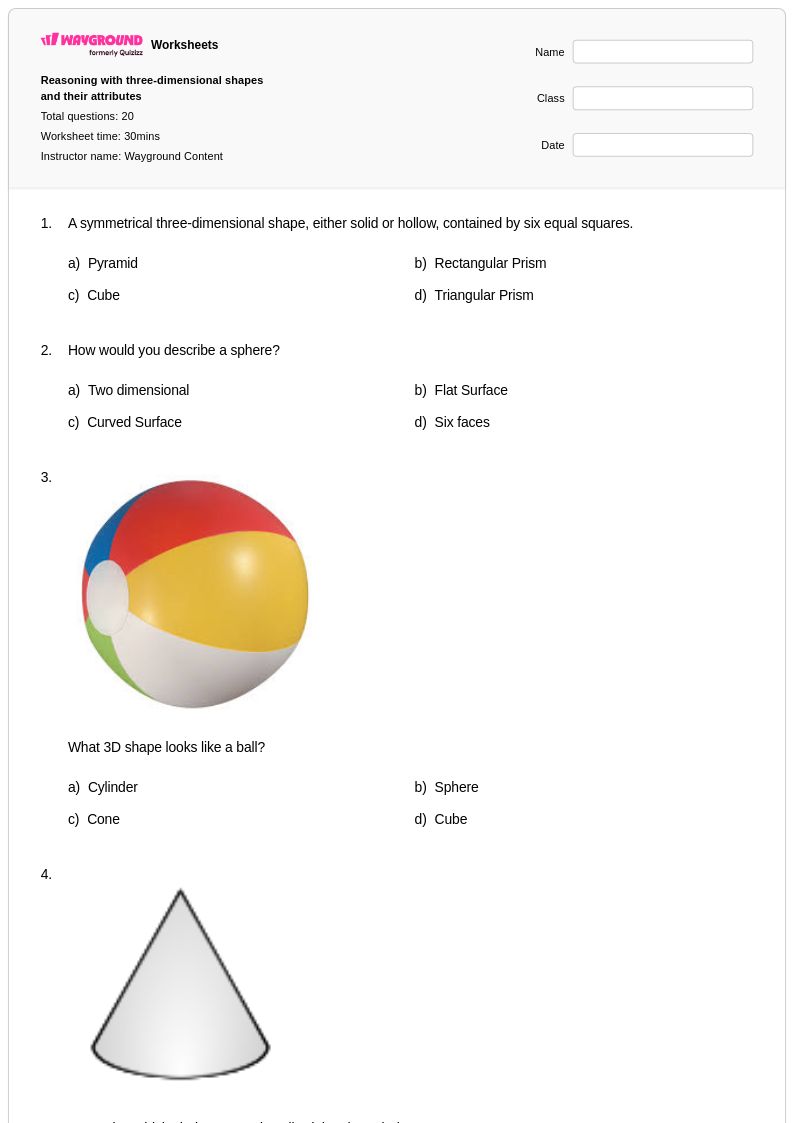
20 Q
1st - 2nd
100 Q
1st
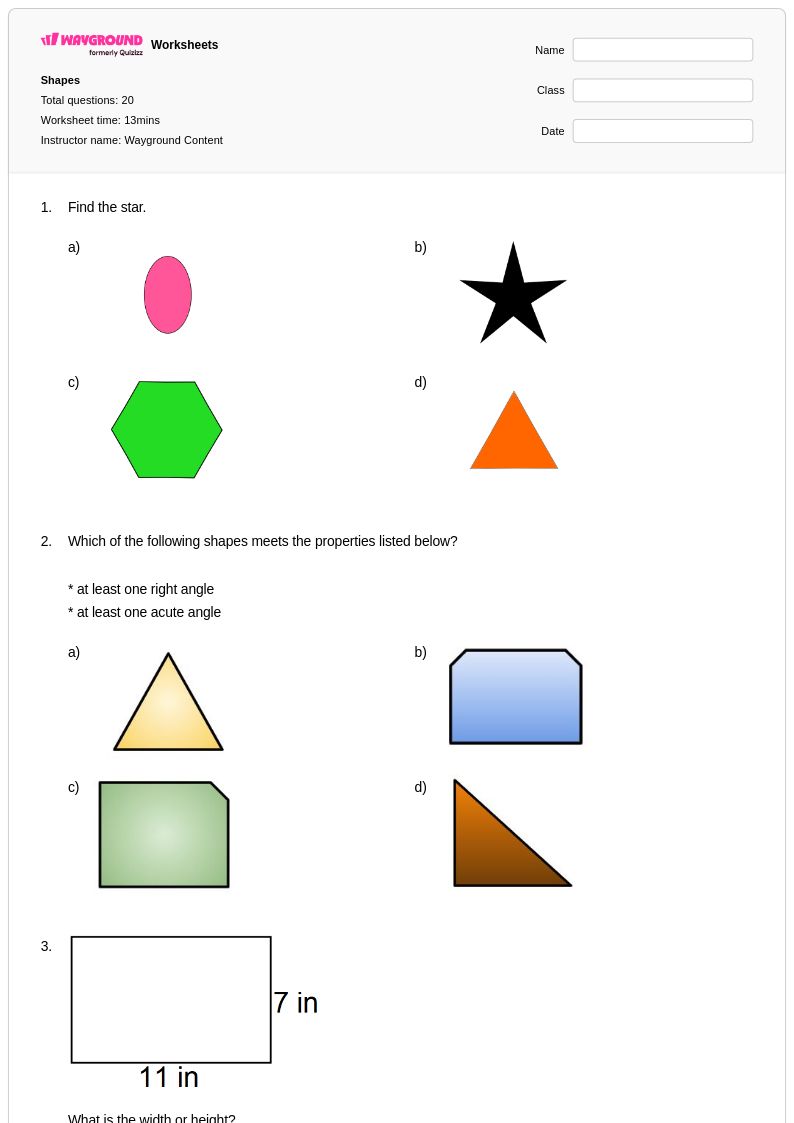
20 Q
1st - 2nd
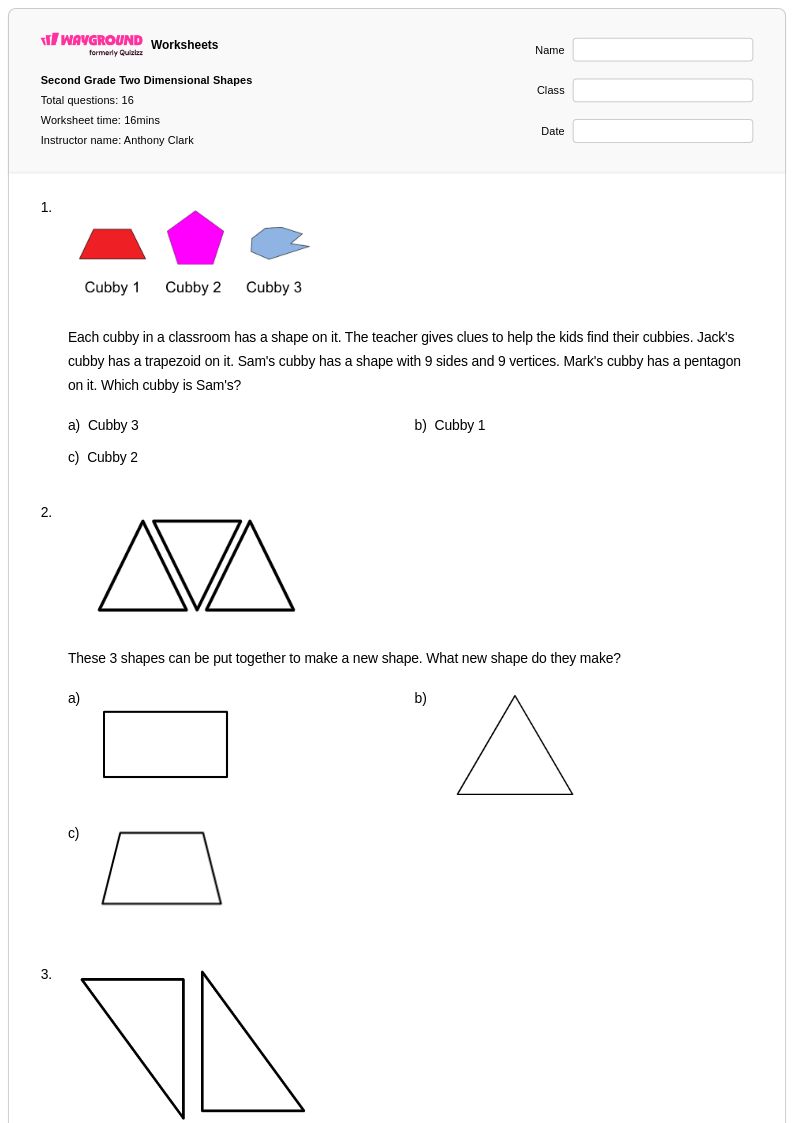
16 Q
1st - Uni
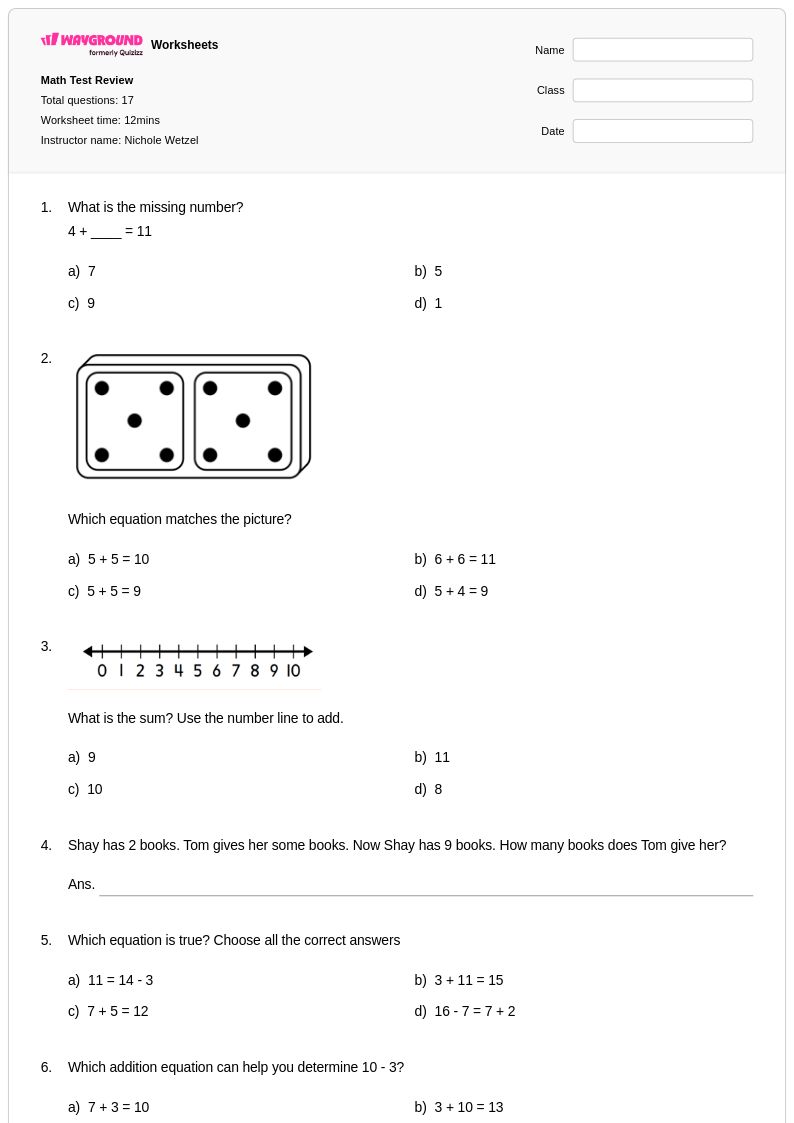
17 Q
1st
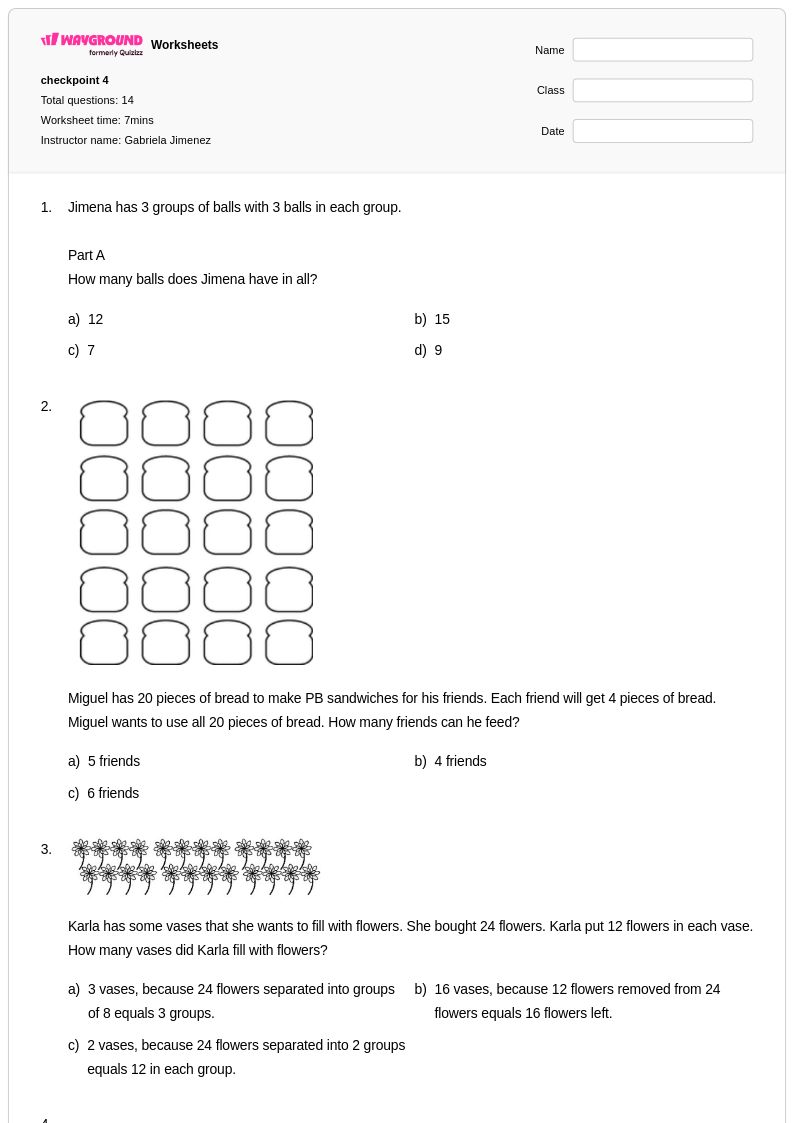
14 Q
1st
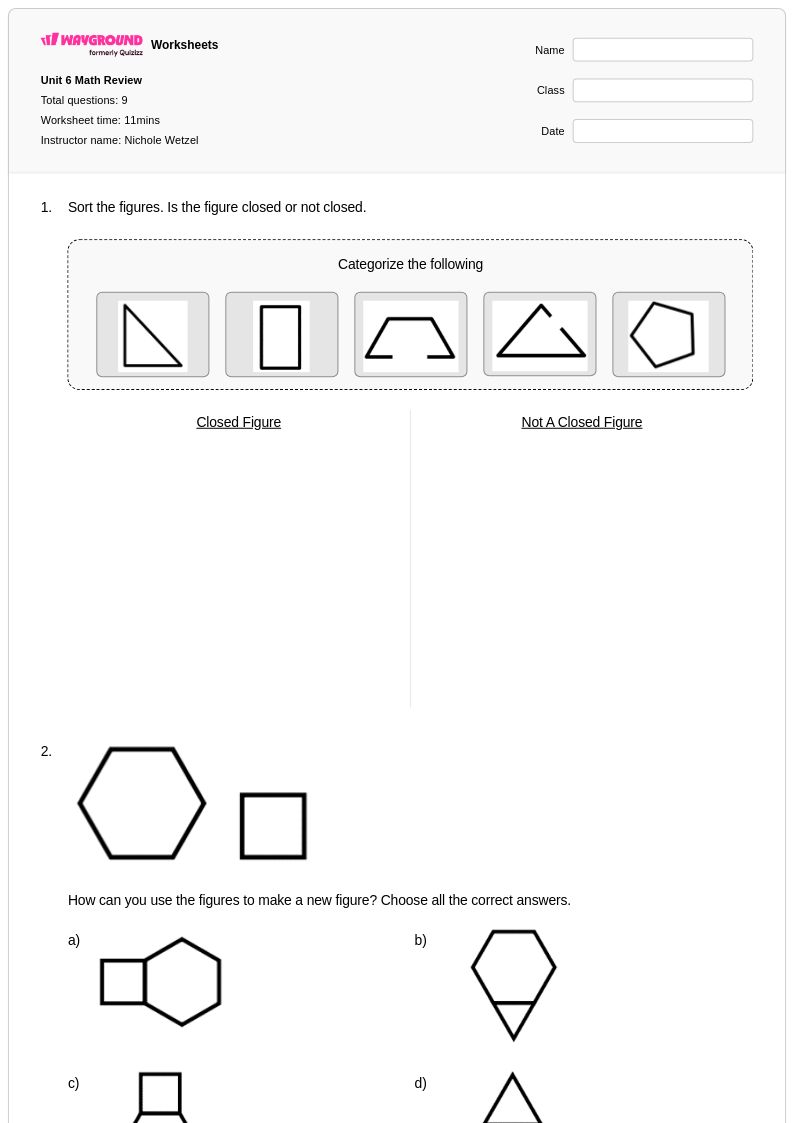
9 Q
1st
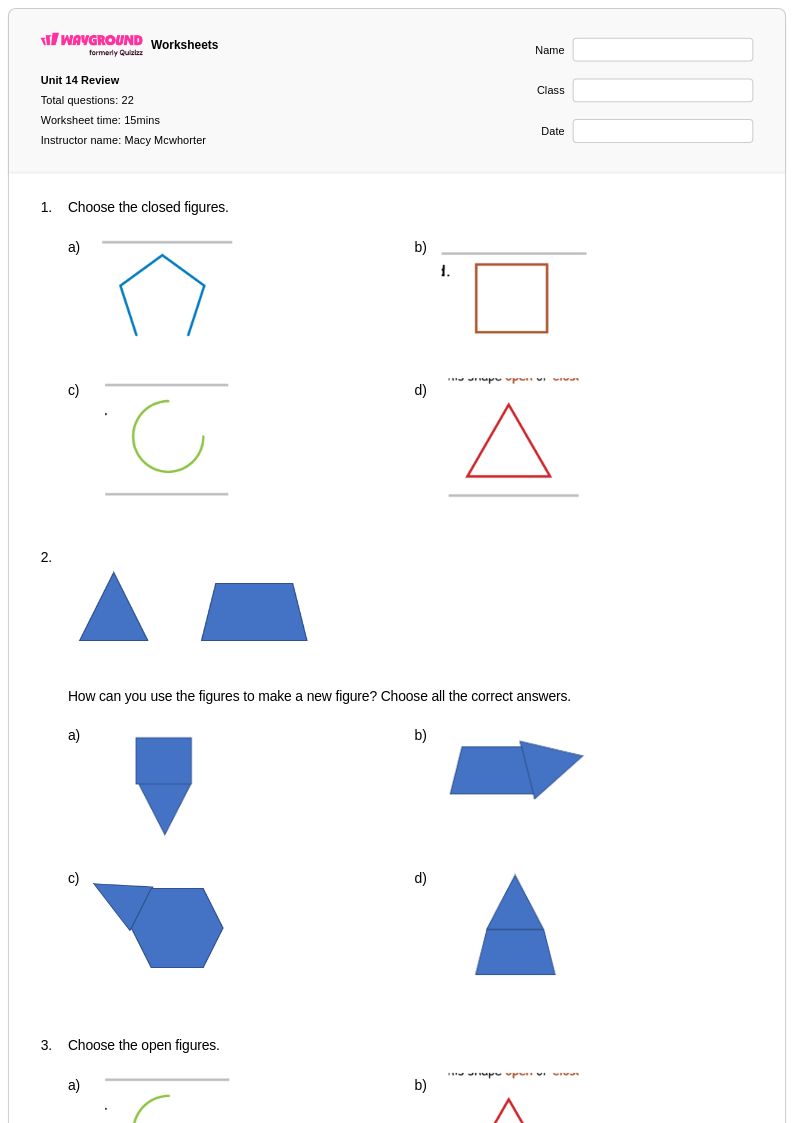
22 Q
1st
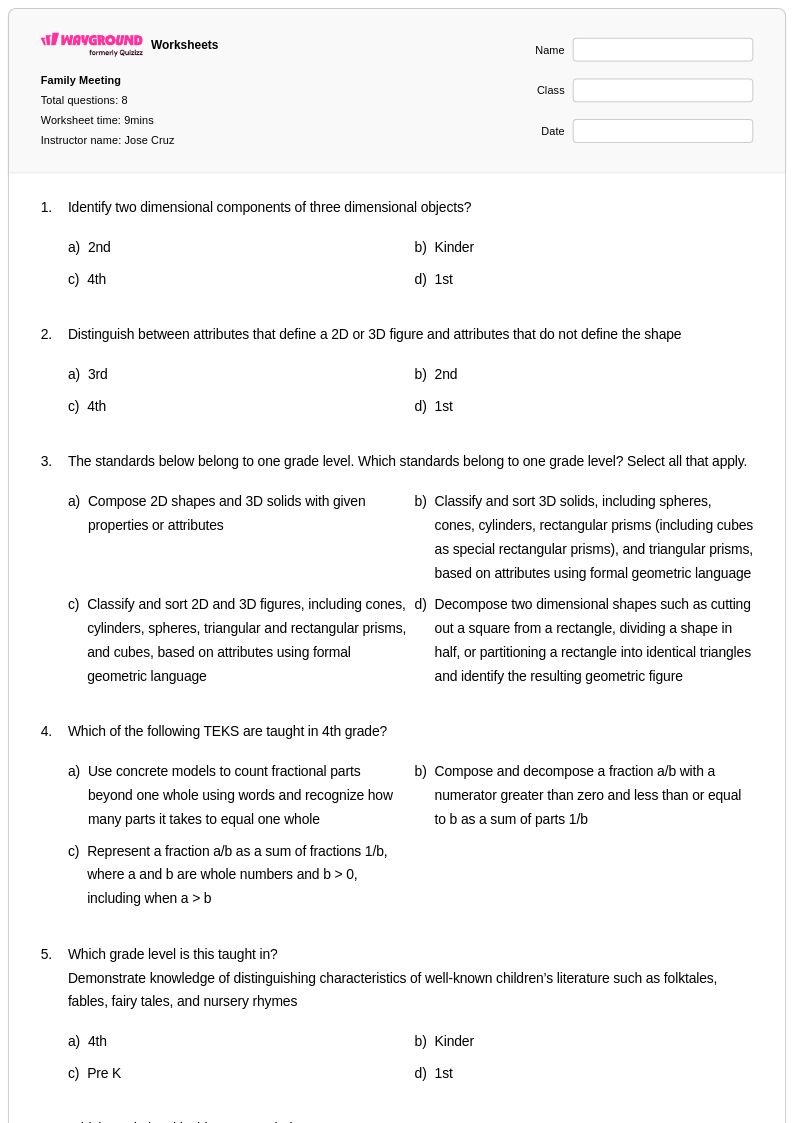
8 Q
1st - 5th
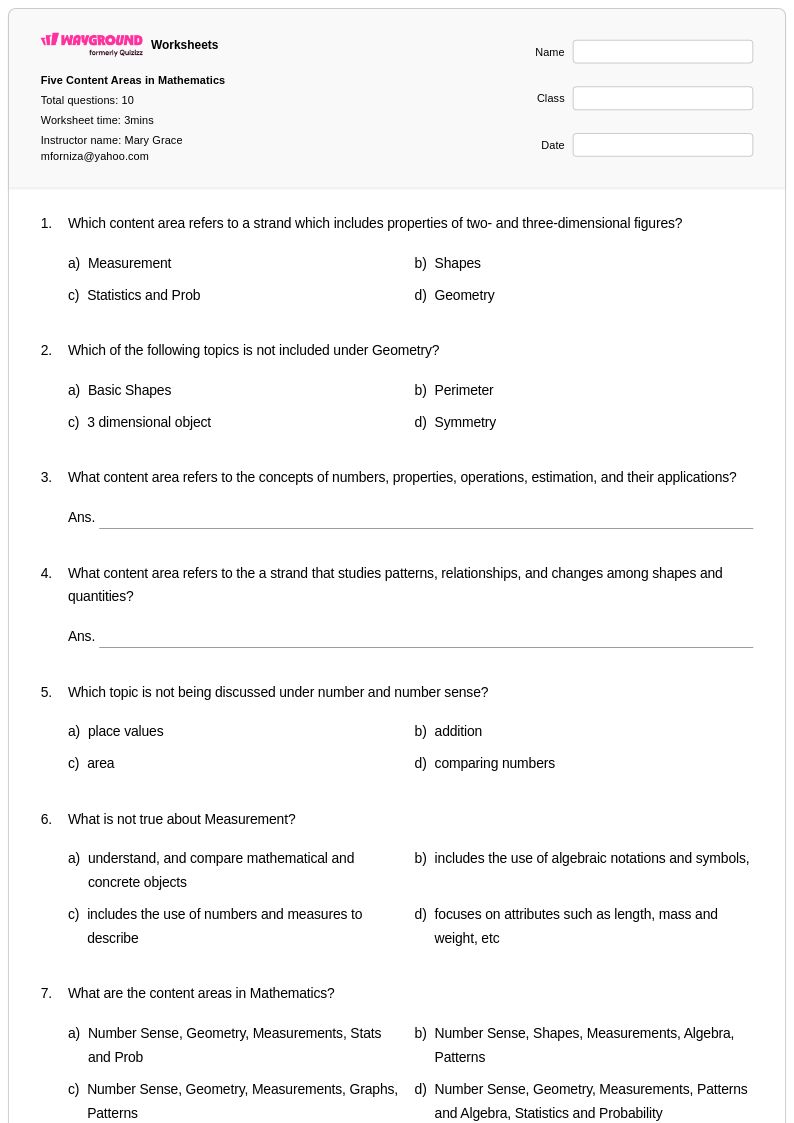
10 Q
KG - 3rd
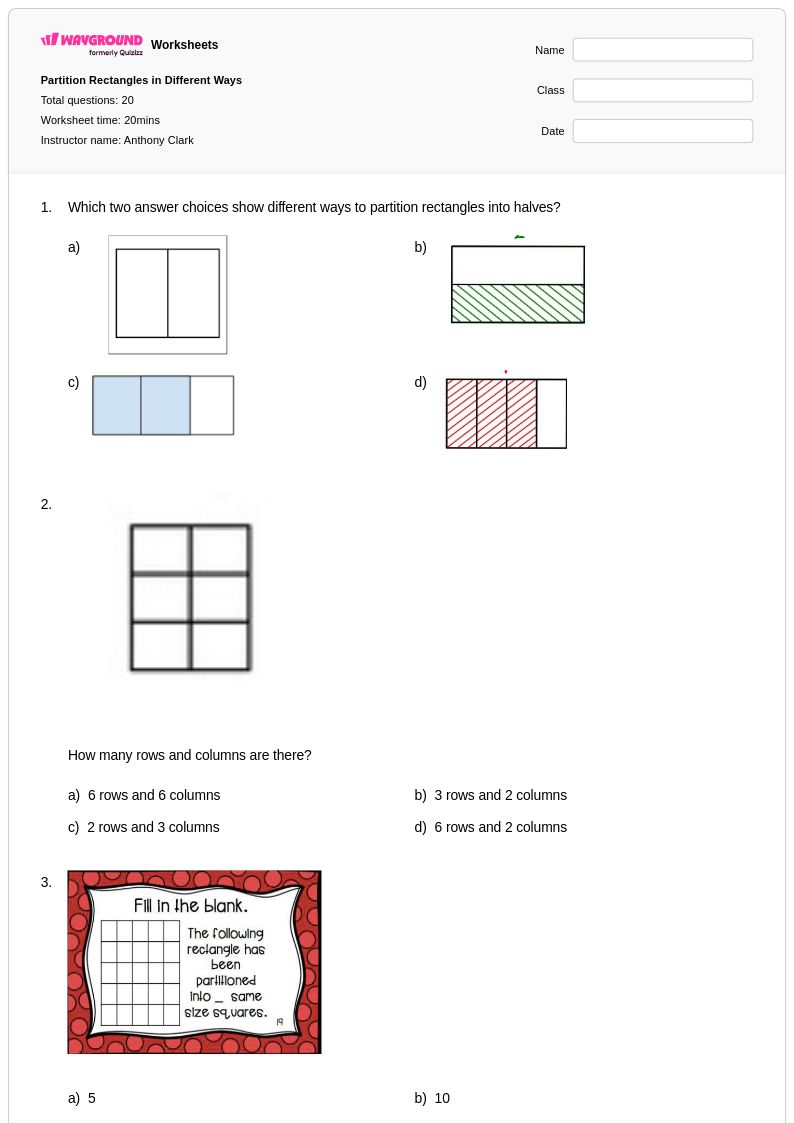
20 Q
1st - Uni
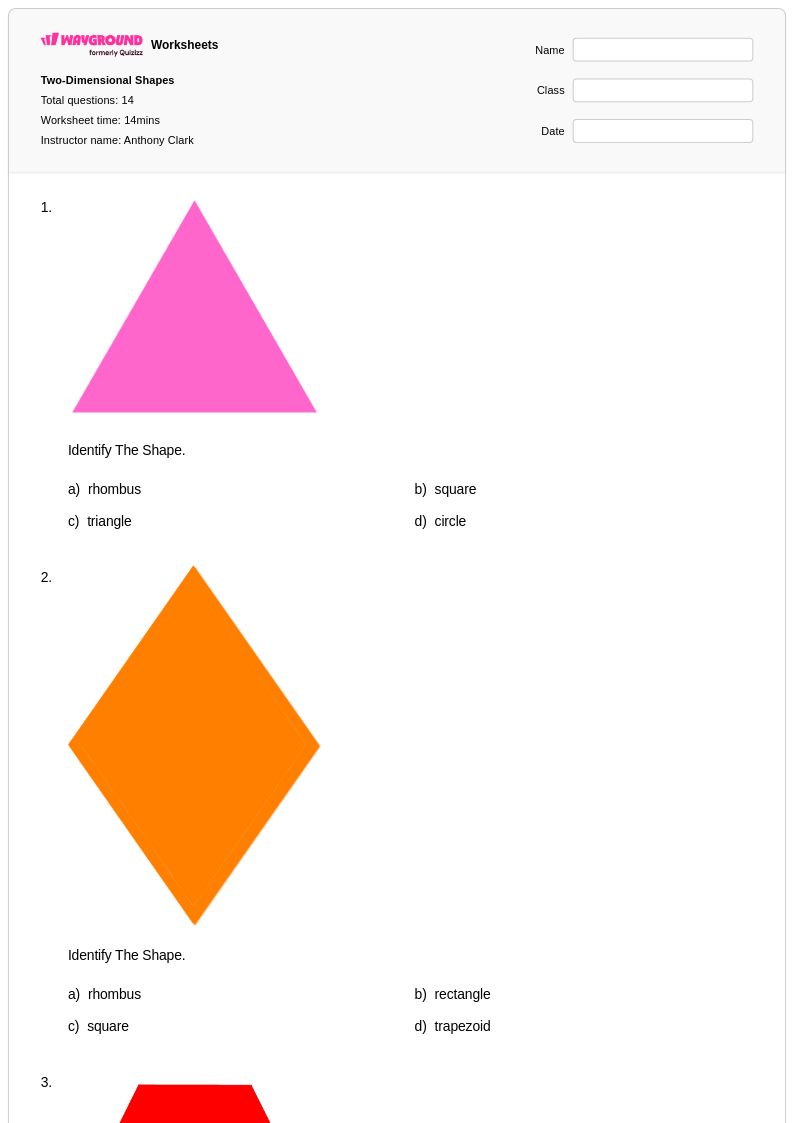
14 Q
1st - Uni
16 Q
1st - Uni
20 Q
1st - 2nd
10 Q
1st
20 Q
1st - 3rd
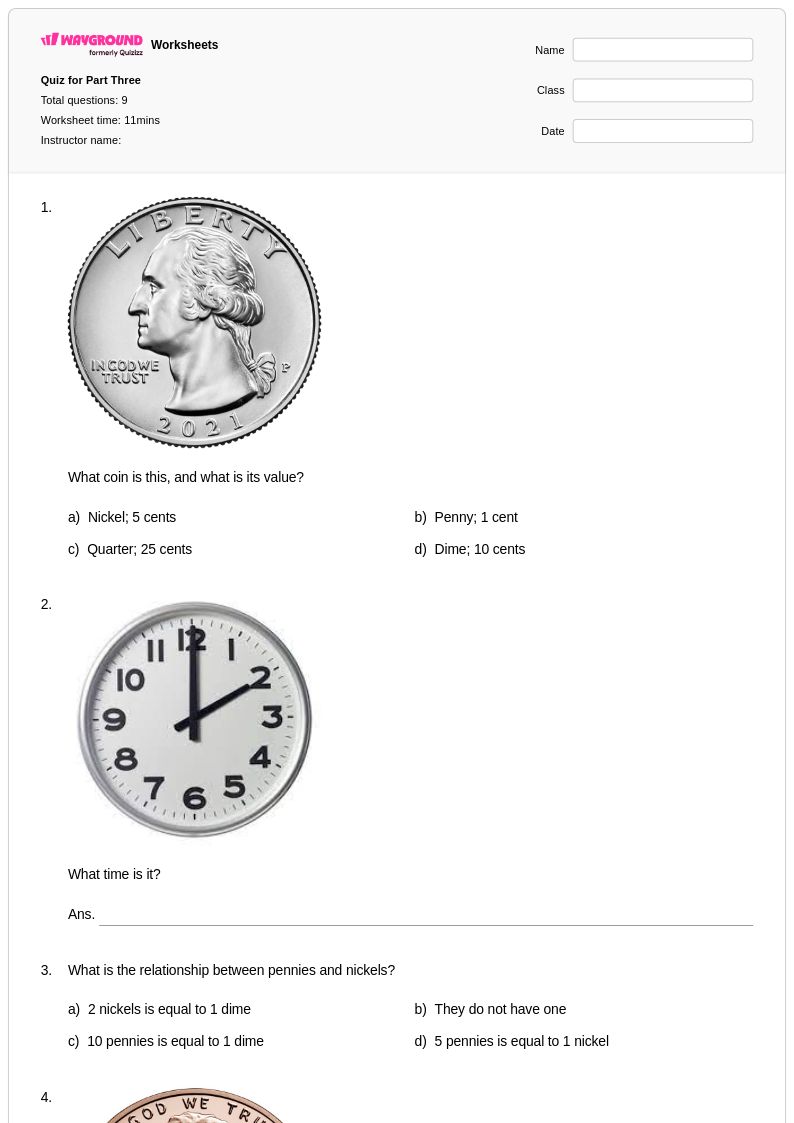
9 Q
1st
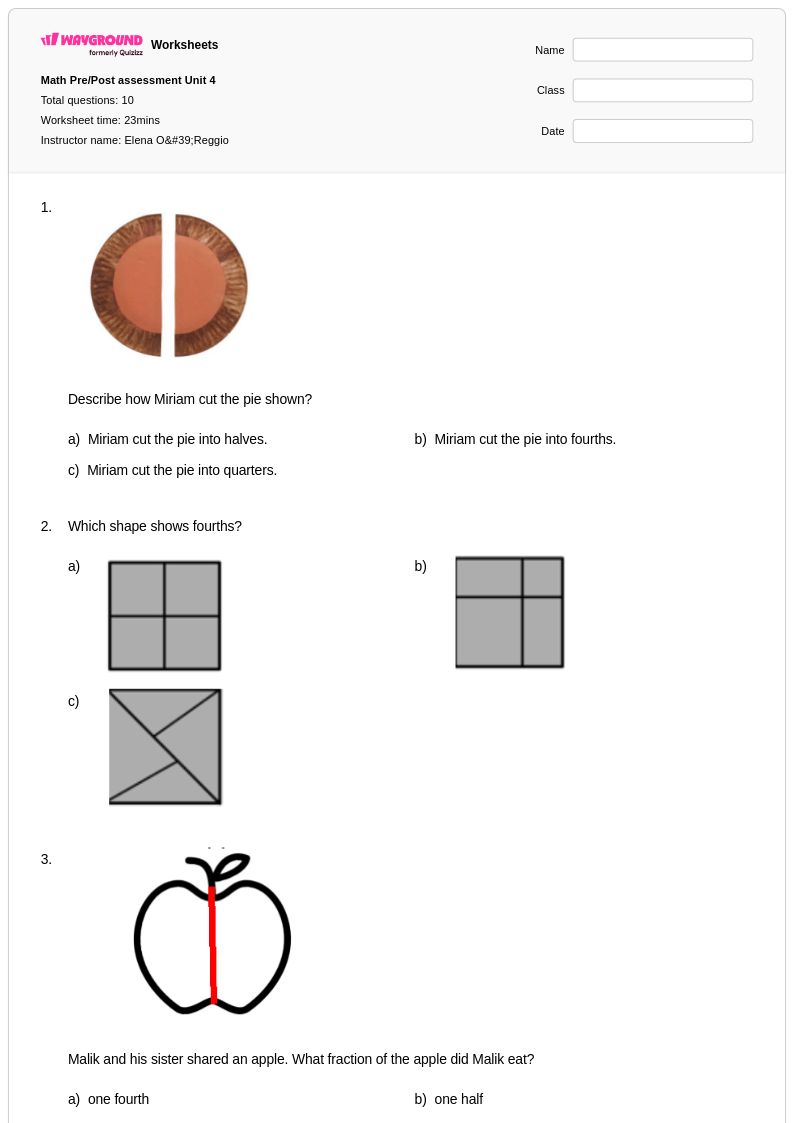
10 Q
1st
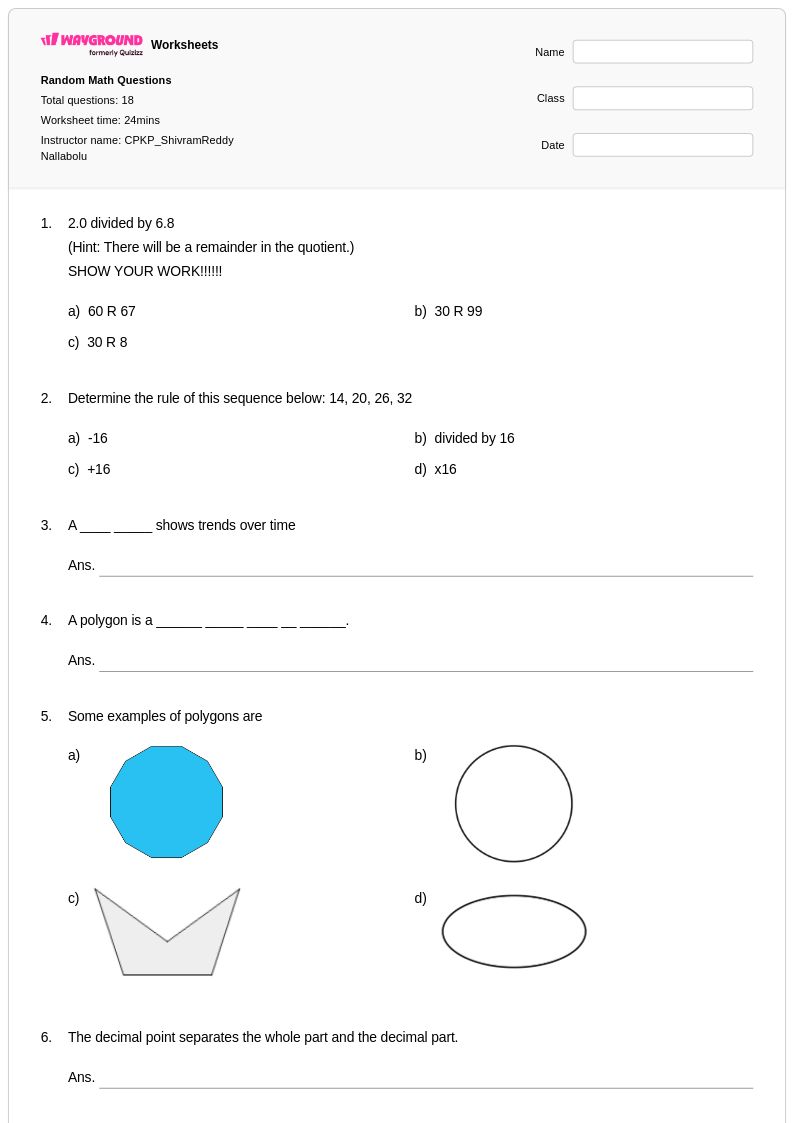
20 Q
1st - 5th
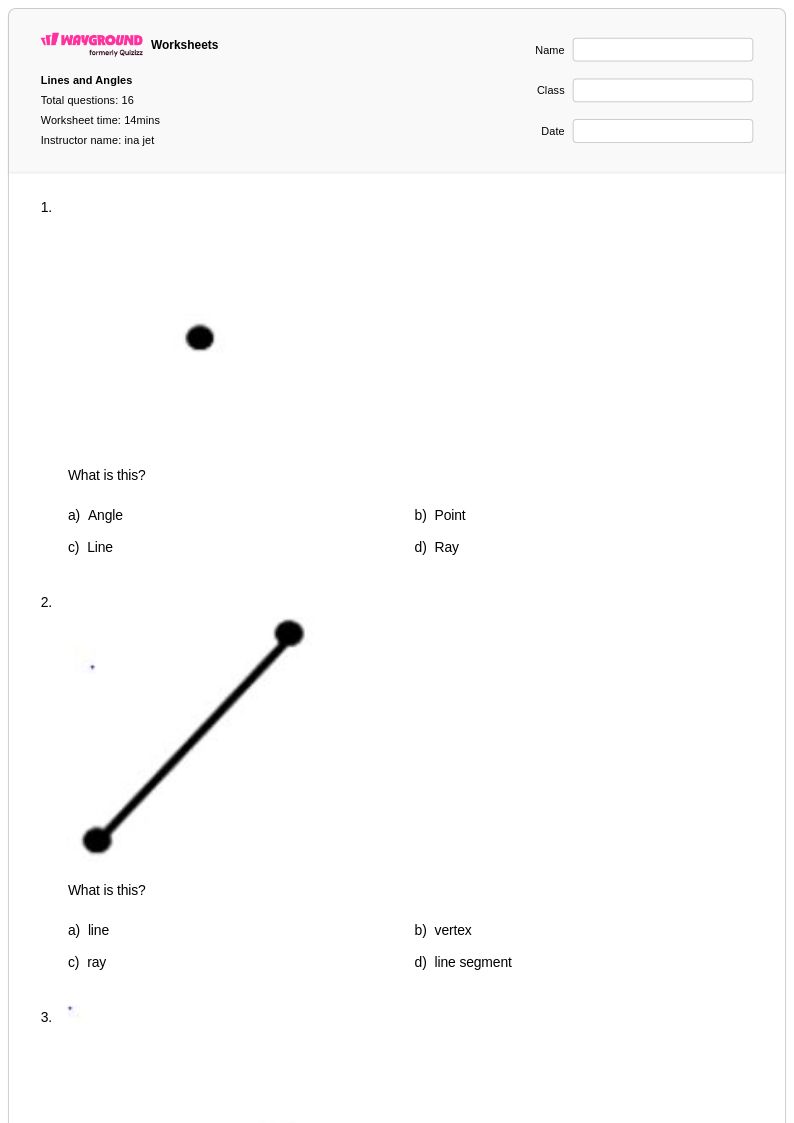
16 Q
1st - 5th
Explore Three-dimensional Figures Worksheets by Grades
Explore Other Subject Worksheets for class 1
Explore printable Three-dimensional Figures worksheets for Class 1
Three-dimensional figures worksheets for Class 1 provide young learners with essential foundational experiences in spatial reasoning and geometric understanding. These carefully designed practice problems introduce first-grade students to basic 3D shapes such as cubes, spheres, cylinders, and rectangular prisms through engaging visual activities that develop shape recognition and spatial awareness skills. The free printable resources available through Wayground help students distinguish between flat and solid shapes, identify three-dimensional objects in their environment, and begin understanding fundamental geometric properties. Each worksheet includes comprehensive answer keys that enable teachers to efficiently assess student progress, while the pdf format ensures consistent printing quality for classroom distribution and take-home practice.
Wayground supports educators with an extensive collection of teacher-created three-dimensional figures worksheets that streamline lesson planning and enhance geometric instruction for Class 1 classrooms. The platform's millions of educational resources feature robust search and filtering capabilities that allow teachers to quickly locate materials aligned with specific learning standards and curriculum requirements. Advanced differentiation tools enable instructors to customize worksheets for diverse learning needs, while the availability of both printable and digital formats, including downloadable pdf versions, provides flexibility for various teaching environments. These comprehensive features support effective remediation for struggling students, enrichment opportunities for advanced learners, and consistent skill practice that reinforces three-dimensional shape concepts throughout the academic year.