
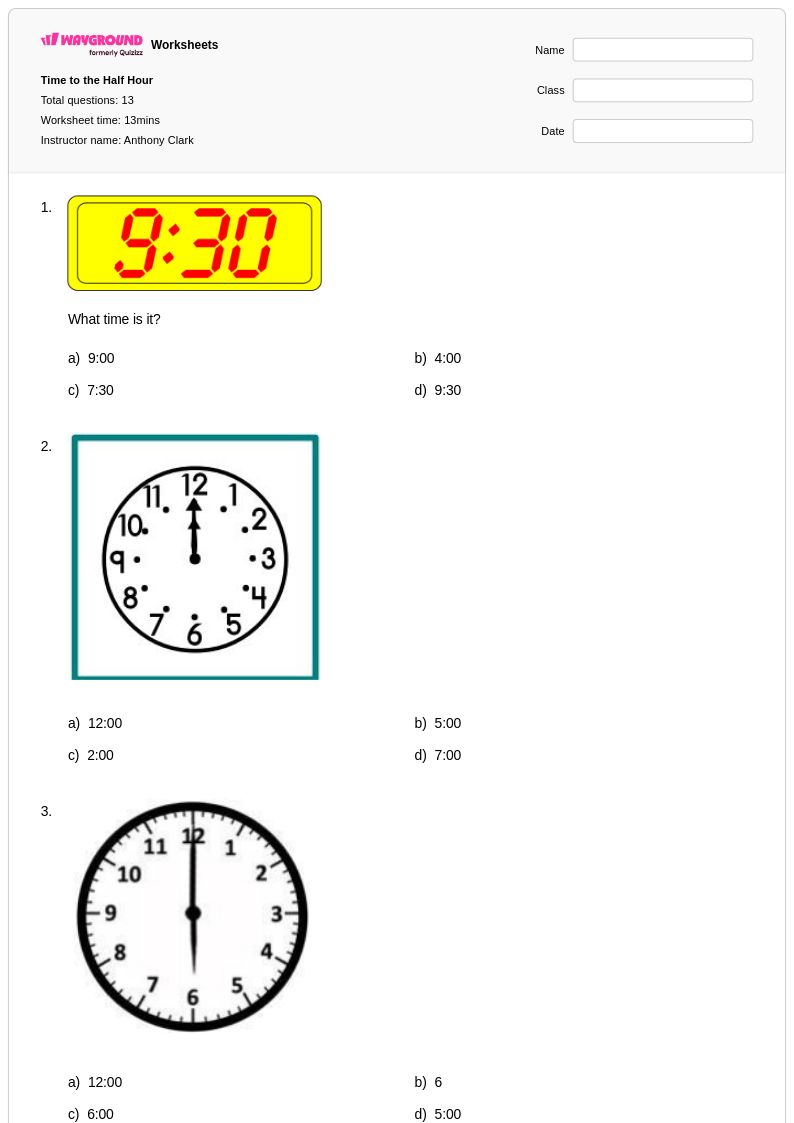
13 Q
1st - Uni
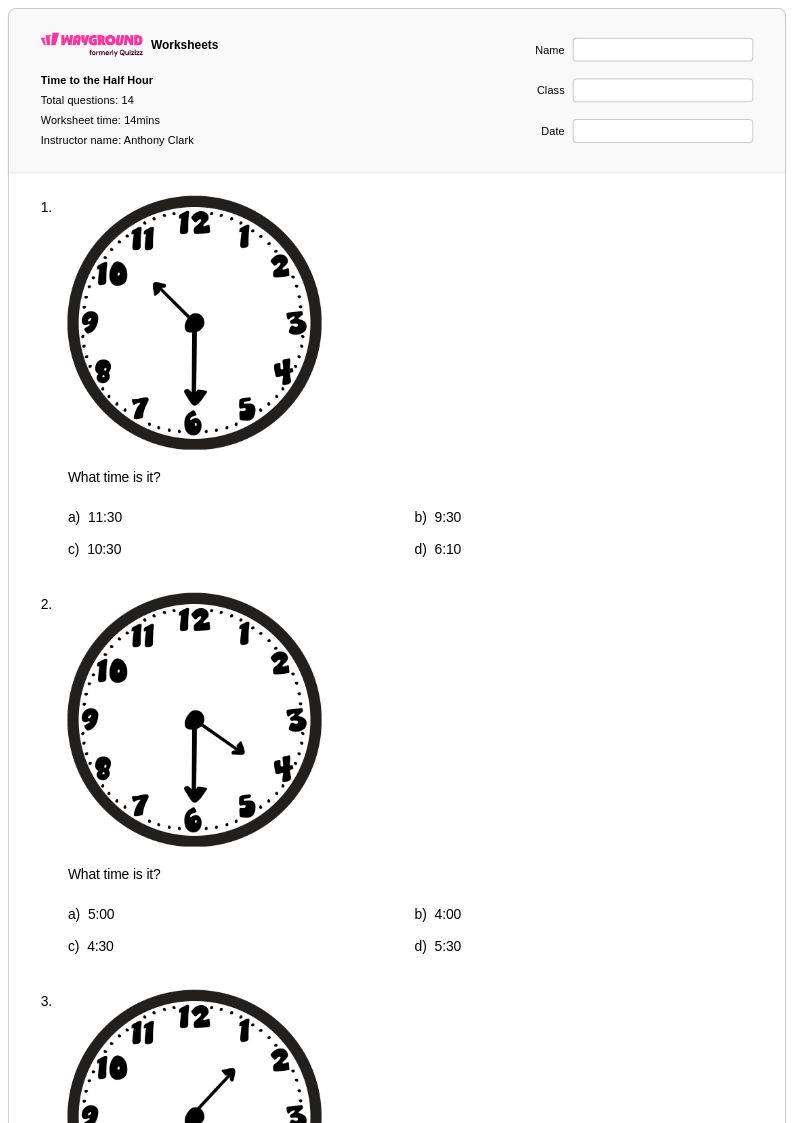
14 Q
1st - Uni
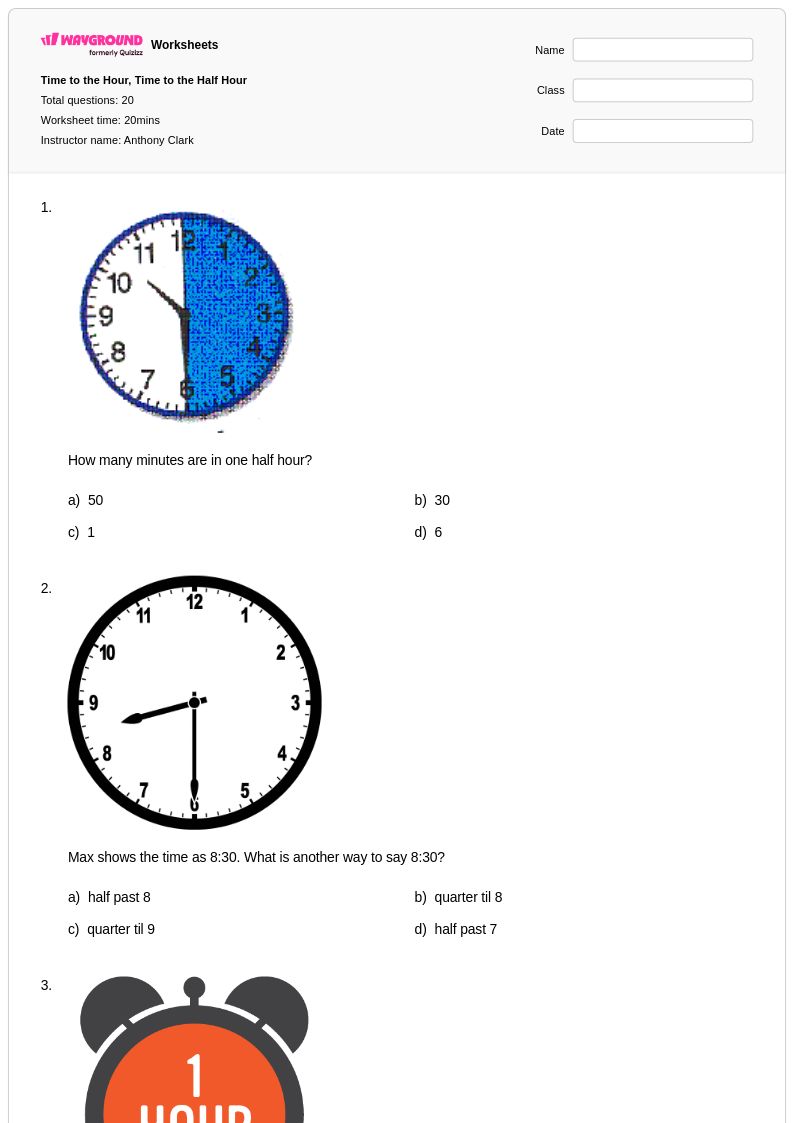
20 Q
2nd - Uni
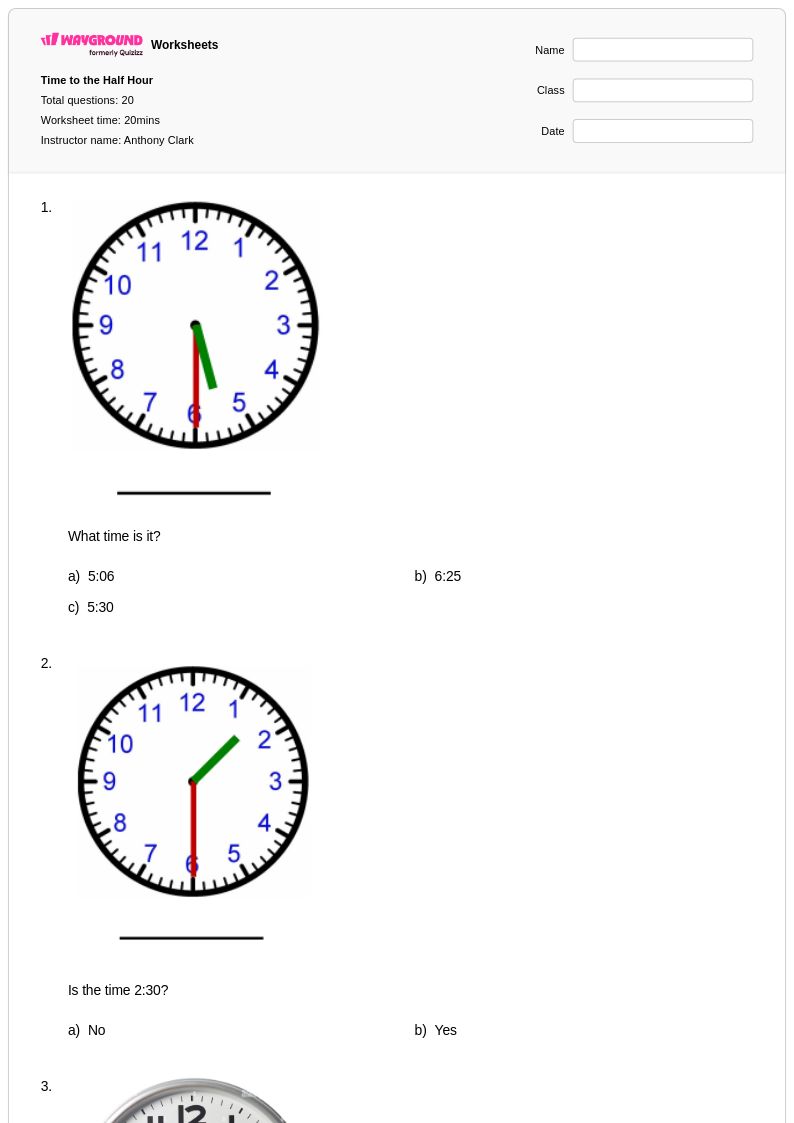
20 Q
1st - Uni
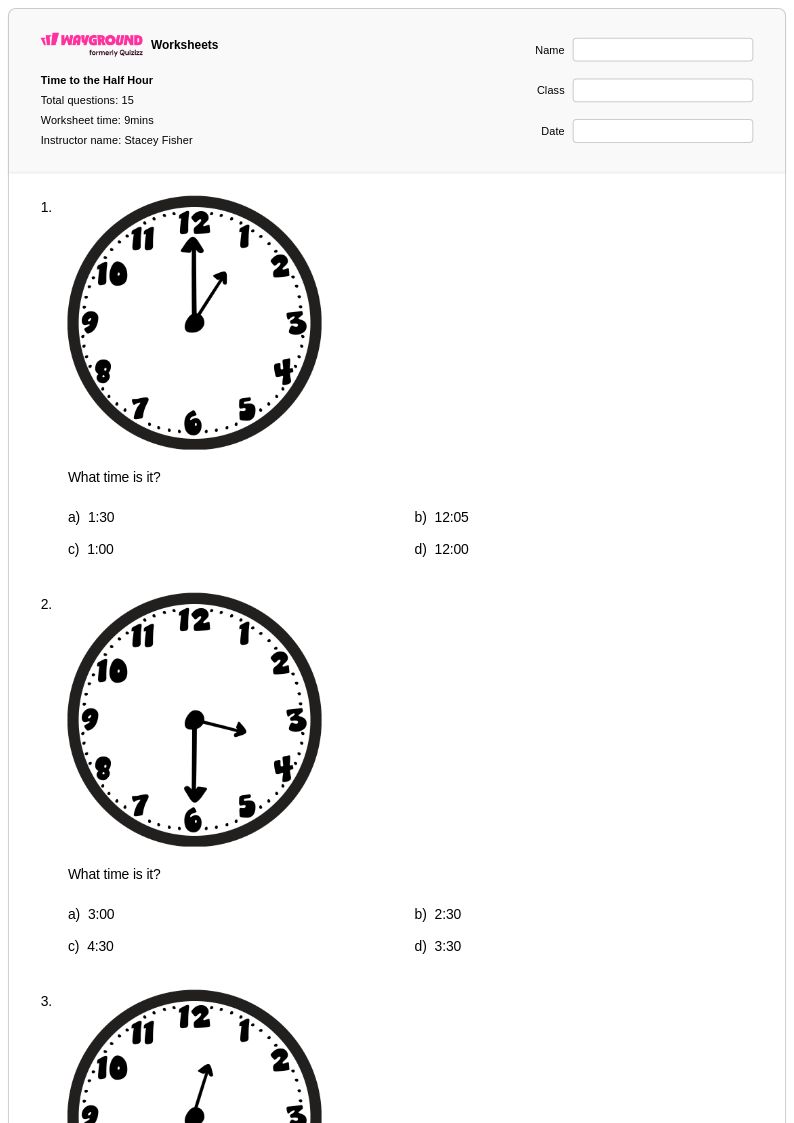
15 Q
1st - 3rd
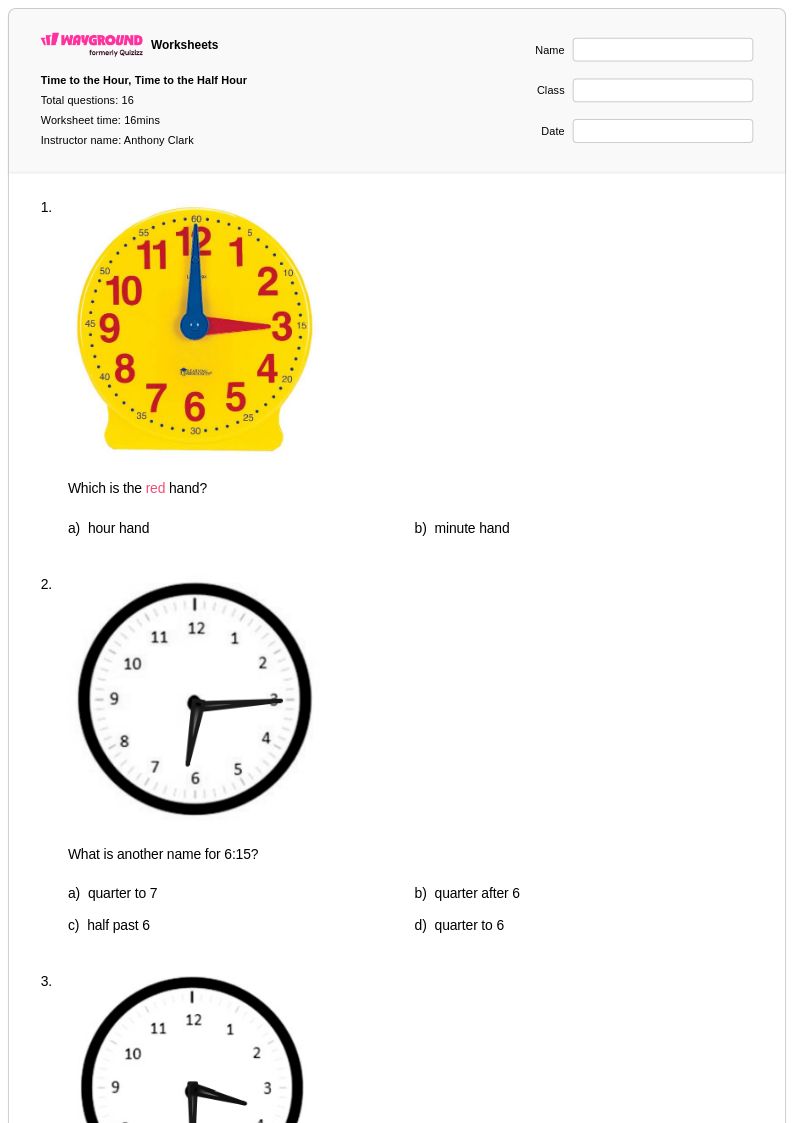
16 Q
2nd - Uni
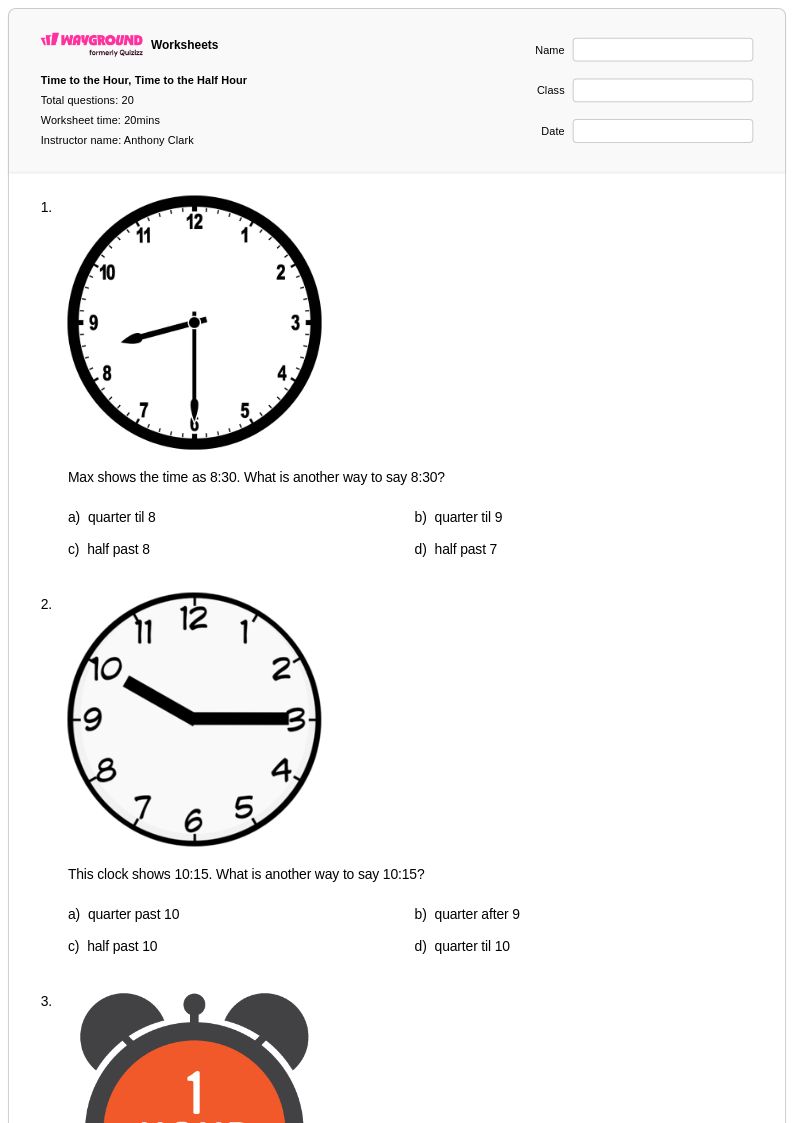
20 Q
2nd - Uni
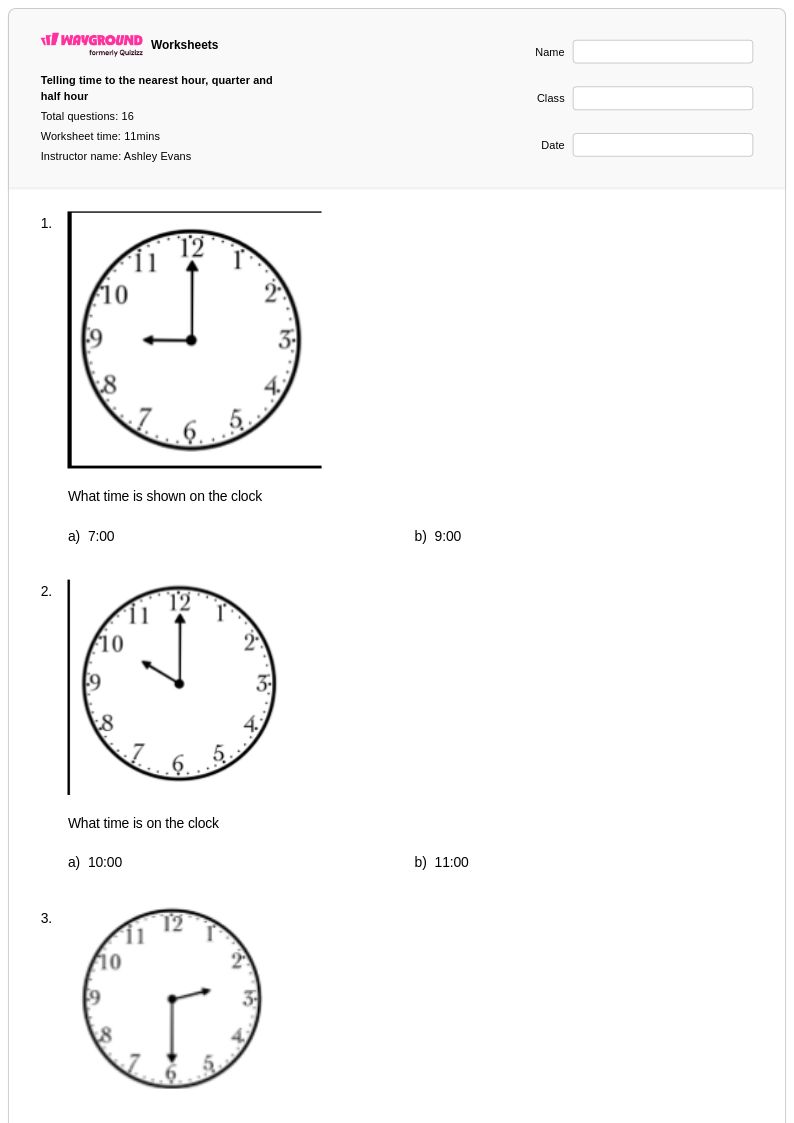
16 Q
3rd
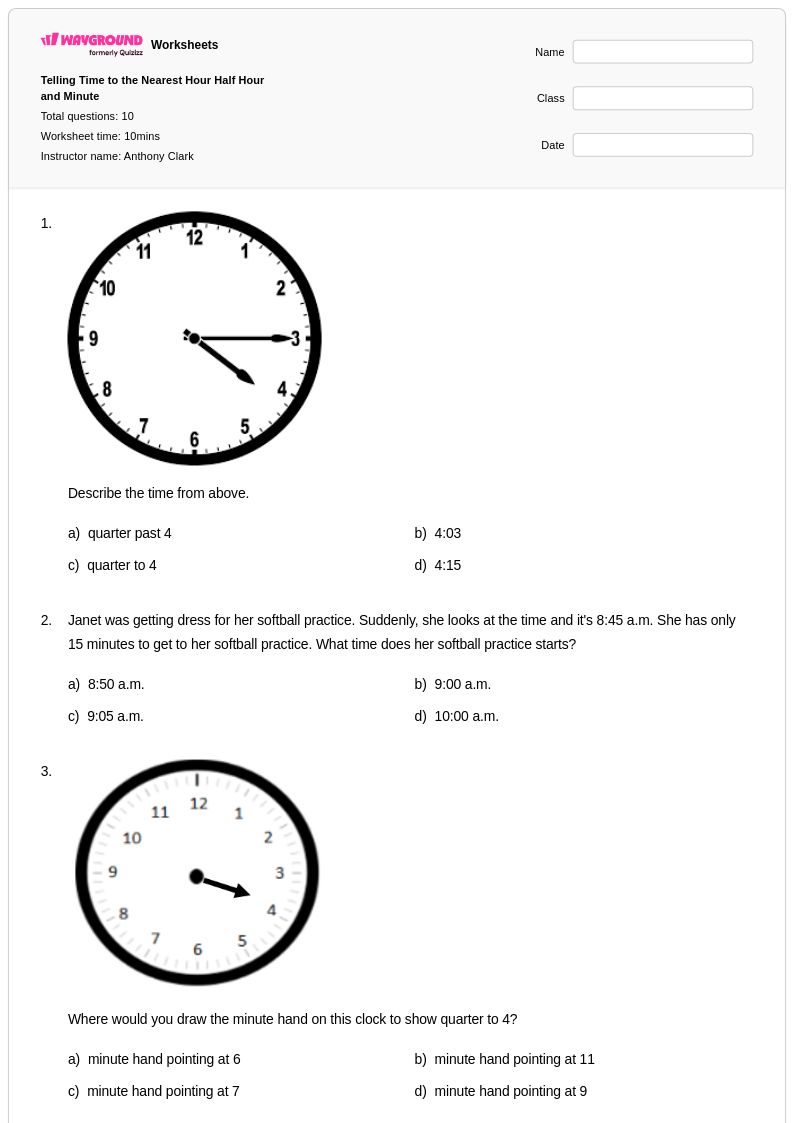
10 Q
3rd - Uni
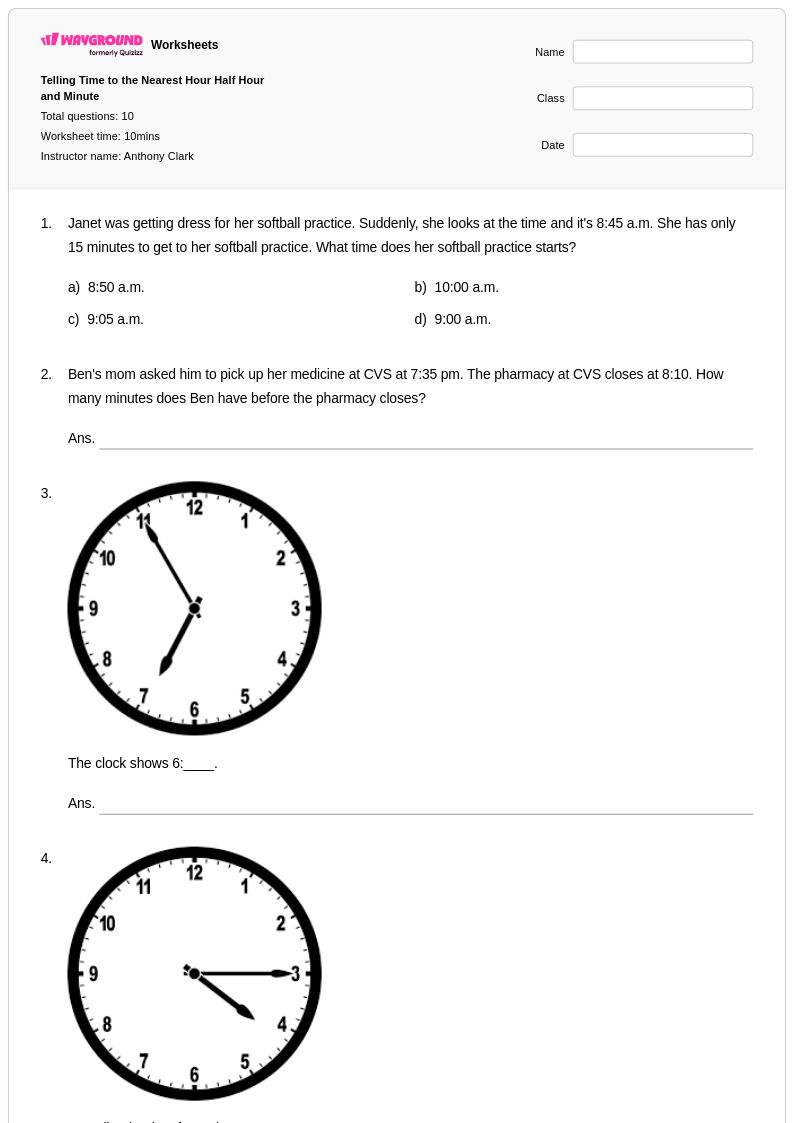
10 Q
3rd - Uni
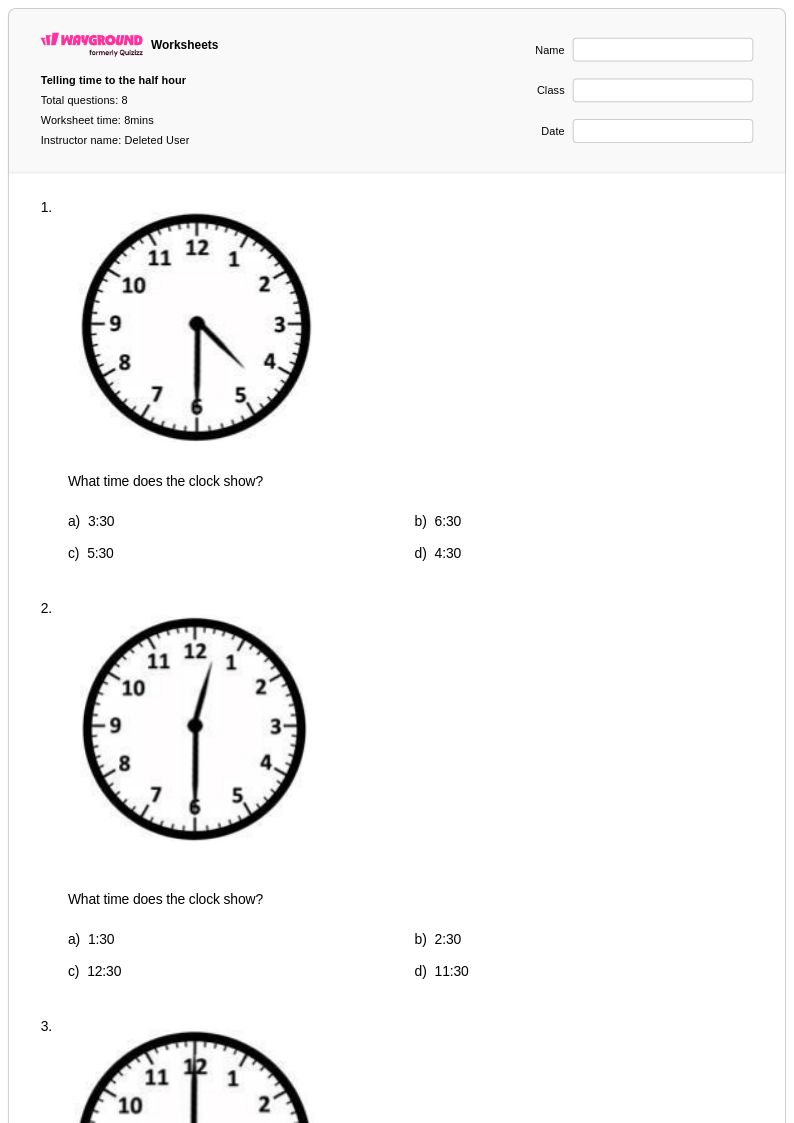
8 Q
2nd - 3rd
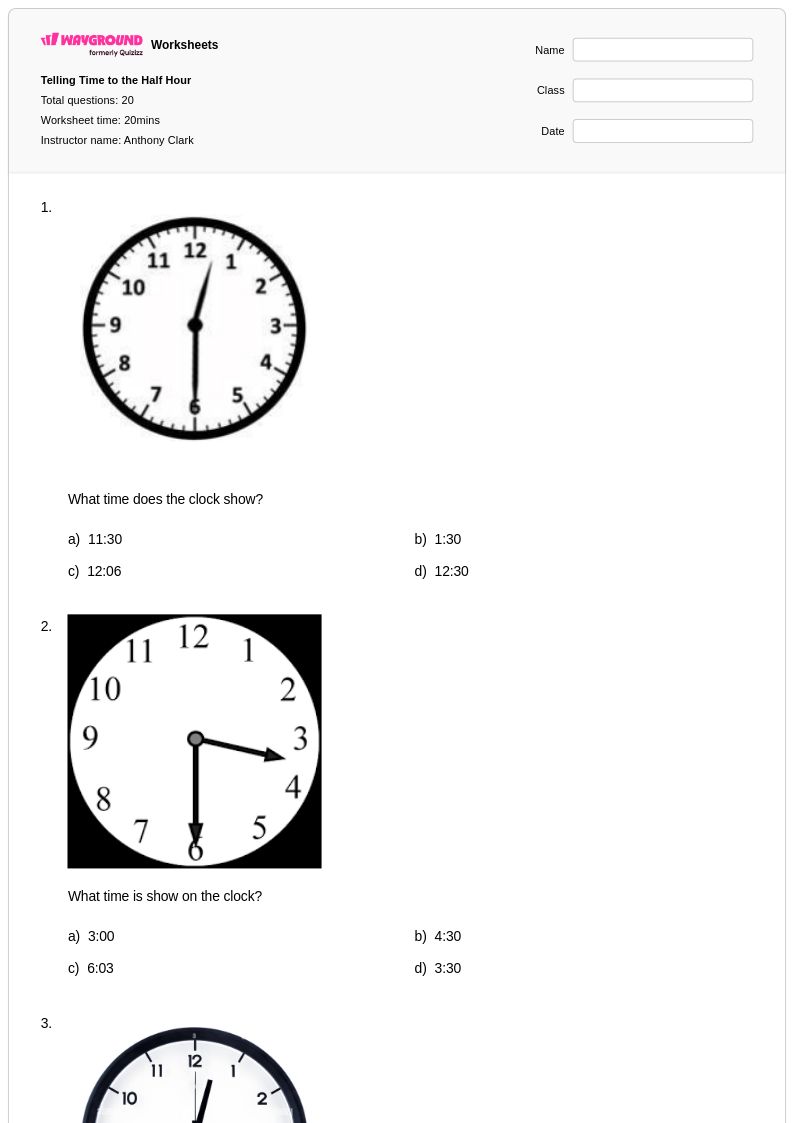
20 Q
1st - Uni
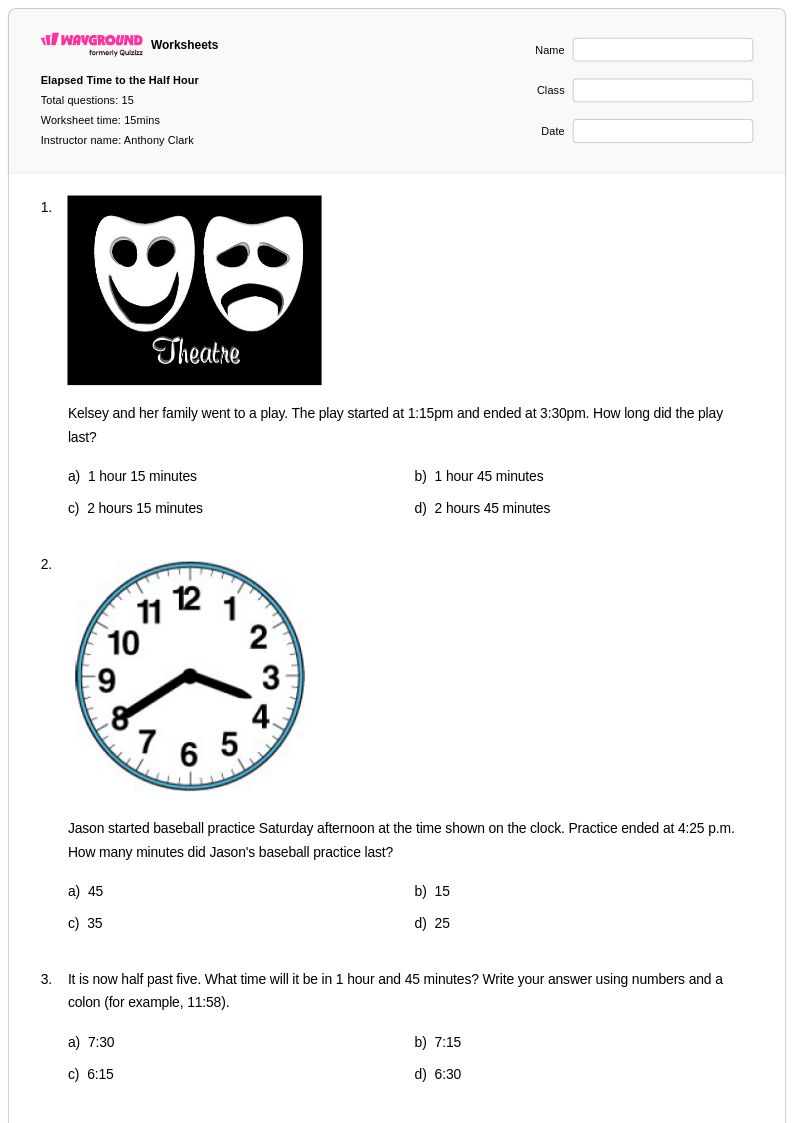
15 Q
3rd - Uni
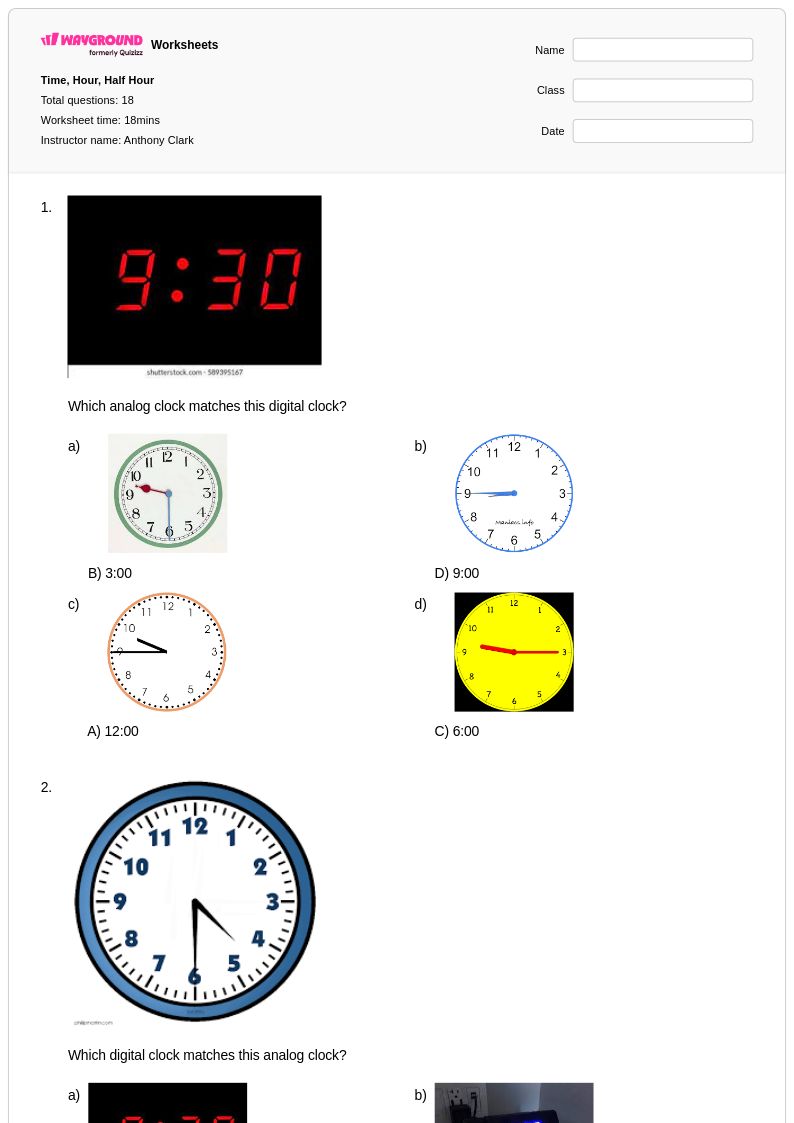
18 Q
2nd - Uni
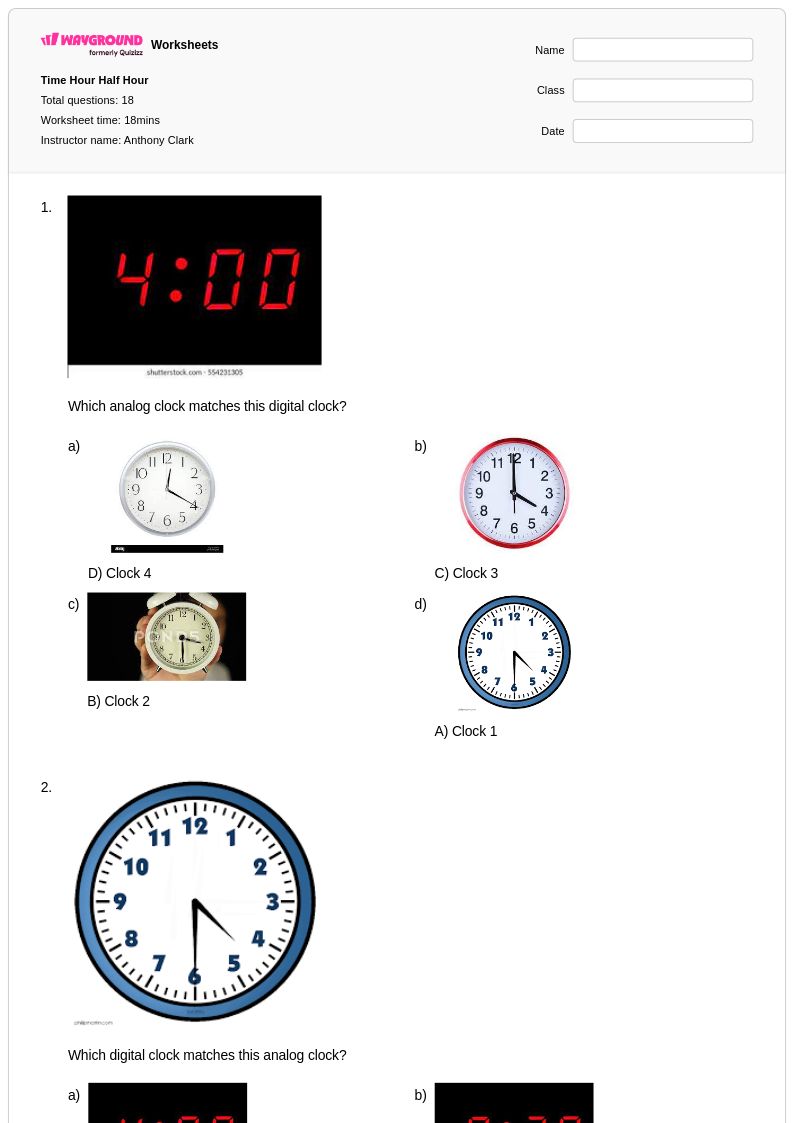
18 Q
2nd - Uni
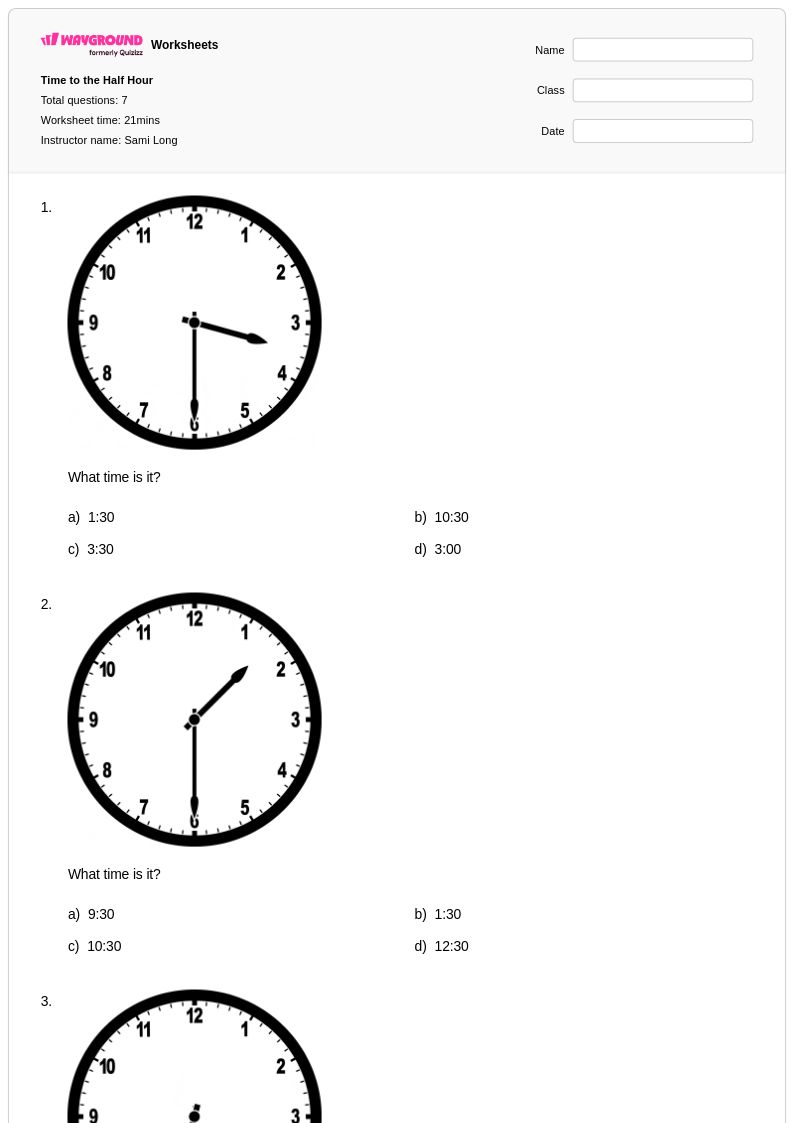
7 Q
1st - 5th
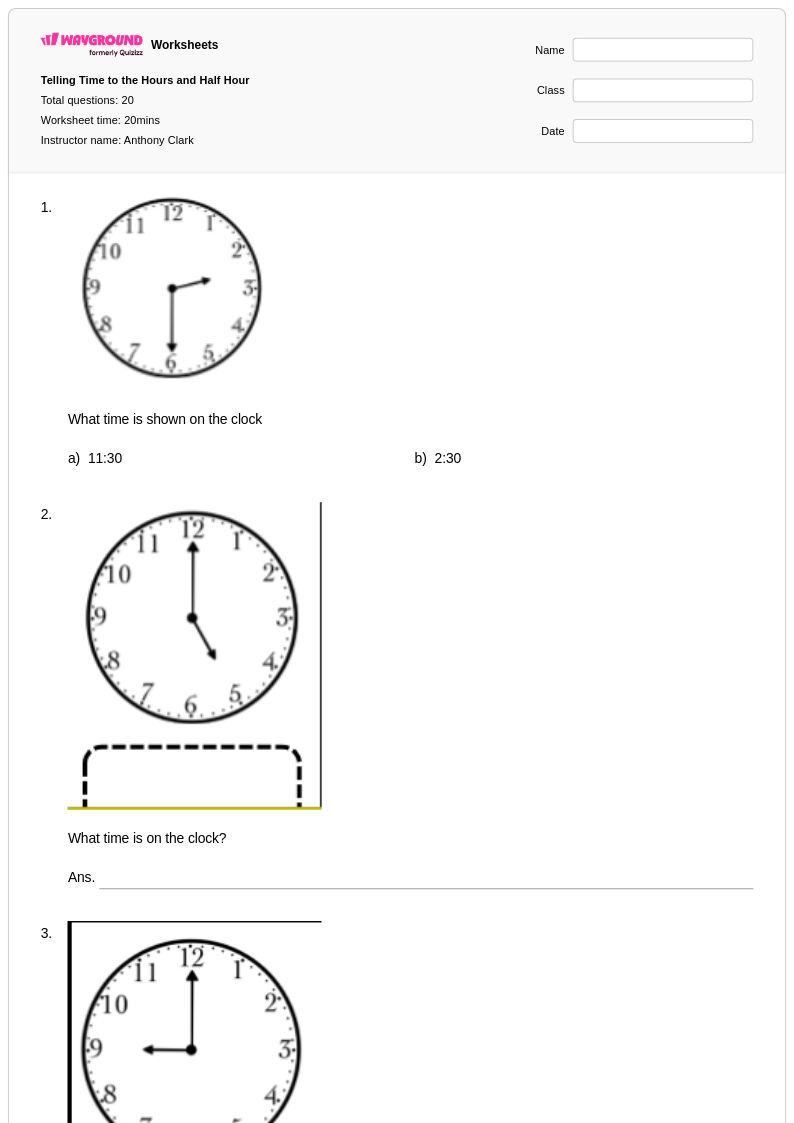
20 Q
1st - Uni
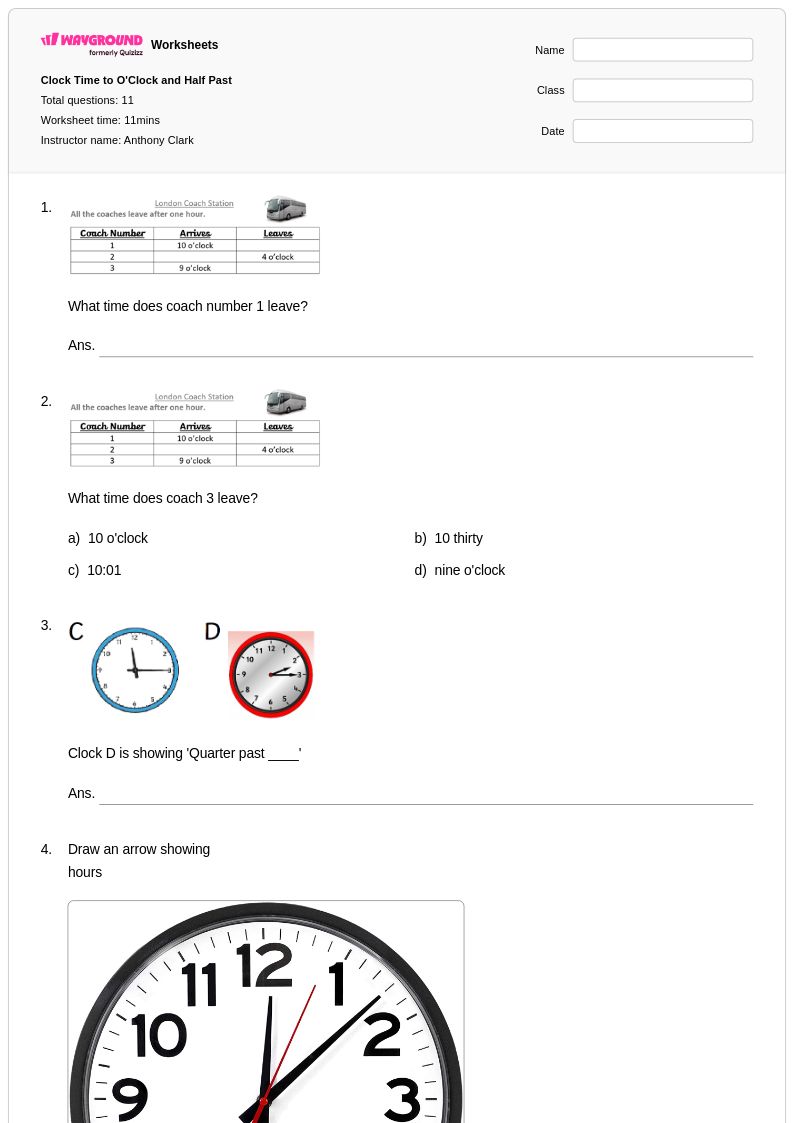
11 Q
3rd - Uni
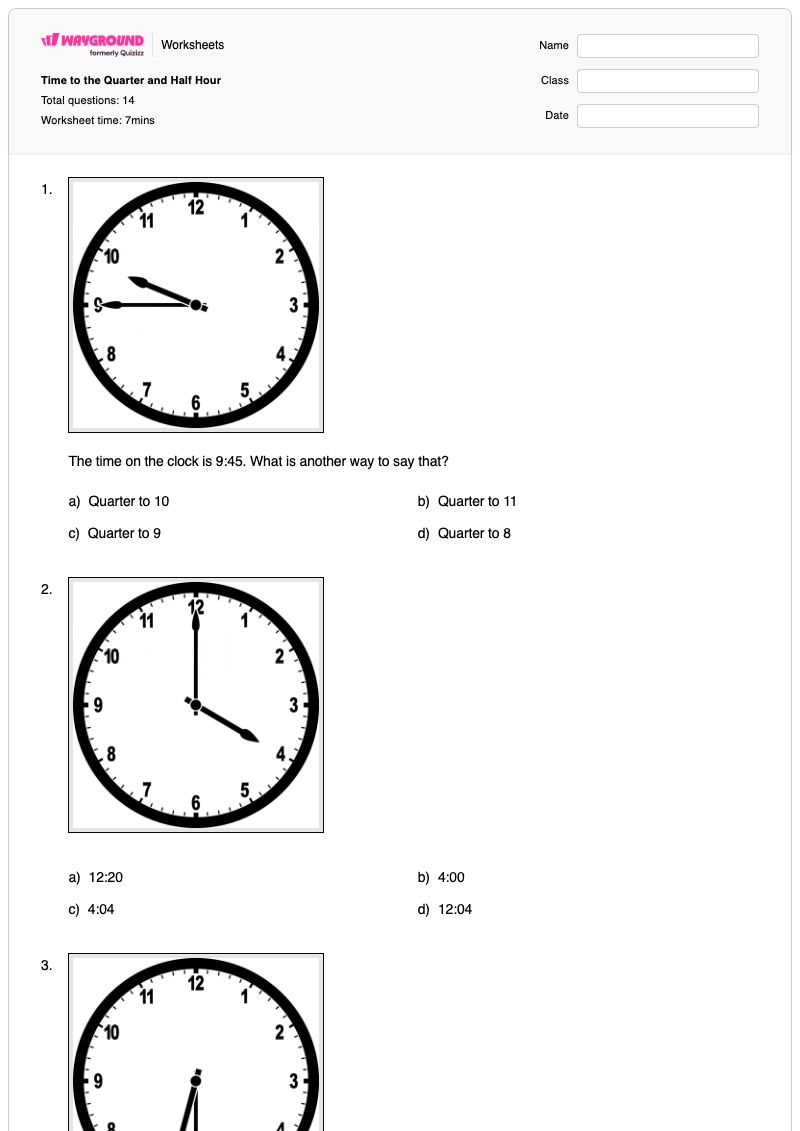
14 Q
3rd
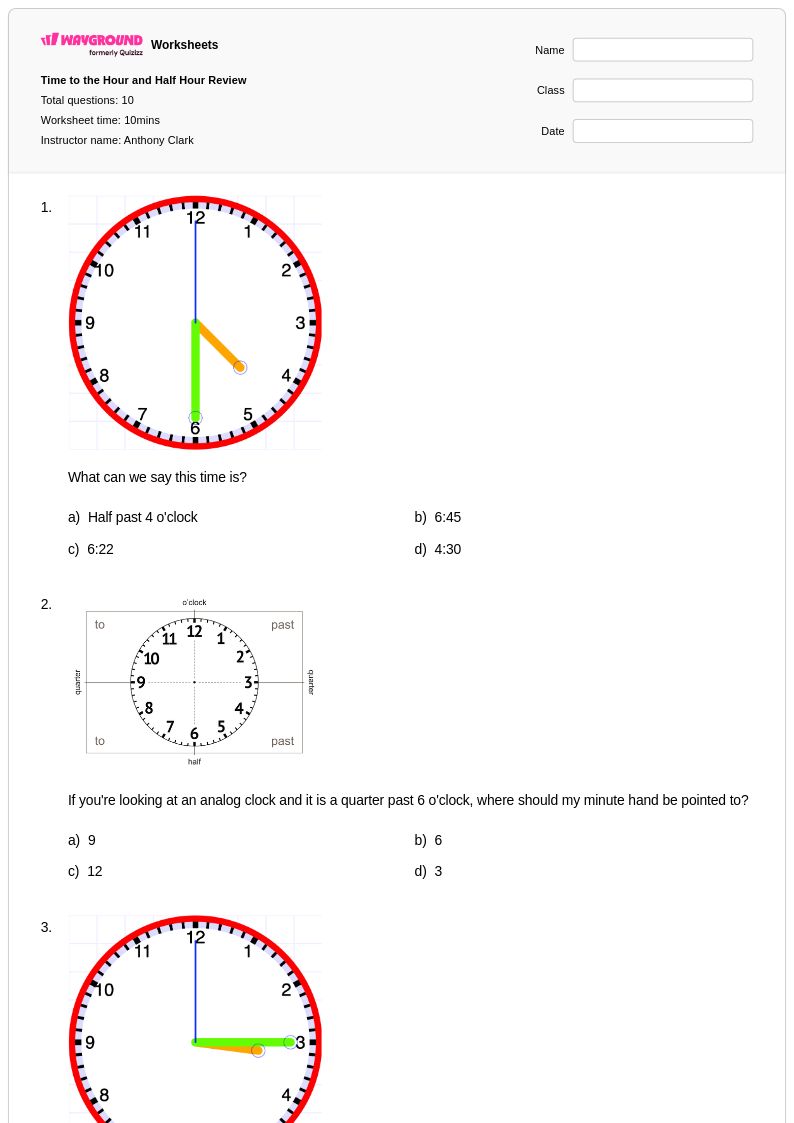
10 Q
1st - Uni
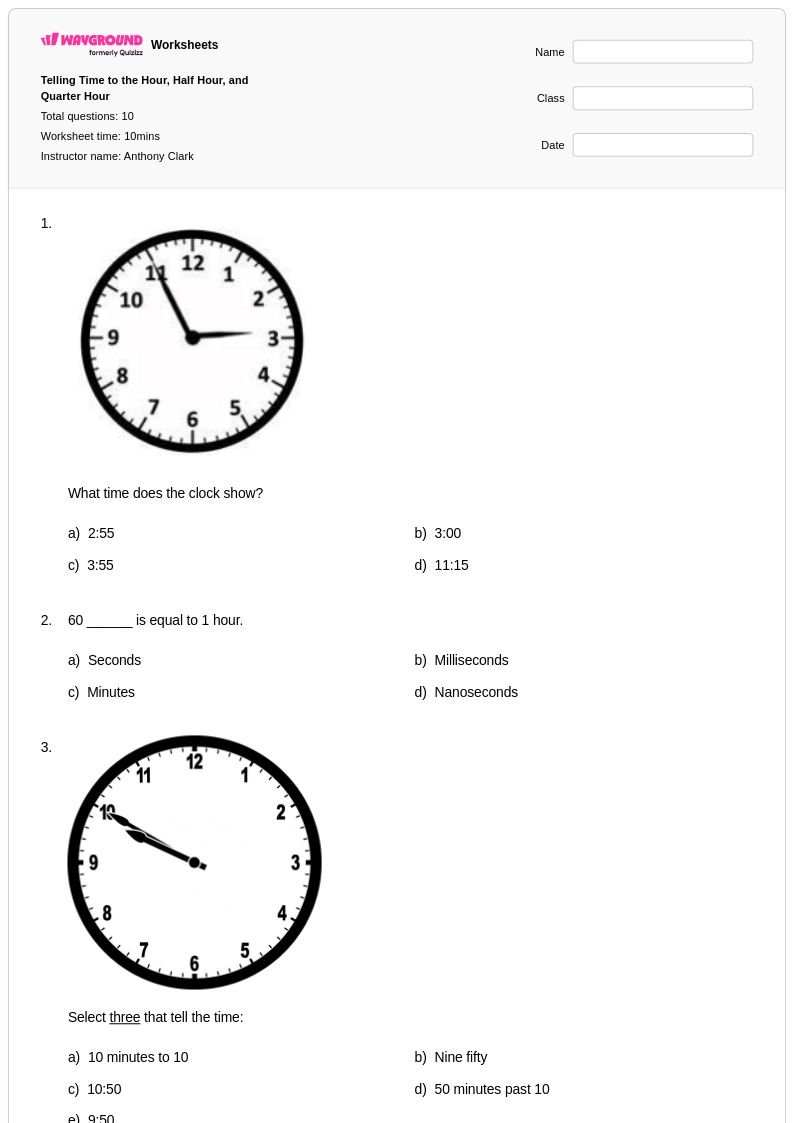
10 Q
3rd - Uni
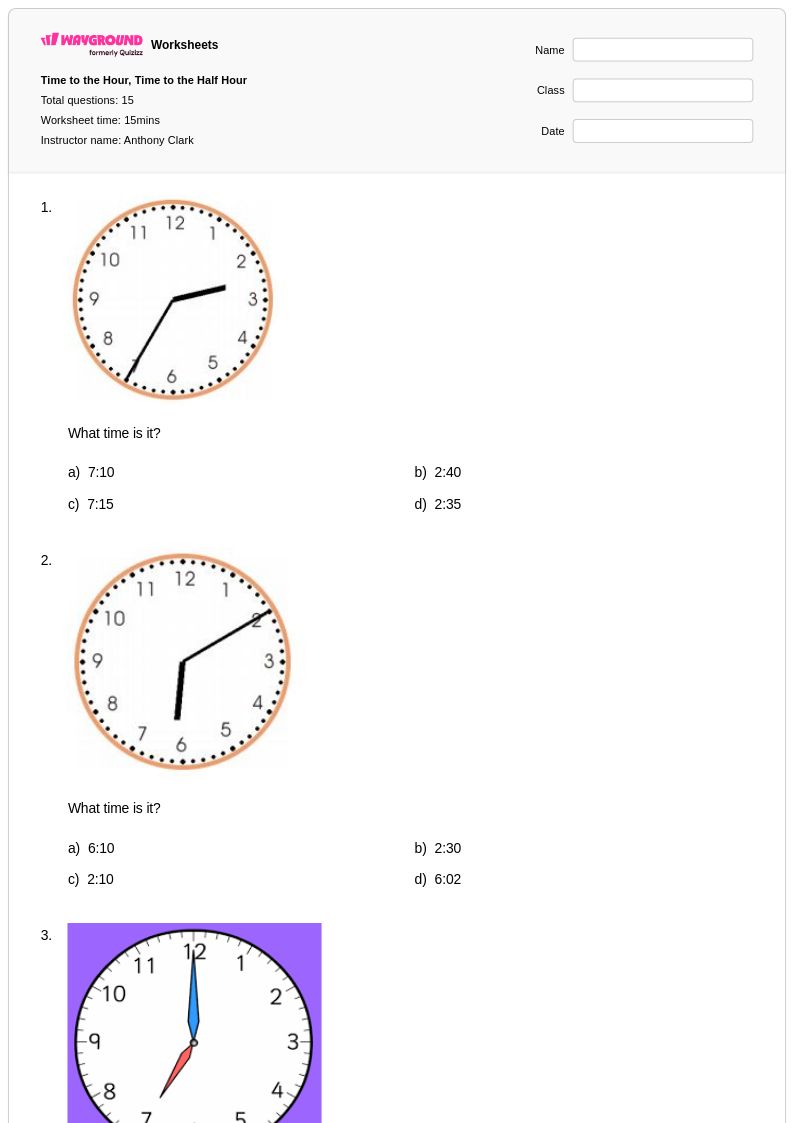
15 Q
2nd - Uni
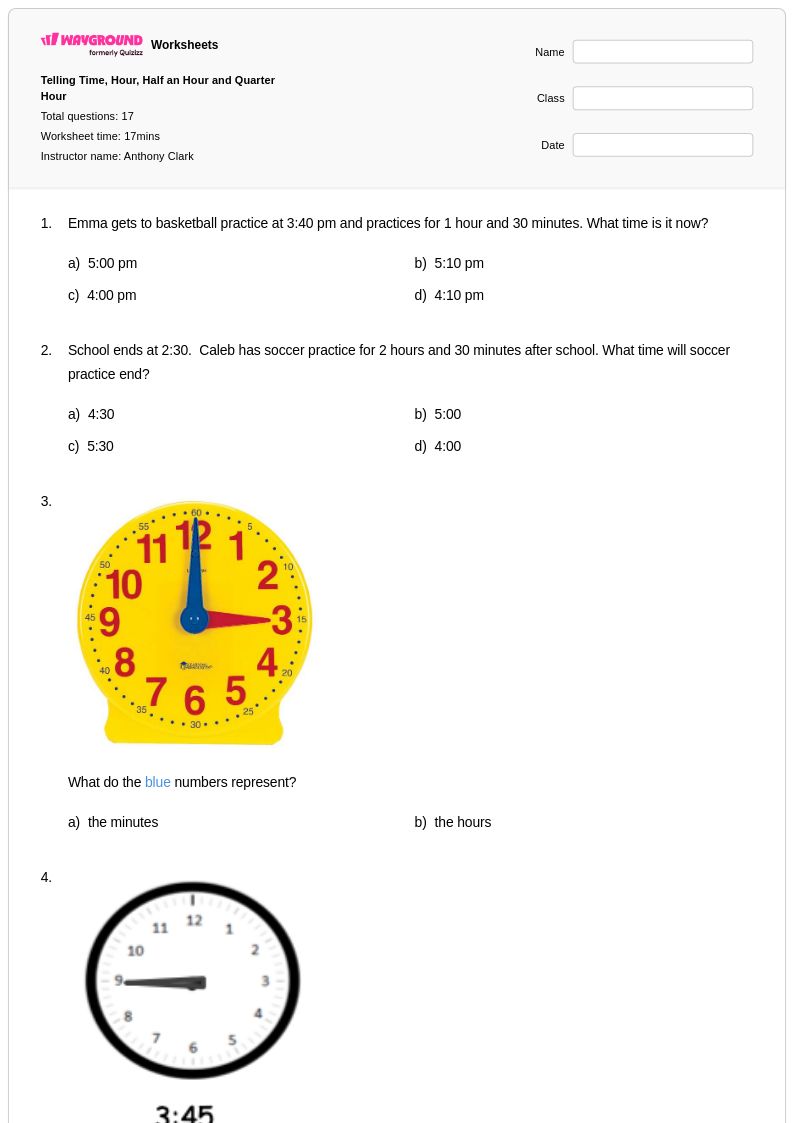
17 Q
3rd - Uni
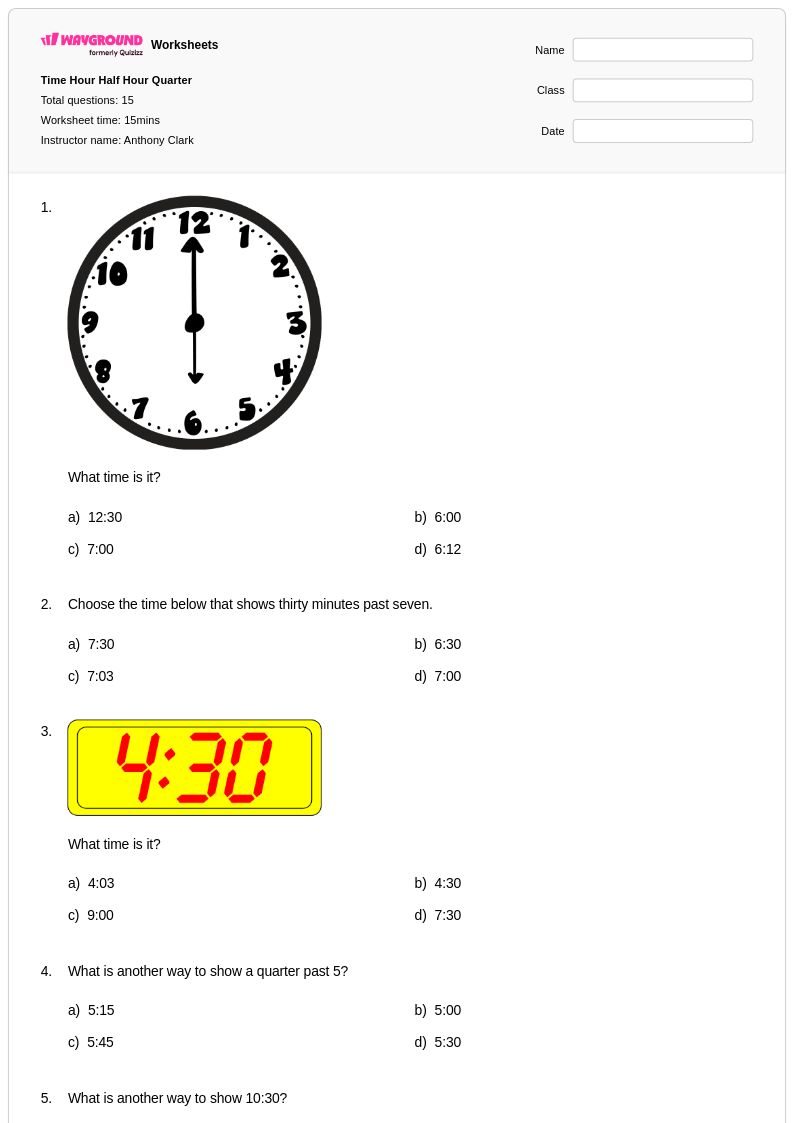
15 Q
2nd - Uni
Explore Time to the Half Hour Worksheets by Grades
Explore Other Subject Worksheets for class 3
Explore printable Time to the Half Hour worksheets for Class 3
Time to the Half Hour worksheets for Class 3 students available through Wayground (formerly Quizizz) provide comprehensive practice in reading and interpreting clocks that display time at 30-minute intervals. These carefully designed printables strengthen essential temporal reasoning skills by helping students master the relationship between hour and minute hands when they form half-hour positions on analog clocks. The practice problems systematically guide learners through recognizing patterns such as the minute hand pointing to the 6 and the hour hand positioned halfway between consecutive numbers. Each free worksheet collection includes detailed answer keys that support independent learning and self-assessment, while the pdf format ensures consistent formatting across different devices and printing scenarios.
Wayground's extensive library features millions of teacher-created resources specifically targeting time concepts, with robust search and filtering capabilities that allow educators to quickly locate Class 3 appropriate materials aligned with mathematical standards for time measurement. The platform's differentiation tools enable teachers to customize worksheets based on individual student needs, whether providing additional scaffolding for struggling learners or offering enrichment activities for advanced students ready to tackle more complex time intervals. These flexible resources are available in both printable and digital formats, making them ideal for classroom instruction, homework assignments, remediation sessions, and skill-building practice that can be seamlessly integrated into existing mathematics curricula focused on developing foundational time-telling competencies.