
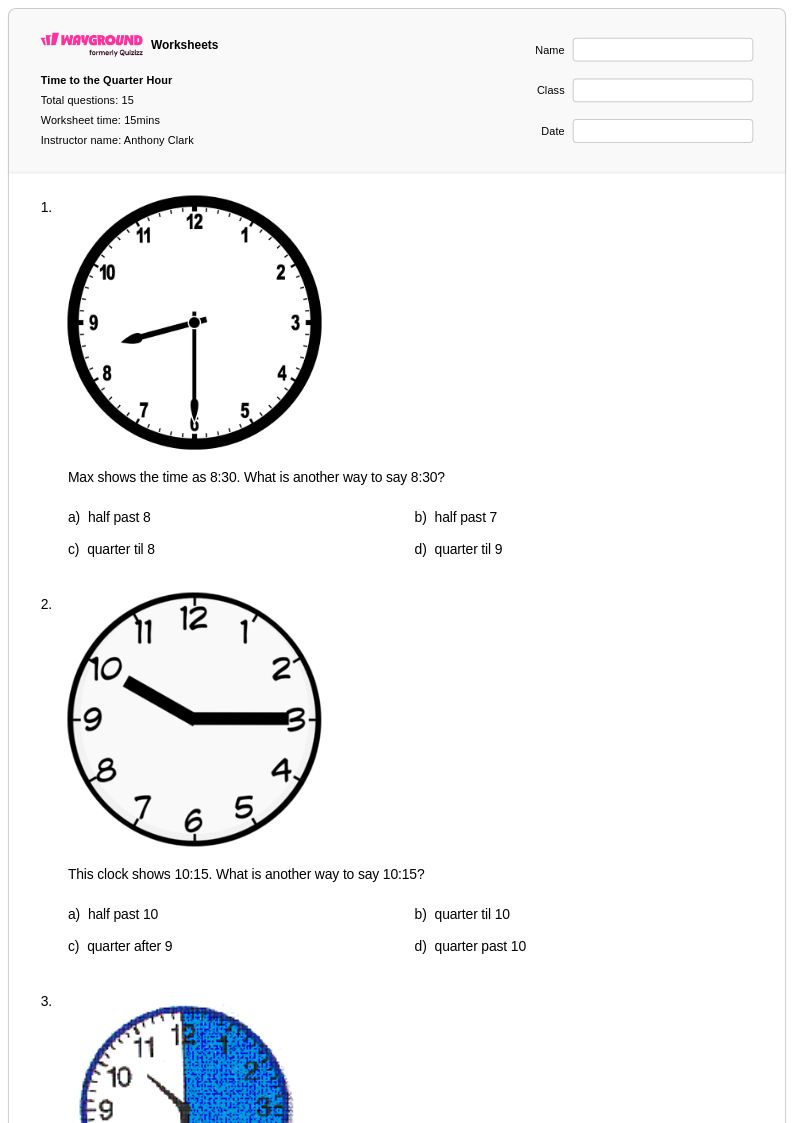
15 Q
2nd - Uni
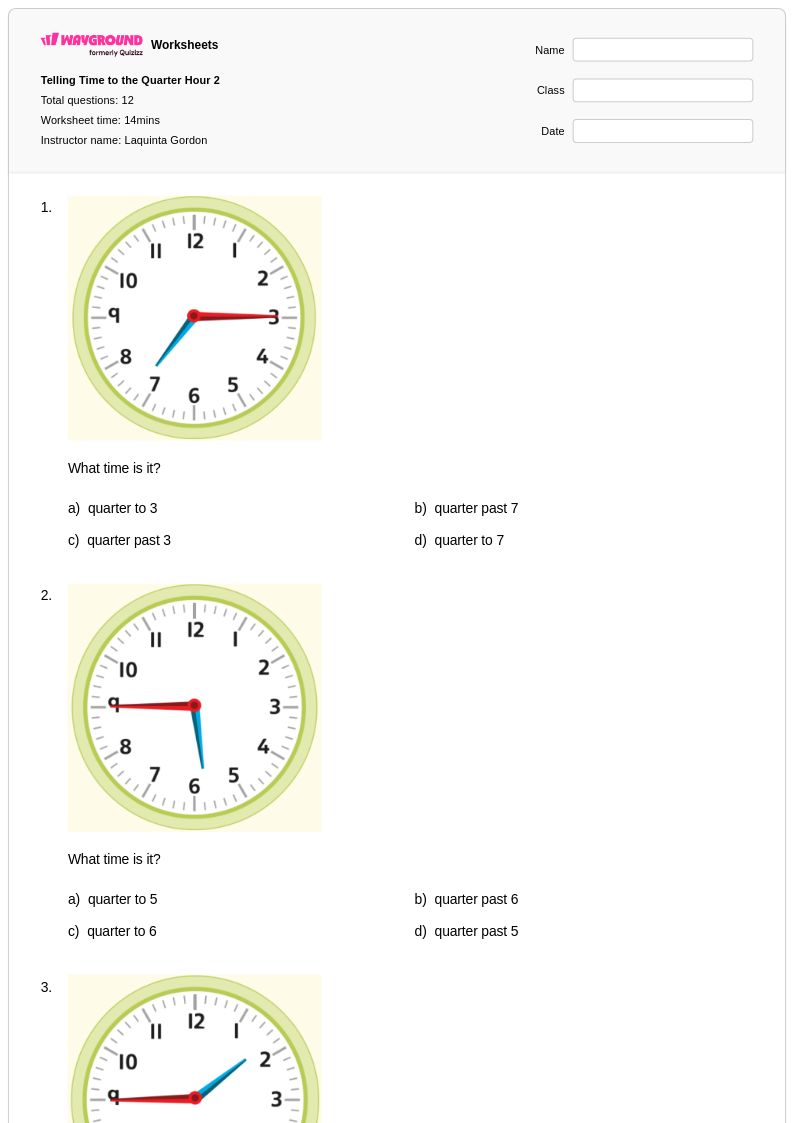
12 Q
3rd
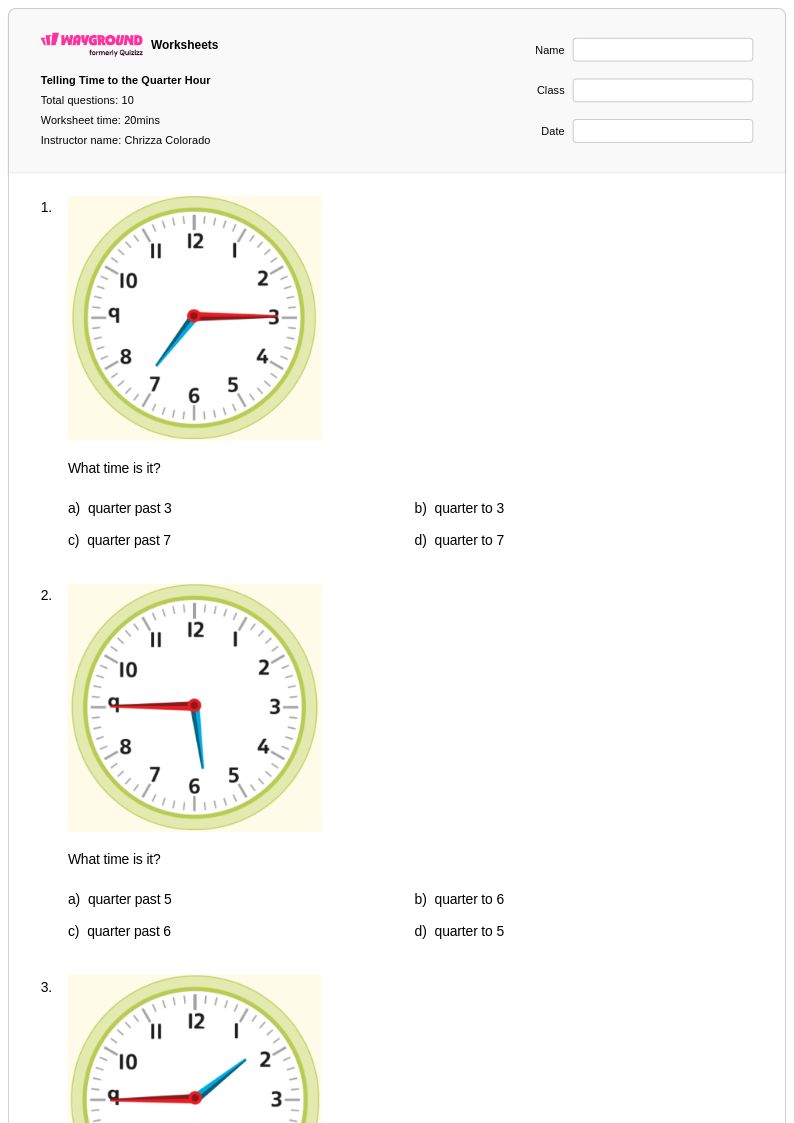
10 Q
2nd - 3rd
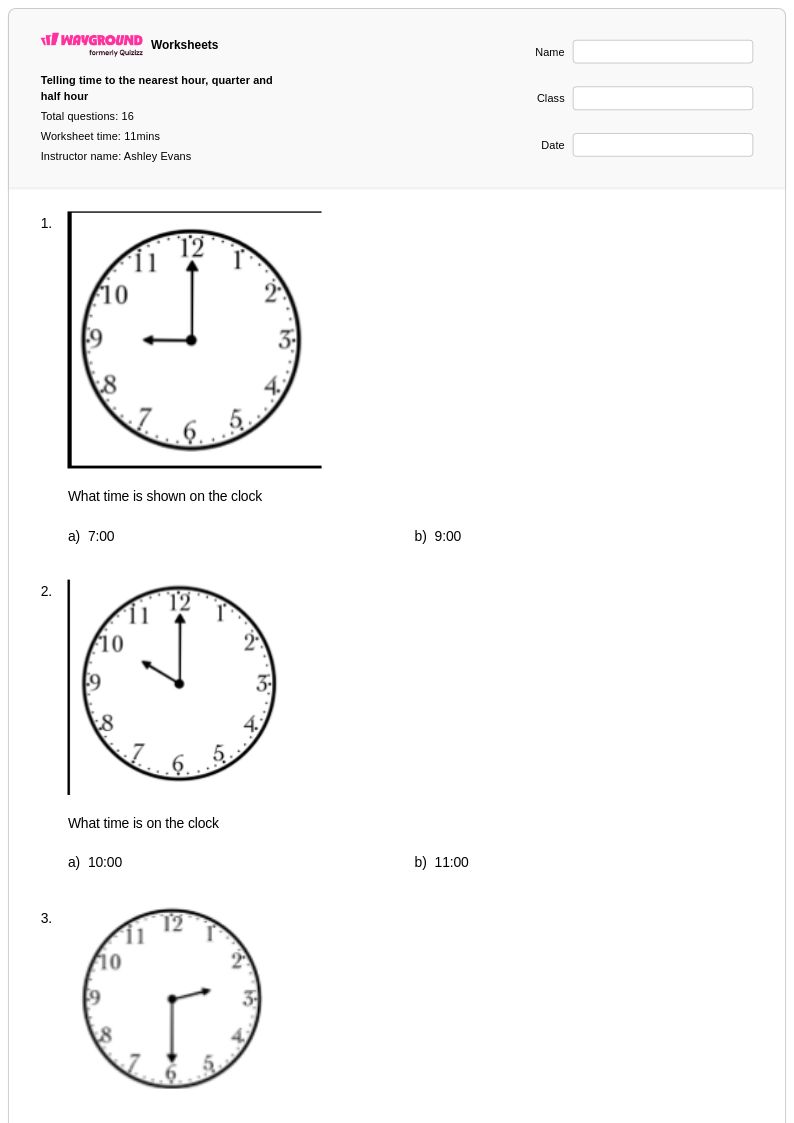
16 Q
3rd
17 Q
3rd - Uni
25 Q
2nd - 4th
15 Q
3rd
14 Q
3rd
10 Q
3rd - Uni
15 Q
2nd - Uni
20 Q
2nd - Uni
20 Q
3rd - Uni
20 Q
3rd - Uni
20 Q
3rd - Uni
18 Q
3rd
20 Q
3rd - Uni
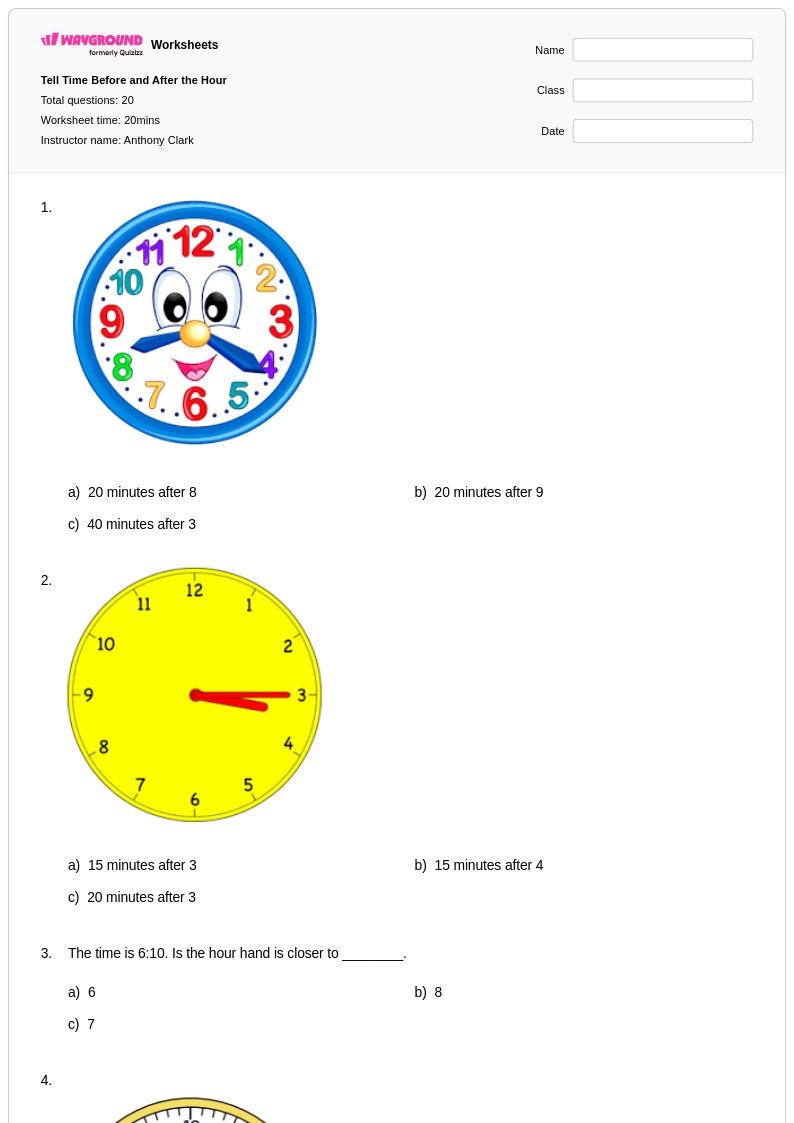
20 Q
3rd - Uni
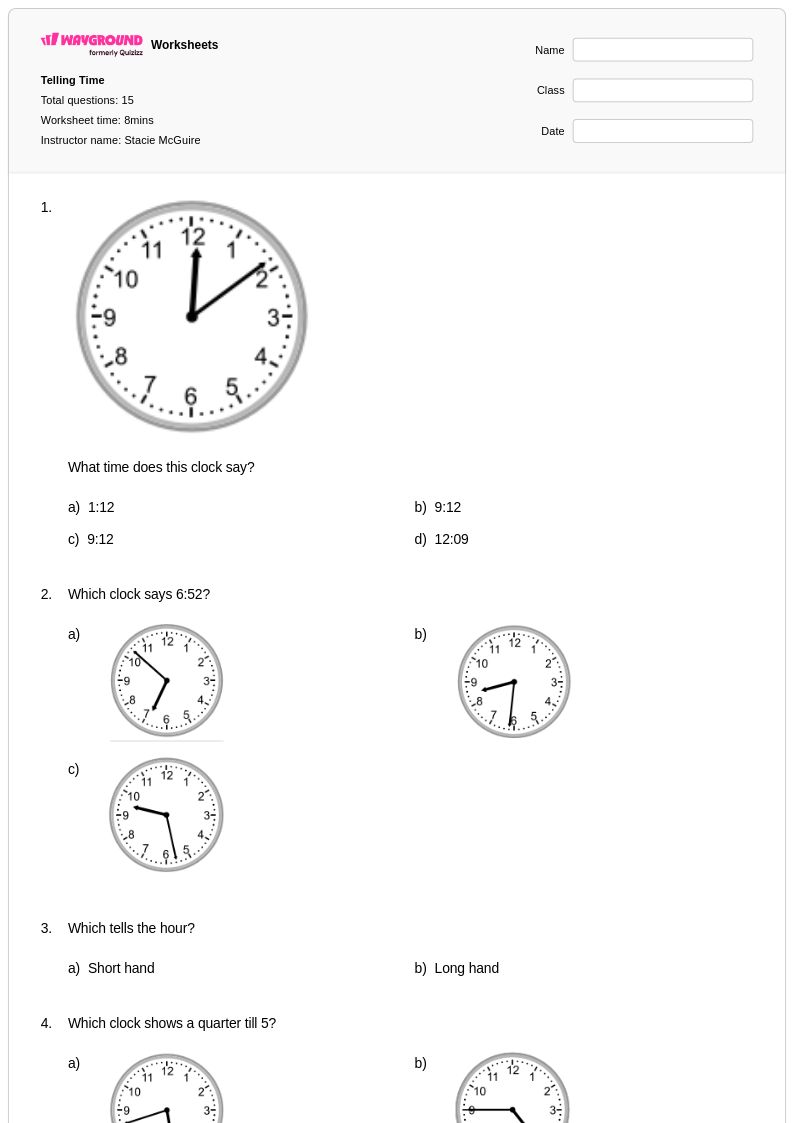
15 Q
3rd
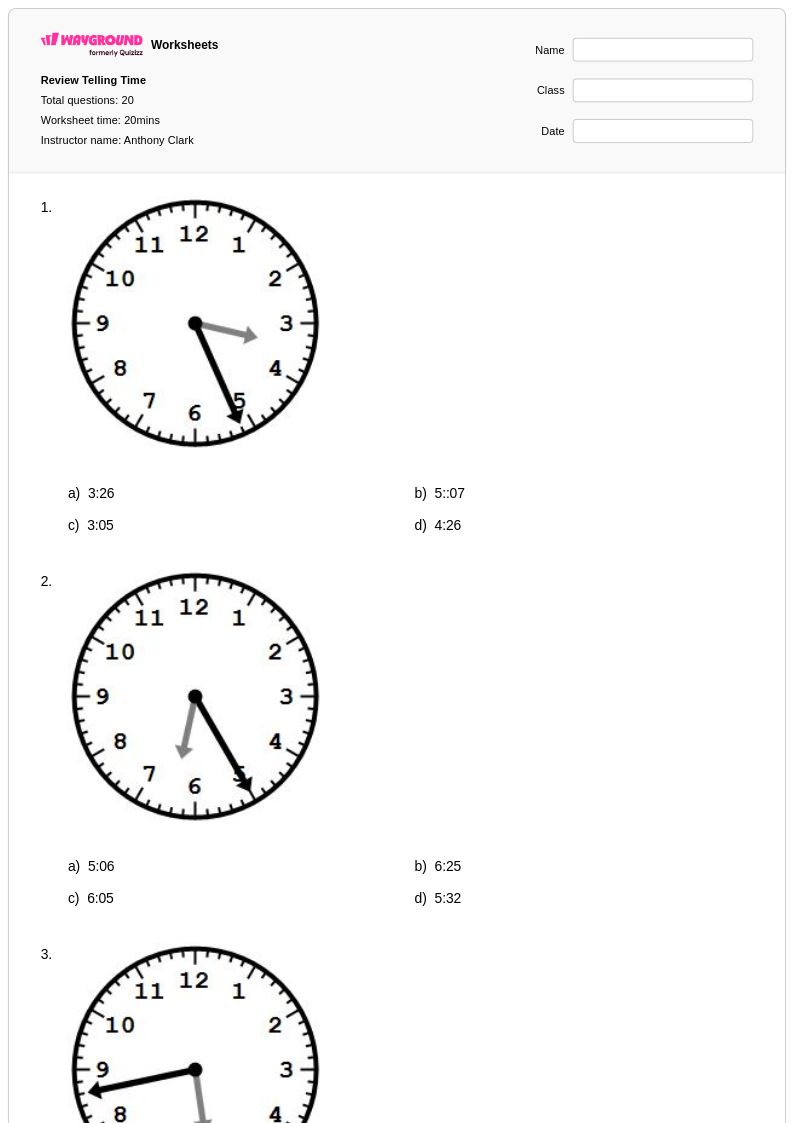
20 Q
2nd - Uni
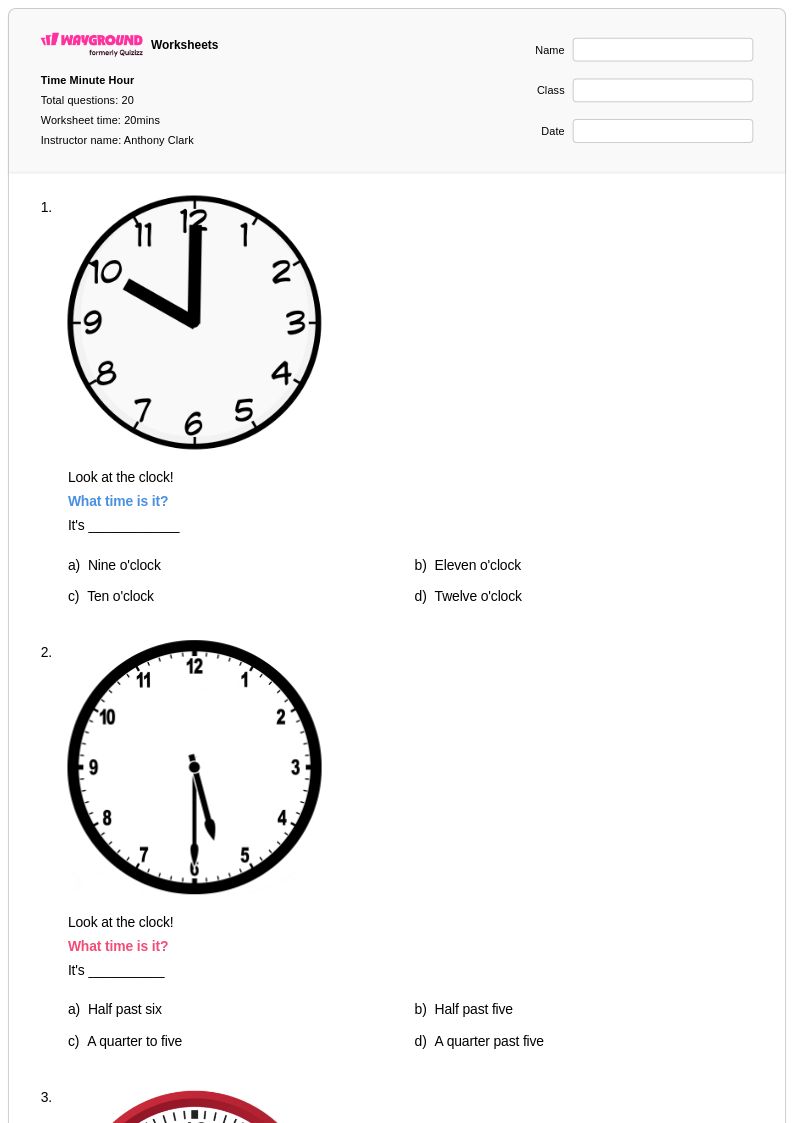
20 Q
2nd - Uni
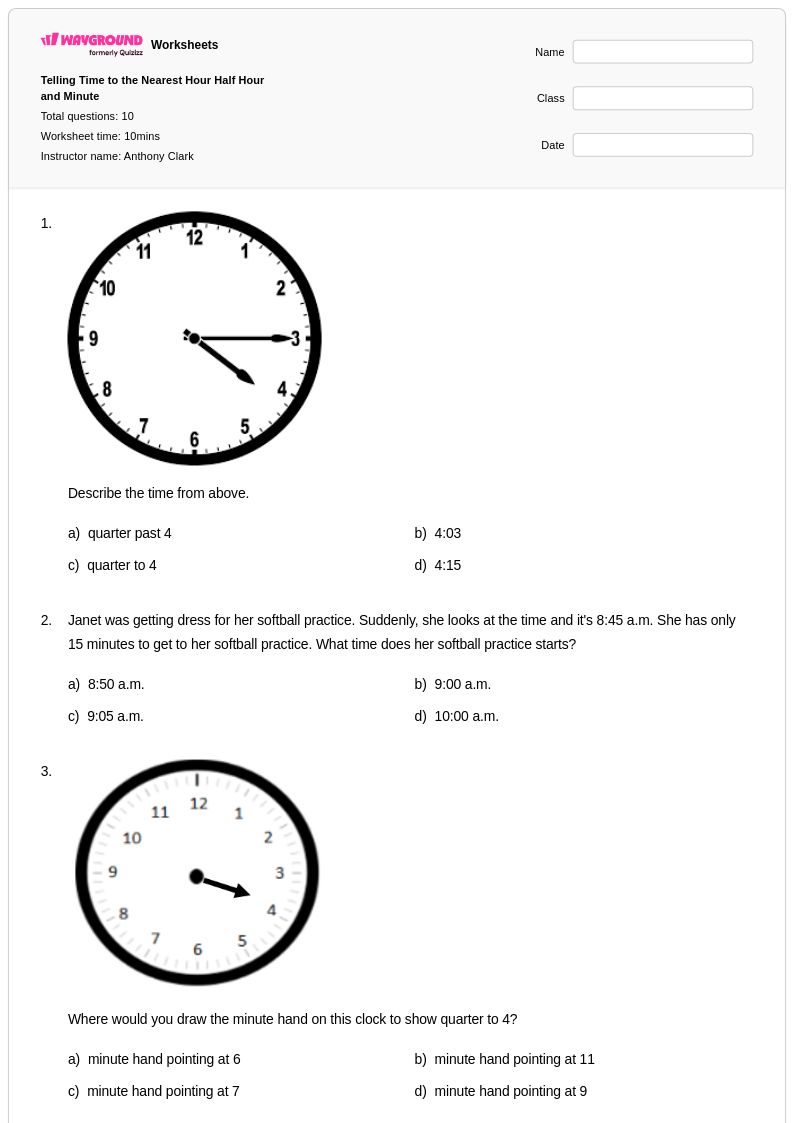
10 Q
3rd - Uni
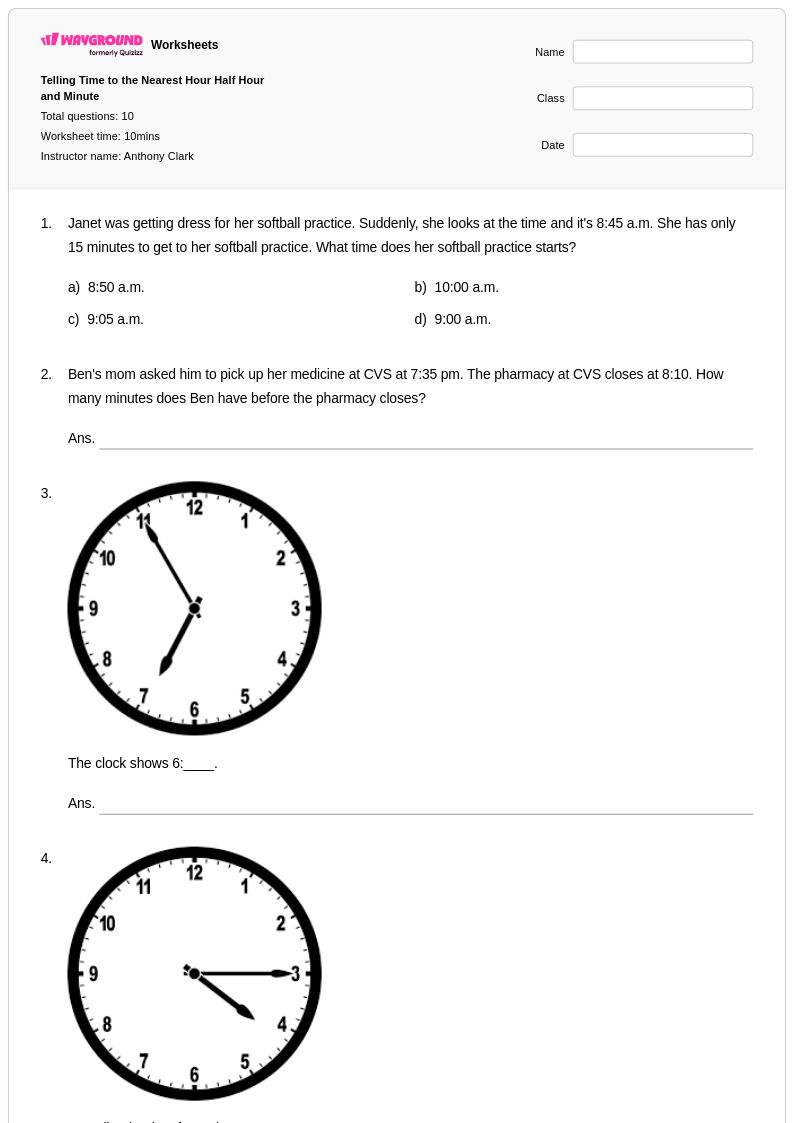
10 Q
3rd - Uni
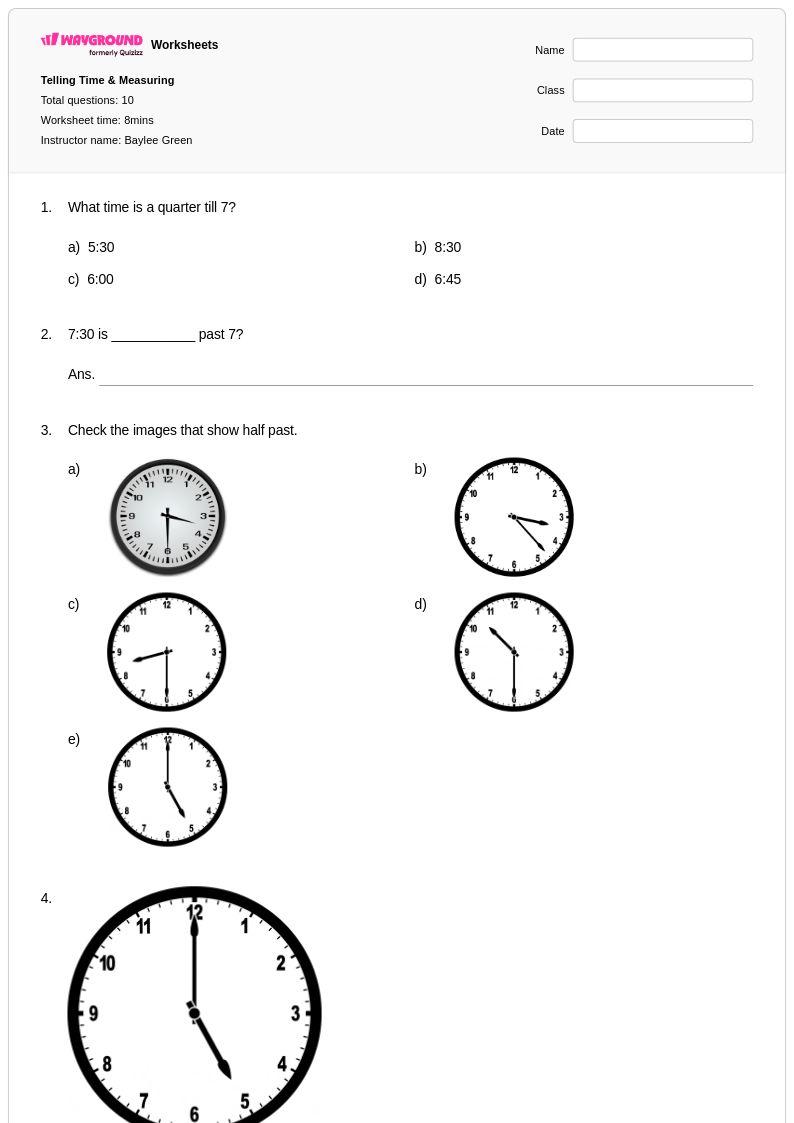
10 Q
3rd
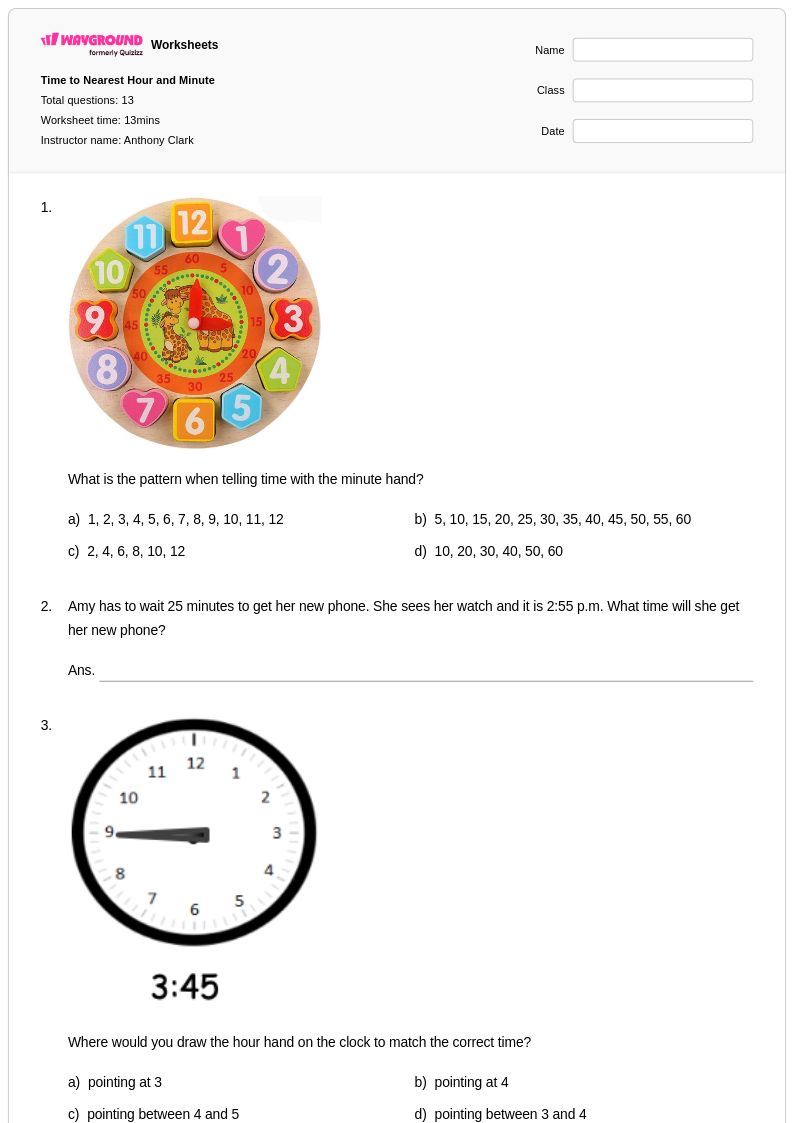
13 Q
3rd - Uni
Explore Time to the Quarter Hour Worksheets by Grades
Explore Other Subject Worksheets for class 3
Explore printable Time to the Quarter Hour worksheets for Class 3
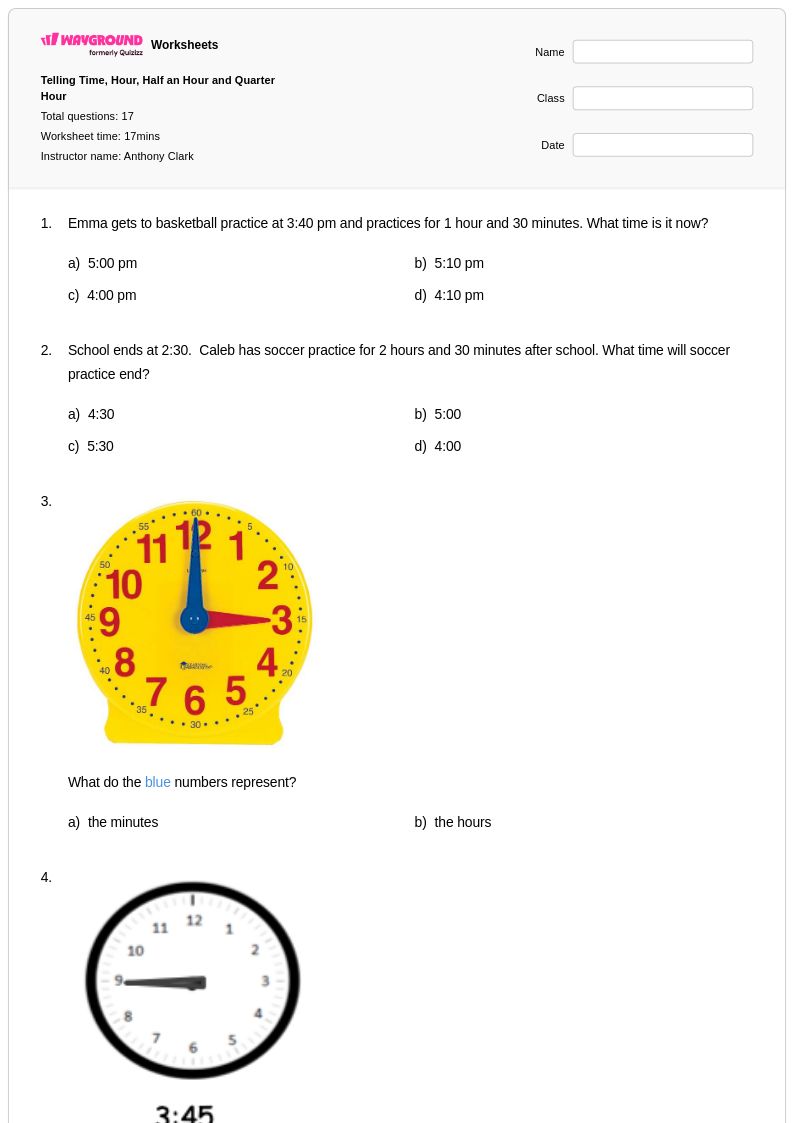
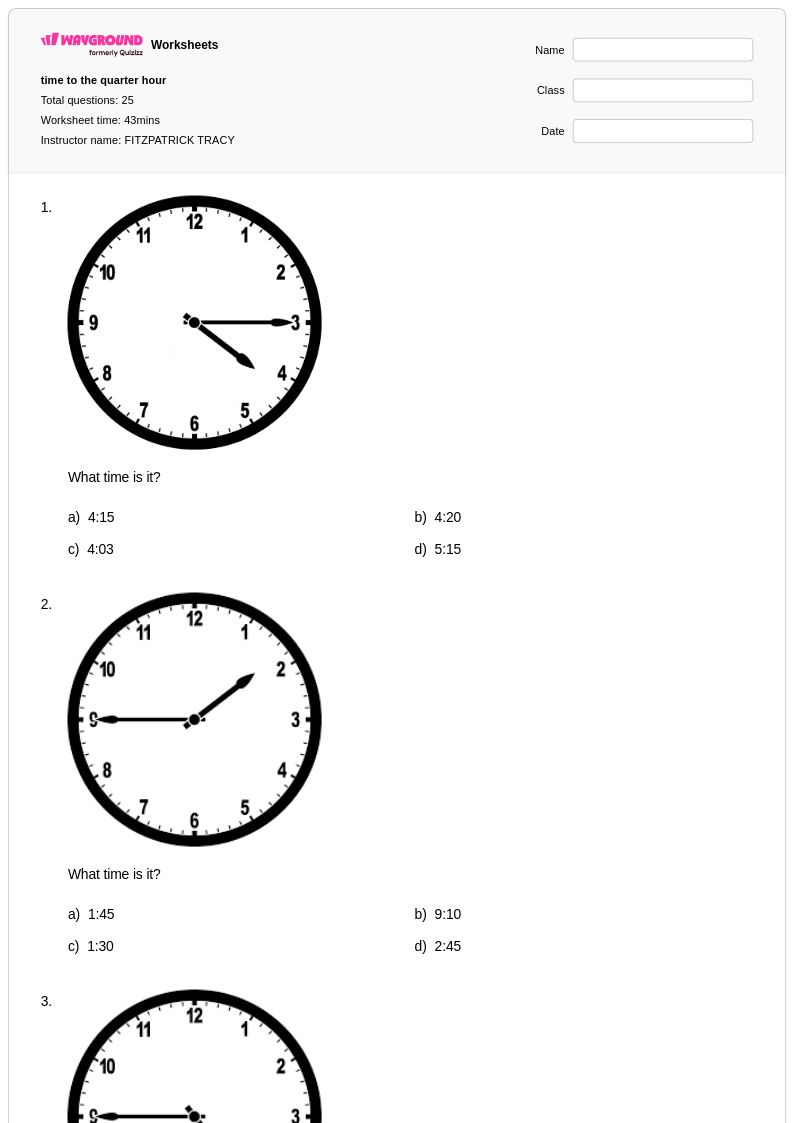
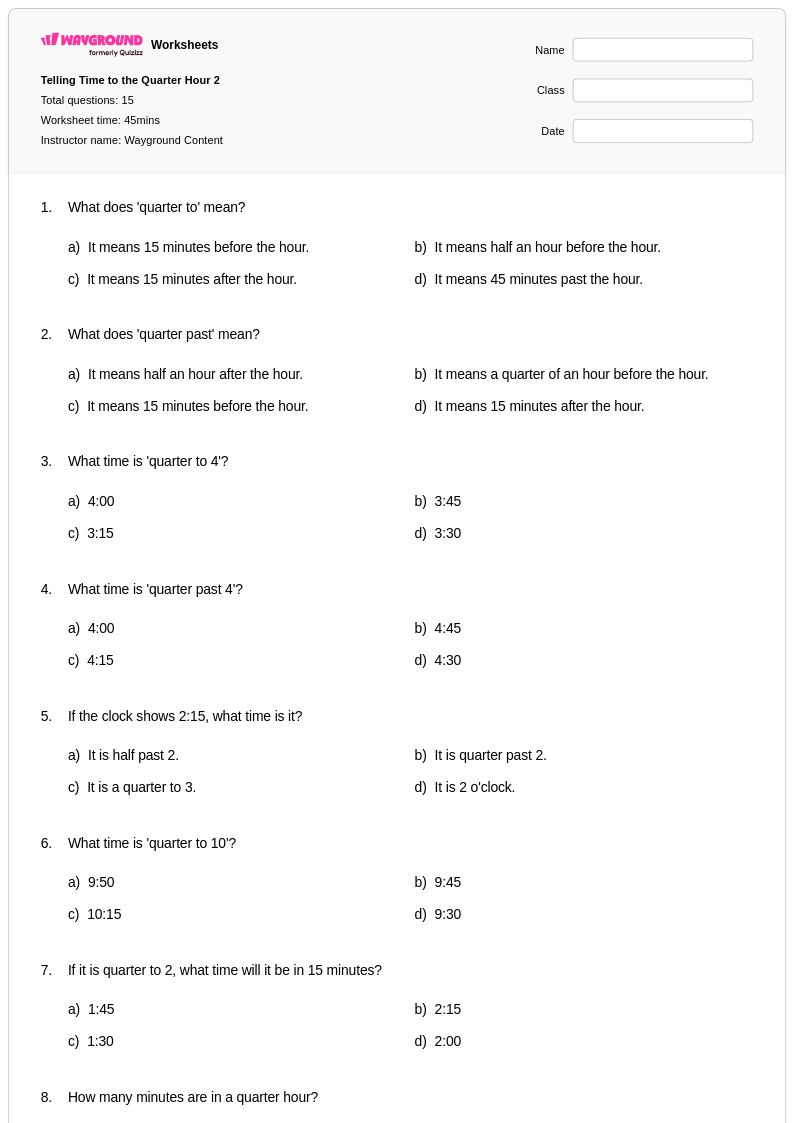
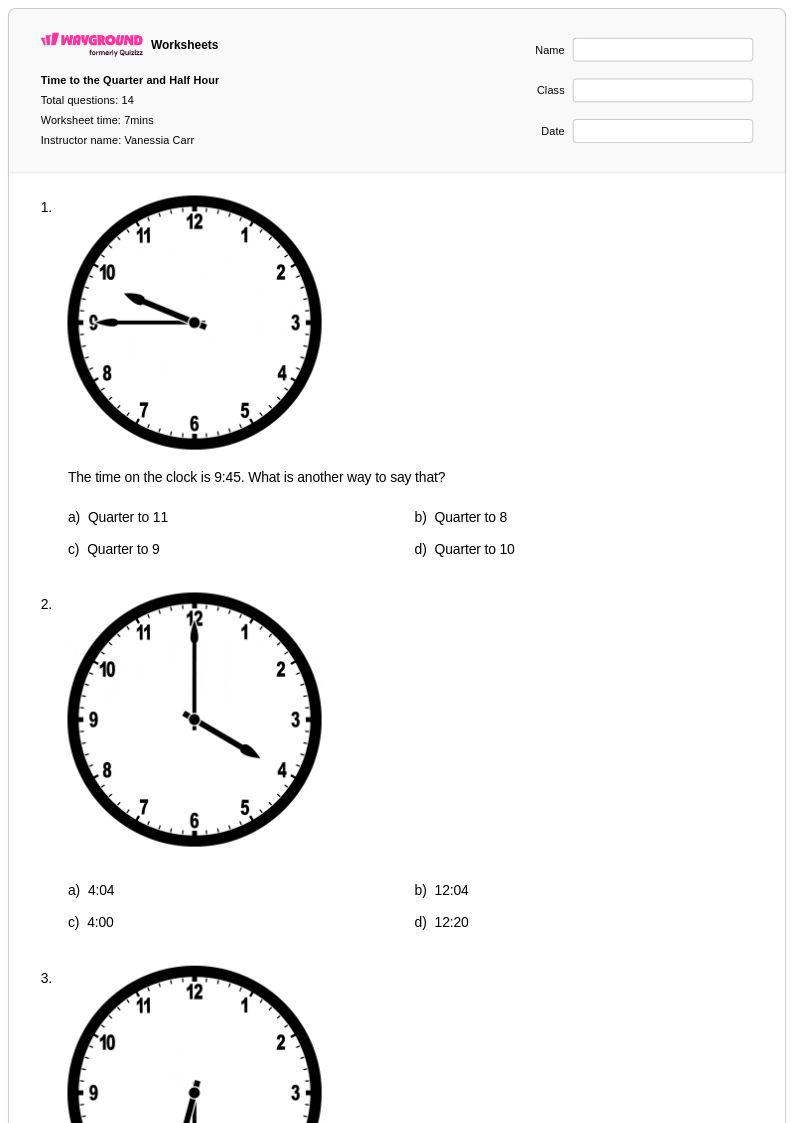
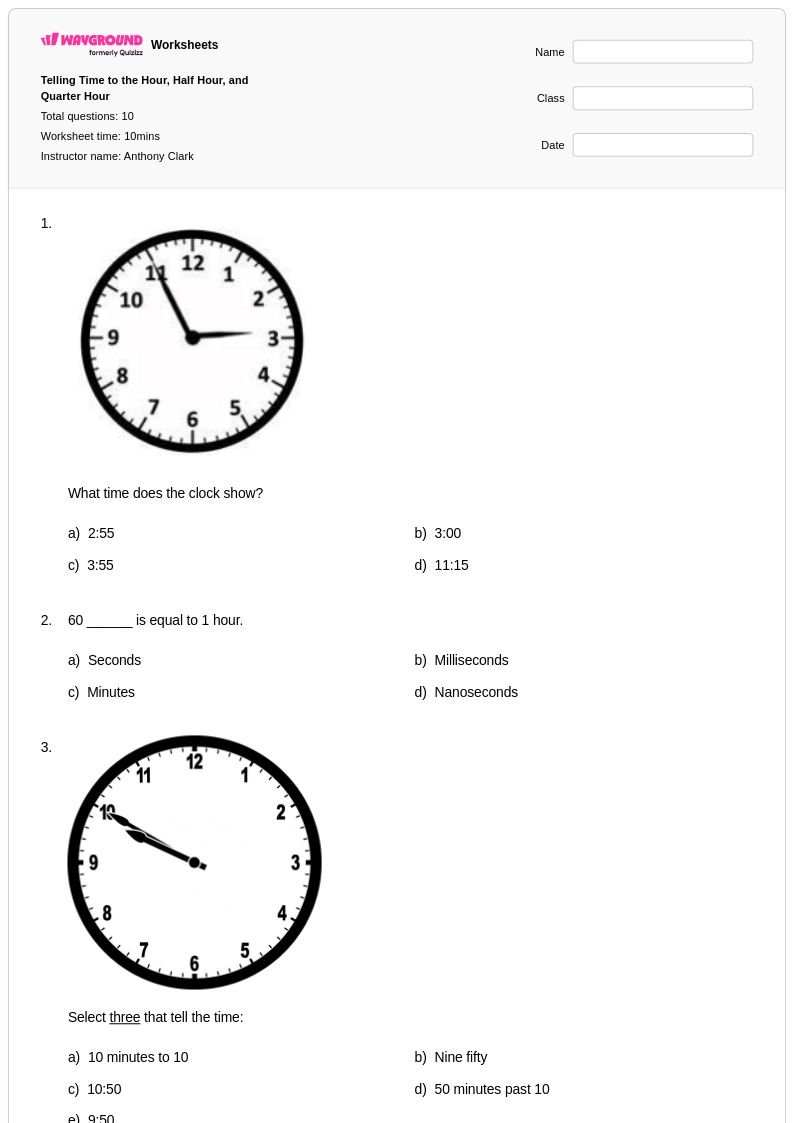
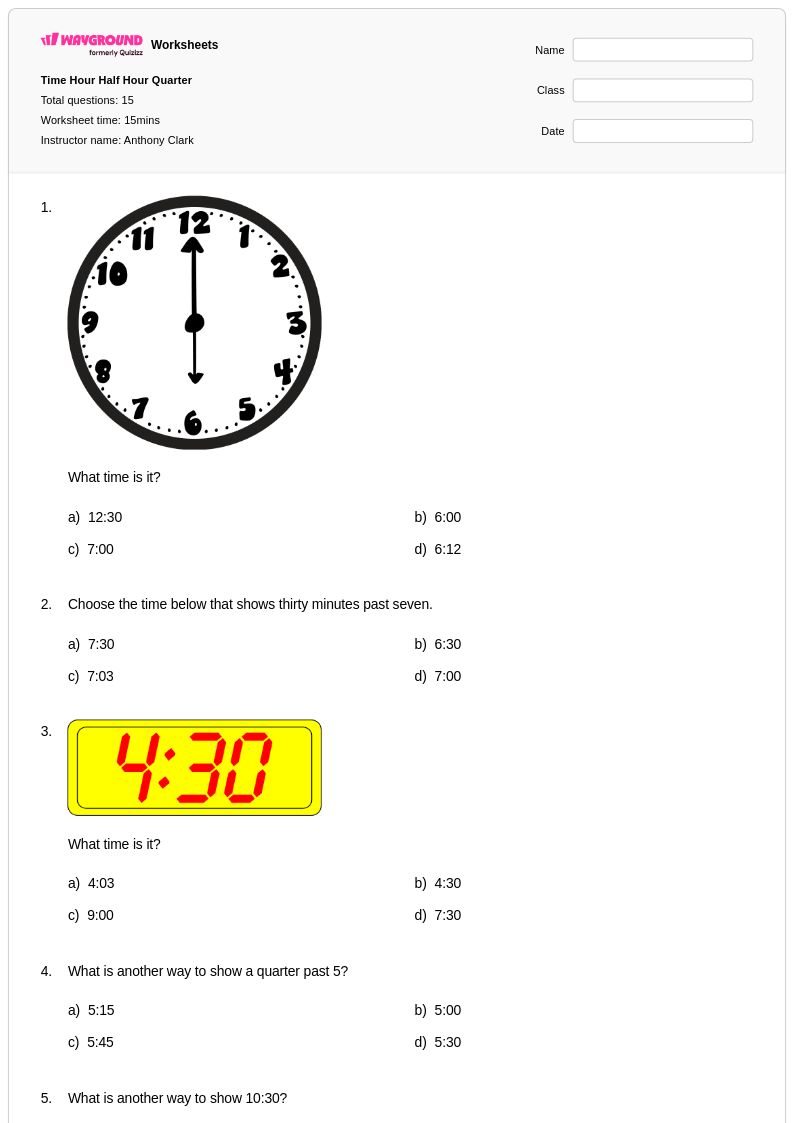
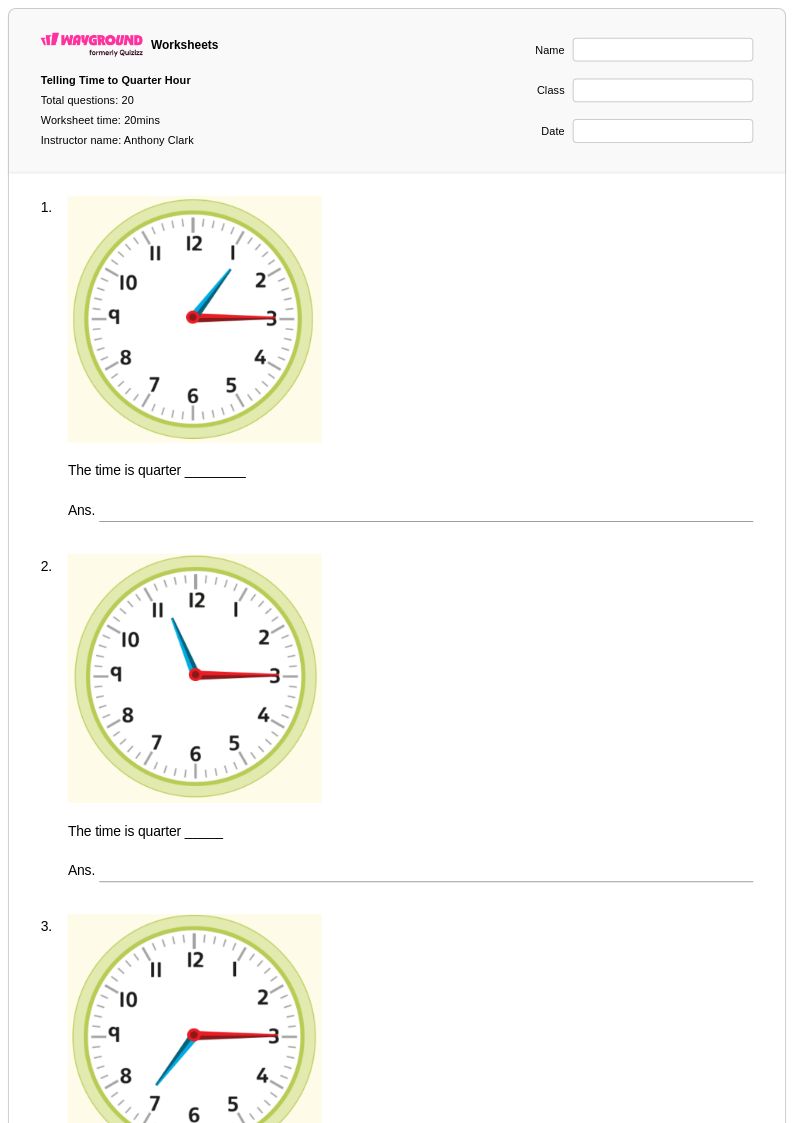
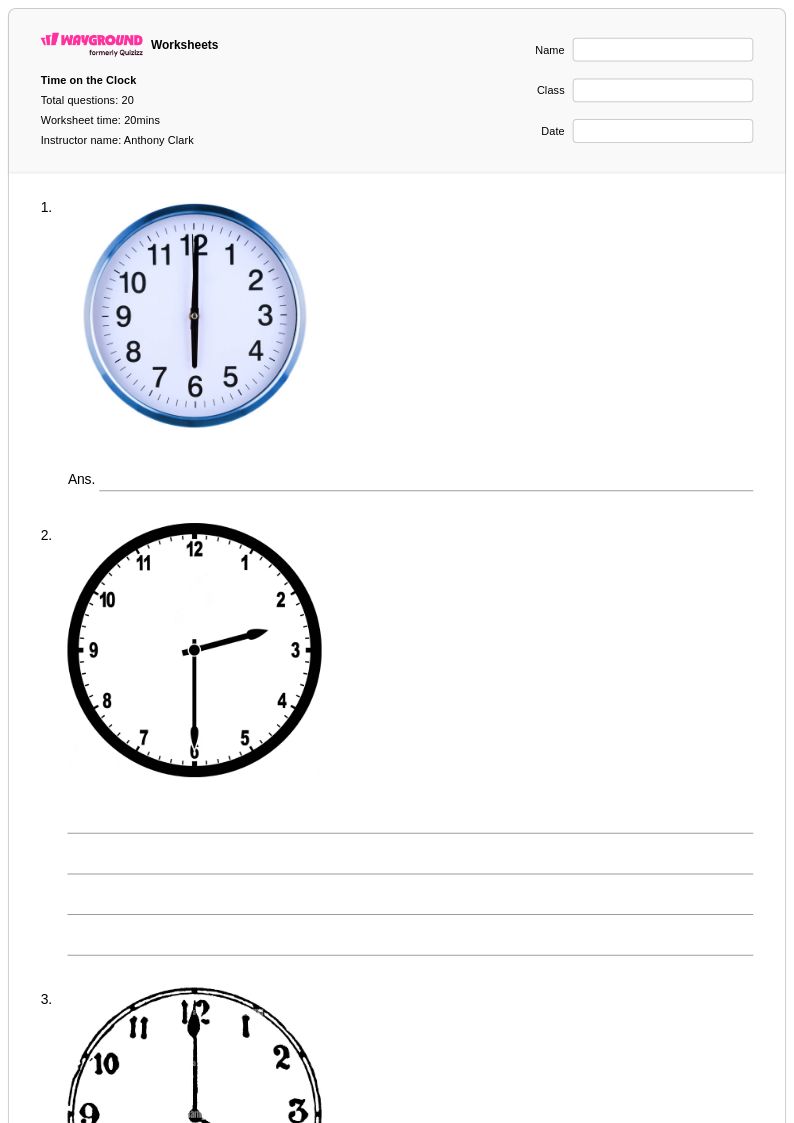
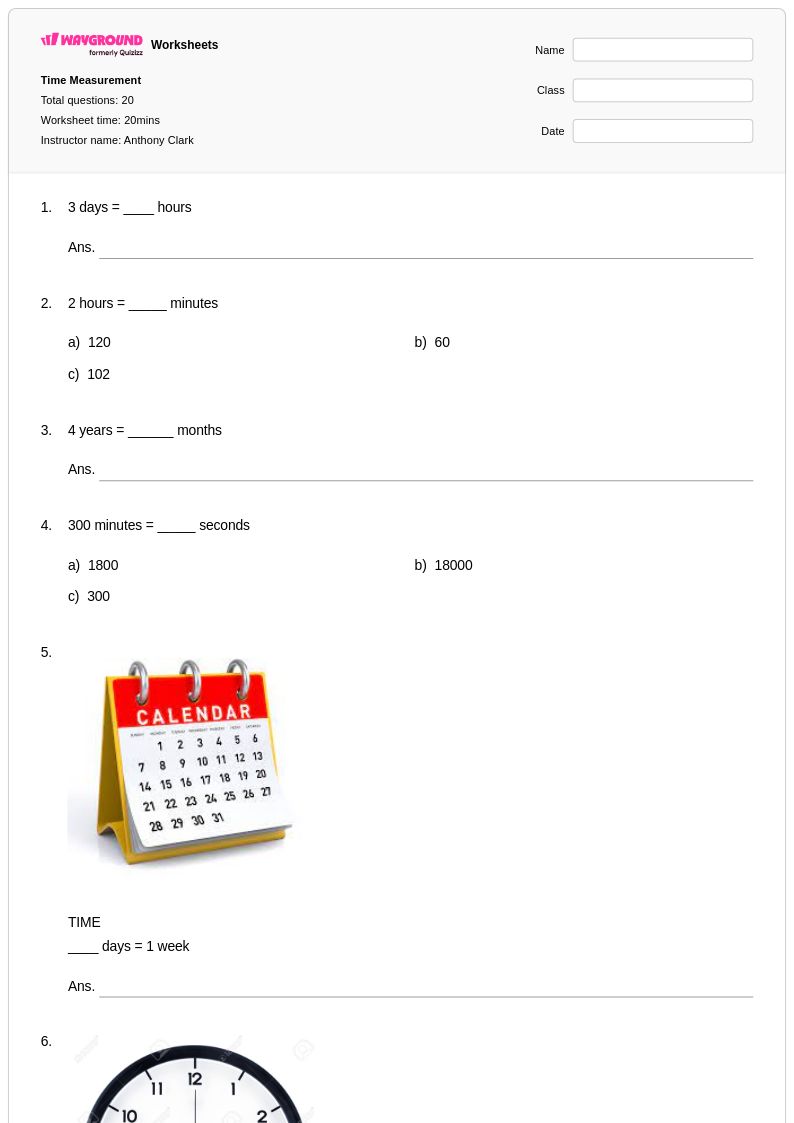
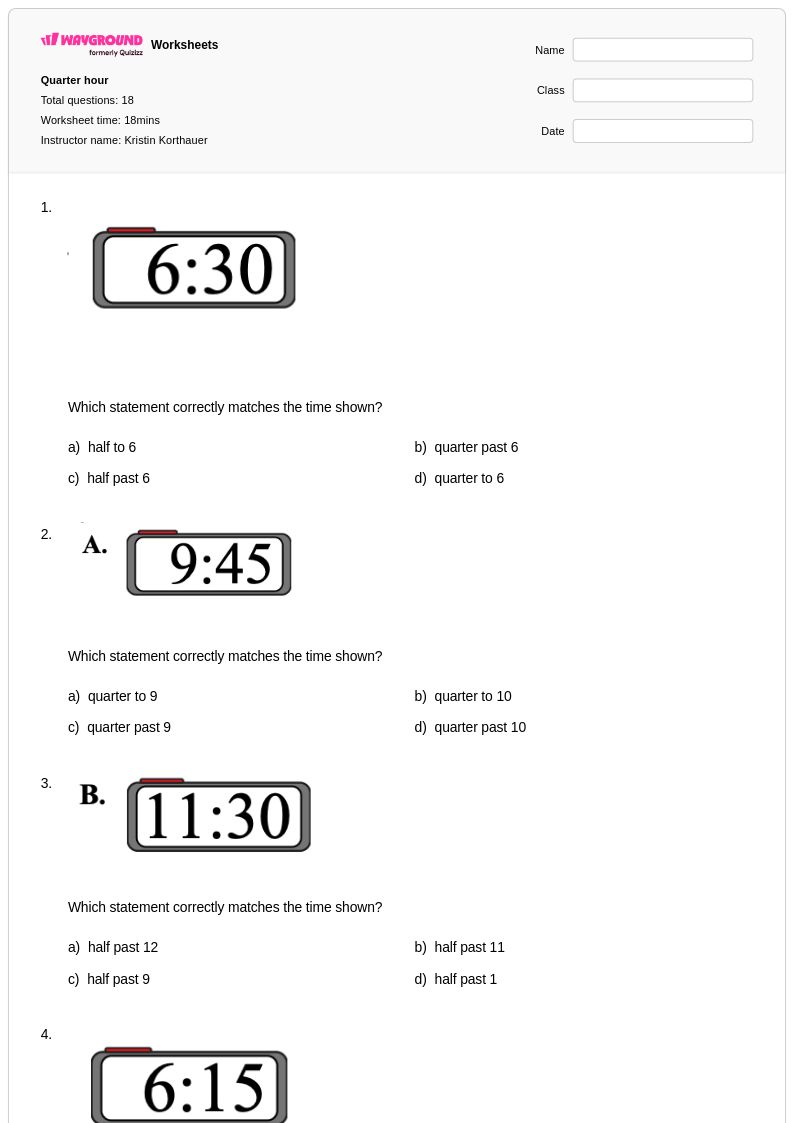
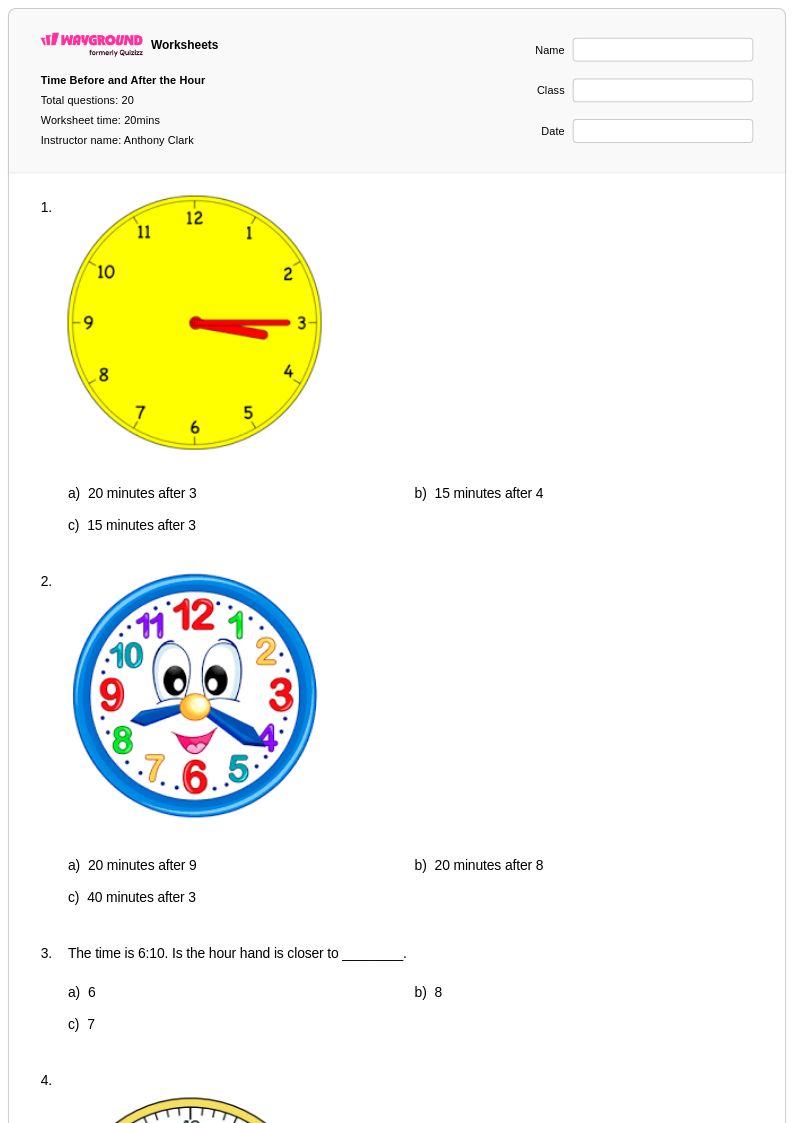
Time to the quarter hour worksheets for Class 3 students available through Wayground (formerly Quizizz) provide essential practice for developing precise time-telling skills that build upon basic hour and half-hour concepts. These comprehensive printables focus specifically on reading analog and digital clocks when the minute hand points to 12, 15, 30, and 45 minutes past the hour, helping third-grade students master the critical skill of identifying quarter past, half past, and quarter to times. The practice problems systematically guide students through recognizing these key time intervals while strengthening their understanding of how the hour and minute hands work together on analog clocks. Each worksheet includes carefully structured exercises that progress from simple identification tasks to more complex time-reading challenges, with accompanying answer keys that support both independent practice and guided instruction in pdf format.
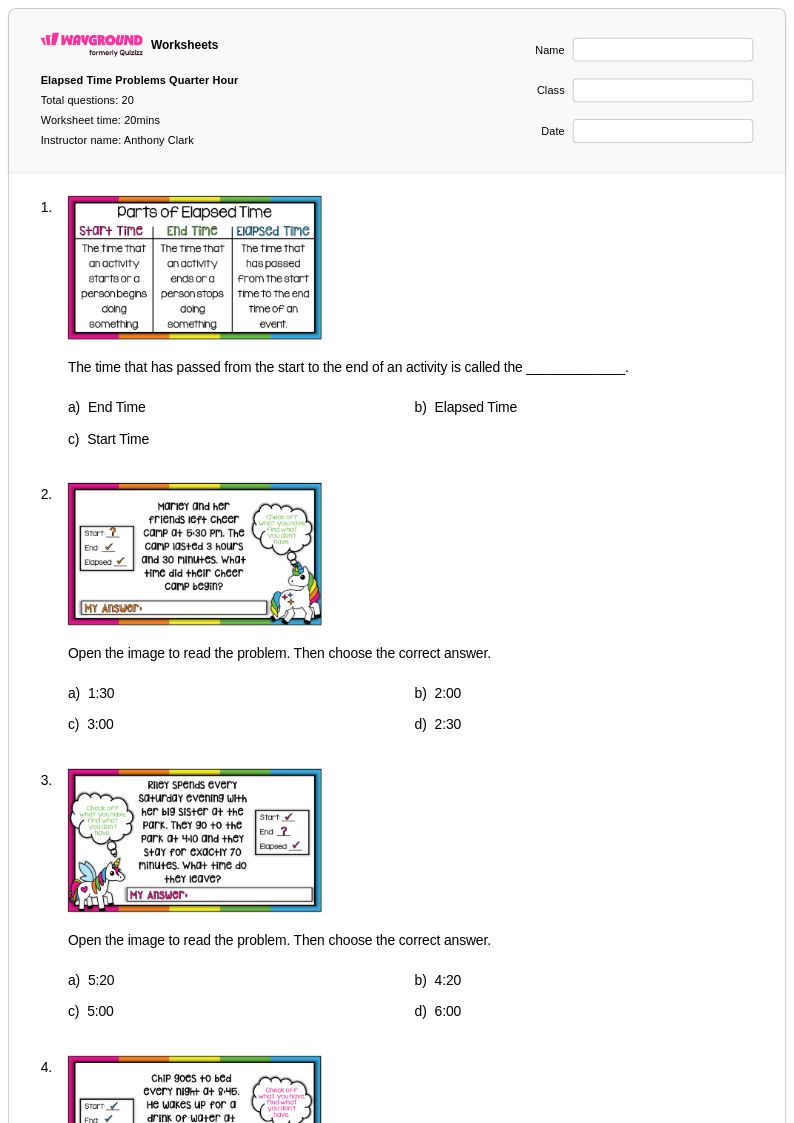
Wayground (formerly Quizizz) empowers teachers with millions of teacher-created time to the quarter hour resources that streamline lesson planning and provide targeted skill practice for Class 3 mathematics instruction. The platform's robust search and filtering capabilities allow educators to quickly locate worksheets that align with specific curriculum standards and match their students' developmental needs, while built-in differentiation tools enable customization for learners at various skill levels. Teachers can access these resources in both printable and digital formats, including downloadable pdf files, making them suitable for classroom instruction, homework assignments, and remediation sessions. The extensive collection supports flexible implementation across different teaching scenarios, from whole-group lessons introducing quarter-hour concepts to individualized practice sessions that help students achieve mastery of this fundamental time-telling skill through repeated exposure and varied problem formats.