Free Printable Vague Pronouns Worksheets for Class 12
Master vague pronouns with Class 12 English worksheets from Wayground, featuring comprehensive printables and practice problems with answer keys to help students identify and correct unclear pronoun references in their writing.
Explore printable Vague Pronouns worksheets for Class 12
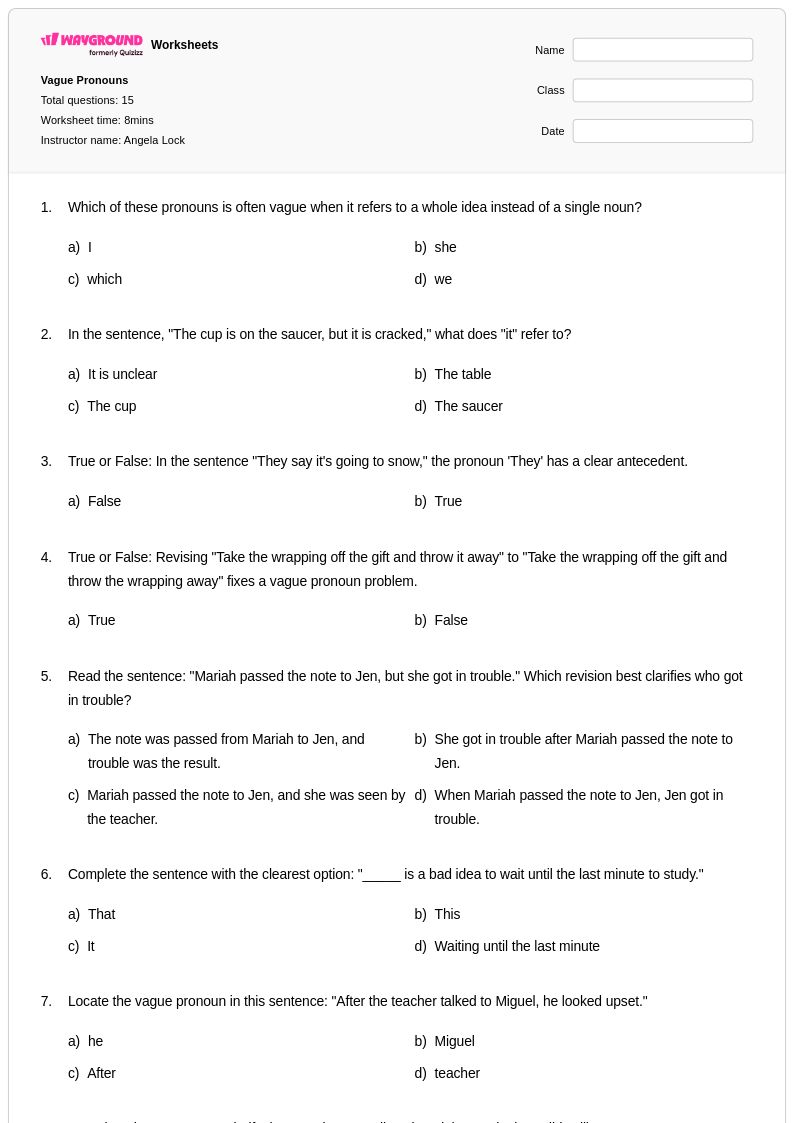
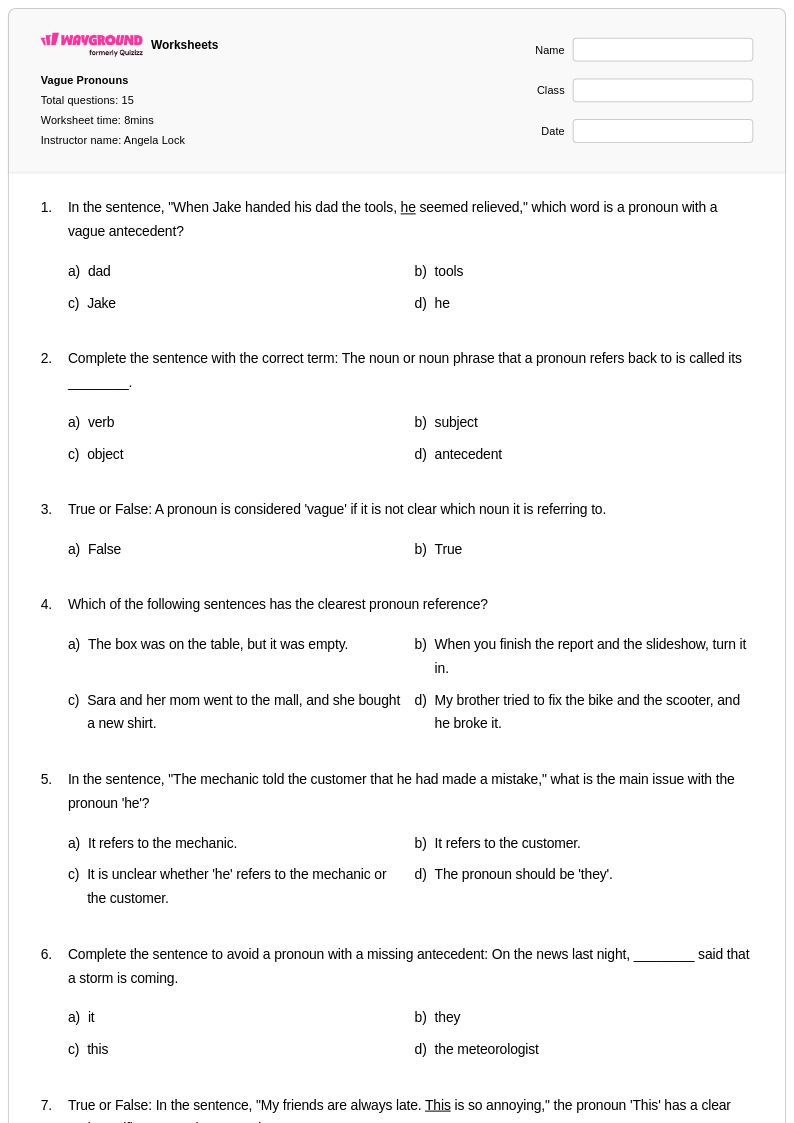
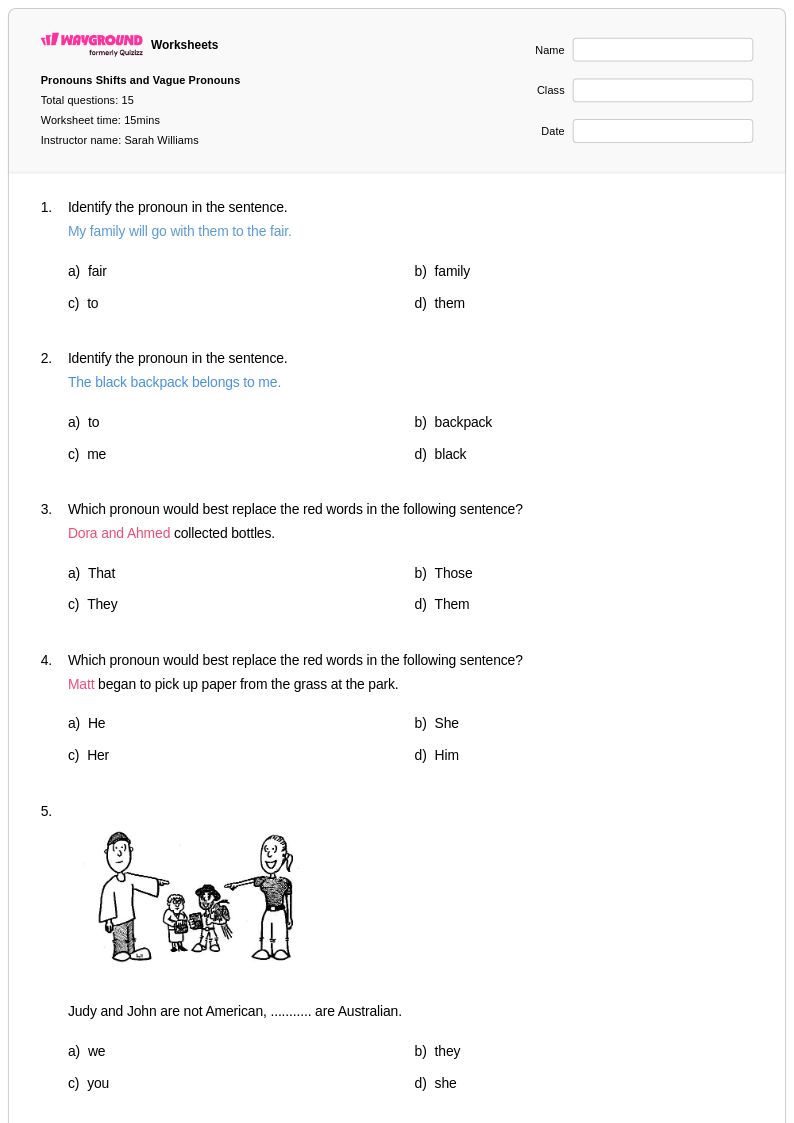
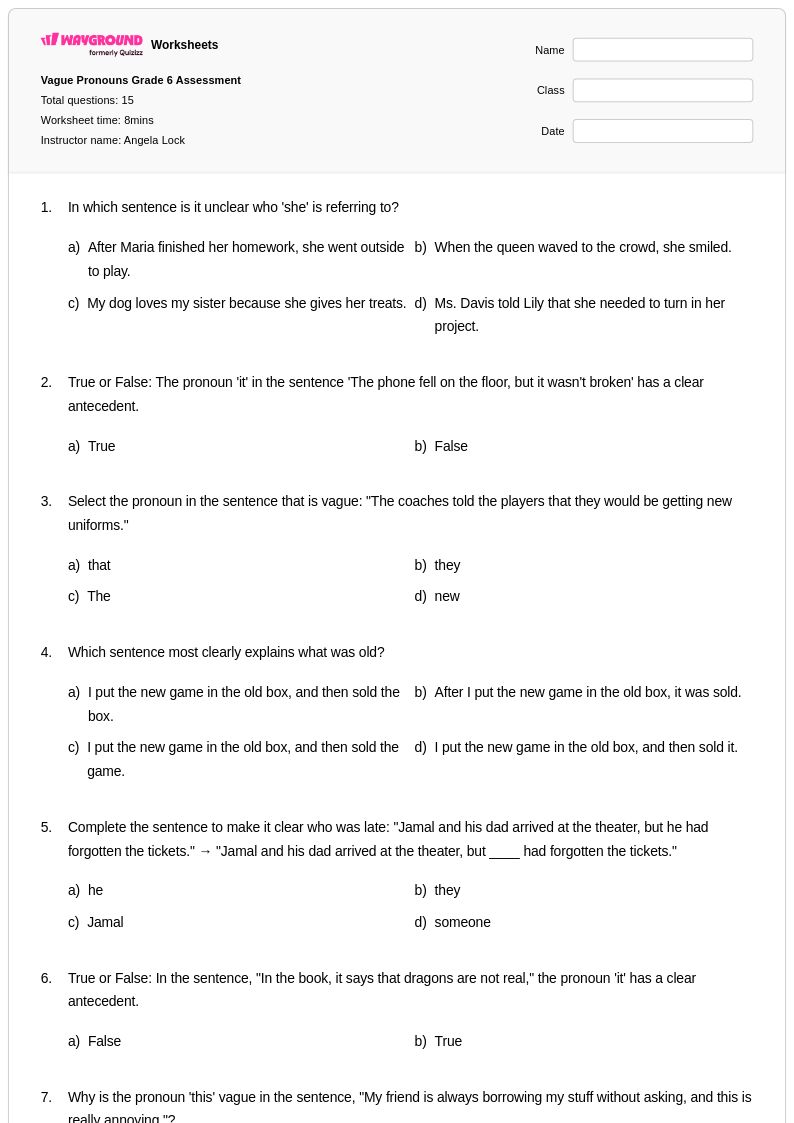
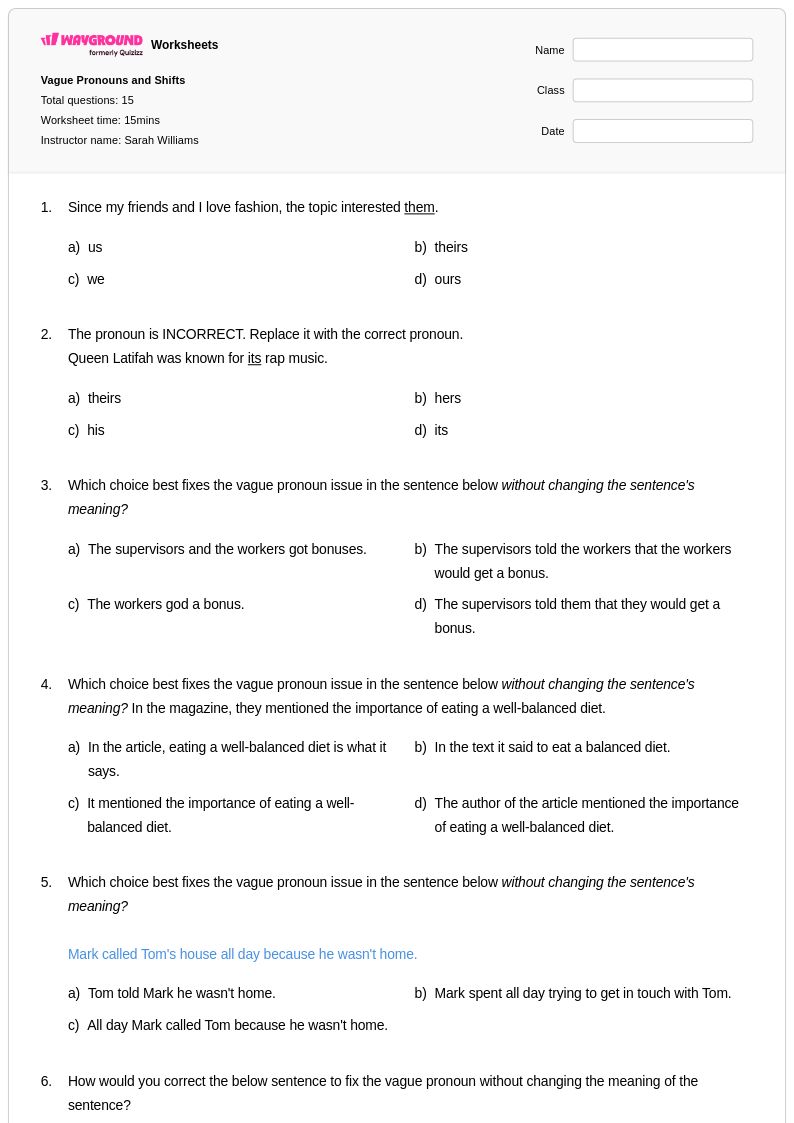
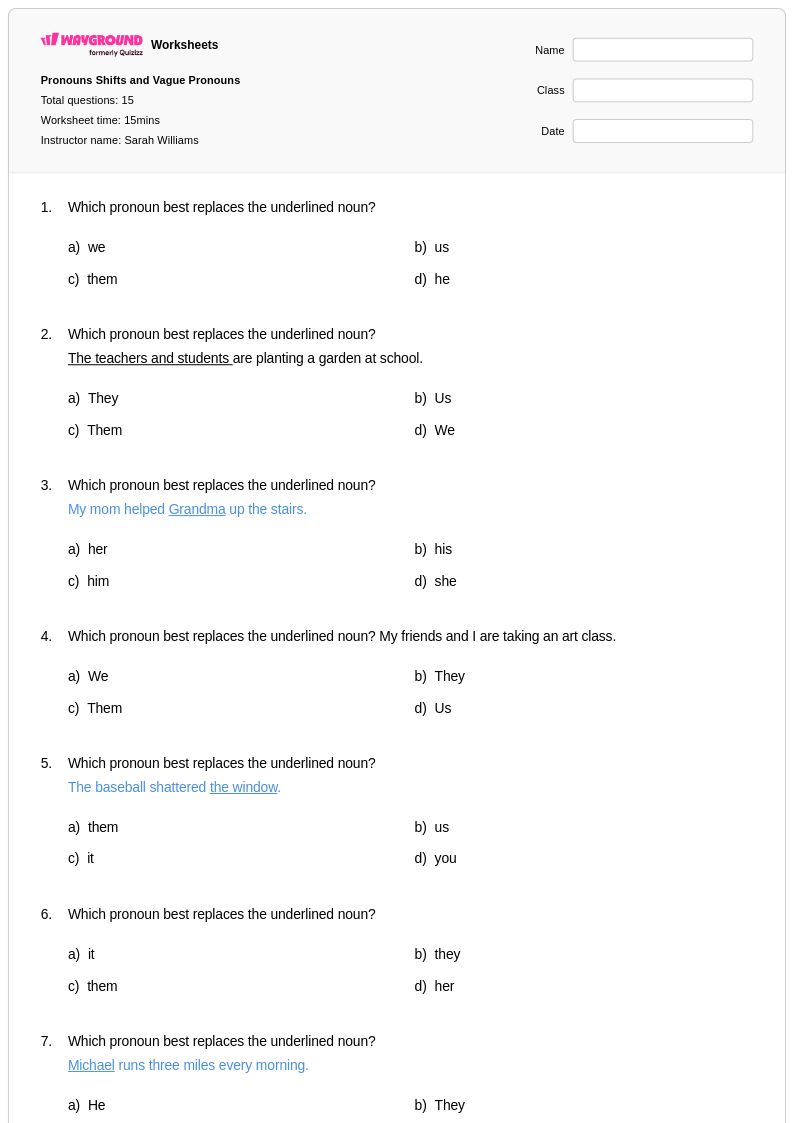
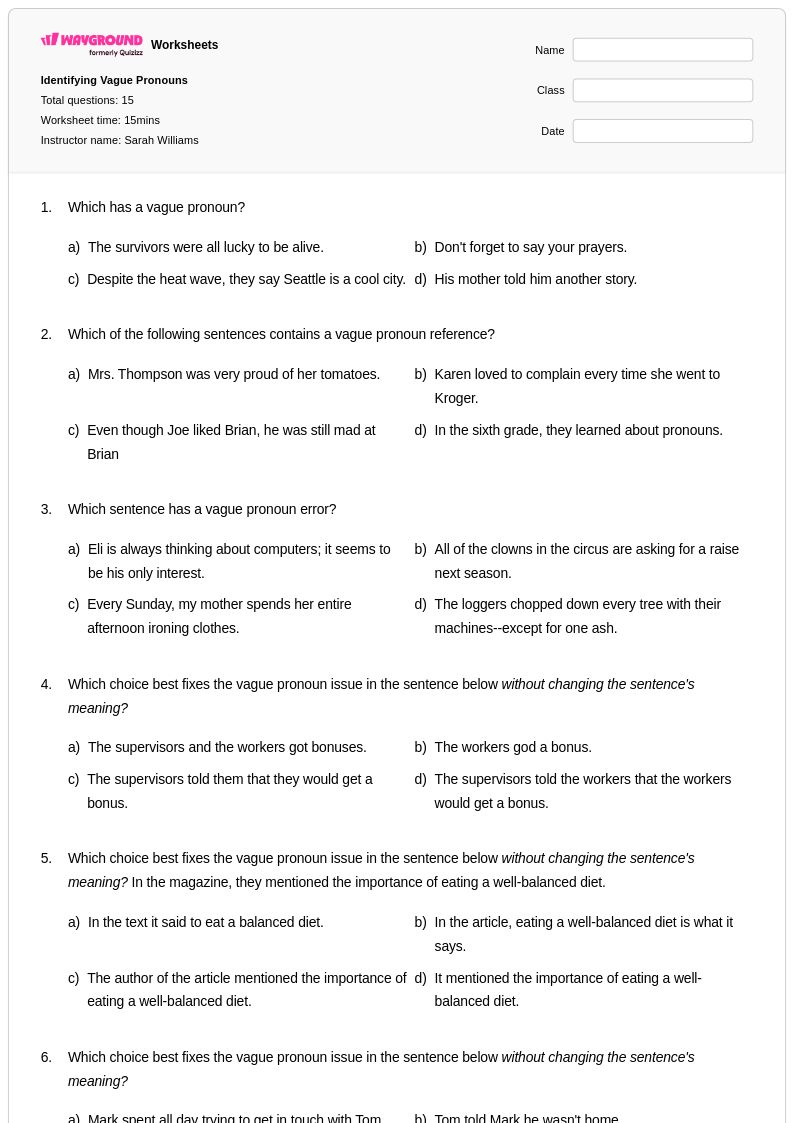
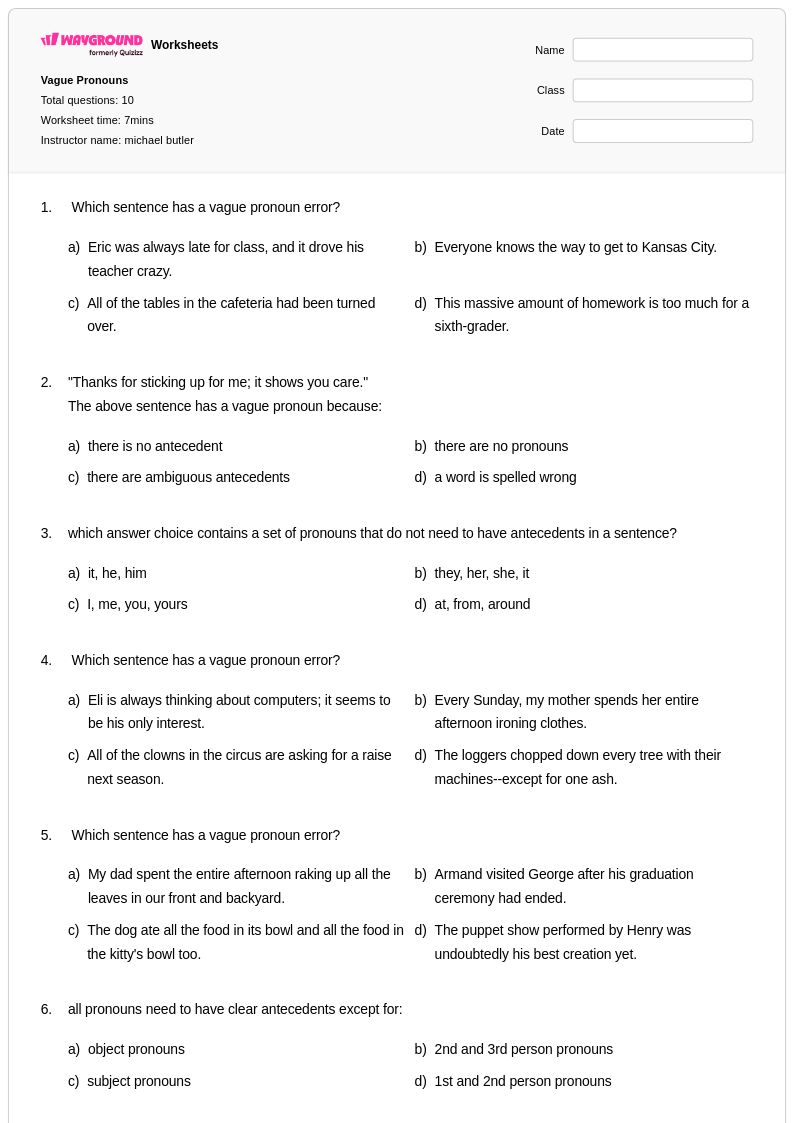
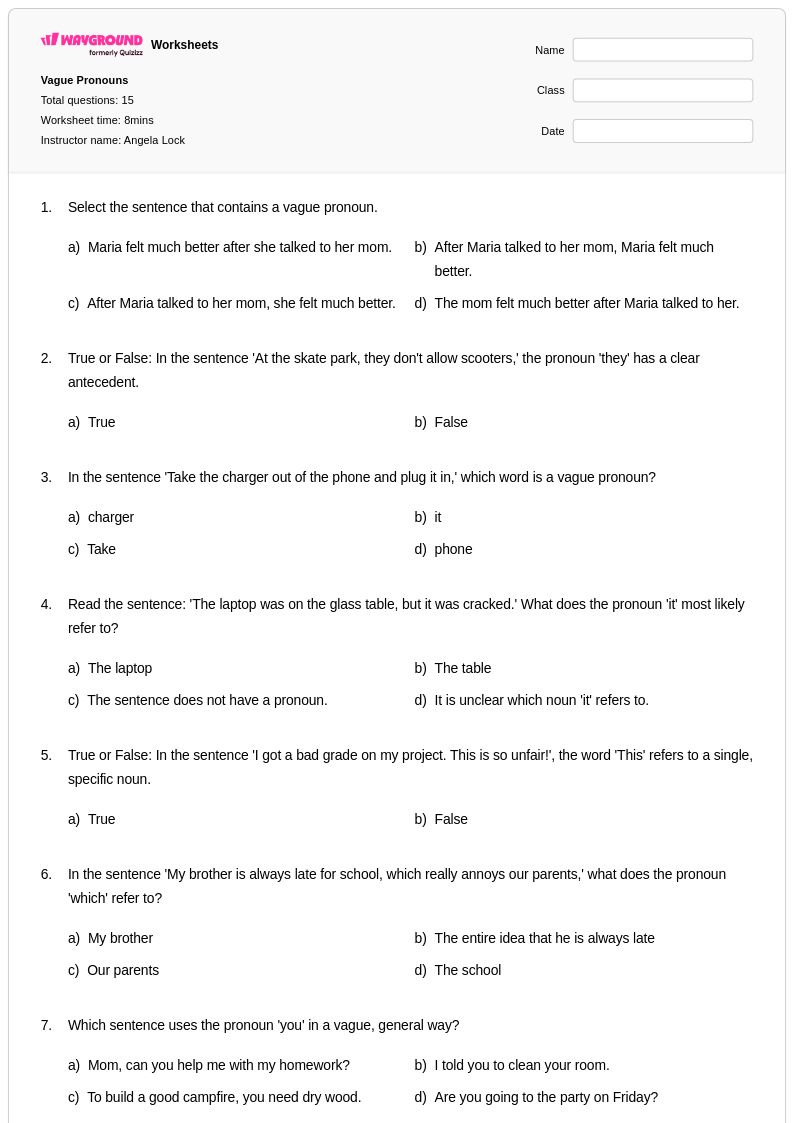
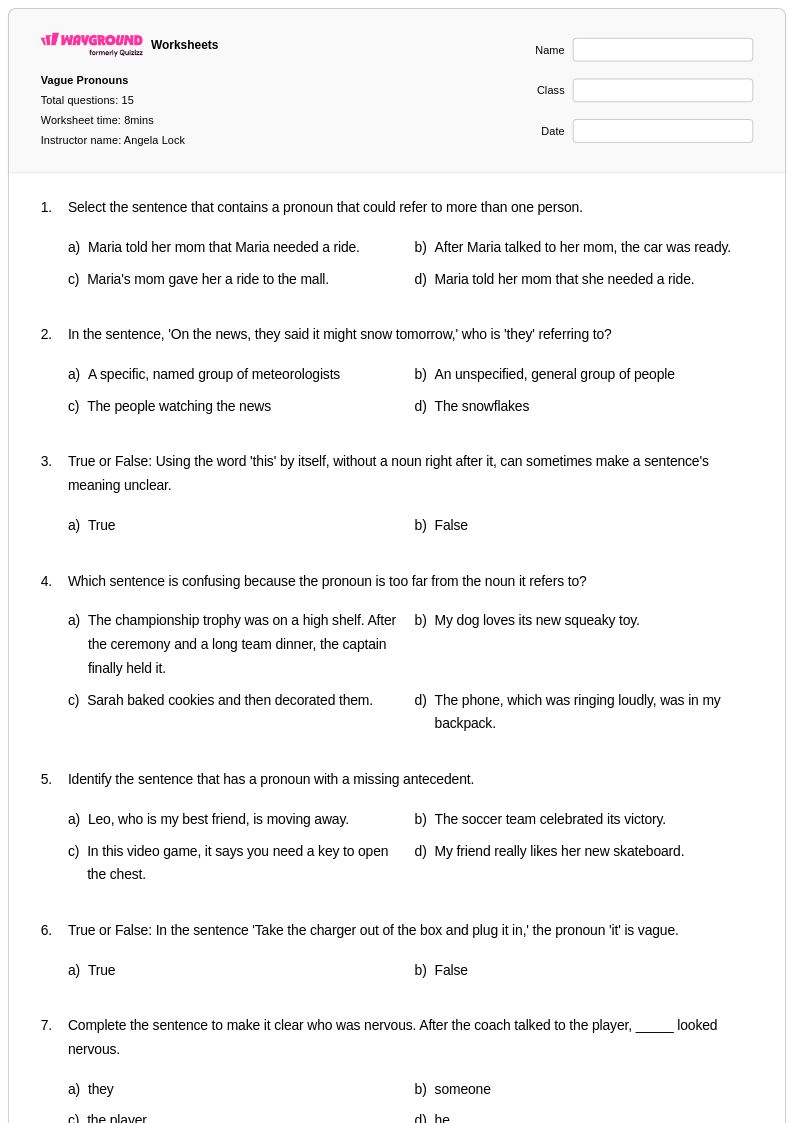
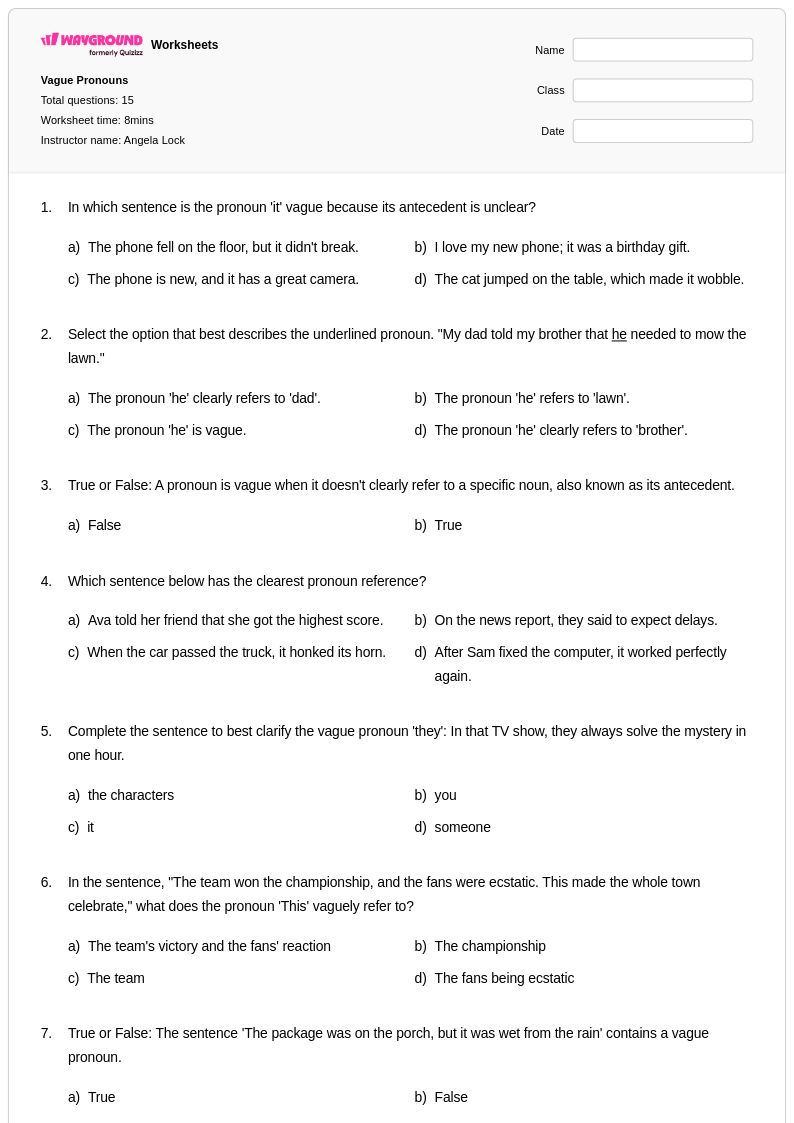
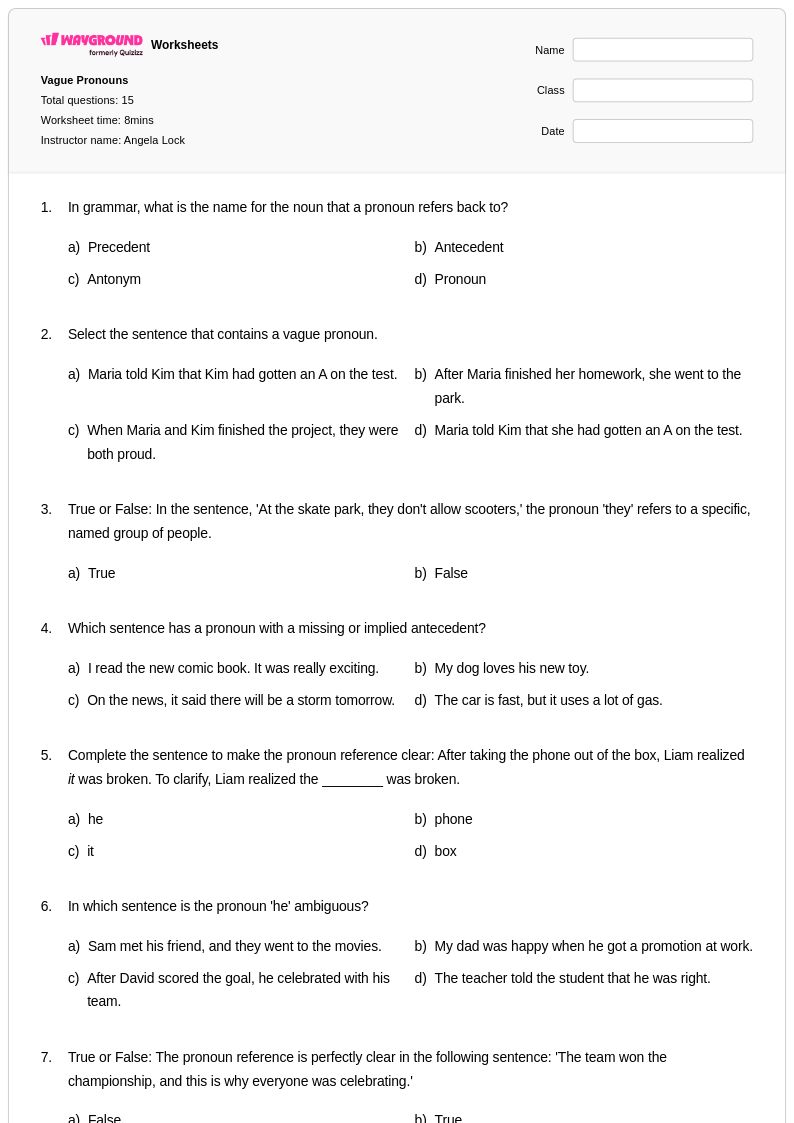
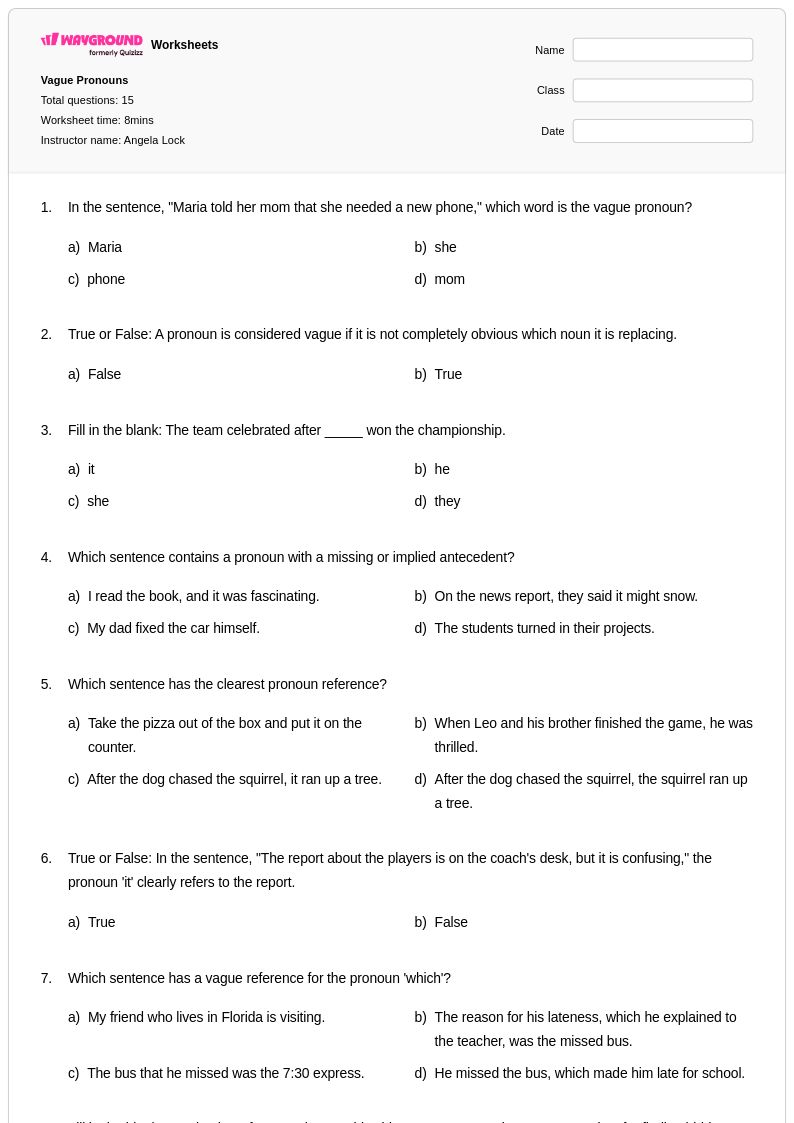
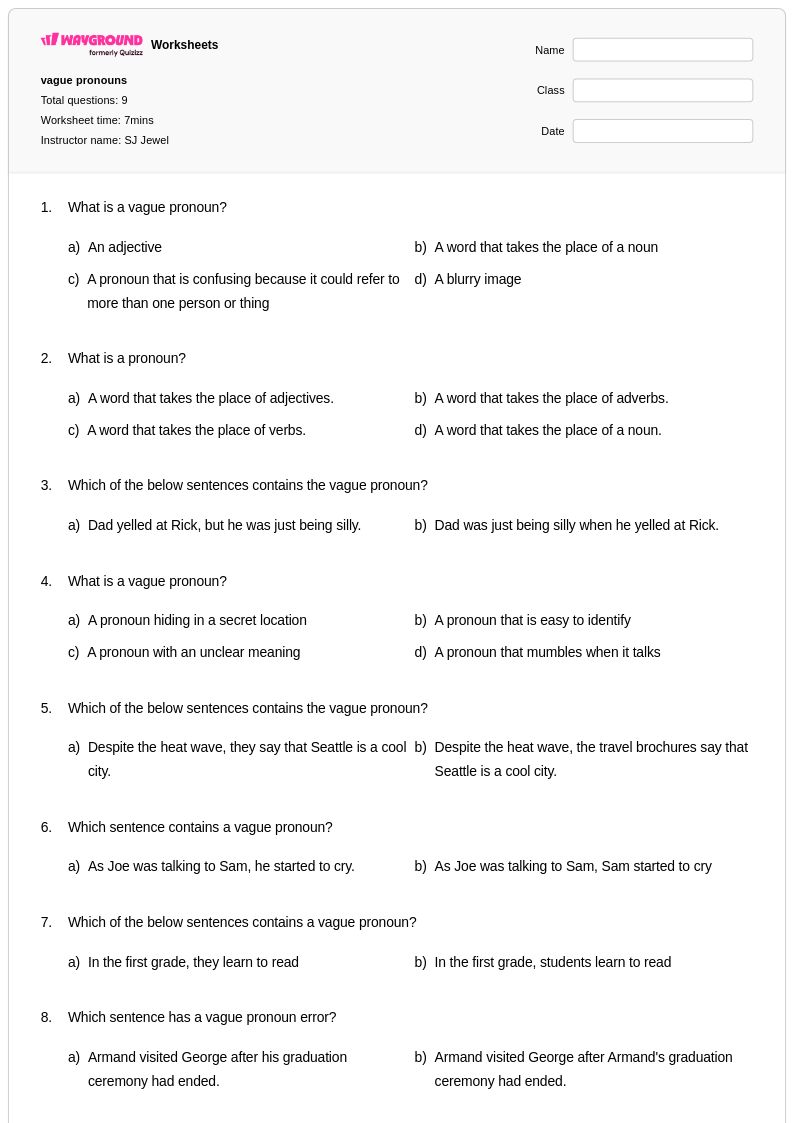
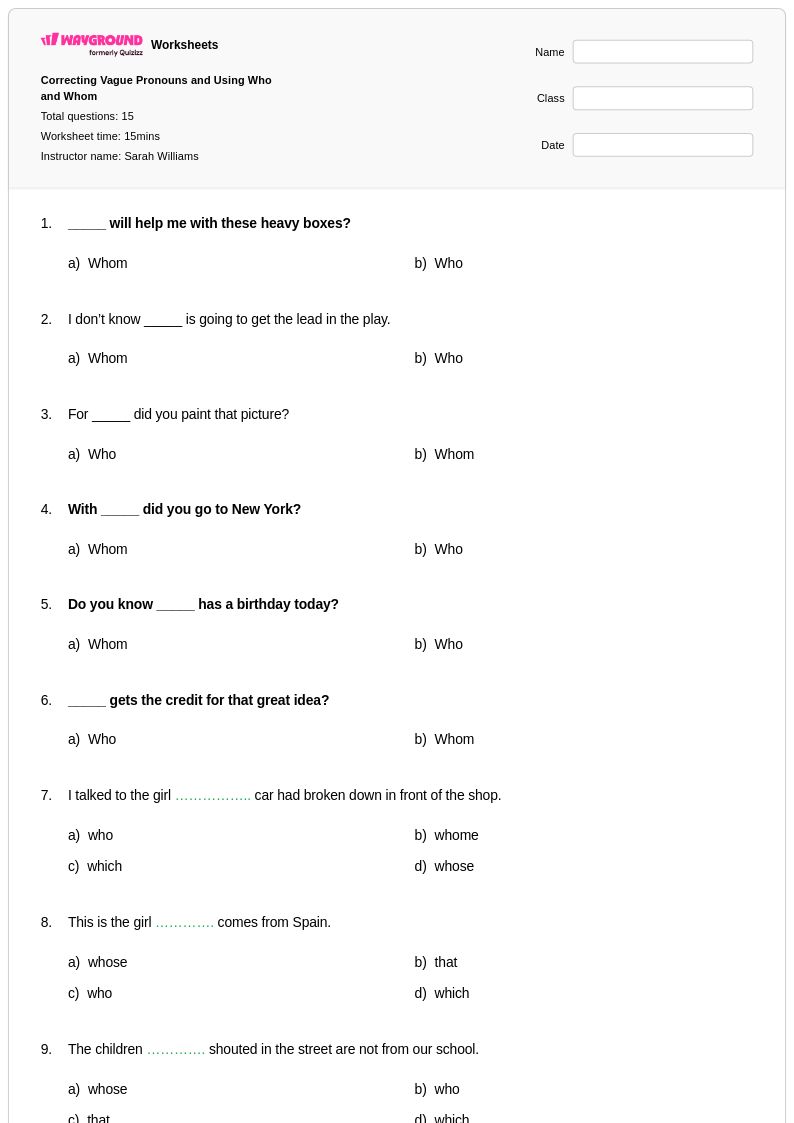
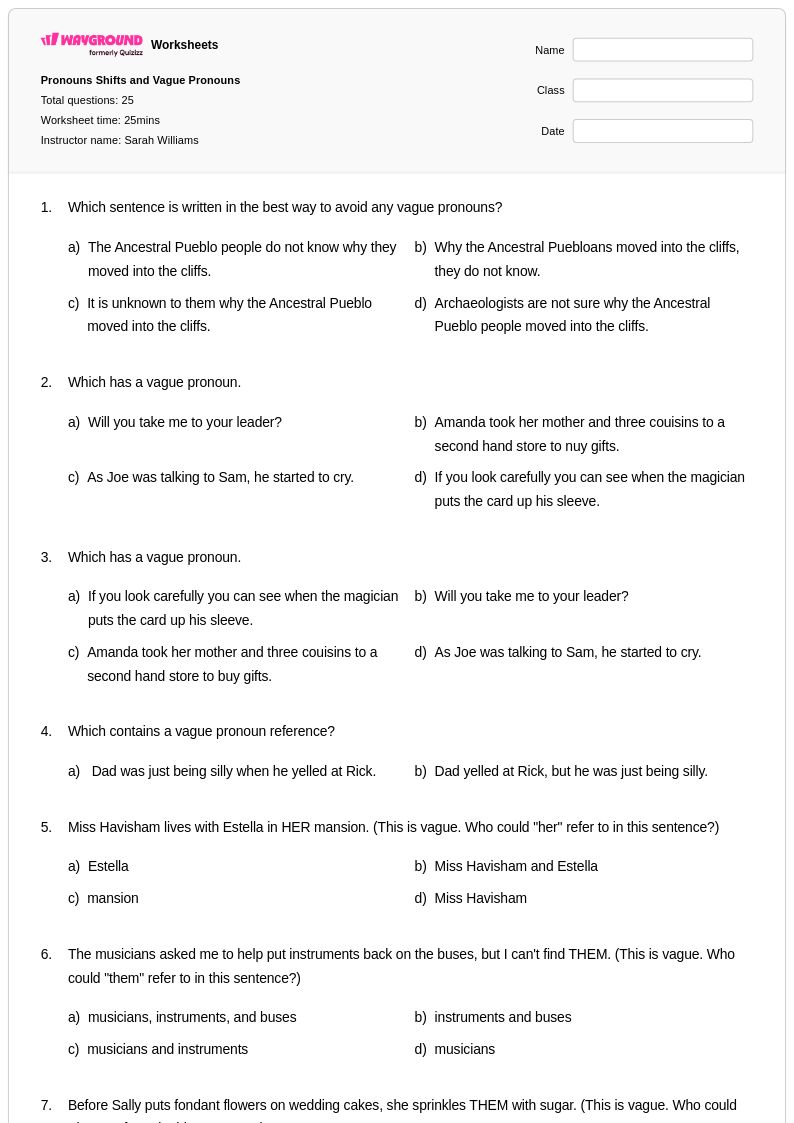
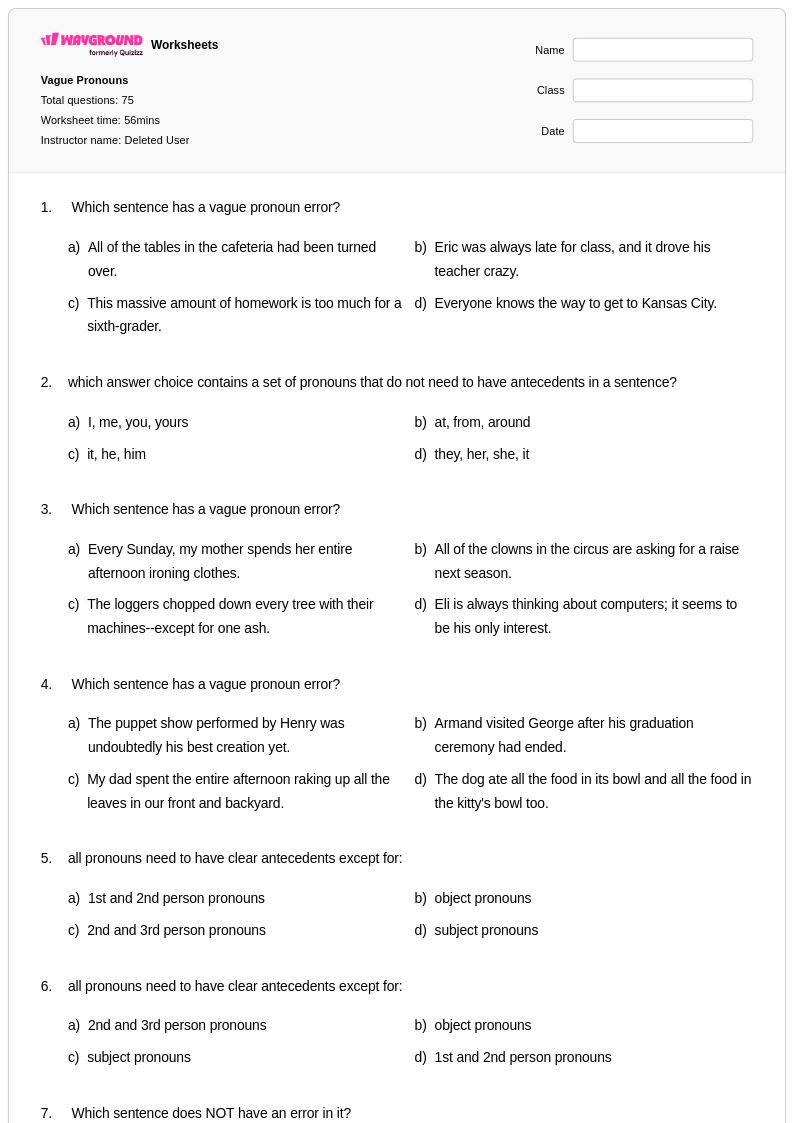
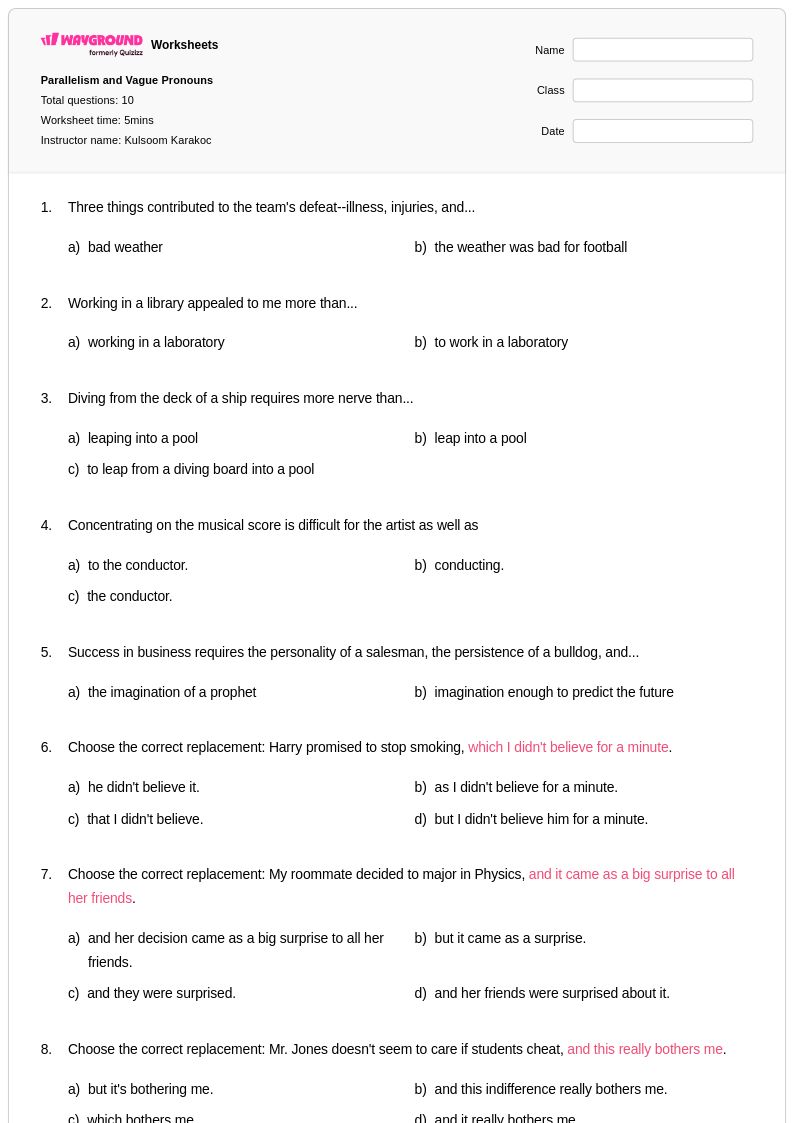
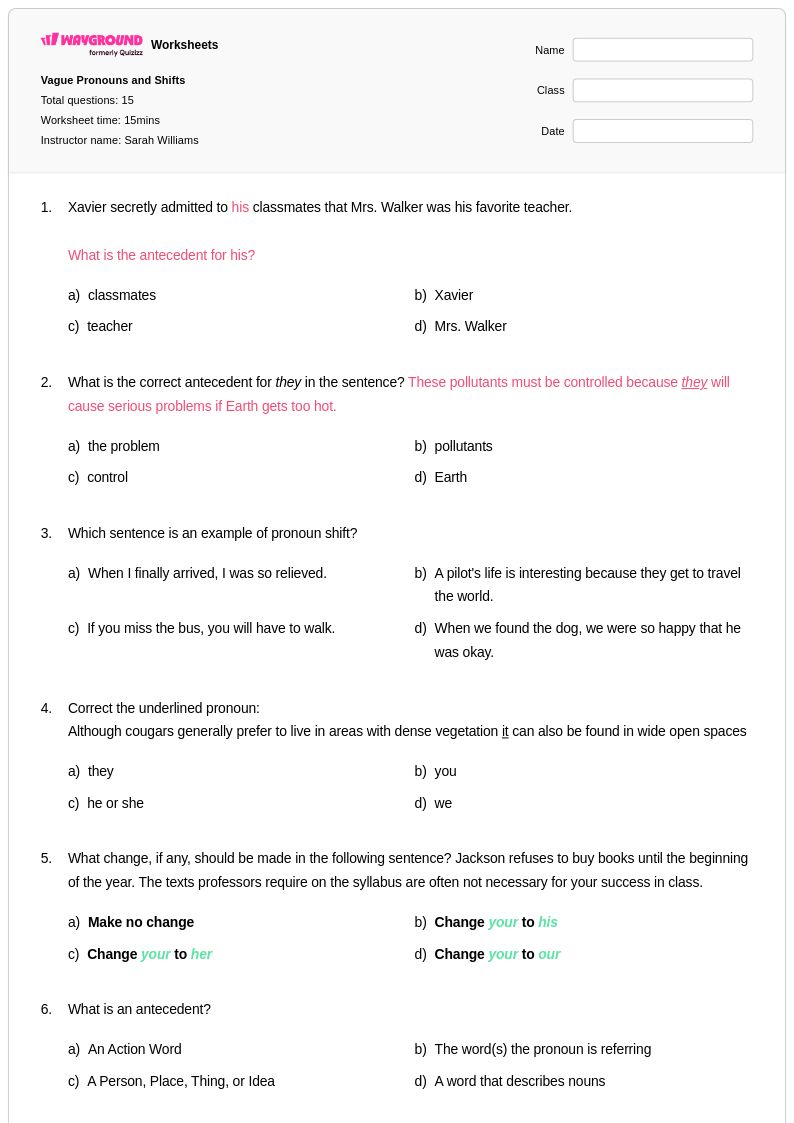
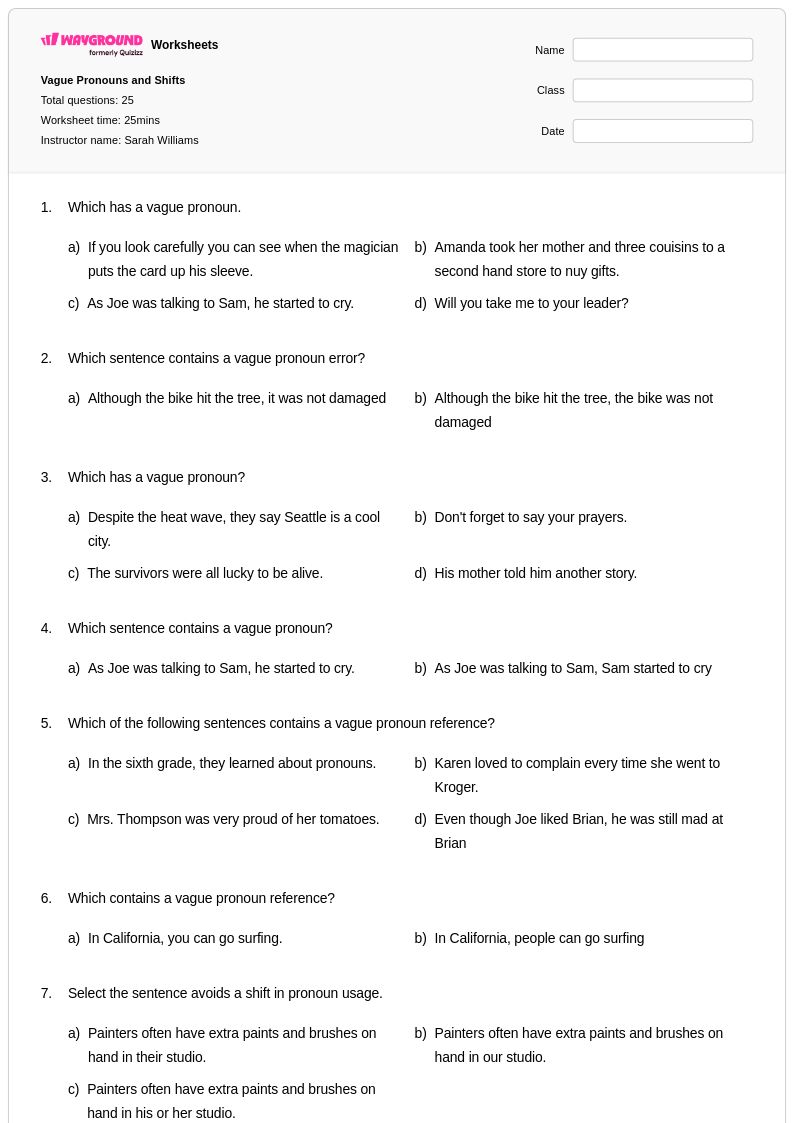
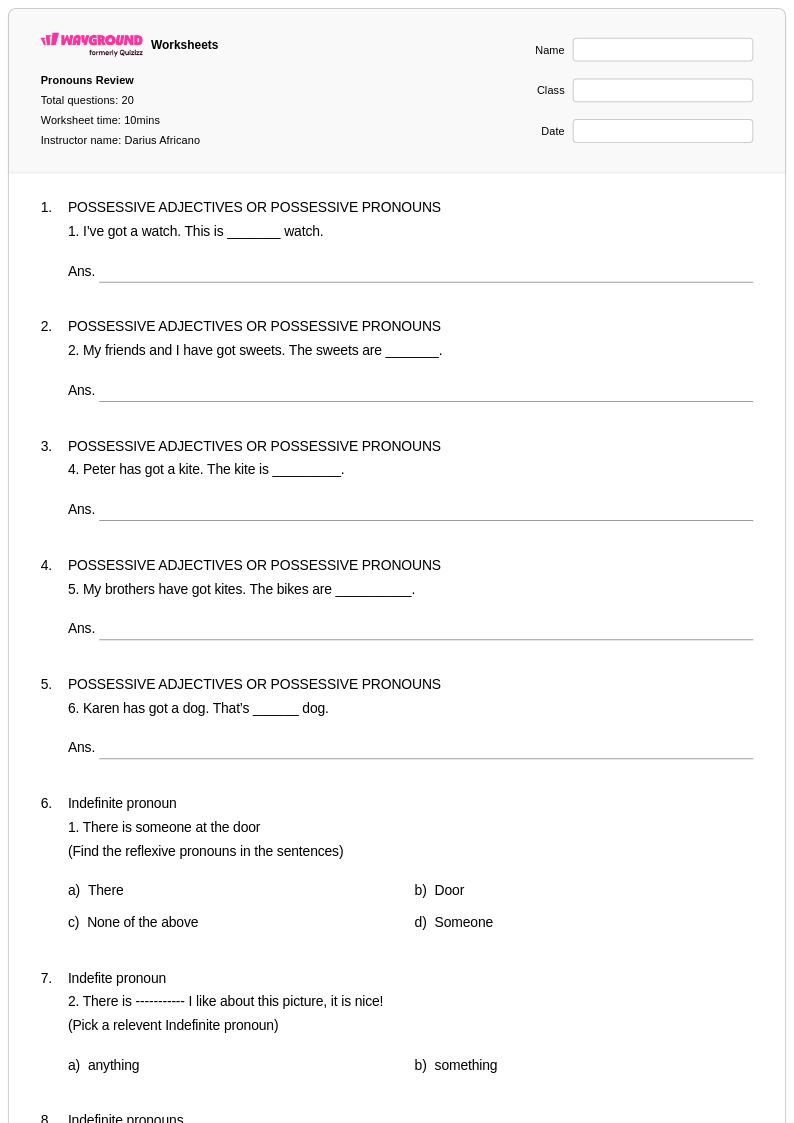
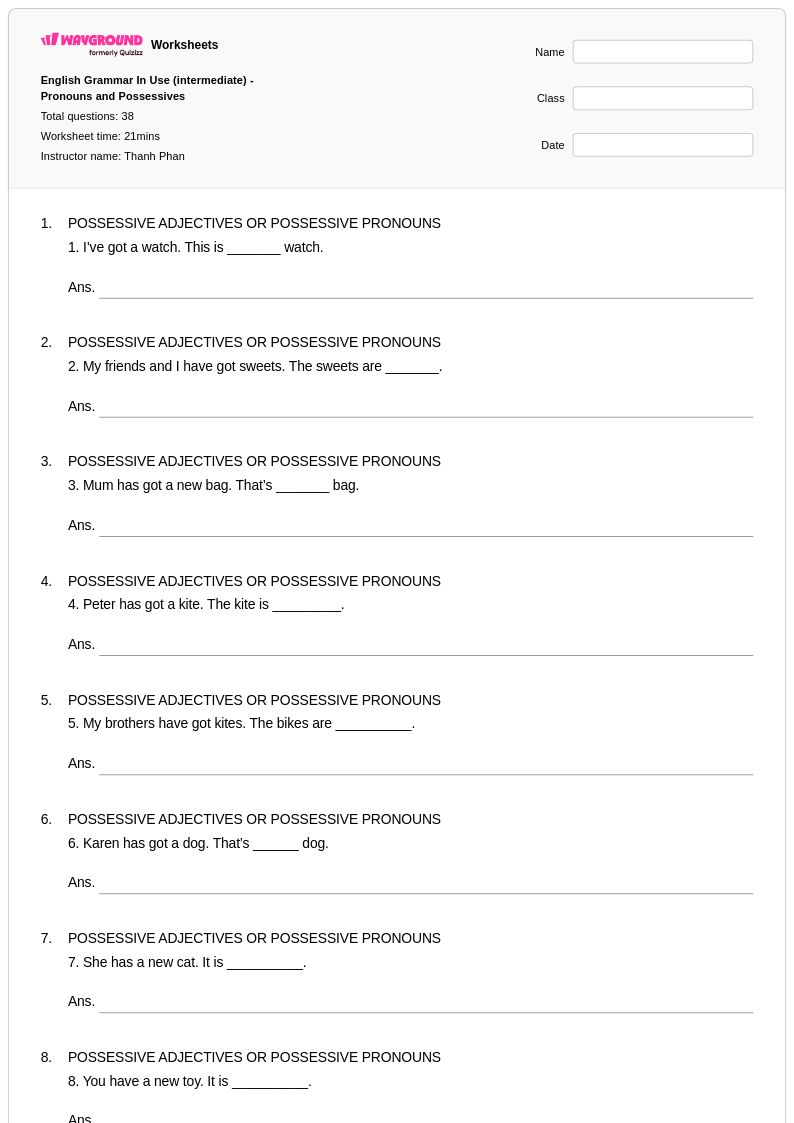
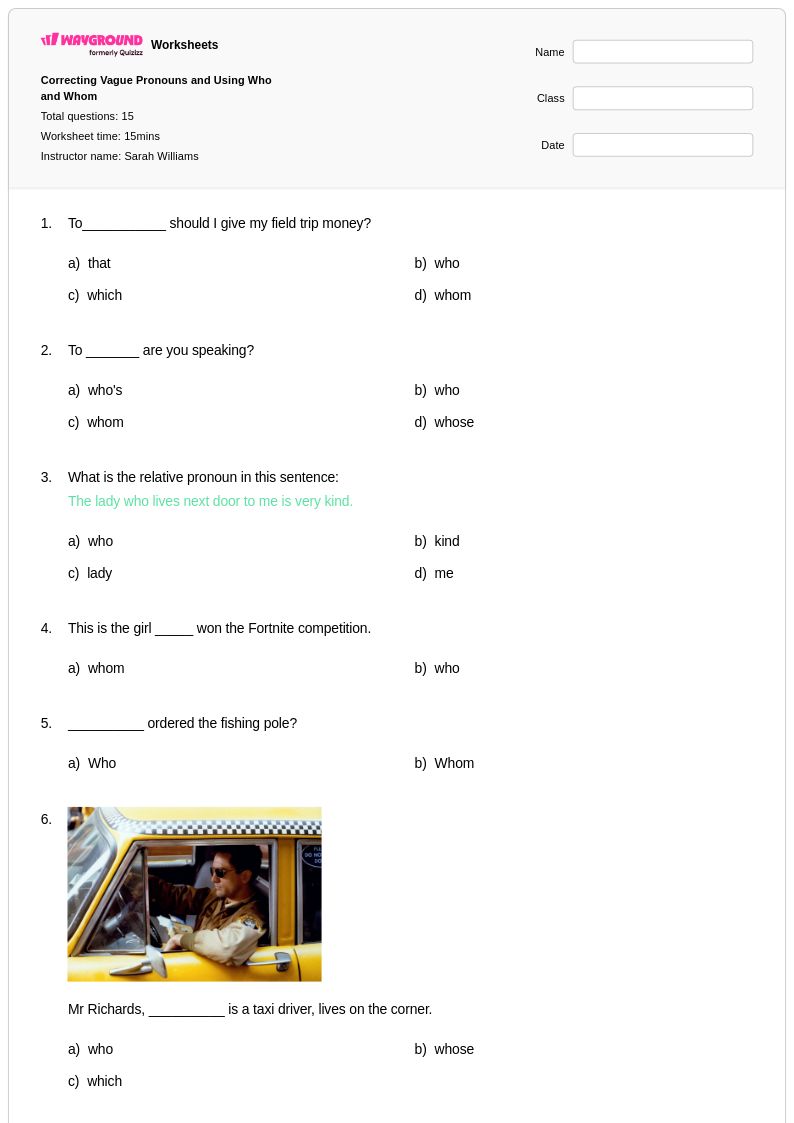
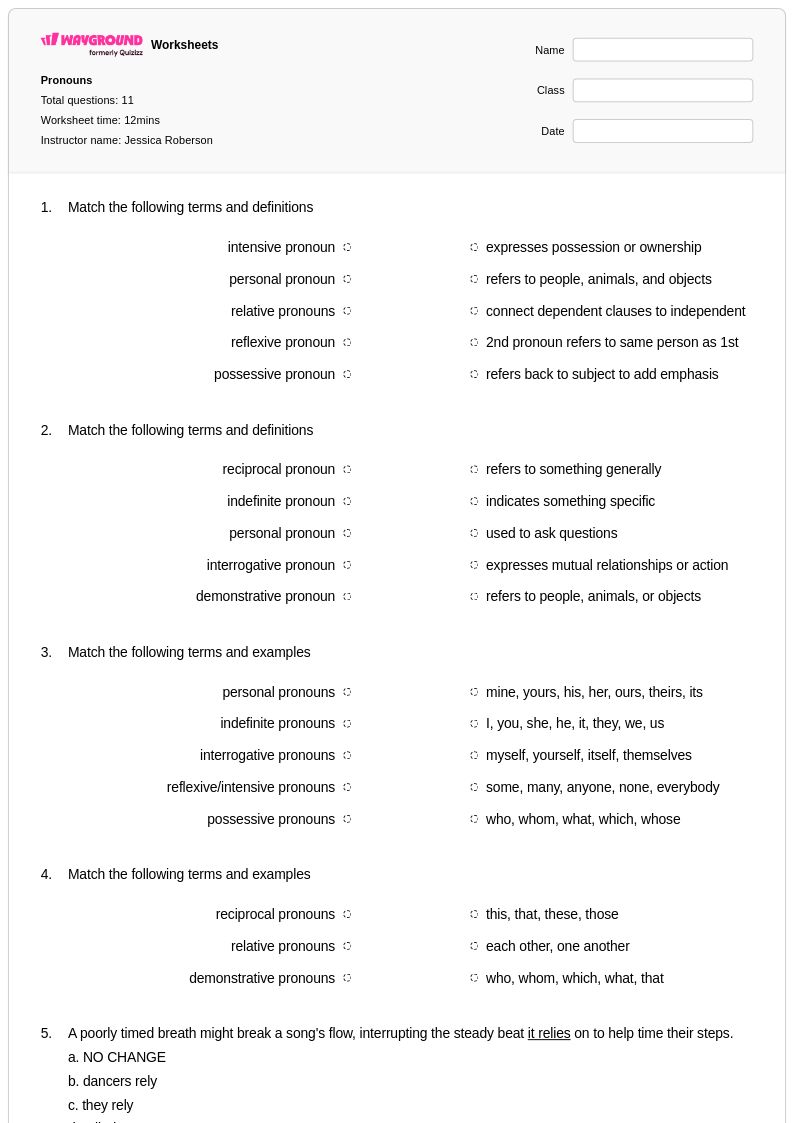
Vague pronoun worksheets for Class 12 students available through Wayground (formerly Quizizz) provide comprehensive practice in identifying and correcting ambiguous pronoun references that can compromise writing clarity and precision. These advanced-level resources focus on helping students recognize when pronouns lack clear antecedents, create confusion between multiple possible referents, or rely on implied rather than explicit noun connections. Students work through carefully crafted practice problems that demonstrate how vague pronouns can obscure meaning in academic and professional writing contexts. Each worksheet includes detailed answer keys that explain not only the corrections but also the reasoning behind pronoun clarity rules, making these free printables valuable tools for both independent study and classroom instruction. The materials strengthen critical editing skills essential for college-level composition and standardized test preparation.
Wayground (formerly Quizizz) supports English teachers with an extensive collection of teacher-created vague pronoun worksheets that can be easily customized to meet diverse classroom needs and learning objectives. The platform's robust search and filtering capabilities allow educators to quickly locate materials aligned with specific standards and difficulty levels, while built-in differentiation tools enable teachers to modify content for students requiring additional support or enrichment opportunities. These resources are available in both printable pdf format for traditional paper-based activities and digital formats for technology-integrated learning environments. Teachers can efficiently plan targeted remediation sessions for students struggling with pronoun clarity, develop comprehensive skill practice sequences, or create assessment materials that accurately measure student progress in this crucial area of advanced grammar and composition instruction.
FAQs
How do I teach students to identify vague pronoun references in their writing?
Start by teaching students to draw an arrow from each pronoun back to its antecedent. If the arrow points to more than one possible noun, or to no noun at all, the pronoun reference is vague. Model this process with mentor sentences before asking students to apply it independently, and emphasize that readers should never have to guess what a pronoun refers to.
What exercises best help students practice correcting vague pronouns?
The most effective practice moves students through a progression: first identifying which pronoun is unclear, then naming the possible antecedents causing confusion, and finally rewriting the sentence for clarity. Sentence revision tasks are especially valuable because they require students to make an active grammatical decision rather than simply circle an error. Worksheets that sequence from identification to revision build this skill systematically.
What are the most common mistakes students make with pronoun references?
The most frequent error is using 'it,' 'this,' 'they,' or 'that' to refer to a broad idea or entire clause rather than a specific noun. For example, writing 'They say it will rain' uses both 'they' and 'it' without clear antecedents. Students also commonly place a pronoun too far from its antecedent, allowing intervening nouns to create ambiguity. Targeted practice identifying these specific patterns helps students recognize and self-correct them in their own writing.
How do I differentiate vague pronoun instruction for struggling writers versus advanced students?
For struggling writers, begin with sentences containing only one possible antecedent confusion and work on naming the problem before fixing it. Advanced students benefit from revising multi-sentence passages where the vague pronoun cascades across sentences, or from analyzing published writing for ambiguous references. On Wayground, teachers can use reduced answer choices for students who need additional support, lowering cognitive load while keeping the skill target the same.
How can I use Wayground's vague pronouns worksheets in my classroom?
Wayground's vague pronoun worksheets are available as printable PDFs for traditional classroom use and in digital formats for technology-integrated or remote learning environments. Teachers can also host the worksheets as a quiz directly on Wayground, enabling real-time student responses and instant feedback. Each worksheet includes a complete answer key, making them practical for independent practice, grammar warm-ups, or targeted remediation sessions.
At what point in a writing unit should I introduce vague pronoun lessons?
Vague pronoun instruction is most effective after students have a working understanding of pronoun-antecedent agreement, since clarity of reference builds on the concept that pronouns must match a specific noun. Introduce it during the revision stage of the writing process, when students are already reviewing their drafts for clarity. This contextual placement helps students apply the skill directly to their own writing rather than treating it as an isolated grammar rule.