
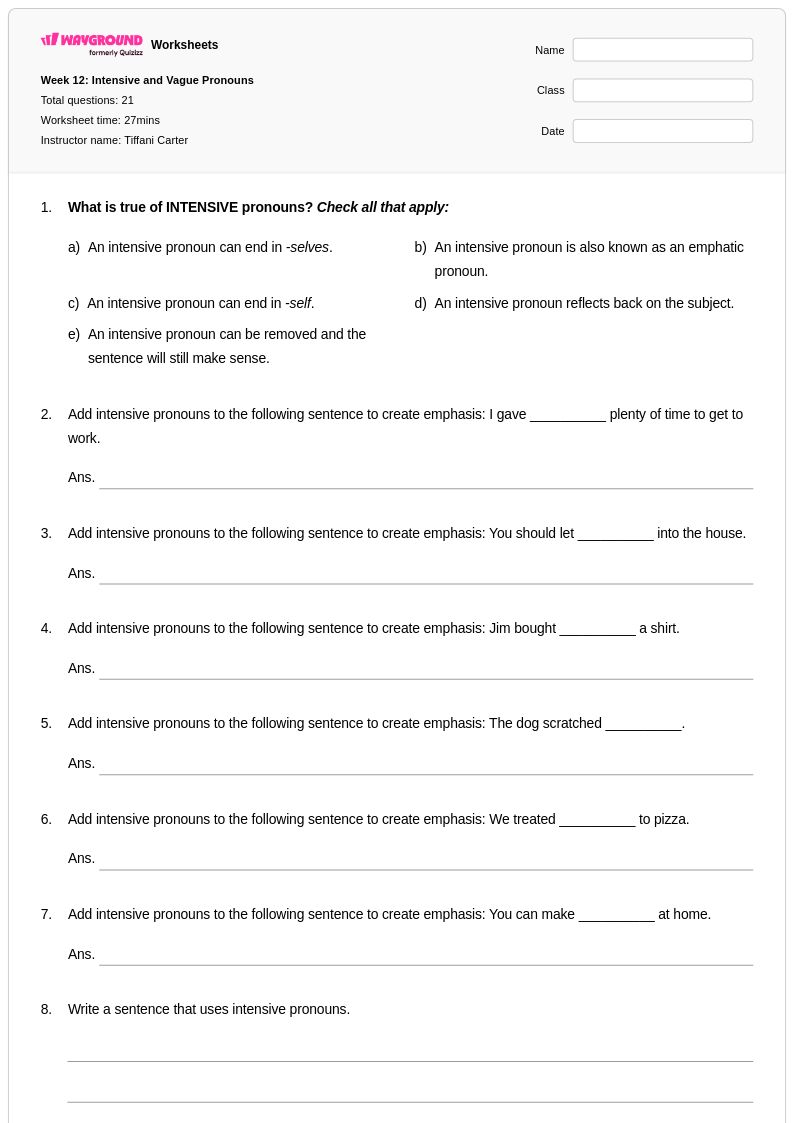
21 Q
7th
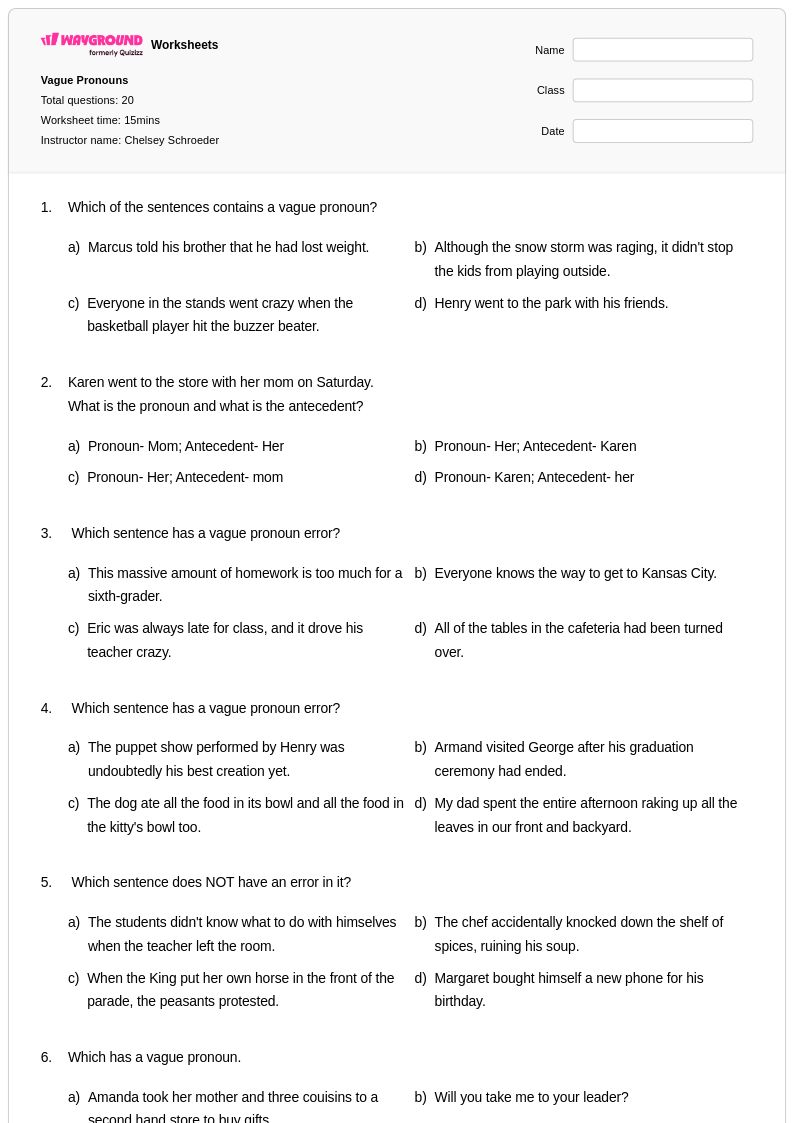
20 Q
7th
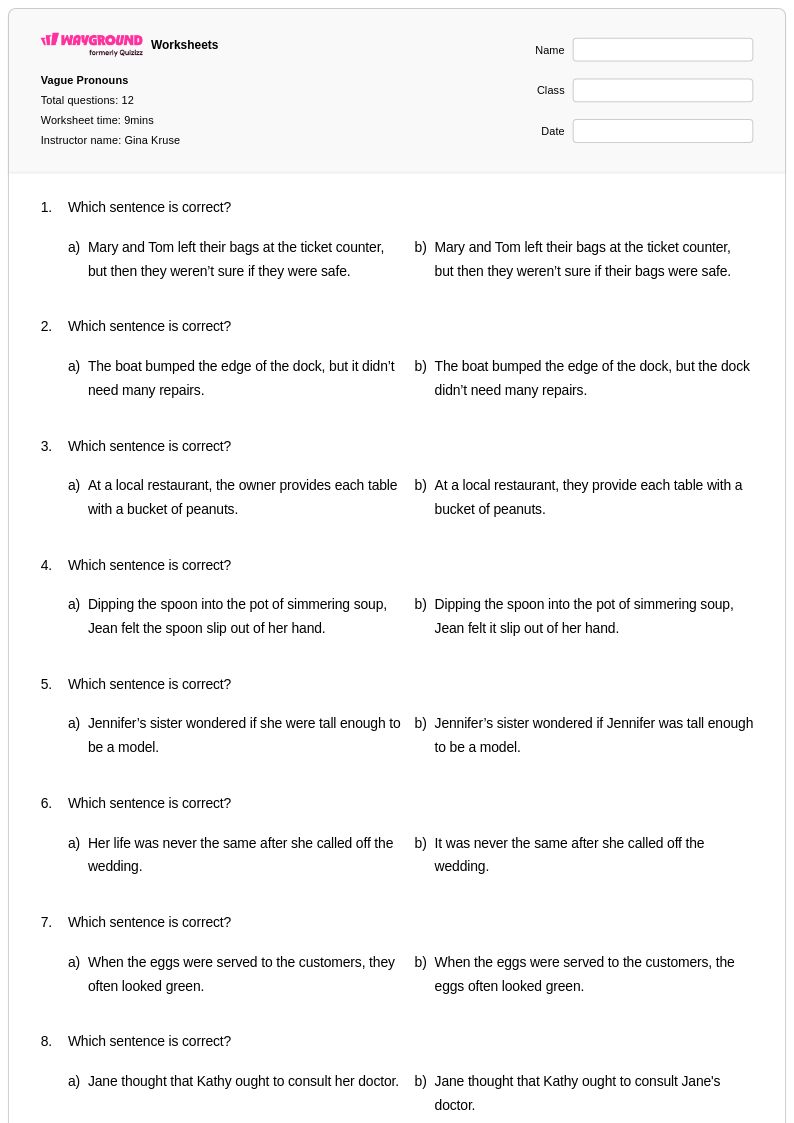
12 Q
7th
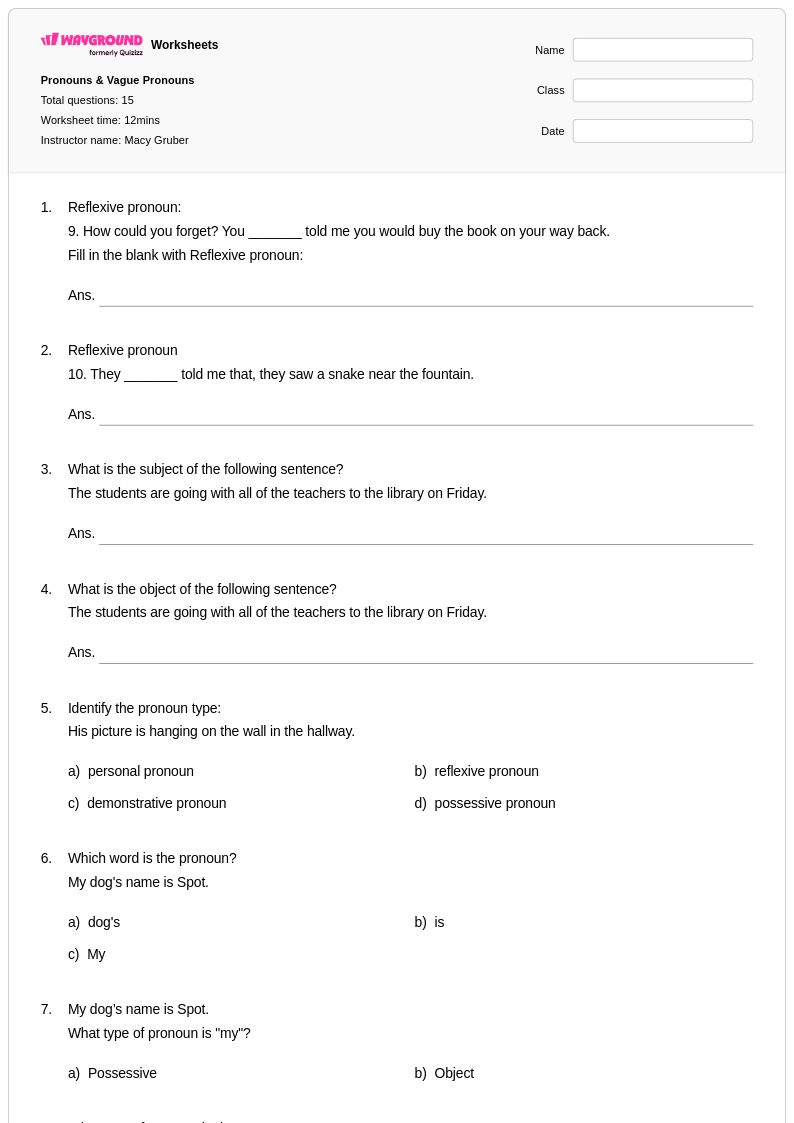
15 Q
6th - 8th
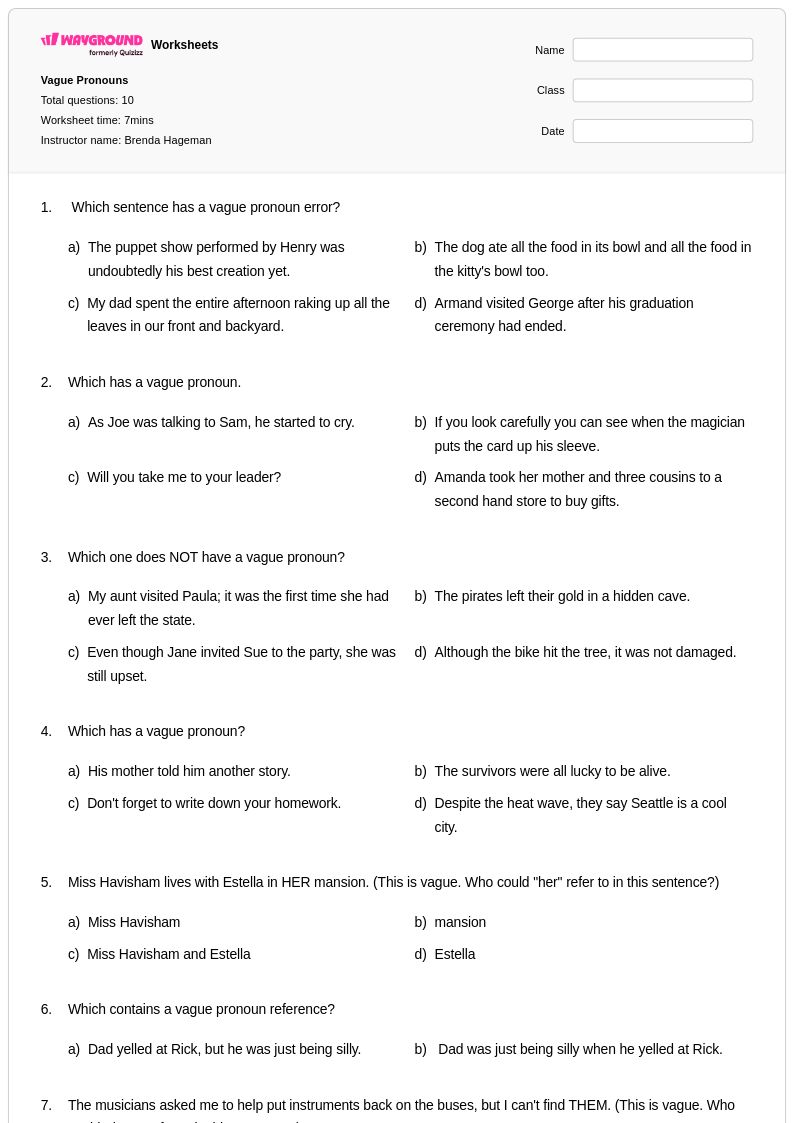
10 Q
7th
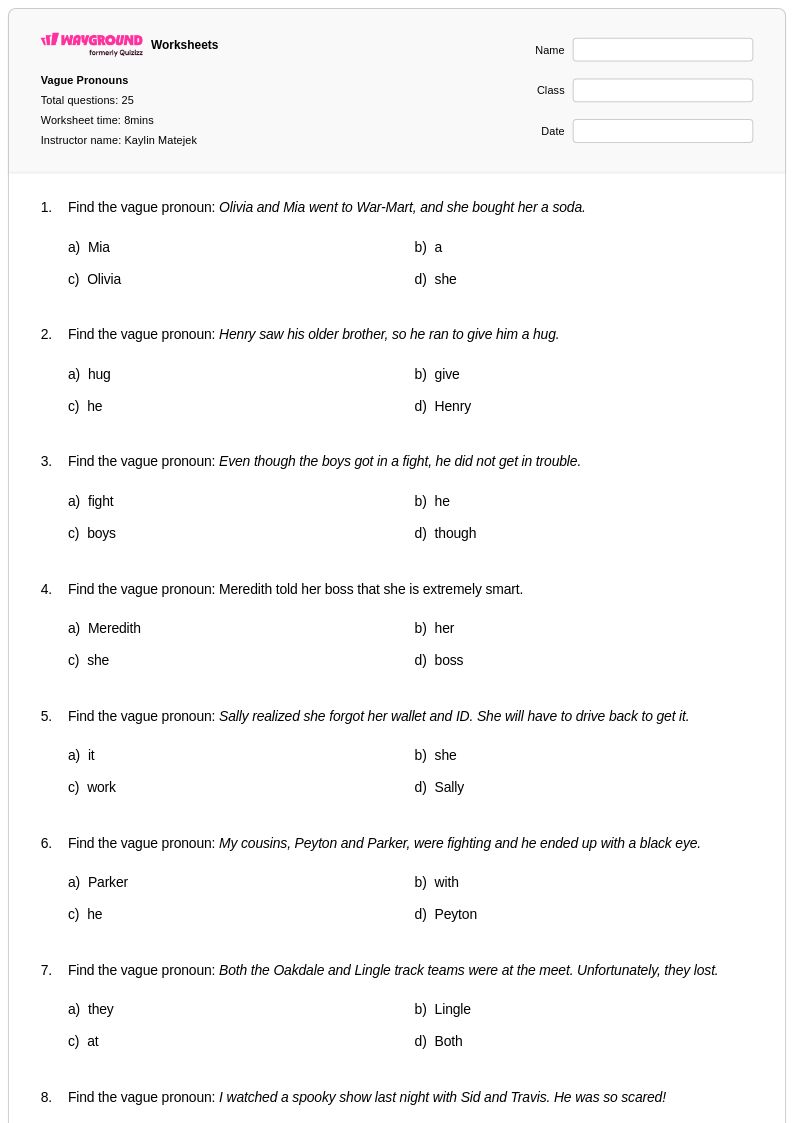
25 Q
6th - 7th
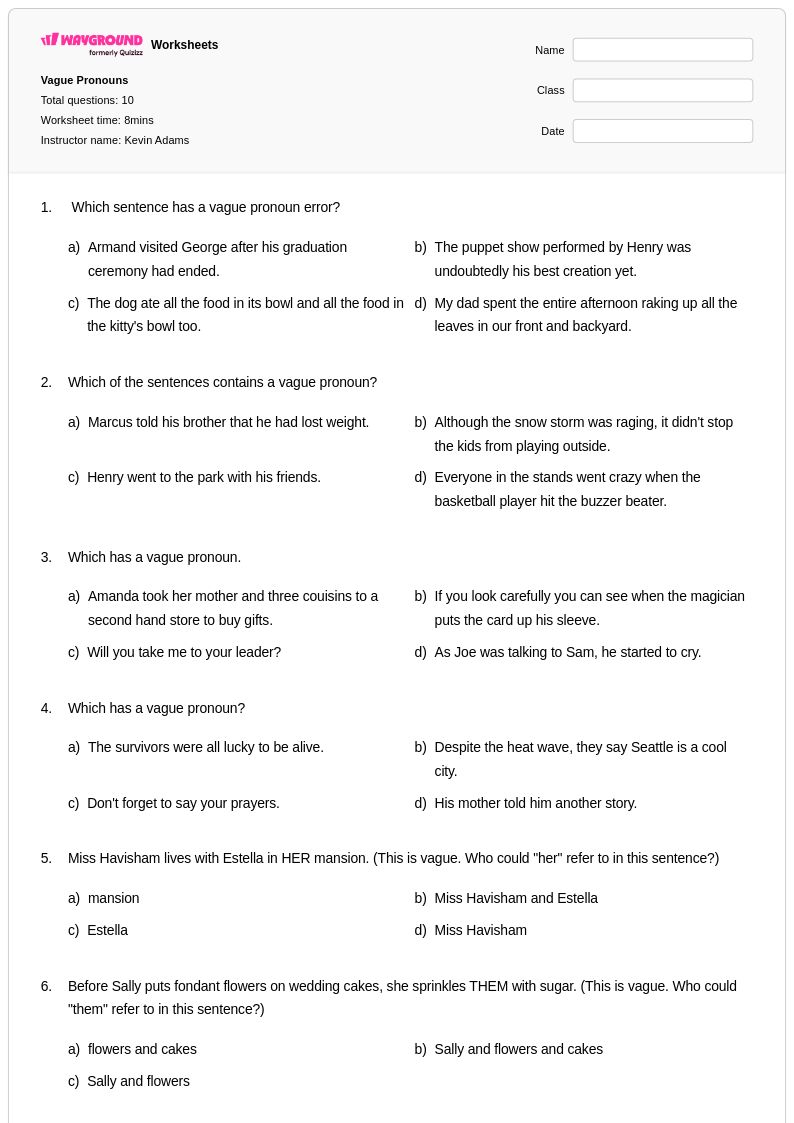
10 Q
6th - Uni
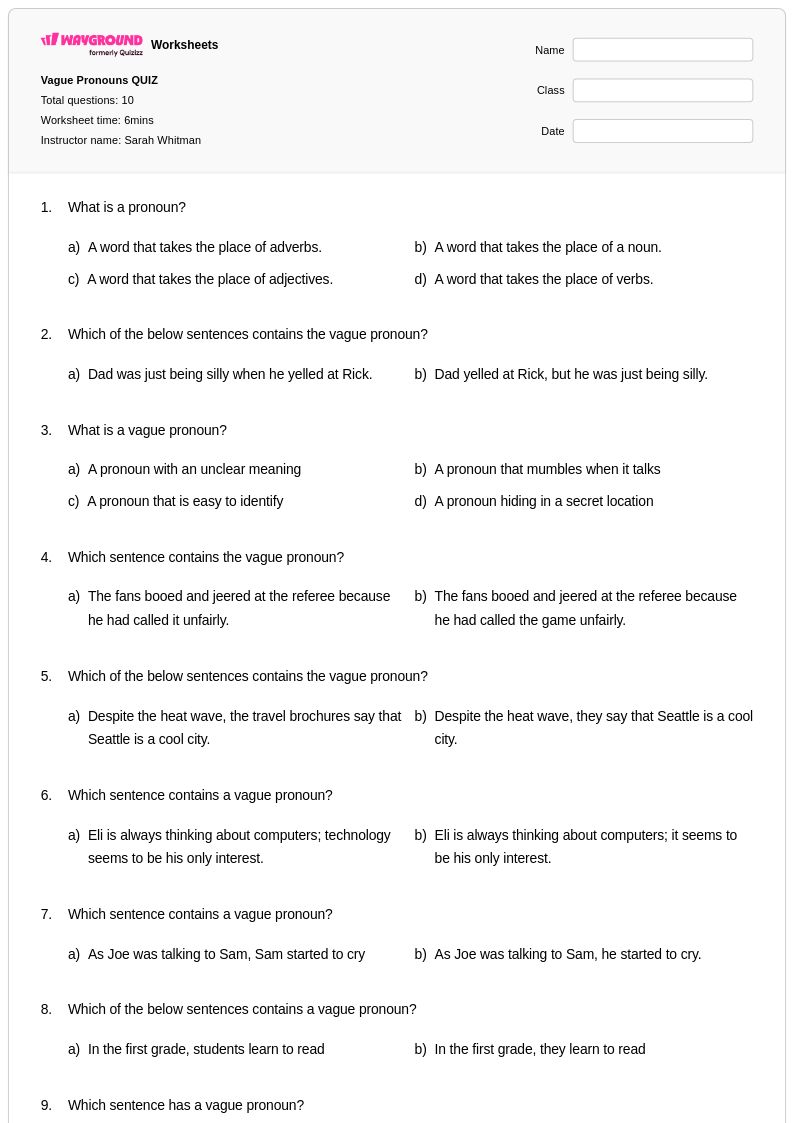
10 Q
6th - 8th
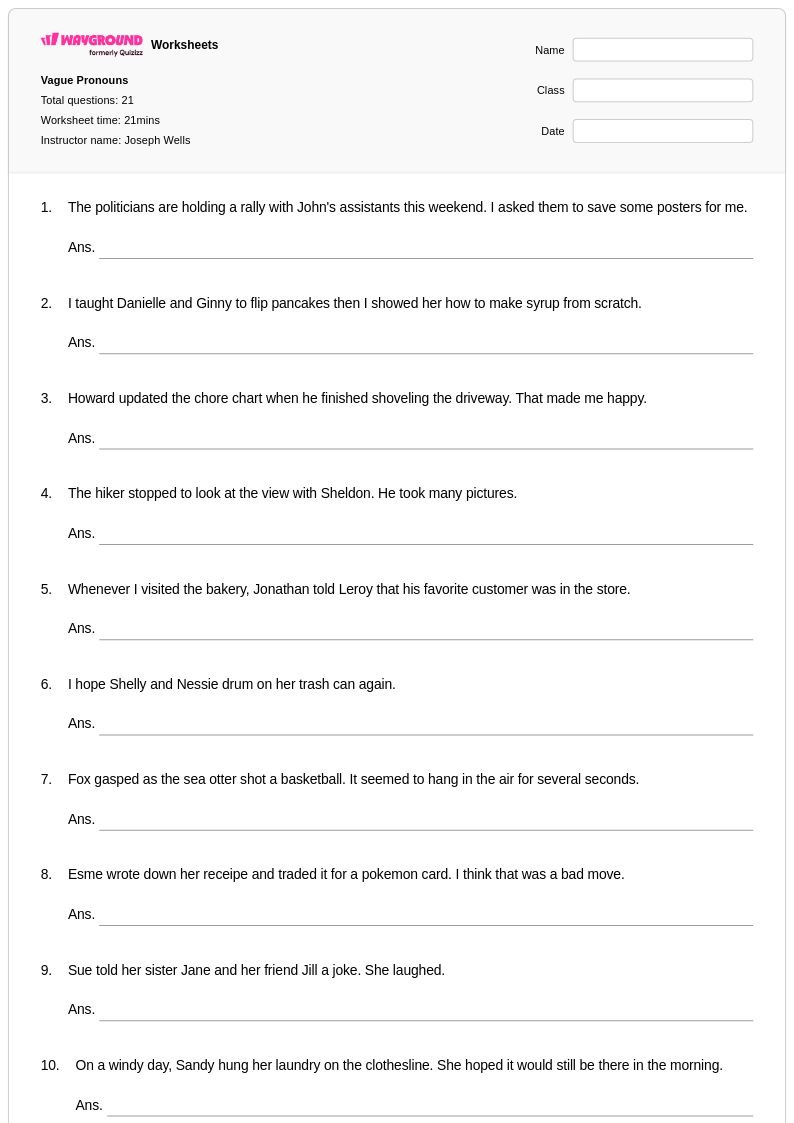
21 Q
6th - 8th
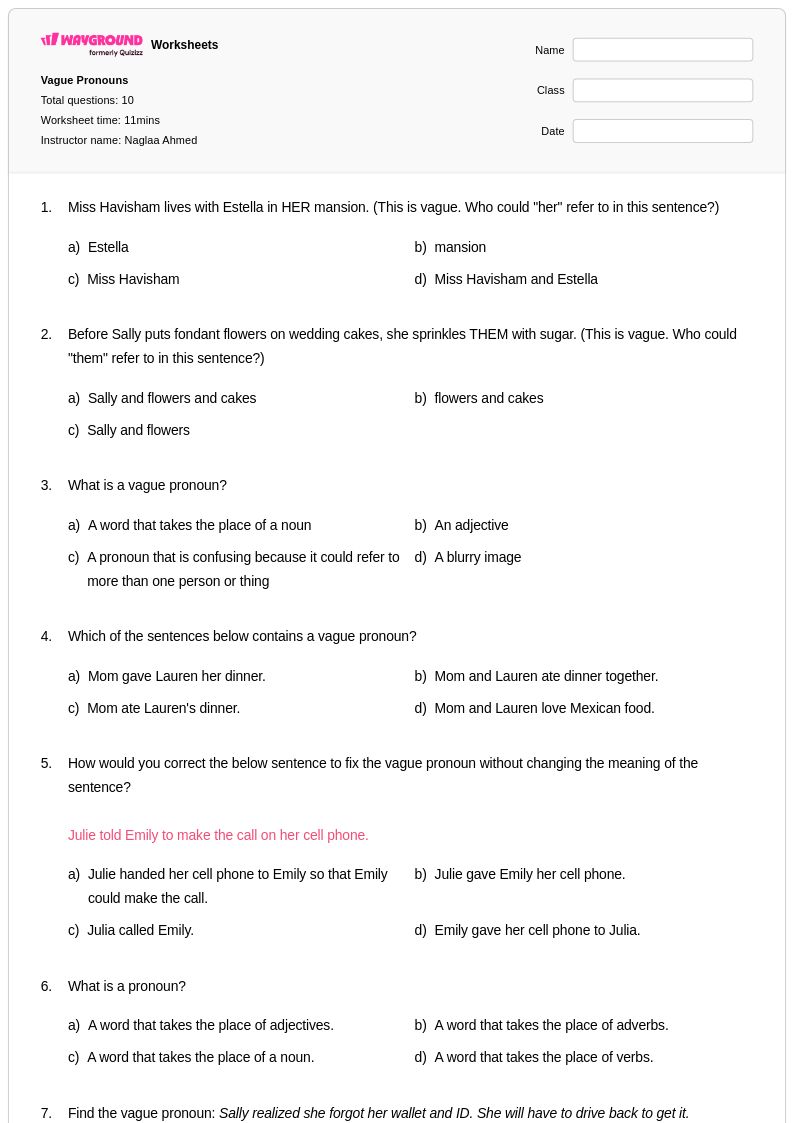
10 Q
6th - 8th
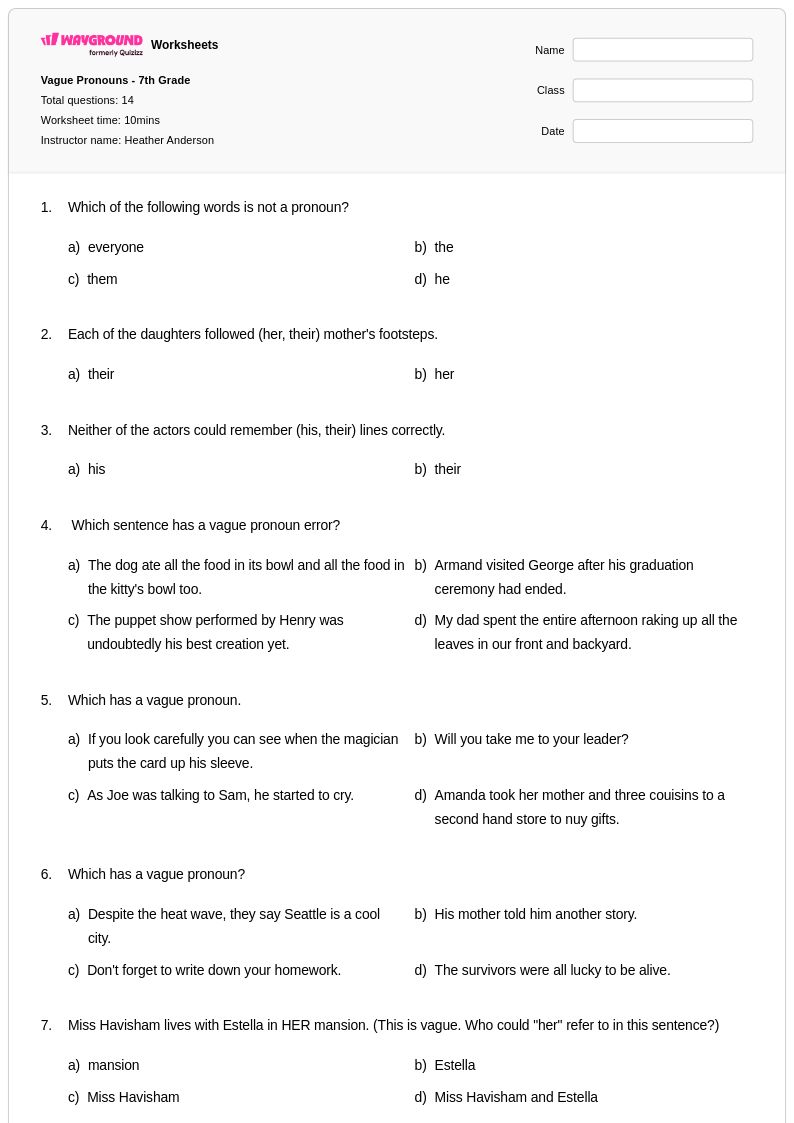
14 Q
7th
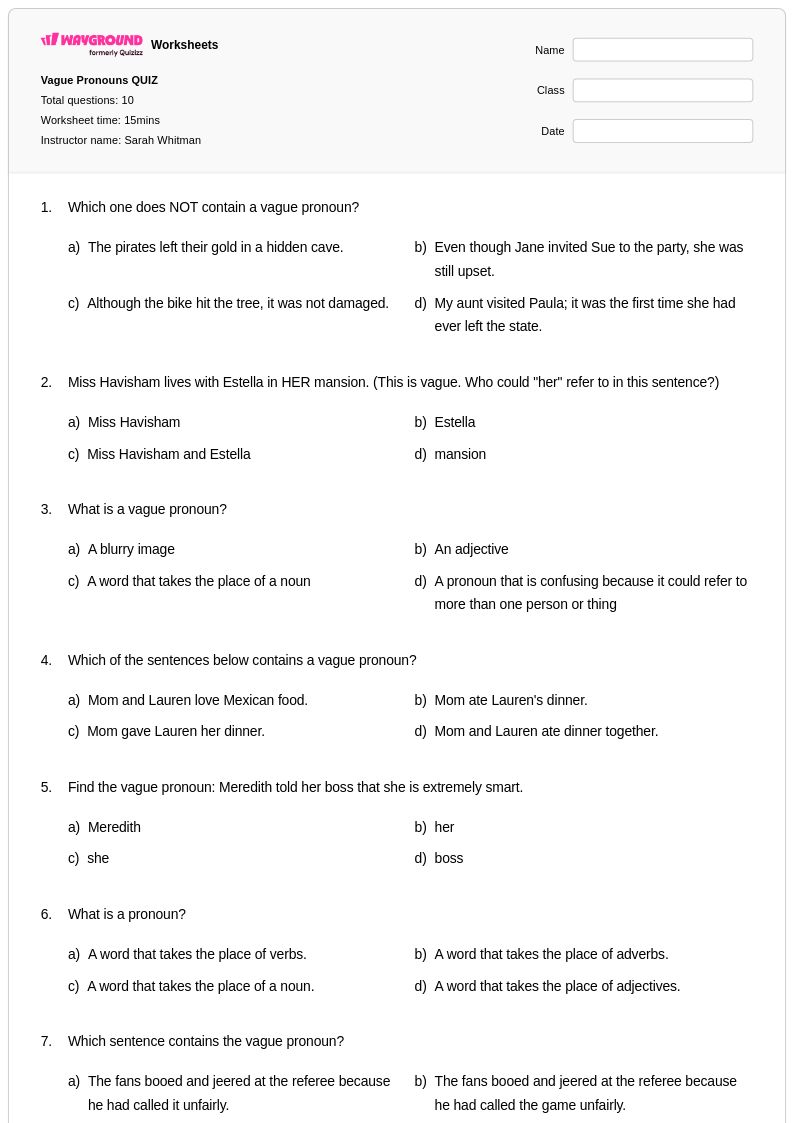
10 Q
6th - 8th
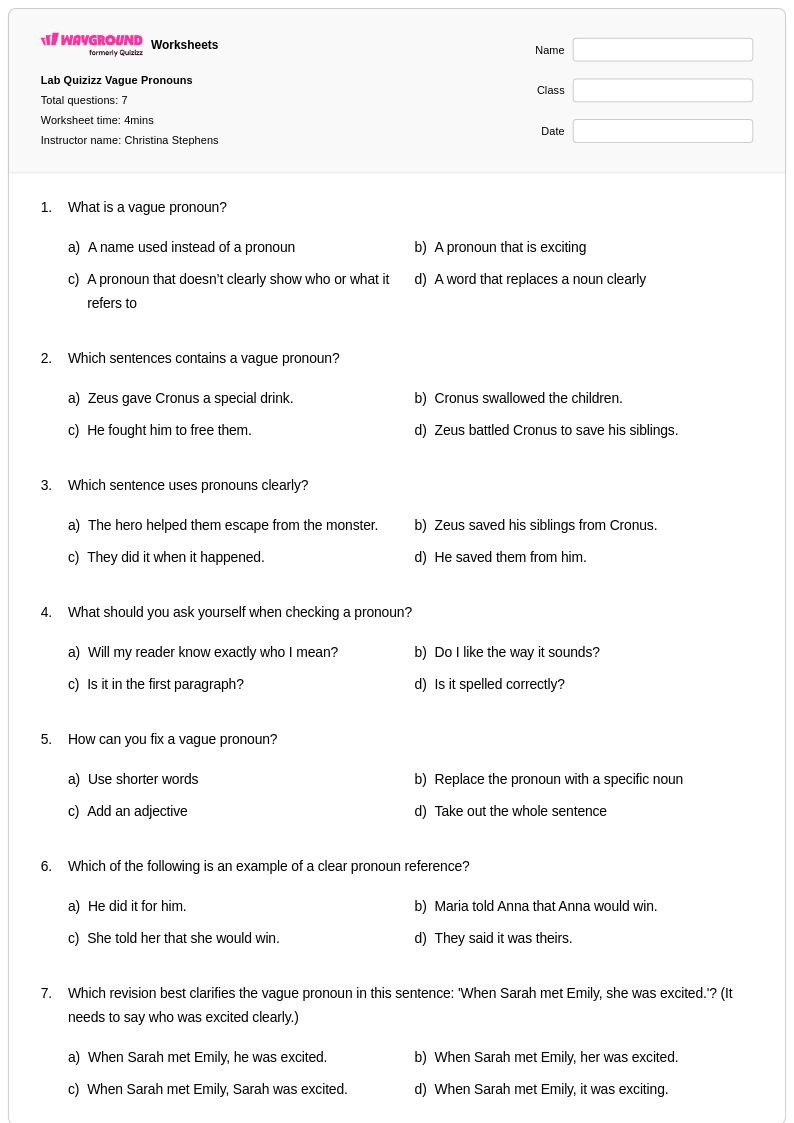
7 Q
6th - 8th
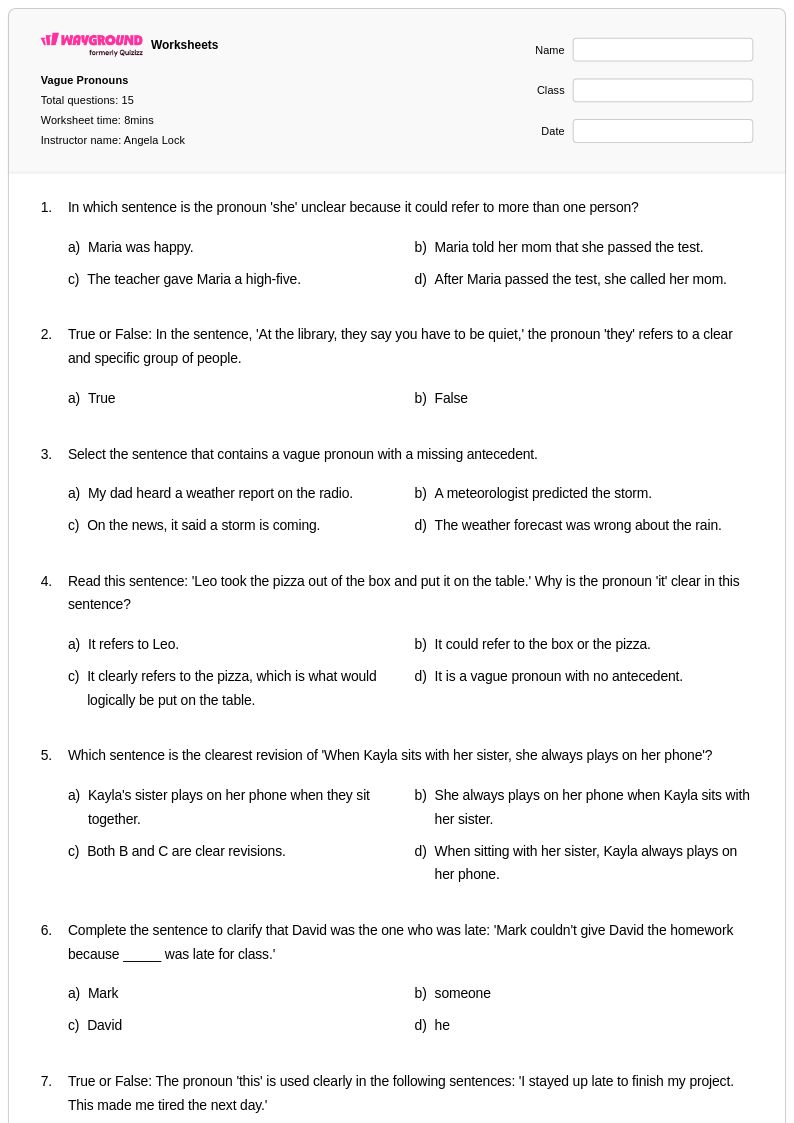
15 Q
6th - Uni
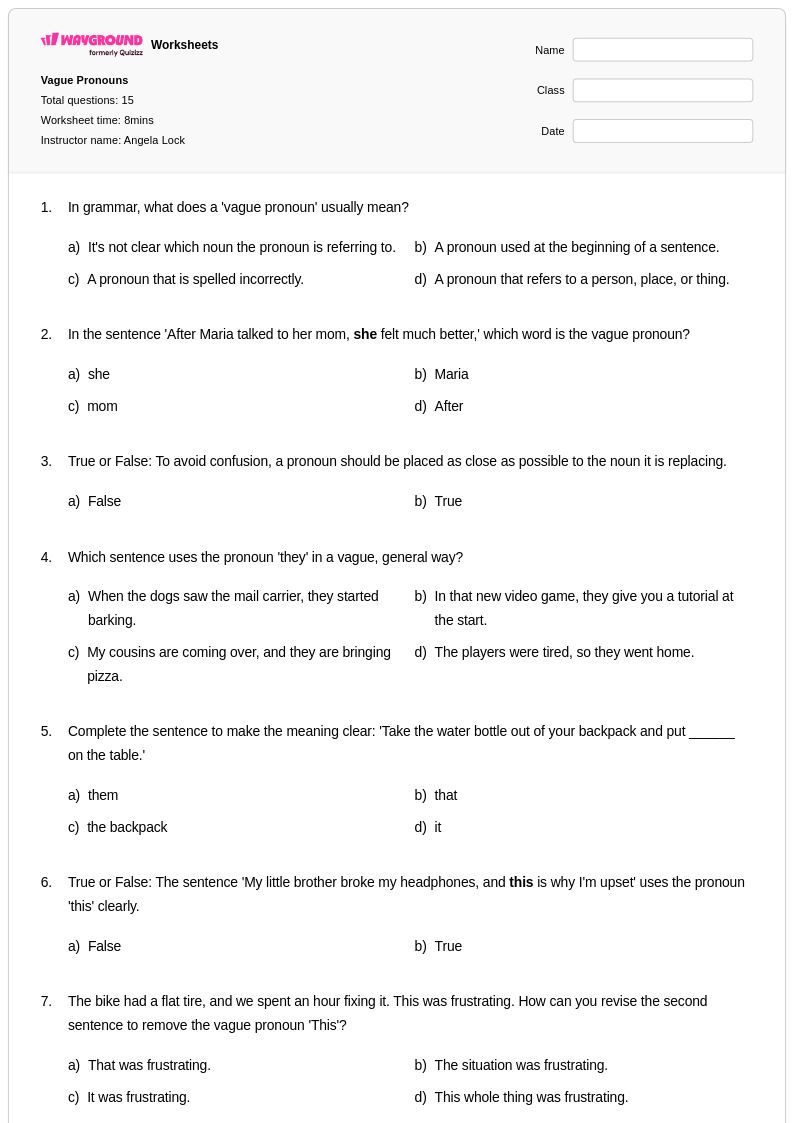
15 Q
7th - Uni
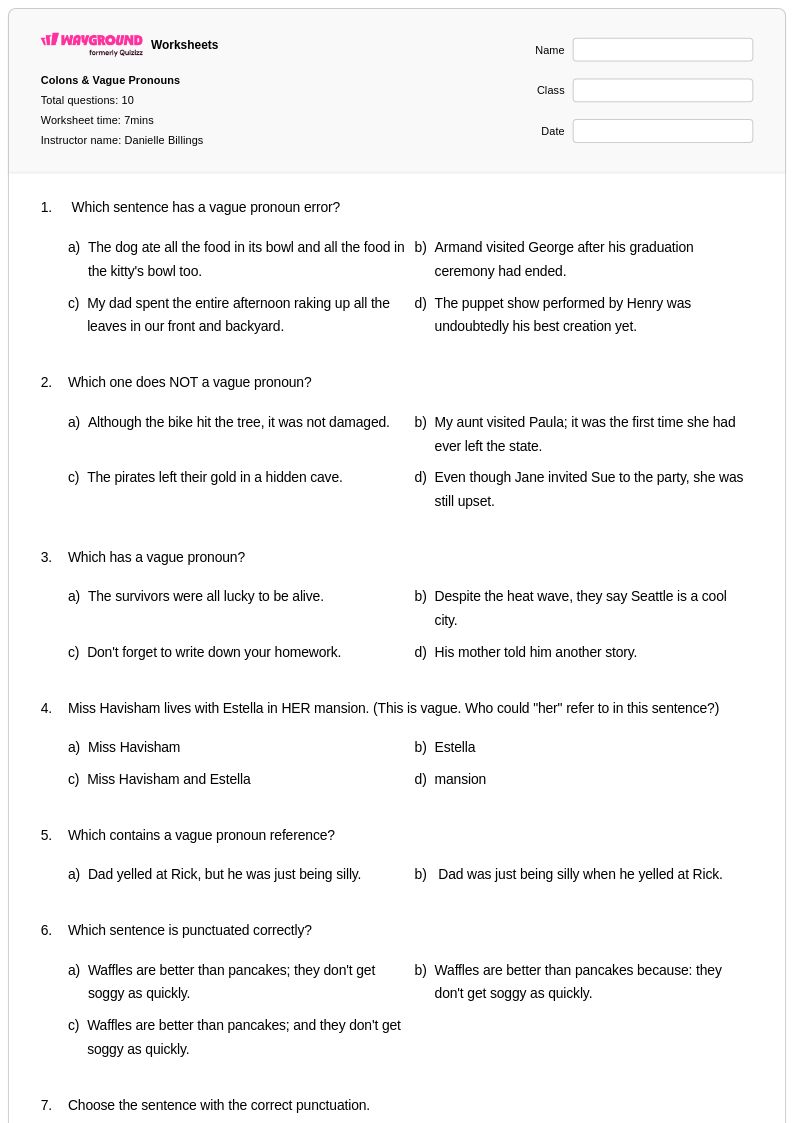
10 Q
6th - 8th
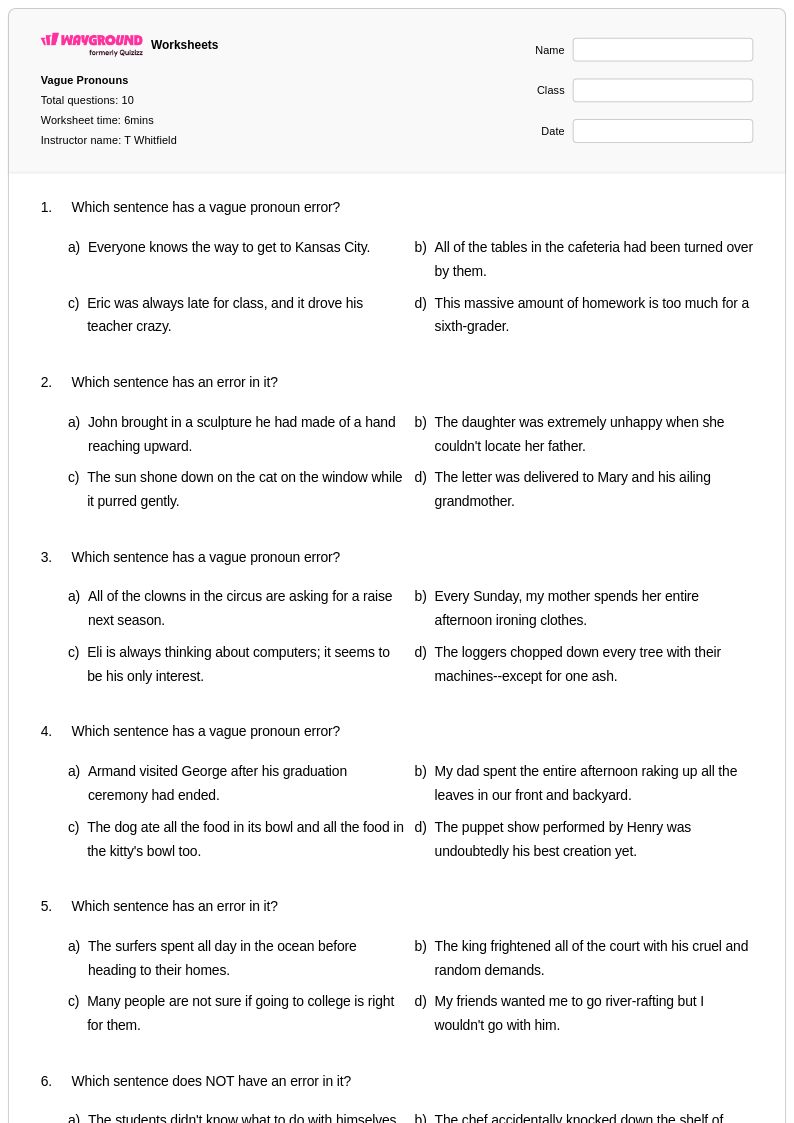
10 Q
6th - 8th
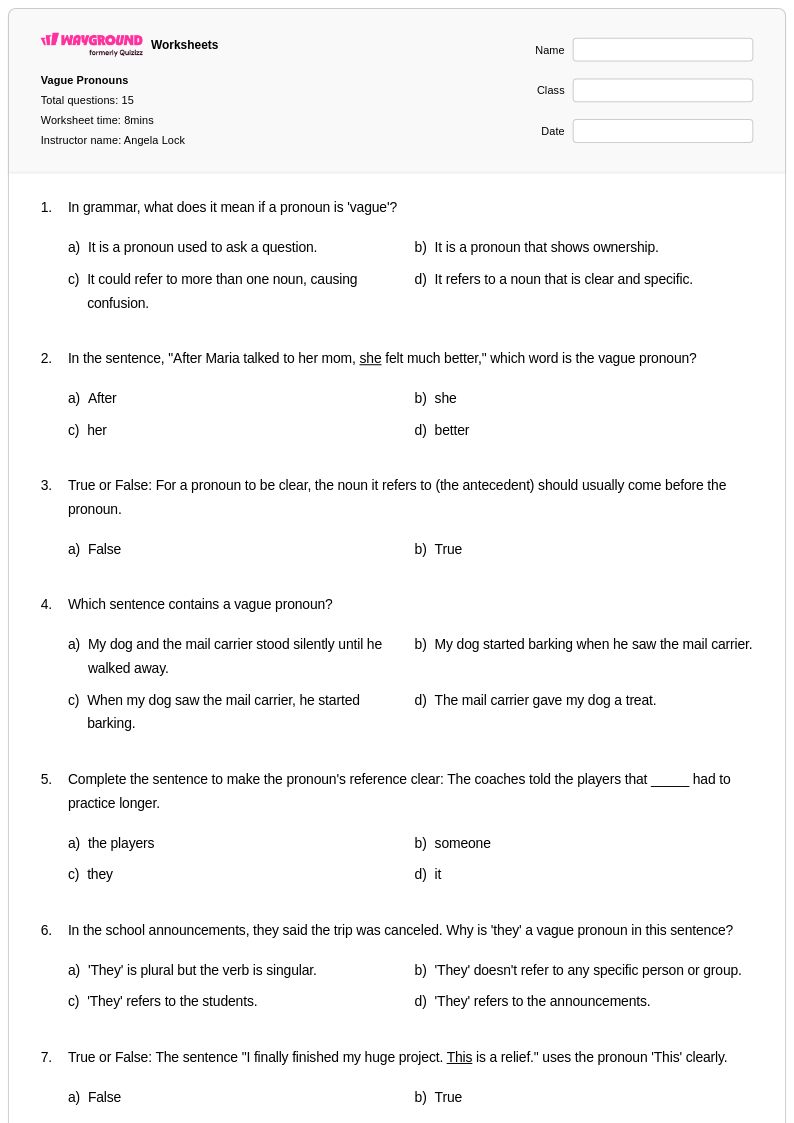
15 Q
6th - Uni
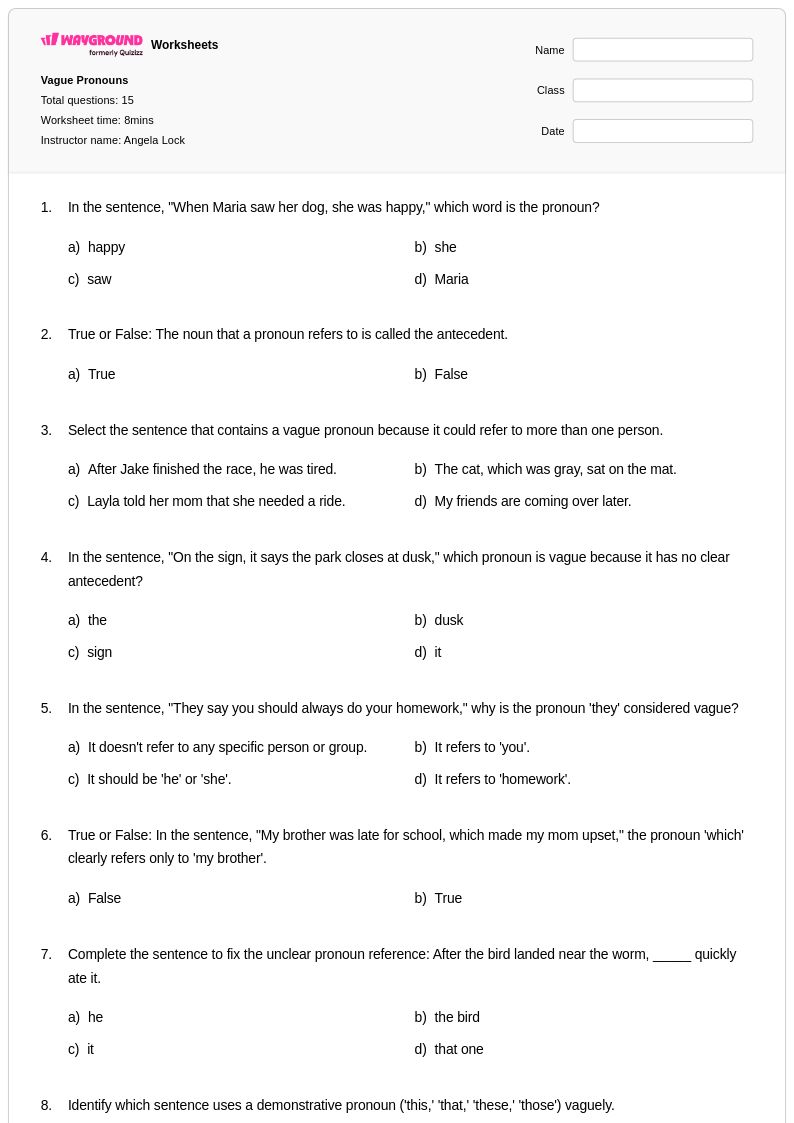
15 Q
6th - Uni
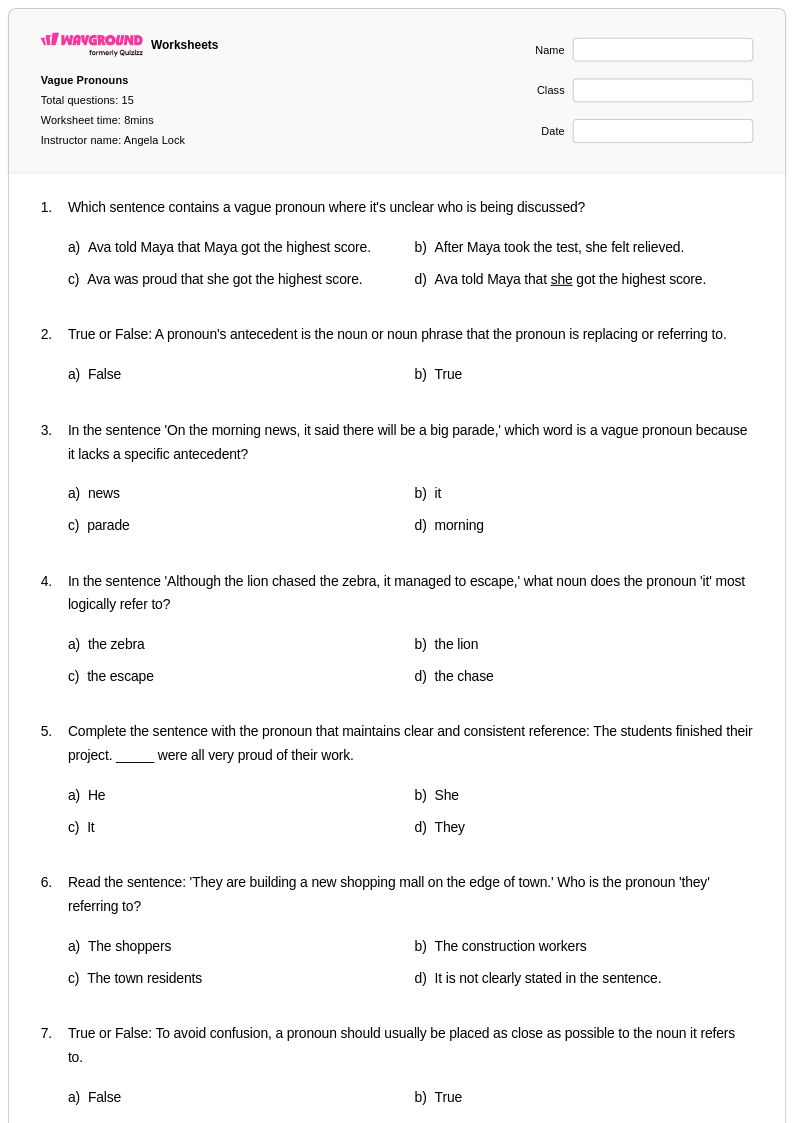
15 Q
7th - Uni
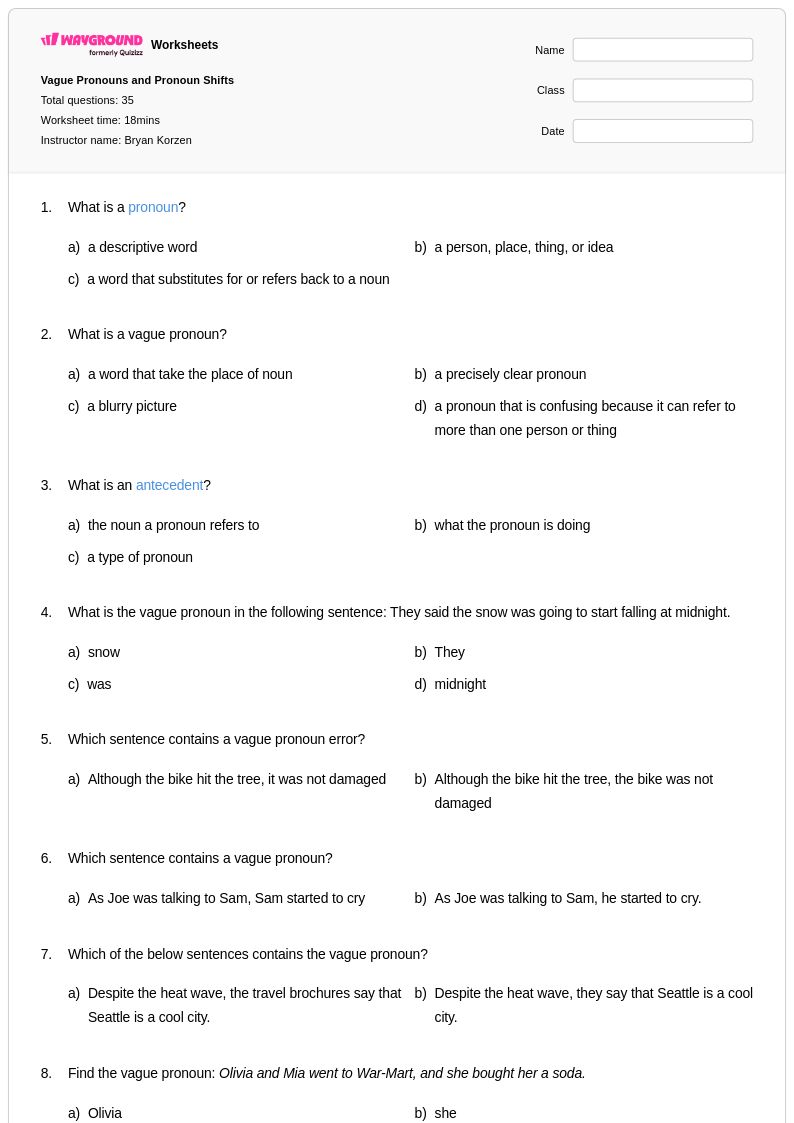
35 Q
6th - 8th
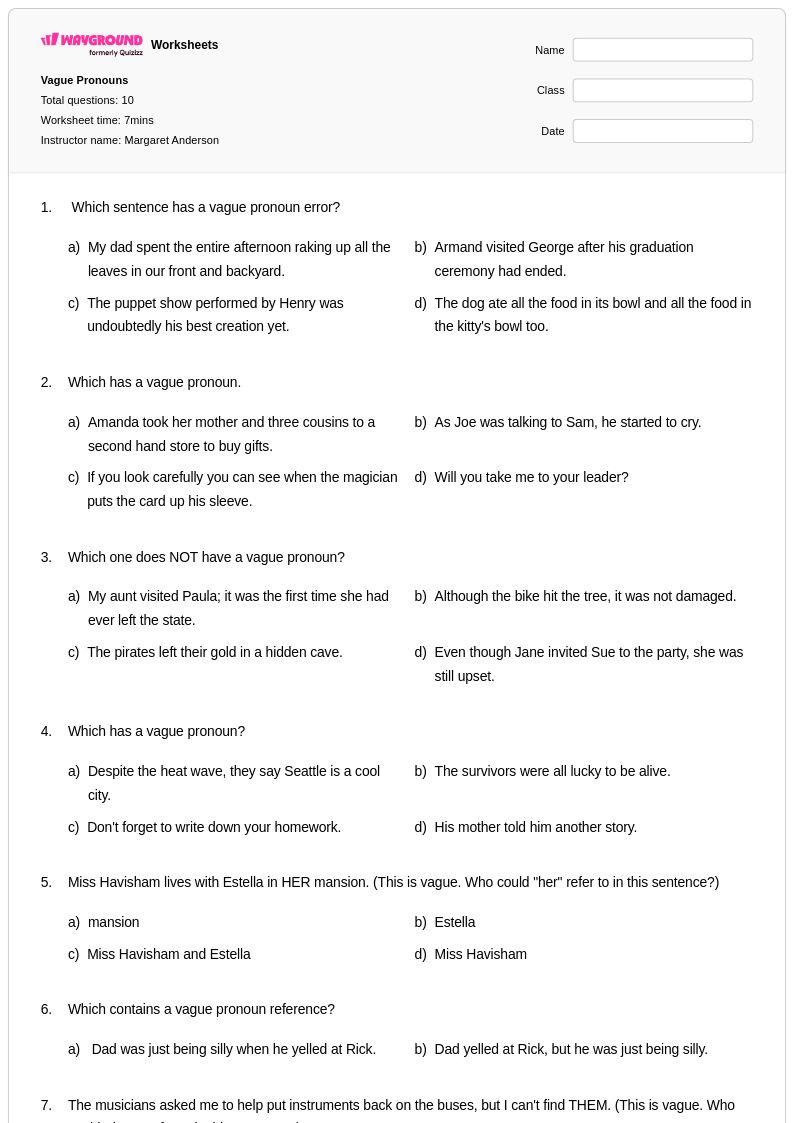
10 Q
7th
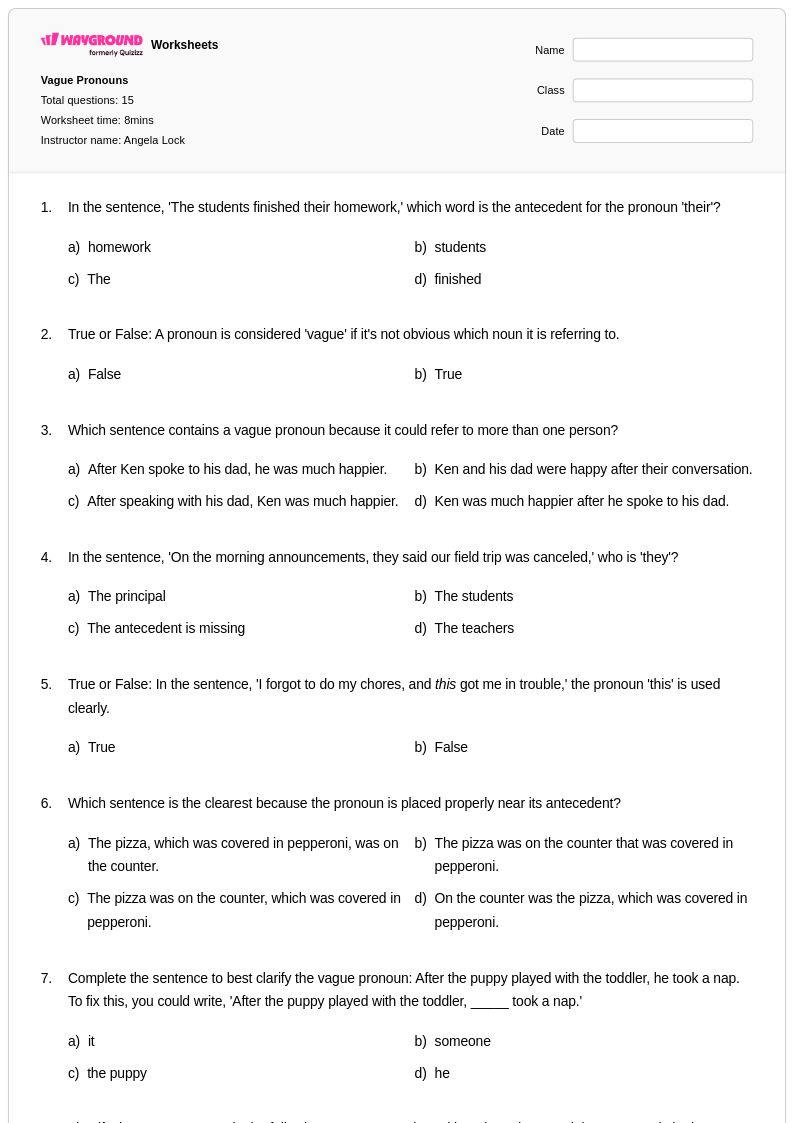
15 Q
6th - Uni
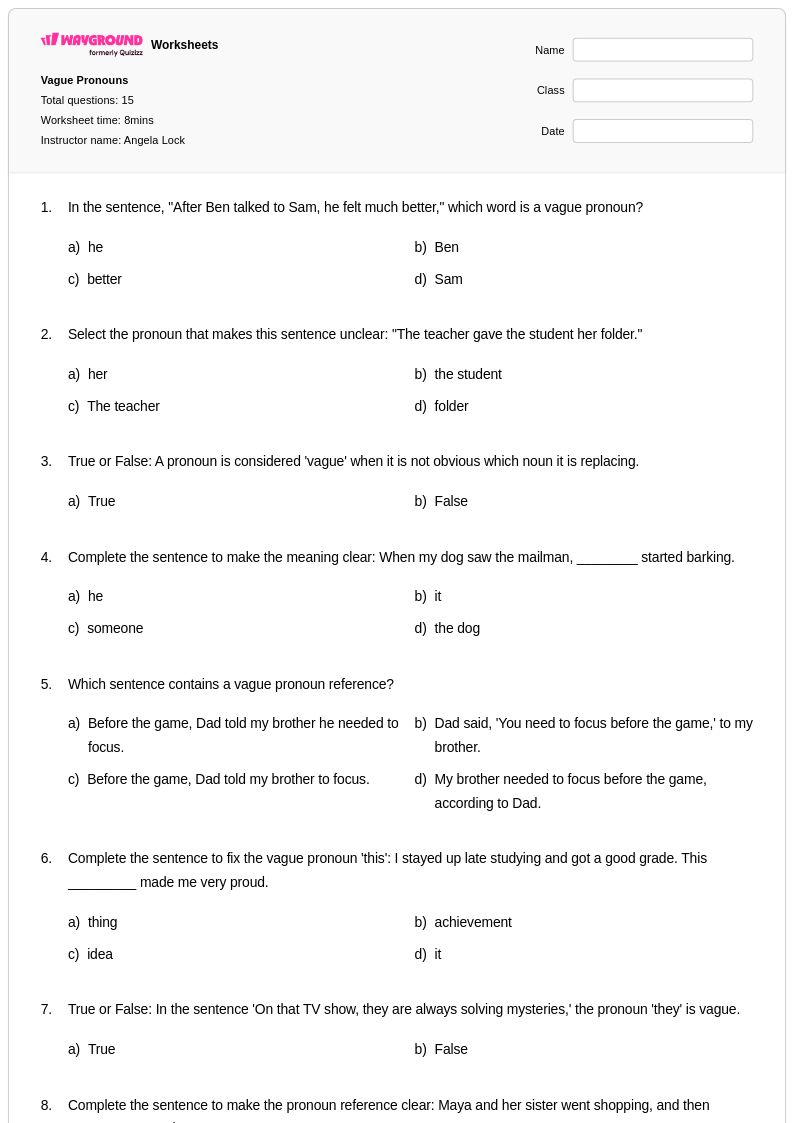
15 Q
7th - Uni
Explore Other Subject Worksheets for class 7
Explore printable Vague Pronouns worksheets for Class 7
Vague pronouns present a significant challenge for Class 7 students as they learn to craft clear, precise written communication. Wayground's comprehensive collection of vague pronoun worksheets helps students identify and eliminate ambiguous pronoun references that can confuse readers and weaken their writing. These carefully designed practice problems guide seventh graders through recognizing when pronouns like "it," "they," "this," and "that" lack clear antecedents, teaching them to revise sentences for maximum clarity. Each worksheet includes detailed answer keys that explain why certain pronoun usage creates confusion and demonstrates effective revision strategies, while the free printable format allows students to work through multiple examples at their own pace. The varied exercises progress from identifying vague pronouns in simple sentences to revising complex paragraphs, building the analytical skills students need to self-edit their own writing effectively.
Teachers can access millions of educator-created resources through Wayground's platform, including extensive collections of vague pronoun worksheets that align with Class 7 English language arts standards. The platform's robust search and filtering capabilities allow instructors to quickly locate materials that match their specific curriculum requirements and student ability levels, while built-in differentiation tools enable teachers to customize worksheets for diverse learning needs. Whether delivered as printable pdf handouts for traditional classroom instruction or assigned digitally for remote learning environments, these resources support flexible lesson planning and targeted skill practice. The comprehensive nature of Wayground's worksheet library makes it invaluable for remediation sessions with struggling writers, enrichment activities for advanced students, and regular grammar practice that reinforces proper pronoun usage across all writing assignments.
FAQs
How do I teach students to identify vague pronoun references in their writing?
What exercises best help students practice correcting vague pronouns?
What are the most common mistakes students make with pronoun references?
How do I differentiate vague pronoun instruction for struggling writers versus advanced students?
How can I use Wayground's vague pronouns worksheets in my classroom?
At what point in a writing unit should I introduce vague pronoun lessons?