Free Printable Relative Pronouns Worksheets for Class 7
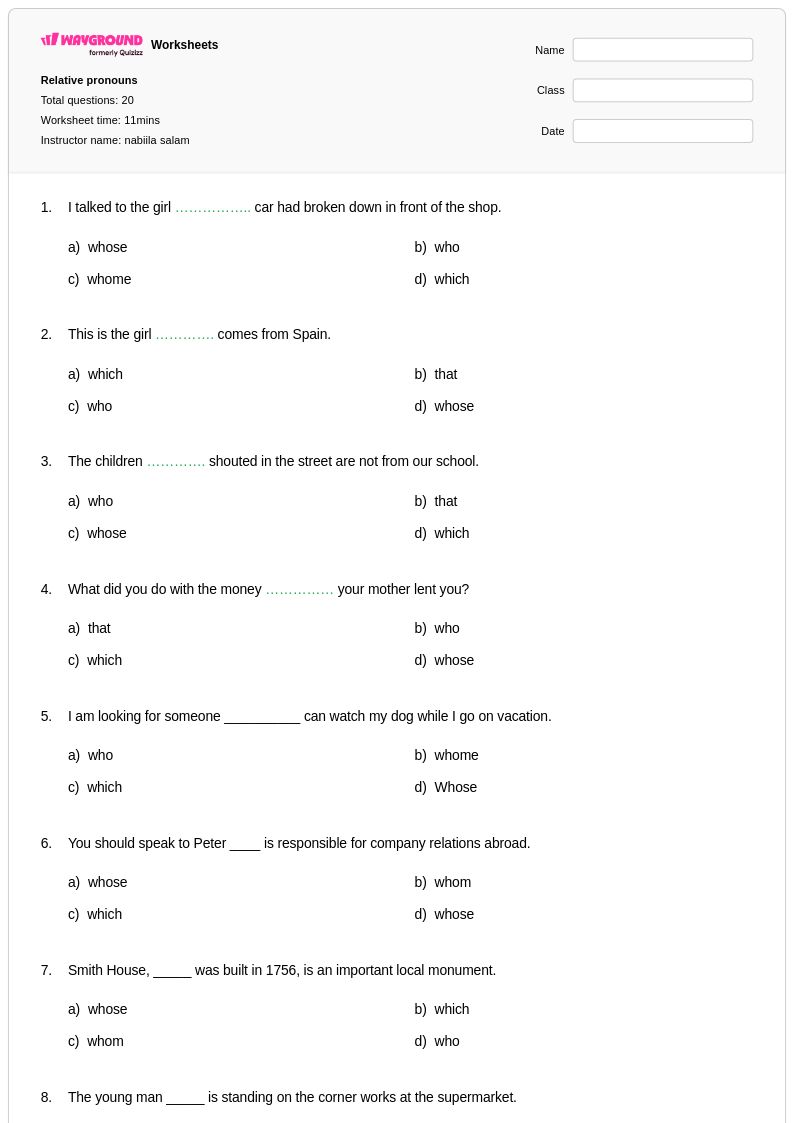
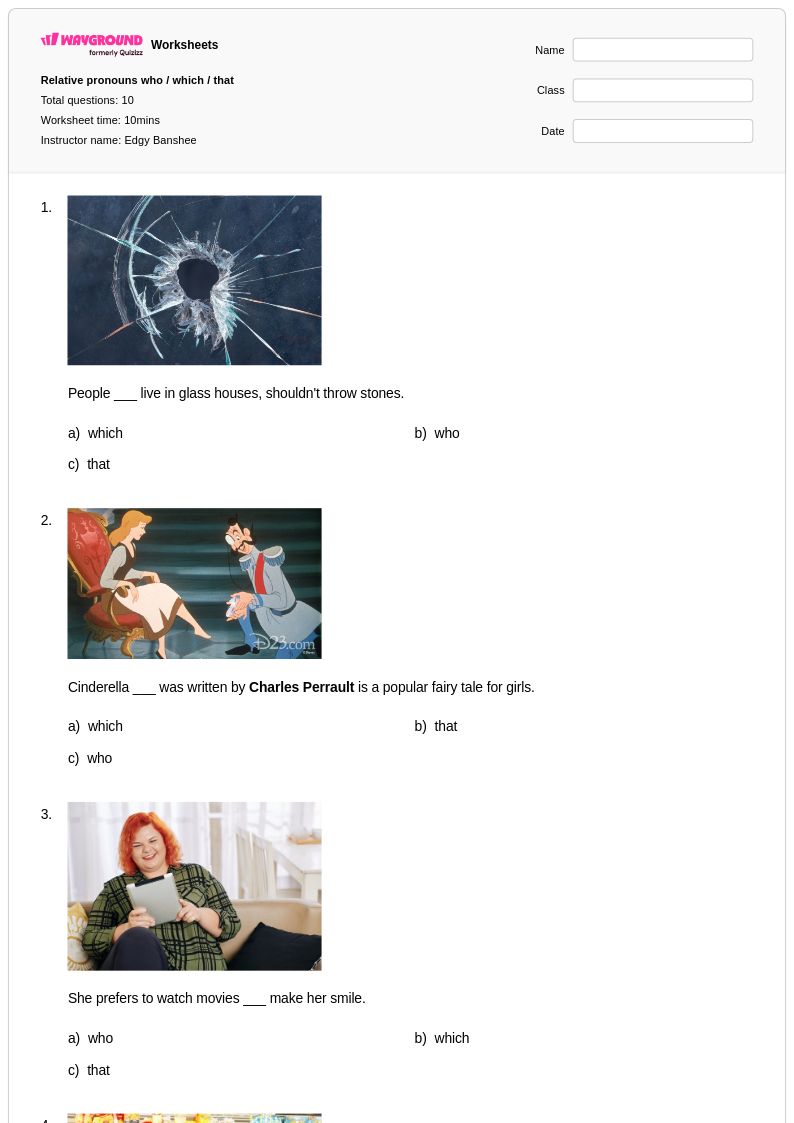
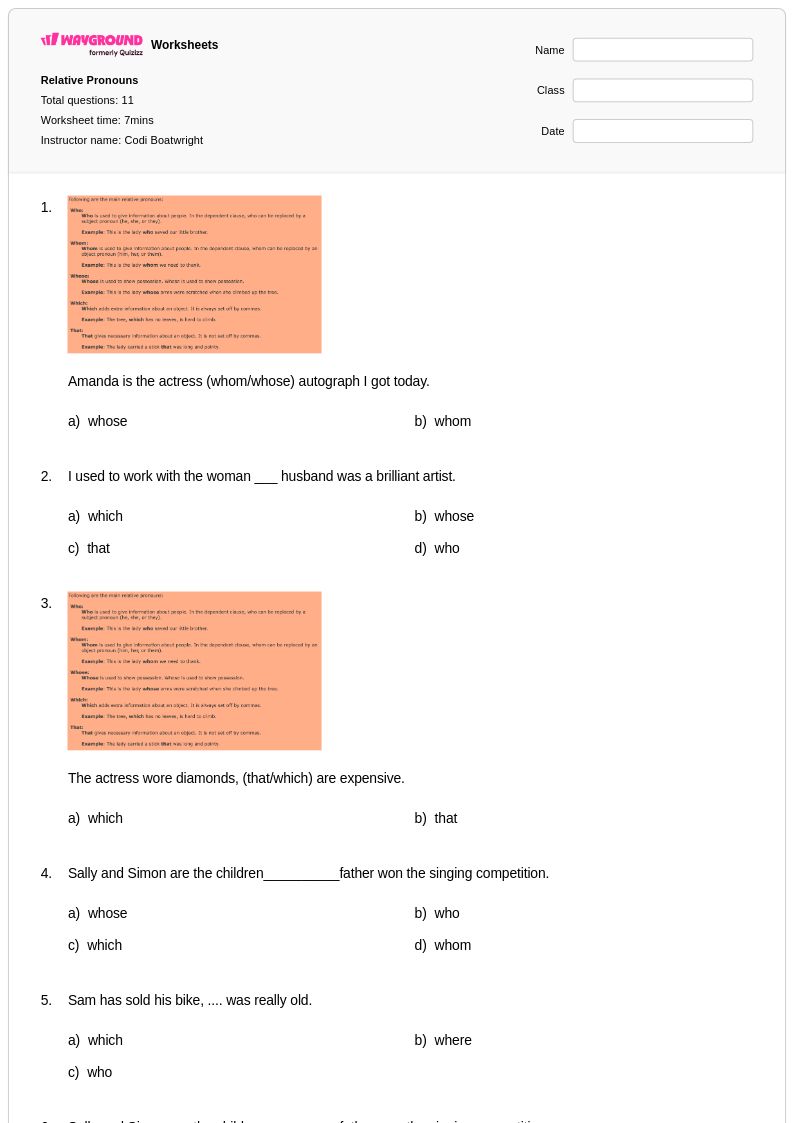
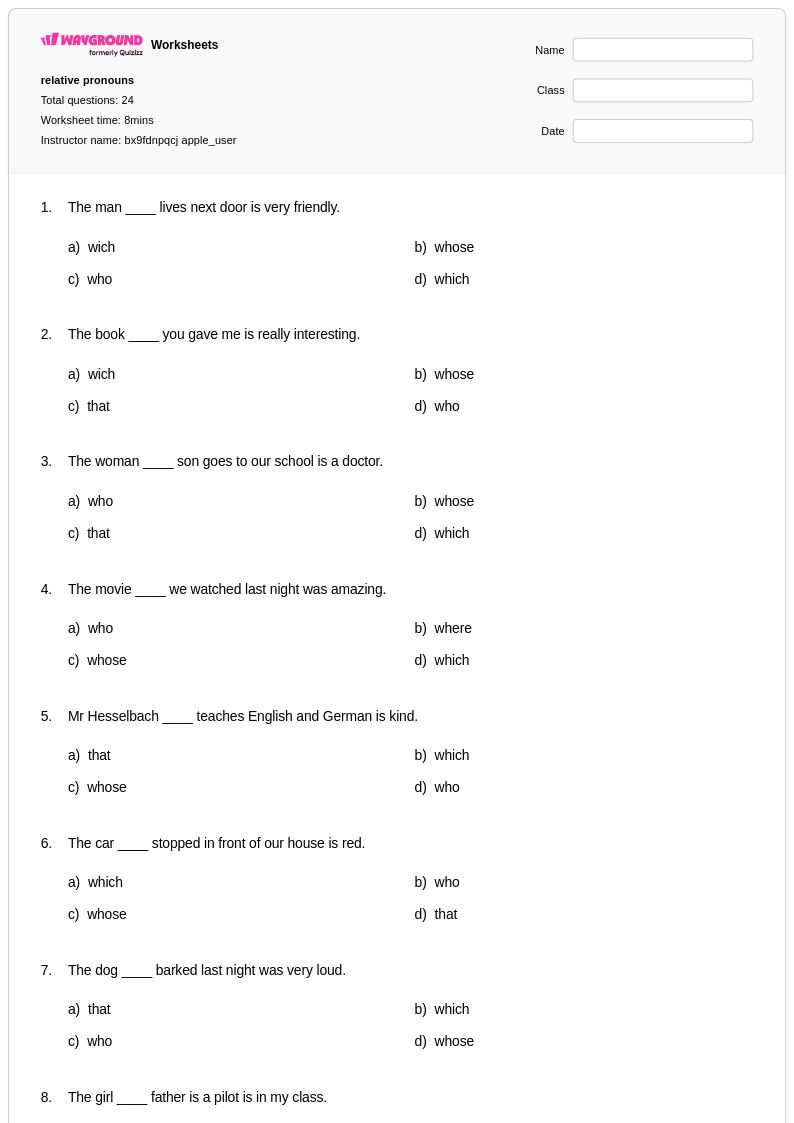
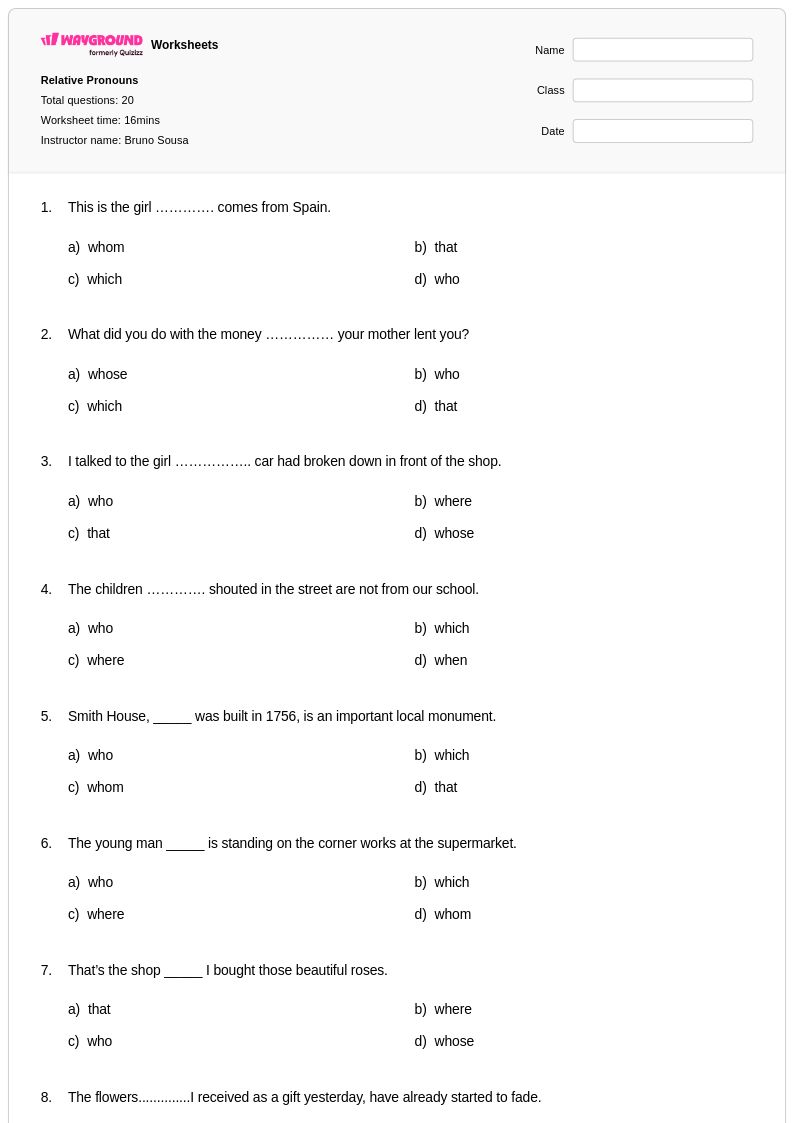
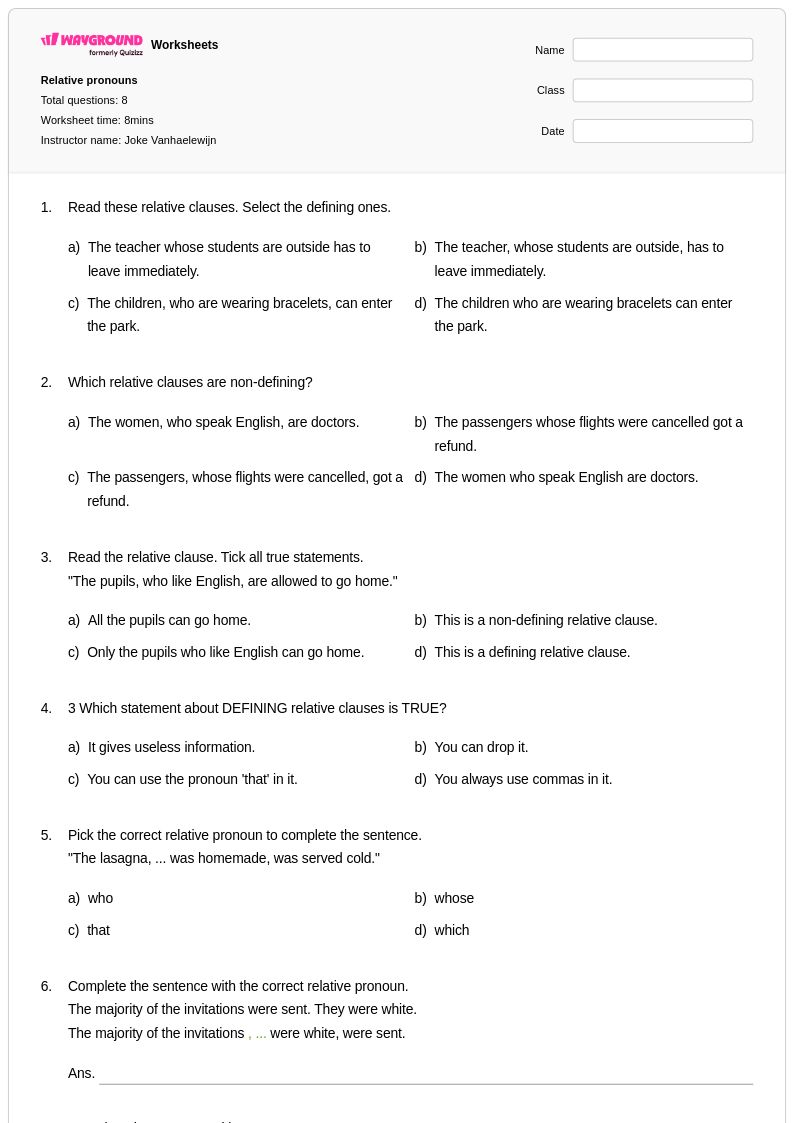
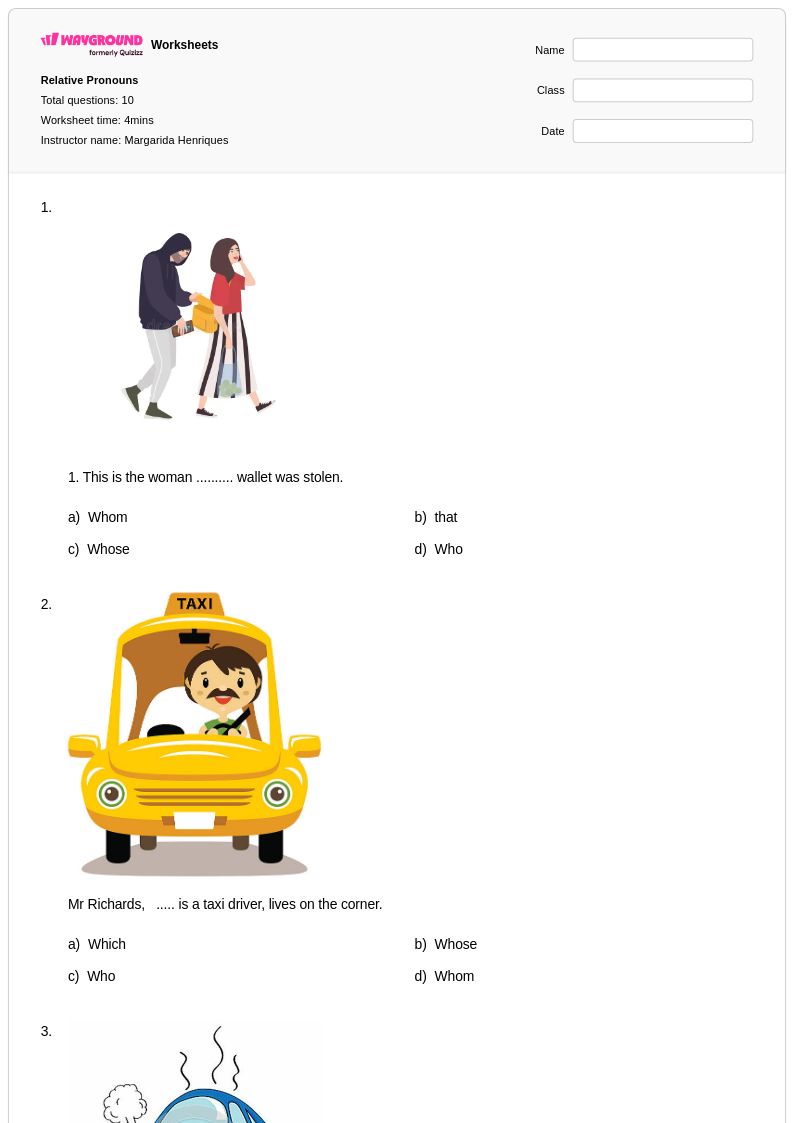
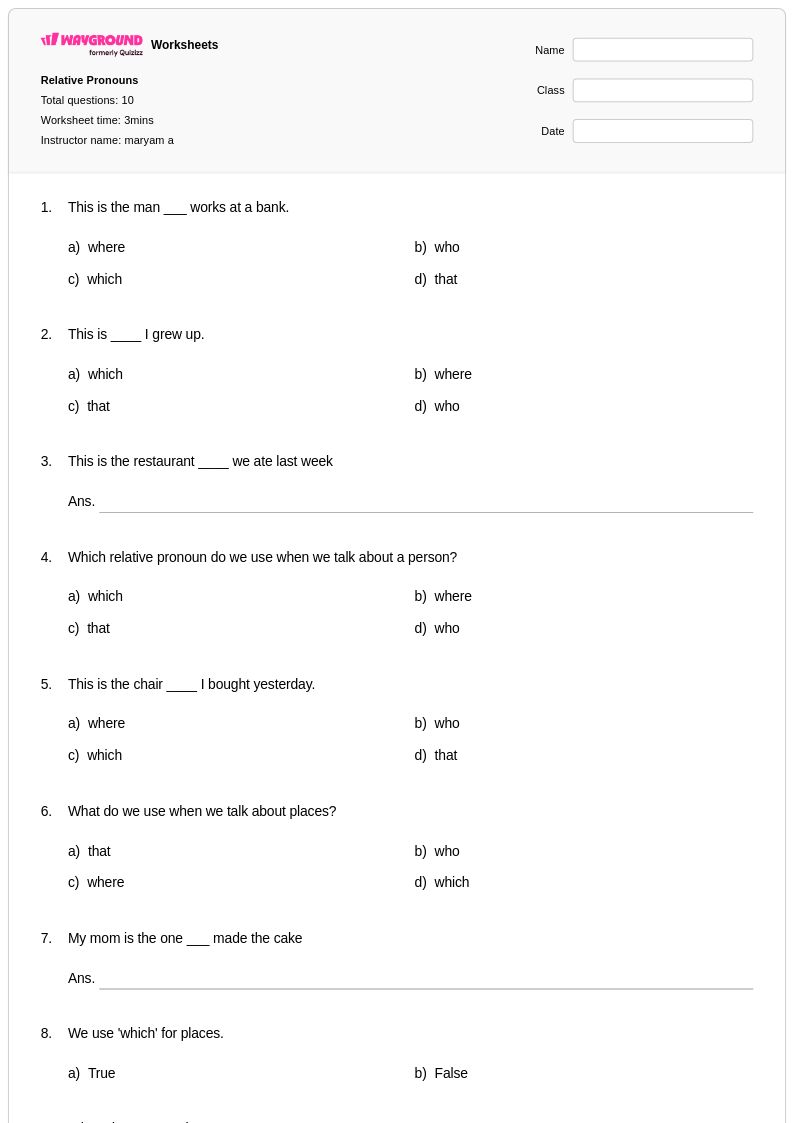
Wayground's free Class 7 relative pronouns worksheets provide comprehensive practice problems and printables with answer keys to help students master identifying and using who, whom, whose, which, and that in complex sentences.
Explore printable Relative Pronouns worksheets for Class 7
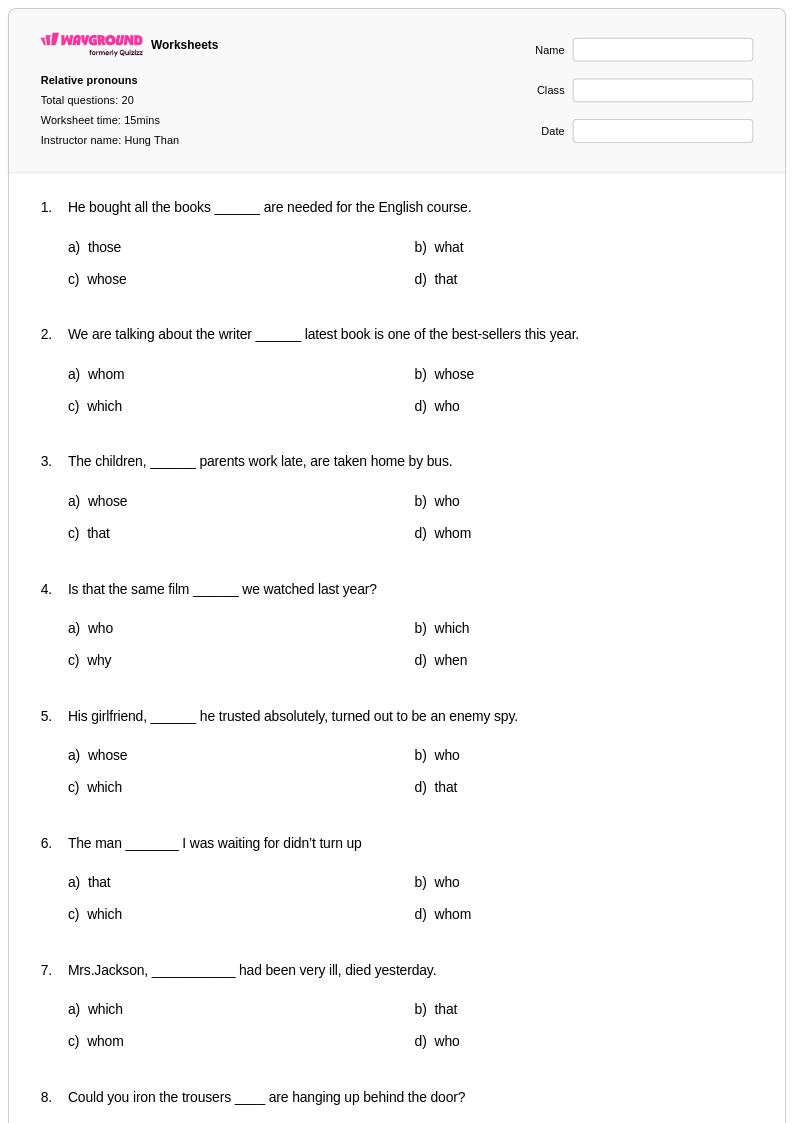
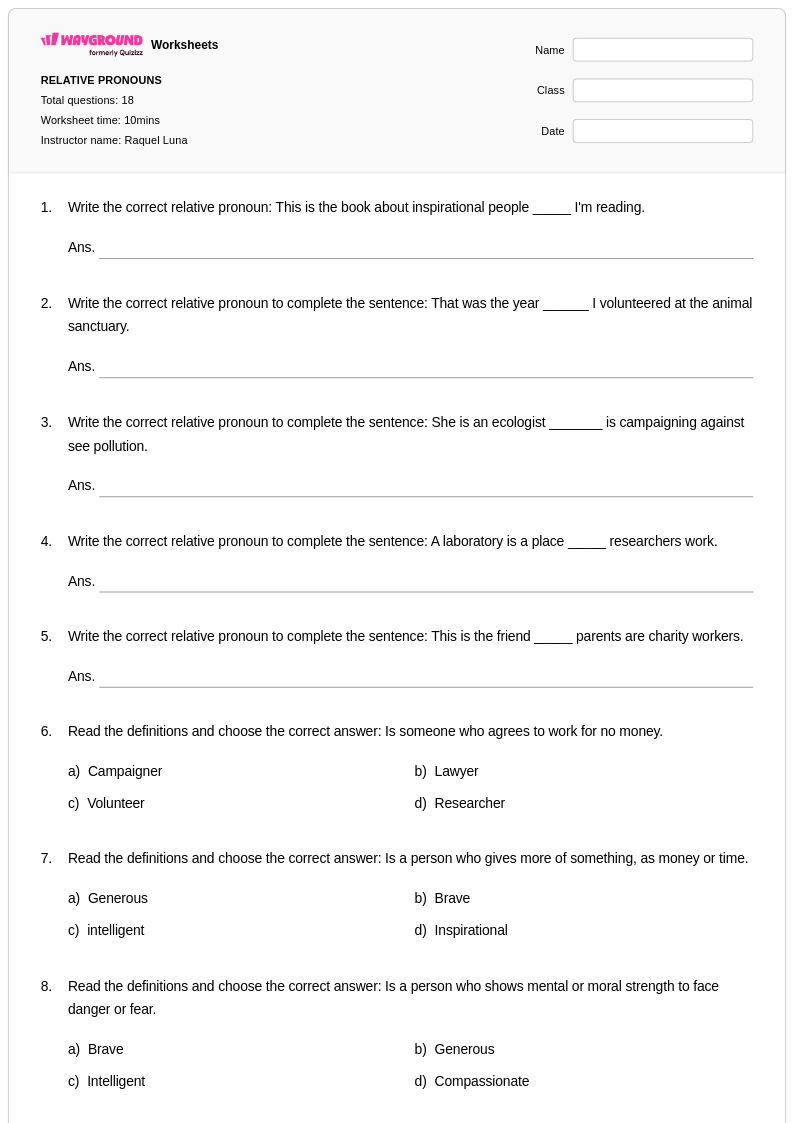
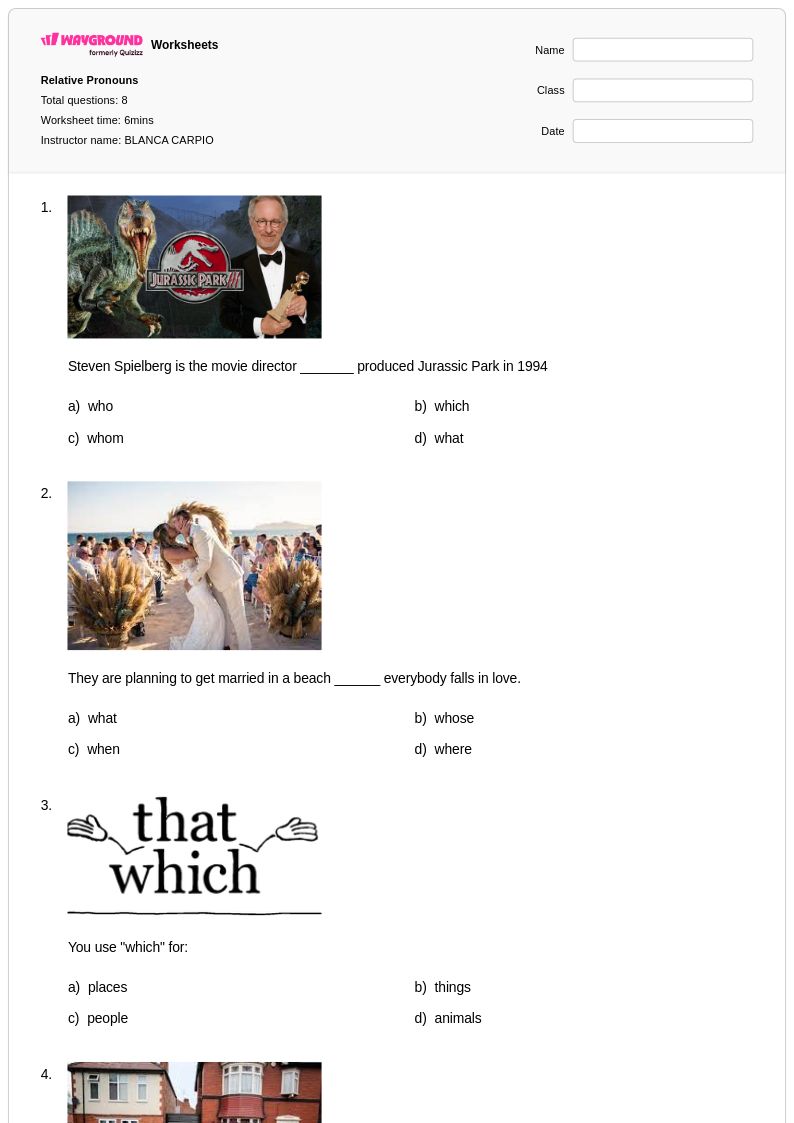
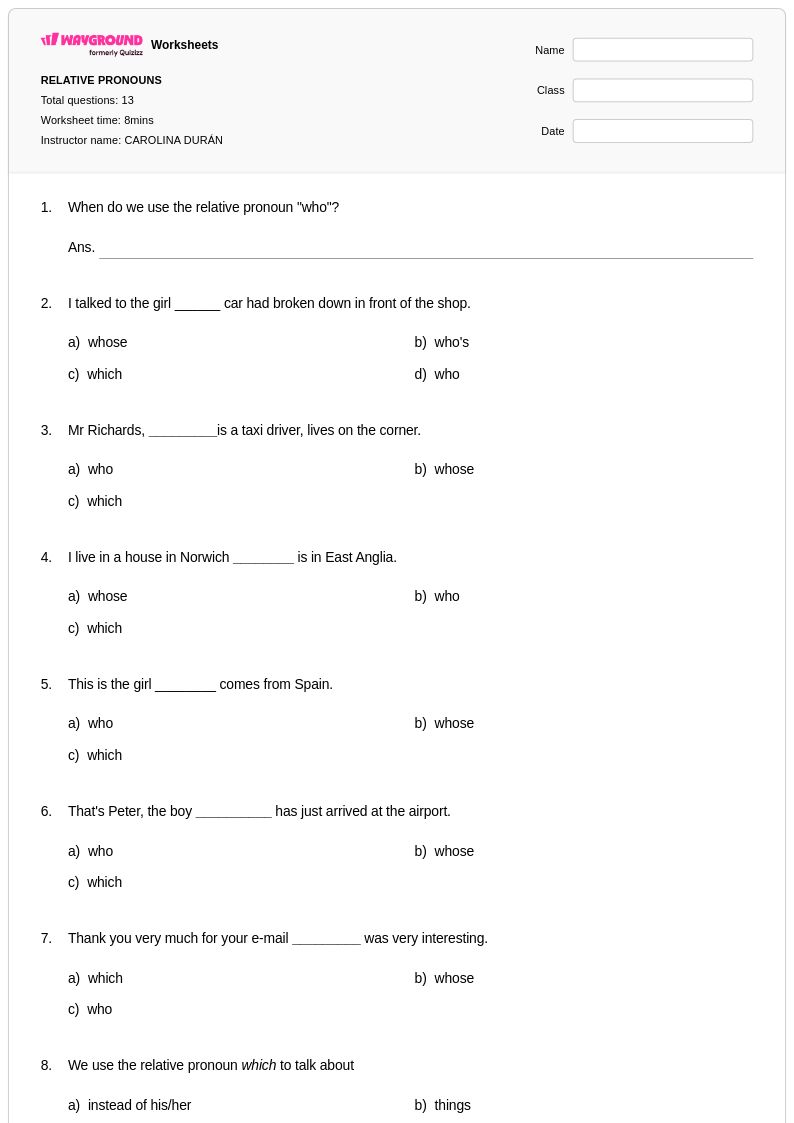
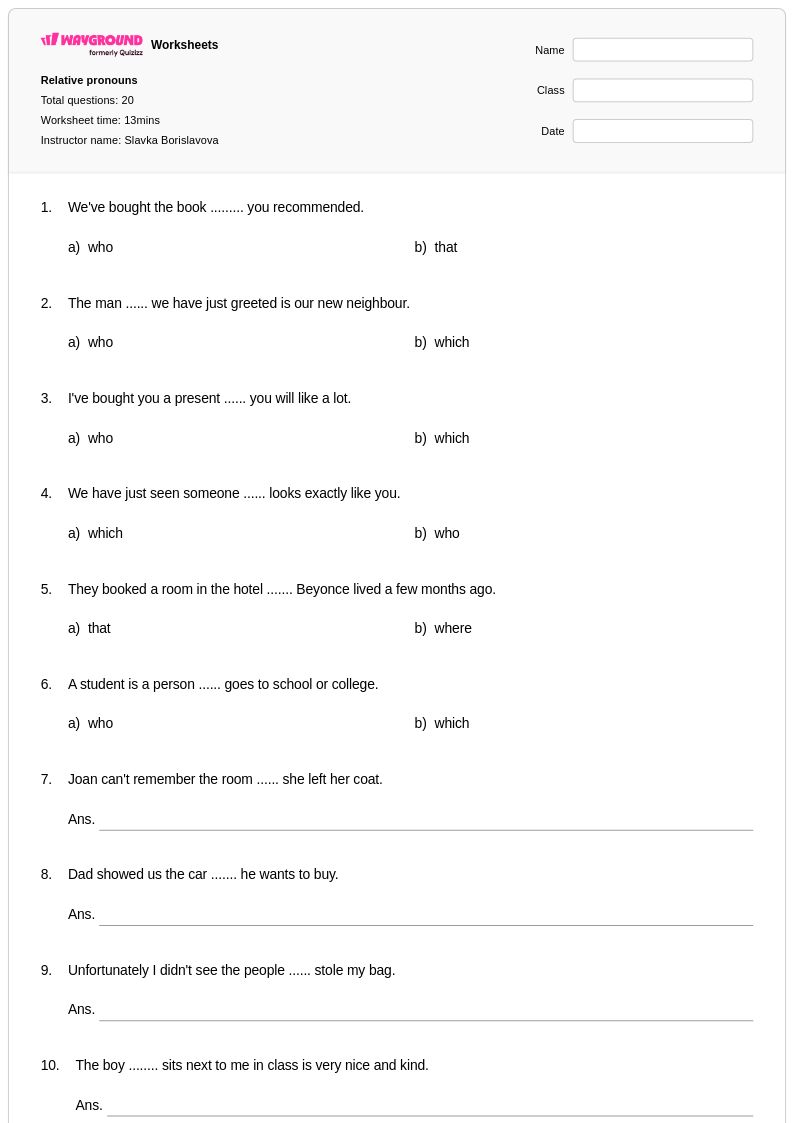
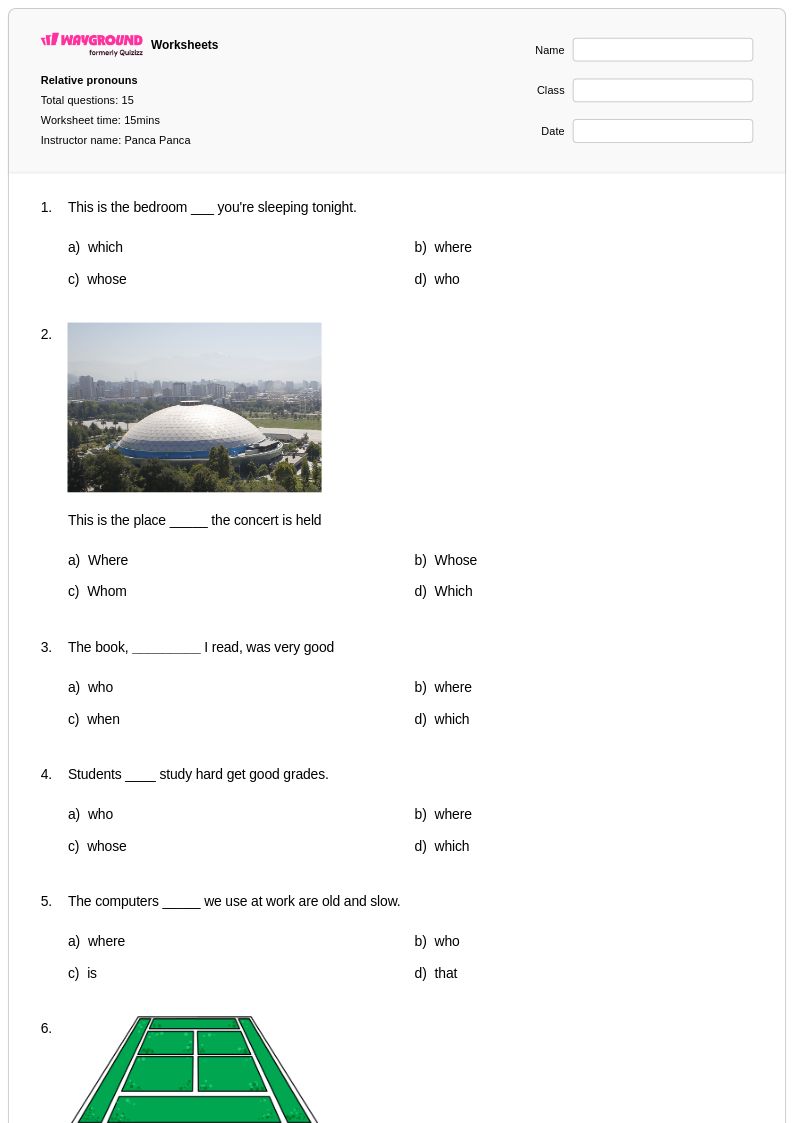
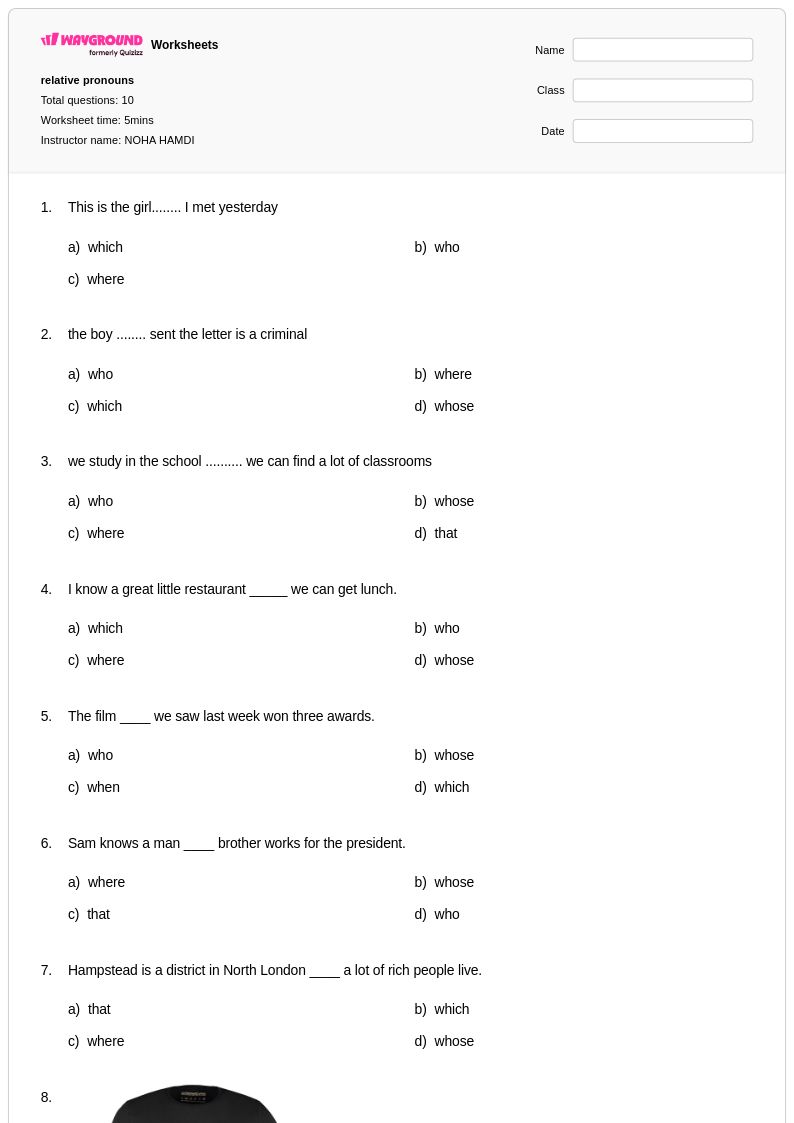
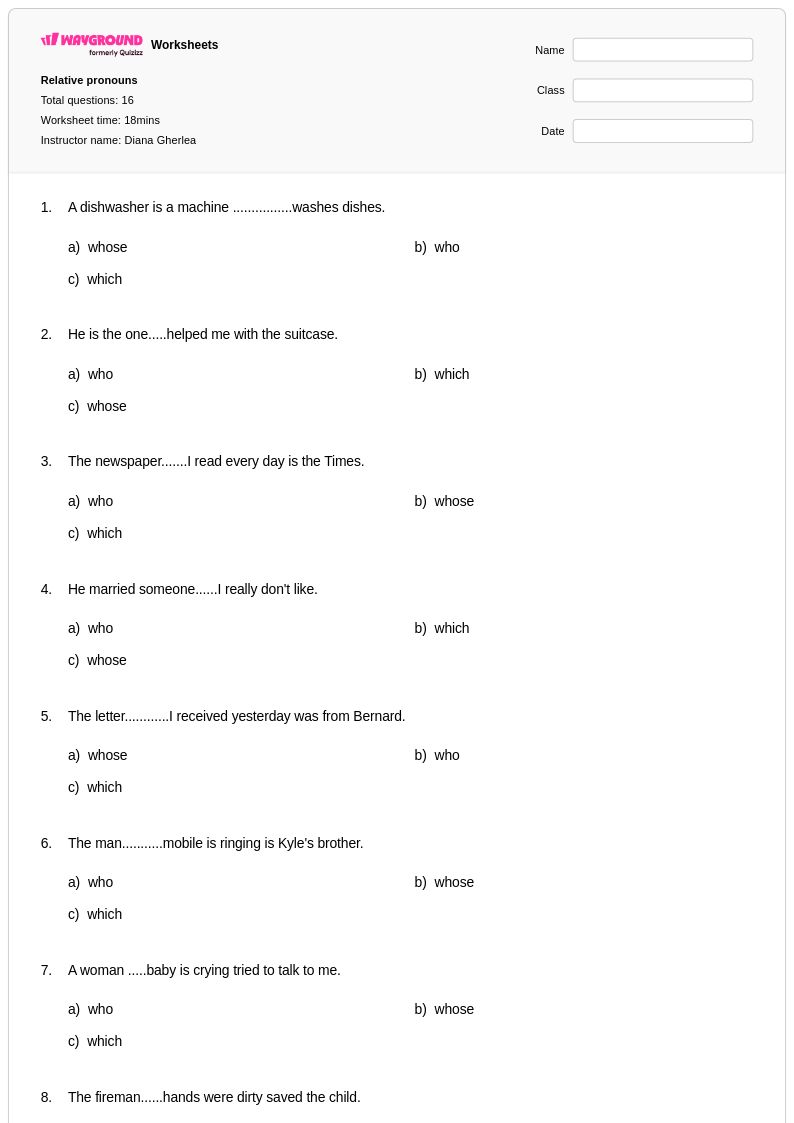
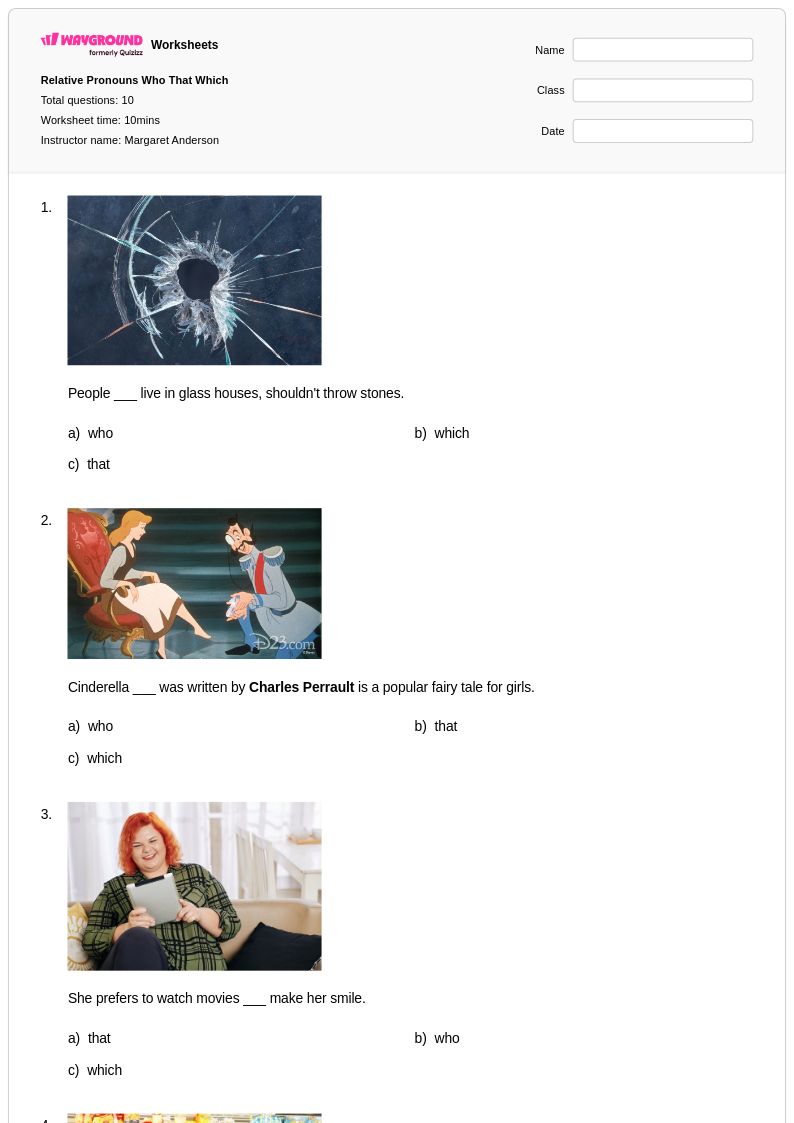
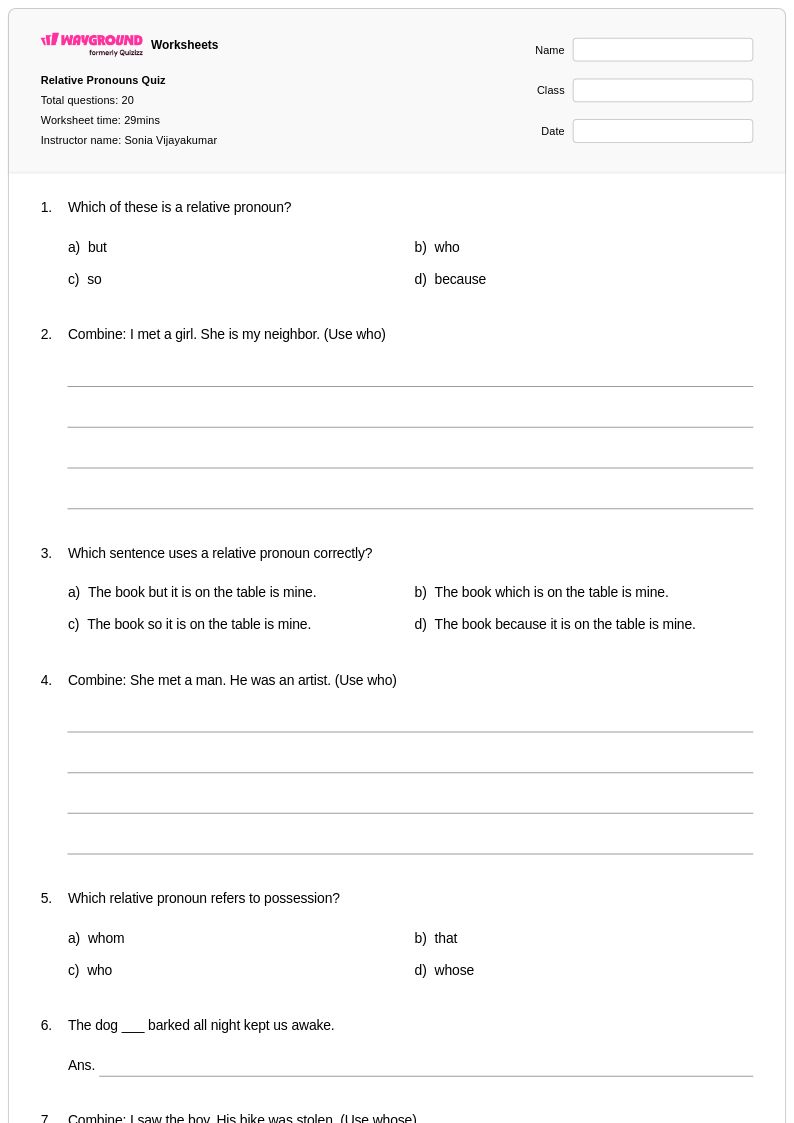
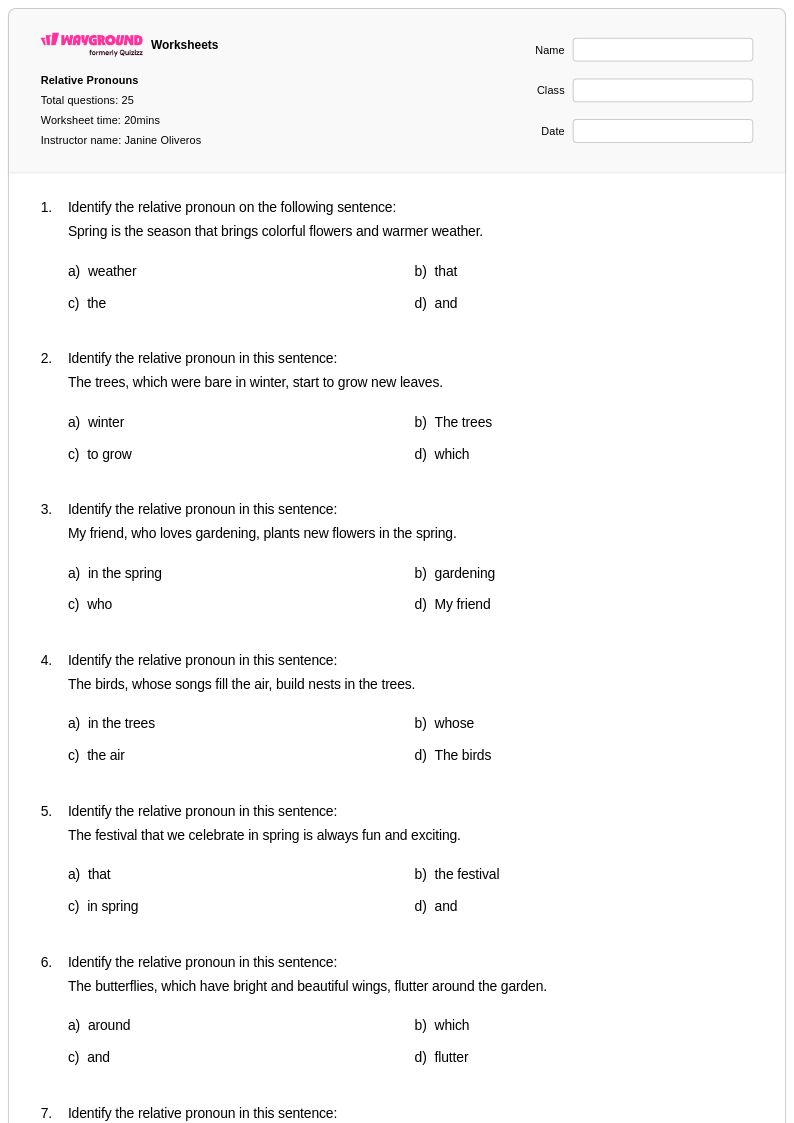
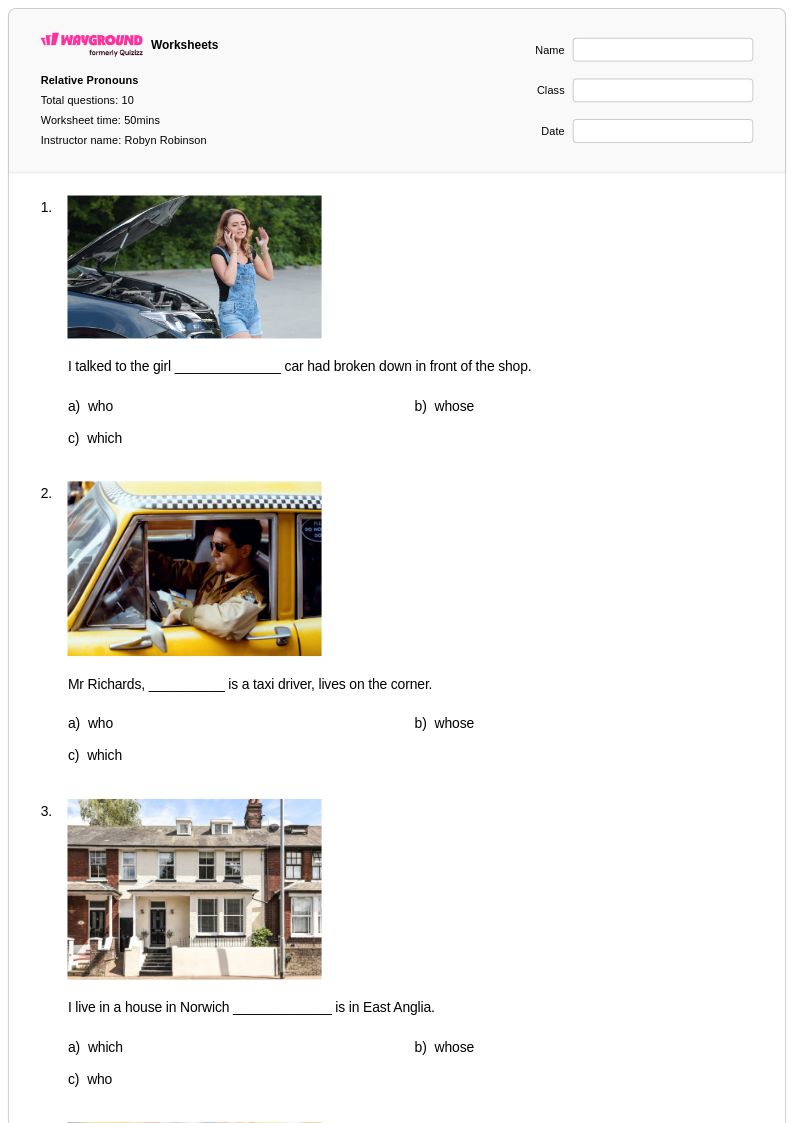
Class 7 relative pronouns worksheets available through Wayground (formerly Quizizz) provide comprehensive practice for students mastering these essential connecting words that link clauses and provide additional information about nouns. These carefully designed printables focus on the five main relative pronouns—who, whom, whose, which, and that—helping seventh graders understand when and how to use each one correctly in both restrictive and non-restrictive clauses. Students work through practice problems that challenge them to identify relative pronouns in complex sentences, choose the appropriate pronoun for different contexts, and construct their own sentences using relative clauses effectively. Each worksheet comes with a detailed answer key in pdf format, allowing students to check their understanding independently while teachers can quickly assess progress and identify areas needing additional support.
Wayground (formerly Quizizz) empowers educators with millions of teacher-created relative pronoun resources specifically aligned to Class 7 English standards, offering robust search and filtering capabilities that help locate exactly the right materials for diverse classroom needs. The platform's differentiation tools enable teachers to customize worksheets for varying skill levels, from students who need foundational practice identifying relative pronouns to advanced learners ready to manipulate complex sentence structures with multiple clauses. Available in both printable and digital formats including downloadable pdf versions, these free resources support flexible lesson planning whether used for initial instruction, targeted remediation, or enrichment activities. Teachers can seamlessly integrate these materials into grammar units, writing workshops, or independent practice sessions, ensuring students develop the syntactic awareness necessary for sophisticated academic writing and reading comprehension.
FAQs
How do I teach relative pronouns to students?
Start by teaching students that relative pronouns (who, whom, whose, which, and that) function as connectors that link a dependent clause to the noun it modifies. Use concrete examples by showing two short sentences being combined into one using a relative pronoun, then have students practice the same process with their own examples. Visually marking the relative clause within longer sentences helps students see the structure before they attempt to produce it independently.
What exercises help students practice using relative pronouns?
The most effective exercises progress from identification to production: start with tasks where students underline or circle relative pronouns in sentences, then move to fill-in-the-blank activities where they choose the correct pronoun, and finally have them combine sentence pairs using an appropriate relative pronoun. Sentence-combining tasks are particularly valuable because they require students to understand both grammar and meaning simultaneously.
What mistakes do students commonly make with relative pronouns?
The most frequent error is confusing who and whom — students often default to who in all cases because whom feels formal and unfamiliar. Another common mistake is using that to refer to people instead of who, and using which in restrictive clauses where that is grammatically preferred. Students also frequently omit the relative pronoun entirely when it serves as the object of its clause, producing grammatically awkward constructions.
How do I help students understand the difference between who and whom?
Teach students the substitution test: if you can replace the relative pronoun with he, she, or they, use who; if you can replace it with him, her, or them, use whom. For example, 'the teacher who graded the test' works because 'she graded the test' is correct, whereas 'the student whom I called' works because 'I called him' is correct. Practicing this test repeatedly with targeted sentences builds the habit before students internalize the rule.
How can I use Wayground's relative pronouns worksheets in my classroom?
Wayground's relative pronouns worksheets are available as printable PDFs for traditional classroom use and in digital formats for technology-integrated environments, giving teachers flexibility regardless of their setup. Teachers can also host these worksheets as an interactive quiz directly on Wayground, which is useful for formative assessment and immediate feedback. All worksheets include complete answer keys, making them practical for independent practice, homework assignments, or small-group instruction without requiring additional teacher preparation.
How do I differentiate relative pronoun instruction for students at different skill levels?
For struggling students, focus on who versus that before introducing whom and whose, and provide sentence frames that reduce the cognitive demand of producing relative clauses from scratch. Advanced students benefit from sentence-combining challenges and editing tasks where they must revise informal or incorrect pronoun use in longer paragraphs. On Wayground, teachers can apply accommodations such as reduced answer choices or read-aloud support to individual students without disrupting the experience of the rest of the class.