
Recommended Topics for you
- Present Simple vs Present Continuous
- Subject-Verb Agreement
- Verb Identification
- Verb Moods
- Verb Usage
17 Q
9th - 12th
16 Q
9th - 12th
63 Q
1st - Uni
13 Q
9th - 12th
14 Q
8th - 12th
15 Q
10th
17 Q
10th
18 Q
3rd - Uni
50 Q
10th
16 Q
9th - 12th
10 Q
10th
10 Q
9th - 12th

18 Q
10th
13 Q
7th - 12th
20 Q
7th - Uni
12 Q
10th
18 Q
10th
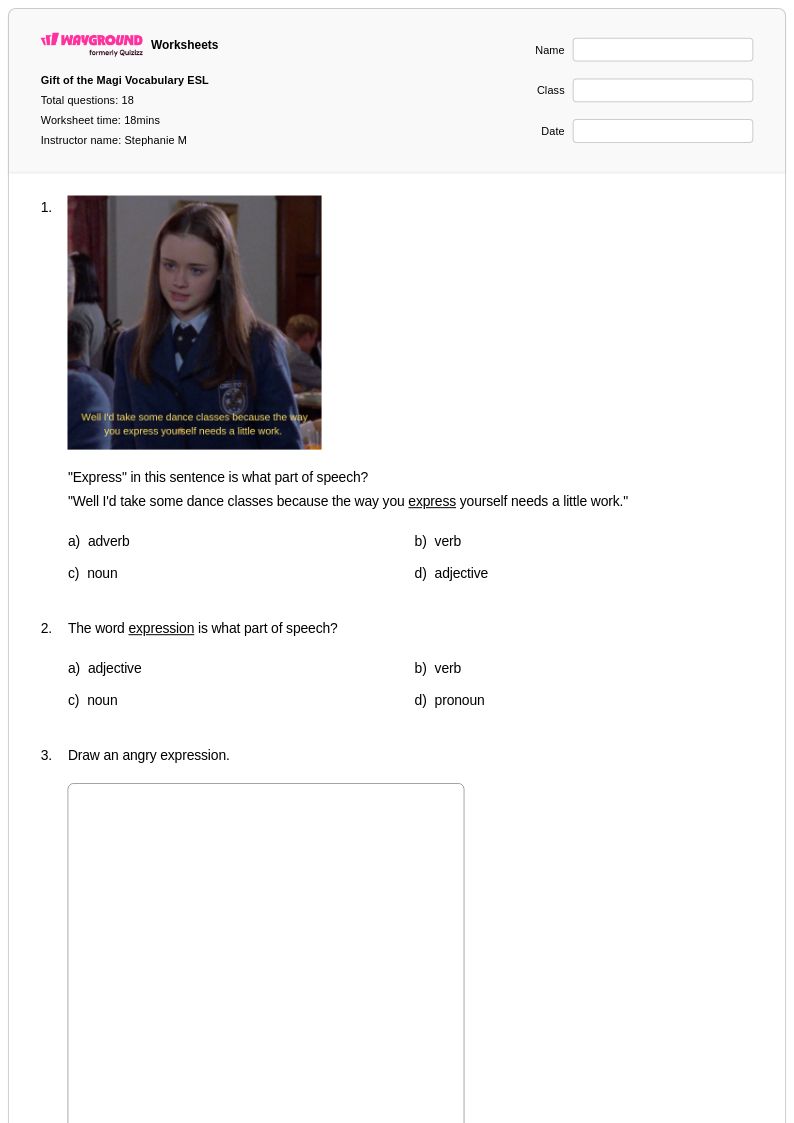
18 Q
5th - 12th

12 Q
9th - 12th
21 Q
4th - Uni
20 Q
10th
16 Q
10th
20 Q
10th
23 Q
5th - 10th
Explore Verb Skills Worksheets by Grades
Explore Verb Skills Worksheets for class 10 by Topic
Explore Other Subject Worksheets for class 10
Explore printable Verb Skills worksheets for Class 10
Class 10 verb skills worksheets available through Wayground (formerly Quizizz) provide comprehensive practice opportunities for students to master advanced verb concepts essential for sophisticated writing and communication. These carefully designed resources focus on complex verb forms, tenses, moods, voices, and usage patterns that tenth-grade students must understand to excel in academic writing and standardized assessments. Students engage with practice problems that challenge them to identify and correctly use subjunctive mood, perfect progressive tenses, conditional constructions, and passive voice transformations. Each worksheet comes with a detailed answer key that enables students to check their work independently and understand the reasoning behind correct usage, while the free printable pdf format ensures easy access for both classroom instruction and independent study.
Wayground's extensive collection draws from millions of teacher-created resources specifically designed to address Class 10 verb skills through targeted practice and assessment materials. The platform's robust search and filtering capabilities allow educators to quickly locate worksheets aligned with specific standards and learning objectives, while differentiation tools enable teachers to customize content difficulty and complexity to meet diverse student needs. These versatile materials are available in both printable and digital formats, including downloadable pdf versions, making them ideal for traditional classroom instruction, remote learning environments, and hybrid teaching models. Teachers can seamlessly integrate these worksheets into their lesson planning for initial instruction, targeted remediation, advanced enrichment activities, and ongoing skill practice, ensuring that all students develop the verb mastery necessary for success in advanced English coursework.
FAQs
How do I teach verb skills to students who are struggling with grammar basics?
What exercises help students practice subject-verb agreement?
What are the most common mistakes students make with verb tense and how can I address them?
How do I help students understand the difference between present simple and present continuous?
How can I use Wayground's verb skills worksheets in my classroom?
How do I differentiate verb skills practice for students at different levels?