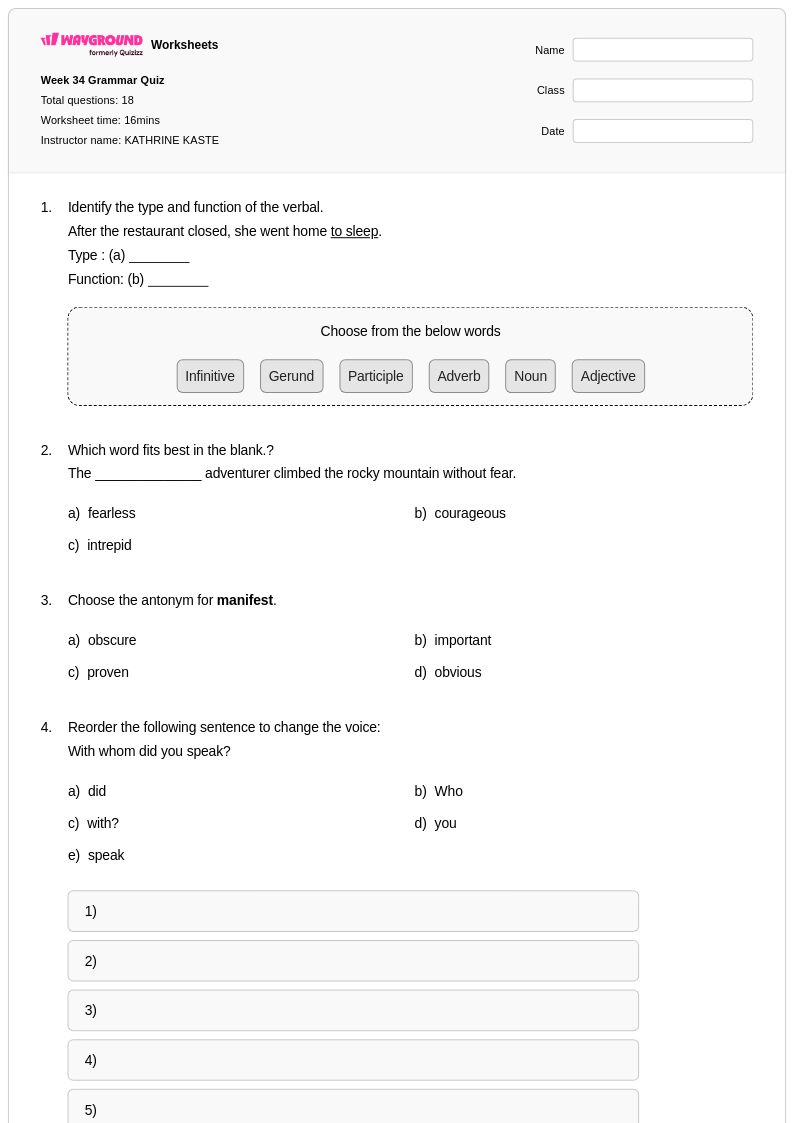
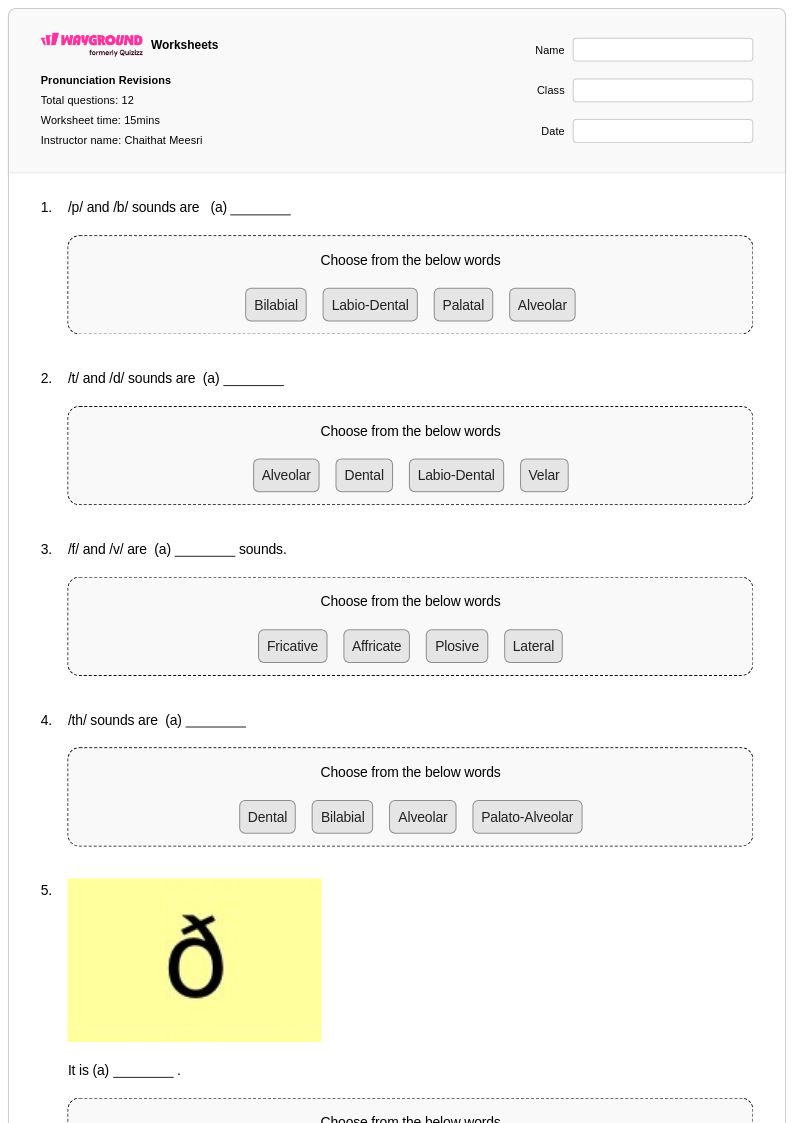
Wayground offers free voiced th phonics worksheets and printables with answer keys to help students master the pronunciation and recognition of voiced th sounds through engaging practice problems and activities.
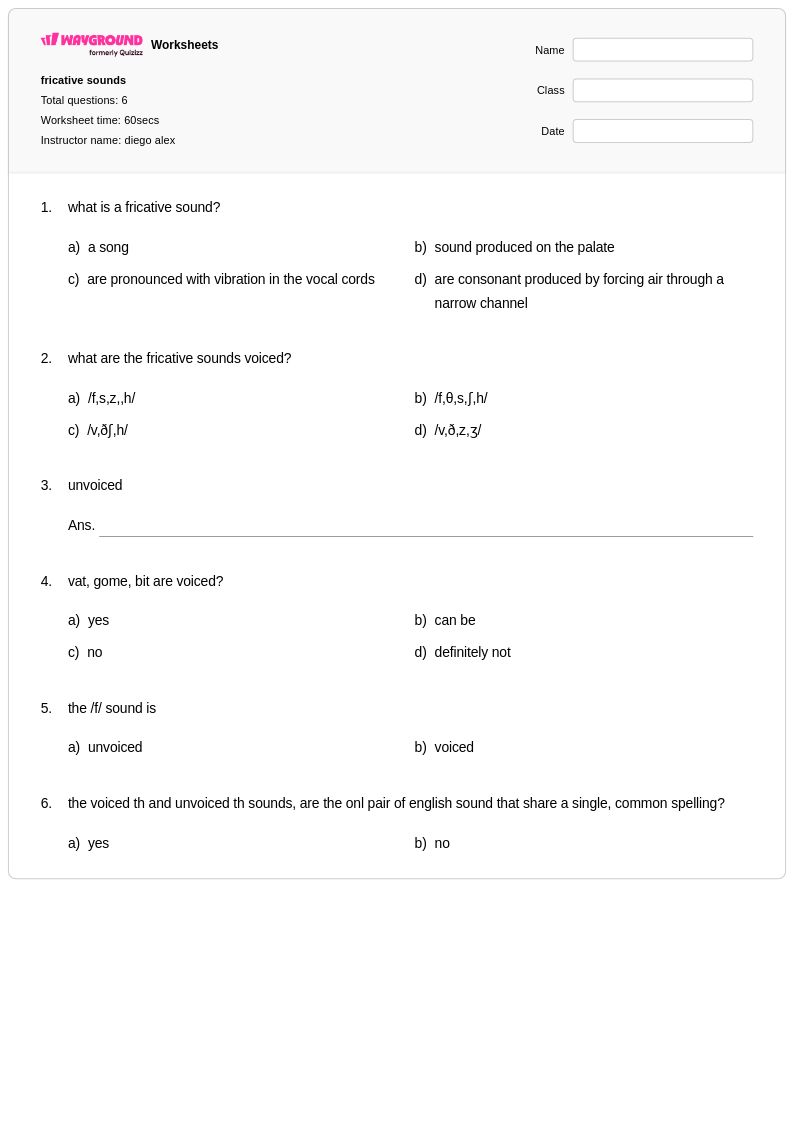
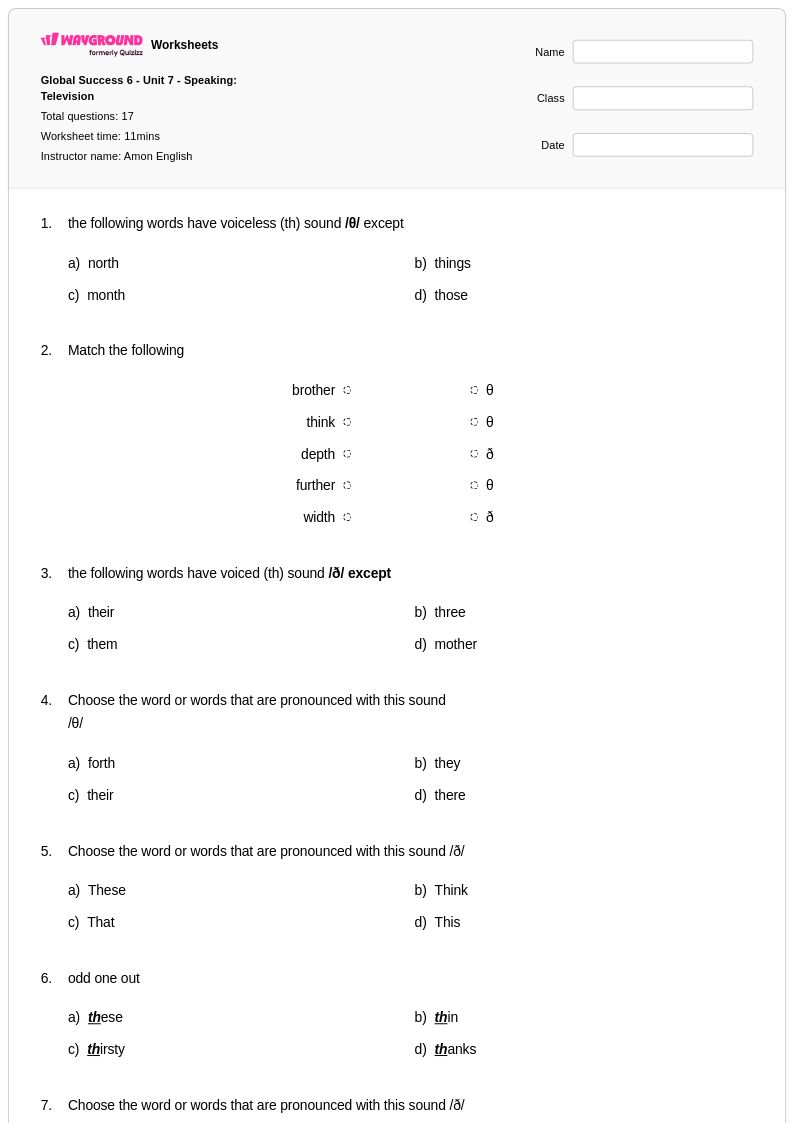
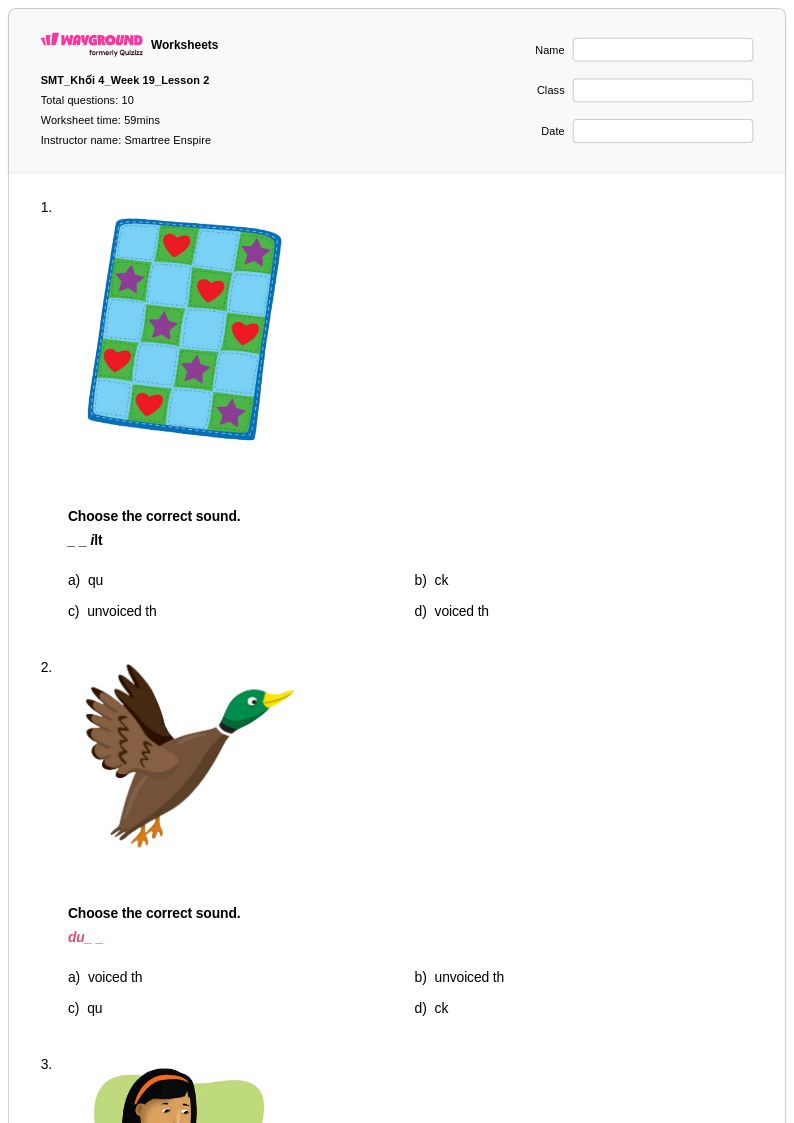
Voiced Th worksheets available through Wayground (formerly Quizizz) provide targeted phonics instruction to help students master the challenging voiced /th/ sound found in words like "this," "that," "there," and "brother." These carefully designed practice materials strengthen students' ability to distinguish between the voiced and unvoiced th sounds, building essential decoding and pronunciation skills that support reading fluency and oral communication. Each worksheet collection includes comprehensive answer keys and is available as free printable pdf resources, featuring systematic practice problems that progress from sound isolation exercises to reading words and sentences containing the voiced th phoneme.
Wayground (formerly Quizizz) empowers teachers with an extensive library of millions of educator-created voiced th phonics resources that can be easily located through robust search and filtering capabilities. The platform's standards-aligned materials support differentiated instruction through flexible customization options, allowing teachers to modify worksheets based on individual student needs and learning objectives. Available in both printable pdf format and interactive digital versions, these resources streamline lesson planning while providing versatile tools for remediation, skill reinforcement, and enrichment activities that help students develop confident mastery of this fundamental phonics concept.
FAQs
How do I teach students the difference between voiced and unvoiced th sounds?
The most effective strategy is to have students place two fingers lightly against their throat while producing each sound. The voiced /th/ — heard in words like 'this,' 'that,' and 'there' — creates a vibration, while the unvoiced /th/ in words like 'think' and 'thumb' does not. Starting with this tactile awareness exercise gives students a reliable physical cue they can use independently during reading and speaking practice.
What words should I use to practice the voiced th sound with early readers?
High-frequency function words are the best starting point because voiced th appears most commonly in words students encounter constantly: 'the,' 'this,' 'that,' 'they,' 'them,' 'then,' 'there,' 'these,' 'those,' and 'brother.' Because many of these are sight words, connecting voiced th instruction to sight word practice reinforces both phonics and fluency simultaneously.
What mistakes do students commonly make with the voiced th sound?
The most frequent error is substituting a /d/ or /v/ sound for the voiced /th/, producing 'dis' instead of 'this' or 'dem' instead of 'them.' This substitution is especially common among English language learners whose first language does not contain a /th/ phoneme. Students also frequently confuse voiced and unvoiced th spellings when writing, since both sounds share identical graphemes.
How can I help English language learners master the voiced th sound?
ELL students benefit most from explicit articulation modeling — showing where the tongue placement is (lightly between or behind the upper front teeth) before asking them to produce the sound independently. Minimal pair contrasts, such as 'they' vs. 'day' or 'them' vs. 'dem,' help students hear the distinction clearly. Repeated oral practice alongside visual word cards is more effective than written exercises alone at the initial instruction stage.
What kinds of exercises help students practice recognizing and reading the voiced th sound?
Effective practice sequences move from sound isolation to word-level reading to sentence-level fluency. Exercises such as sorting words by voiced versus unvoiced th, identifying voiced th words in sentences, and reading passages with repeated voiced th words build recognition and automaticity. Progressing through these stages systematically ensures students can apply the skill in connected text, not just in isolation.
How do I use Wayground's voiced th worksheets in my classroom?
Wayground's voiced th worksheets are available as free printable PDFs for traditional classroom use and in digital formats for technology-integrated learning environments, and teachers can also host them as a quiz directly on Wayground. The worksheets include complete answer keys, making them practical for independent practice, small group instruction, or homework without additional preparation. Wayground also supports student-level accommodations such as read aloud, extended time, and reduced answer choices, which can be applied individually so that students who need extra support receive it without disrupting the rest of the class.