
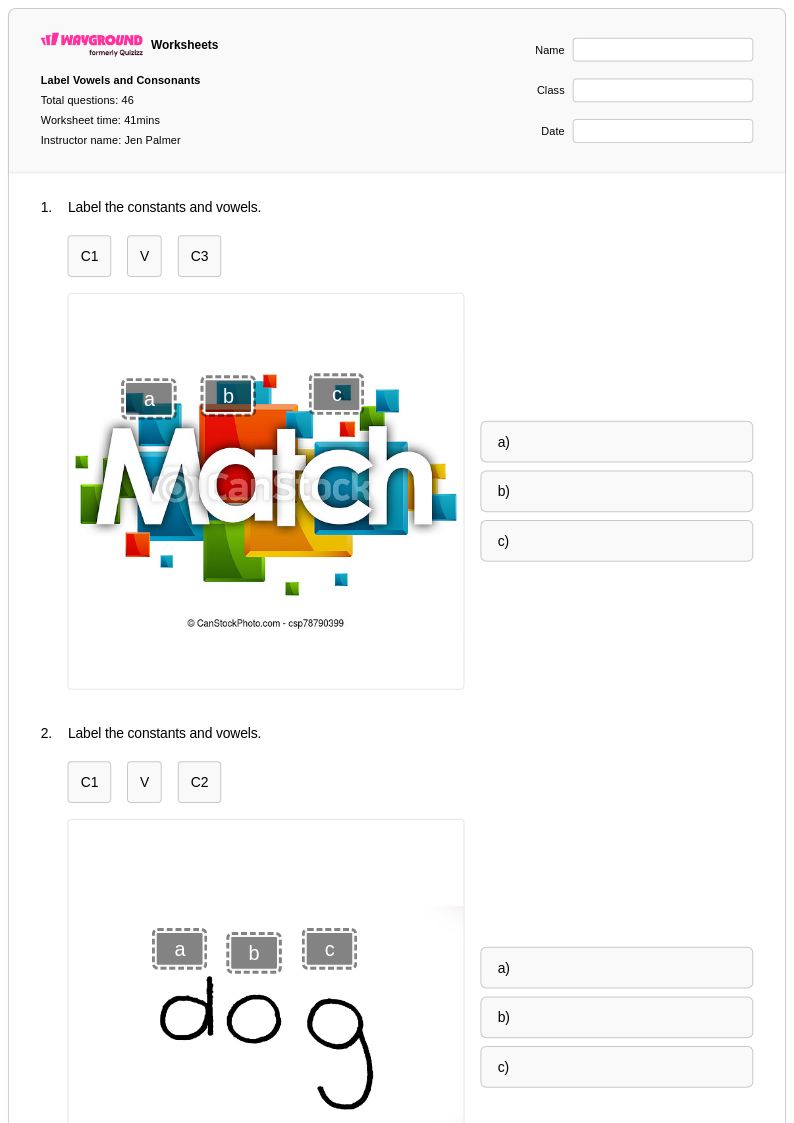
46 Q
1st
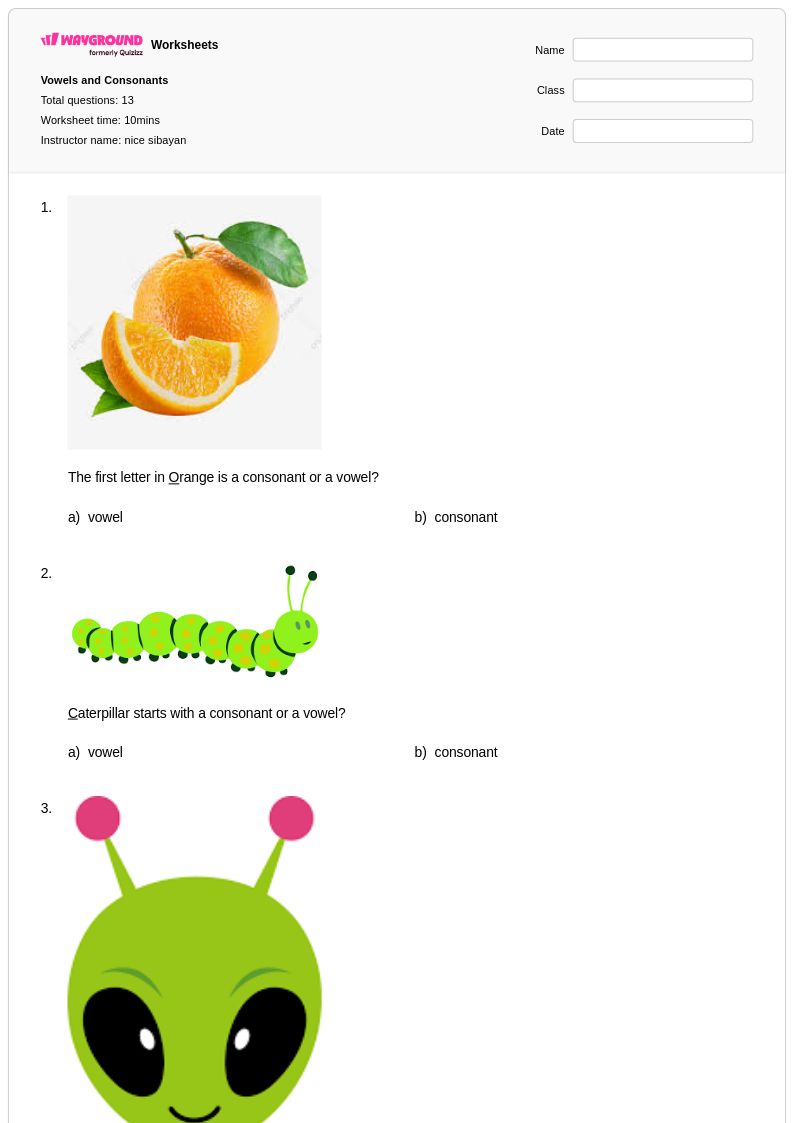
13 Q
1st
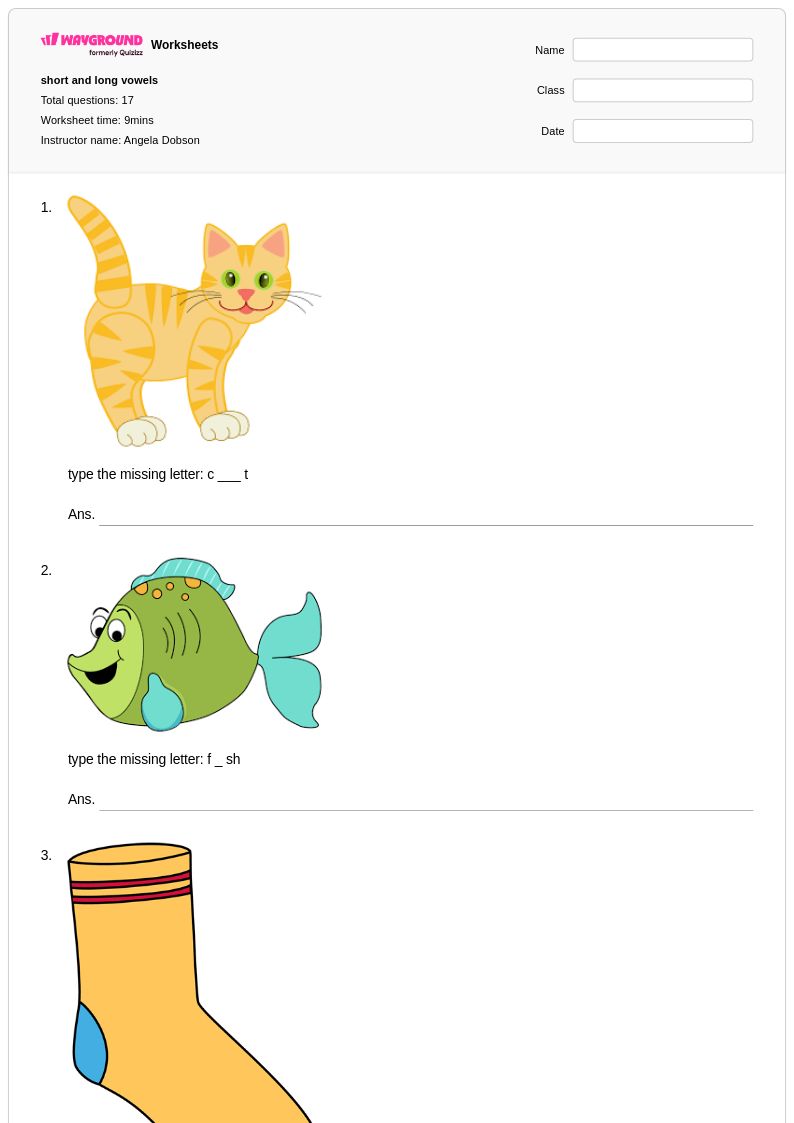
17 Q
1st - 3rd
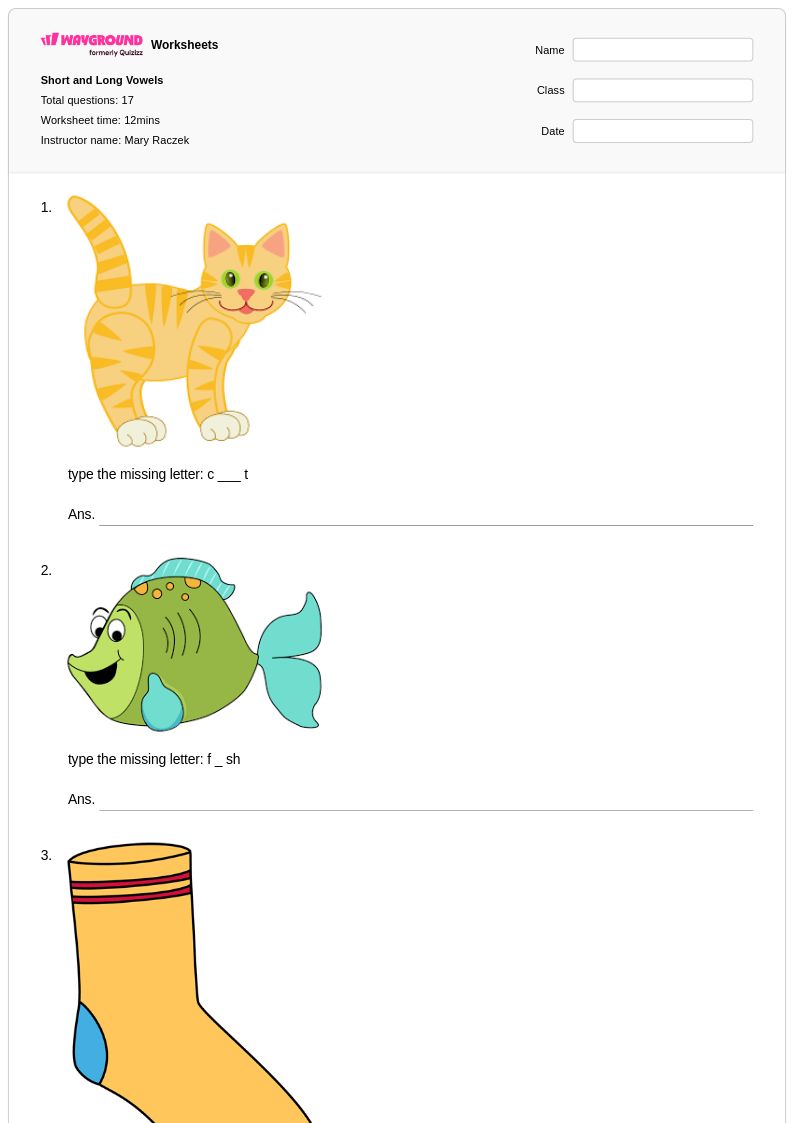
17 Q
1st - 2nd
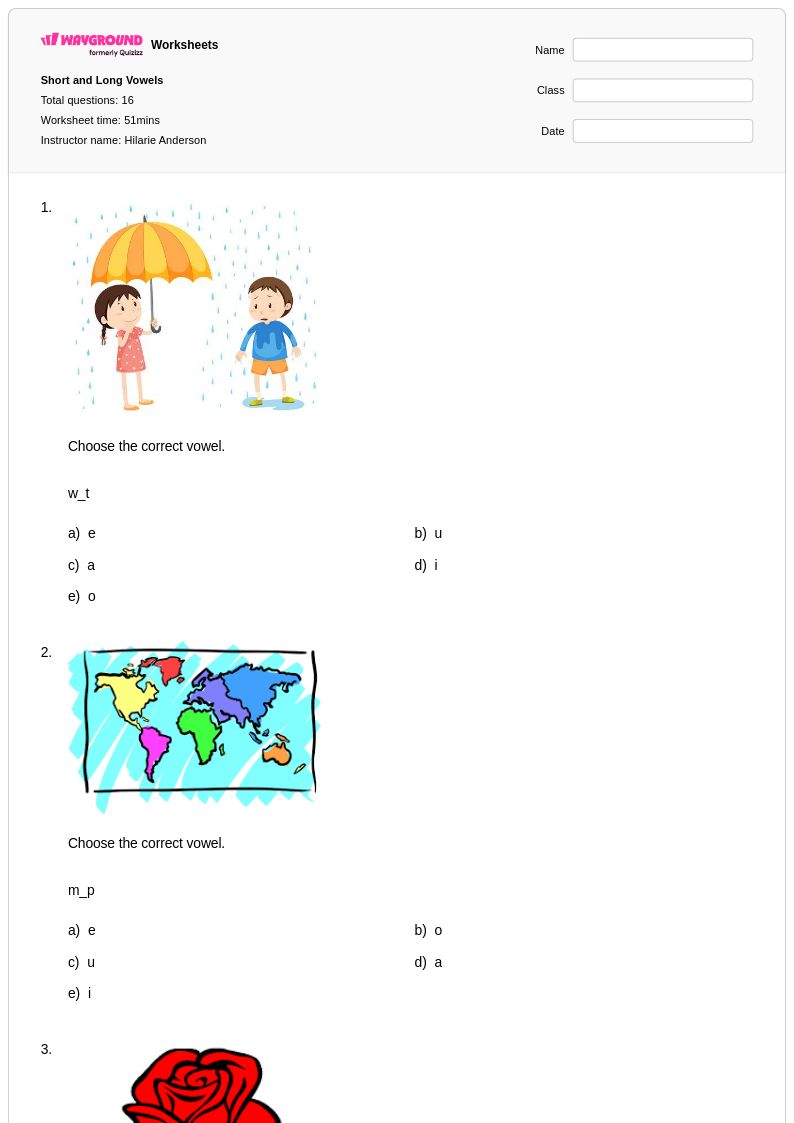
18 Q
1st - Uni
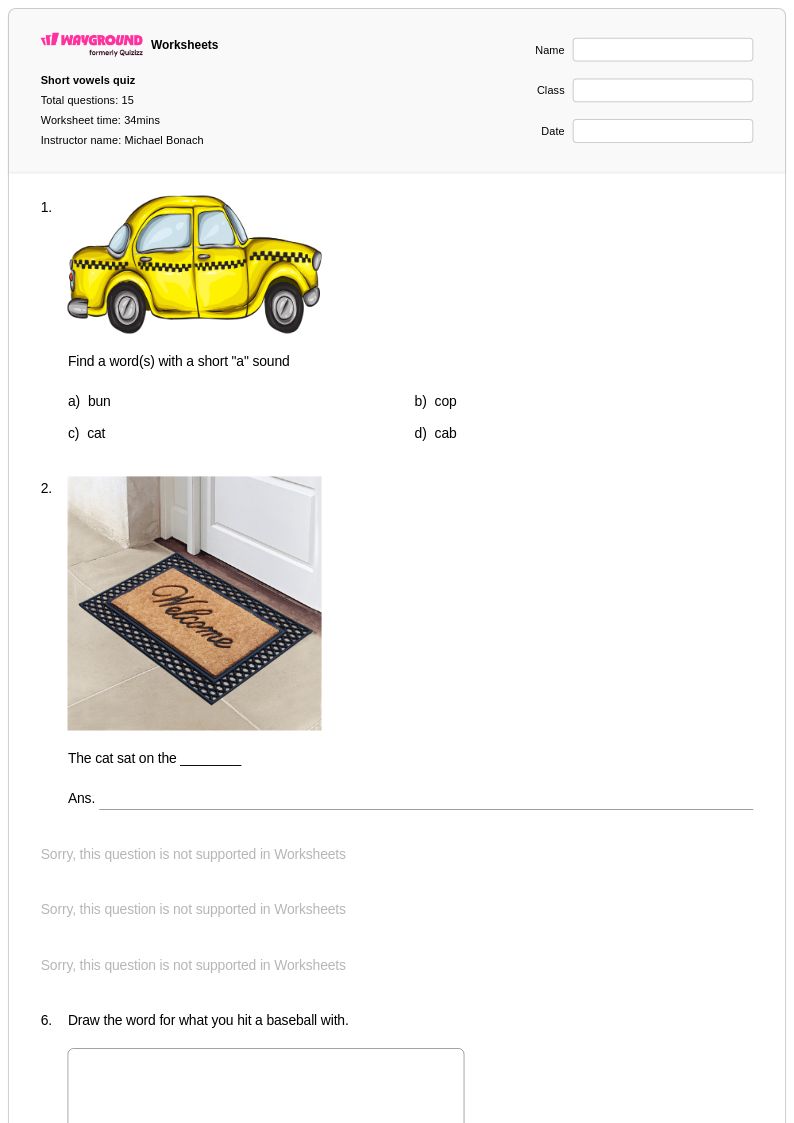
18 Q
1st
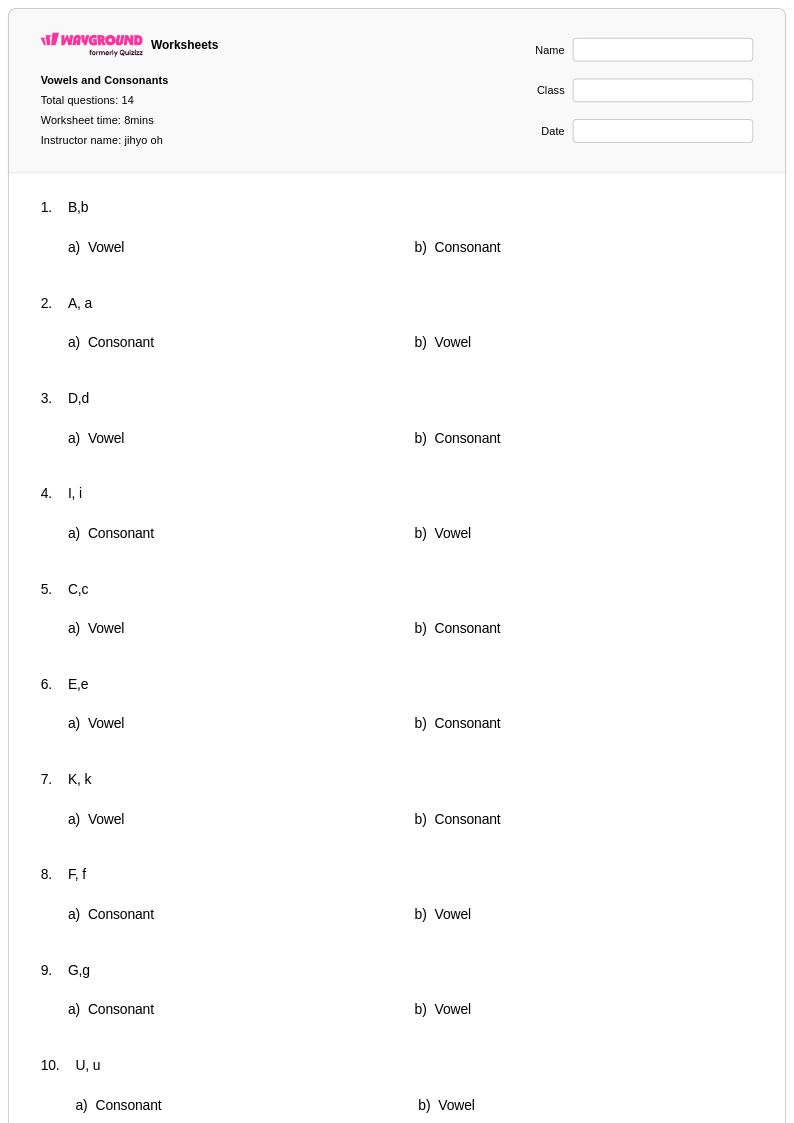
14 Q
KG - 2nd
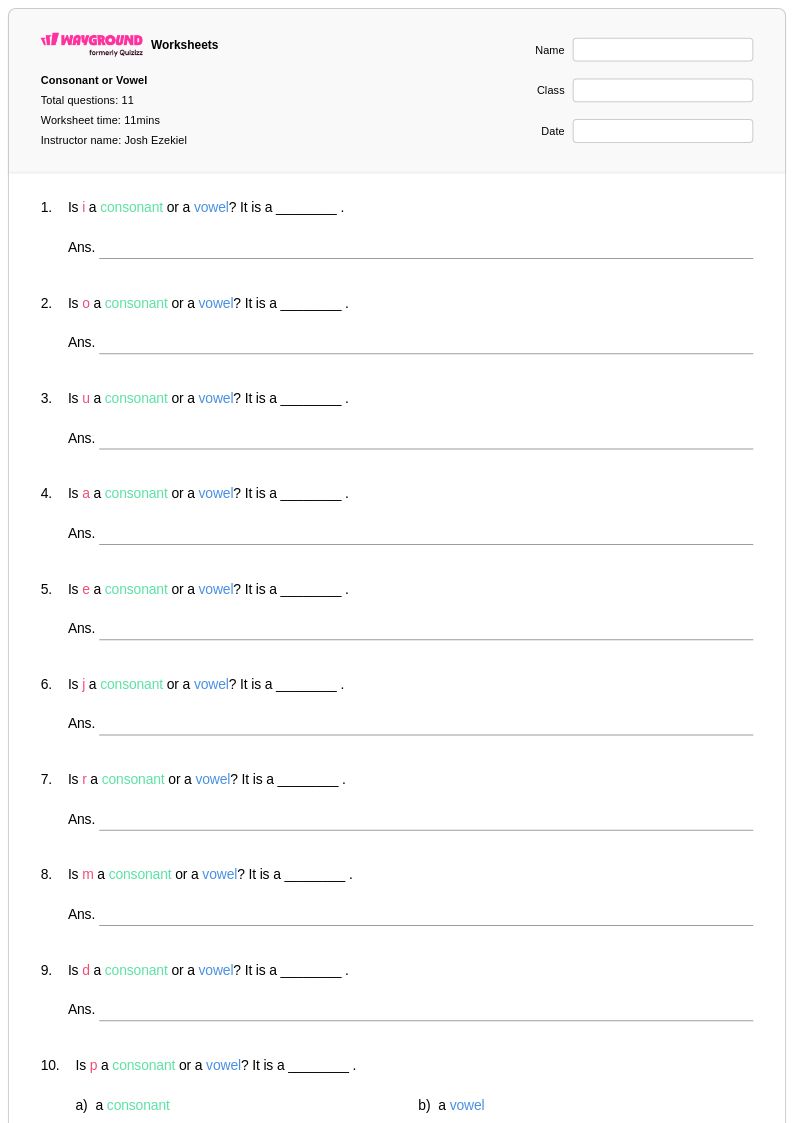
11 Q
1st - 5th
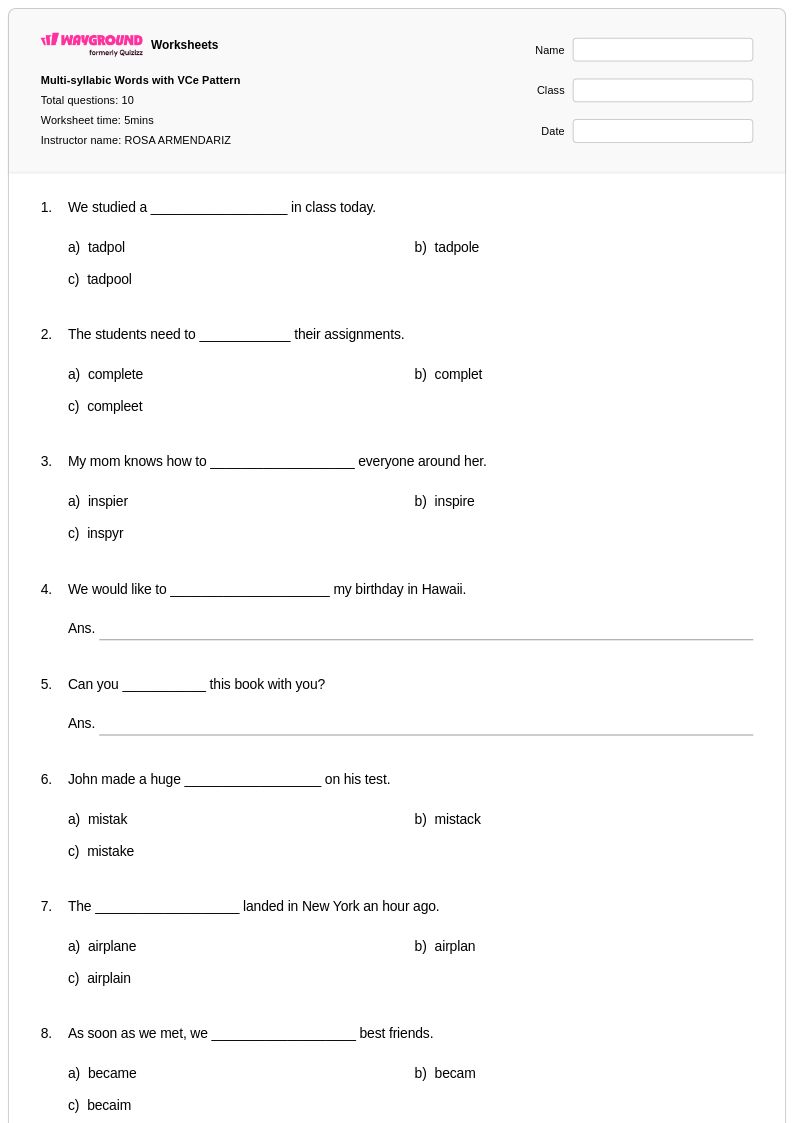
10 Q
KG - 5th
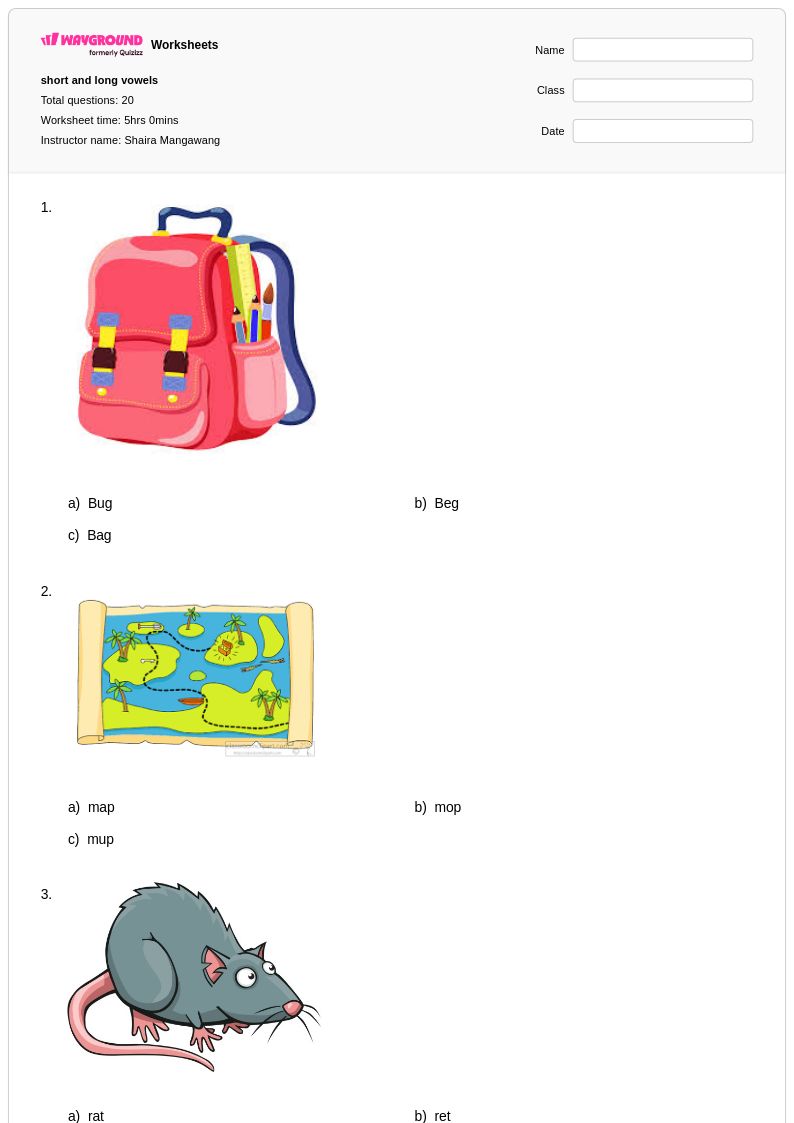
20 Q
1st - 2nd
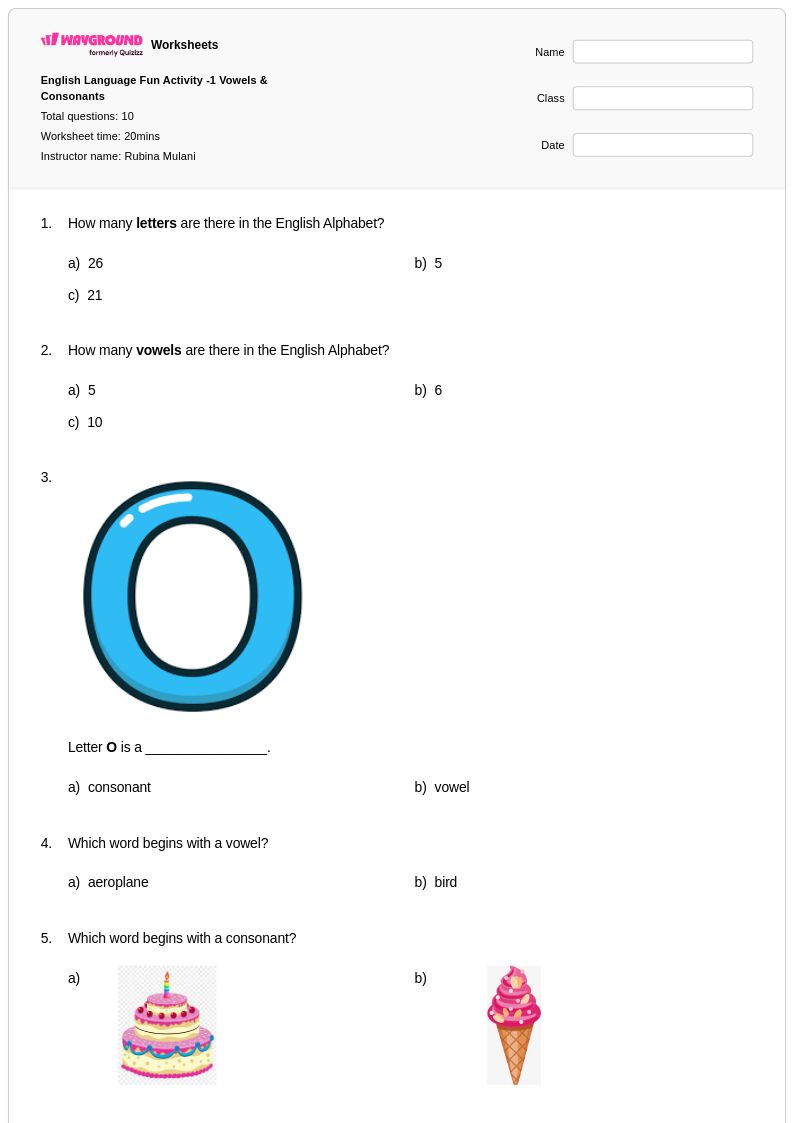
10 Q
1st
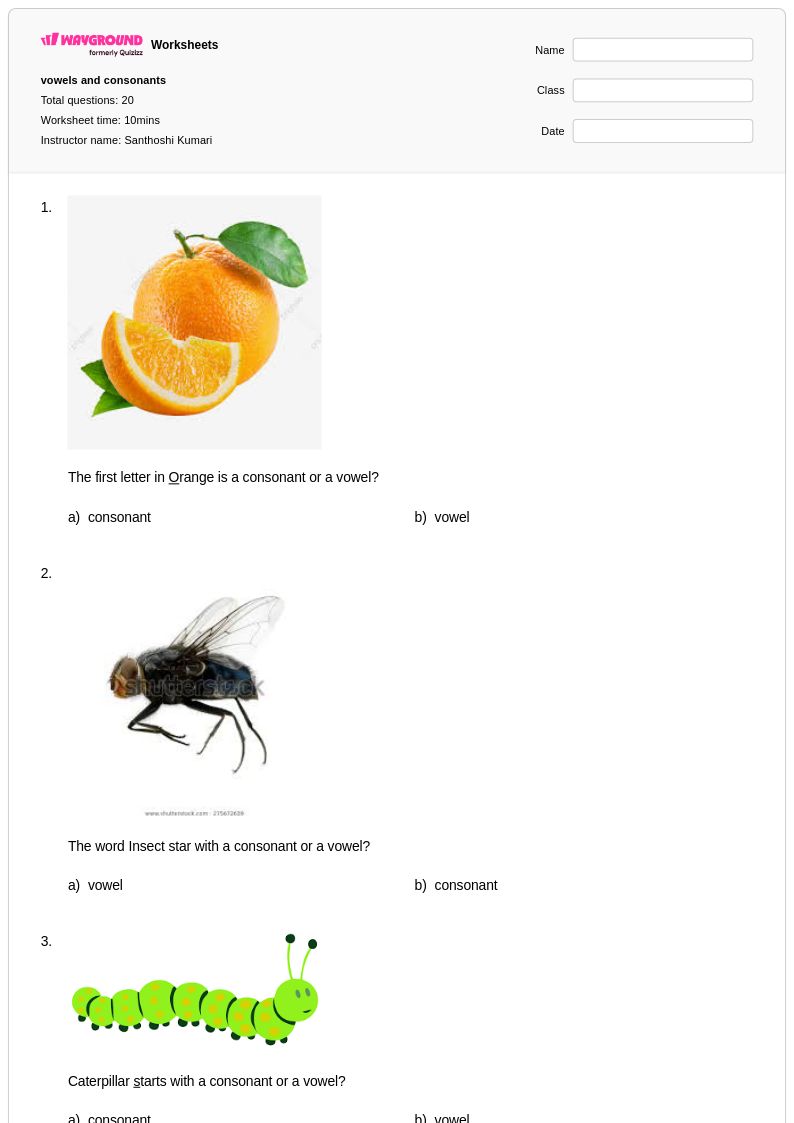
20 Q
1st - 2nd
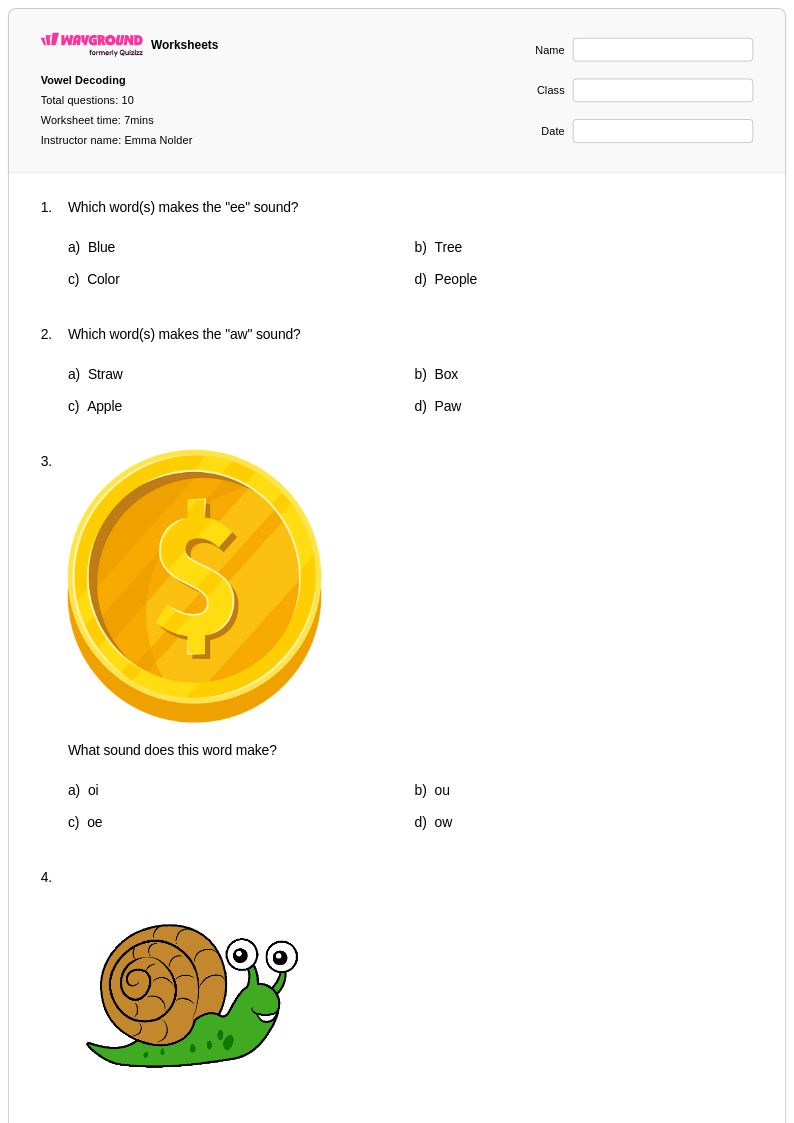
10 Q
1st
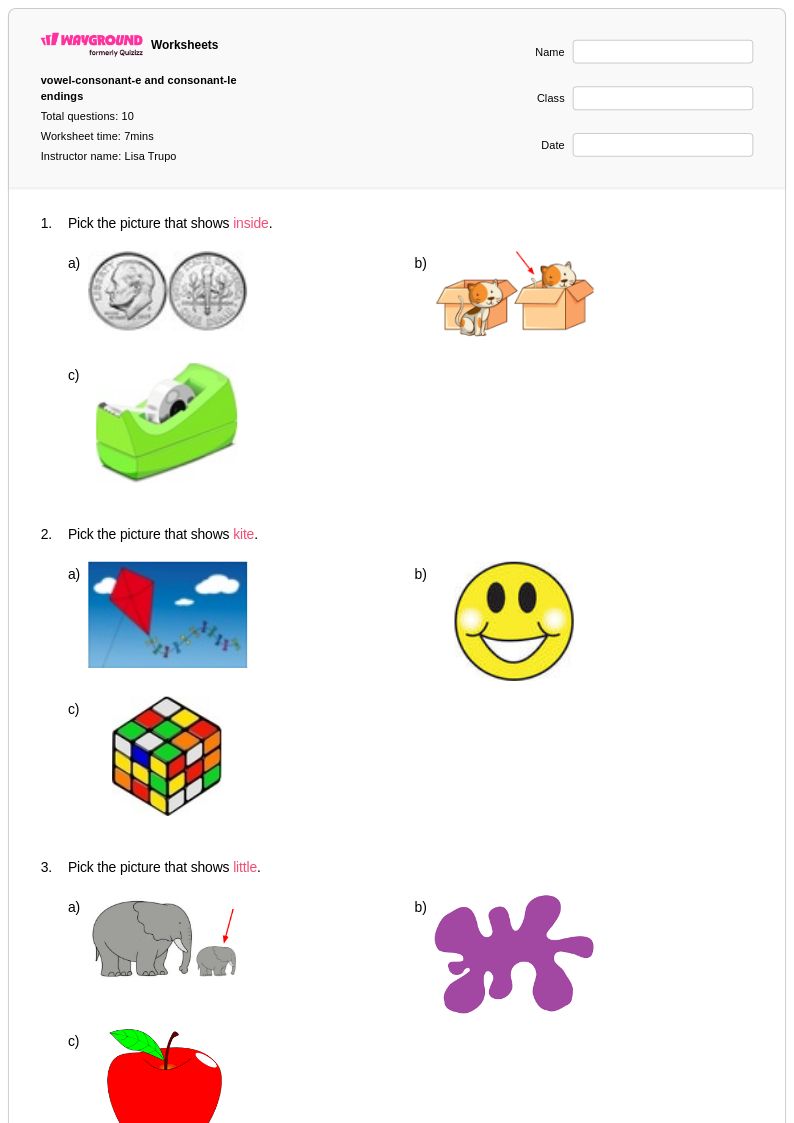
10 Q
KG - 2nd
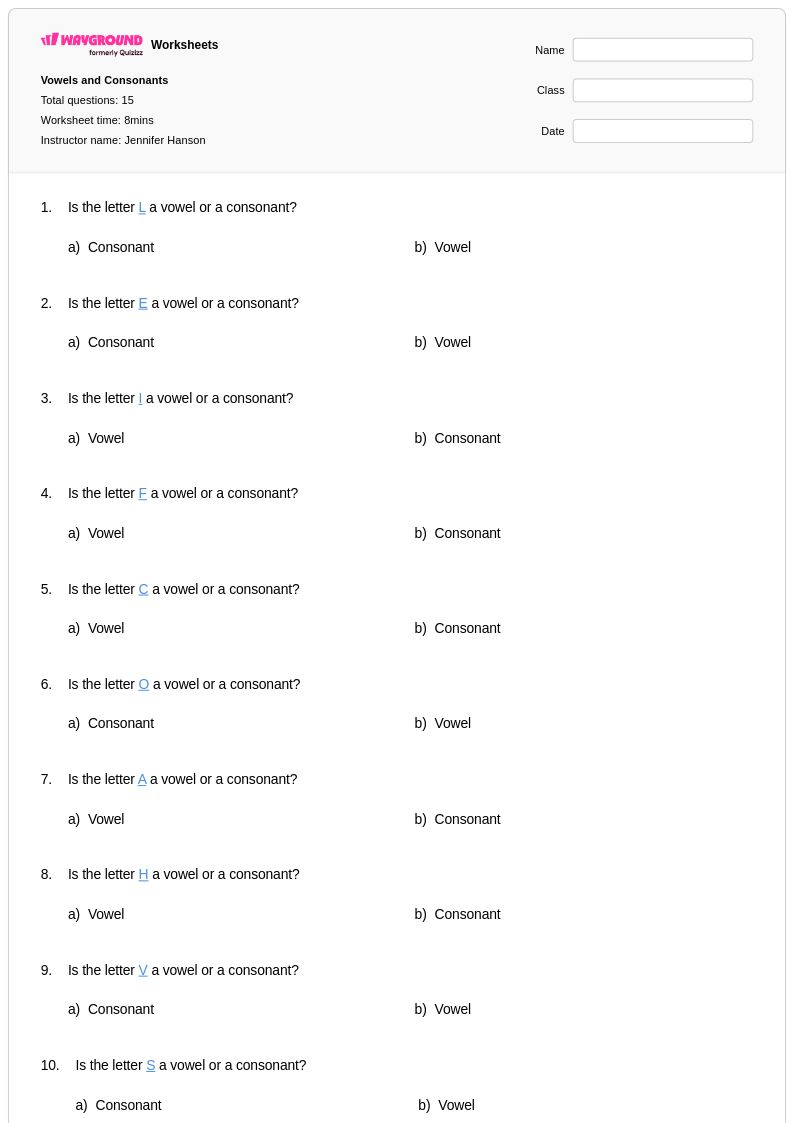
15 Q
1st - 5th
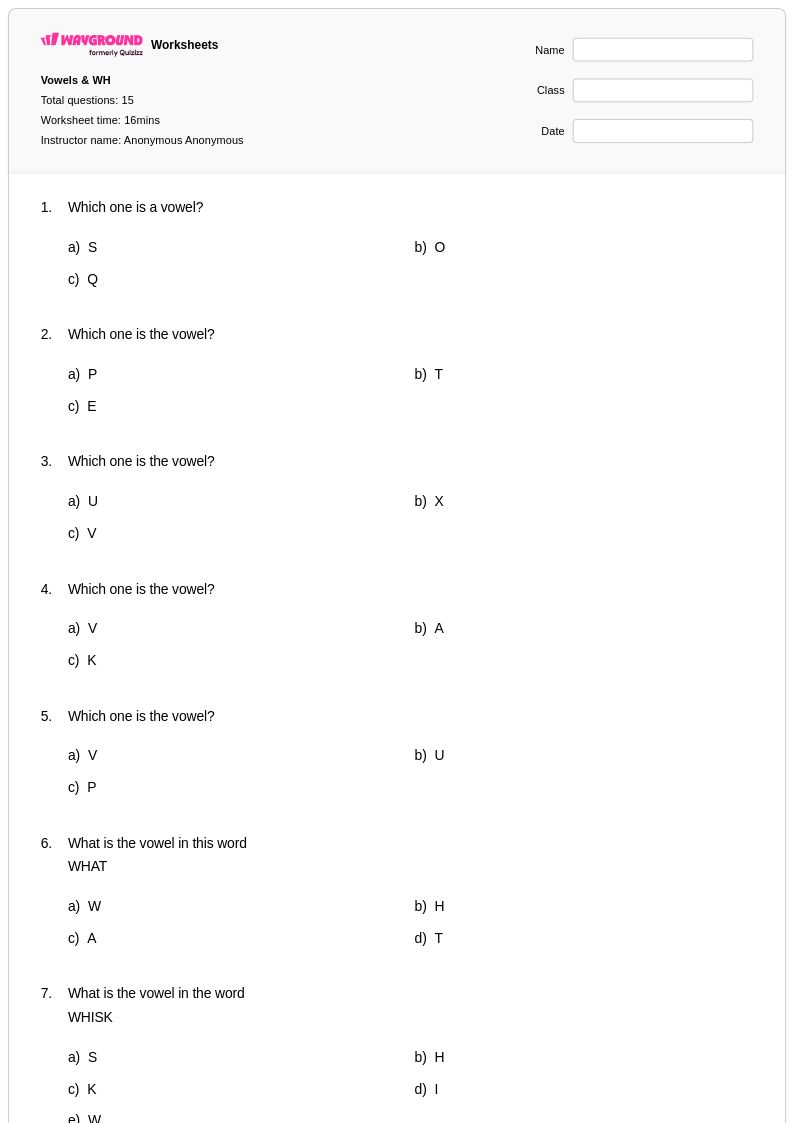
15 Q
1st - 5th

7 Q
1st - 5th
17 Q
1st - 5th
10 Q
KG - 1st
8 Q
KG - 1st
10 Q
1st
15 Q
1st
10 Q
1st
10 Q
1st - 2nd
Explore Vowel-consonant-vowel Pattern Worksheets by Grades
Explore Other Subject Worksheets for class 1
Explore printable Vowel-consonant-vowel Pattern worksheets for Class 1
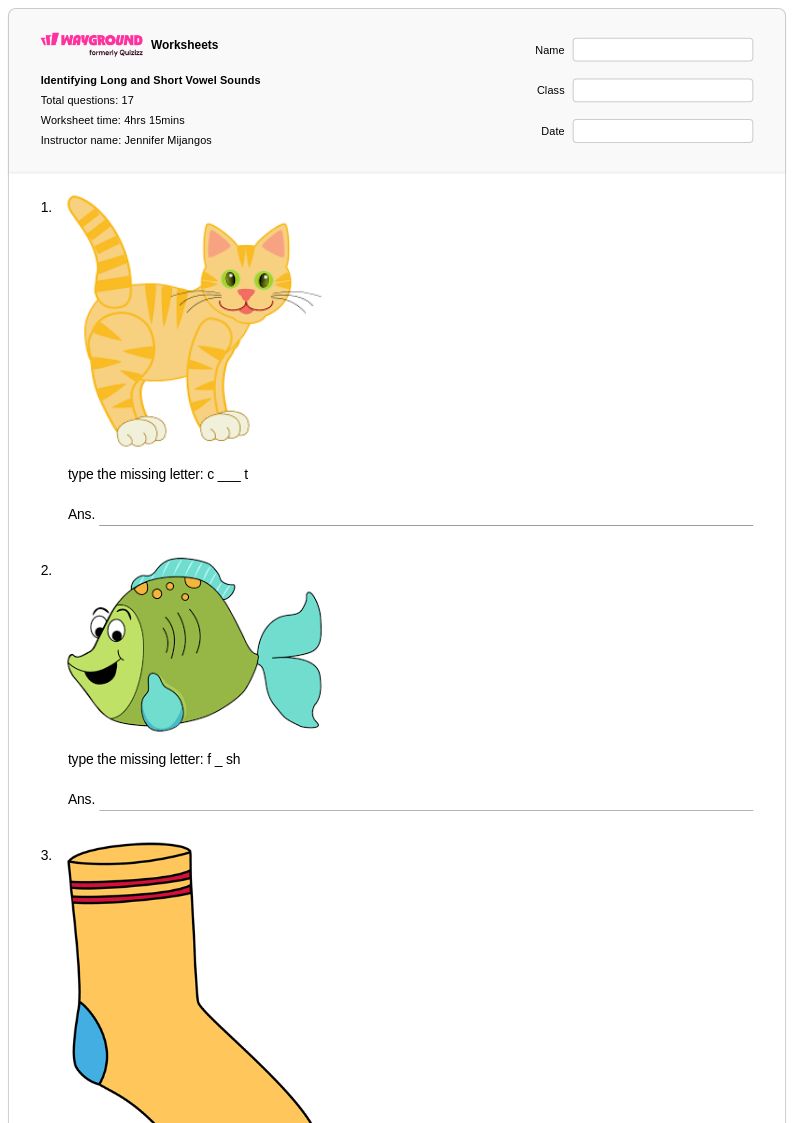
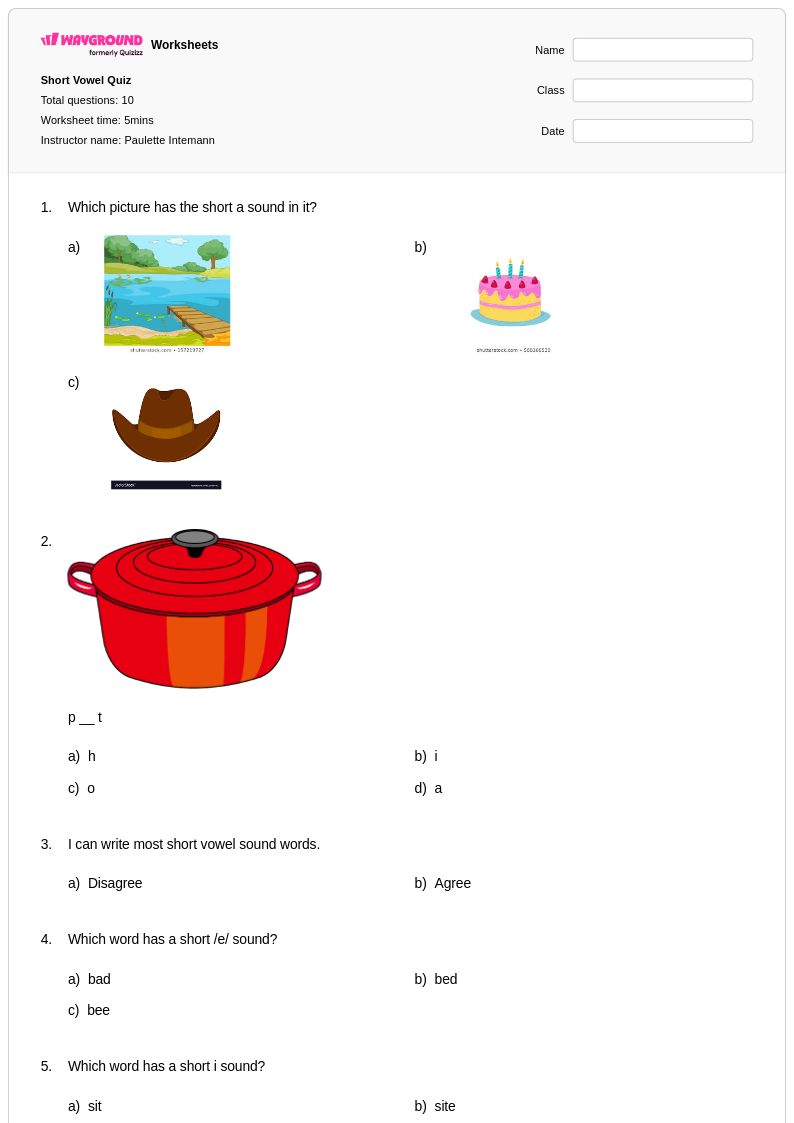
Vowel-consonant-vowel pattern worksheets for Class 1 students provide essential foundational practice for developing reading fluency and phonetic awareness. These comprehensive printables from Wayground (formerly Quizizz) focus on helping young learners recognize and decode three-letter words that follow the CVC structure, such as "cat," "dog," and "run." The worksheets systematically strengthen students' ability to identify short vowel sounds positioned between consonants, building crucial phonemic awareness skills that serve as stepping stones to more complex reading patterns. Each practice problem is carefully designed to reinforce sound-letter relationships, while the included answer key allows for immediate feedback and self-correction. These free pdf resources offer varied activities including word completion exercises, picture-to-word matching, and sound isolation tasks that make phonics instruction both engaging and effective.
Wayground (formerly Quizizz) empowers educators with access to millions of teacher-created vowel-consonant-vowel pattern resources specifically aligned to Class 1 learning standards. The platform's robust search and filtering capabilities enable teachers to quickly locate materials that match their students' specific skill levels and learning objectives. Advanced differentiation tools allow instructors to customize worksheets for diverse learners, creating modified versions for students who need additional support or enrichment challenges for those ready to advance. Available in both printable and digital formats, including downloadable pdf files, these resources seamlessly integrate into any classroom environment or home learning setting. Teachers can efficiently plan targeted phonics lessons, implement focused remediation strategies, and provide meaningful skill practice that addresses individual student needs while maintaining curriculum alignment and instructional continuity.
FAQs
How do I teach the vowel-consonant-vowel pattern to early readers?
What exercises help students practice the vowel-consonant-vowel pattern?
What mistakes do students commonly make with the vowel-consonant-vowel pattern?
How can I differentiate VCV phonics instruction for struggling readers?
How do I use vowel-consonant-vowel pattern worksheets from Wayground in my classroom?
At what reading level should students learn the vowel-consonant-vowel pattern?