Free Printable Water on Earth Worksheets for Kindergarten
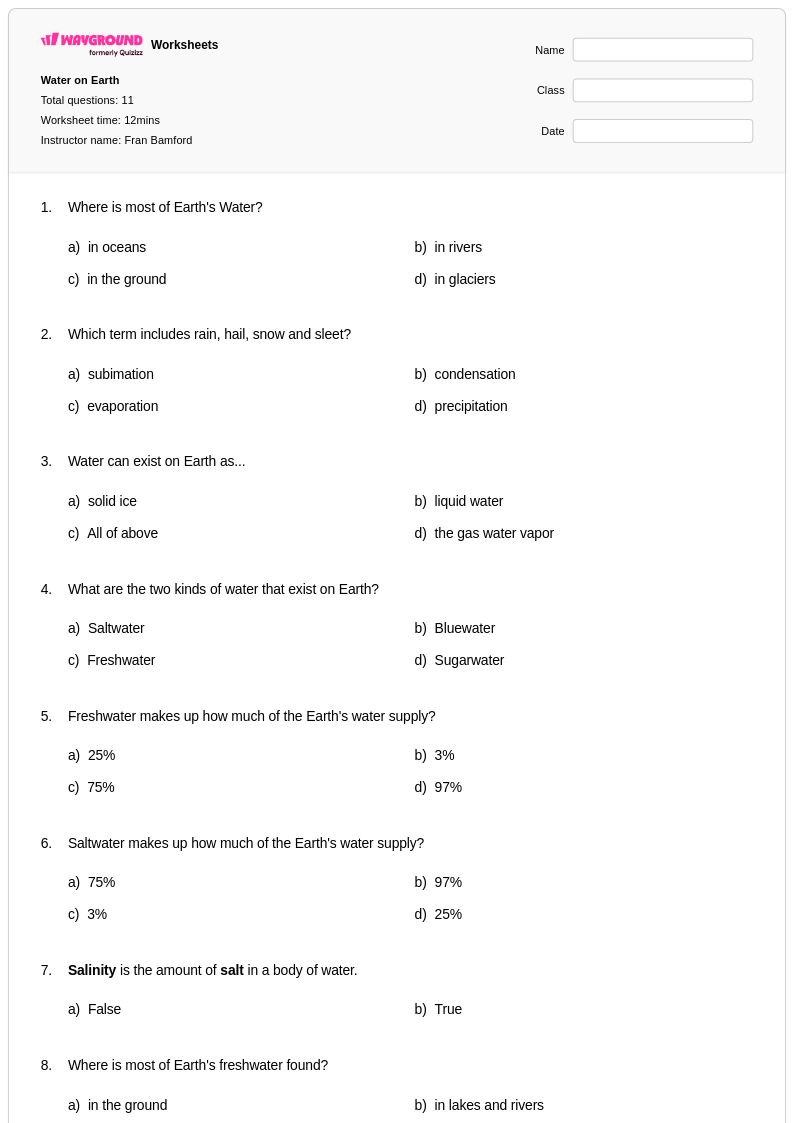
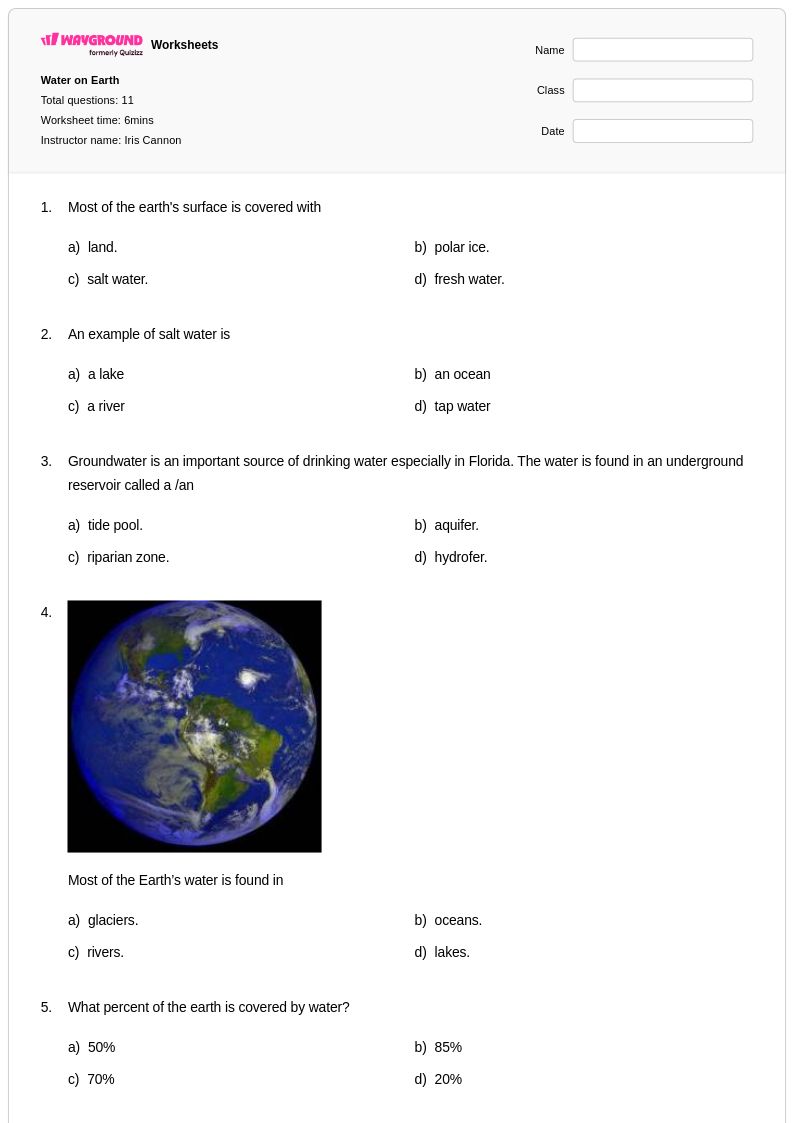
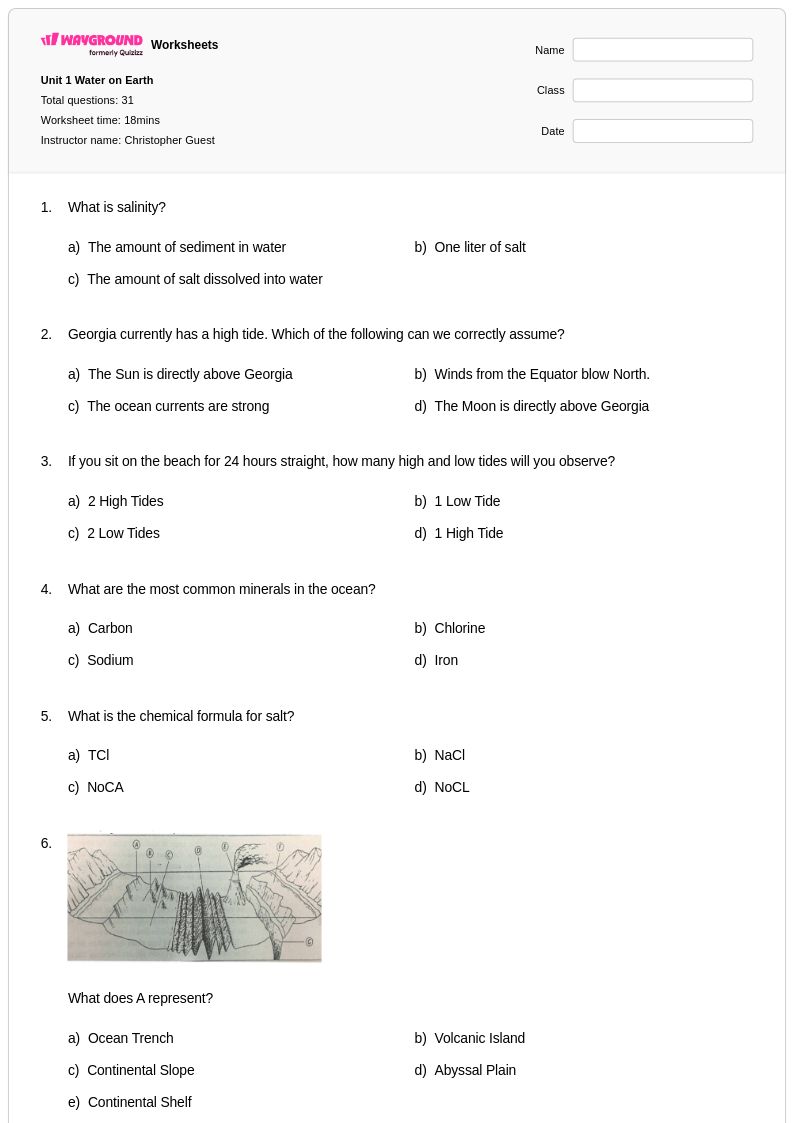
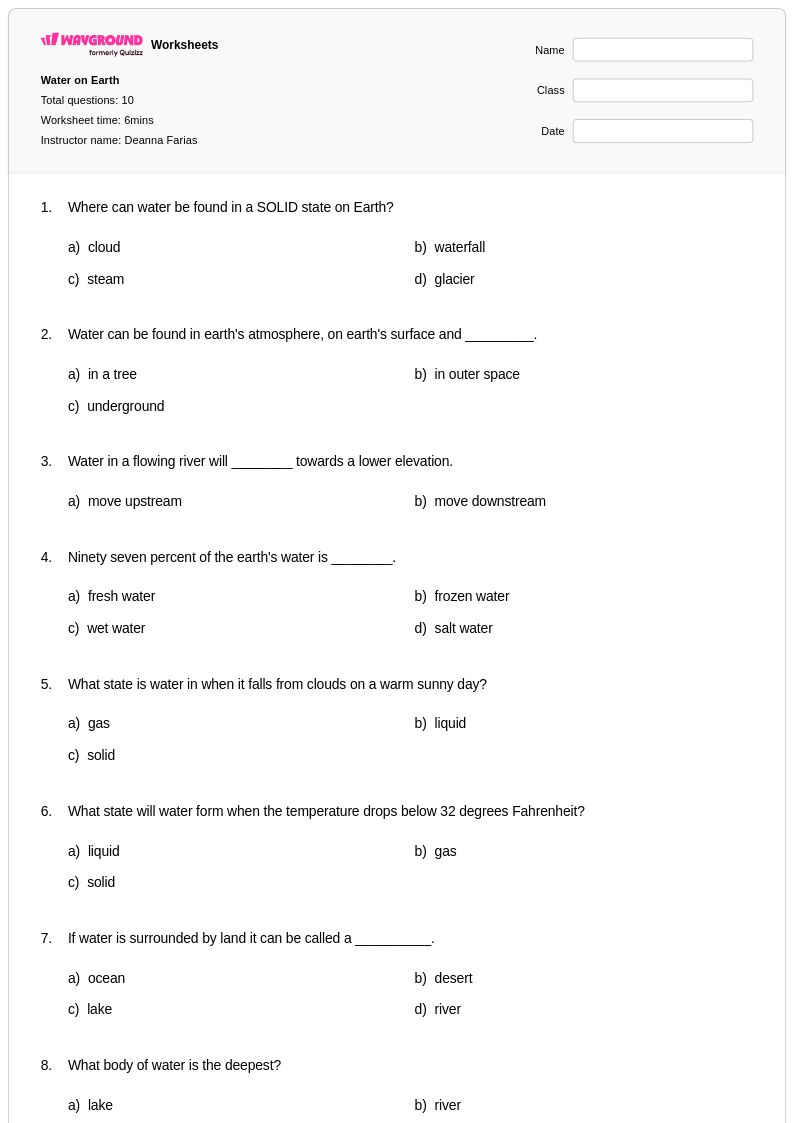
Explore our free kindergarten water on Earth worksheets and printables that help young learners discover where water exists on our planet through engaging practice problems and activities with answer keys.
Explore printable Water on Earth worksheets for Kindergarten
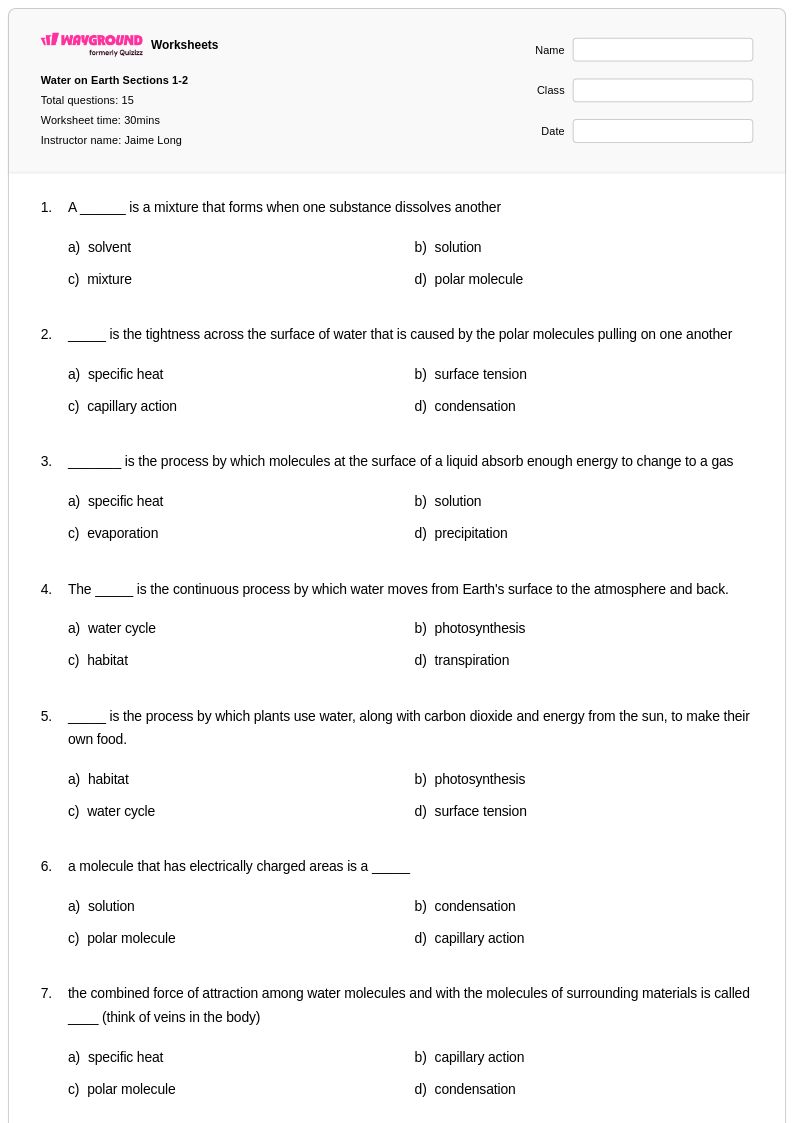
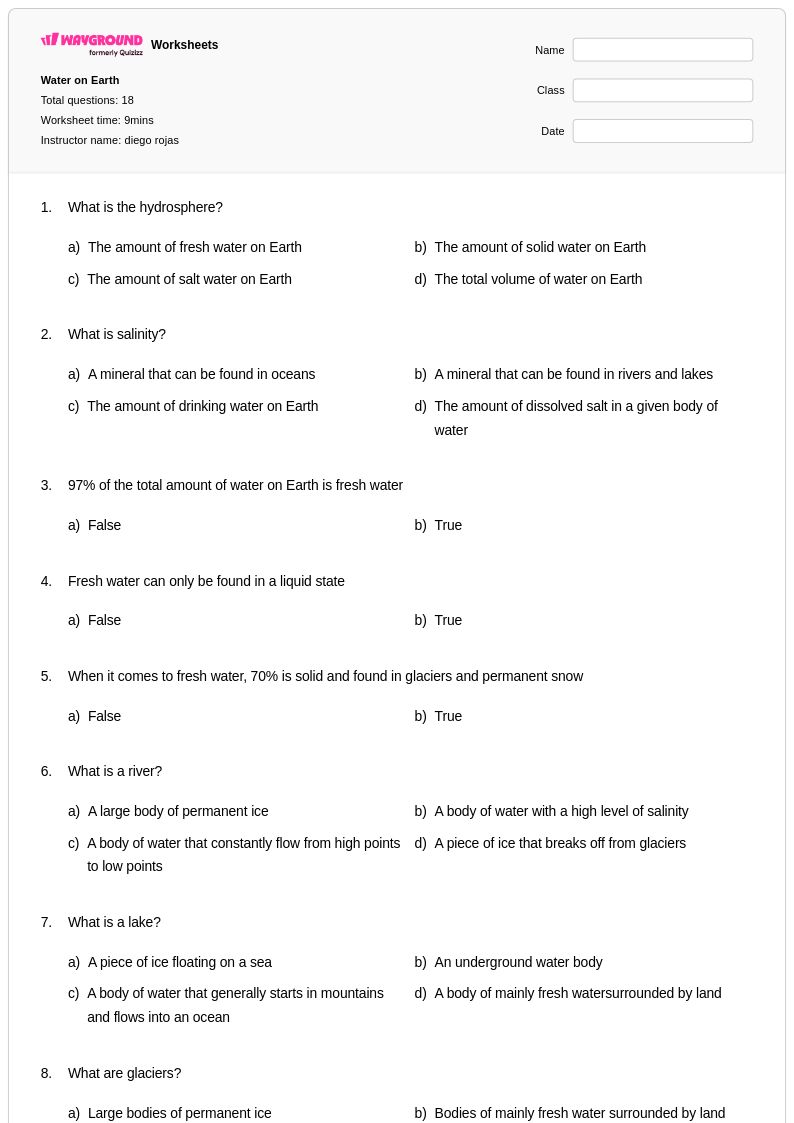
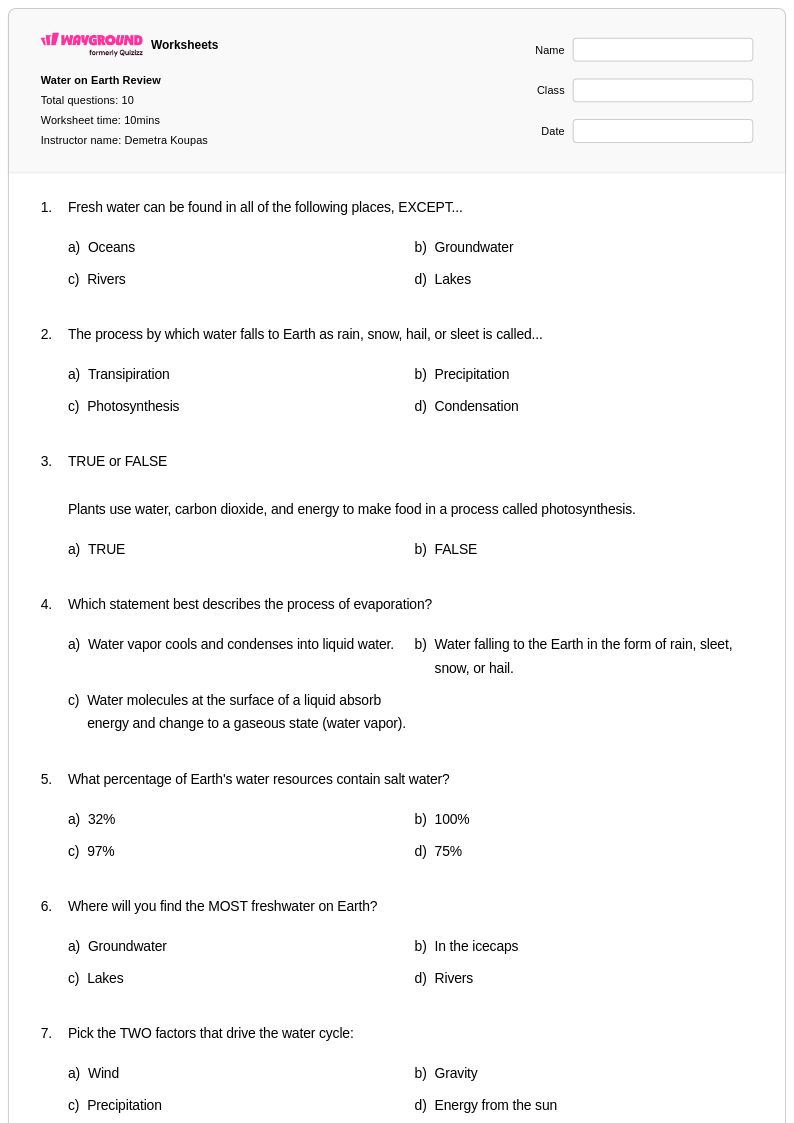
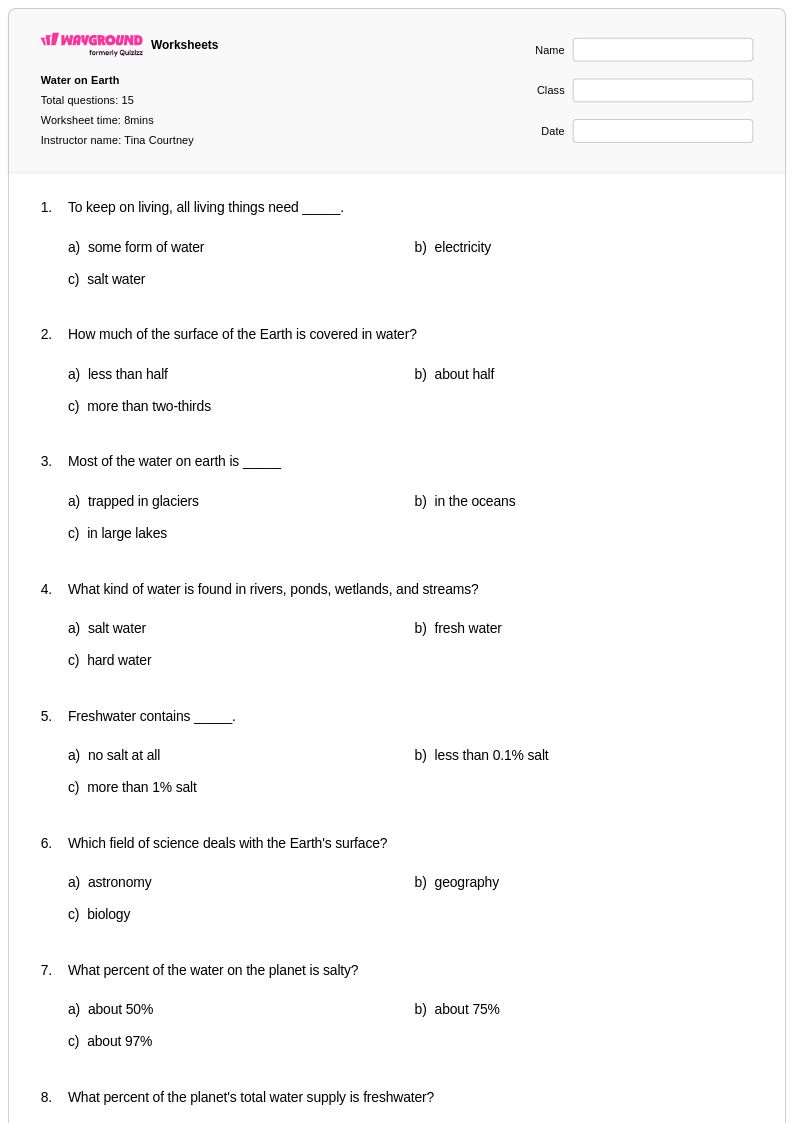
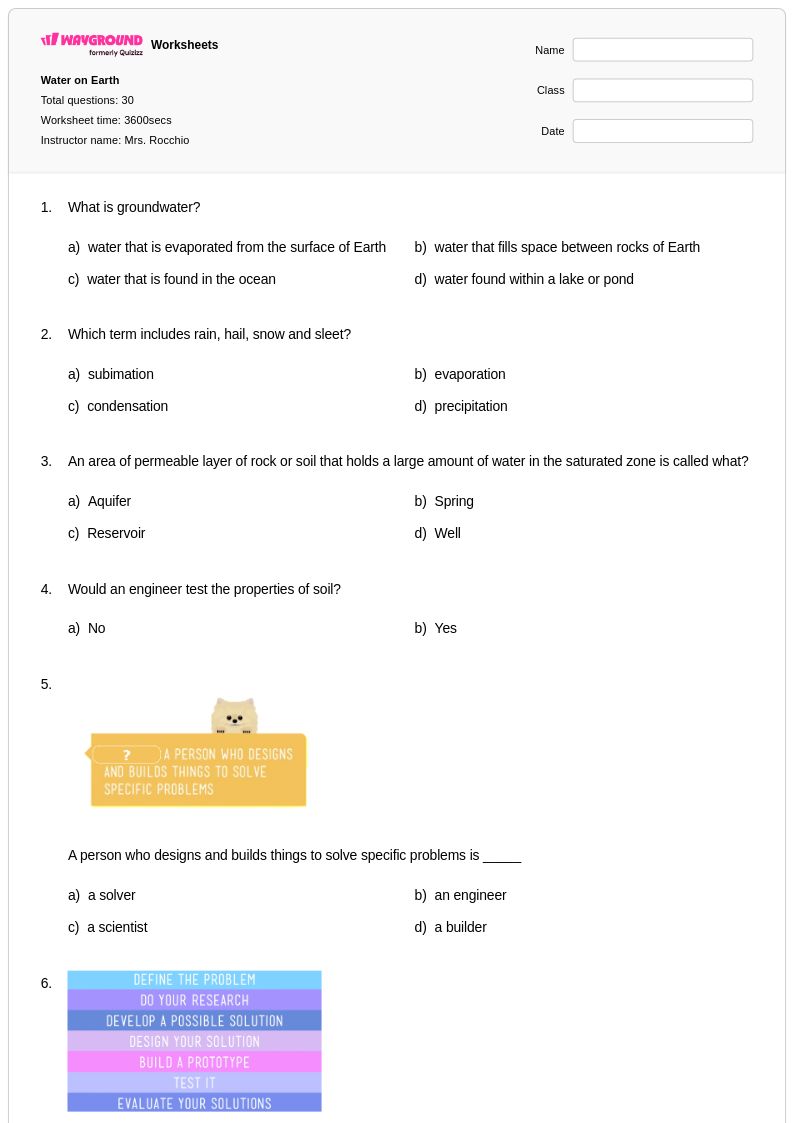
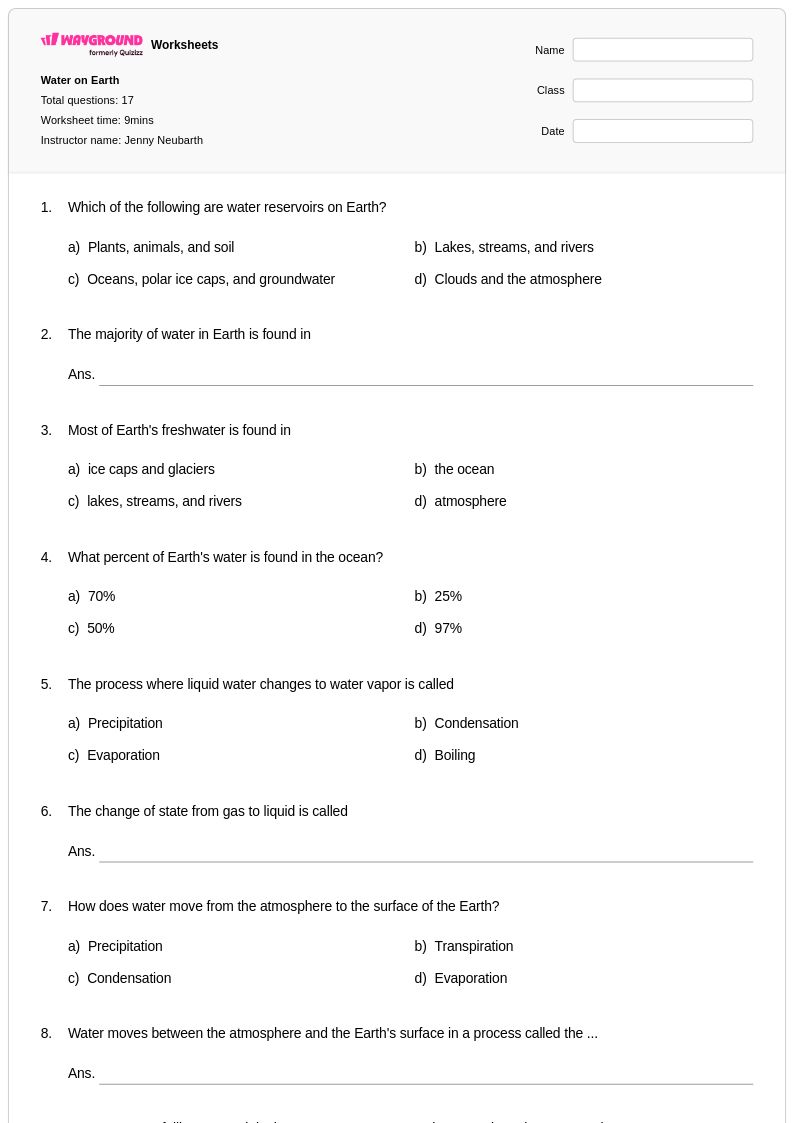
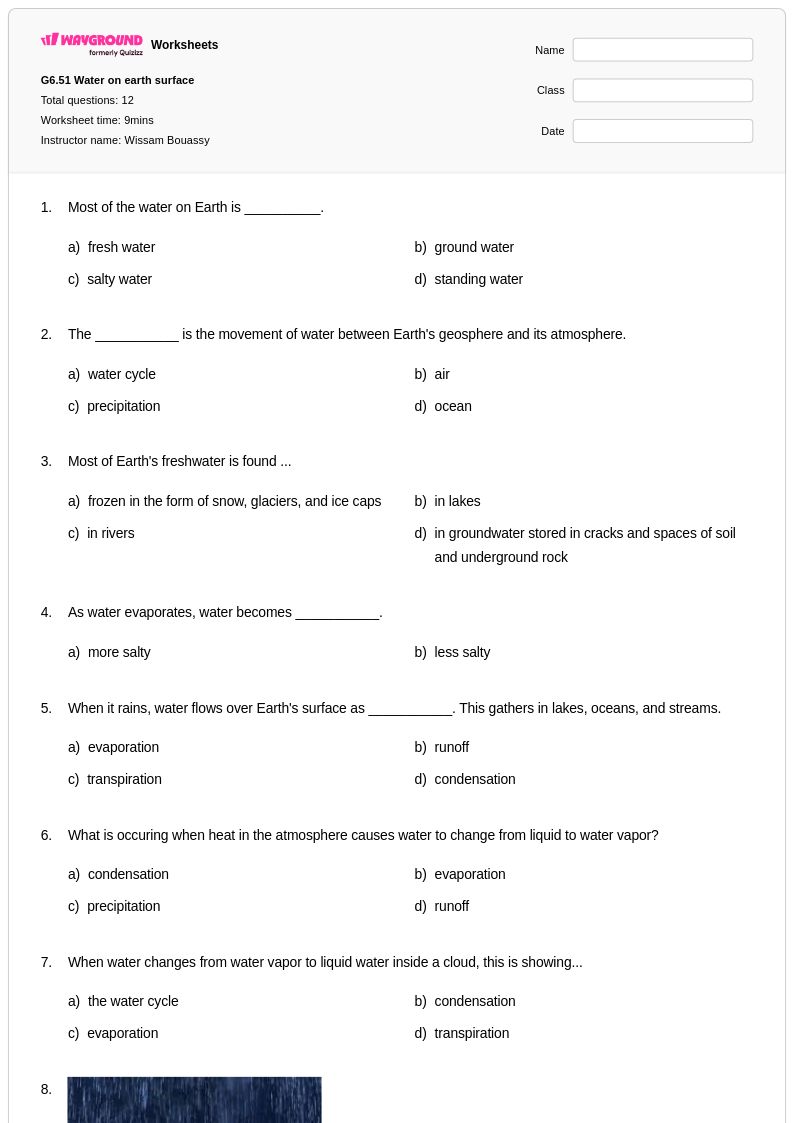
Water on Earth worksheets for kindergarten students available through Wayground (formerly Quizizz) introduce young learners to fundamental concepts about our planet's most essential resource. These educational materials help kindergarteners develop early scientific thinking skills by exploring where water exists on Earth, from oceans and rivers to lakes and precipitation. The worksheets strengthen observation abilities, basic classification skills, and vocabulary development through age-appropriate activities that connect water concepts to children's daily experiences. Teachers can access these free printables with comprehensive answer keys, allowing for effective assessment of student understanding while providing structured practice problems that build foundational knowledge in earth science.
Wayground (formerly Quizizz) empowers educators with an extensive collection of millions of teacher-created resources specifically designed for kindergarten water on Earth instruction. The platform's robust search and filtering capabilities enable teachers to quickly locate worksheets that align with curriculum standards and match their students' developmental needs. These differentiation tools support both remediation for struggling learners and enrichment opportunities for advanced students, while the flexible customization options allow educators to modify content for specific classroom requirements. Available in both printable and digital pdf formats, these resources streamline lesson planning and provide versatile options for skill practice, whether used for whole-group instruction, independent work, or targeted intervention activities.
FAQs
How do I teach the water cycle and Earth's water systems effectively?
Effective water cycle instruction builds from concrete to abstract: start with observable phenomena like evaporation and precipitation before moving to broader concepts like groundwater recharge and ocean circulation. Use diagrams that label each stage of the hydrological cycle, then connect those stages to real-world examples such as watershed drainage and aquifer replenishment. Reinforcing these connections through structured practice helps students see water systems as interconnected rather than isolated processes.
What exercises help students practice understanding Earth's water systems?
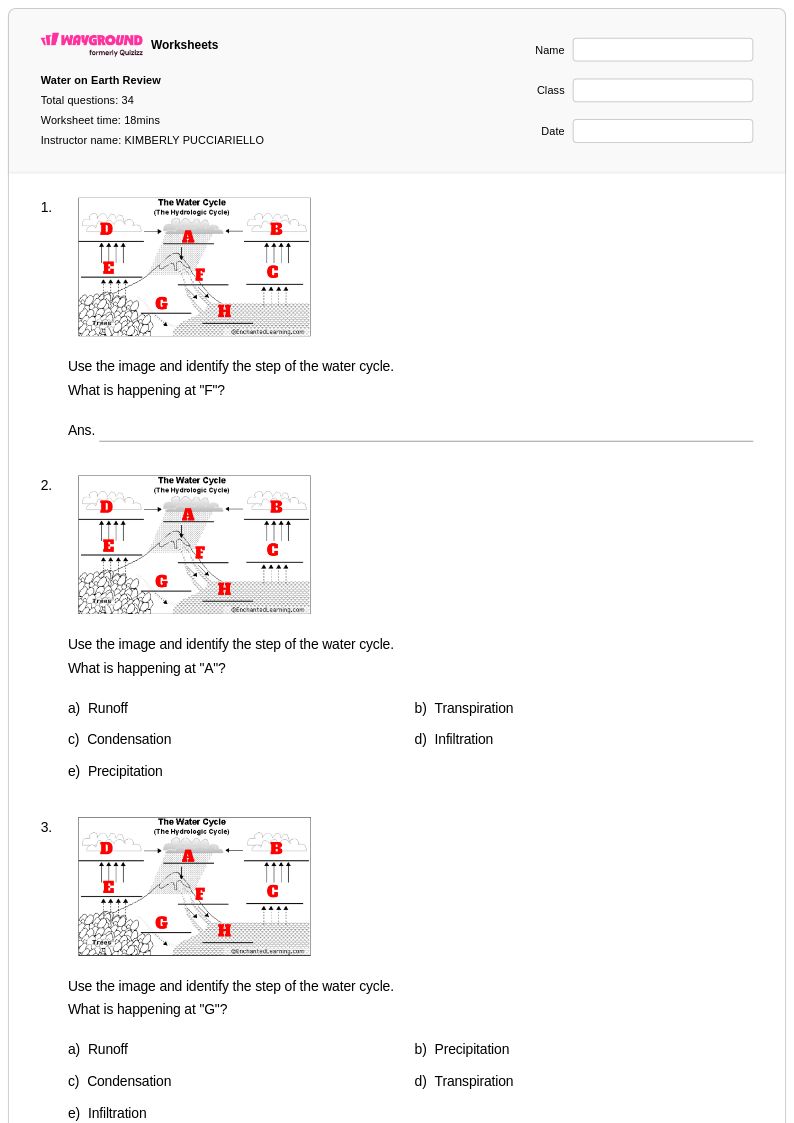
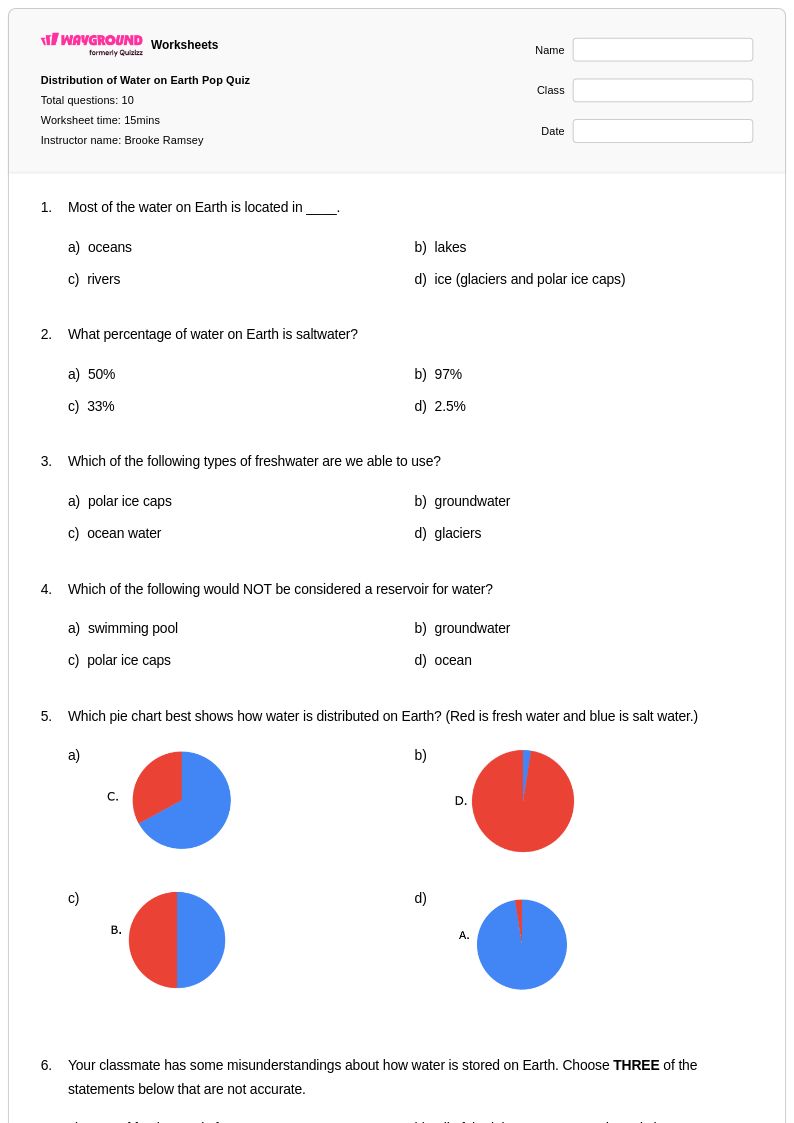
Practice exercises that work well for water on Earth topics include labeling water cycle diagrams, analyzing maps of freshwater versus saltwater distribution, and interpreting data on precipitation patterns or groundwater levels. Tasks that ask students to trace water's movement through different reservoirs — atmosphere, surface, and subsurface — build systems thinking alongside content knowledge. Mixing diagram-based tasks with short written analysis questions strengthens both recall and conceptual understanding.
What misconceptions do students commonly have about the water cycle and freshwater resources?
A common misconception is that freshwater is abundant and evenly distributed across Earth, when in fact the vast majority of Earth's water is saltwater and most freshwater is locked in glaciers or ice caps. Students also frequently confuse evaporation with boiling, not recognizing that evaporation occurs at ambient temperatures. Another persistent error is treating the water cycle as a linear sequence rather than a continuous, interconnected system with multiple simultaneous processes.
How do human activities affect Earth's water systems, and how can I teach this concept?
Human activities such as deforestation, agriculture, urbanization, and industrial discharge alter natural water cycles by changing infiltration rates, increasing surface runoff, depleting aquifers, and introducing pollutants into watersheds. Teaching this topic is most effective when students compare natural versus modified landscapes and examine case studies of specific water resource challenges. Asking students to evaluate trade-offs between water use and conservation ties the science directly to civic and environmental reasoning.
How do I use Wayground's Water on Earth worksheets in my classroom?
Wayground's Water on Earth worksheets are available as free printable PDFs for traditional classroom use and in interactive digital formats for technology-integrated environments, giving teachers flexibility across different instructional settings. Each worksheet includes a complete answer key, making them practical for independent practice, homework, or formative assessment without additional prep. Teachers can also host these materials as a quiz directly on Wayground, enabling real-time student responses and streamlined review.
How can I differentiate Water on Earth instruction for students at different skill levels?
Wayground's differentiation tools allow teachers to customize water science materials for varying skill levels, so struggling learners can engage with foundational concepts while advanced students tackle more complex analysis. For students who need additional support, accommodations such as read aloud, reduced answer choices, and extended time can be applied individually without disrupting the rest of the class. These settings are saved and reusable across future sessions, reducing setup time for recurring differentiation needs.


![Chapter 7 [Water on Earth] Lessons 3 + 4 Review - Dapat dicetak Water-on-earth Worksheets Kindergarten - Wayground](https://quizizz-static.s3.amazonaws.com/_media/worksheets-new/5ea2d9b64beee3001bdf7f2b-chapter-7-water-on-earth-lessons-3-4-review)