Free Printable Weapons of World War I Worksheets for Class 6
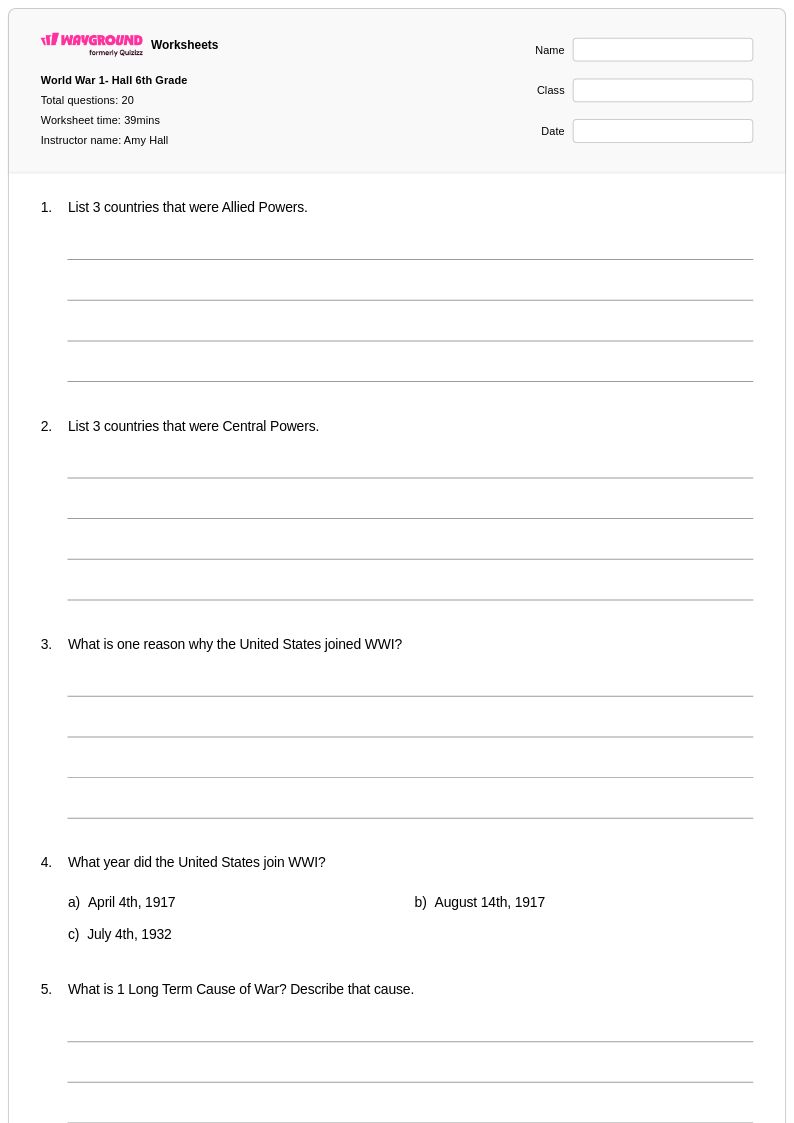
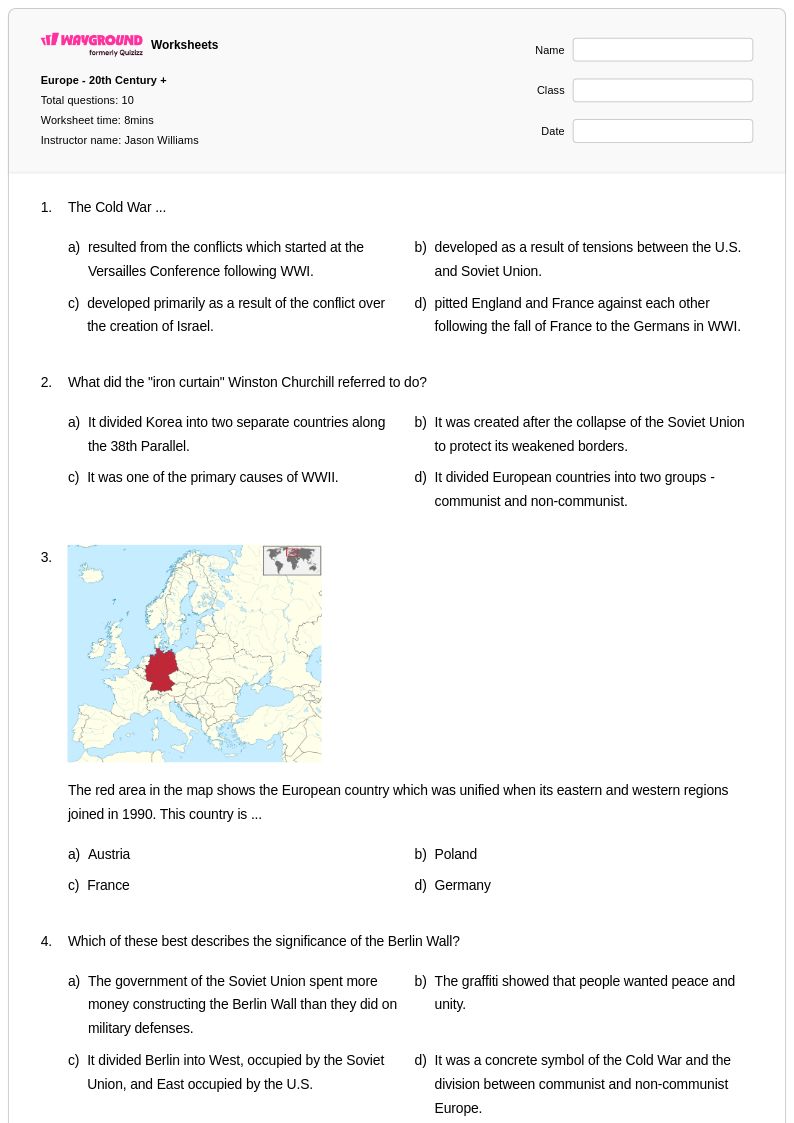
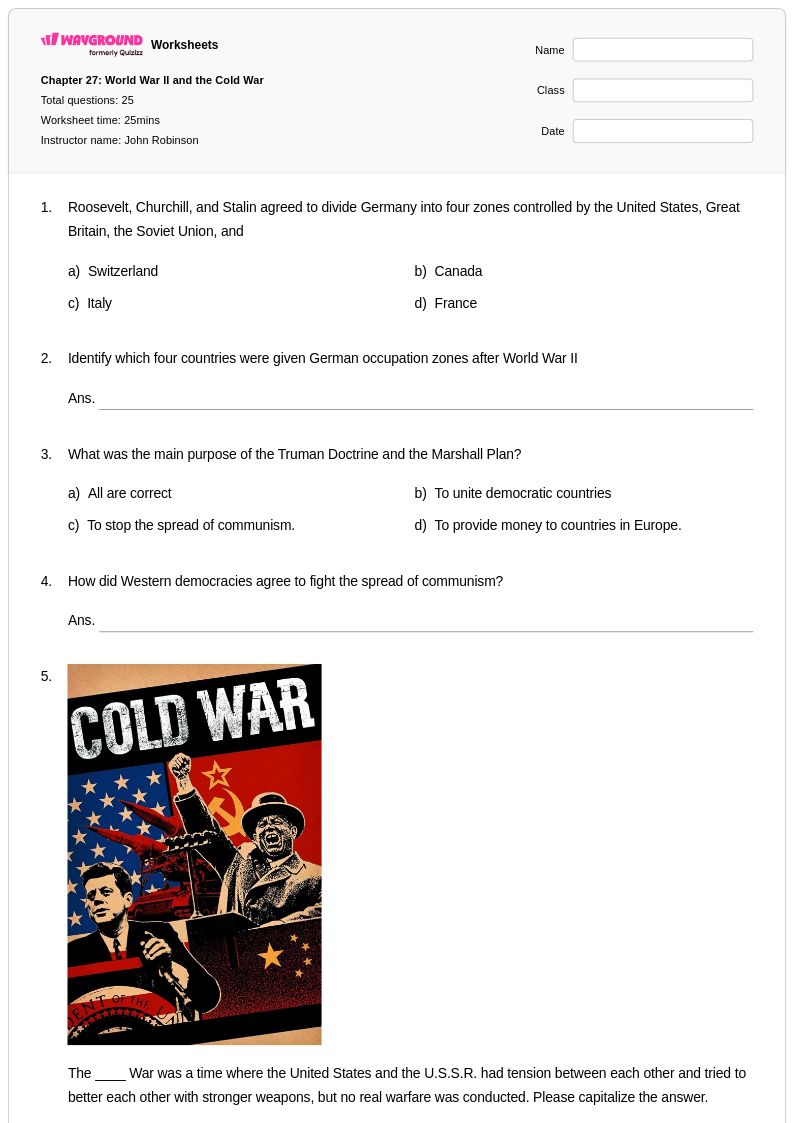
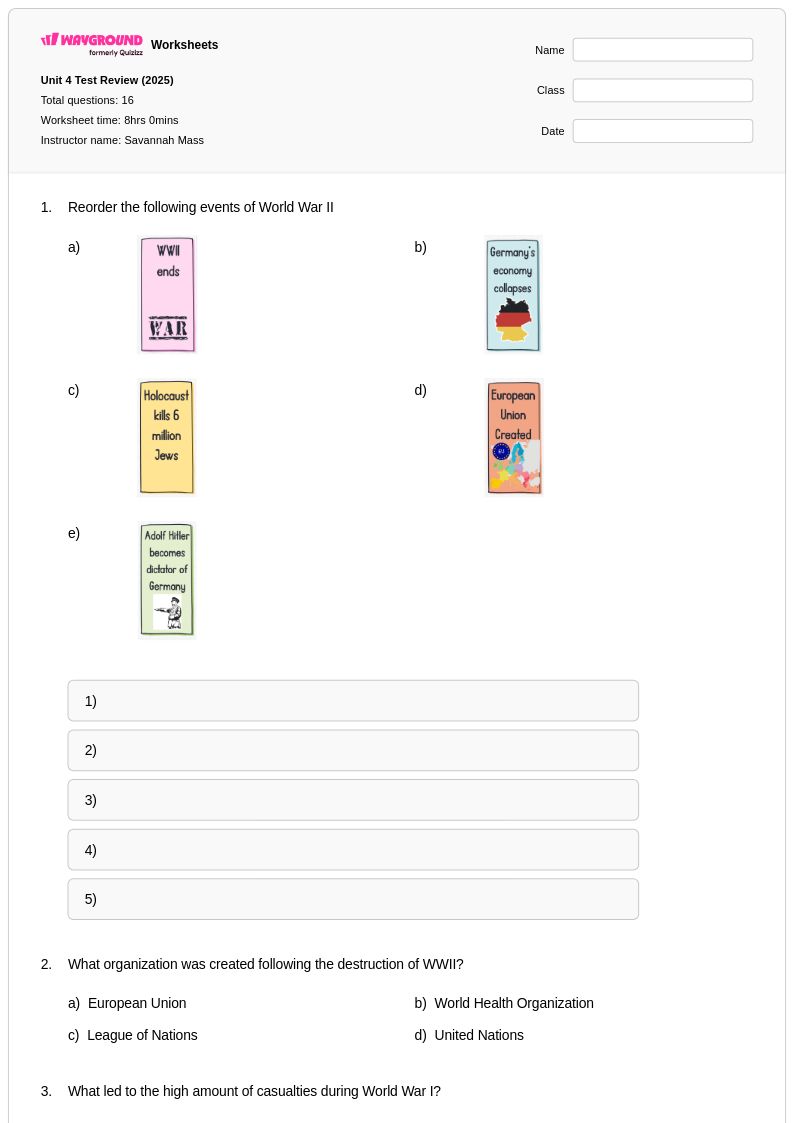
Class 6 students explore World War I weapons through our comprehensive collection of free worksheets, printables, and practice problems with answer keys that help them understand the technological innovations and military strategies of the Great War.
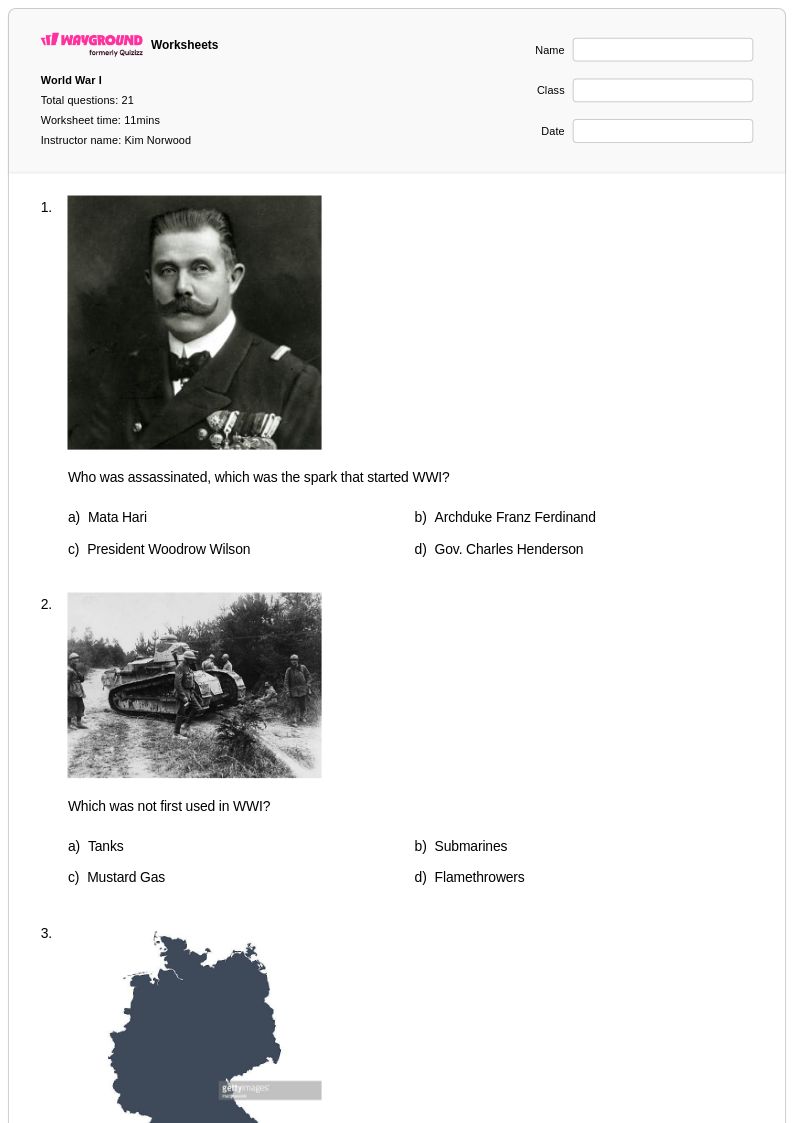
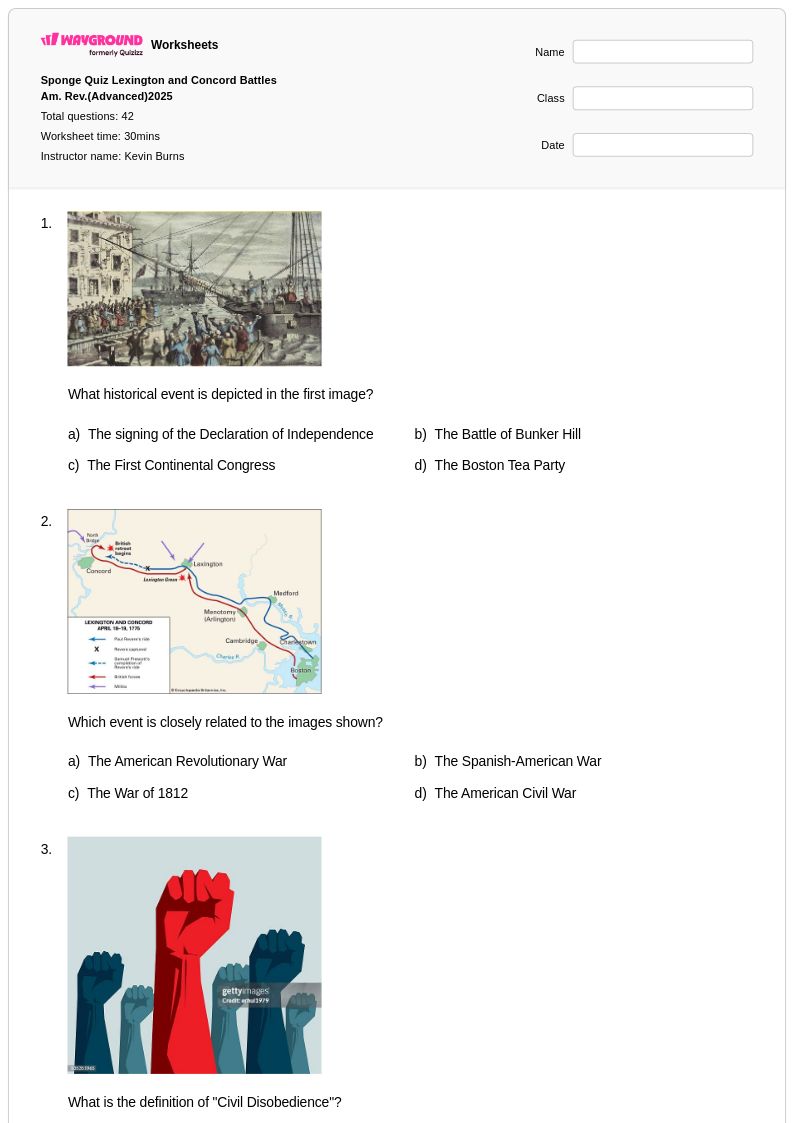
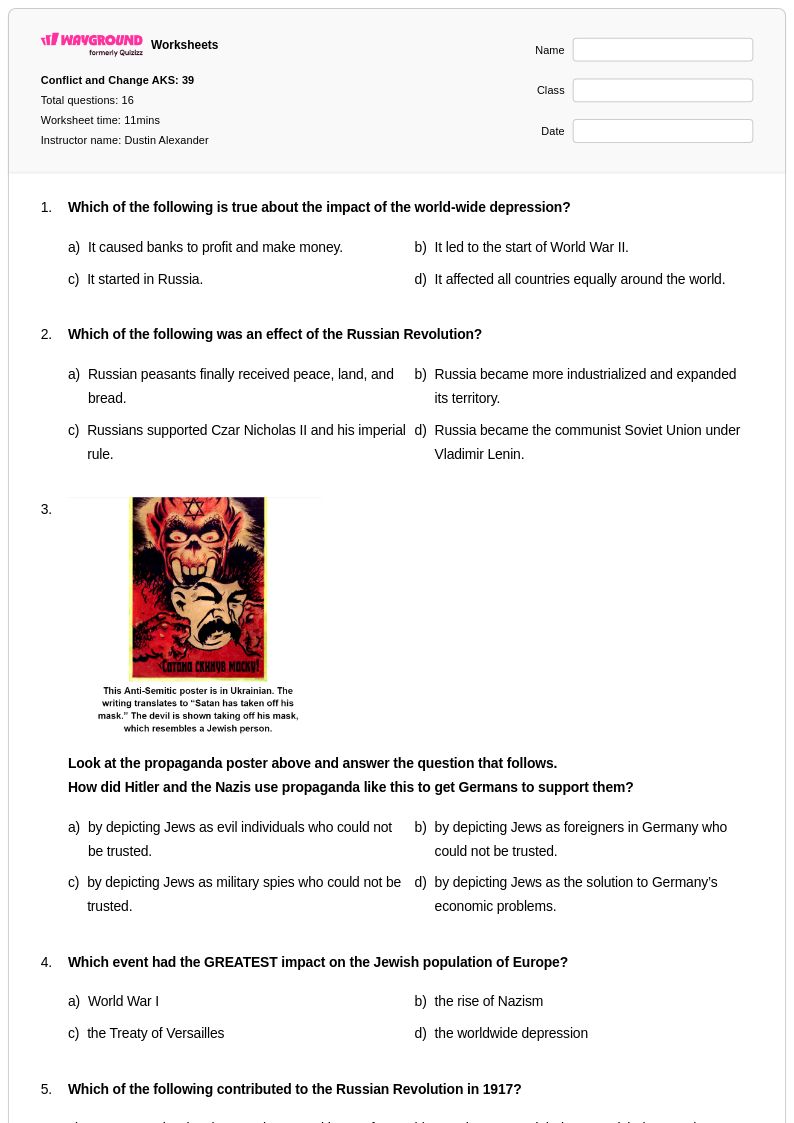
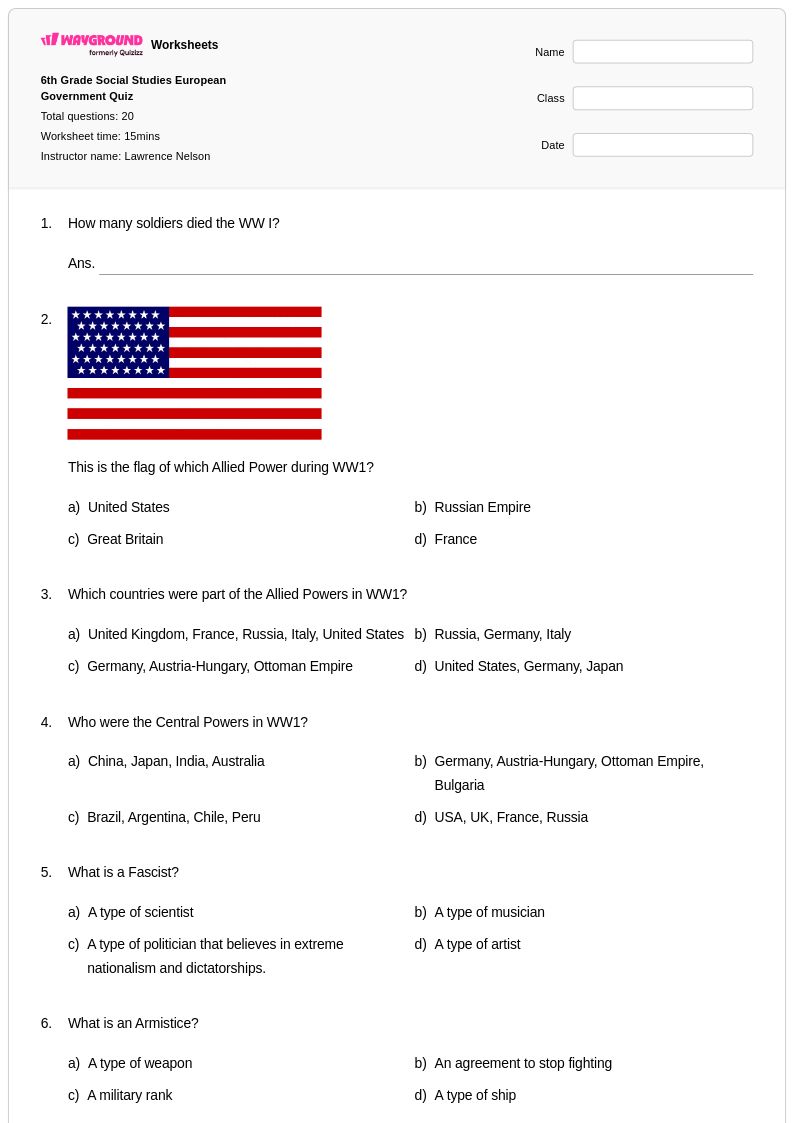
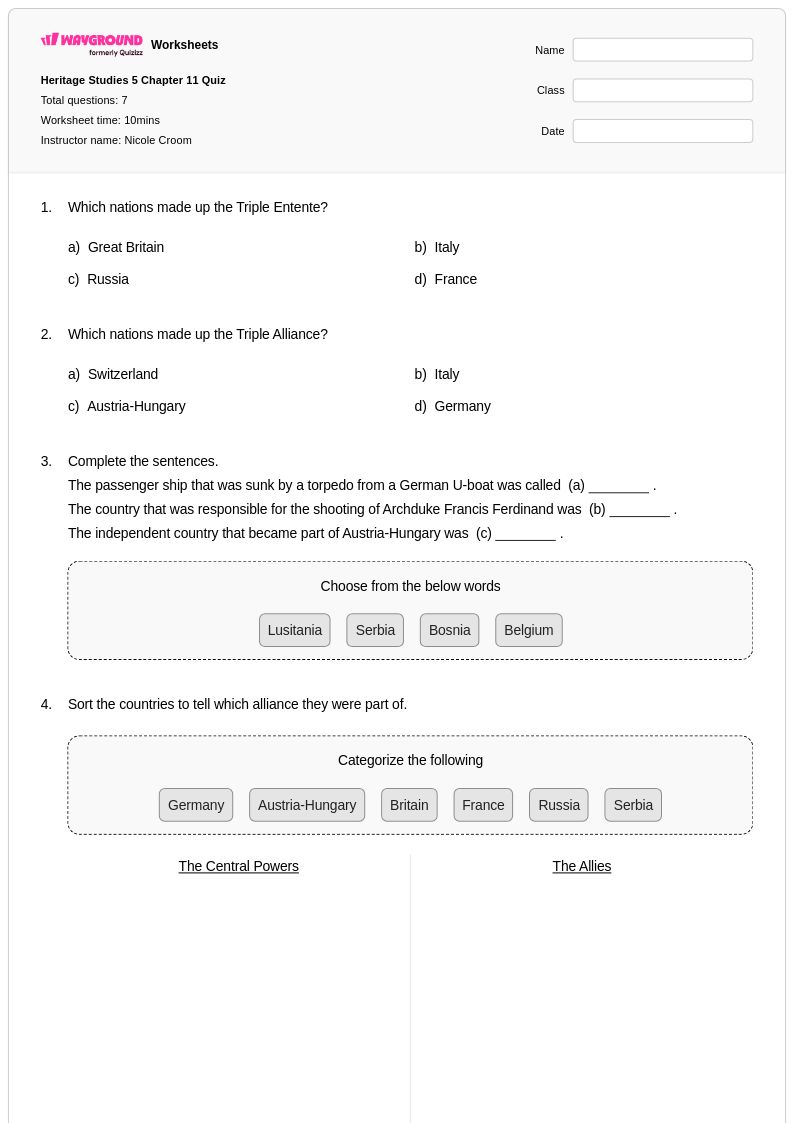
Explore printable Weapons of World War I worksheets for Class 6
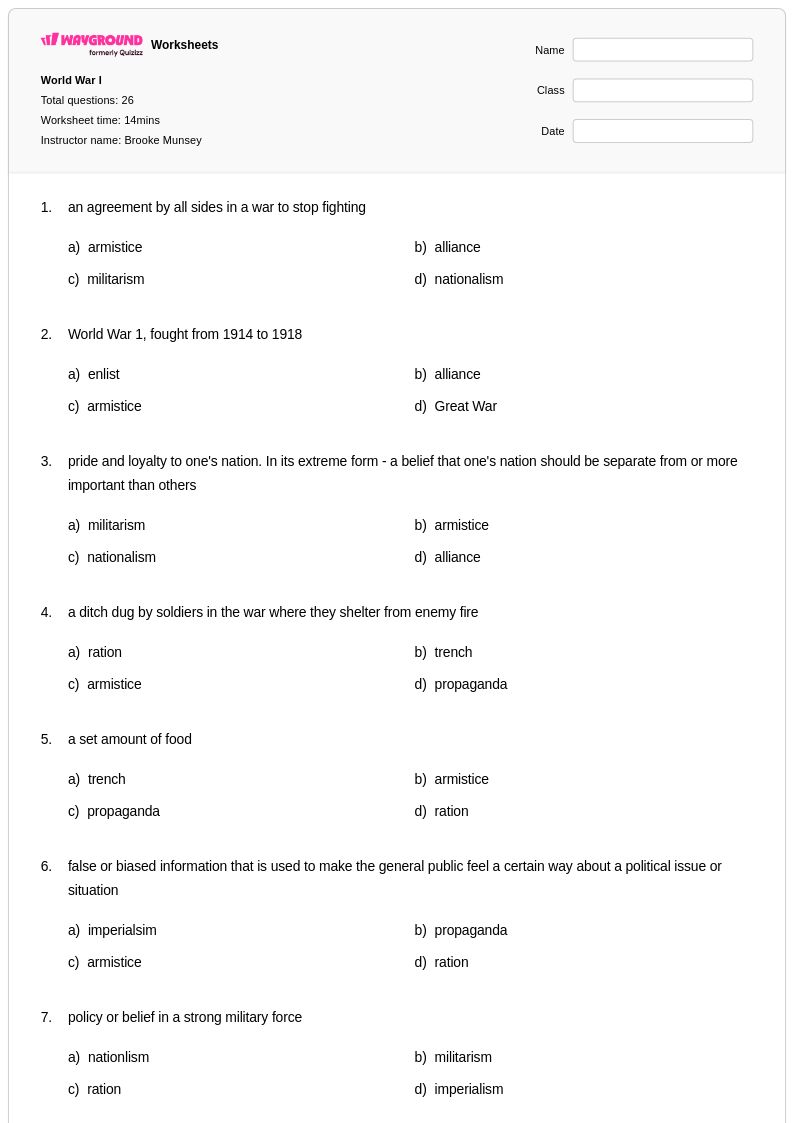
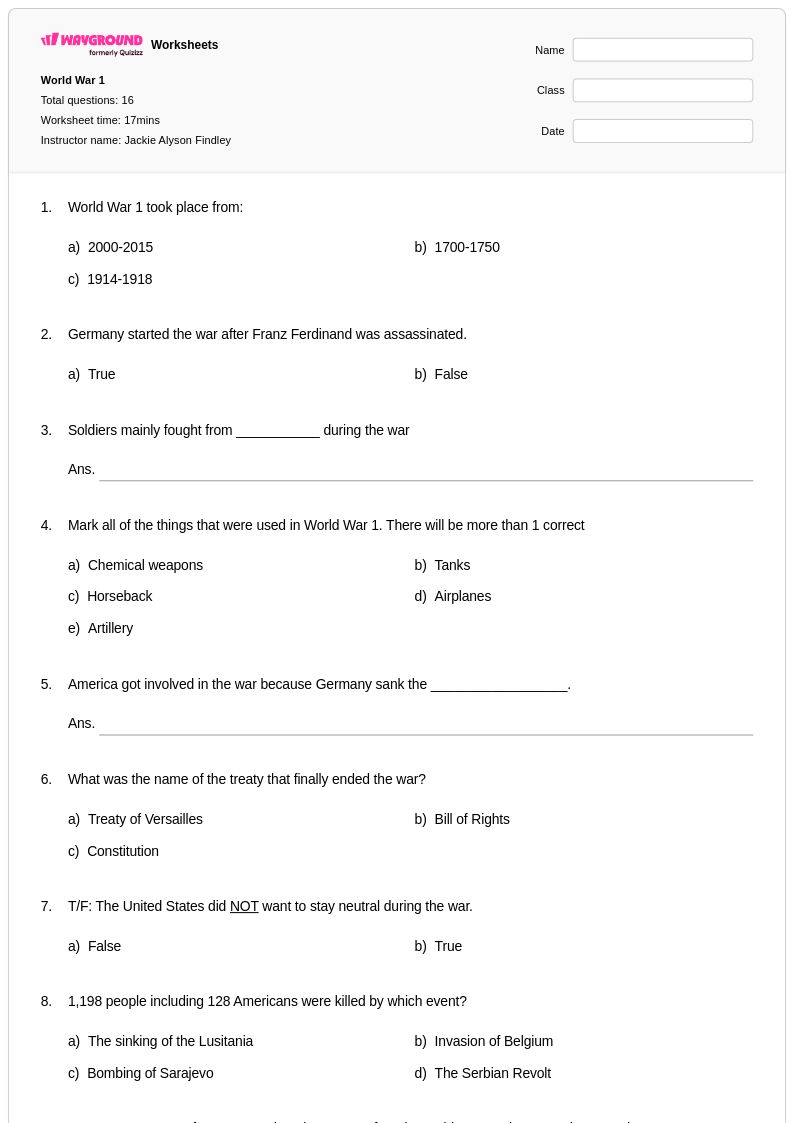
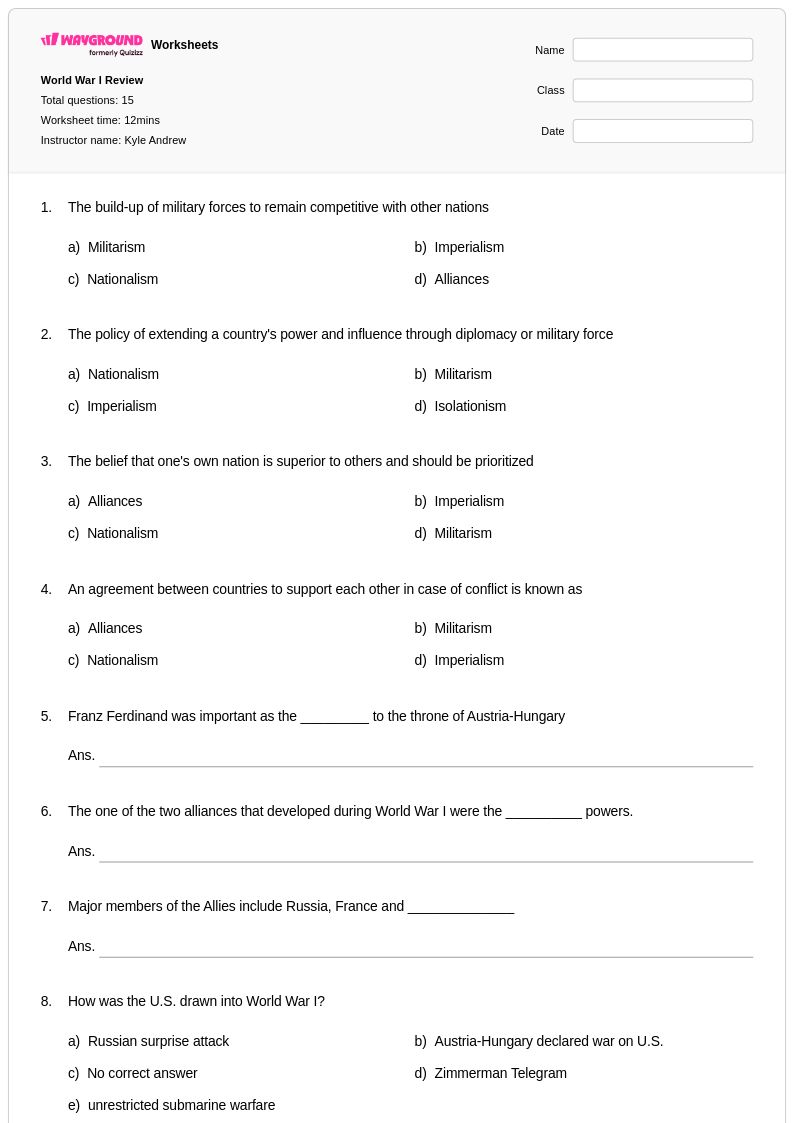
Weapons of World War I worksheets for Class 6 students provide comprehensive exploration of the technological innovations that transformed modern warfare between 1914 and 1918. These educational resources guide sixth-grade learners through detailed examination of artillery, machine guns, poison gas, tanks, aircraft, and naval weaponry that defined the Great War. Students develop critical thinking skills as they analyze how technological advancements influenced military tactics, casualty rates, and the overall course of the conflict. Each worksheet collection includes structured practice problems that challenge students to compare pre-war and wartime technologies, evaluate the effectiveness of different weapons systems, and understand the human cost of mechanized warfare. These printable resources feature comprehensive answer keys that support both independent study and classroom instruction, with free pdf formats ensuring accessibility for diverse learning environments.
Wayground, formerly Quizizz, empowers educators with an extensive library of millions of teacher-created World War I weapons worksheets specifically designed for Class 6 social studies instruction. The platform's advanced search and filtering capabilities allow teachers to quickly locate resources aligned with state and national history standards, ensuring curriculum coherence and academic rigor. Differentiation tools enable instructors to customize content complexity, vocabulary levels, and assessment formats to meet individual student needs, while flexible digital and printable pdf options accommodate various classroom technologies and learning preferences. These comprehensive worksheet collections support strategic lesson planning by providing ready-to-use materials for introducing new concepts, reinforcing historical understanding, and conducting formative assessments. Teachers utilize these resources for targeted remediation with struggling learners, enrichment activities for advanced students, and systematic skill practice that builds students' ability to analyze primary sources, interpret historical evidence, and understand the complex relationships between technology and warfare in early twentieth-century conflicts.
FAQs
How do I teach the weapons of World War I in a history class?
Teaching WWI weapons is most effective when framed around technological change rather than a simple inventory of armaments. Start with pre-war weapons students are familiar with, such as rifles and artillery, then introduce the revolutionary innovations of the conflict — poison gas, machine guns, tanks, and aircraft — emphasizing why each emerged and what tactical problem it was meant to solve. Connecting each weapon to specific battles or strategic shifts (e.g., tanks at the Somme, gas at Ypres) gives students concrete anchors for understanding how technology reshaped modern warfare.
What exercises help students practice analyzing WWI weapons and their impact?
Comparison exercises are particularly effective — having students evaluate two or more weapon systems side by side based on effectiveness, strategic use, and limitations builds analytical thinking rather than rote memorization. Practice problems that ask students to connect a specific weapon to a tactical outcome, or to rank innovations by their overall impact on the war, push beyond recall into genuine historical reasoning. Worksheets that include primary source excerpts, such as soldier accounts of gas attacks or tank deployments, add depth and give students evidence to work with directly.
What misconceptions do students commonly have about WWI weapons?
A common misconception is that tanks and aircraft immediately transformed WWI battles — in reality, early versions were unreliable and had limited strategic impact until the war's final stages. Students also frequently misunderstand poison gas as a decisive weapon, when in fact wind, terrain, and protective equipment significantly limited its effectiveness after initial deployments. Another error is treating WWI weapons as isolated inventions rather than responses to the stalemate of trench warfare, which is the key context that explains why so much innovation occurred in such a short period.
How can I use Weapons of World War I worksheets in my classroom?
Weapons of World War I worksheets on Wayground are available as printable PDFs for traditional classroom use and in digital formats for technology-integrated environments, making them flexible for in-person, hybrid, or remote instruction. Teachers can also host the worksheets as a live or assigned quiz directly on Wayground, giving students an interactive experience while automatically tracking responses. Each worksheet includes a complete answer key, which reduces grading time and makes the materials practical for independent work, homework, or bell-ringer activities.
How do I differentiate WWI weapons instruction for students at different levels?
For struggling learners, focus on the most impactful innovations — machine guns, poison gas, and tanks — with visual supports and simplified cause-and-effect framing. Advanced students can engage with more nuanced analysis, such as evaluating the ethical debates around chemical warfare or comparing the pace of technological adoption across Allied and Central Powers. On Wayground, teachers can apply individual accommodations such as read aloud support, reduced answer choices, or extended time to specific students without disrupting the rest of the class, making differentiation manageable within a single assignment.
Why is understanding WWI weapons important for students studying modern history?
WWI marks the first large-scale use of industrialized warfare, and understanding its weapons helps students grasp why the conflict was so devastating and why it fundamentally changed how nations approached military conflict. The introduction of chemical weapons, armored vehicles, and aerial combat during WWI directly shaped the weapons development and military doctrine of World War II and beyond. Without this foundation, students struggle to understand later 20th-century history, including arms control treaties, the Geneva Conventions, and the accelerating pace of military technology in the modern era.