
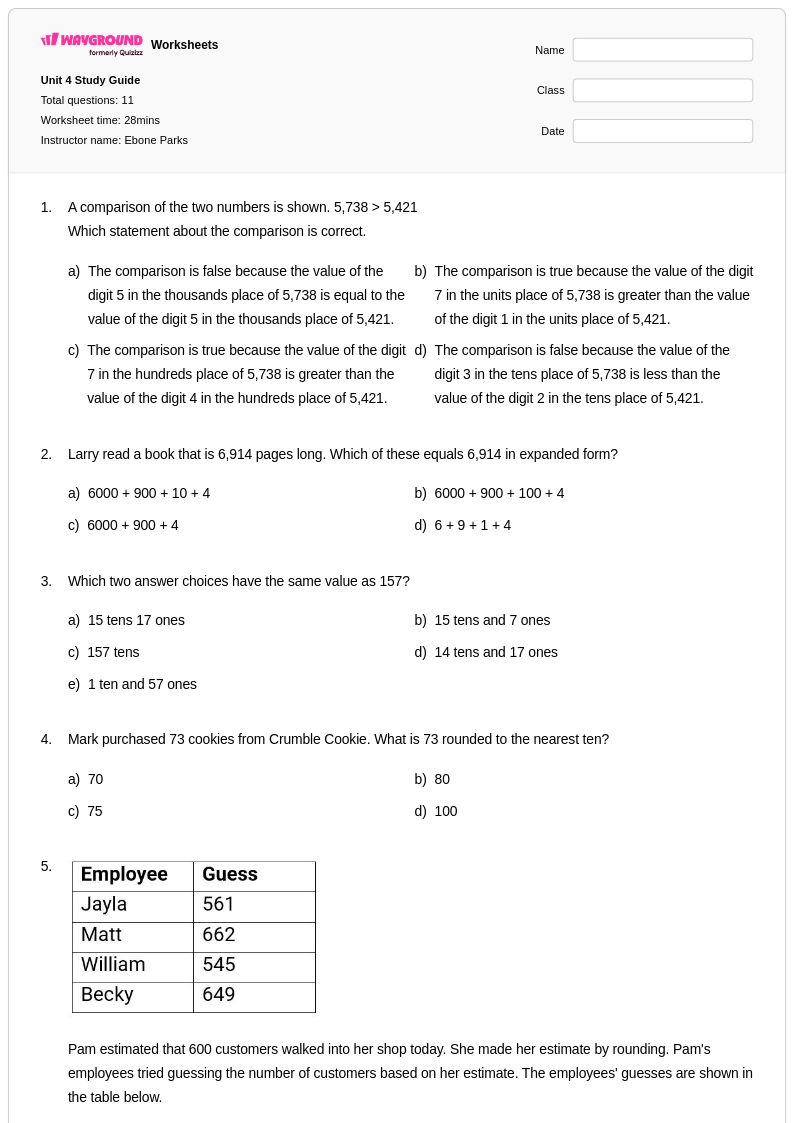
11 Q
3rd
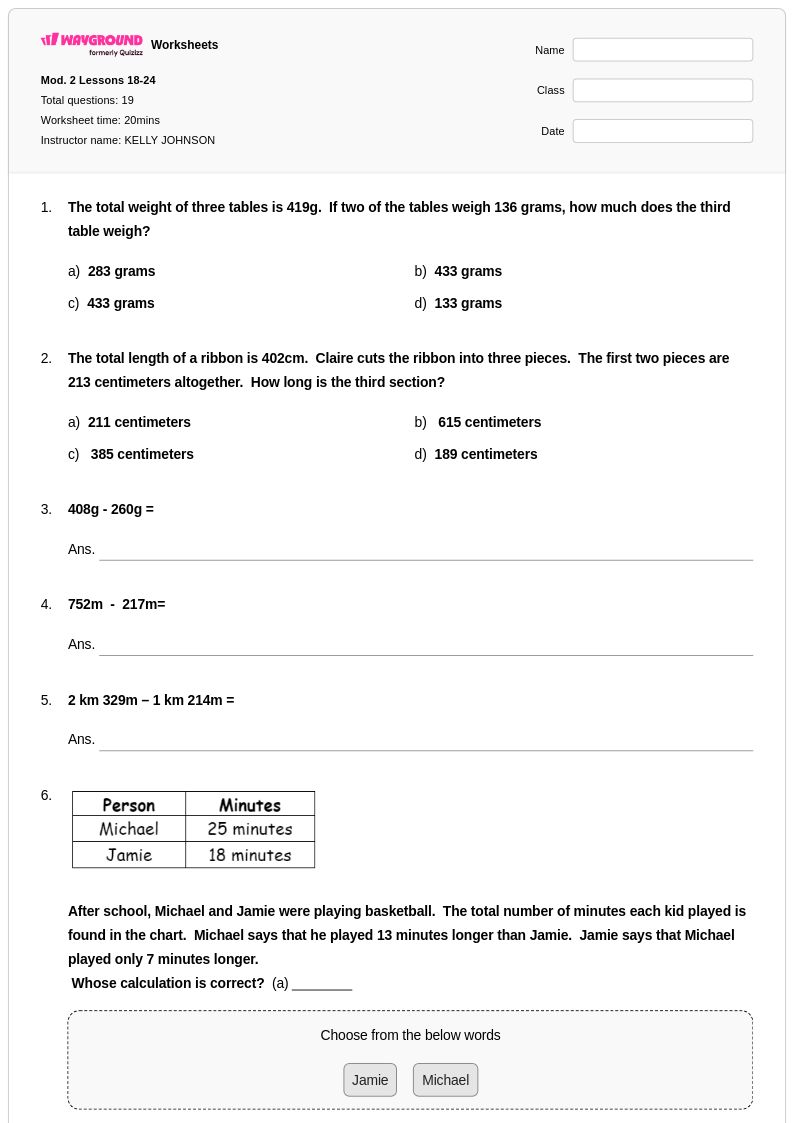
19 Q
3rd
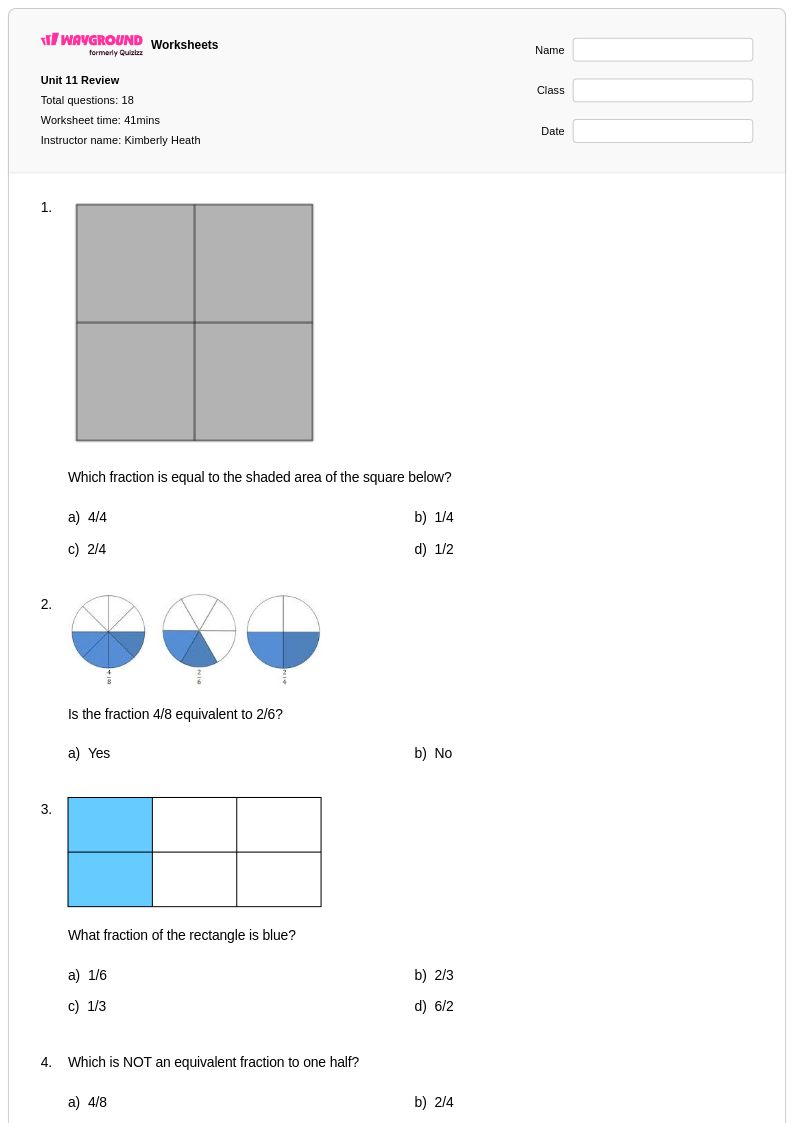
18 Q
3rd
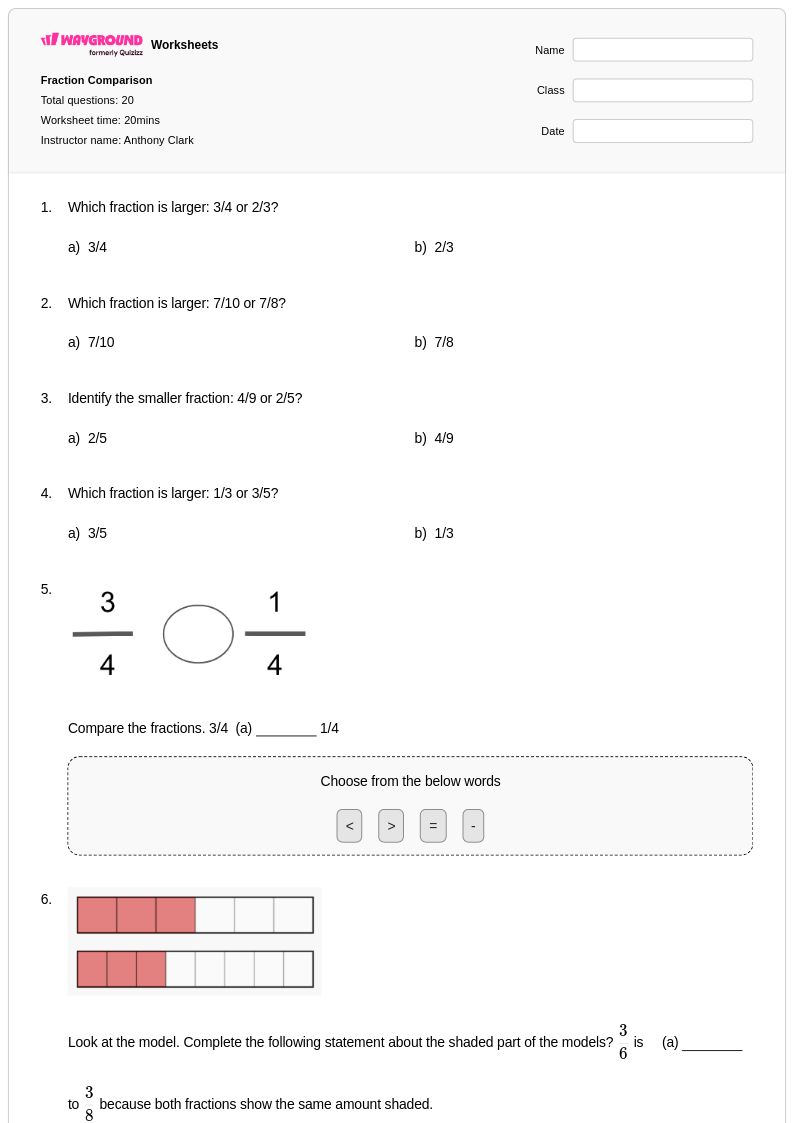
20 Q
3rd - Uni
20 Q
3rd
8 Q
3rd
16 Q
3rd
22 Q
3rd
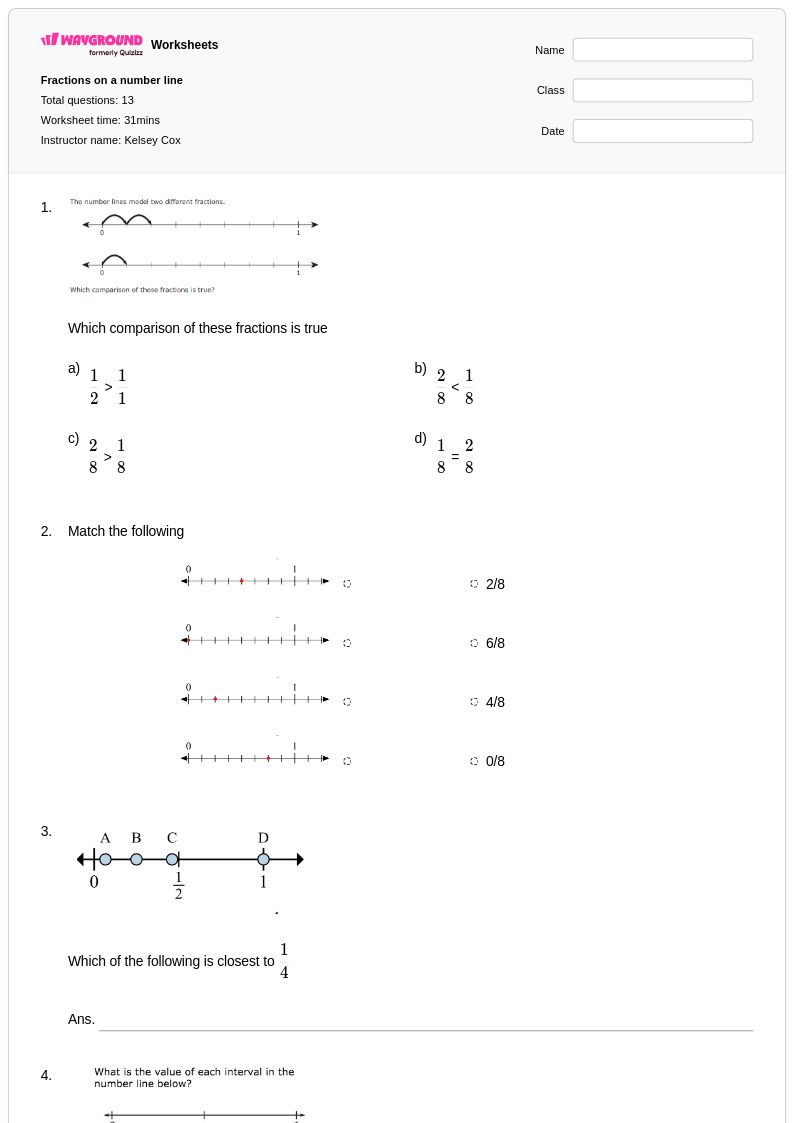
13 Q
3rd
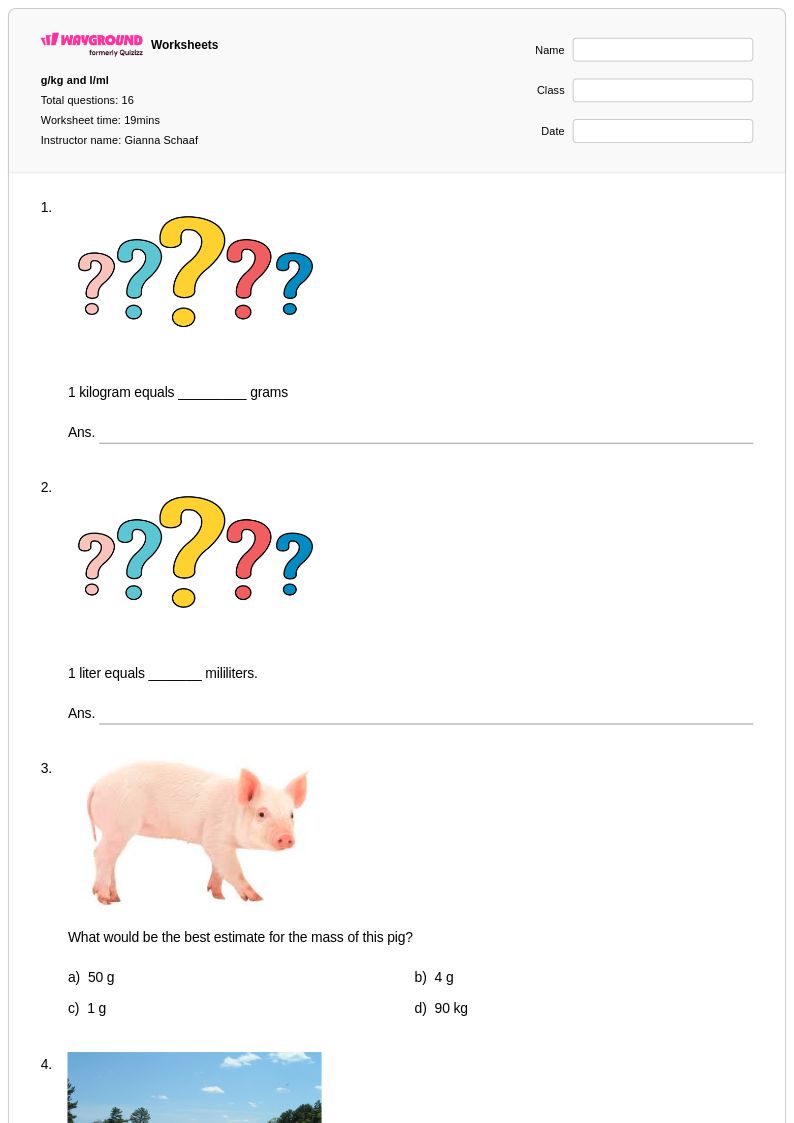
16 Q
3rd
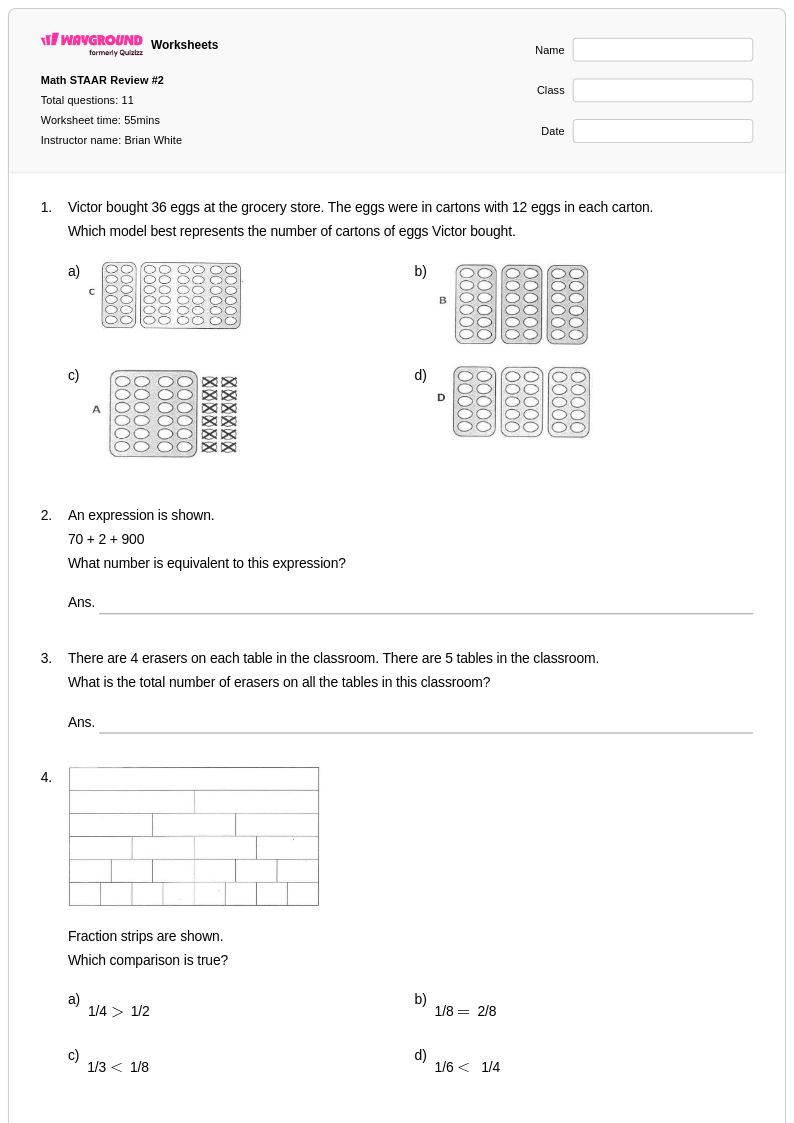
11 Q
3rd
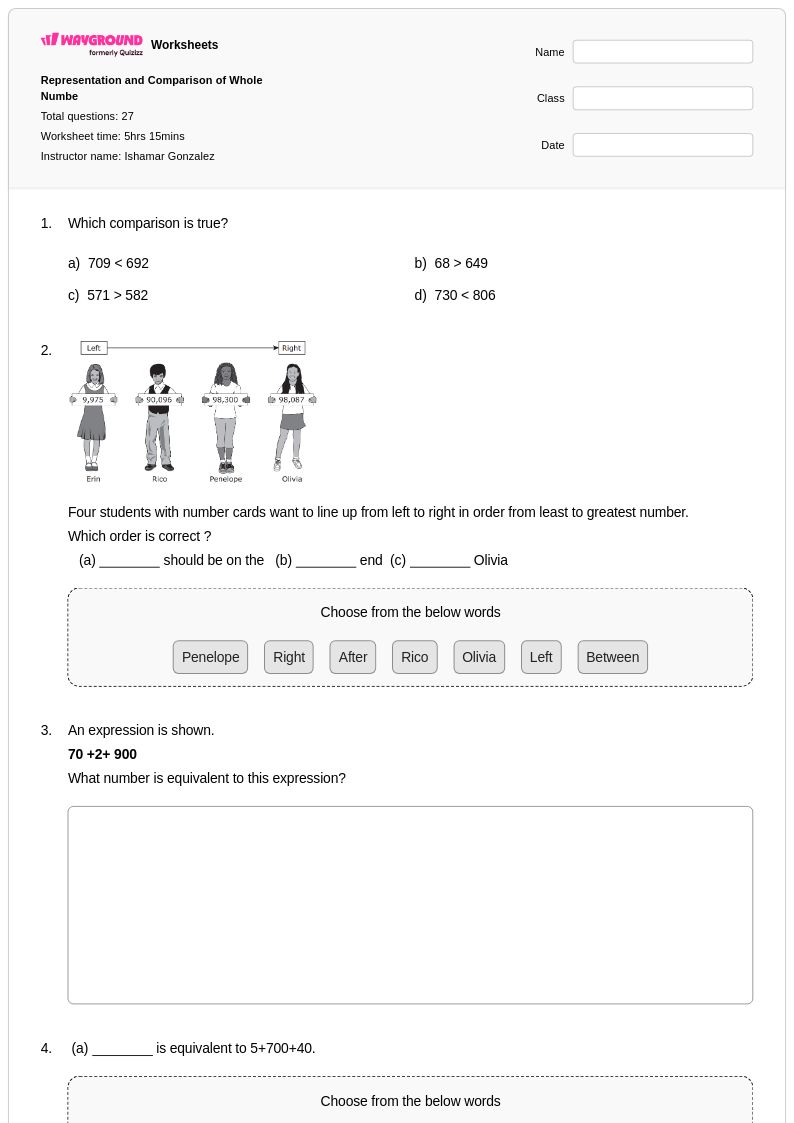
27 Q
3rd
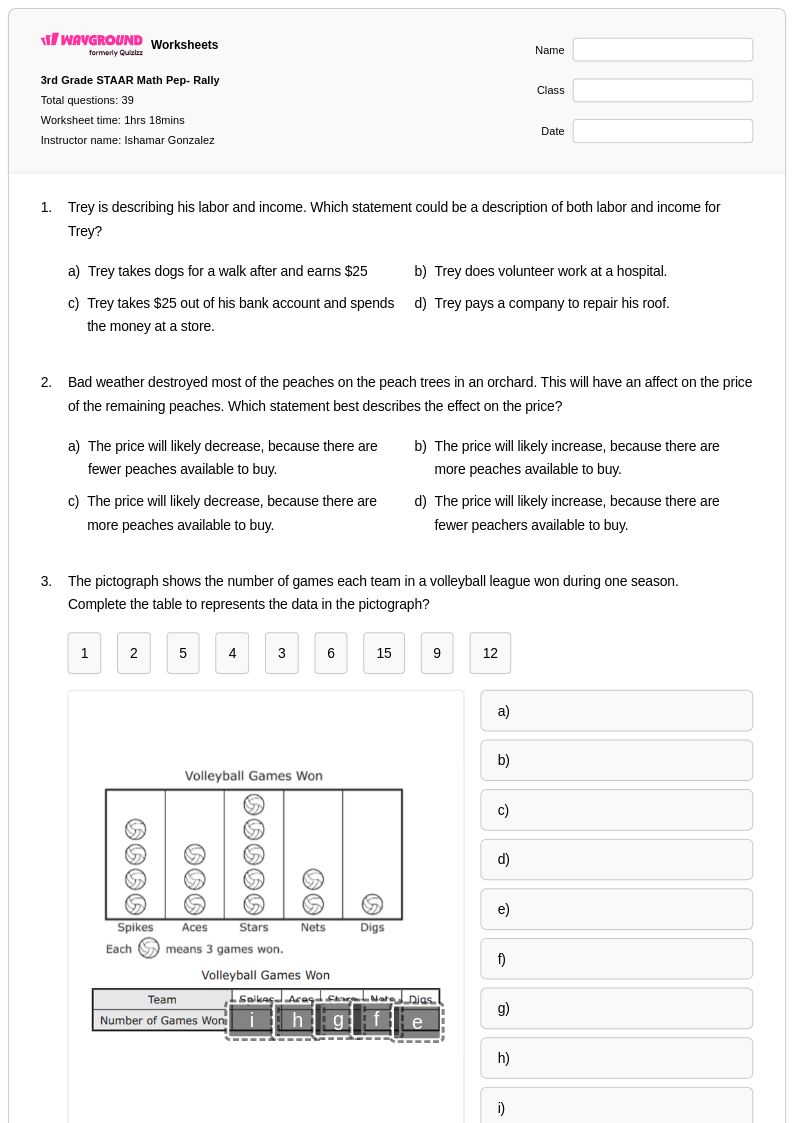
39 Q
3rd
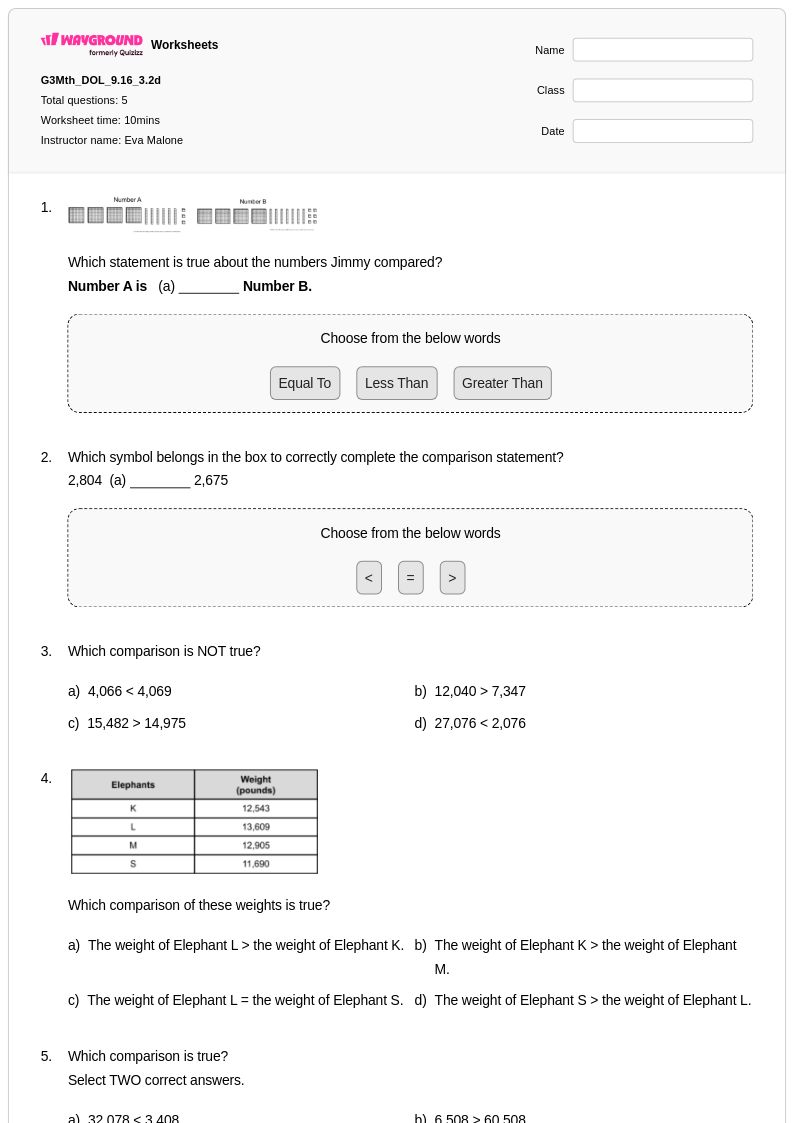
5 Q
3rd - Uni
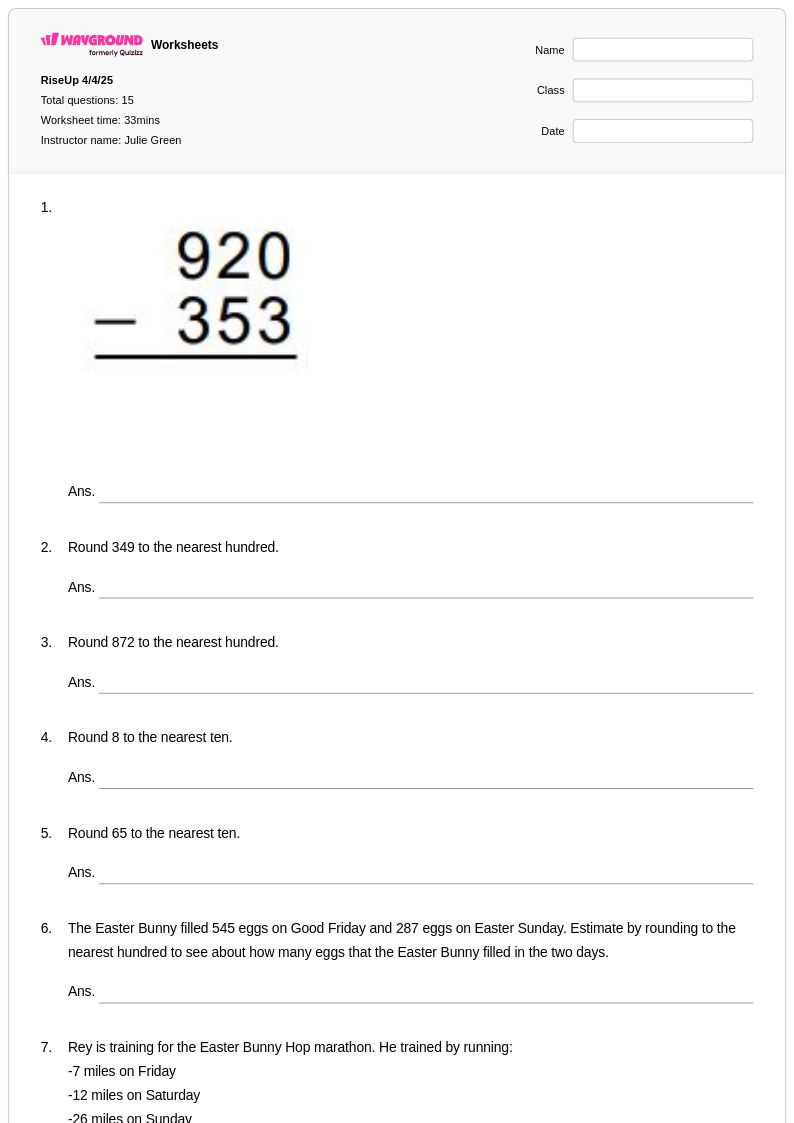
15 Q
3rd
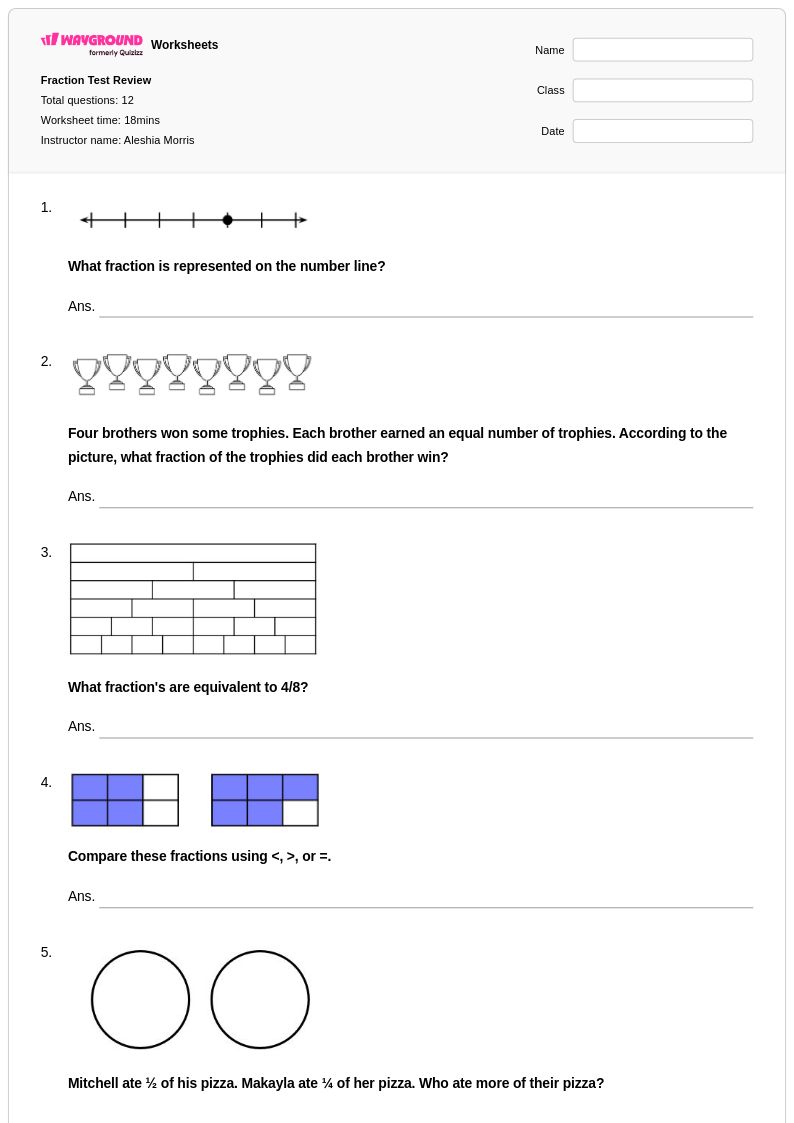
12 Q
3rd
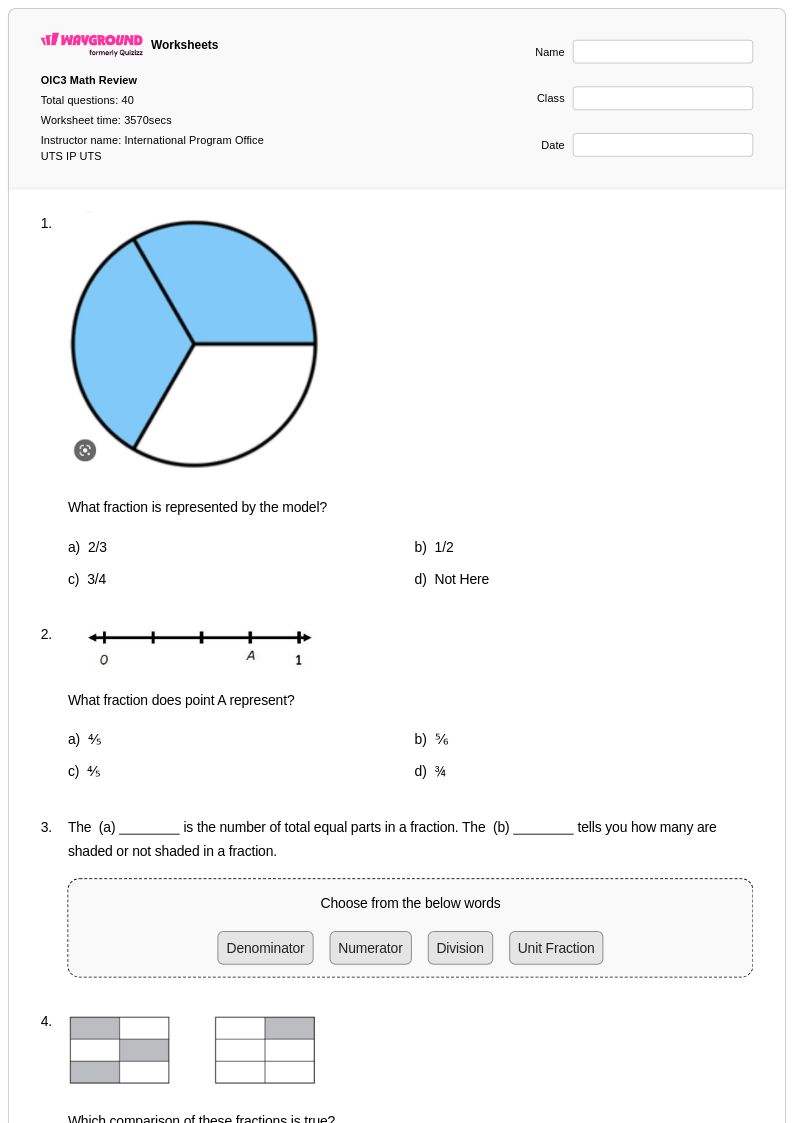
40 Q
3rd
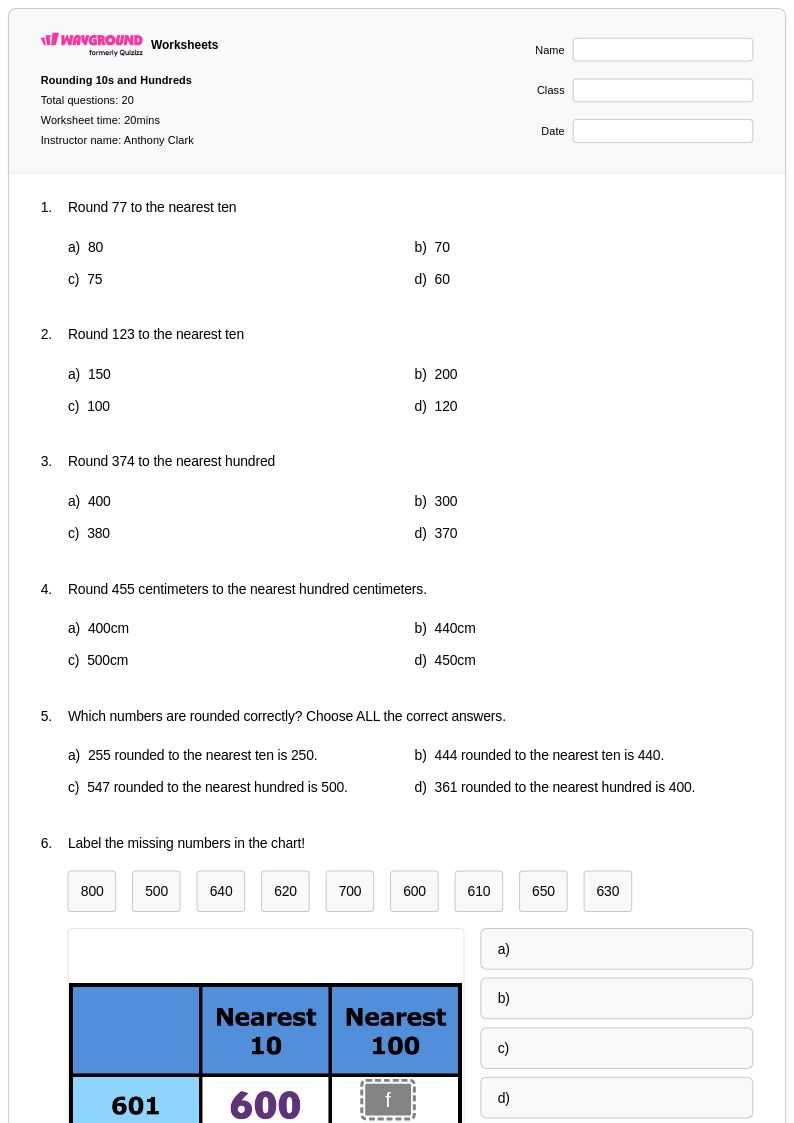
20 Q
3rd - Uni
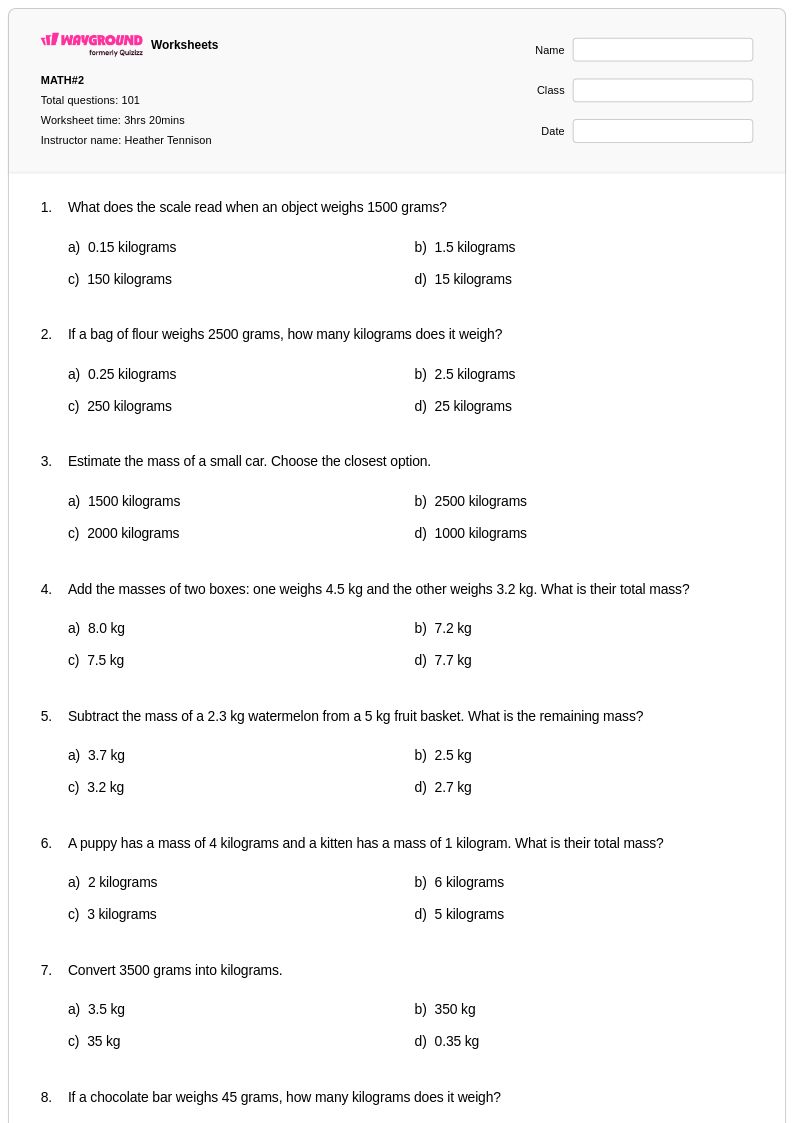
209 Q
3rd
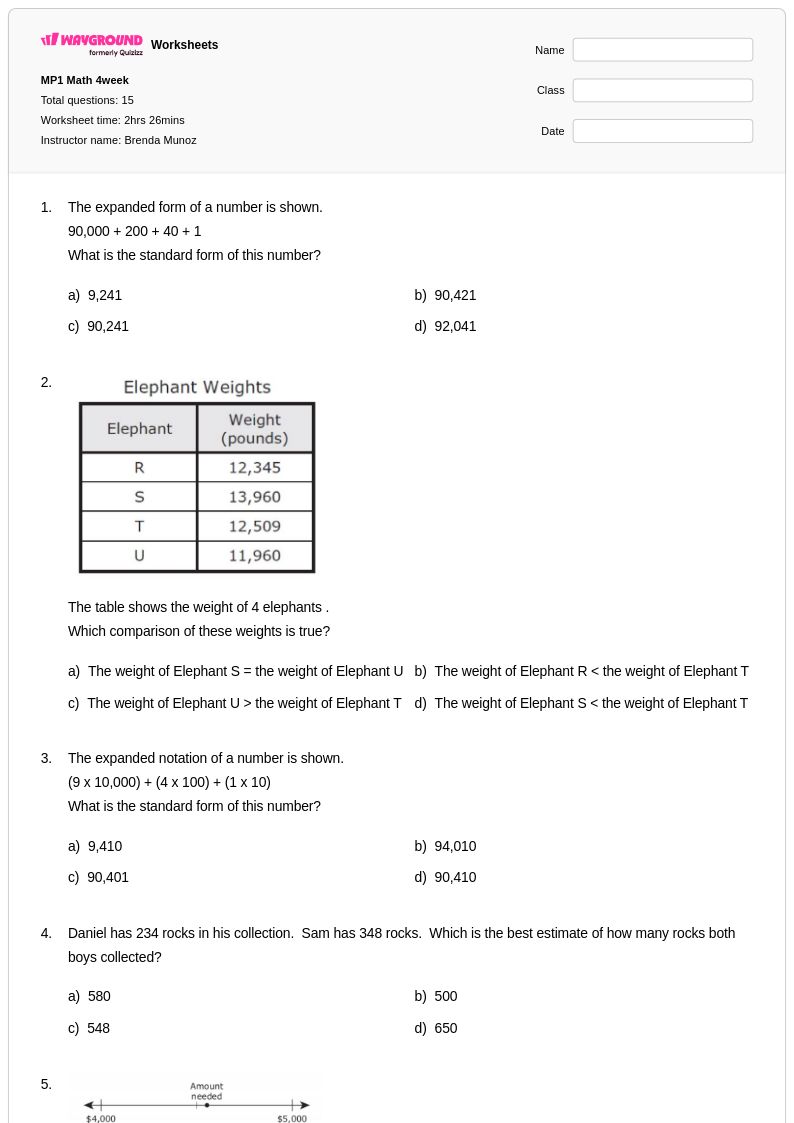
15 Q
3rd
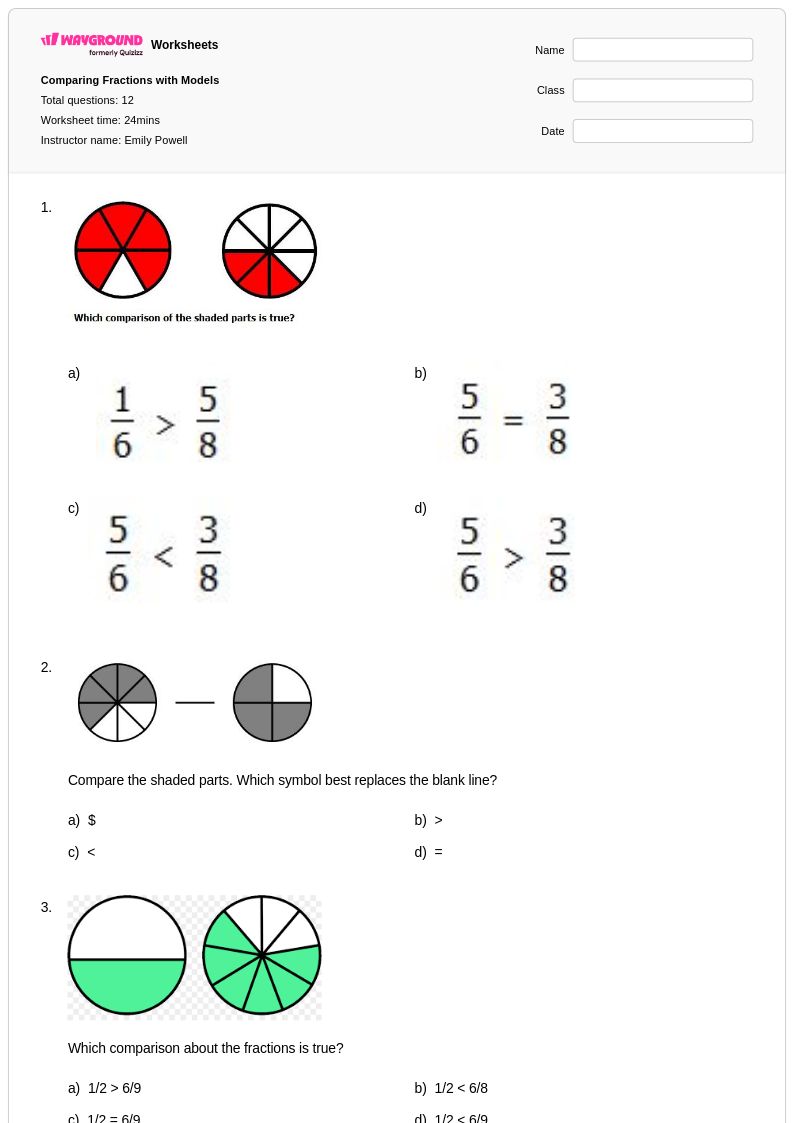
12 Q
3rd
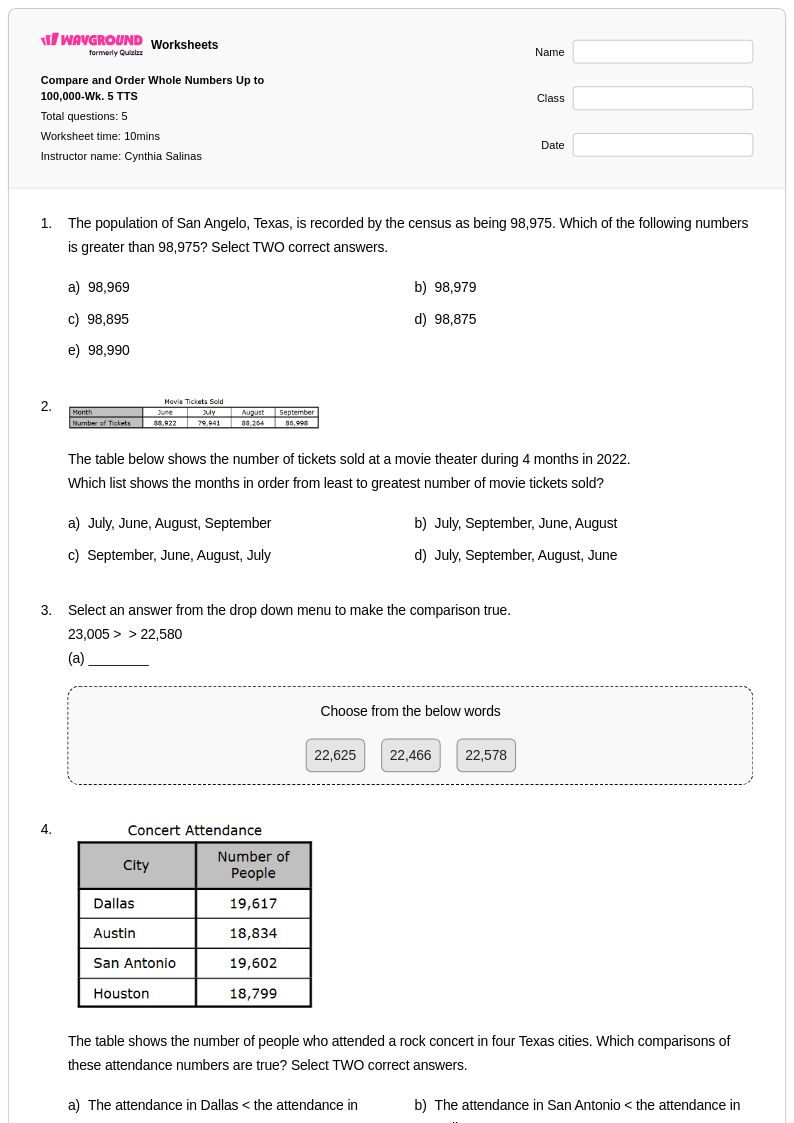
5 Q
3rd
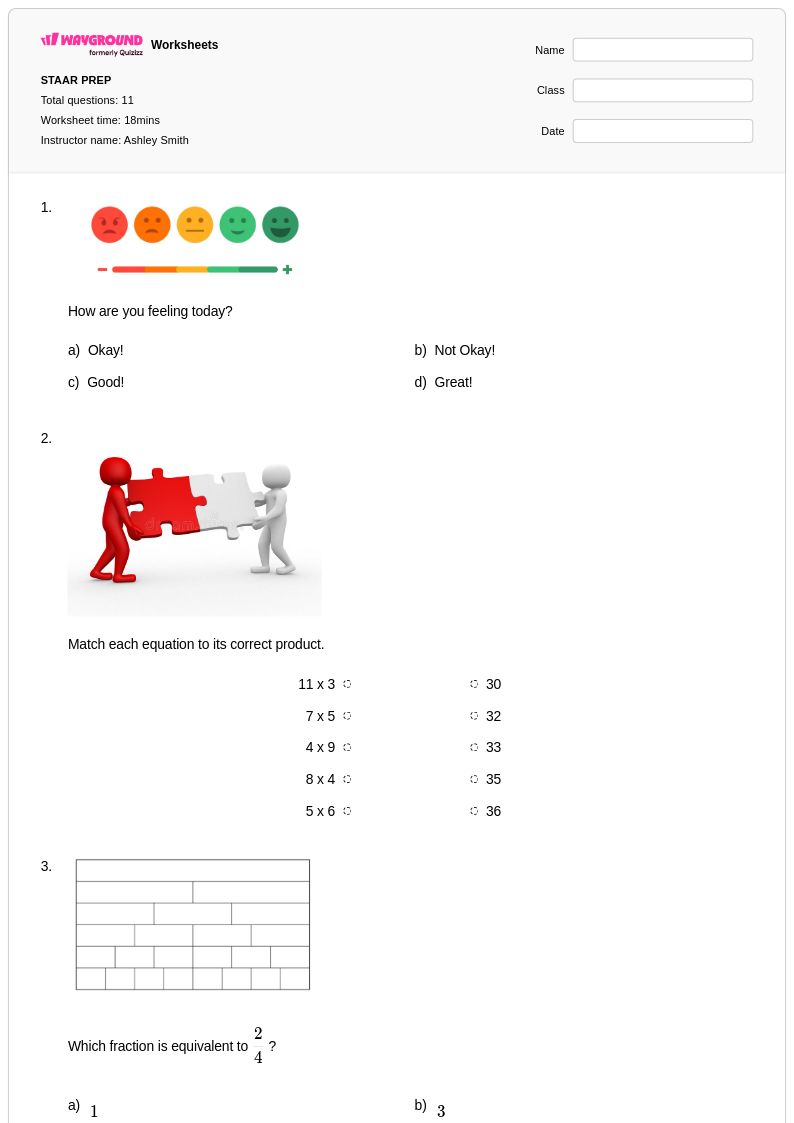
11 Q
3rd
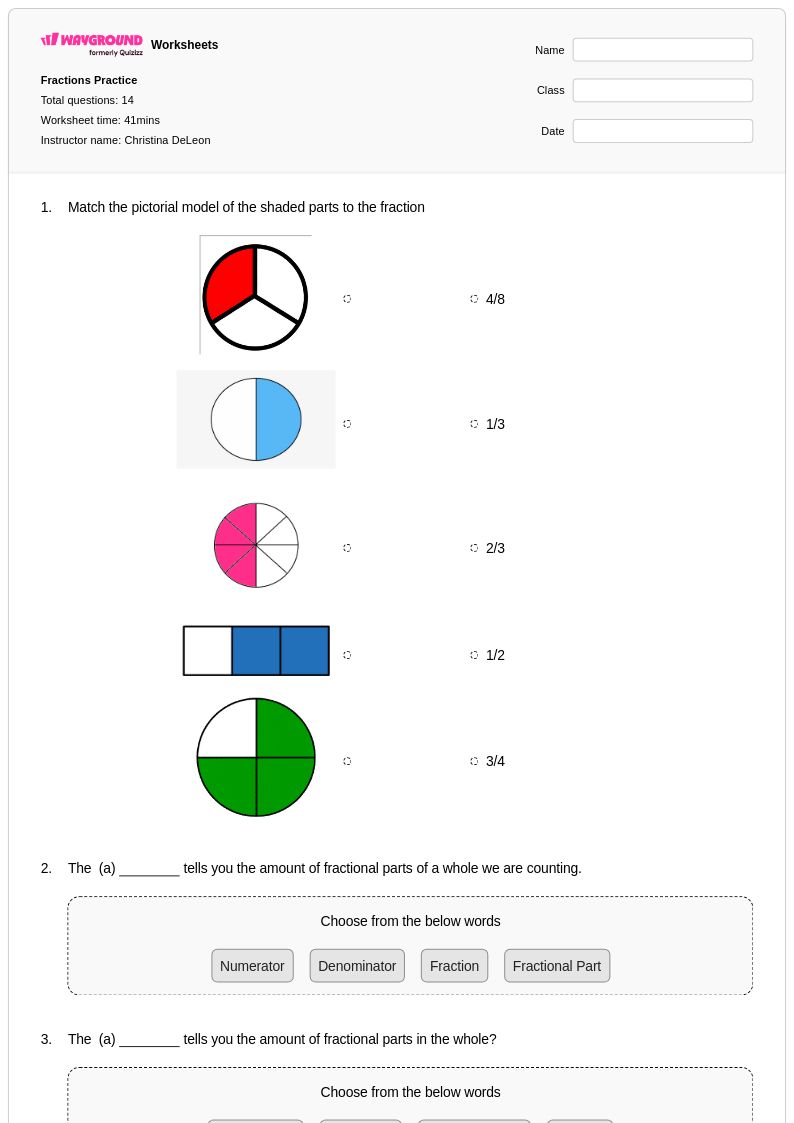
14 Q
3rd
Explore Other Subject Worksheets for class 3
Explore printable Weight Comparison worksheets for Class 3
Weight comparison worksheets for Class 3 students available through Wayground (formerly Quizizz) provide essential foundational practice in measurement skills that third graders need to master. These comprehensive printables focus on developing students' ability to compare, order, and analyze the relative weights of various objects using both standard and non-standard units of measurement. The worksheets strengthen critical mathematical thinking by engaging students in hands-on comparison activities where they determine which objects are heavier, lighter, or equal in weight, while also introducing concepts of estimation and logical reasoning. Each worksheet collection includes detailed answer keys and offers free access to practice problems that range from visual weight comparisons using balance scales to real-world scenarios involving everyday objects, ensuring students can apply their learning beyond the classroom setting.
Wayground (formerly Quizizz) empowers educators with millions of teacher-created weight comparison resources specifically designed for Class 3 mathematics instruction, featuring robust search and filtering capabilities that allow teachers to quickly locate materials aligned with their curriculum standards and learning objectives. The platform's differentiation tools enable instructors to customize worksheets based on individual student needs, whether for remediation support or enrichment challenges, while maintaining flexibility through both printable pdf formats and interactive digital versions. Teachers can efficiently plan comprehensive measurement units by accessing varied practice materials that progress from basic weight vocabulary and visual comparisons to more complex multi-step problems involving weight relationships, making it simple to provide targeted skill practice that addresses diverse learning styles and academic levels within their Class 3 classrooms.