Free Printable Wilderness Survival Worksheets for Class 6
Enhance Class 6 students' wilderness survival skills with Wayground's comprehensive collection of free worksheets, printables, and practice problems covering essential outdoor safety techniques, complete with detailed answer keys.
Explore printable Wilderness Survival worksheets for Class 6
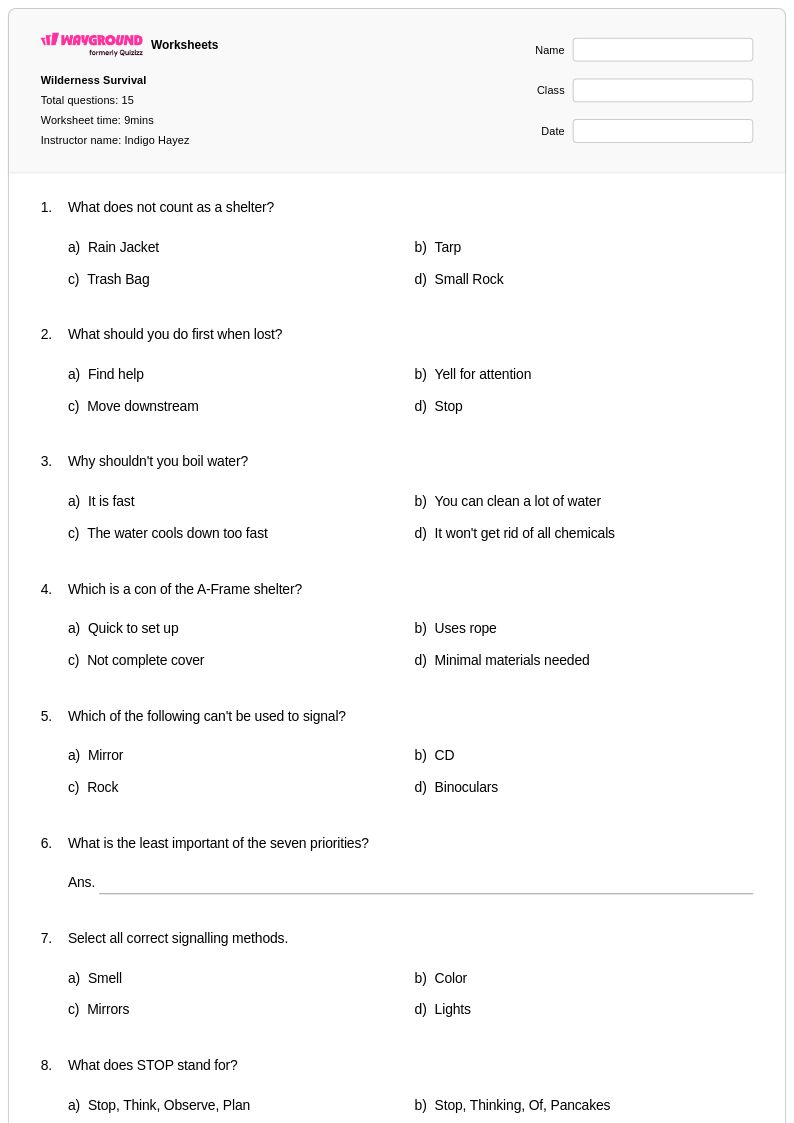
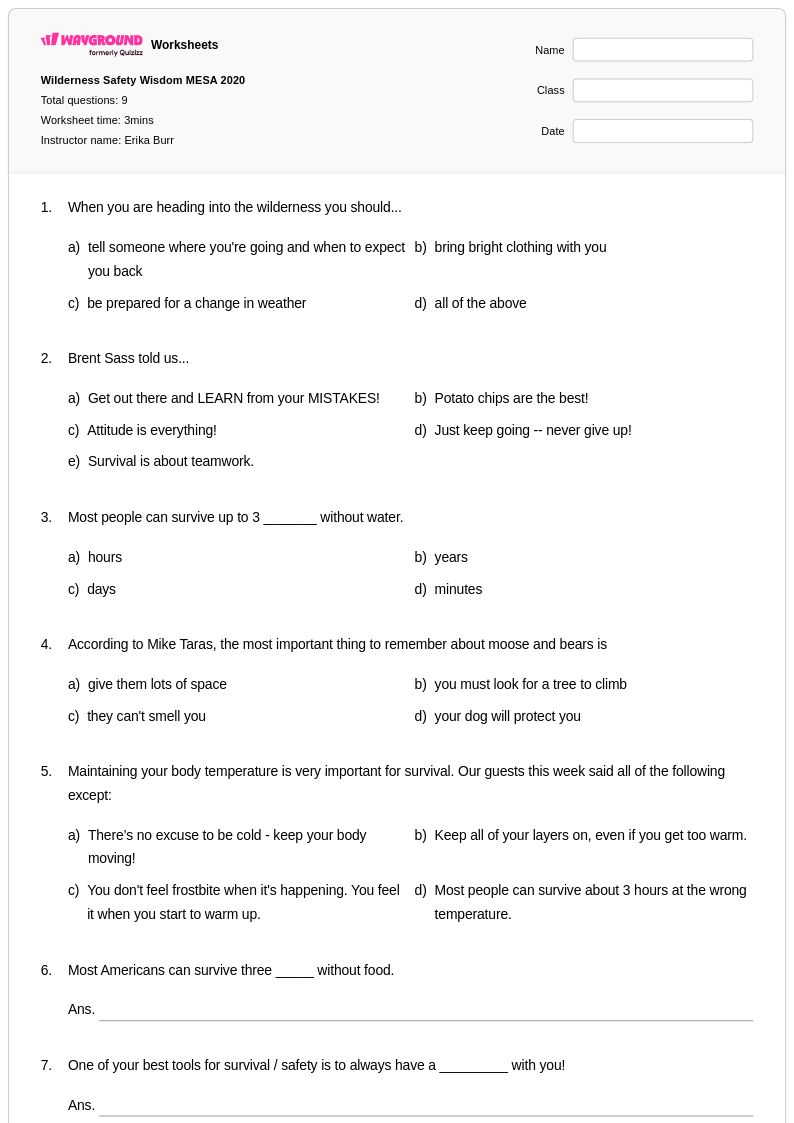
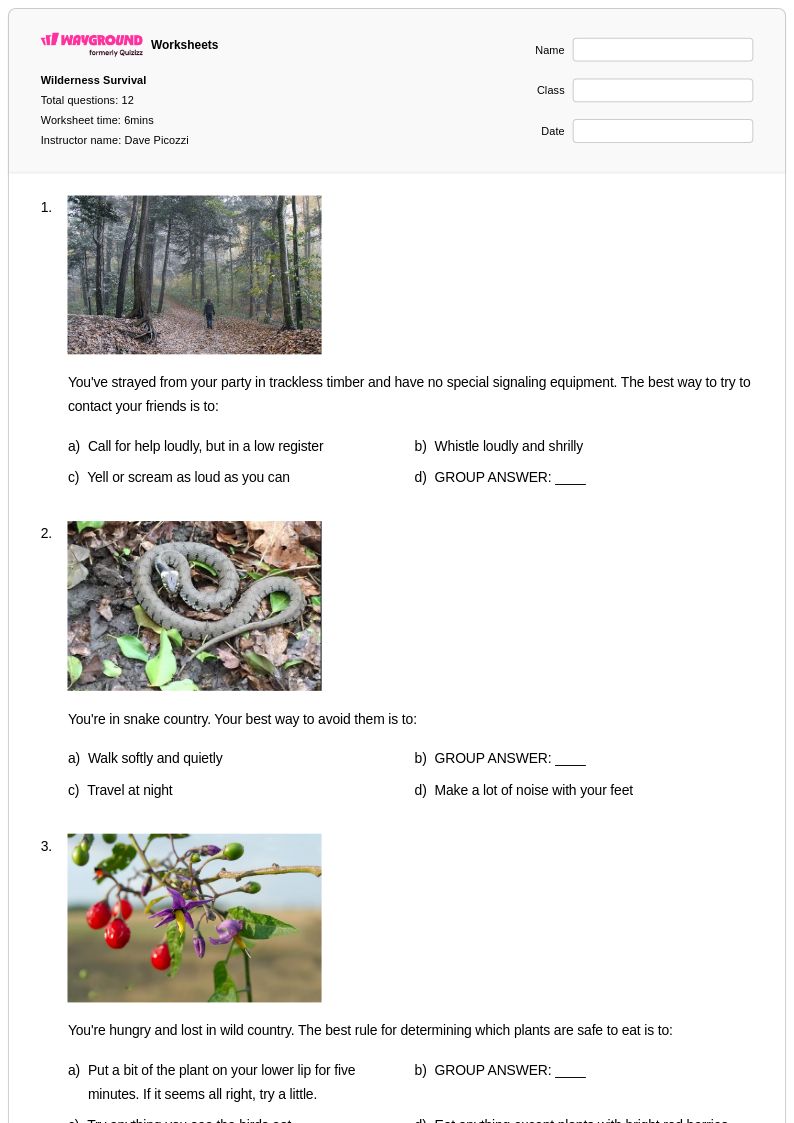
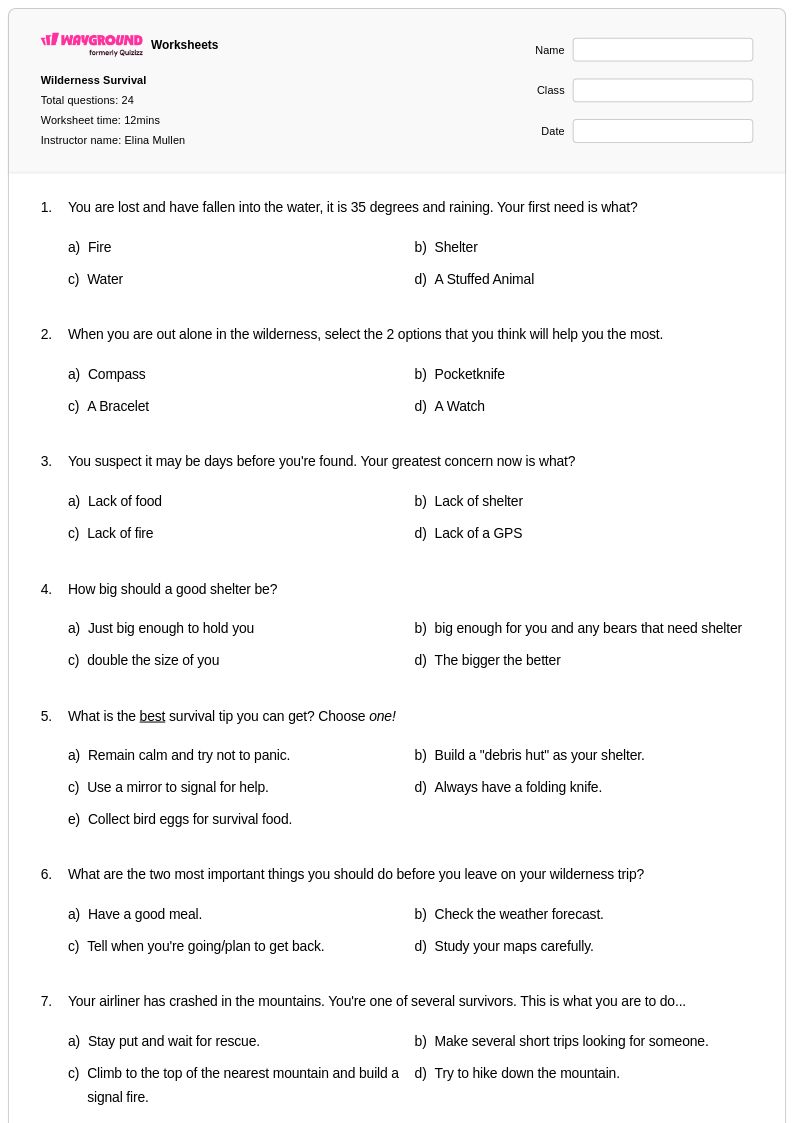
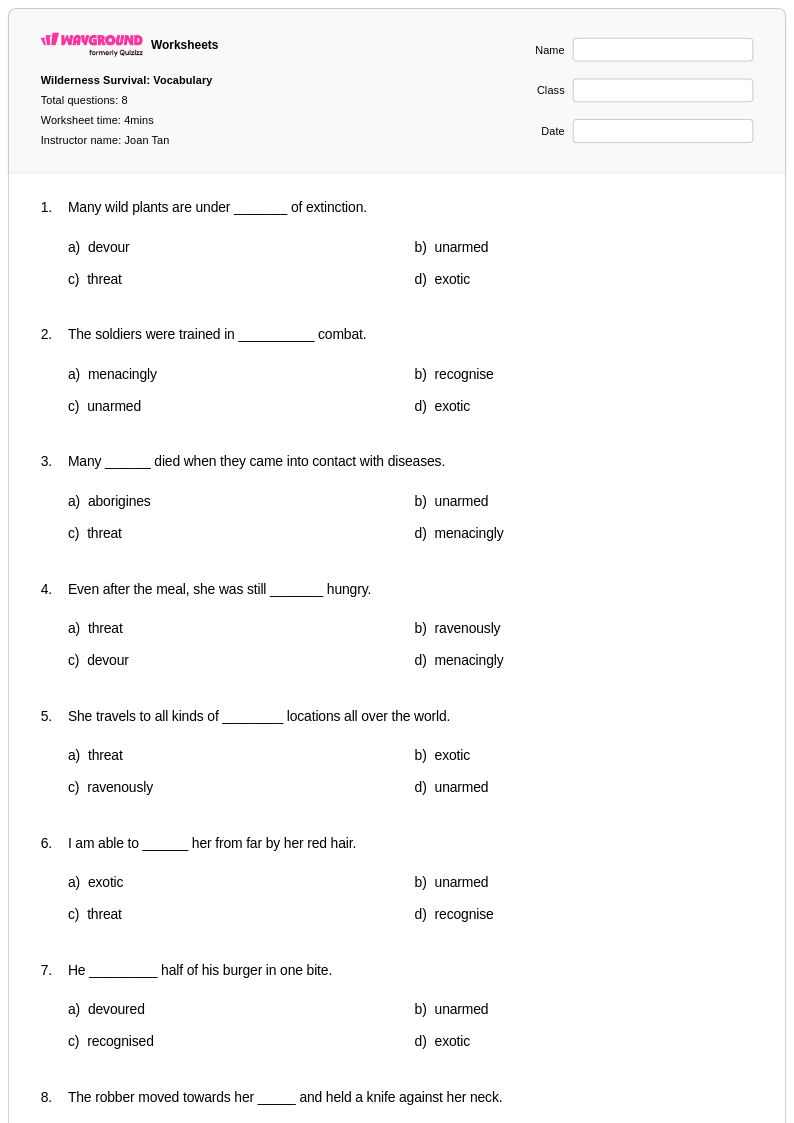
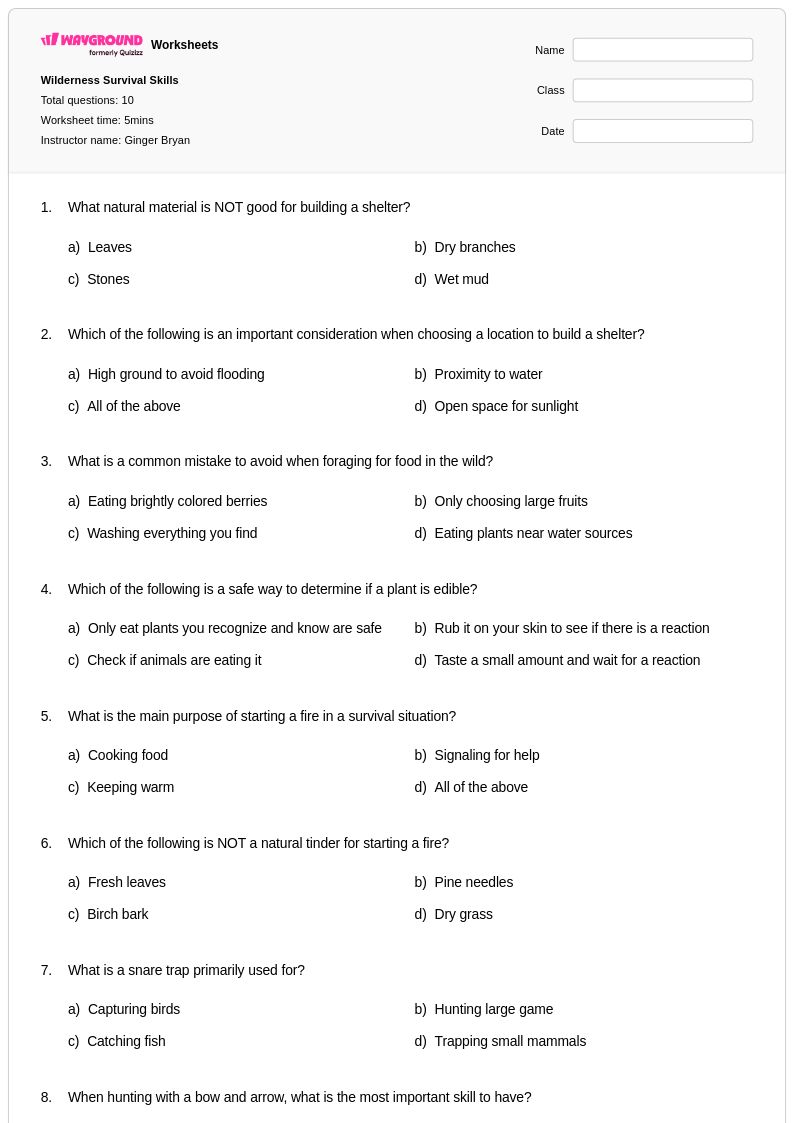
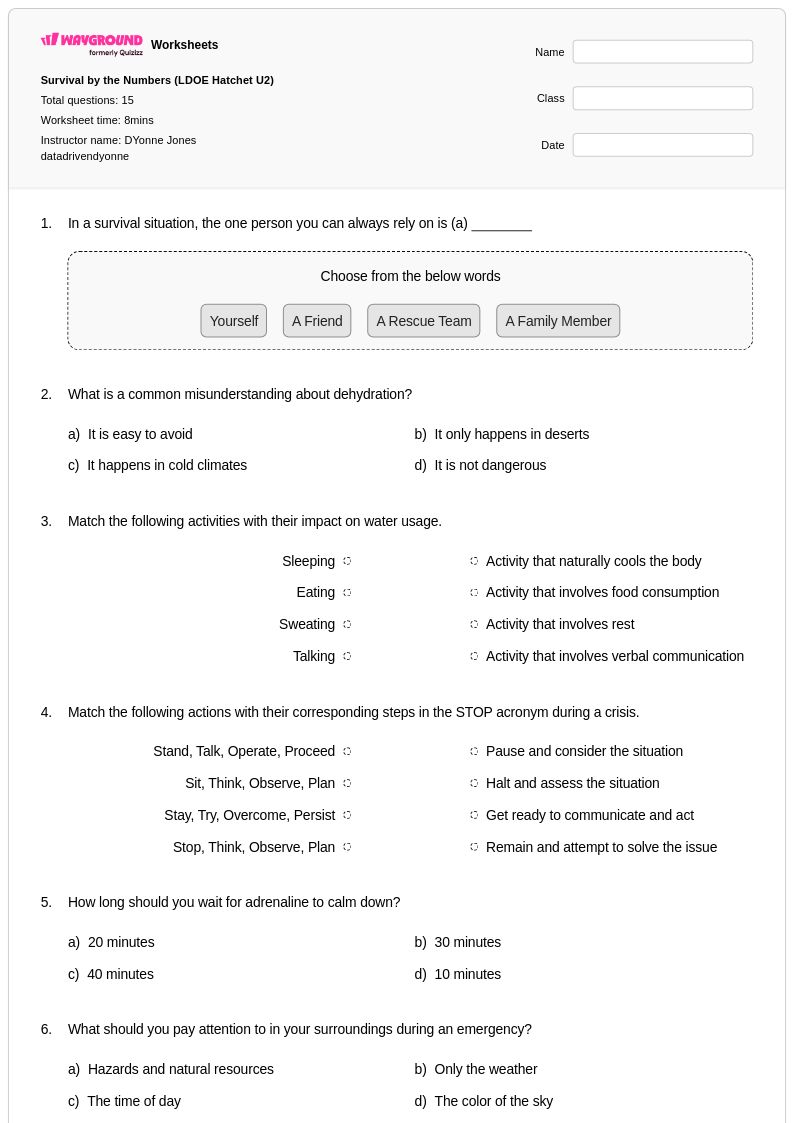
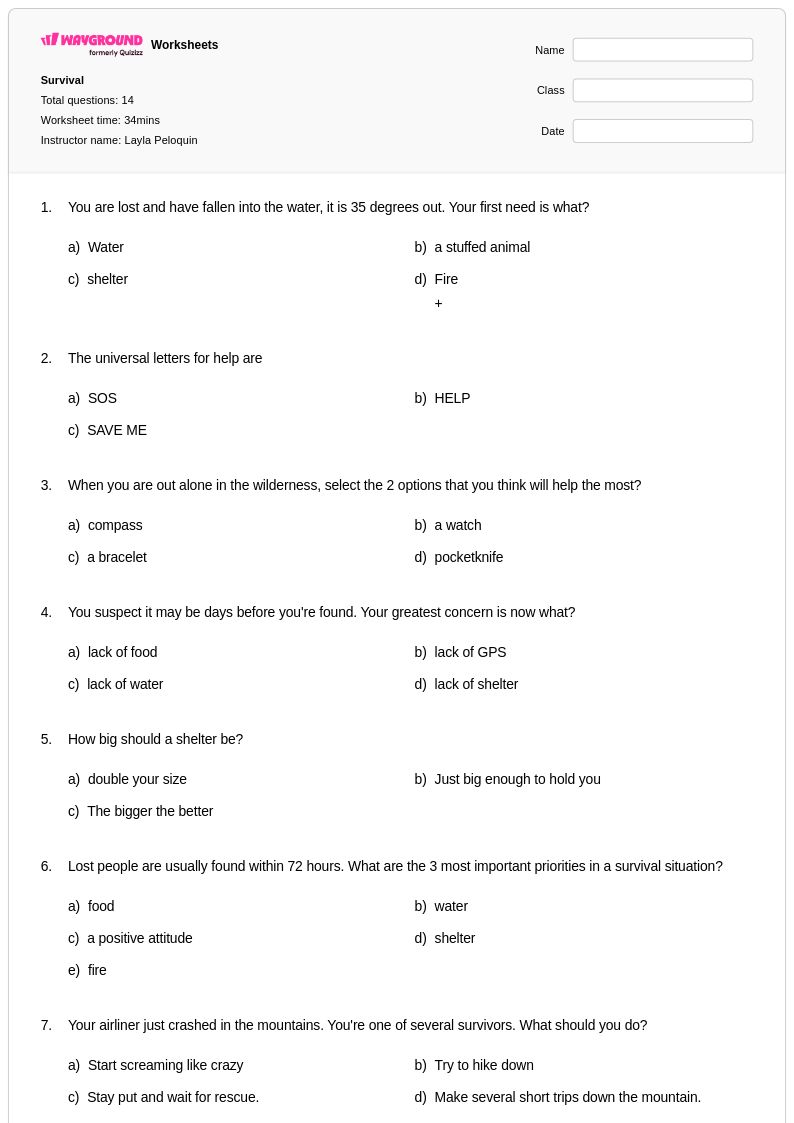
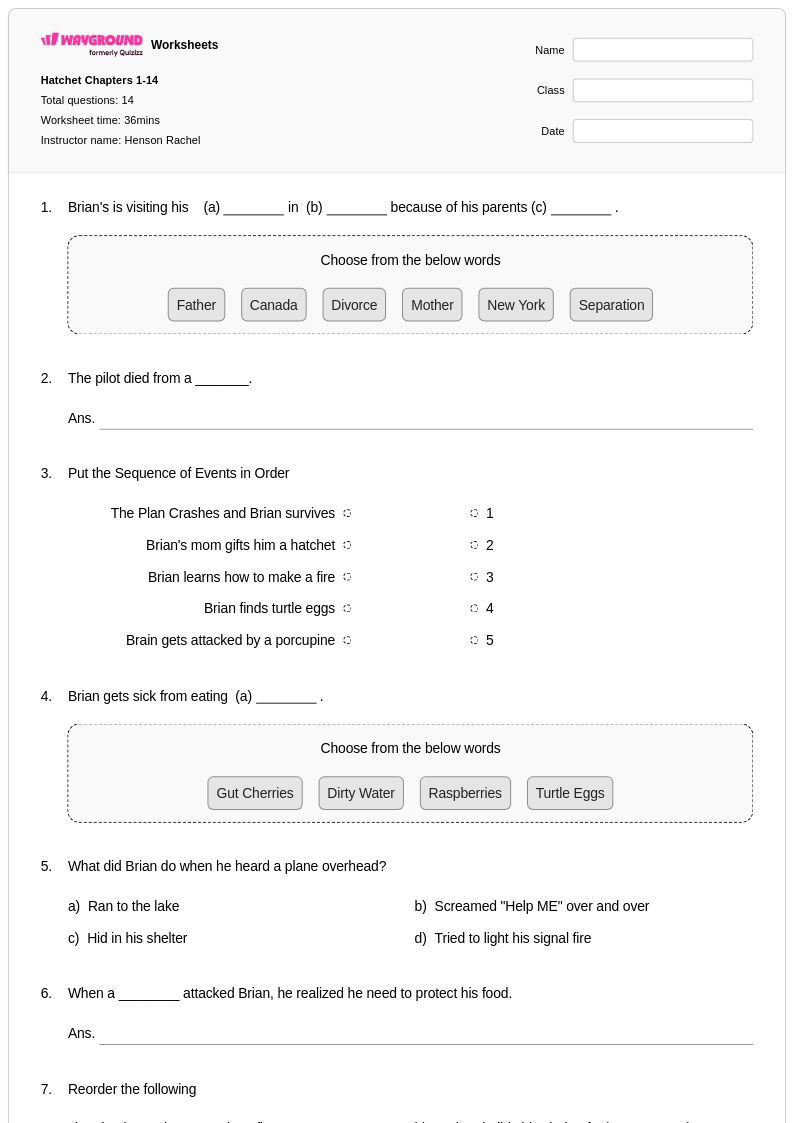
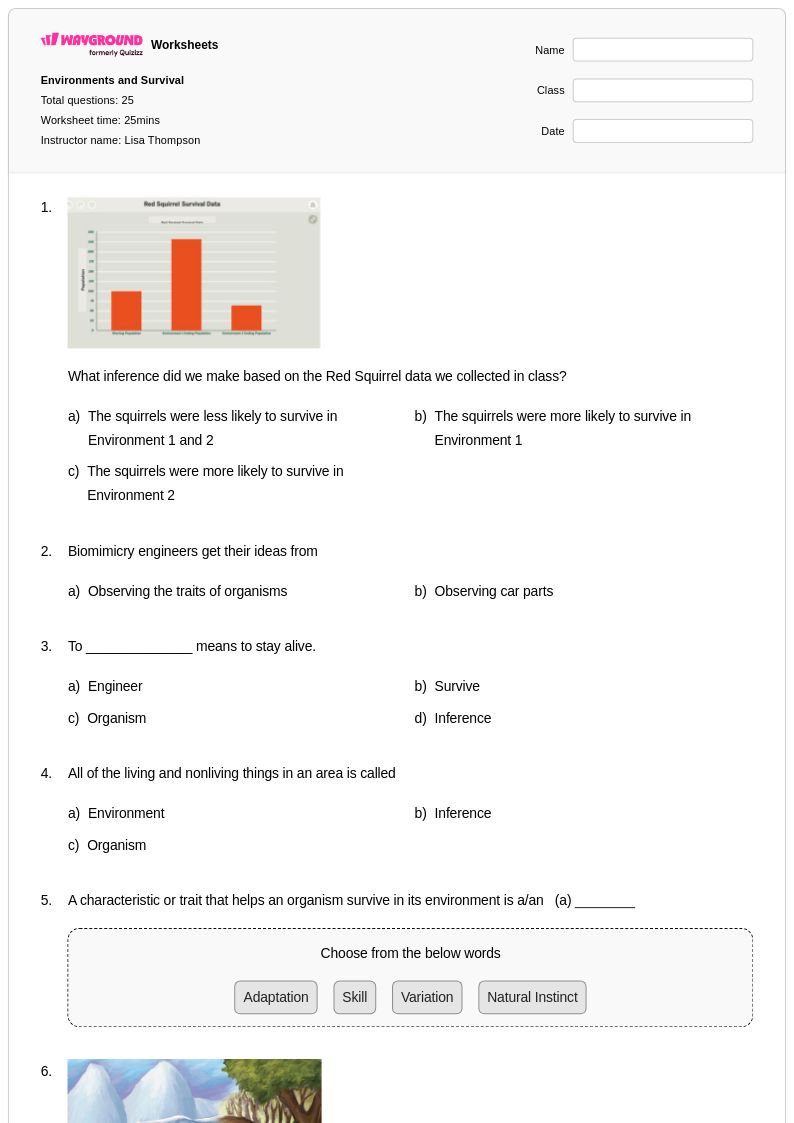
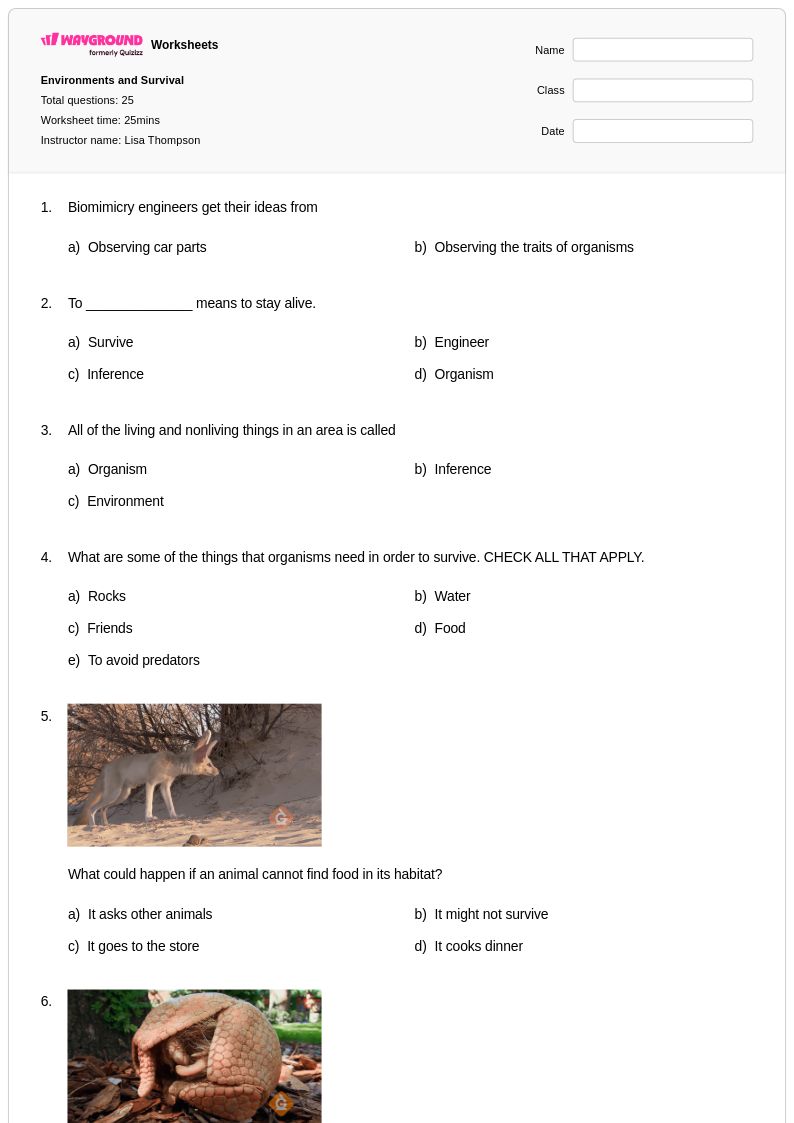
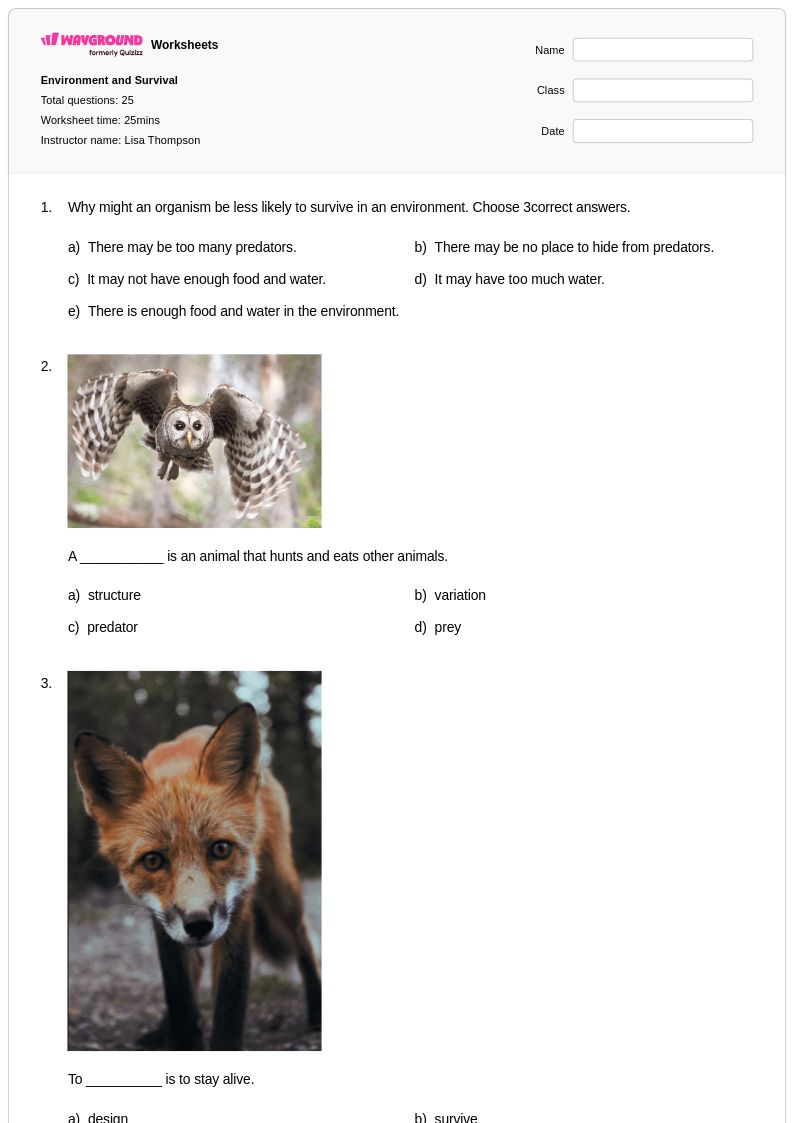
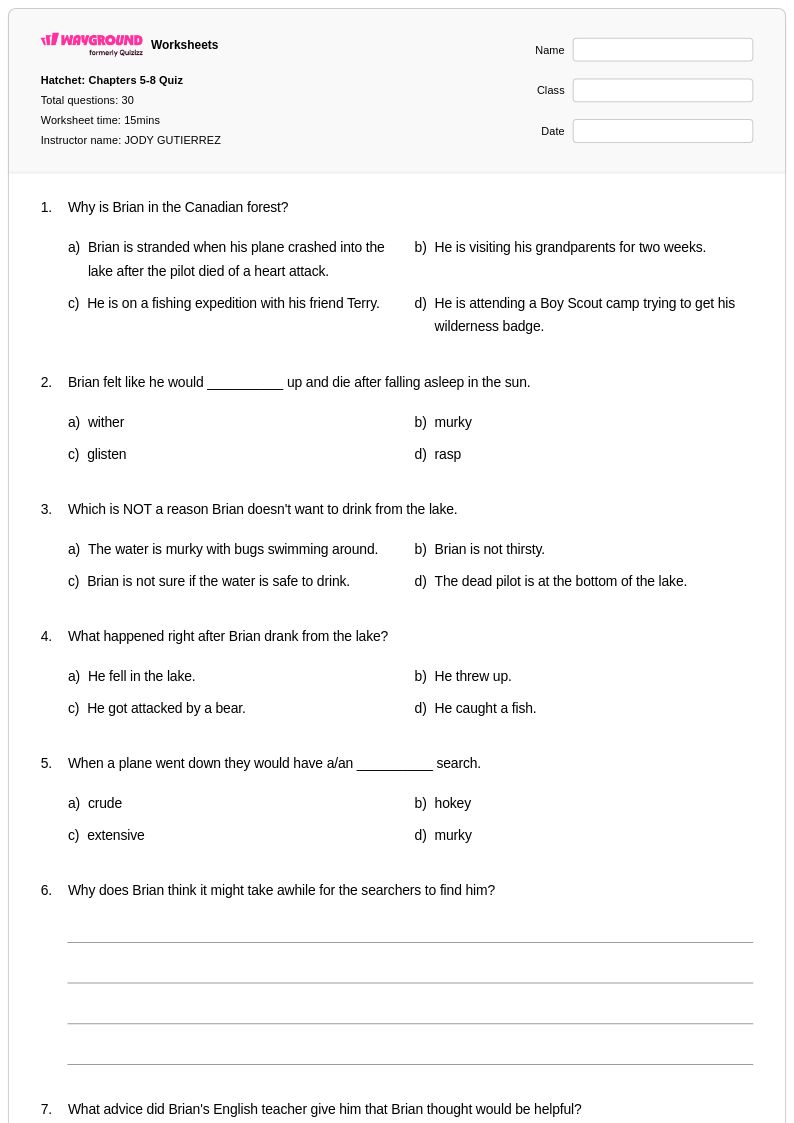
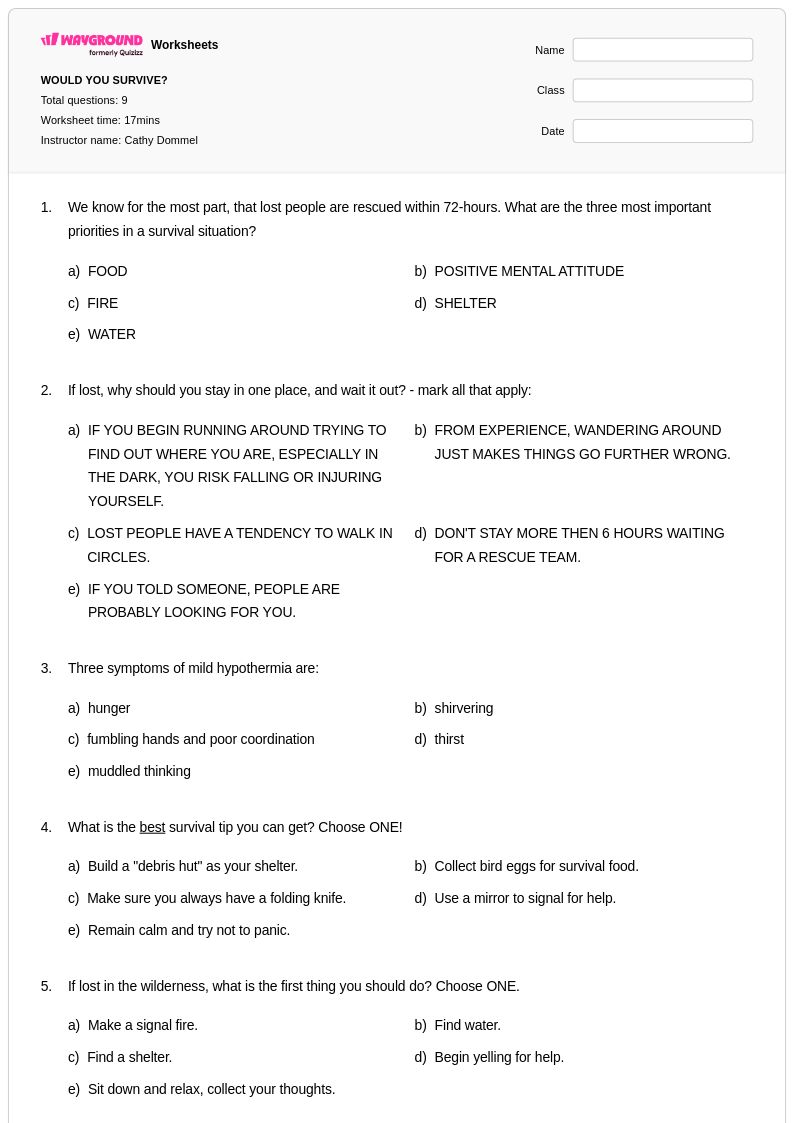
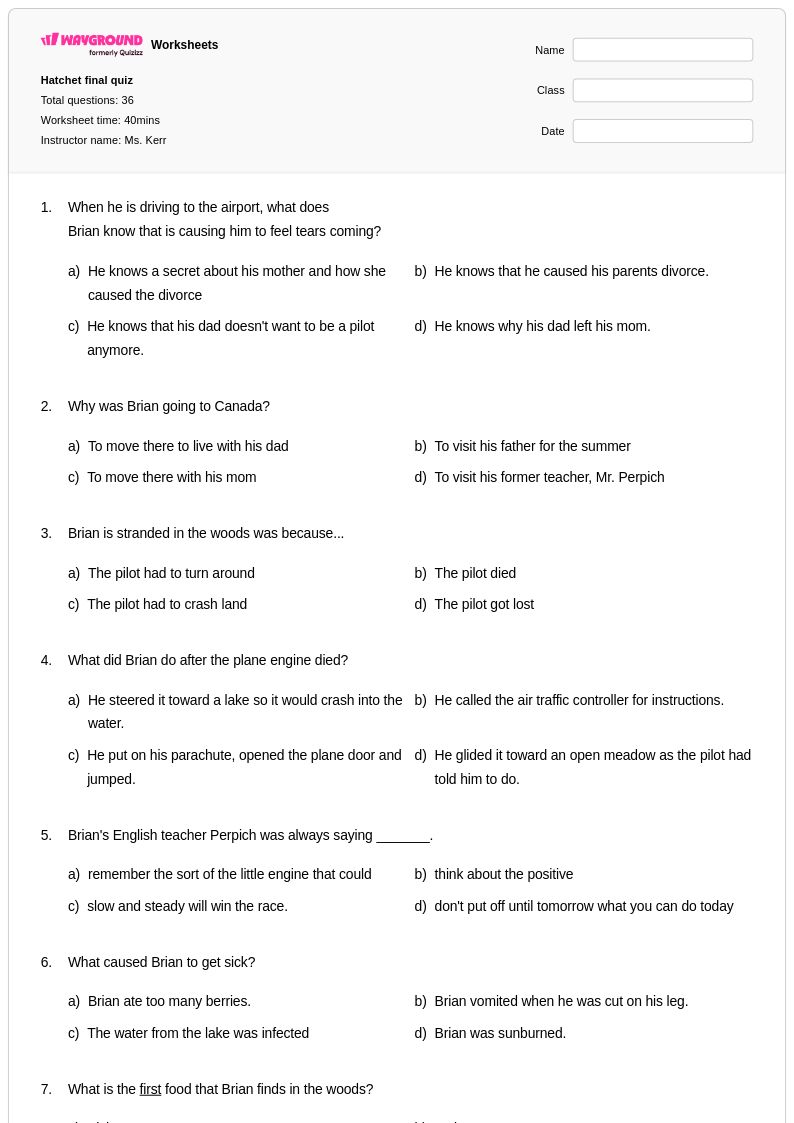
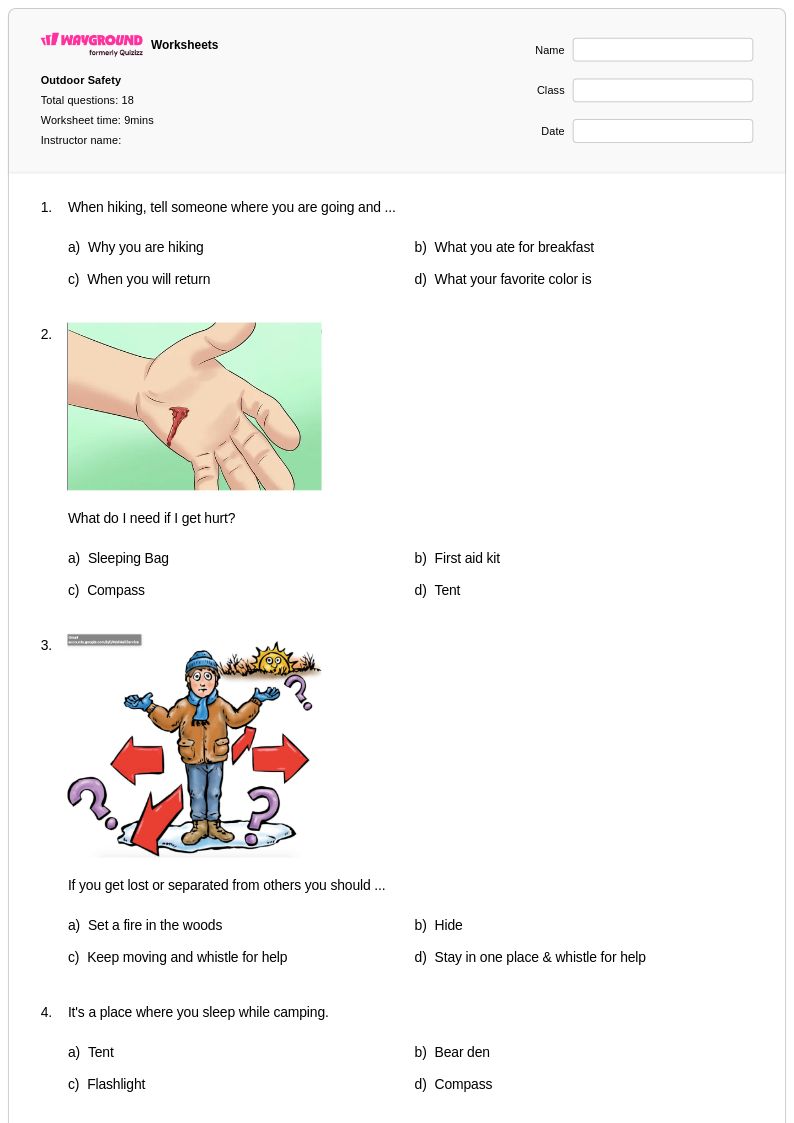
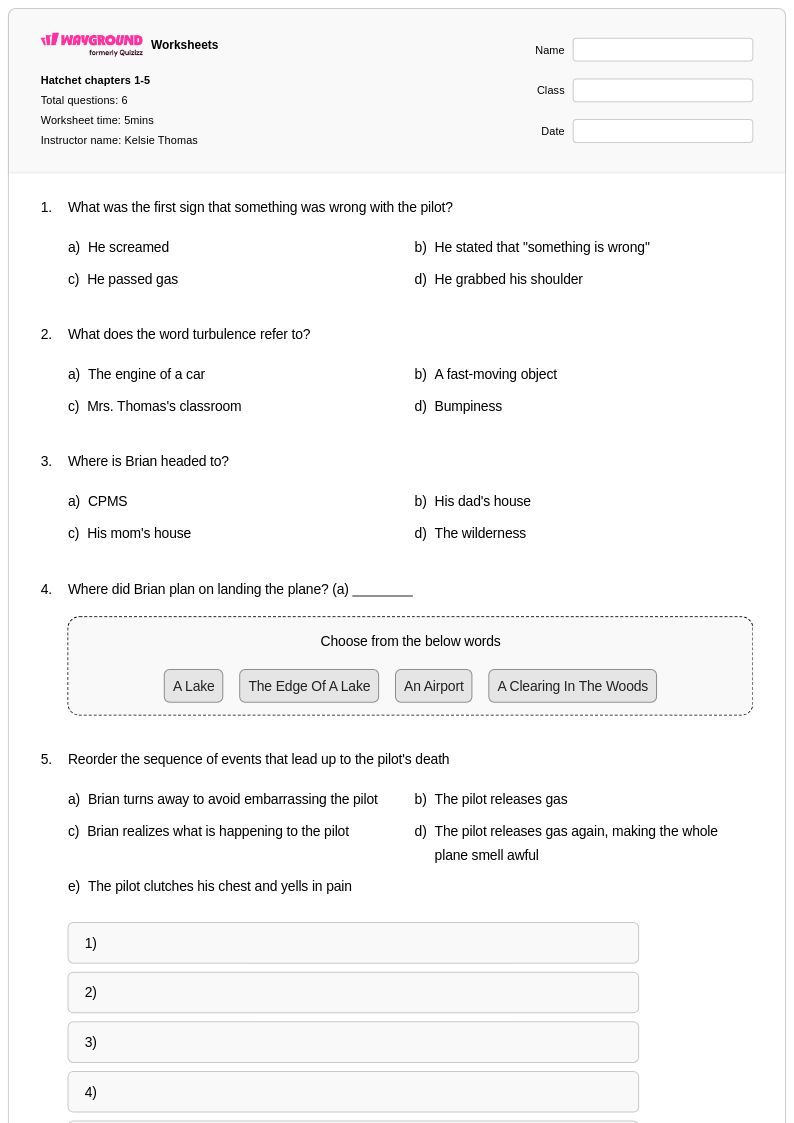
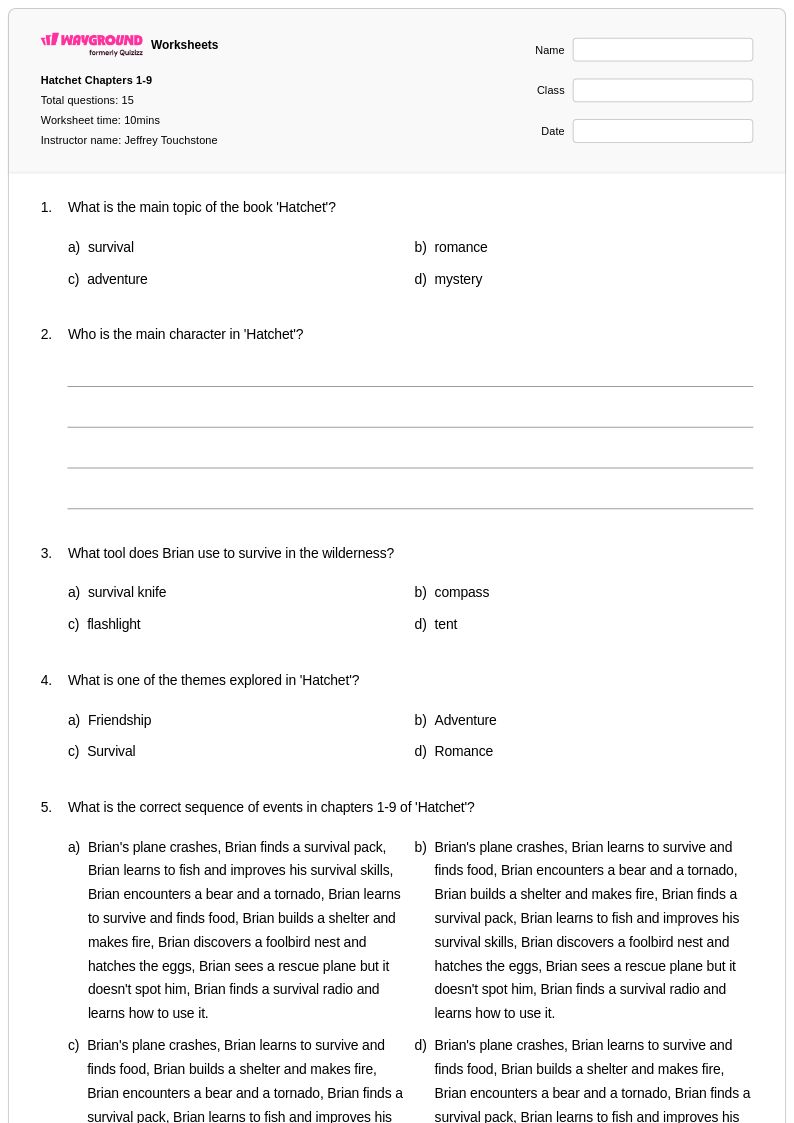
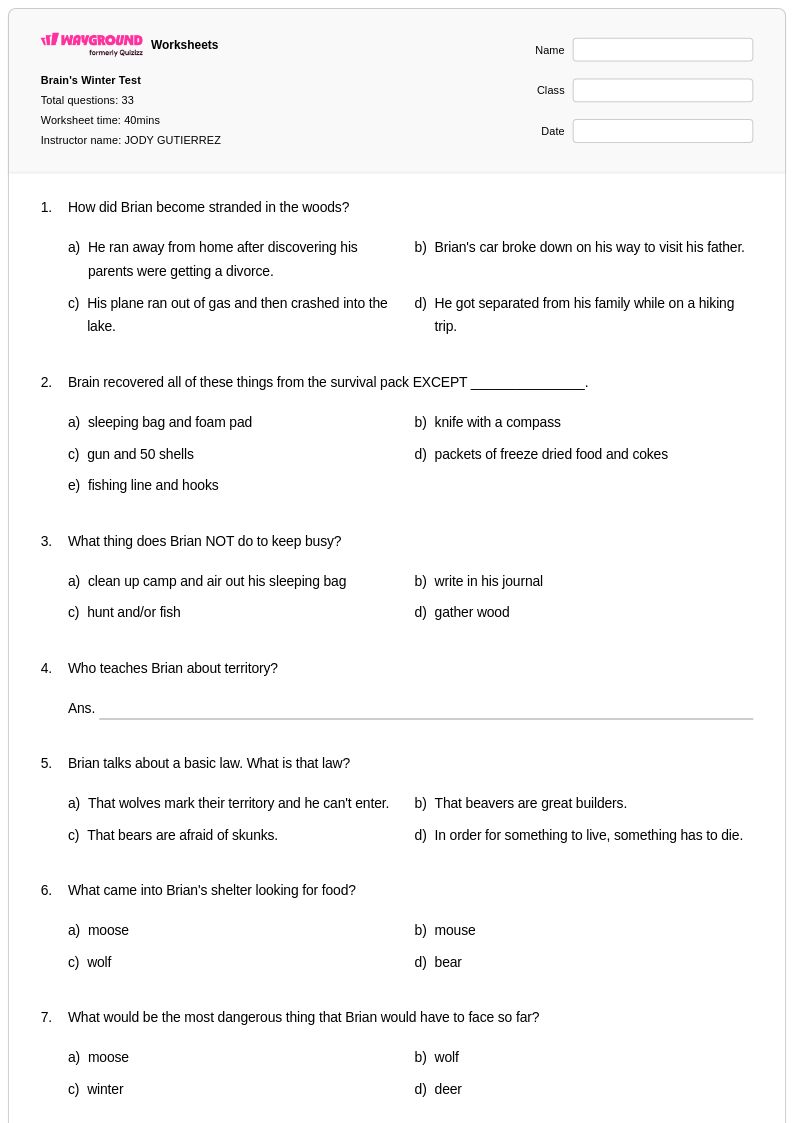
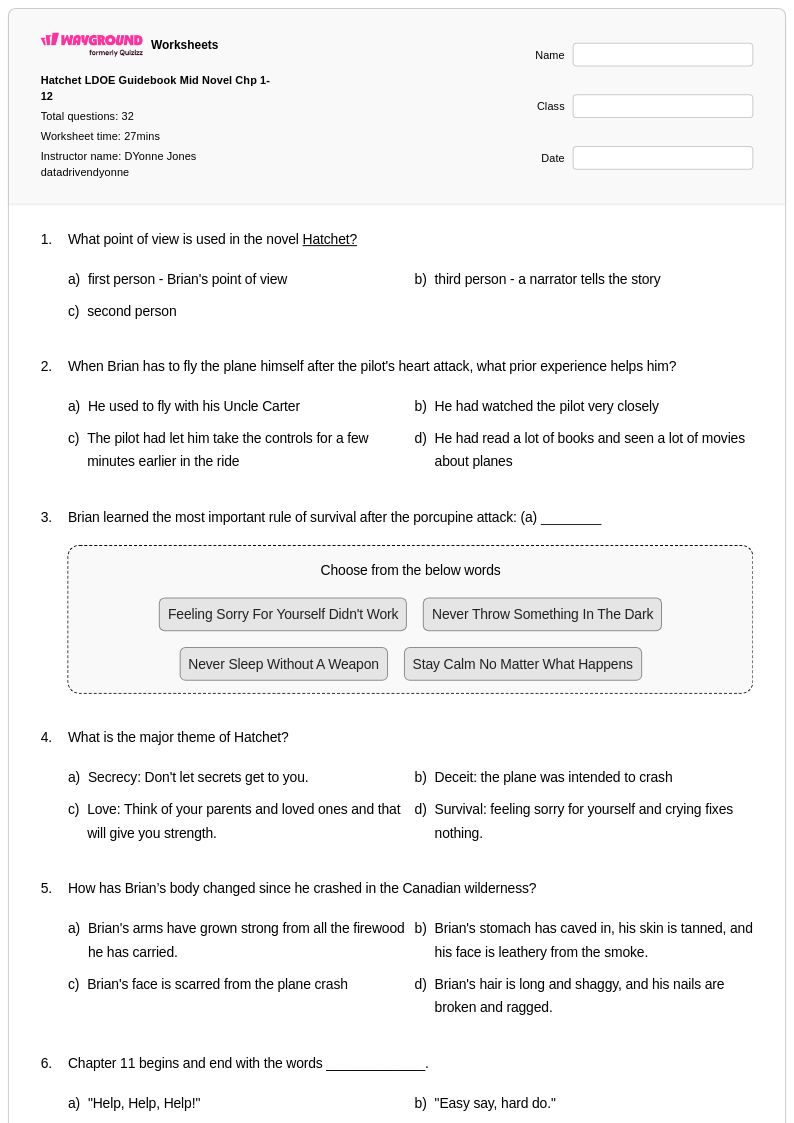
Wilderness survival worksheets for Class 6 students available through Wayground (formerly Quizizz) provide comprehensive educational resources that teach essential outdoor safety skills and survival techniques appropriate for middle school learners. These expertly designed printables cover fundamental survival concepts including shelter construction, water procurement and purification, fire building basics, navigation without technology, emergency signaling methods, and identifying edible plants versus dangerous flora. Each worksheet strengthens critical thinking abilities, problem-solving skills, and practical knowledge that builds confidence in outdoor environments while emphasizing safety protocols. The collection includes varied practice problems that challenge students to apply survival principles in hypothetical scenarios, complete with detailed answer keys that enable both independent study and guided instruction. These free educational materials support hands-on learning experiences and complement outdoor education programs by reinforcing theoretical knowledge through engaging pdf worksheets that can be completed in classroom or field settings.
Wayground (formerly Quizizz) empowers physical education teachers with access to millions of teacher-created wilderness survival resources that streamline lesson planning and enhance outdoor education curriculum delivery. The platform's robust search and filtering capabilities allow educators to quickly locate grade-appropriate materials that align with physical education standards while supporting diverse learning needs through built-in differentiation tools. Teachers can customize existing worksheets or create entirely new materials using the platform's flexible editing features, ensuring content matches specific program requirements and student skill levels. These comprehensive resources are available in both printable and digital formats, including downloadable pdf versions that facilitate seamless integration into existing lesson plans. The extensive collection supports various instructional approaches from skill-building practice sessions to remediation activities for struggling learners, while also providing enrichment opportunities for advanced students ready to explore more complex survival scenarios and outdoor adventure concepts.
FAQs
How do I teach wilderness survival skills in a classroom setting?
Teaching wilderness survival in a classroom works best when theoretical concepts are paired with scenario-based problem solving. Start with foundational priorities like the rule of threes (air, shelter, water, food), then build into specific skills such as shelter construction, water purification, and navigation. Using practical worksheets with real-world survival scenarios helps students apply knowledge before they ever encounter an outdoor environment.
What topics should a wilderness survival unit cover?
A comprehensive wilderness survival unit should cover shelter construction, water purification methods, fire building techniques, navigation without technology, food procurement, and signaling for rescue. These six areas represent the core competencies students need to respond effectively to outdoor emergencies. Sequencing instruction from immediate survival priorities to longer-term strategies helps students understand how to triage decisions under pressure.
What exercises help students practice wilderness survival skills?
Scenario-based practice problems are the most effective exercises for wilderness survival because they require students to apply multiple skills simultaneously, mirroring real conditions. Worksheets that present survival situations and ask students to prioritize actions, identify resources, or evaluate decisions build critical thinking alongside content knowledge. Hands-on simulations layered on top of written practice deepen retention and transfer.
What mistakes do students commonly make when learning wilderness survival concepts?
One of the most common misconceptions is that food is the first survival priority, when in reality shelter and water take precedence in most emergency scenarios. Students also frequently underestimate how quickly dehydration and hypothermia can become life-threatening, leading to poor decision-making in simulated situations. Worksheets that present timed or resource-constrained scenarios help surface and correct these misunderstandings before they become ingrained.
How can I differentiate wilderness survival instruction for students at different skill levels?
Differentiation in wilderness survival instruction can be achieved by varying the complexity of survival scenarios, the number of variables students must manage, and the amount of scaffolding provided. For struggling learners, simplified decision trees or guided worksheets with fewer answer choices reduce cognitive load and build foundational confidence. Advanced students benefit from open-ended scenarios that require them to synthesize multiple survival strategies and justify their reasoning. On Wayground, teachers can configure accommodations such as reduced answer choices and read-aloud support for individual students without affecting the rest of the class.
How do I use Wayground's wilderness survival worksheets in my class?
Wayground's wilderness survival worksheets are available as printable PDFs for field-based or traditional classroom use and in digital formats for technology-integrated instruction, giving teachers flexibility depending on the learning environment. Each worksheet includes a complete answer key, so teachers can use them for guided practice, independent work, or formative assessment without additional prep. Teachers can also host the material as a live quiz on Wayground, enabling real-time participation and instant feedback.