
 Worksheets
Respiratory System
Total questions: 40
Worksheet time: 21mins
Bony ridges on the lateral walls of the nasal cavity that increase surface area are known as...
paranasal sinuses
nasal septa
conchae
nostrils
Given the following structures:
1. larynx
2. nasal cavity
3. pharynx
4. trachea
Which of the following is the correct order that air would flow during inhalation.
1,2,3,4
2,3,1,4
2,1,3,4
4,2,3,1
The trachea...
extends from the nasal cavity to the bronchi
is lined with cilia
lies posterior to the esophagus
is the passageway for food into the stomach
Given the following structures:
1. alveoli
2. bronchi
3. bronchioles
Which of the following is the correct order in which air would flow after inhalation?
1,2,3
2,1,3
2,3,1
3,2,1
The actual gas exchange with the blood occurs in the
bronchi
bronchioles
alveoli
ventricles
Surfactant...
decreases the surface tension of fluid in the alveoli
increases the energy required to keep the lungs inflated
makes the lungs tend to collapse
traps foreign particles that enter the lungs
Which of the following is not a characteristic of human lungs?
Both right and left lungs are composed of three lobes.
Bronchi divide to form bronchioles.
Capillary supply is abundant to facilitate gas exchange with the blood.
The alveoli are tiny air sacs arranged in clusters.
Which body function is made possible by the fibrous bands stretched across the larynx?
swallowing
breathing
diffusion
speech
The use of oxygen by the cells to release energy from food is called...
photosynthesis
cellular respiration
diffusion
osmosis
The release of energy in the cells for repair, mitosis and maintainance requires...
oxygen and glucose
carbon dioxide and water
oxygen and carbon dioxide
oxygen and water
The energy used to make ATP comes from...
oxygen
carbon dioxide
glucose
water
Which organelle uses oxygen to release energy from food?
nucleus
ribosome
mitochondrion
endoplasmic reticulum
The movement of oxygen from the alveoli to the blood and from the blood to the tissues is due to the process of...
osmosis
diffusion
cytokinesis
phagocytosis
The left lung has three lobes and the right lung has two.
True
False
Each lung is contained within the thoracic cavity, but is also surrounded by the pluera.
True
False
During inhalation, the diaphragm moves upward decreasing the volume of the thoracic cavity.
True
False
The role of the mucus and and cilia in the respiratory system is to....
warm the air.
clean the air.
humidify the air.
All of the choices are true.
When the diaphragm contracts...
the volume of the thoracic cavity increases and the pressure decreases, causing air to rush into the lungs.
the volume of the thoracic cavity decreases and the pressure increases causing air to rush out of the lungs.
When the diaphragm relaxes...
the volume of the thoracic cavity increases and the pressure decreases, causing air to rush into the lungs.
the volume of the thoracic cavity decreases and the pressure increases causing air to rush out of the lungs.
Gases move from a lower pressure to a higher pressure.
True
False
Dissolved particles move across a membrane from a higher concentration to a lower concentration.
True
False

When we breathe in...................enters our lungs and passes into the blood.
oxygen
carbon dioxide
Which two gases are exchanged in the Respiratory System?
oxygen and nitrogen
carbon dioxide and oxygen
The place in the lungs where oxygen and carbon dioxide are exchanged
Diaphragm
Alveolus
Bronchi Tube
Trachea
Tubes that move air from the trachea to the lungs.
Alveoli
Bronchi
Veins
Arteries

Letter D is pointing to which Respiratory organ?
Alveoli
Diaphragm
Lung
Bronchi
Which part of the Respiratory System collects air from the environment & heats/moistens the air before entering the body?
lungs
nose
mouth

Letter B is pointing to which organ of the Respiratory System?
Nose
Trachea
Lungs
Diaphragm
When the diaphragm contracts and moves down, the lungs are...
expanding with air
shrinking - pushing air out
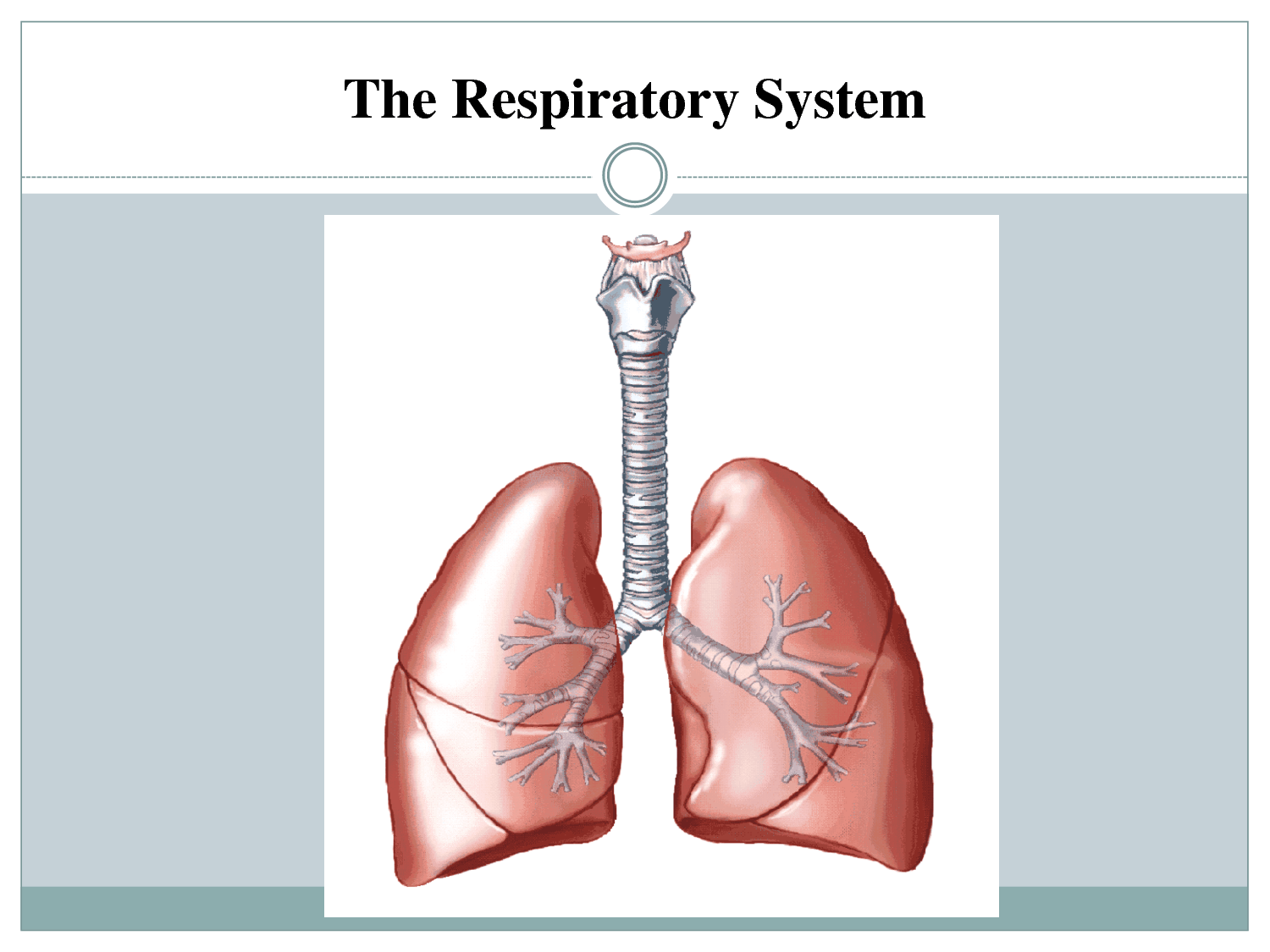
What is the main function of the respiratory system?
to provide oxygen and remove carbon dioxide from the body
to bring oxygen to the body
to break down food and absorb nutrients
to remove oxygen from the body and deliver carbon dioxide
What is the primary muscle involved in the process of breathing?
Stomach
Heart
Diaphragm
Liver
Which structure prevents food from entering the trachea during swallowing?
Bronchi
Pharynx
Larynx
Epiglottis
What is the role of cilia in the respiratory system?
To trap and move particles out of the airways
To increase the surface area for gas exchange
To produce mucus
To absorb oxygen
Which part of the respiratory system is responsible for voice production?
Larynx
Trachea
Bronchi
Pharynx
What is the function of the pleural membrane in the respiratory system?
To exchange gases with the blood
To protect the lungs and reduce friction during breathing
To filter air entering the lungs
To humidify and warm the air

During inhalation the diaphragm contract and goes ...
up
down

During exhalation the diaphragm relaxes and goes ...
up
down
movement of air in and out of lungs
ventilation
gas exchange
respiration
breathing
What is the purpose of pulmonary surfactant?
Promotes capillary growth
Decreases surface tension
Adheres alvioli and capillaries
Stretches the inside surface of the alveoli

