
 Worksheets
Cytology
Total questions: 55
Worksheet time: 39mins
Name
Class
Date
1.
Which organelle is responsible for packaging and modifying molecules to be secreted out of a cell?
a)
Ribosome
b)
Golgi apparatus
c)
Endoplasmic reticulum
d)
Lysosome
2.
A human cell with .9%NaCl is placed in a hypotonic that has 0%NaCl, 100% H2O, the cell will:
a)
shrink
b)
swell
c)
stay same
d)
regain salt
3.
Protein synthesis occurs in the:
a)
lysosomes
b)
peroxisomes
c)
ribosomes
d)
nucleolus
4.
Cytokinesis is completed during:
a)
Metaphase
b)
Telophase
c)
Anaphase
d)
Prophase
5.
Pinocytosis is refers to:
a)
Cell eating
b)
Cell producing
c)
Cell drinking
d)
Phagocytosis
6.
Chromsomes line up in the middle of the cell during:
a)
Anaphase
b)
Metaphase
c)
Prophase
d)
Telophase
7.
Organelles that contain powerful digestive enzymes that break down substances inside a cell are called:
a)
Mitochondria
b)
Lysosomes
c)
Ribosomes
d)
Centrioles
8.
Smooth Endoplasmic Reticulum lacks _____________ attached.
a)
Mitochondria
b)
Particles
c)
Ribosomes
d)
Lysosomes
9.
These form a cytoskeleton for a cell, function in support.
a)
Centrioles
b)
Microtubules
c)
Mitochondria
d)
Fibers
10.
The nucleus contains:
a)
ribosomes
b)
vesicles
c)
DNA (genetic material)
d)
Phospholipids
11.
The movement of molecules from higher concentration to lower concentration is
a)
diffusion
b)
cell division
active transport
active transport
c)
active transport
d)
tonicity
12.
Active transport requires
a)
energy
b)
the nucleus
c)
chloroplasts
d)
lysosomes
13.
water moves from
a)
higher conc. H20 => lower conc H20
b)
lower conc. H20 => higher conc. H20
14.
The mitochondria....
a)
produces energy
b)
causes cell division
c)
is not an organelle
d)
is found in a prokaryote
15.
What organelle PRODUCES proteins?
a)
ribosomes
b)
centrioles
c)
lysosomes
d)
nucleus
16.
Cell organelles that are responsible for digesting food, worn out organelles and other cellular wastes are called ___________________.
a)
Mitochondria
b)
Vacuoles
c)
Lysosomes
d)
Chlororplasts
17.
Cells with a nucleus and membrane-bound organelles are called ____________________.
a)
prokaryotes
b)
eukaryotes
c)
bacteria
d)
protists
18.
In what organelle is the genetic material found inside?
a)
Endoplasmic Reticulum
b)
Golgi Complex
c)
Nucleolus
d)
Nucleus
19.
Which of the following is directly involved in the transportation of materials inside/within the cell?
a)
Endoplasmic Reticulum
b)
Vacuole
c)
Lysosome
d)
Mitochondria
20.
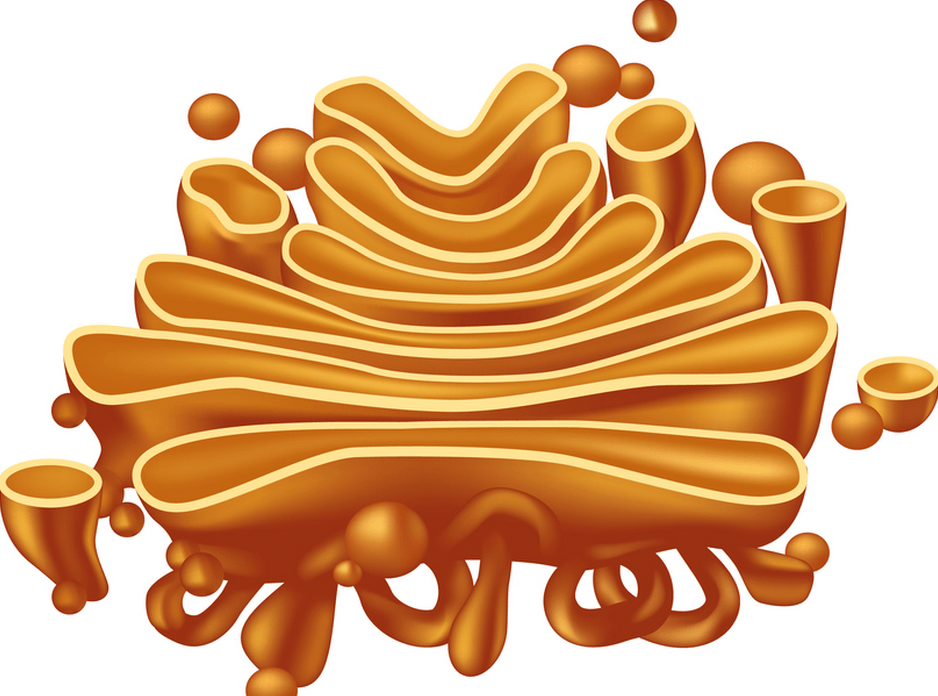
I am a protein packaging and shipping machine! Who am I?
a)
vacuole
b)
ribosome
c)
mitochondrion
d)
golgi apparatus
21.
Packages proteins into vesicles and ships them out.
a)
Endoplasmic Reticulum
b)
Ribosomes
c)
Golgi Apparatus
d)
Nucleus
22.
Acts like a subway system, carrying protein through the cell.
a)
Golgi Apparatus
b)
Nuclear Membrane
c)
Ribosomes
d)
Endoplasmic Reticulum
23.
The clear, jelly-like material in a cell that supports and protects the cell’s organelles.
a)
Cytoplasm
b)
Cell Membrane
c)
Nucleus
d)
Mitochondria
24.
Controls the movement of materials in and out of the nucleus.
a)
Nuclear Membrane
b)
Cellular Membrane
c)
Cytoplasm
d)
Endoplasmic Reticulum
25.
Osmosis is the movement of _____ across a membrane.
a)
food
b)
energy
c)
oxygen
d)
water
26.
During osmosis
a)
water moves from high to low concentration
b)
large or oddly shaped molecules move across a cell membrane
c)
water moves when energy is used
d)
proteins are built
27.
An animal cell placed in a hypertonic (salty) solution will
a)
Shrink
b)
Swell
c)
Stay the same
28.
Ideally, your cells should be in a(n) _______ solution
a)
Hypertonic
b)
Hypotonic
c)
Isotonic
d)
Cola
29.
Passive transport requires no
a)
concentration gradients
b)
osmosis
c)
motion
d)
energy
30.
The movement of molecules against a concentration gradient
a)
simple diffusion
b)
facilitated diffusion
c)
active transport
d)
osmosis
31.
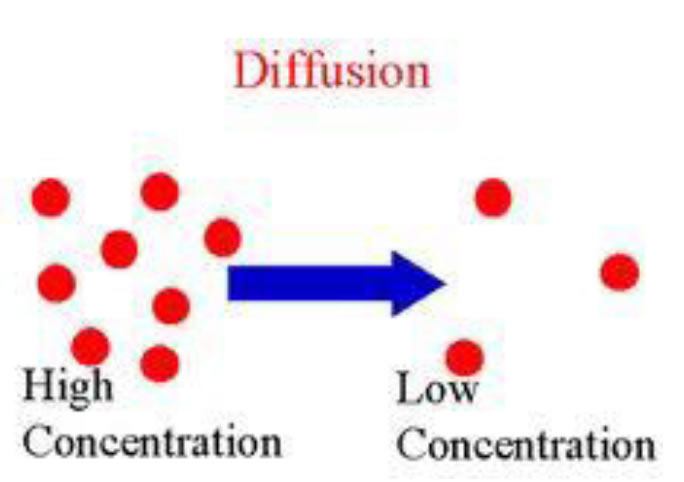
a)
Passive Transport
b)
Active Transport
32.
In a solution, salt is considered the _______.
a)
solvent
b)
solute
c)
solution
33.
If a cell containing 5% salt is placed into a glass of water with 20% salt, the water is _______ compared to the cell.
a)
hypertonic-
b)
hypotonic
c)
isotonic
34.

_______ regulates what enters and leaves a cell.
a)
Cell Membrane
b)
Nucleus
c)
Mitochondria
d)
Cytoplasm
35.

The cell below is in a _________ solution.
a)
Hypotonic
b)
Hypertonic
c)
Isotonic
36.

The cell below is in a _____________ solution.
a)
Hypertonic
b)
Hypotonic
c)
Isotonic
37.

Which cell is placed into a hypotonic environment?
a)
A
b)
B
c)
C
d)
D
38.
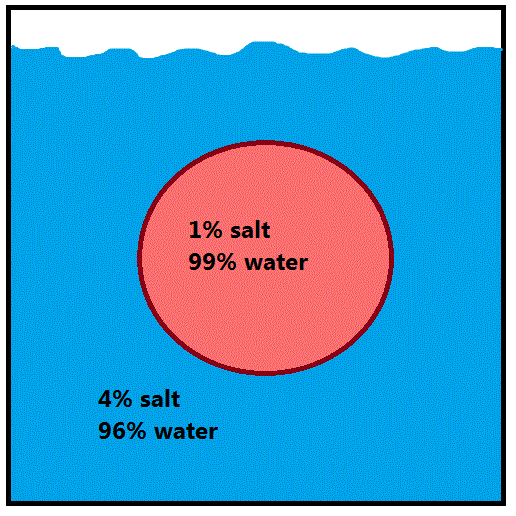
Where will the water go?
a)
Into the cell
b)
Out of the cell
c)
Equally in & out - it's isotonic
d)
There is no water
39.
Which of these phases of mitosis take place first?
a)
anaphase
b)
telophase
c)
prophase
d)
metaphase
40.
Which of these lists presents the stages of the cell cycle in the correct order?
a)
interphase, mitosis, cytokinesis
b)
cytokinesis, mitosis, interphase
c)
mitosis, interphase, cytokinesis
d)
interphase, cytokinesis, mitosis
41.
During interphase, the DNA is in the form of
a)
chromatin
b)
chromosomes
c)
chromatids
d)
centromeres
42.

Identify the stage.
a)
interphase
b)
metaphase
c)
anaphase
d)
telophase
43.

Identify the stage of mitosis.
a)
interphase
b)
prophase
c)
metaphase
d)
anaphase
44.

Identify the stage of mitosis.
a)
interphase
b)
prophase
c)
anaphase
d)
cytokinesis
45.

Identify the stage of mitosis.
a)
interphase
b)
prophase
c)
anaphase
d)
cytokinesis
46.

What is the next phase of mitosis?
a)
Prophase
b)
Metaphase
c)
Anaphase
d)
Telophase
47.

Name the previous phase.
a)
Prophase
b)
Metaphase
c)
Anaphase
d)
Telophase
48.
Nuclear membrane forms around chromosomes and begins to separate.
a)
Anaphase
b)
Telophase
c)
Prophase
d)
Interphase
49.
The phase in mitosis where chromosomes move away and are pulled apart by spindles to opposite sides of the cell.
a)
prophase
b)
anaphase
c)
metaphase
d)
telephase
50.
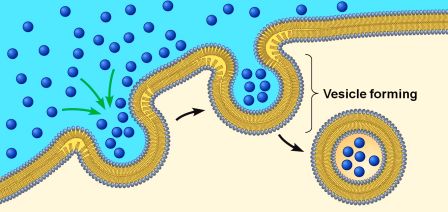
Which form of active transport is being shown?
a)
Facilitated Diffusion
b)
Exocytosis
c)
Endocytosis
d)
Protein Pumps
51.
Which is NOT a form of active transport?
a)
Endocytosis
b)
Osmosis
c)
Exocytosis
d)
Pinocytosis
52.
When cells take in a liquid through active transport, what is it called?
a)
Exocytosis
b)
Phagocytosis
c)
Pinocytosis
d)
Osmosis
53.
When cells take in food particles through active transport, what is it called?
a)
Pinocytosis
b)
Phagocytosis
c)
Exocytosis
d)
Osmosis
54.
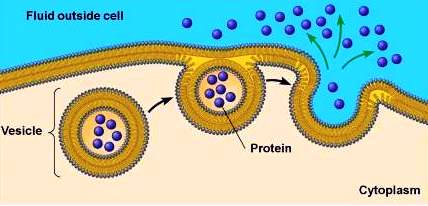
Which form of active transport is being shown?
a)
Pinocytosis
b)
Endocytosis
c)
Exocytosis
d)
Osmosis
55.
What is the difference between active and passive transport?
a)
Active does not need energy and passive uses ATP (energy)
b)
Active uses ATP (energy) and passive does not need energy
c)
Active stores transport proteins and passive releases
d)
Active uses hormones and passive does not
100 %

