
 Worksheets
motion, forces and newton's laws
Total questions: 79
Worksheet time: 4hrs 47mins
Name
Class
Date
1.
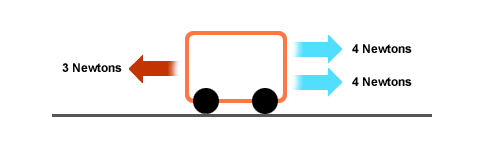
What will happen to the cart in the illustration?
a)
It will stand still.
b)
It will move at constant velocity.
c)
It will accelerate to the right.
d)
It will accelerate to the left.
2.
Unbalanced forces cause an object to _____.
a)
remain motionless
b)
move at constant velocity
c)
speed up, slow down, or change direction
3.
In order for a helicopter to hover in place, which statement must be true?
a)
The upward force is greater than the downward force.
b)
The upward force is lesser than the downward force.
c)
The upward force is exactly the same as the downward force.
d)
There are no forces acting on the helicopter.
4.
Newton's First Law of Motion is also known as the Law of _____.
a)
Inertia
b)
Conservation of Mass
c)
Action and Reaction
d)
Mass and Acceleration
5.
When a magician yanks the tablecloth off of a table without knocking over the dishes on the table, he's demonstrating Newton's _____ Law of Motion.
a)
1st
b)
2nd
c)
3rd
d)
4th
6.
Newton's Second Law of Motion says that if you want to increase the acceleration of an object, you have to _____.
a)
increase the unbalanced force
b)
decrease the unbalanced force
c)
increase the object's mass
d)
make sure all forces are balanced
7.
Newton's Third Law says that forces _____.
a)
always come in equal and opposite pairs
b)
always come in groups of three
c)
are always balanced
d)
are never balanced
8.
Which of Newton's Laws best explains how a rocket can accelerate by pushing against its own burning fuel?
a)
Newton's First Law
b)
Newton's Second Law
c)
Newton's Third Law
d)
None of these
9.
A book resting on a desk is an example of _____.
a)
balanced forces
b)
unbalanced forces
c)
centrifugal forces
10.
The tendency of an object to resist changes in its motion is called _____.
a)
stubborness
b)
momentum
c)
inertia
d)
laziness
11.
When equal forces act in opposite directions, the result is _____.
a)
unbalanced forces
b)
balanced forces
c)
net forces
d)
zero forces
12.
A rocket accelerating upward from a launch pad is an example of _____.
a)
balanced forces
b)
unbalanced forces
c)
zero forces
13.
TRUE or FALSE: If you wish to speed up, slow down, or change direction in your car, you need to apply an UNBALANCED force to the car.
a)
TRUE
b)
FALSE
14.
Forces are measured in _____.
a)
kilograms
b)
seconds
c)
meters
d)
newtons
15.
The scientist who is most famous for developing the Laws of Motion is _____.
a)
Albert Einstein
b)
Stephen Hawking
c)
Sir Isaac Newton
d)
Galileo Galilei
16.
According to Newton's Second Law, an object's acceleration is INVERSELY proportional to its _____.
a)
unbalanced force
b)
balanced force
c)
mass
d)
velocity
17.
What is speed?
a)
how far you go
b)
how much distance is covered over a period of time
c)
how fast you accelerate
d)
the change in the location of a object
18.
Total distance divided by total time is
a)
average speed
b)
constant speed
c)
instantaneous speed
d)
acceleration
19.
The correct equation to calculate speed is
a)
distance/time
b)
time/distance
c)
distance x time
d)
distance/time2
20.
What is velocity?
a)
the quickness of an object
b)
the location of an object
c)
acceleration
d)
speed in a specific direction
21.
Shona cycles at an average speed of 8km/h. How far has she travelled if she cycles for 4 hours?
a)
55km
b)
32km
c)
43km
d)
32miles
22.
Can be measured in meters per second (m/s)
a)
Distance
b)
Time
c)
Speed
d)
Acceleration
23.
How far will a person go if they jog for 2 hours at a speed of 12 km/hr?
a)
6 km
b)
0.5 km
c)
10 km
d)
24 km
24.
What is a way to measure speed?
a)
miles/hour
b)
centimenters
c)
hours/kilometer
d)
kilometers
25.
If a cheetah runs 180 miles in 3 hours, what is its average speed?
a)
60 hours
b)
60 miles
c)
60 miles/hour
d)
60 miles/second/second
26.
What is a way to measure velocity
a)
miles per second squared
b)
meters per second
c)
meters per second squared
d)
seconds
27.
A runners races in the 100 meter dash. It takes her 10 seconds to finish. What is her average speed?
a)
10 m/s
b)
1000 m/s
c)
100 seconds
d)
10 seconds
28.
A greater applied force is required to move an object with a greater mass than one with a smaller mass.
a)
True
b)
False
29.
If a baseball and a cannonball are dropped from the same height at the same time, which ball will hit the ground first?
a)
the cannonball
b)
the baseball
c)
The balls land at the same time.
d)
the ball with the larger volume
30.
A crumpled piece of paper hits the ground before a flat sheet of paper because
a)
the acceleration of gravity is greater on the crumpled paper.
b)
there is more air resistance against the flat paper.
c)
the crumpled paper is more massive
d)
the crumpled paper is less massive.
31.
Which of the following explains the difference between speed and velocity?
a)
One has motion, and the other does not.
b)
One has direction, and the other does not.
c)
One involves time, and the other does not.
d)
One involves acceleration, and the other does not.
32.
A hiker’s velocity begins at 1.8 m/s uphill and changes to 1.5 m/s uphill. How do you know that the hiker has a negative acceleration?
a)
His direction changed.
b)
His direction was unchanged.
c)
His speed increased.
d)
His speed decreased.
33.
How does Newton’s third law explain how a rocket takes off?
a)
The rocket’s acceleration is positive, while the gasses acceleration is negative but the direction is the same.
b)
The rocket is at rest until ignition.
c)
The hot gasses move in one direction, while the rocket moves in the opposite direction but with equal force.
34.
A greater applied force is required to move an object with a greater mass than one with a smaller mass.
a)
True
b)
False
35.

Which car is accelerating?
a)
A car that is not moving
b)
A ar that rounds a curve at a constant speed
c)
A car traveling at a constant speed
d)
A car that has a set speed of 60mph
36.
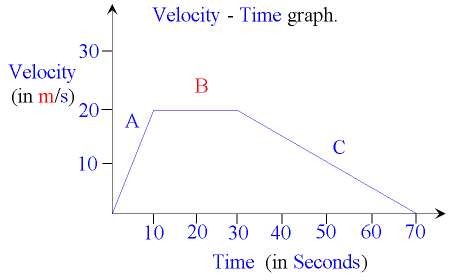
How fast is the car traveling at 30 seconds?
a)
5m/s
b)
10m/s
c)
20m/s
d)
30m/s
37.
A car starts from rest at a stop light and reaches 20 m/s in 3.5 s. Determine the acceleration of the car.
a)
2.2m/s2
b)
7.0m/s2
c)
5.7m/s2
d)
70m/s2
38.
Forces always act in equal and opposite pairs.
a)
Newton's 1st Law
b)
Newton's 2nd Law
c)
Newton's 3rd Law
d)
Newton's 4th Law
39.
Find the velocity of a truck that travels 75 miles north in 2.5 hours.
a)
187.5 mph north
b)
30 mph north
c)
300 mph north
d)
200 mph north
40.
Find the velocity of a plane that traveled 3000 miles west in 5 hours.
a)
65 mph west
b)
6 mph west
c)
600 mph west
d)
6000 mph west
41.
Find the average speed of a train that traveled 540 km in 6 hours?
a)
80 km/h
b)
100 km/h
c)
90 km/h
d)
3240 km/h
42.
How far will a person go if they jog for 2 hours at a speed of 12 km/hr?
a)
6 km
b)
0.5 km
c)
10 km
d)
24 km
43.
It took 3.5 hours for a train to travel the distance between two cities at a velocity of 120 miles/hr. How many miles lie between the two cities?
a)
34 miles
b)
420 miles
c)
120 miles
d)
360 miles
44.
John took 90 minutes to bicycle to his grandmother's house, a total of six kilometers. What was his speed (pay attention to units)?
a)
540 km/hr
b)
.066 km/hr
c)
4 km/hr
d)
9 km/hr
45.
A plane traveled for about 2.5 hours at a velocity of 1200 km/hr. What distance did it travel?
a)
3000 km
b)
480 km
c)
3000 m
d)
480 m
46.
A girl is pedaling her bicycle at a speed of 0.10 km/min. How far will she travel in two hours? (pay attention to units)
a)
20 km
b)
.2 km
c)
3 km
d)
12 km
47.
What is the velocity of a car that traveled a total of 75 kilometers north in 1.5 hours?
a)
112.5 km/hr north
b)
50 km/h north
c)
.833 km/hr north
d)
40 km/hr north
48.
initial v=5 m/s, final v=0 m/s, time is 20 seconds, what is a (acceleration)
a)
(0-5)/20
b)
(5-0)/20
c)
5/20
d)
20/(5-0)
49.
Acceleration only takes place when things speed up.
a)
True
b)
False
50.
When are you undergoing an acceleration in a car?
a)
speed up
b)
slow down
c)
make turns
d)
All of the above
51.
In each of the following cases, determine which car has the greatest acceleration?
a)
starts from 0m/s to 20m/s in 4 seconds.
b)
speed up from 20m/s to 40m/s in 3 seconds
c)
slow down from 50m/s to stop in 2 seconds
d)
starts from 0 m/s to 20m/s in 5 seconds
52.
Why does a car accelerate as it round a corner at a constant speed?
a)
Its direction changes
b)
It doesn't
c)
It slows down
d)
Its speeds up
53.
Acceleration is defined at a change in velocity. Velocity is ______
a)
Speed in one direction
b)
The same thing as speed
c)
distance/time
d)
time/distance
54.

Determine the motion of the car.
a)
at rest
b)
constant velocity
c)
speeding up
d)
slowing down
55.
A car accelerates from a standstill to 70 m/s in 10 seconds. What is the acceleration?
a)
0.7m/s2
b)
7m/s2
c)
14m/s2
d)
none of the above
56.
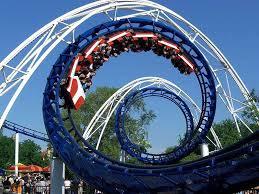
A roller coasters accelerates from an initial velocity of 6.0 m/s to a final velocity of 70 m/s over 4 seconds. What's the acceleration?
a)
24 m/s2
b)
18 m/s2
c)
16 m/s2
d)
16 m/s
57.
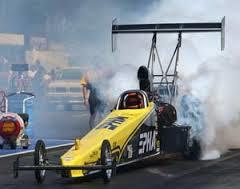
A drag racer accelerated from 0 m/s to 200 m/s in 5 s. What was the acceleration?
a)
0 m/s
b)
40 m/s2
c)
-40 m/s2
d)
40 m/s
58.

A box attains a velocity of 27 m/s in 3 seconds from 0m/s. Find the acceleration.
a)
30 m/s
b)
24 m/s2
c)
9 m/s2
d)
81 km/hr
59.
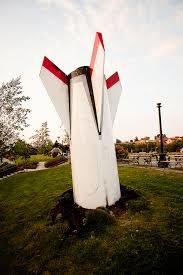
A rocket with an initial velocity of 8 m/s hits the ground at 640 m/s in eight seconds. Find the acceleration.
a)
79 m/s2
b)
80 m/s2
c)
0.0125m/s
d)
80 mi/hr
60.
Velocity describes both speed and _____________
a)
time
b)
direction
c)
momentum
d)
acceleration
61.

In a tug of war the left team pulls with a force of 200N. The right team pulls with a force of 150N.What is the resultant force?
a)
50N to the left.
b)
350N to the left.
c)
350N to the right.
d)
50N to the right.
62.

What is the net force?
a)
400 N Up
b)
400 N Down
c)
- 400 N Down
d)
800 N Down
63.
The force that opposes the motion of two surfaces sliding past each other is called ___________.
a)
acceleration
b)
inertia
c)
friction
d)
unbalanced
64.

What is the net force
a)
10 N
b)
0 N
c)
25 N
d)
1 N
65.
What is a friction force that acts on an object but is not moving?
a)
Centripetal Force
b)
Sliding Friction
c)
Electromagnetic Force
d)
Static Friction
66.
What is a fluid friction acting on an object that is moving through the air?
a)
Gravity
b)
Fluid Friction
c)
Air resistance
d)
Sliding Friction
67.
What is the overall force acting on an object after all forces are combined.
a)
Sliding Friction
b)
Inertia
c)
Weight
d)
Net Force
68.

How will this object move?
a)
It won't move.
b)
It will move to the right.
c)
It will move to the left.
d)
It will move up.
69.

What is the net force?
a)
30 N left
b)
25 N right
c)
5 N left
d)
55 N right
70.

On which surface would friction be the greatest?
a)
carpet
b)
ice
c)
snow
d)
satin
71.
------->14N -------->3N -------->15N
a)
23N
b)
48N
c)
2N
d)
32N
72.
A student moves a box with 10 N up and 5 N right. What is the net force on the box
a)
11.2 N Up and to the Right
b)
11.2 N Down and to the Left
c)
11.2 N Up and to the Left
d)
11.2 N Up and Down
73.
The rougher the surface, the faster an object will travel over the surface.
a)
True
b)
False
74.

Wheels on a skateboard most likely experiences-
a)
Rolling Friction
b)
Sliding Friction
c)
Fluid Friction
d)
Static Friction
75.

Sally experiences-
a)
Rolling Friction
b)
Sliding Friction
c)
Fluid Friction
d)
Static Friction
76.

The baseball player experiences-
a)
Rolling Friction
b)
Sliding Friction
c)
Fluid Friction
d)
Static Friction
77.

Swimming fish experience-
a)
Rolling Friction
b)
Sliding Friction
c)
Fluid Friction
d)
Static Friction
78.
Friction acts in a direction ___________ to the object's direction of motion.
a)
similar
b)
opposite
c)
parallel
d)
west
79.
When two surfaces rub, the irregularities of one surface get caught on those of the other surface?
a)
True
b)
False
100 %

