wayground logo

Free Printable Worksheets

NEW

Font size

S
M
L
XL
Worksheets

Semester II: Test I: Module I: Circular & Rotational Motion

Total questions: 75

Worksheet time: 1hrs 27mins

Name
Class
Date
1.

Which one of these is not a key descriptor for angular motion.

a)

Angular momentum

b)

Angular velocity

c)

Moment of Inertia

d)

Displacement

2.

What are the units for angular displacement.

a)

m/s

b)

kgm2/s

c)

radians

d)

rad/s

3.

The equation for moment of inertia is ...

a)

MI= m × r2MI=\sum_{ }^{ }\ m\ \times\ r^2

b)

MI =r × mMI\ =r\ \times\ m

c)

MI = mr2MI\ =\ \frac{m}{r^2}

d)

MI =A +SMI\ =\sqrt{A\ +S}

4.

Moment of Inertia combines the mass of a body (kg) with .....

a)

speed of the body

b)

velocity of the body

c)

distance of the body from the Center of Mass2

d)

radians

5.

The units for Moment of Inertia are..

a)

Kg/s2

b)

m/s2

c)

kg/m

d)

kgm2

6.

Angular momentum =

a)

Moment of inertia - angular velocity

b)

Moment of inertia x angular velocity

c)

Angular velocity + moment of inertia

d)

Angular velocity / Moment of Inertia

7.

What is the angular momentum of a gymnast whos moment of inertia is 10kgm2 and an angular velocity of 2rad/s?

a)

20 kgm2rad/s

b)

10 kgm2rad/s

c)

20 kgm2

d)

30 kgm/s

8.

How many radians make up one revolution of 360 degrees?

a)

π/2

b)

π

c)

d)

3π/2

9.

What does Rotational Inertia depend on?

a)

Mass

b)

Mass Distribution

c)

Both Mass and its Distribution

d)

Neither Mass nor its distribution

10.

If the body is moving in a circle of radius r with a constant speed v, its angular velocity is

a)

v2 / r

b)

vr

c)

v / r

d)

r / v

11.
Which of the following increase the centripetal force?
a)
Increasing the radius
b)
Increasing the velocity
c)
Decreasing the mass
d)
Decreasing the acceleration
12.

A disk rotates with an angular speed  ω\omega  . What is the linear speed v of a point on the disk located a distance r away from the axis of rotation?

a)

 ωr\omega r  

b)

 ωr\frac{\omega}{r}  

c)

 rω\frac{r}{\omega}  

d)

 ω2r\omega^2r  

13.

Four rotations per minute is a measurement of ________

a)

angular velocity

b)

angular acceleration

c)

time period

d)

angular displacement

14.

The time required for one complete revolution is:

a)

torque

b)

frequency

c)

period

d)

rotational kinetic energy

15.
When an object spins it is said to undergo ______________. 
a)
rotational motion
b)
angular momentum
c)
axis differentiation
d)
rotational axis
16.

Which of the following is NOT a unit of rotational speed?

a)

Meters per second

b)

Revolutions per minute

c)

Revolutions per second

d)

Rotations per second

17.
The linear speed of an object directed along the tangent to the object’s circular path.
a)
centrifugal speed
b)
tangential speed
c)
linear speed
d)
angular speed
18.

A possible unit for angular acceleration is:

a)

rad/s2

b)

rad/s

c)

N*m

d)

Kg*m2

19.
Which statement is true about an object that is traveling in uniform circular motion?
a)
The speed of the object varies.
b)
The net force on the object is directed toward the center of the circular path.
c)
The direction of the object's velocity is constant.
d)
The net force on the object is directed away from the center of the circular path.
20.
The velocity is always _____ to the line of a circle. 
a)
outwards
b)
towards the center
c)
tangent
d)
faster
21.
What is the force that causes centripetal acceleration when a car goes around a curve?
a)
Friction
b)
Gravity 
c)
Normal
d)
Tension
22.
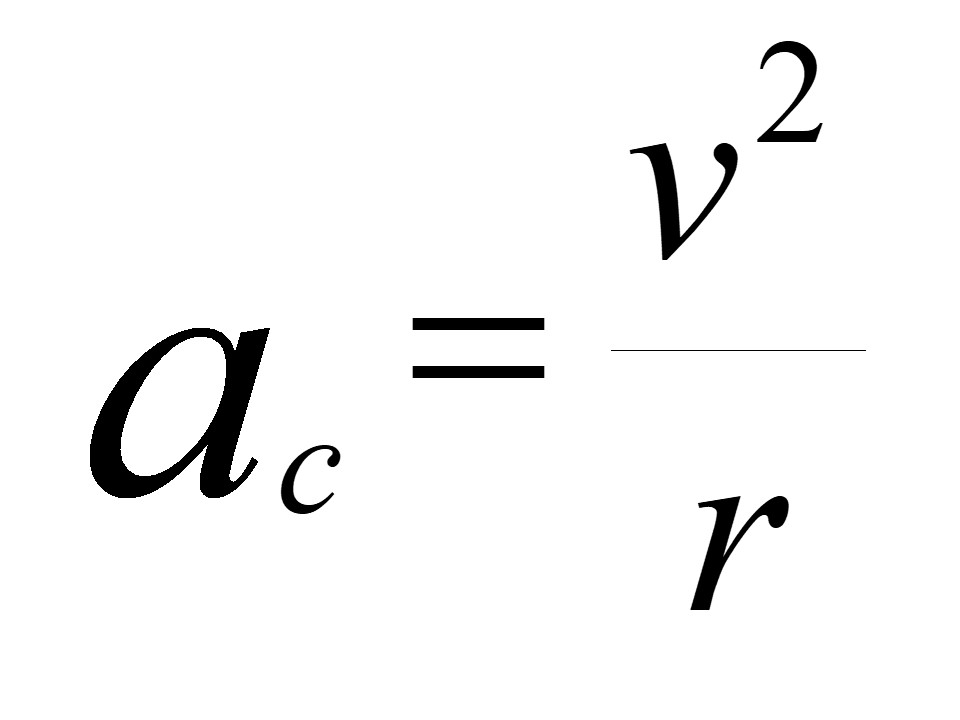
Which represents the acceleration of the ball?
a)
A
b)
B
c)
C
d)
D
23.
Which statement is true about an object that is traveling in uniform circular motion?
a)
The speed of the object varies.
b)
The net force on the object is directed toward the center of the circular path.
c)
The direction of the object's velocity is constant.
d)
The net force on the object is directed away from the center of the circular path.
24.

Categorize something that is measured in degrees

a)

Linear Distance

b)

Angular Distance

c)

Linear Speed

d)

Angular Speed

25.

Categorize something that is measured in rpm

a)

Linear Distance

b)

Angular Distance

c)

Linear Speed

d)

Angular Speed

26.

In the equation

 s=θr,  θ represents...s=\theta r,\ \ \theta\ represents...  

a)

Angular velocity measured in radians

b)

The central angle measured in degrees

c)

The central angle measured in revolutions

d)

The central angle measured in radians
27.

In the equation

v=ωr, ω represents...v=\omega r,\ \ \omega\ represents...

a)

Angular velocity measured in radians

b)

Angular velocity measured in degrees

c)

Angular velocity measured in revolutions

d)

The central angle measured in radians

28.
A 0.12-m-radius grinding wheel takes 5.5 s to speed up from 2.0 rad/s to 11.0 rad/s. What is the wheel's average angular acceleration?
a)
9.6 rad/s/s
b)
4.8 rad/s/s
c)
3.1 rad/s/s
d)
1.6 rad/s/s
29.
 2600 rev/min is equivalent to which of the following?
a)
2600 rad/s 
b)
43.3 rad/s 
c)
273 rad/s
d)
60 rad/s
30.
A disc rotates through 20 rotations in 5 seconds. If the disc starts from rest, what is the angular velocity?
a)
5 rotations/s
b)
100 rotations/s
c)
4 rotations/s
d)
10 rotations/s
31.
Which of the following depict the speed of the blowing ball?
a)
A
b)
B
c)
C
d)
D
32.
What relationship exists between the radius of a circle and the centripetal acceleration?
a)
direct
b)
inverse
c)
exponential
d)
inverse squared
33.
A car with mass m travels around a curve with velocity v. What do you know about the centripetal force if the velocity triples?
a)
Nothing 
b)
The centripetal force triples
c)
the centripetal force multiplies by 9
d)
The centripetal force divides by 3
34.
Calculate the velocity of an object moved around a circle with a radius of 1.65 m and an acceleration of 3.5 m/s2.
a)
2.4 m/s
b)
3.6 m/s
c)
3.9 m/s
d)
4.2 m/s
35.

What's the centripetal acceleration of an object traveling 2.3 m/s around a circle of diameter 0.6 m?

a)

5 m/s2

b)

17.63 m/s2

c)

10 m/s2

d)

8.81 m/s2

36.

A toy car is following a circular path with a constant speed of v=3 m/s . If the radius of the circular path is 1 m, find The centripetal acceleration of the car

a)

30 m/s2

b)

3 m/s2

c)

9 m/s2

d)

6 m/s2

37.
What is the SI unit for circumference?
a)
meter
b)
pi
c)
inches
d)
kilometer
38.
Calculate the centripetal force required to make a 5 kg ball move 4 m/s in a circle with a radius of 2 m.
a)
10 N
b)
20 N
c)
30 N
d)
40  N
39.
Which of the following units is used for tangential velocity?
a)
m/s2
b)
N
c)
J
d)
m/s
40.
Which of the following is the unit for centripetal force?
a)
J
b)
m/s2
c)
kg⋅m/s
d)
N
41.
What is the relationship between centripetal force and the mass of an object?
a)
direct
b)
inverse
c)
exponential
d)
inverse squared
42.
A car with mass m travels around a curve with velocity v. What do you know about the centripetal force if the radius triples?
a)
9.8?
b)
Force triples
c)
Force divides by 3
d)
Force divides by 9
43.

A car is making a turn at speed v. The radius of the turn is r and the centripetal force on the car is F.

If the car rounds the same curve at speed 2v, what is the required centripetal force?

a)

0.5 F

b)

F

c)

2F

d)

4F

44.

The diagram shows a stone tied to the end of a length of string and is whirled round in a horizontal circle . What provides the centripetal force on the stone?

a)

The weight of the string.

b)

The friction in the string.

c)

The tension in the string.

d)

The air resistance from the surroundings.

45.
The moment of inertia:
a)
is synonymous with mass
b)
does not depend on where the mass is located
c)
resistance to a change in rotational inertia
d)
more resistance to change = less inertia
46.
When an object is experiencing a net torque
a)
it is in dynamic equilibrium.
b)
it is in static equilibrium.
c)
it is rotating.
d)
it is translating.
47.
The property of a body to resist change in motion.
a)
mass
b)
weight
c)
volume
d)
inertia
48.
A person sits on a freely spinning lab stool that has no friction in its axle. When this person extends her arms,
a)
her moment of inertia increases and her angular speed decreases.
b)
her moment of inertia decreases and her angular speed increases.
c)
her moment of inertia increases and her angular speed increases.
d)
her moment of inertia increases and her angular speed remains the same.
49.

Calculate the torque produced by 75- N perpendicular force at the end of a 0.20 m long wrench.

a)

15 Nm

b)

1.5 Nm

c)

15.0 Nm

d)

16 Nm

50.
The moment of inertia:
a)
is synonymous with mass
b)
does not depend on where the mass is located
c)
resistance to a change in rotational inertia
d)
more resistance to change = less inertia
51.

Do all objects have a centre of gravity?

a)

No objects have a centre of gravity

b)

Only some objects have a centre of gravity

c)

Only very heavy objects have a centre of gravity

d)

Yes all objects have a centre of gravity

52.

The point through which the whole weight of the body acts is called

a)

Inertial Point

b)

Center of gravity

c)

Centriod

d)

Central point

53.

Center of gravity of an object depends on it's

a)

weight

b)

mass

c)

density

d)

shape

54.

Where will be the centre of gravity of a uniform rod lies ?

a)

At its end

b)

At its middle point

c)

At its centre of its cross sectional area

d)

Depends upon its material

55.

Where the center of gravity of a circle lies?

a)

At its centre

b)

Anywhere on its radius

c)

Anywhere on its circumference

d)

Anywhere on its diameter

56.

What is one way you might increase the stability of an object?

a)

Lower the center of gravity

b)

Raise the center of gravity

c)

Increase the height of the object

d)

Shorten the base of the object

57.
What is the centre of mass ?
a)
it is a single point at which the object can balance.
b)
The mass is distributed equally around it.
c)
the centre of gravity of the object
d)
All of the above
58.

The point through which the whole weight of the body acts is called

a)

Inertial Point

b)

Center of gravity

c)

Centriod

d)

Central point

59.

A line on which the centers of circles lie is:

a)

lever arm

b)

angular momentum

c)

period

d)

axis of rotation

60.

An angle subtended by an arc whose length is equal to the radius is:

a)

radian

b)

angular acceleration

c)

angular momentum

d)

fictitious forces

61.

The product of the force times the lever arm; the movement of the force about the axis is:

a)

torque

b)

lever arm

c)

rotational inertia

d)

angular momentum

62.

What would be the mass of the object concentrated at a distance from an axis? It would have the same moment of inertia as the original object.

a)

fictitious forces

b)

radius of gyration

c)

law of conservation of angular momentum

d)

inertial force

63.

A body rotating about an axis has this:

a)

rotational kinetic energy

b)

period

c)

frequency

d)

angular momentum

64.

What is the rotational analog of the linear momentum?

a)

rotational inertia

b)

angular momentum

c)

torque

d)

angular velocity

65.

The total angular momentum of a rotating body remains constant if the net torque acting on it is zero:

a)

frequency

b)

rotational kinetic energy

c)

law of conservation of angular momentum

d)

rotational motion

66.
The easiest way to open a heavy door  is by applying the force
a)
Near the hinges
b)
In the middle of the door
c)
At the edge of the door far from the hinges
d)
At the top of the door
67.
What is the Unit for Torque
a)
Nm
b)
N
c)
W
d)
J
68.
Find the magnitude of the torque produced by a 5.0 N force applied to a door at a perpendicular distance of 65 cm from the hinge.
a)
75 Nm
b)
3.25 Nm
c)
6.3 Nm
d)
8.75 Nm
69.
Which of the following units is used for tangential velocity?
a)
m/s2
b)
N
c)
J
d)
m/s
70.

Which equation defines the relationship between linear velocity and angular velocity?

a)
b)
c)
d)
71.

Which equation defines rotational kinetic energy?

a)
b)
c)
d)
72.

Which equation shows the correct relationship between angular momentum and torque?

a)
b)
c)
d)
73.

At what angle should the force be applied to a wrench to produce the maximum torque?

a)

00 to the handle

b)

900 to the handle

c)

1800 to the handle

d)

3600 to the handle

74.
The easiest way to open a heavy door  is by applying the force
a)
Near the hinges
b)
In the middle of the door
c)
At the edge of the door far from the hinges
d)
At the top of the door
75.
What will happen to the torque and speed of gear A?
a)
Increased torque, increased speed
b)
Decreased torque, decreased speed
c)
Decreased torque, increased speed
d)
Increased torque, decreased speed