
 Worksheets
EOC SB.1 - Cells, Transport & Macromolecules
Total questions: 50
Worksheet time: 38mins
Name
Class
Date
1.
Which macromolecule stores energy, insulates us, and makes up the cell membrane?
a)
lipids
b)
proteins
c)
carbohydrates
d)
nucleic acids
2.
Which are enzymes?
a)
simple carbohydrates
b)
proteins that speed up chemical reactions
c)
lipids that make up the cell membrane
d)
a building block of DNA
3.
Another name for fats and oils
a)
proteins
b)
sugar
c)
lipids
d)
nucleic acids
4.
Which organelle breaks down sugar into something our cells can use? (ATP)
a)
cell membrane
b)
mitochondria
c)
Golgi body
d)
endoplasmic reticulum
5.
What is the monomer of proteins?
a)
amino acids
b)
polypeptides
c)
nucleotides
d)
monosaccharides
6.
Phospholipids are used in what biological structure?
a)
RNA
b)
DNA
c)
Cell membrane
d)
Cell wall
7.
What is the monomer of nucleic acids?
a)
Glycerol
b)
Monosaccharides
c)
Amino Acids
d)
Nucleotides
8.
The loss of a protein's structure is called...
a)
Denaturation
b)
Unfolding
c)
Coiling
d)
Inactivation
9.
Plant cell walls consist mainly of ----
a)
chitin
b)
peptidoglycan
c)
cellulose
d)
none of the above
10.
The characteristic that all lipids have in common is----
a)
made of fatty acids and glycerols
b)
acidic when mixed with water
c)
no high energy content
d)
do not dissolve in water
11.
All carbohydrates are:
a)
made of amino acids
b)
composed of carbon, hydrogen and oxygen atoms
c)
made of fatty acids
d)
composed of carbon, hydrogen, oxygen and nitrogen atoms
12.
What suffix is used in the names of most carbohydrates?
a)
-ase
b)
-nic
c)
-ose
d)
-yme
13.
Enzymes affect the chemical reactions in cells by changing the:
a)
pH of the cell
b)
heat of the reaction
c)
products of the reaction
d)
speed of the reaction
14.
What suffix is used in the names of most enzymes?
a)
- ase
b)
- gen
c)
- yme
d)
-nic
15.
The substance on which an enzyme acts is the:
a)
product
b)
substrate
c)
active site
d)
activation energy
16.
RNA contains the sugar...
a)
Deoxyribose
b)
Glucose
c)
Ribose
d)
Lipids
17.
All organic compounds contain the element
a)
carbon
b)
nitrogen
c)
phosphorus
d)
sulfur
18.
What word describes when a molecule is attracted to water?
a)
hydrophobic
b)
hydrophilic
c)
bipolar
d)
solvent
19.
Which macromolecule is made of simple and complex sugars?
a)
lipids
b)
proteins
c)
carbohydrates
d)
nucleic acids
20.

Directs all cell activities through the DNA located there.
a)
Lysosomes
b)
Nucleus
c)
ribosomes
d)
Mitochondria
21.
Which of the following is directly involved in the transportation of materials inside/within the cell?
a)
Endoplasmic Reticulum
b)
Vacuole
c)
Lysosome
d)
Mitochondria
22.
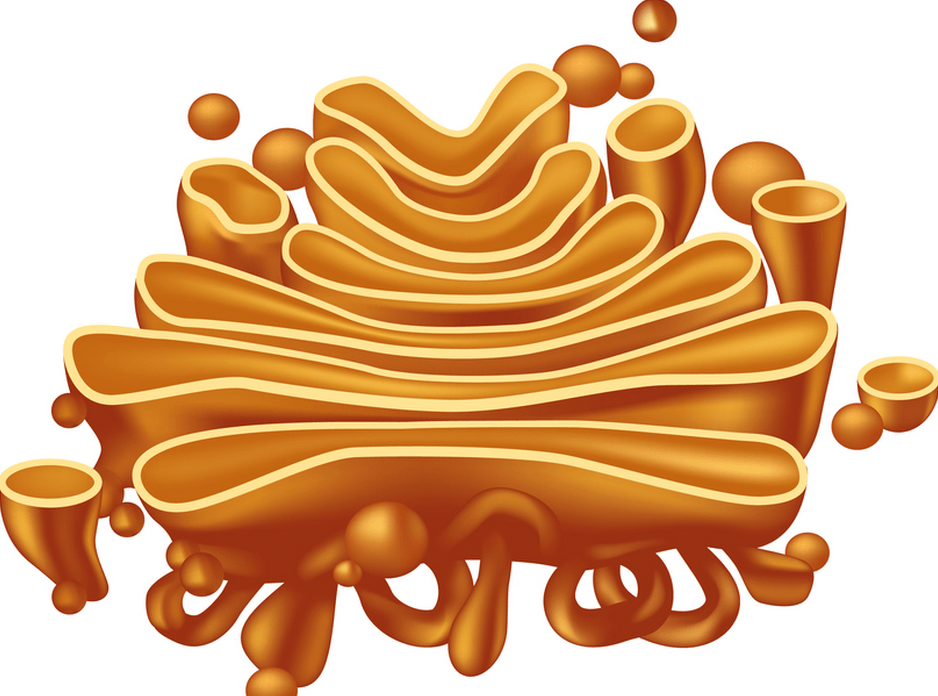
I am a protein packaging and shipping machine! Who am I?
a)
vacuole
b)
ribosome
c)
mitochondrion
d)
golgi apparatus
23.
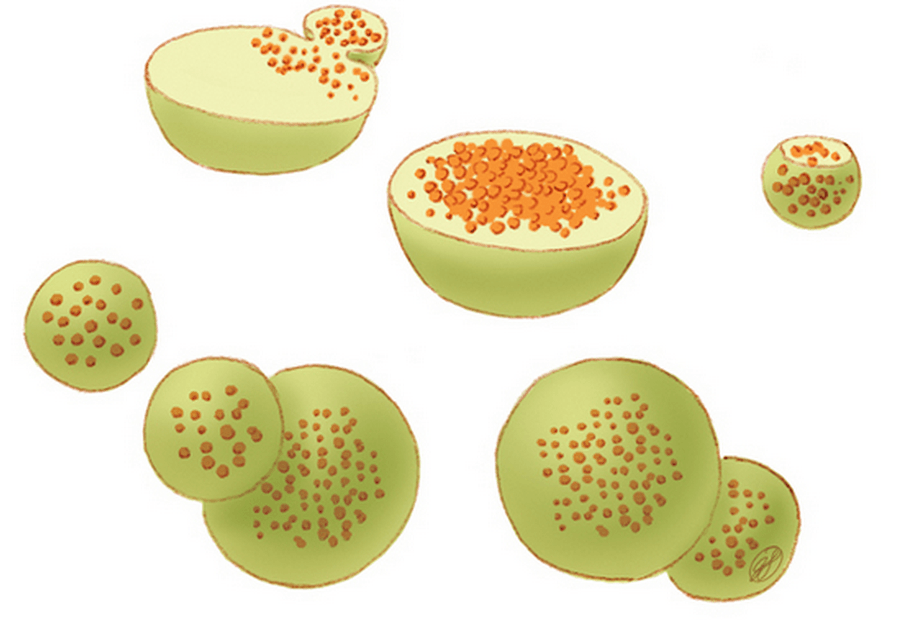
You might think of me as the trash collector, but recycler is maybe more accurate. What am I?
a)
mitochondria
b)
lysosome
c)
vacuole
d)
ribosome
24.
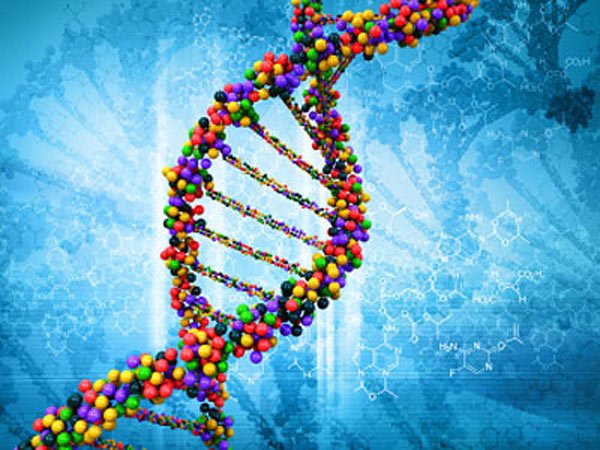
What is the name of the genetic material that is inside the nucleus?
a)
ER
b)
ATP
c)
YOLO
d)
DNA
25.
Where are proteins made?
a)
Golgi body
b)
Mitoichondria
c)
Chromosomes
d)
Ribosomes
26.
The site of photosynthesis
a)
ribosome
b)
mitochondria
c)
chloroplast
d)
nucleus
27.
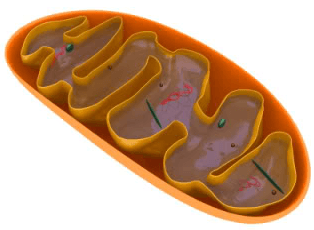
What are tiny organelles that convert glucose into ATP?
a)
Ribosomes
b)
Vesicles
c)
Cytoskeleton
d)
Mitochondria
28.
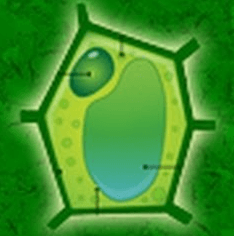
A rigid layer that lies outside the cell's membrane is...
a)
Cytoskeleton
b)
Cilia
c)
Cell Wall
d)
Flagella
29.
What is the gel-like substance inside of cells called?
a)
photoplasm
b)
photosynthesis
c)
cytoskeleton
d)
cytoplasm
30.
A group of tissues that work together to perform a similar function is called_____. (Examples include the heart, lungs or stomach)
a)
cells
b)
tissues
c)
organs
d)
organ system
31.
A group of cells that have similar functions? Examples are nervous, epithelial, muscle and connective
a)
cells
b)
tissues
c)
organs
d)
atoms
32.

This is a example of........
a)
organ system
b)
cells
c)
organ
d)
tissue
33.
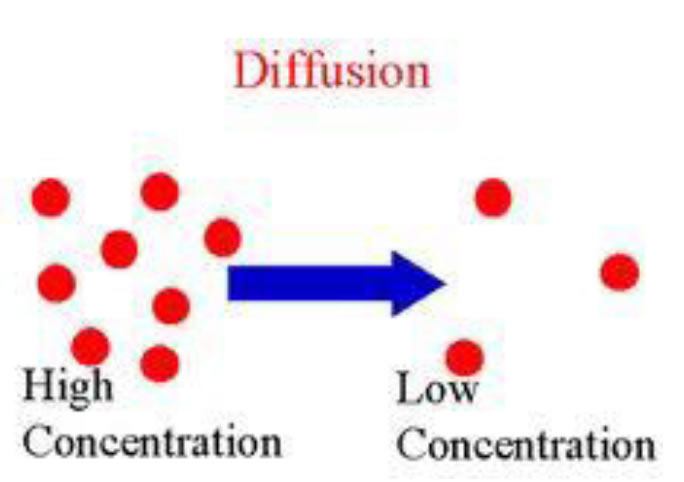
Movement of particles from high to low concentration.
a)
Passive Transport
b)
Active Transport
34.
How does a cell maintain homeostasis?
a)
Regulates what enters and leaves the cell
b)
Flexibility
c)
Protective barrier
d)
Structure and support
35.
The cell membrane is selectively permeable, which means...
a)
All materials can enter and leave the cell
b)
Certain things can enter while others cannot
c)
The cell manually sorts through all materials
d)
Only certain cells can interact with the cell.
36.
What is it called when molecules move across the cell membrane from an area of high concentration to an area of low concentration through a carrier protein?
a)
Diffusion
b)
Osmosis
c)
Active Transport
d)
Facilitated Diffusion
37.
What is the name of the process in which molecules move from an area of high concentration to an area of low concentration across a selectively permeable membrane?
a)
Diffusion
b)
Osmosis
c)
Active Transport
d)
Facilitated Diffusion
38.

Against the concentration gradient
low to high
uses energy/ATP
low to high
uses energy/ATP
a)
facilitated diffusion
b)
osmosis
c)
active transport
d)
simple diffusion
39.
Most active transport proteins use energy from the breakdown of:
a)
nucleus
b)
cell membrane
c)
ATP
d)
mitochondria
40.

This picture represents what type of cell transport?
a)
endocytosis
b)
exocytosis
c)
osmosis
d)
passive transport
41.
A cell will _____________________ in a hypertonic solution.
a)
swell
b)
shrink
c)
will not change
d)
will explode
42.
A cell will __________________ in a hypotonic solution.
a)
swell and perhaps burst (lyse)
b)
shrink
c)
the size of the cell will not change
d)
the size of the cell will change from large to small and from small to large
43.
Moving "Big stuff" out
a)
Endocytosis
b)
Exocytosis
c)
Diffusion
d)
Osmosis
44.
Spraying Axe body spray in a corner of the room and someone on the opposite corner smells it is an example of what?
a)
Osmosis
b)
Facilitated diffusion
c)
Active transport
d)
Diffusion
45.
Which of the following is the correct equation for PHOTOSYNTHESIS?
a)
CO2 + light + H2O --> O2 + Sugar
b)
CO2 + sugar + H2O --> O2 + light
c)
O2 + light + H2O --> CO2 + Sugar
d)
CO2 + O2 + H2O --> Light+ Sugar
46.
Which organisms perform CELLULAR RESPIRATION?
a)
Only Autotrophs
b)
Only Heterotrophs
c)
Autotrophs and Heterotrophs
47.
Cellular respiration is similar in both plants and animals in what way?
a)
Energy is required and oxygen is released.
b)
Nitrogen is required and energy is released.
c)
Oxygen is required and energy is released.
d)
Oxygen is required and carbon is released.
48.
What pigment in the leaf captures energy from the sun?
a)
carbon
b)
chlorophyll
c)
air
d)
chloroplast
49.
Carbon dioxide enters the leave through what opening?
a)
root
b)
stem
c)
stomata
d)
stomach
50.
What are the products of photosynthesis?
a)
water and carbon dioxide
b)
oxygen and glucose
c)
oxygen and carbon dioxide
d)
oxygen and water
100 %

