
 Worksheets
Pythagorean Theorem and Distance Formula
Total questions: 75
Worksheet time: 4hrs 25mins


A(3,1) B(-2,-1) written correctly is:
(−2−3)2 + (−1−1)2
(1−3)2 + (−1−2)2
(−2−3)2 − (−1−1)2
(−2−3)2 − (−1−1)2
Find the distance between the points (4, 3) and (0, 6).
3
4
5
7

Find the distance.
9.7
10.7
11.7
12.7
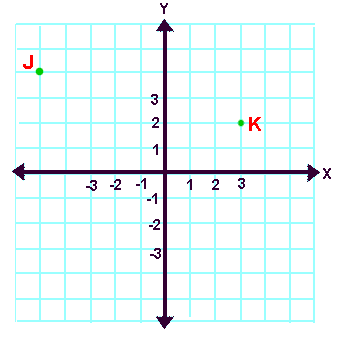
How is the distance formula correctly written:
d = (y1 − y2)2 −(x2 − x1)2
d = (x2 − x1)2 + (y2 − y1 )2
d = (y1 − y 2)2 + (x2 − x1)2
d = (x)2− (y)2

Granny Gardner has a rectangular vegetable garden that has a length of 6o feet. She runs a 61 foot hose diagonally across her garden. What is the width of Granny’s garden?
1
86
11
121
A 24-inch television measures 24 inches diagonally and has a width of 16.8 inches. To the nearest tenth, what is the height of the TV? Round to the nearest tenth.
(a)
A pool table measures 4 feet by 8 feet. What is the distance, to the nearest tenth of a foot, from one corner pocket to the opposite corner pocket? Round to the nearest tenth.
(a)

A
B
C
D

A
B
C
D

A
B
C
D

A
B
C
D

25
5
10
35

127.3
16200
180
90.8

9.4
9
13
89
The slide at the playground has a height of 6 feet. The base of the slide measured on the ground is 8 feet. What is the length of the slide?
8 feet
5.29 feet
10 feet
14 feet
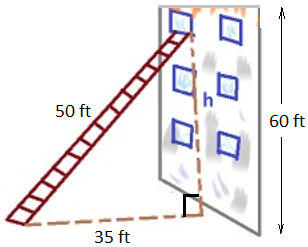
Lisa drives her car 46 km south and then 13 km east. How far is she from her starting point?
44.1 km
59 km
47.8 km
33 km
What is the length of a diagonal of a rectangular picture whose sides are 12 inches by 17 inches? Round to the nearest tenth of an inch. DO NOT INCLUDE UNITS ON YOUR ANSWER.
(a)
c2 = a2 - b2
In a right triangle __________is ALWAYS the longest side.
a leg
a hypotenuse
Sides a and b are called legs.
true
false

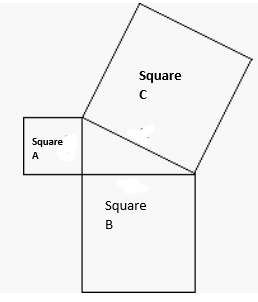
The diagram shows three squares that are joined at vertices to form a right triangle.
Which statement is true?
The sum of the areas of square A and square C is equal to the area of square B.
The sum of the areas of square B and square C is equal to the area of square A.
The sum of the areas of square of C and Square B and square A equal to the area of square C.
The sum of the areas of square A and Square B is equal to the area of square C.
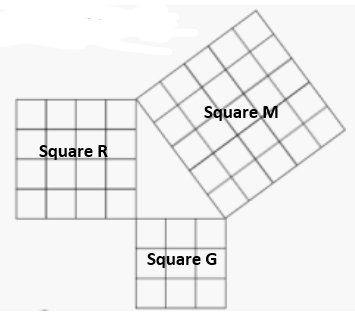
A teacher is showing his student Jacob to join three squares at their vertices to create the figure shown in the diagram.
The student will use small congruent square tiles to cover each region without any gaps or overlaps. Based on the information, which statement is true?
The number of tiles needed to cover Square R is the same as the number of square tiles needed to cover Square G and Square M
The number of tiles needed to cover Square G is the same as the number of tiles needed to cover both Square R and Square M.
The number of tiles needed to cover Square M is the same as the number of square tiles needed to cover Square R and Square G.
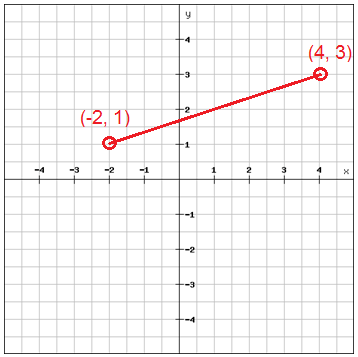
What is the distance between the two points?
12.6
11.8
12.7
12


The slide at the playground has a height of 6 feet. The base of the slide measured on the ground is 8 feet. What is the length of the slide?
8 feet
5.29 feet
10 feet
14 feet
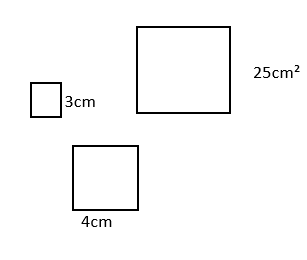
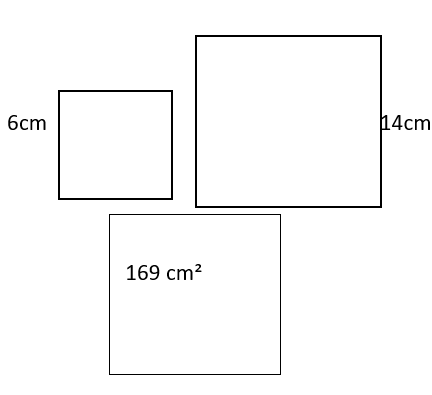
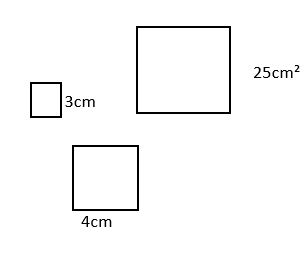
1. When three squares are joined at their vertices to form a right triangle, the combined area of the two smaller squares is the same as the area of the larger square. Do these three squares support this statement?
yes
no
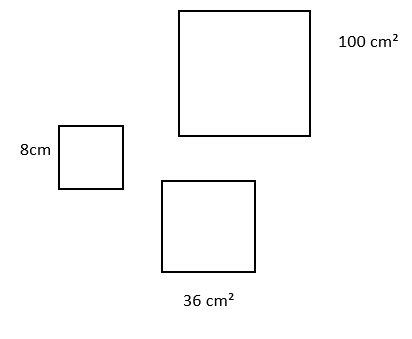
When three squares are joined at their vertices to form a right triangle, the combined area of the two smaller squares is the same as the area of the larger square. Do these three squares support this statement?
yes, because the area of the smaller square and the area of the larger square is equal to the area of the medium square.
yes, because the sum of the area of smaller square and the area of the medium square is equal to the area of the larger square.
No, because the difference of the area of the medium square and the area of the larger square is equal to the area of the smaller square.
No, because the sum of the area of smaller square and the area of the medium square does not equal to the area of the larger square.
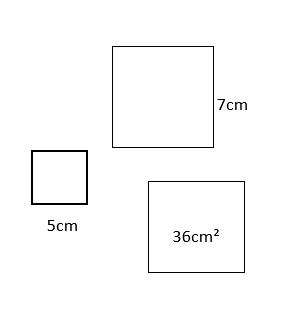
When three squares are joined at their vertices to form a right triangle, the combined area of the two smaller squares is the same as the area of the larger square. Do these three squares support this statement?
yes, because the sum of the area of the large square and the area of the small square is equal to the area of the medium square.
Yes, because the sum of the area of the small square and the area of the medium square is equal to the area of the larger square.
No, because the sum of the area of the large square and the area of the medium square is not equal to the area of the smaller square.
No, because the sum of the area of the small square and the area of the medium square is not equal to the area of the larger square.
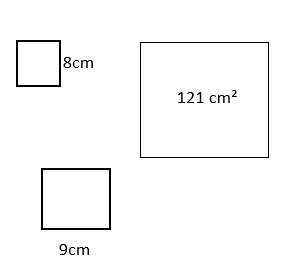
When three squares are joined at their vertices to form a right triangle, the combined area of the two smaller squares is the same as the area of the larger square. Do these three squares support this statement?
yes
no
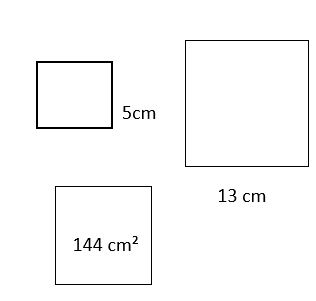
When three squares are joined at their vertices to form a right triangle, the combined area of the two smaller squares is the same as the area of the larger square. Do these three squares support this statement?
yes, because a2 + b2 =c2
no, because a2 + b2 =c2
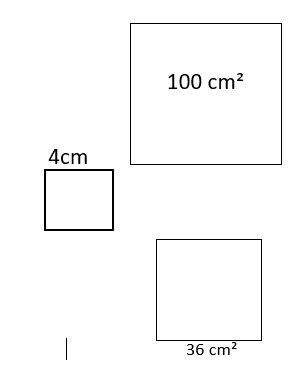
When three squares are joined at their vertices to form a right triangle, the combined area of the two smaller squares is the same as the area of the larger square. Do these three squares support this statement?
yes
no
1. When three squares are joined at their vertices to form a right triangle, the combined area of the two smaller squares is the same as the area of the larger square.
Which three squares do NOT support this statement?
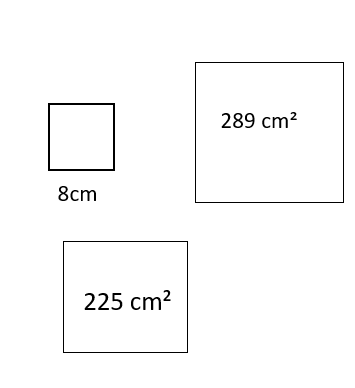
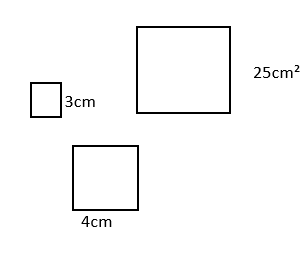
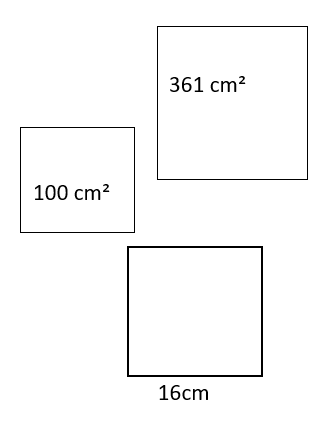
When three squares are joined at their vertices to form a right triangle, the combined area of the two smaller squares is the same as the area of the larger square.
Which three squares support this statement? (note 2 answers)
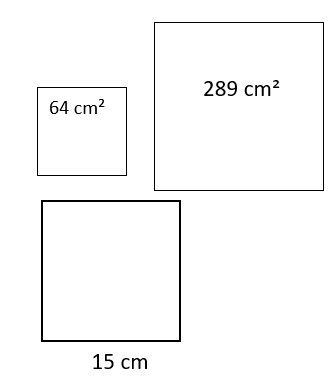
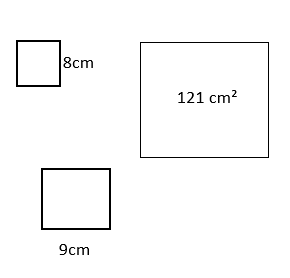
The diagram shows three squares that are joined at vertices to form a right triangle.
Which statement is true?
The sum of the areas of square A and square C is equal to the area of square B.
The sum of the areas of square B and square C is equal to the area of square A.
The sum of the areas of square of C and Square B and square A equal to the area of square C.
The sum of the areas of square A and Square B is equal to the area of square C.
A teacher is showing his student Jacob to join three squares at their vertices to create the figure shown in the diagram.
The student will use small congruent square tiles to cover each region without any gaps or overlaps. Based on the information, which statement is true?
The number of tiles needed to cover Square R is the same as the number of square tiles needed to cover Square G and Square M
The number of tiles needed to cover Square G is the same as the number of tiles needed to cover both Square R and Square M.
The number of tiles needed to cover Square M is the same as the number of square tiles needed to cover Square R and Square G.

