wayground logo

Free Printable Worksheets

NEW

Font size

S
M
L
XL
Worksheets

Geology-Changes on Earth's Surface: Test Review

Total questions: 65

Worksheet time: 58mins

Name
Class
Date
1.
The process in which water, wind, ice, and heat break down rock is called
a)
weathering
b)
erosion 
c)
cementation 
d)
compaction 
2.
Igneous rocks that form quickly on the surface of Earth are said to be
a)
intrusive
b)
extrusive
c)
granite
d)
magma
3.
_______ rock forms when magma or lava cools and hardens
a)
Metamorphic
b)
Sedimentary
c)
Igneous
d)
Oceanic
4.
The way a mineral splits is called?
a)
hardness
b)
layers
c)
bands
d)
cleavage
5.
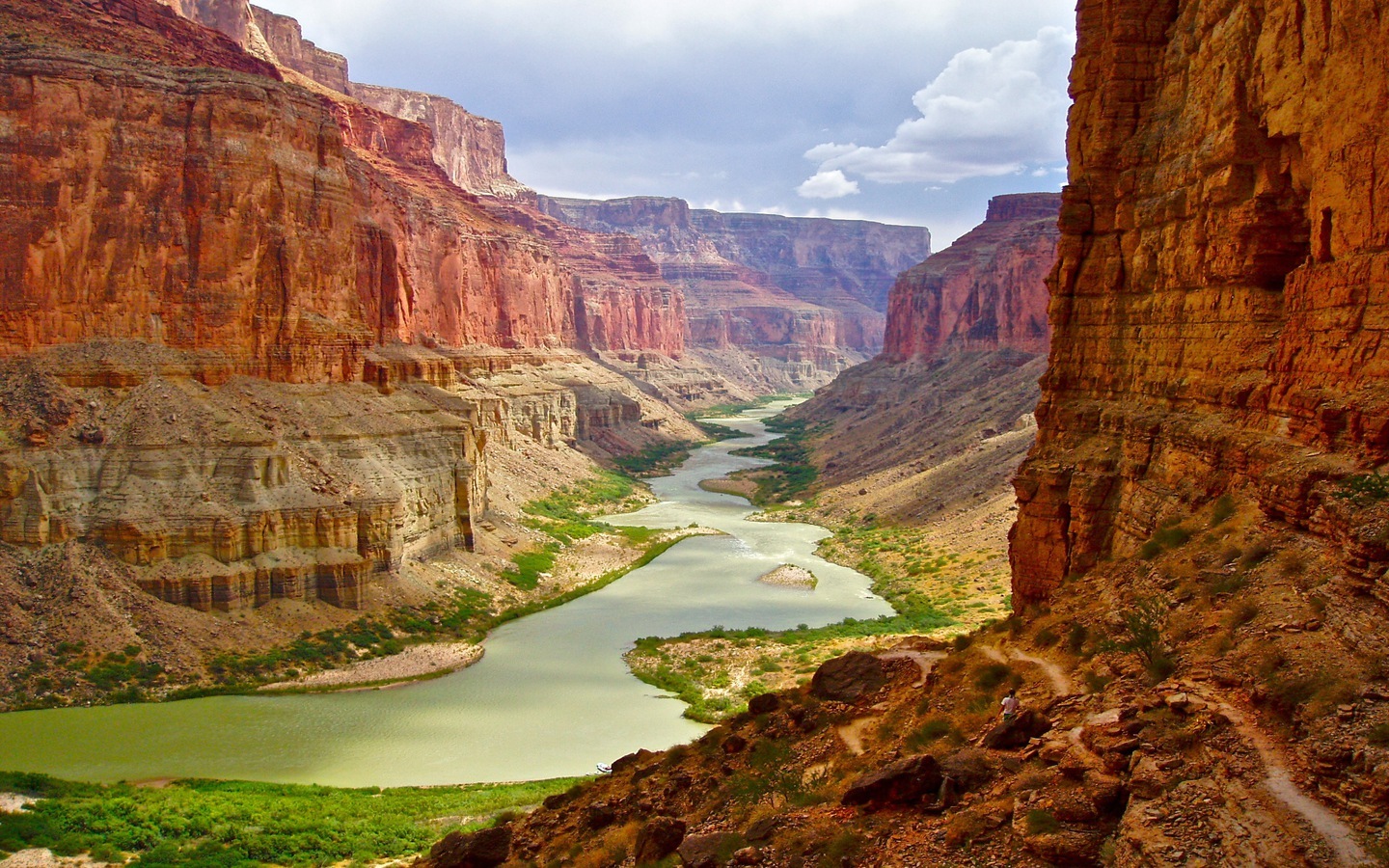
Wind and water have eroded this rock to show the layers of sediment that were laid down millions of years ago. What type of rock is this?
a)
Sedimentary
b)
Igneous
c)
Metamorphic
6.
What step changes sediment into sedimentary rock?
a)
Cementation
b)
Compaction
c)
Erosion
d)
Both cementation and compaction
7.
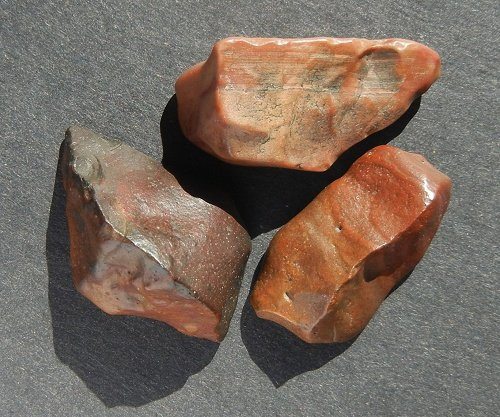
After lots of time, pressure, and heat, you get this kind of rock. What type of rock is this?
a)
Sedimentary
b)
Igneous
c)
Metamorphic
8.
This rock was formed by smaller pieces of rock that settled at the bottom of a lake millions of years ago. What type of rock is this?
a)
Sedimentary
b)
Igneous
c)
Metamorphic
9.
How do you test the hardness of a mineral? 
a)
Throw it against a wall
b)
Step on it
c)
Scratch Test
d)
Kick it until it breaks
10.
How light reflects off of a mineral is called the mineral's ____________. 
a)
luster
b)
streak
c)
cleavage
d)
fracture
11.
Most fossils are preserved in...
a)
Sedimentary Rock 
b)
Rock Candy 
c)
Ice 
d)
Metamorphic Rock 
12.

Which type of metamorphic rock has minerals in bands or stripes (SWIRLY PATTERN)?

a)

Nonfoliated

b)

Coarse grained

c)

Fine grained

d)

Foliated

13.
What is the MAIN way rocks are classified?
a)
Their color and shapes
b)
HOW they form
c)
Mineral bands
d)
WHERE they form
14.
A naturally occurring solid mixture of minerals and organic matter is a ______________. 
a)
mineral
b)
rock
c)
composition
d)
pebble
15.
Rock layers closest to the Earth's surface are usually younger. 
a)
True 
b)
False 
16.
Relative time tells us exactly when an event happened. 
a)
True
b)
False 
17.
What step changes igneous rock into a sedimentary rock? 
a)
compaction and cementation 
b)
weathering and erosion 
c)
melting and cooling 
d)
heat and pressure 
18.
Hurricane Matthew washed away at least 162 miles (261 km) of U.S. Atlantic sand dunes this month. The process of washing away the sand dunes is known as ______________. 
a)
Erosion 
b)
Chemical Weathering 
c)
Mechanical Weathering 
d)
Abrasion 
19.

These rocks were broken apart from the continuous freeze/thaw of water in the cracks of the rocks. This is an example of mechanical weather by:

a)

ice wedging

b)

acid rain

c)

burrowing by animals

d)

abrasion

20.

Tree roots breaking up a sidewalk is an example of:

a)

mechanical weathering

b)

chemical weathering

21.

Potholes forming in the road after a very cold winter is an example of:

a)

mechanical weathering

b)

chemical weathering

22.
A metal statue slowly turning green after years of being outside is an example of:
a)
mechanical weathering
b)
chemical weathering
23.
Rocks along a riverbed that are smoothed from continuously moving water and sediment rubbing against them is an example of:
a)
mechanical weathering
b)
chemical weathering
24.
A piece of sandstone changing color (from brown to rusty red) from exposure to water and air is an example of:
a)
mechanical weathering
b)
chemical weathering
25.
Acid rain wearing away the face of a marble gravestone or statue is an example of?
a)
mechanical weathering
b)
chemical weathering
26.
Wind blowing dirt and sand through the air is an example of...
a)
weathering 
b)
erosion
27.
Soil is made of
a)
weathered rocks and minerals
b)
dead plants and animals
c)
air and water
d)
all of the above
28.
Which of the following is NOT one of the three layers of soil?
a)
topsoil
b)
undersoil
c)
subsoil
d)
bedrock
29.
What is the process of rocks being broken down over time called?
a)
Weathering
b)
Accumulation
c)
Condensation
d)
Evaporation
30.
What is the layer of soil just below the topsoil?
a)
soil
b)
subsoil
c)
topsoil
d)
terrace farming
31.
Layers of soil are also known as:
a)
Soil Profiles
b)
Soil Horizons
c)
Soil sheets
d)
Soil cores
32.
What is the layer of soil that contains humus, leaf litter, and other organic matter?
a)
O - Organic
b)
A - Topsoil
c)
B - Subsoil
d)
R - Bedrock
33.
Which do you think has more nutrients, DARK or LIGHT soil?
a)
DARK 
b)
LIGHT 
34.
What is NOT an agent of erosion? 
a)
glaciers
b)
wind
c)
humus
d)
gravity 
35.
The process by which wind, water, ice, or gravity transport soil and sediment from one location to another
a)
Weathering
b)
Erosion
36.
Oxygen mixing with iron results in _____________. 
a)
Acid Rain 
b)
Oxidation 
c)
Soil Leaching
d)
Infiltration 
37.
Sand dunes are formed by ___________. 
a)
Chemical Weathering 
b)
Deposition 
c)
Mechanical Weathering 
d)
Erosion 
38.

Rain washing away soil from a hillside is an example of what?

a)

Weathering

b)

Erosion

c)

Deposition

d)

Compaction

39.

Deltas forming at the mouths of rivers are examples of what?

a)

Weathering

b)

Erosion

c)

Deposition

d)

Compaction

40.

A pond filling up with sediment and becoming a marsh is an example of what?

a)

Weathering

b)

Erosion

c)

Deposition

d)

Cementation

41.
A satellite image of an area in Florida shows a river with slight bends along its length. A second satellite image taken of the same area 10 years later shows the same river with  a different course. What is the best explanation for the difference in the shape of the river's course between the two satellite images?
a)
Wind blew waves across the water surface, eroding away the bank on one side of the river until the river's course changed its shape
b)
Regular freezing and thawing of the river split the soil along the river banks, changing the shape of the river
c)
Water eroded the banks of the river and deposited the eroded soil on opposite banks, causing the river to form tighter bends
d)
Acid rain chemically weathered the banks along the river, forcing the river to wind back and forth
42.
As you were climbing a mountain, you noticed that rocks were crumbling below your feet and moving down the mountain. What 2 processes did you observe?
a)
Weathering and erosion
b)
Erosion and deposition
c)
Abrasion and chemical weathering
d)
Abrasion and ice wedging
43.
Your teacher filled a box with sand. She put a fan at one end and turned the fan on. The sand was blown to the opposite side of the box and collected at that side. What processes was the teacher demonstrating?
a)
Weathering and erosion
b)
Weathering and deposition
c)
Erosion and deposition
d)
Chemical and mechanical weathering
44.
An avalanche is an example of which process?
a)
Weathering
b)
Erosion
c)
Deposition
d)
Volcanic Eruption
45.
Over long periods of time, deposition may change the Earth’s surface by _____.
a)
forming new land features.
b)
breaking down large rocks into smaller ones.
c)
washing away beaches.
d)
moving topsoil.
46.
A cliff formed near the ocean.  Which statement best describes how this cliff formed?
a)
Warm air melted the rock.
b)
Sun rays evaporated the rock.
c)
Ocean waves washed away rock.
d)
Plant roots pushed away the rock.
47.
What is the process that picks up and moves weathered rocks?
a)
Deposition
b)
Landslide
c)
Weathering
d)
Erosion
48.
What causes the greatest erosion effect on our beaches?
a)
Waves
b)
Gravity
c)
Glaciers
d)
Wind
49.
Flood water pounding against a canyon wall and wearing it down is an example of
a)
Weathering
b)
Erosion
c)
Deposition
d)
An avalanche
50.
Which of the following is NOT a slow change to Earth's surface?
a)
Weathering
b)
Erosion
c)
Deposition
d)
Landslides
51.

A fan-shaped accumulation of silt, sand, gravel and boulders deposited by fast-flowing mountain rivers when they reach flatter land

a)

Meander

b)

Mesa

c)

Alluvial fan

d)

Levee

52.
What type of texture does a SLOWLY cooling, intrusive igneous rock have?
a)
Foliated
b)
Nonfoliated
c)
Coarse grained
d)
Fine grained
53.
Magma cooling and hardening below Earth's surface forms an
a)
Intrusive igneous rock
b)
Extrusive igneous rock
c)
Foliated metamorphic rock
d)
Organic sedimentary rock
54.
The color of a mineral in powder form is called the mineral's 
a)
hardness
b)
specific gravity
c)
luster
d)
streak
55.
A naturally occurring, inorganic solid with a crystal structure and a definite chemical composition is referring to
a)
density
b)
streak
c)
mineral
d)
non silicate mineral
56.
Which rock layer in the diagram seems to be the oldest?
a)
F
b)
E
c)
B
d)
A
57.
Which of the following orders the rock layers accurately from youngest to oldest?
a)
1, 2, 3, 4, 5
b)
5, 4, 3, 2, 1
c)
2, 3, 4, 5, 1
d)
1, 2, 3, 5, 4
58.

According to the law of super position the rock layer on the bottom is usually the....

a)

youngest

b)

oldest

c)

hardest

59.
What soil conservation technique is this?
a)
Crop rotation
b)
contour plowing
c)
terracing
d)
wind break
60.
What conservation method refers to cutting steeps hills into several smaller steps to prevent water erosion?
a)
windbreaks
b)
contour plowing
c)
terrace farming
d)
crop rotation
61.
What soil conservation is this?
a)
Cover Crops
b)
terracing
c)
Crop Rotation
d)
contour plowing
62.
Which type of soil conservation strategy is being  used in this picture?
a)
windbreakers
b)
contour farming
c)
planting of vegetation
d)
terracing
63.
Planting the same crop every year can use up soil nutrients. Instead farmers often plant a different crop in the same field each year known as
a)
cover crop
b)
crop rotation
c)
conservation plowing
d)
contour plowing
64.
Glaciers scraping rocks across the earth’s surface
a)
Weathering
b)
Erosion
c)
Deposition
65.
These rocks were made smooth by wind blowing smaller rock particles across their surface.  This is an example of:
a)
ice wedging
b)
chemical weathering
c)
acid rain
d)
abrasion