
 Worksheets
Force & Motion, and Energy Review
Total questions: 62
Worksheet time: 48mins
Name
Class
Date
1.
Energy is...
a)
A magnet
b)
A push or Pull
c)
The ability to do work
d)
Too much sugar
2.
Which one of the following would cause an energy stick to light up?
a)
Putting a piece of cotton
b)
Making an open circuit
c)
Putting a piece of plastic on it
d)
Making a closed Circuit
3.
When students dropped water balloons from the roof, they were testing which force?
a)
Gravity
b)
Magnetism
c)
Friction
d)
Energy
4.
Students are trying to create a circuit. They have a battery and a light bulb. What else do they need?
a)
A nail
b)
Copper wire
c)
More light bulbs
d)
A Q-tip
5.
A force is...
a)
Only a push
b)
Energy
c)
Only a pull
d)
A push or Pull
6.

What is the name of this tool?
a)
Electromagnet
b)
Light Energy
c)
Sound Energy
d)
A Drill
7.

What does this tool do?
a)
Repels (pushes away) Metal
b)
Makes Metal light up
c)
Attracts metal objects (like a magnet)
d)
Causes metal to catch on fire
8.
Which energy produces vibrations?
a)
Light energy
b)
Sound Energy
c)
Thermal Energy
d)
Electrical Energy
9.
The force that only pull objects is
a)
Friction
b)
Magnetism
c)
Gravity
d)
Energy
10.
An object that does not let energy pass through it is...
a)
An Insulator
b)
A Conductor
c)
Matter
d)
Elecricity
11.
Something that does let energy pass through it is...
a)
An insulator
b)
A conductor
c)
Electricity
d)
Matter
12.
Energy of Motion is...
a)
Electrical Energy
b)
Light Energy
c)
Thermal Energy
d)
Mechanical Energy
13.
Metals are always ...
a)
What's a metal?
b)
Insulators
c)
Silver
d)
conductors
14.
Is plastic a conductor or insulator?
a)
Conductor
b)
Insulator
15.
Is rubber a conductor or insulator?
a)
Conductor
b)
Insulator
16.
Is a nail a conductor or insulator?
a)
Conductor
b)
Insulator
17.

What could students be testing with this?
a)
Color of toy cars
b)
Types of toy cars
c)
Ramp height and distance travelled
d)
Which car is the prettiest
18.
By changing the surface a ball rolls on, students could be testing...
a)
Friction
b)
Motion
c)
Temperature
d)
Gravity
19.
In a complete circuit...
a)
The light bulb does not light up
b)
Not everything is connected
c)
The light bulb lights up
d)
It is open
20.
The sun is a source of which type of energy
a)
Electrical
b)
Thermal
c)
Sound
d)
Mechanical
21.
A force that always works against motion is...
a)
Energy
b)
Magnetism
c)
Gravity
d)
Friction
22.
A battery is which type of energy?
a)
Thermal
b)
Electrical
c)
Sound
d)
Mechanical
23.

A Microscope is a
a)
tool to help you see objects that are far away
b)
tool to make objects appear much larger
c)
tool to help you weigh an object
d)
tool to protect your eyes
24.

What is this science tool?
a)
magnet
b)
hand lenses
c)
rain gauge
d)
balance
25.

What is this science tool?
a)
beaker
b)
weather vane
c)
thermometer
d)
balance scale
26.

What is this science tool?
a)
balance scale
b)
beaker
c)
hand lenses
d)
thermometer
27.

A magnet will pick up
a)
a penny
b)
a rubber band
c)
a paper clip
d)
a pizza
28.

What is the volume on this graduated cylinder?
a)
10 mL
b)
9.2 cm
c)
6.2 mL
d)
6.2 cm
29.

What is the volume of the irregular object?
a)
10 mL
b)
7 mL
c)
5 mL
d)
2 mL
30.

What is the length of the crayon?
a)
7.1 cm
b)
4.5 mL
c)
4.4 g
d)
3.4 cm
31.

What is measured with a graduated cylinder?
a)
Passage of time
b)
Distance from one thing to another
c)
Weight of an object
d)
Volume of liquid
32.

Calculate the volume of the rock
a)
10.0 mL
b)
16.0 mL
c)
30.0 mL
d)
40.0 mL
33.

What is the volume of the fish?
a)
18.0 ml
b)
6.0 ml
c)
38.0 ml
34.
Weathering involves the movement of rocks and minerals by agents such as water, wind and gravity.
a)
True
b)
False
35.
The process of carrying away weathered bits of rocks is called
a)
weathering
b)
erosion
c)
deposition
37.
The process of moving weathered rock and depositing it in another location is called?
a)
weathering
b)
erosion
c)
deposition
37.
The process of moving weathered rock and depositing it in another location is called?
a)
weathering
b)
erosion
c)
deposition
38.
The process of slowly breaking rocks into smaller pieces is called
a)
weathering
b)
erosion
c)
deposition
39.
Deposited material at the end of a river is called?
a)
landform
b)
delta
c)
canyon
40.
A natural land feature on Earth's surface is called
a)
landform
b)
delta
c)
canyon
41.
Wind blowing sand from one location to another is called
a)
Weathering
b)
Erosion
c)
Deposition
42.
Water getting into cracks, freezing, and breaking the rocks or pavement apart is called?
a)
Weathering
b)
Erosion
c)
Deposition
43.
Waves dropping sand on the beach is called?
a)
Weathering
b)
Erosion
c)
Deposition
44.
A mudslide flowing down a steep hill is called?
a)
Weathering
b)
Erosion
c)
Deposition
45.
What characteristic do all renewable resources share?
a)
Produced by waste products of animals
b)
Form underground from dead organisms
c)
Allow energy to pass through them easily
d)
Replaced in a reasonably short time period
46.
Which of the following is a renewable resource?
a)
Oil
b)
Coal
c)
Crops
d)
Natural Gas
47.
It is important to conserve nonrenewable resources because these resources–
a)
Form from the remains of plants or animals
b)
May be used up in the near future
c)
Have less stored energy than renewable resources
d)
Are easier to find than other resources
48.
Which of the following is a nonrenewable resource?
a)
Water
b)
Oxygen
c)
Wood
d)
Oil
49.
Which is a non-renewable resource?
a)
Paper
b)
Plastic
c)
Plastic water bottle
d)
coal
50.
What is a renewable resource?
a)
An object you can reuse
b)
An object you cannot reuse
c)
Fossil fuels
d)
Oil
51.
What is a non-renewable resource?
a)
Paper
b)
You can`t reuse them
c)
A plastic bottle
d)
You can reuse
52.
Where does most of earth`s energy come from?
a)
The sun
b)
Mars
c)
Wind
d)
Water
53.

Does evaporation happen before or after condensation?
a)
before
b)
after
c)
during
d)
dont know
54.
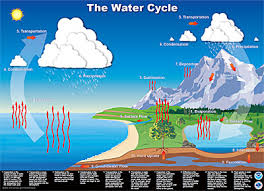
Which stages does liquid water from the ocean turn into water vapor?
a)
condesantion
b)
evaporation
c)
precipitation
d)
run off
55.

what does the #4 show in the diagram?
a)
condensation
b)
evaporation
c)
precipitation
d)
run off
56.

What is it called when plants give off water vapor as a waste product?
a)
condensation
b)
evaporation
c)
sublimation
d)
transpiration
57.
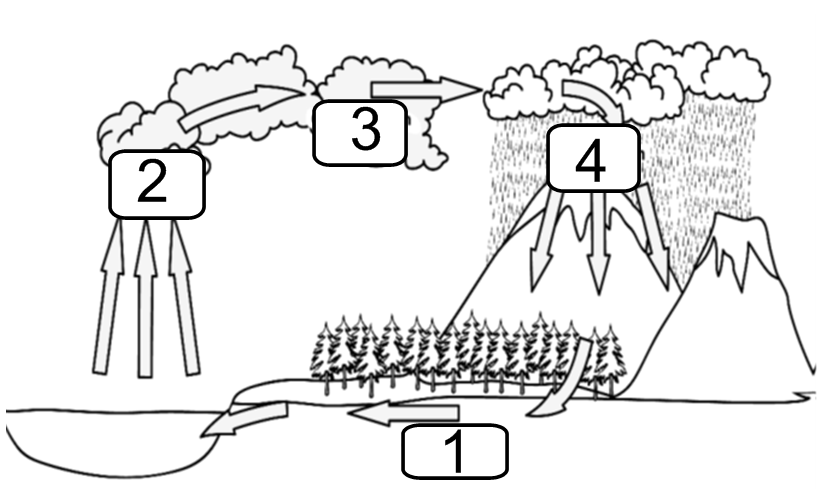
Which stage does the #2 show in the diagram?
a)
condensation
b)
evaporation
c)
precipitation
d)
run off
58.

Which stage does the #3 show in the diagram?
a)
condensation
b)
evaporation
c)
precipitation
d)
run off
59.
Which of these is an example of precipitation?
a)
snow
b)
air
c)
clouds
d)
vapor
60.
What source of energy evaporates the most water from Earth’s surface?
a)
volcanoes
b)
the sun
c)
lightning
d)
wind
61.
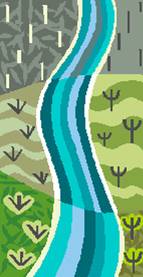
What is water that flows in rivers and streams into the oceans and lakes?
a)
evaporating
b)
condensing
c)
precipitating
d)
runoff
62.
On which kind of day would you expect the most evaporation from the surface of a pond?
a)
cold, rainy
b)
cold, sunny
c)
warm, rainy
d)
warm, sunny
100 %

