
 Worksheets
PHYSICS FORM 4 KSSM 2020
Total questions: 63
Worksheet time: 40mins


What is defined as a push or pull between two objects that are touching?
Contact force
Force that acts over a distance
Non contact force
Normal force
Which diagram best shows person pushing a couch (accelerating) across the floor?


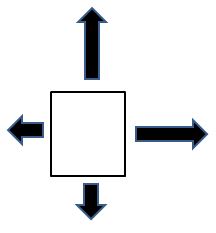
The down-arrow in this diagram is most-likely:
gravity
normal
a push or pull
friction


As distance between two objects increase, the pull of gravity
Increases
Decreases
Stays the same
Motion is the result of ____ force
balanced
no
unbalanced

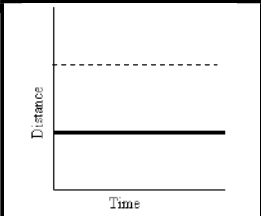
What does the solid line on this graph represent?
Constant speed
Acceleration
At rest
deceleration
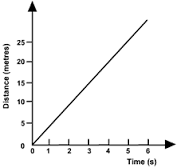
What is the line on this graph showing?
moving away from starting point at a constant speed
moving back towards the starting point at a constant speed
acceleration (getting faster)
deceleration (getting slower)
An object at rest will remain at rest unless acted upon by an unbalanced force. Likewise an object in motion will remain in motion unless acted upon by an unbalanced force.
Newton's 2nd law
Newton's 3rd law
Fig Newton's law
Newton's 1st law


At which position does the child on the swing have the most gravitational potential energy?
W
X
Y
Z
A ball is thrown horizontally from the top of a hill. Is it accelerating?
Yes, but only vertically
Yes, but only horizontally
Yes it is accelerating horizontally and vertically
No, it is not accelerating at all
Vertical means ____________
up and down
left to right
side to side
diagonally
Horizontal means
up and down
left to right
in a circle
diagonally
A projectile can accelerate in the _________ direction.
leftward
horizontal
vertical
rightward
A projectile CANNOT accelerate in the ____ direction
rightward
vertical
horizontal
leftward
Tony Romo is in his car accelerating downhill with a net force of 2000 N to the right. What additional force would be needed for him to have balanced forces
2000 N to the left
2000 N to the right
1000 N to the left
1000 N to the right
NY Giants quarterback Daniel Jones is studying for his physics test and is reading his textbook. If gravity is pulling his textbook down with a force of 30 N, what additional force is needed so that the book stays at rest?
30 N up
30 N down
30 N left
30 N right
The normal force is always _________ to the surface
parallel
perpendicular
paradox
Pythagorean
The acceleration of an object would increase if there was an increase in the
mass of the object
force on the object
inertia of the object
friction on the object
What happens when two forces act in the same direction?
They cancel each other out.
The stronger one prevails.
Their strengths are added.
Their sum divided by two is the total force.
The greater the mass of an object,
the easier the object starts moving.
the greater its inertia.
the more balanced it is.
the more space it takes up.
The force of gravity on a person or object on the surface of a planet is called
mass.
weight.
terminal velocity
free fall.
The force that one surface exerts on another when the two rub against each other is called
a. c.
b.. d. .
friction.
inertia.
acceleration
gravity
According to the law of conservation of momentum, when two objects collide in the absence of outside forces,
velocity decreases
velocity increases
the objects have the same momentum before and after they collide.
the objects have more momentum after they collide than they did before.
The momentum of an object is in the same direction as its
force.
velocity.
acceleration.
inertia.
According to Newton’s third law of motion, when a hammer strikes and exerts force on a nail, the nail
creates a friction with the hammer.
disappears into the wood.
exerts an equal and opposite force on the hammer.
moves at a constant speed.
The overall force on an object after all the forces are added together is called the
balanced force
unbalanced force
net force
centripetal force

Compare the acceleration of the 1-kg object with that of the 2-kg object.
1kg object has more acceleration because it has less mass
1kg object has less acceleration because it has less mass
2kg object has more acceleration because it has more mass
2kg object has less inertia because it has more mass
Define the term inertia.
the amount of matter in an object
the amount of space an object takes up
the tendency of an object to resist a change in motion, determined by mass
The force that one surface exerts on another when the two rub against each other
Acceleration equals the change in speed, divided by...
Speed
Distance
Time
Initial Speed
Velocity consists of both...
Time & Distance
Speed & Direction
Time & Direction
Speed & Distance
The speed of an object at a given moment is called?
Final Speed
Average Speed
Acceleration
Instantaneous Speed
Any change in position is....
Velocity
Motion
Speed
Acceleration
When an object speeds up it is considered...
Negative Acceleration
Neutral Acceleration
Initial Speed
Positive Acceleration
When an object slows down it is considered...
Positive Acceleration
Final Velocity
Negative Acceleration
Hitting the brakes
To find average speed of an object, you must know...
Distance & Time
Distance & Velocity
Time & Speed
Distance & Acceleration
What is speed?
The rate at which an object changes position
The rate at which an object slows down
How fast an object is moving at any given moment
A speedometer
What is average speed?
The rate at which an object moves
The speed of an object at any given moment
The distance an object travels per unit of time
Speed with direction
Which of the following is NOT an example of acceleration?
A truck slowing down for a stop sign
A motorcycle turning a corner at a consistent speed
A truck driving straight and using cruise control
A plane taking flight
Speed =
Distance ÷ Speed
Velocity ÷ Time
Distance x Time
Distance ÷ Time
Acceleration=
V¹-V² ÷ Distance
V¹-V² ÷ Time
V²-V¹ ÷ Time
Final Velocity ÷ Time

