
 Worksheets
Earth Science Midterm Review
Total questions: 54
Worksheet time: 36mins
Name
Class
Date
1.
Cool air. Does it rise or sink?
a)
It rises.
b)
It sinks.
2.

What type of front is this? What direction is it moving in?
a)
warm front, northwest
b)
warm front, southeast
c)
cold front, northwest
d)
cold front, southeast
3.

What does this symbolize?
a)
cold front
b)
warm front
c)
stationary front
4.
Rain, snow, sleet, hail are all examples of
a)
evaporation
b)
condensation
c)
precipitation
5.
Where is the ozone layer located and why is it important to life on Earth?
a)
The ozone layer is in the troposphere. It is important because of the greenhouse effect.
b)
The ozone layer is in the stratosphere. It protects Earth from ultraviolet radiation from the sun.
6.

Why are CFCs (chloroflorocarbons) dangerous to planet Earth?
a)
CFCs destroy the ozone layer which protects Earth from ultraviolet rays.
b)
CFCs protect the earth
7.
How do High Pressure (happy weather) and Low Pressure (lousy weather) move across the United States?
a)
High to Low
b)
Low to High
8.

Temperature has nothing to do with air pressure.
a)
True
b)
False
9.
What is needed in the atmosphere for clouds to form?
a)
nebula
b)
condensation nuclei
10.
Hot air. Does it rise or sink?
a)
It rises.
b)
It sinks.
11.

Type of front? Direction its moving in?
a)
stationary front, northeast
b)
cold front, southeast
c)
warm front, northwest
12.
What direction does high pressure move?
a)
clockwise
b)
counterclockwise
13.
What direction does low pressure move in?
a)
clockwise
b)
counterclockwise
14.
The lower the pressure the more intense the storm is.
a)
True
b)
False
15.
What powers the water cycle?
a)
the moon
b)
the sun
16.
This is the part of the water cycle where clouds form.
a)
evaporation
b)
condensation
c)
precipitation
17.
An air mass that formed over land is
a)
continental
b)
maritime
18.
An air mass formed over an ocean is
a)
continental
b)
maritime
19.
Continental air masses are
a)
moist
b)
dry
20.
Maritime air masses are
a)
moist
b)
dry
21.
A continental polar air mass is
a)
moist and warm
b)
moist and cold
c)
dry and warm
d)
dry and cold
22.
A maritime tropical air mass is
a)
moist and warm
b)
moist and cold
c)
dry and warm
d)
dry and cold
23.

Compared to the temperature and moisture of the air rising on the windward side, the temperature and moisture of the air descending at the same altitude on the leeward side will be
a)
cooler and more moist
b)
cooler and drier
c)
warmer and more moist
d)
warmer and drier
24.

What does the ozone layer do?
a)
absorb ultraviolet radiation
b)
cause pollution
c)
increase biological activity
d)
nothing
25.

What type of front does this represent?
a)
cold front
b)
warm front
c)
stationary front
d)
occluded front
26.

Which direction is the warm front travelling?
a)
north
b)
south
c)
west
d)
east
27.

In which atmospheric layer do we live?
a)
Meosphere
b)
Troposphere
c)
Exosphere
28.
We use what word to identify an air mass that has formed over water?
a)
Continental
b)
Polar
c)
Maritime
d)
Tropical
29.
We use what word to identify an air mass that has formed over land?
a)
Tropical
b)
Polar
c)
Maritime
d)
Continental
30.
We use what word to identify an air mass that has warm air from low latitudes?
a)
Tropical
b)
Polar
c)
Maritime
d)
Continental
31.
We use what word to identify an air mass that has cold air from high latitudes?
a)
Tropical
b)
Polar
c)
Maritime
d)
Continental
32.

This weather map helps to predict the location where a storm will occur by giving which type of information?
a)
Air Pressure
b)
Humidity
c)
Wind Speed
d)
Temperature
33.

What are convection currents and what do they cause?
a)
Warm air rising and cooling. They cause liquids to rise and sink.
b)
Radiation from the sun. They cause the earth's surface to warm.
34.

What is the elevation of point B?
a)
800 ft
b)
850 ft
c)
900 ft
d)
1000 ft
35.
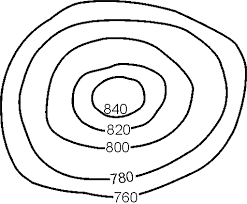
Determine the contour interval:
a)
5 m
b)
10 m
c)
15 m
d)
20 m
36.
What do contour lines that are farther apart represent?
a)
waterfall
b)
steep area
c)
gentle slope
d)
river
37.
Almost Earth’s twin in size and mass, this planet has a very thick atmosphere.
a)
Venus
b)
Mars
c)
Mercury
d)
Neptune
38.
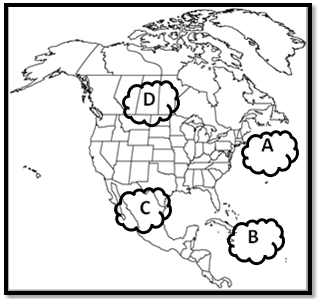
Which type of air would you find at air mass A?
a)
cold, dry
b)
warm, humid
c)
warm, dry
d)
cold, humid
39.
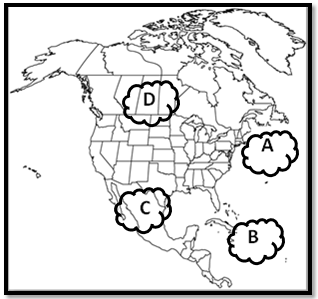
Which type of air would you find at air mass C?
a)
cold, dry
b)
warm, humid
c)
warm, dry
d)
cold, humid
40.
The place where two air masses meet.
a)
air mass
b)
air pressure
c)
water cycle
d)
front
41.
What combinations of air cause tornadoes to form?
a)
Hot
b)
Cold/dry and warm/wet
c)
Cold/wet and warm/dry
d)
Cold
42.
What is the formula for density?
a)
density = mass x volume
b)
density = mass / volume
c)
density = mass + volume
d)
density = mass - volume
43.
Light Years are a measure of:
a)
time
b)
speed
c)
distance
d)
light
44.
Which of these is an example of precipitation?
a)
snow
b)
air
c)
clouds
d)
vapor
45.
Snow, sleet, hail, and rain are all examples of ________________.
a)
evaporation
b)
condensation
c)
accumulation
d)
precipitation
46.
What is the energy source for the water cycle?
a)
the sun
b)
the earth
c)
water
d)
the moon
47.

What part of the water cycle does this picture show?
a)
condensation
b)
precipitation
c)
evaporation
48.
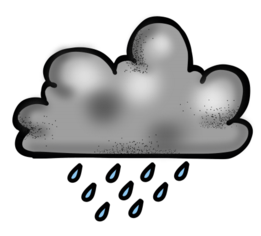
What part of the water cycle does this picture show?
a)
condensation
b)
precipitation
c)
evaporation
49.
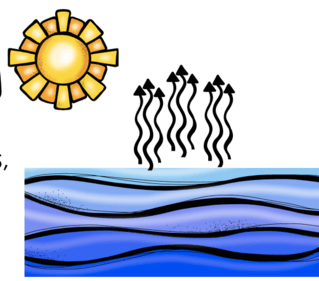
What part of the water cycle does this picture show?
a)
condensation
b)
precipitation
c)
evaporation
50.
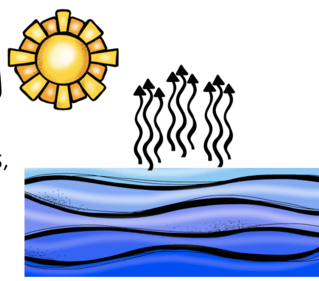
Evaporation happens when the sun ___________ water and turns it into vapor.
a)
cools
b)
heats up
c)
freezes
d)
lights up
51.
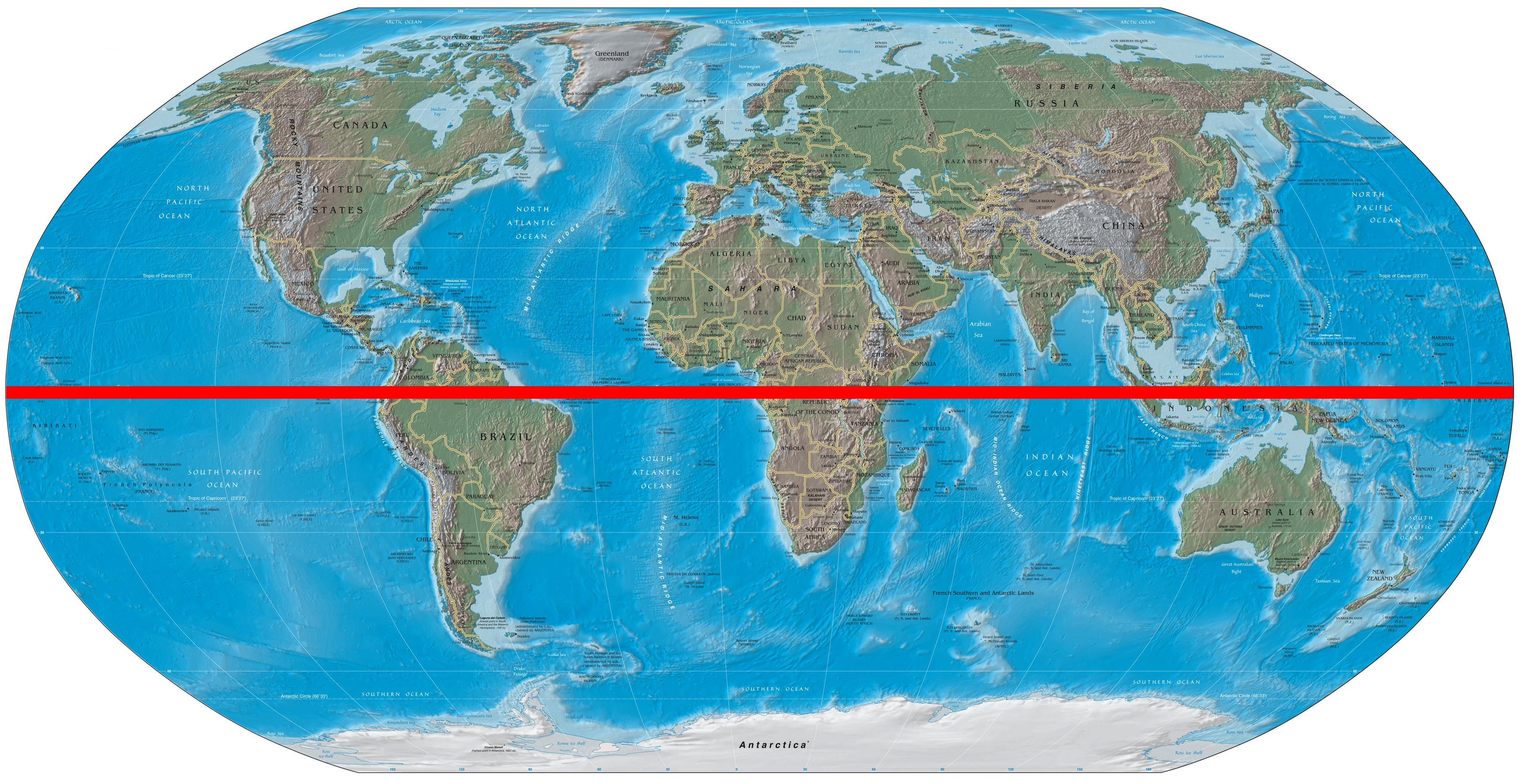
What is the name of this line at 0 degrees latitude?
a)
Prime Meridian
b)
Equator
c)
North Pole
d)
South Pole
52.
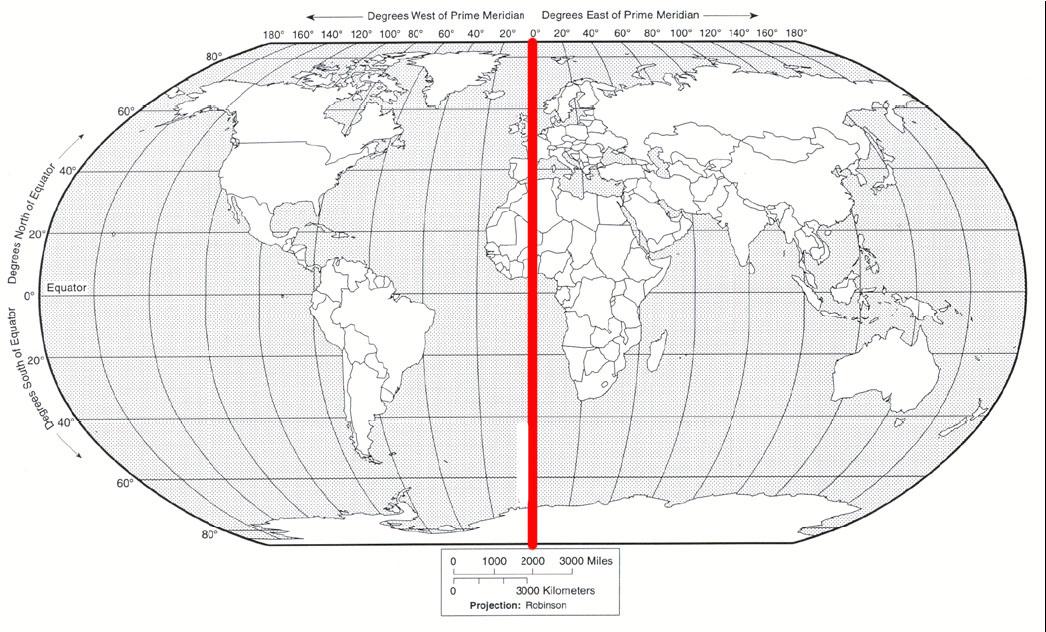
What is the name of the line at zero degrees longitude?
a)
Equator
b)
Prime Meridian
c)
North Pole
d)
South Pole
53.
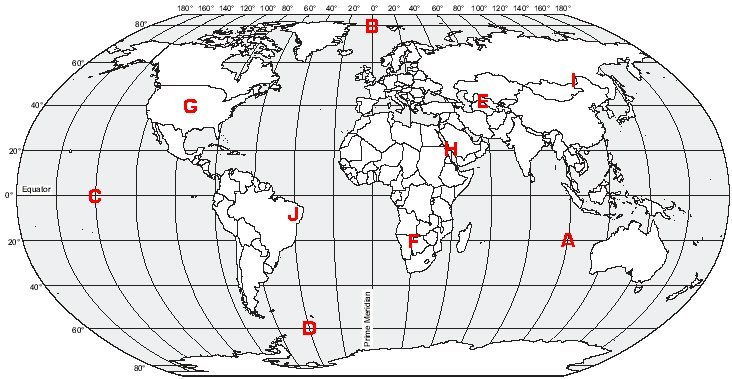
What is the approximate location of letter B?
a)
80oN, 0o
b)
0o, 80oW
c)
80oS, 0o
d)
0o, 80oE
54.
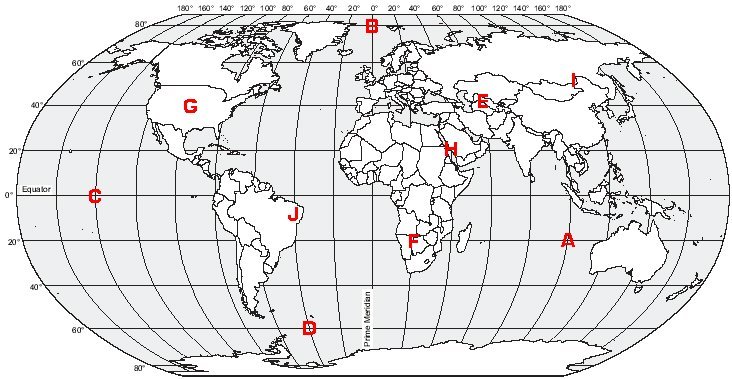
What is the approximate location of G?
a)
100oW, 40oN
b)
40oN, 100oW
c)
40oS, 100oW
d)
40oN, 100oE
100 %

