
 Worksheets
Chapter 7 Cell Structure and Transport Review
Total questions: 50
Worksheet time: 31mins
Name
Class
Date
1.
Prokaryotes are unlike all other organisms in that their cells
a)
do not have a nucleus
b)
have organelles
c)
have cell walls
2.
Bacteria are
a)
prokaryotes
b)
eukaryotes
3.
Bacteria are unicellular
a)
True
b)
False
4.

What type of cell is pictured?
a)
Prokaryotic
b)
Eukaryotic
c)
Plant
d)
Animal
5.
Which statement about bacteria is true?
a)
All bacteria are prokaryotes
b)
All bacteria are eukaryotes
c)
All bacteria are autotrophs
d)
All bacteria are heterotrophs
6.

Type of cell shown?
a)
Bacterial
b)
Prokaryotic
c)
Eukaryotic
d)
Red blood
7.
First type of cell to appear on Earth?
a)
Plant
b)
Animal
c)
Prokaryotic
d)
Eukaryotic
8.
Which of the following in NOT a characteristic of eukaryotic cells?
a)
DNA is separated from the cytoplasm by a nuclear membrane
b)
Large
c)
Complex
d)
Lack membrane-bound organelles
9.
Which of the following is NOT a type of eukaryotic cell?
a)
mushroom cell
b)
pea leaf cell
c)
bacterial cell found in Swiss cheese
d)
alligator stomach cell
10.
All cells come from other...
a)
cells
b)
plants
c)
nucleus
d)
microscopes
11.
Plants and animal cells are examples of ___ cells
a)
prokaryotic cells
b)
eukaryotic cells
12.
How are prokaryotes and plant cells similar?
a)
They both contain membrane-bound organelles.
b)
They both cell walls.
c)
The both have nuclei.
d)
They both have chloroplasts.
13.
______________ are the basic unit of living things.
a)
Kittens
b)
Organisms
c)
Cells
d)
Organelles
14.
All organisms are made of:
a)
organelles
b)
cytoplasm
c)
DNA
d)
cells
15.

What type of cells are humans made up of?
a)
Prokaryotic
b)
Eukaryotic
c)
Bacteria
d)
Plant
16.
How are prokaryotes and eukaryotes similar?
a)
They both contain membrane-bound organelles.
b)
They both have cell membranes.
c)
The both have nuclei.
d)
They both have chloroplasts.
17.

Plant cells are the same as animal cells.
a)
True
b)
False
18.

Every cell is surrounded by a cell membrane.
a)
True
b)
False
19.

What is the name of the structure shown in the diagram where energy for the cell is produced.
a)
Chloroplast
b)
Nucleus
c)
Mitochondrion
d)
Vacuole
20.
The part of the cell that allows materials to enter and exit as needed.
a)
nucleus
b)
cytoplasm
c)
mitochondria
d)
cell membrane
21.
The thick jelly like material inside of a cell that holds the organelles and gives it shape.
a)
nucleus
b)
cytoplasm
c)
mitochondria
d)
cell membrane
22.

"Large Storage tanks" Can hold food, water or waste for the cell. Found in Plant cells.
a)
Ribosomes
b)
Lysosomes
c)
Chloroplast
d)
Vacuole
23.

Where are proteins made?
a)
Golgi body
b)
Mitochondrion
c)
Chromosomes
d)
Ribosomes
24.
This organelle takes food and turns it into ENERGY for plant and animal cells.
a)
Chloroplast
b)
Mitochondria
c)
Lysosome
d)
Ribosome
25.
What is the gel-like substance inside of cells called?
a)
photoplasm
b)
photosynthesis
c)
cytoskeleton
d)
cytoplasm
26.
The site of photosynthesis
a)
ribosome
b)
mitochondria
c)
chloroplast
d)
nucleus
27.
What organelle is considered to be the “gatekeeper” for plant and animal cells?
a)
Cell Wall
b)
Cytoplasm
c)
Nucleous
d)
Cell Membrane
28.

What is the name of Aladdin's sidekick monkey?
a)
Rhonda
b)
Aboo
c)
Kong
d)
Jafar
29.
Hard outer covering that provides structure and support for a plant cell.
a)
cell wall
b)
cytoplasm
c)
chloroplast
d)
cell membrane
30.

Structures that allow the cell to live, grow and reproduce. These structures have specific functions.
a)
cell
b)
organs
c)
ribosomes
d)
organelles
31.

What is the name of this character from Disney's the Jungle Book?
a)
Baloo
b)
Shere Khan
c)
Bagheera
d)
Mowgli
32.
The cell membrane can be compared to a "doorman" because it is
a)
permeable
b)
semi permeable
c)
elastic
d)
strong and sturdy
33.
Osmosis is the diffusion of _____ across a selectively permeable membrane.
a)
food
b)
air
c)
water
d)
oxygen
34.
During diffusion
a)
substances (things) moves from high to low concentration
b)
water moves when energy is used
c)
large or oddly shaped molecules move across a cell membrane
d)
water moves from high to low concentration
35.

Which way will the water molecules move during osmosis?
a)
Out of the cell, so the cell shrinks.
b)
Out of the cell, so the cell swells.
c)
Into the cell, so the cell shrinks.
d)
Into the cell, so the cell swells.
36.

_______ regulates what enters and leaves a cell.
a)
Cell Membrane
b)
Nucleus
c)
Mitochondria
d)
Cytoplasm
37.
Which of the following is NOT a type of passive transport?
a)
Facilitated diffusion
b)
Diffusion
c)
Endocytosis
d)
Osmosis
38.

what type of solution causes the blood cells to swell and burst.
a)
hypotonic solution
b)
hypertonic solution
c)
isotonic solution
d)
active transport
39.

What type of solution would cause water to move out of the plant cell?
a)
hypotonic solution
b)
hypertonic solution
c)
isotonic solution
d)
active transport
40.

this picture show the molecules getting help across the membrane. the vocabulary word that best describes this is
a)
diffusion
b)
osmosis
c)
facilitated diffusion
d)
active transport
41.
Which type of transport gets rid of wastes?
a)
Protein Pumps
b)
Endocytosis
c)
Exocytosis
d)
Facilitated Diffusion
42.

What type of transport is this?
a)
Endocytosis
b)
Exocytosis
c)
Diffusion
d)
Sodium-Potassium Pump
43.

What type of transport is this?
a)
Endocytosis
b)
Diffusion
c)
Exocytosis
d)
Osmosis
44.
What type of organelle is used during endocytosis and exocytosis?
a)
Endoplasmic Reticulum
b)
Golgi Body
c)
Vesicle
d)
Lysosome
45.
The interior fiber network that provides structure for the cell
a)
cytoskeleton
b)
cytoplasm
c)
ribosomes
d)
centrioles
46.

What is this image?
a)
cell membrane
b)
proteins
c)
carbohydrates
d)
lipids
47.

What do the brown structures represent?
a)
Phospholipids
b)
Glycoproteins
c)
Channel Proteins
d)
Cyctoskeleton Filaments
48.

Which of the following scientists contributed to the cell theory?
a)
Rudolf Virchow, Robert Hooke, Anton van Leuwenhoek
b)
Matthais Schleiden, Theodor Schwann, Rudolf Virchow
c)
Robert Hooke, Theodor Schwann, Anton von Leuwenhoek
d)
Theodor Schwann, Matthais Schleiden, Robert HookeOption 4 (optional)
49.
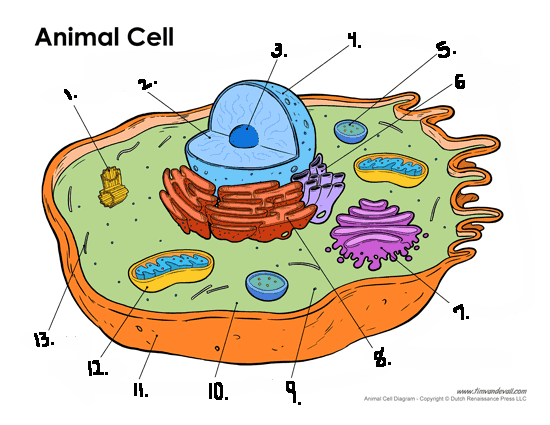
What is #8 on the Diagram?
a)
Cytoplasm
b)
Mitrochondria
c)
Rough Endoplasmic Reticulum
d)
Nucleus
50.
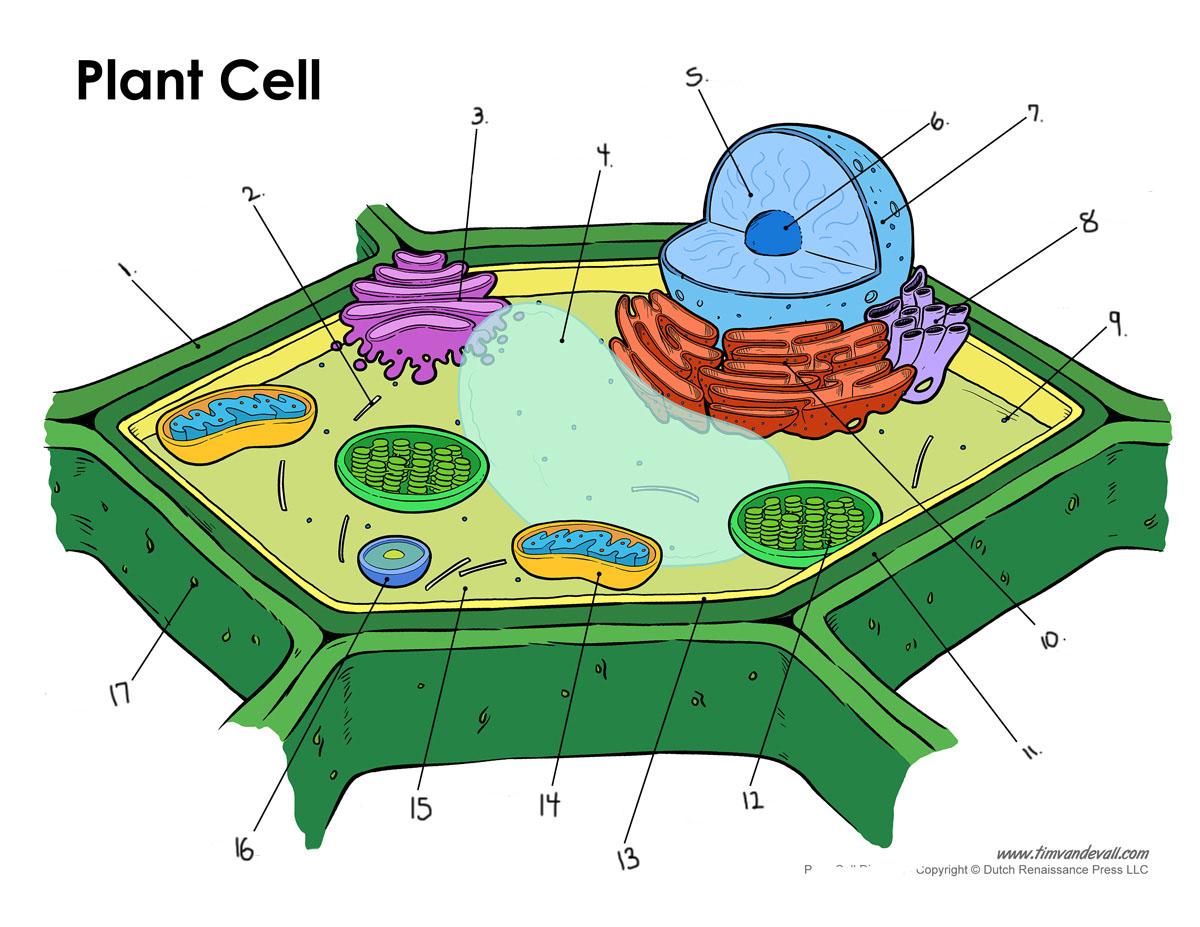
What is #3 on the Diagram
a)
Mitochondria
b)
Ribosome
c)
Golgi Bodies
d)
Cell Wall
100 %

