wayground logo

Free Printable Worksheets

Font size

S
M
L
XL
Worksheets

Classification Quiz Review

Total questions: 46

Worksheet time: 1hrs 2mins

Name
Class
Date
1.

This cladogram shows the evolutionary relationships among some mammals based on homologous structures. Which statement is supported by this cladogram?

a)

Hippopotamuses are more closely related to cows than javelinas

b)

Toothed whales are more closely related to mouse deer than to hippopotamuses

c)

Javelinas and pigs are more closely related than baleen whales and toothed whales

d)

Cows and mouse deer are more closely related than javelinas and pigs

2.

No evolution - species is well adapted to its environment

a)

fossil

b)

homologous structures

c)

stasis

3.

The human hemoglobin molecule contains a chain of 146 amino acids. The chart below shows how many amino acids in other animal hemoglobin differ from the human hemoglobin. Based on this evidence alone, to what animal are humans more closely related?

a)

Rhesus monkey

b)

Mouse

c)

Chicken

d)

Frog

4.

What can we conclude from the similarities in the baleen whale and hummingbird skeletons?

a)

The whale could fly at one time.

b)

The hummingbird could once swim.

c)

Both animals evolved from a common ancestor.

d)

There is nothing to conclude because they are so different.

5.

Studying which of the following would provide the best evidence that two organisms share a common ancestor?

a)

Fossil Records

b)

Embryology

c)

DNA sequences

d)

Comparative anatomy

6.

Which of the following is a source of genetic variation within a species?

a)

Cross breeding two different species

b)

Mutations

c)

Cloning

d)

Selective breeding

7.
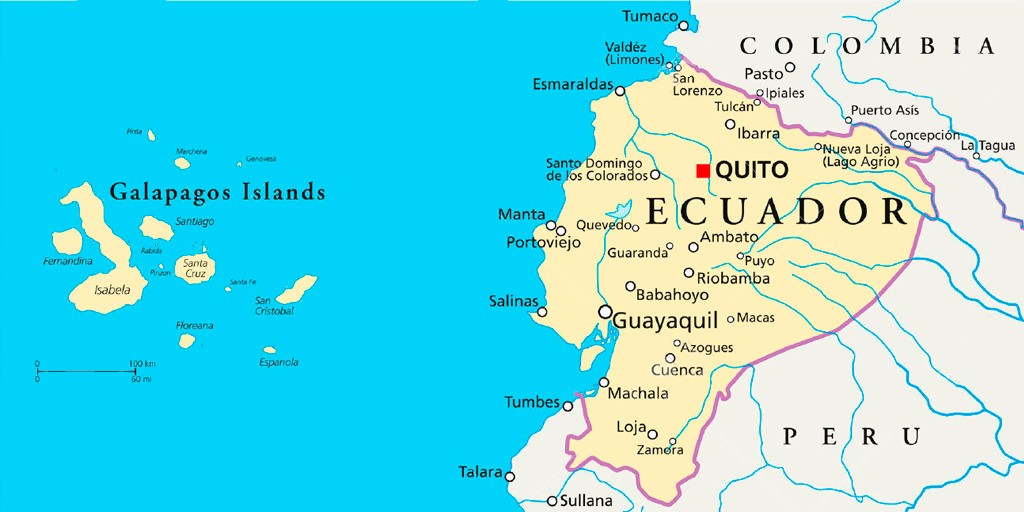
The Galapagos Islands, a small group of islands off the coast of Ecuador, is home to reptiles such as the giant tortoise and the iguana. The eastern islands are much older than the islands to the west.  Which statement about the origin of these reptiles is best supported by this information?
a)
The ancestor of each species came from different continents at different times.
b)
The common ancestors of the reptiles probably came from Equador.
c)
The common ancestor of each species evolved in Peru and came to the islands at the same time.
8.
The picture shows the members of the Camelidae family. The physical features and the geographical origin of these animals provide evidence that - 
a)
they live in the same type of environment.
b)
have slowly evolved to become herbivores.
c)
have a common ancestor.
d)
exchanged DNA in the past.
9.
What is an organism called when it is unable to produce its own food and must find an external source?
a)
Heterotroph
b)
Autotroph
c)
Eukaryote
d)
Prokaryote
10.
What is an organism called when it is able to produce its own food using light energy?
a)
Heterotroph
b)
Autotroph
c)
Eukaryote
d)
Prokaryote
11.
This kingdom is eukaryotic, uni and multicellular, heterotrophic, and has a cell wall made of chitin.
a)
Plant
b)
Fungi
c)
Animal
d)
Eubacteria
12.
This kingdom is multicellular, autotrophic, and has a cell wall made of cellulose.
a)
Fungi
b)
Plant
c)
Animals
d)
Eubacteria
13.
Escherichia coli is the scientific name of a bacterium.  What category of classification is Escherichia?
a)
Species
b)
Order
c)
Phylum
d)
Genus
14.
What species is bird C?
a)
Dunliin
b)
Osprey
c)
Bald Eagle
d)
Baird's Sparrow
15.
What bird is the closest relative to bird K?
a)
D
b)
J
c)
H
d)
B
16.
Do salamanders have claws?
a)
Yes
b)
No
c)
Maybe
17.
Which types of cells have a cell membrane?
a)
Eukaryotes
b)
Prokaryotes
c)
Both
18.
Which type of organism has DNA, ribosomes, but no nucleus?
a)
Eukaryote
b)
Prokaryote
c)
Both
19.

Select all of the cell types that have DNA that is bound in a nuclear membrane.

a)

animal cell

b)

plant cell

c)

prokaryotic cell

d)

protist cell

20.

Here is a table that shows the level of classification for a dog. What is the correct label for X?

a)

Domain

b)

Genus

c)

Order

d)

Phylum

21.

Here is a table that shows the level of classification for a dog. What is the correct label for Y?

a)

Domain

b)

Genus

c)

Order

d)

Phylum

22.

Here is a table that shows the level of classification for a dog. What is the correct label for Z?

a)

Domain

b)

Genus

c)

Order

d)

Phylum

23.

How can you know that two organisms are two different species?

a)

How they feed

b)

Where they live

c)

Their mating and reproducing abilities

d)

When they are active

24.

Use the following to decide which tree this leaf belongs to:

a)

Blue Atlas Cedar

b)

Arizona Cypress

c)

Southern Catalpa

d)

Lilac Chaste Tree

25.

The scientific name for a human is Homo sapiens. Select the two levels of classification this name represents.

a)

family

b)

order

c)

species

d)

phylum

e)

genus

26.

Two organisms mate and produce infertile offspring (their babies can't have babies). What is the best explanation for their inability to reproduce?

a)

The parents are of a different genus and a different species

b)

The parents are of a different species, but the same genus

c)

The parents are of the same genus and the same species

d)

The parents are of the same speices, but different genus

27.

How are organisms classified as Eukarya different from organisms classified as Archaea and Bacteria?

a)

They are all multicellular

b)

They all reproduce asexually

c)

They all produce their own food

d)

They all have membrane-bound nuclei

28.
a)

Phyla

b)

Classes

c)

Families

d)

Domains

29.

Organisms are classified into 3 domains: 1. Archaea 2. Bacteria 3. Eukarya

Organisms that live in extremely hot or acidic environments belong to:

a)

1 only

b)

2 only

c)

1 and 2 only

d)

1, 2, and 3

30.
a)

Organism 1

b)

Organism 2

c)

Organism 3

d)

Organism 4

31.

What is the correct scientific name for the organism in the table?

a)

Reptilia testudines

b)

Chordata reptilia

c)

Emydidae terrapene

d)

Terrapene carolina

32.
Which kingdoms are prokaryotic?
a)
Archaebacteria and Animalia
b)
Eubacteria and Archaebacteria
c)
Fungi and Protista
d)
Plantae and Eubacteria
33.
This domain is characterized by bacteria that can live in extreme environments, such as hot springs.
a)
Archaea
b)
Bacteria
c)
Eukarya
d)
Prokarya
34.
 You would find mushrooms and molds in which kingdom?
a)
Plantae
b)
Protists
c)
Fungi
d)
Animalia
35.
In which kingdom do I belong if I am unicellular, autotrophic, and eukaryotic?
a)
Archaebacteria
b)
Protista
c)
Animalia
d)
Plantae
36.
What is the difference between Archaebacteria and Eubacteria?
a)
Eubacteria are eukaryotic.
b)
Archaebacteria are multicellular.
c)
Archaebacteria can live in extreme environments.
d)
Archaebacteria are found everywhere.
37.
All of the following have a nucleus except...
a)
bacteria
b)
animals
c)
plants
d)
protists
38.
Which kingdom contains multicellular, heterotrophic organisms whose cells have NO cell walls?
a)
Protista
b)
Fungi
c)
Plantae
d)
Animalia
39.
Animals must eat other organisms for food, so they are classified as...
a)
heterotrophs
b)
autotrophs
c)
eukaryotic
d)
prokaryotic
40.
Identify the kingdom...
Rod-shaped prokaryotes swabbed from a kitchen faucet.
a)
Archaebacteria
b)
Eubacteria
c)
Protista
d)
Fungi
41.
Identify the kingdom...
Microscopic unicellular organism found in a mud puddle.  Organism's DNA is contained in a nucleus and it moves by beating tiny hairs in the water.
a)
Archaebacteria
b)
Eubacteria
c)
Protista
d)
Fungi
42.
Identify the kingdom...
Unicellular organisms with no nuclei found living in the superheated waters of a hot spring.
a)
Archaebacteria
b)
Eubacteria
c)
Fungi
d)
Protista
43.
Identify the kingdom...
Multicellular organism with cell walls made of chitin found growing on a decomposing manure pile.

a)
Archaebacteria
b)
Eubacteria
c)
Protista
d)
Fungi
44.
All of the following have a nucleus except...
a)
Bacteria
b)
Animalia
c)
Plantae
d)
Protista
45.
Which kingdom is Autotrophic, Eukaryotic and reproduces sexually?
a)
Bacteria
b)
Fungi
c)
Plantae
d)
Protista
46.
How many kingdoms are there?
a)
2
b)
4
c)
6
d)
8