
 Worksheets
Fall Exam Review 2020
Total questions: 28
Worksheet time: 28mins
An atom’s mass number is 210 and its atomic number is 85. How many neutrons does the atom have?
85
125
210
295

Which of these atoms is the least reactive?
A
B
C
D
What characteristic of atoms always determines the atoms's identity?
The number of protons
The number of neutrons
The location of valance electrons
The location of valance electrons

Which two elements on the periodic table are in the same group?
O and Cl
Se and Br
Ar and Br
Ne and Ar
In which of these compounds are there twice as many oxygen atoms as hydrogen atoms?
H3PO4
H2SO4
HClO3
H2O
Which of the following best decribes the velocity of an object?
30 m/s
30 m/s
30 m/s east
30 m/s2

If carbon has a density of 2.27 g/cm3 , which substance is probably carbon?
Which statement best describes evidence that a chemical reaction occurs?
Two liquids were mixed in a test tube and one floated to the top.
Salt dissolved in a beaker of warm water.
Steam rose from a flask when a liquid was heated.
A solid sank to the bottom of a container when two liquids were mixed.
How many TOTAL ATOMS are in the chemical formula for baking soda, NaHCO3?
4
6
10
12

An element is shiny, solid, conducts electricity/heat, and is able to bend when pressure is applied. This element would be classified as a -
metal
nonmetal
metalloid
Elements in the same group on the Periodic Table have what in common?
similiar sizes
similiar shapes
similiar chemical properties
similiar physical properties
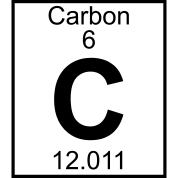

What is the atomic number of the atom shown?
3
4
7
10
The chemical formula for ethanol is
C2H6O.
How many total atoms are in 20 molecules of ethanol?
9
20
180
240

How much magnesium oxide is produced in this reaction?
(a)
The mass number of an element that has 18 protons, 18 electrons, and 19 neutrons is _____.
12.5
13
25
37

Which subatomic particle does the RED(+) circle represent?
proton
neutron
electron
nucleus
Which subatomic particle does the YELLOW(-) circle represent?
proton
neutron
electron
nucleus
Which subatomic particle does the GREEN( ) circle represent?
proton
neutron
electron
nucleus

What is the net force?
18 N
0 N
10 N
6 N
Which of the following objects will change its motion?
A bike rider on a smooth, level road, pedaling at a constant rate.
A train pulling on another train, each with the same amount of force.
A chair sitting on the floor with balanced forces acting in opposite directions.
A ball rolling across the floor with friction acting in the opposite direction

How will this object move?
The object will move to the left, as the forces are balanced.
The object will move to the right, as the forces are unbalanced.
The object will move to the left, as the forces are unbalanced.
The object will move to the right, as the forces are balanced.
A 20 kg bike accelerates at 10 m/s2. What was the force applied?
25 Newtons
20 Newtons
200 Newtons
10 Newtons


