
NEW
Font size
S
M
L
XL
 Worksheets
Plate Tectonics
Total questions: 23
Worksheet time: 42mins
Name
Class
Date
1.

Name the boundary
a)
convergent
b)
transform
c)
divergent
d)
insurgent
2.
This layer of Earth is the thickest part
a)
crust
b)
outer core
c)
mantle
d)
inner core
3.
What is Pangaea?
a)
The name of a German Scientist
b)
the name of the supercontinent that existed millions of years ago
c)
another name for continental drift
d)
the name of an ancient fossil
4.
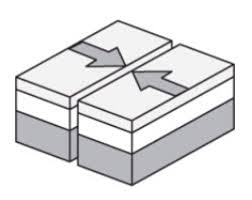
Name the boundary
a)
convergent boundary
b)
divergent boundary
c)
transform boundary
d)
sergent boundary
5.
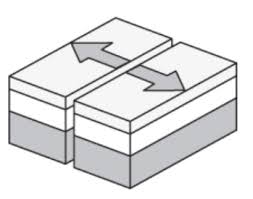
Name the boundary
a)
convergent boundary
b)
divergent boundary
c)
transform boundary
d)
sergent boundary
6.
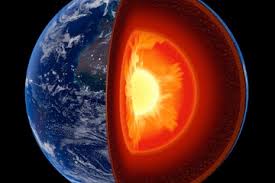
As you travel from the inner core to the crust, how would temperature, pressure and density of the material change?
a)
The would all increase
b)
The would all decrease.
c)
They would stay the same.
d)
Temperature would decrease, but pressure and density would increase.
7.
A subduction zone is formed...
a)
when one tectonic plate sinks below another
b)
at every type of convergent plate boundary
c)
at every type of divergent plate boundary
d)
at transform boundaries
8.
Whenever a subduction zone is formed a ______ is formed.
a)
Mountain
b)
Island Arc
c)
Rift
d)
Volcano
9.
Plate movement is caused by ______________.
a)
the rotation of the Earth
b)
ocean tides
c)
convection currents in the mantle
d)
the moon's gravity
10.
What are mid-ocean ridges?
a)
A chain of underwater waterfalls
b)
A chain of underwater volcanos
c)
A chain of underwater mountains
d)
A chain of underwater rocks
11.
What does the theory of continental drift state?
a)
The continents were once joined in a super-continent and have moved over time
b)
Continents are stationary and do not move
c)
The Earth is broken into lithospheric plates that move due to convection currents
d)
none of the above
12.

Who is the person credited with developing the theory of continental drift?
a)
Harry Hess
b)
Galileo
c)
Alfred Wegener
d)
Newton
13.
Seafloor spreading is a process that
a)
destroys oceanic crust
b)
occurs at mid-ocean ridges
c)
causes continents to plow through the seafloor
d)
a large ice sheet
14.
What are tectonic plates?
a)
slabs of oceanic crust
b)
slabs of continental crust
c)
slabs of crust and upper mantle
15.
When does a divergent plate boundary form?
a)
when a denser plate sinks below a more buoyant plate
b)
when two plates slide past each other
c)
when two plates separate
d)
when two plates collide
16.
Which layer of Earth's surface behaves like plastic?
a)
asthenosphere
b)
lithosphere
c)
crust
d)
mantle
17.
Fossils of a particular animal species have been found in both southern Africa and South America but nowhere else. Which of the following is MOST LIKELY the reason why?
a)
The fossils evolved into different organisms
b)
The climate changed and became much colder.
c)
In the past, Africa and South America were part of the same continent
d)
In the future, Africa and South America will be part of the same continent.
18.

Which direction are the plates moving at a divergent boundary?
a)
moving away from each other
b)
moving towards each other
c)
sliding past each other
d)
they don't move
19.

Which direction are plates moving at a convergent boundary?
a)
away from each other
b)
going towards each other
c)
sliding past each other
d)
they don't move
20.
What would you be most likely to find at a convergent boundary between two pieces of continental crust?
a)
Volcano
b)
Mountains
c)
Rift
d)
Island Arc
21.

Magnetic stripes on the seafloor show that
a)
a crust is destroyed at ridges
b)
Earth's magnetic field has changed
c)
earthquakes are common in the ocean
22.
What evidence suggests that continents were once joined?
a)
topography of the seafloor
b)
convergent plate boundaries
c)
the puzzle-like fit of coastlines
23.
What evidence suggests that the continents were once joined?
a)
topography of the seafloor
b)
convergent plate boundaries
c)
the puzzle-like fit of coastlines
Reset

