
 Worksheets
Env. Science Final Review
Total questions: 46
Worksheet time: 2hrs 49mins
Name
Class
Date
1.
The gas that is most abundant in the atmosphere is
a)
oxygen
b)
nitrogen
c)
carbon dioxide
d)
argon
2.
What absorbs ultraviolet rays in the atmosphere?
a)
troposphere
b)
stratosphere
c)
ozone layer
d)
greenhouse gases
3.
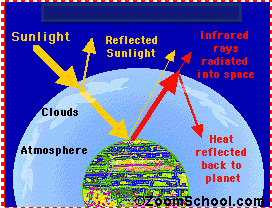
What does this diagram illustrate?
a)
Ozone Layer
b)
The Greenhouse Effect
c)
Ultraviolet Radiation
d)
Layers of the atmosphere
4.
Where is the ozone located?
a)
troposphere
b)
stratosphere
c)
mesosphere
d)
thermosphere
27.
What chemical is responsible for breaking up the ozone?
a)
CFCs
b)
Carbon Dioxide
c)
Nitrogen
d)
Oxygen
6.
This protects us from harmful UV rays from the sun
a)
Troposphere
b)
Stratosphere
c)
Greenhouse Effect
d)
Ozone Layer
7.

The picture shows what type of succession?
a)
primary
b)
secondary
c)
tertiary
d)
quadanary
8.
The first organisms that appear in an ecological community
a)
ecological succession
b)
primary succession
c)
secondary succession
d)
pioneer speciles
9.
A nonliving element in an ecosystem is an
a)
animal
b)
abiotic factor
c)
biotic factor
d)
organism
10.
A living or once-living organisms in an ecosystem is a
a)
population
b)
biotic factor
c)
abiotic factor
d)
community
11.

In this diagram, removing which living factor will have the MOST impact on this food chain?
a)
sun
b)
grass
c)
grasshopper
d)
robin
12.

Which organism in this food chain is a producer?
a)
Seaweed
b)
clam
c)
starfish
d)
seagull
13.
A PRODUCER
a)
Makes its own energy
b)
Eats other organisms
c)
Eats DEAD organisms
14.
A CONSUMER
a)
Makes its own energy
b)
Eats other organisms
c)
Eats DEAD organisms
15.
A DECOMPOSER
a)
Makes its own energy
b)
Eats other organisms
c)
Eats DEAD organisms
16.
A PLANT is a
a)
Producer
b)
Consumer
c)
Decomposer
17.

In this Food Web Pyramid what is the proper name for the organisms above the producer level at the bottom.
a)
herbivores
b)
decomposer
c)
carnivores
d)
omnivores
18.
In an energy pyramid, energy_______ as you move up the pyramid.
a)
Increases
b)
Decreases
c)
Stays the same
d)
Changes up and down
19.

The most important abiotic factors when studying biomes are...
a)
Food and Water
b)
Water and Sunlight
c)
Temperature and Oxygen
d)
Water and Temperature
20.
Greenhouse gases....
a)
make plants green
b)
increase the temperature of the earth
c)
produce oxygen
d)
decrease the temperature of the earth
21.

In the energy pyramid here, which organisms have the most energy available?
a)
Producers
b)
Carnivores
c)
Herbivores
d)
Top Predator
22.

In the energy pyramid below, which organism has the least amount of energy available?
a)
Producers
b)
Herbivores
c)
Carnivores
d)
Top Predator
23.

What is the carrying capacity of the following graph?
a)
1000
b)
8000
c)
800
d)
600
24.
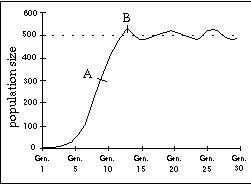
What is the carrying capacity of the graph?
a)
around 500
b)
more than 500
c)
less than 500
d)
around 600
25.

If the amount of food or resources available increases, the carrying capacity for an animal:
a)
Stays the same
b)
Increases
c)
Decreases
d)
Fluctuates
26.
The main human activity that releases greenhouse gases is
a)
using bottled water
b)
burning fossil fuels
c)
texting on cellphones
d)
eating meat
27.
What chemical is responsible for breaking up the ozone?
a)
CFCs
b)
Carbon Dioxide
c)
Nitrogen
d)
Oxygen
28.

The picture shows what type of succession?
a)
primary
b)
secondary
c)
tertiary
d)
quadanary
29.
Succession that occurs in an area with NO SOIL
a)
ecological succession
b)
primary succession
c)
secondary succession
d)
pioneer speciles
30.
The process of change in the living parts of the ecosystem
a)
ecological succession
b)
primary succession
c)
climax community
d)
pioneer species
31.
What human activity is the primary source of acid rain?
a)
Cars
b)
deforestation
c)
coal powerplants
d)
volcanoes
32.
Pollution hanging over urban areas that causes reduced visibility is called
a)
Air pollution
b)
Temperature inversion
c)
Light pollution
d)
Smog
33.
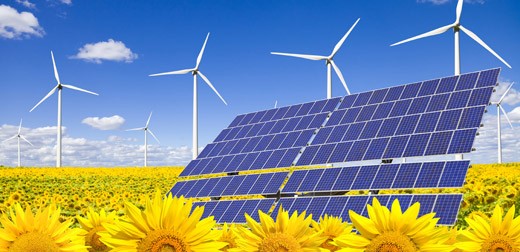
__________ is an energy resource that WILL NOT run out in the next several hundred years.
a)
Renewable Energy Resource
b)
Nonrenewable Energy Resource
34.

__________ is an energy resource that WILL NOT run out in the next several hundred years.
a)
Renewable Energy Resource
b)
Nonrenewable Energy Resource
35.
Where is most of the freshwater found on Earth?
a)
lakes
b)
glaciers
c)
oceans
d)
rivers
36.
what is one way you can conserve water?
a)
take shorter showers
b)
drink a lot of water
c)
water your lawn daily
d)
keep your faucet running
37.
A relationship between two species where one benefits while the other is harmed.
a)
Mutualism
b)
Commensalism
c)
Parasitism
d)
Naturalism
38.
A relationship between two organisms in which one organism benefits and the other is unharmed
a)
Mutualism
b)
Competition
c)
Parasitsm
d)
Commensalism
39.
A relationship between two organisms in which both organisms benefit.
a)
Mutualism
b)
Competition
c)
Parasitsm
d)
Commensalism
40.
The difference between a point source and a nonpoint source of water pollution is...
a)
a nonpoint source is easily identifiable
b)
point sources can be targeted for reduction
c)
nonpoint sources tend to be factory outputs
d)
point sources tend to be agricultural in nature
41.
Which of these is an example of nonpoint source pollution?
a)
an unlined landfill
b)
a leaking waste water pipe
c)
a leaking oil tanker
d)
runoff from feedlots
42.
Pollution is__________
a)
People have contaminated, or dirtied an area with waste
b)
People have cleaned, or fixed up an area
c)
People have gathered, or collected the trash in the area
43.
Failing septic systems
a)
Point
b)
Non-Point
44.
Building and parking lot construction
a)
Point
b)
Non-Point
45.
Large storm water systems
a)
Point
b)
Non-Point
46.
Oil refinery wastewater
a)
Point
b)
Non-point
100 %

