
 Worksheets
Explorace Gemilang
Total questions: 80
Worksheet time: 2hrs 55mins
Name
Class
Date
1.
Particles of matter that move faster (like in a gas) have more of what?
a)
energy
b)
mass
c)
color
d)
weight
2.
Something that makes an object start moving, stop moving, speed up, or slow down is a(n)
a)
load
b)
position
c)
force
d)
effort
3.
The tendency of an object to remain at rest or in motion.
a)
friction
b)
velocity
c)
acceleration
d)
inertia
4.
Sound waves are also called
a)
compressional waves
b)
crests
c)
ocean waves
d)
conservation
5.
The force that opposes the motion of two surfaces sliding past each other is called
a)
acceleration
b)
inertia
c)
resistance
d)
friction
6.
___________ is a form of energy an object has if it is moving.
a)
Potential Energy
b)
Entropy
c)
Kinetic Energy
d)
Thermal Energy
7.
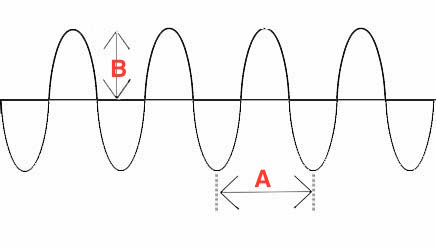
What property of this wave is represented by the letter "A"
a)
amplitude
b)
crest
c)
trough
d)
wavelength
8.
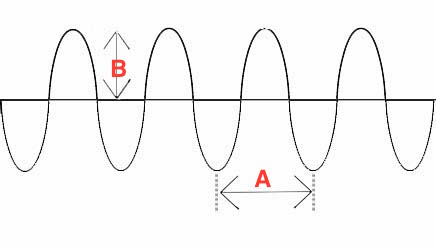
What property of the wave is represented by the letter "B"?
a)
amplitude
b)
crest
c)
trough
d)
wavelength
9.
The number of wavelengths that pass a point each per second is:
a)
frequency
b)
period
c)
longitudinal
d)
transverse wave
10.
When the frequency of a wave increases, what happens to the wavelength?
a)
The wavelength is not directly affected by the frequency of a wave.
b)
The wavelength increases.
c)
The wavelength decreases.
d)
More specific information is needed to form a conclusion about the wavelength.
11.
A mechanical wave cannot travel through...
a)
a vacuum(empty space).
b)
water.
c)
air.
d)
glass.
12.

Why does cupping your hands around your mouth when you shout make the sound travel further?
a)
The sound spreads out.
b)
Your voice gets louder.
c)
You are screaming.
d)
The sound energy is directed in one direction.
13.

Why is the school library covered with carpet?
a)
So everyone can make a lot of noise
b)
to help absorb sounds to keep it quiet
c)
because it looks good
d)
to help absorb sounds so it can stay noisy
14.
You will see a flash of lightening before you hear the thunder that goes with it because-
a)
the eye is quicker than the ear
b)
thunder occurs much later than lightening
c)
sound travels faster through the atmosphere than light
d)
light travels faster through the atmosphere than sound
15.
The highest pitch is made by the _______ instrument.
a)
biggest
b)
wooden
c)
smallest
d)
shiniest
16.

Sound is a form of?
a)
energy
b)
pitch
c)
volume
d)
matter
17.
Which of these animals would probably cause the greatest pressure on the ground?
a)
A fat cow with big feet
b)
A fat cow with small feet
c)
A calf with big feet
d)
A calf with small feet
18.

What pressure does a 4000N horse exert on the ground if each foot is 10cm2?
a)
40 N/cm2
b)
100 N/cm2
c)
400 N/cm2
d)
10 N/cm2
19.

What happens?
a)
Neither piston moves
b)
Piston A goes up and B goes down
c)
Piston B goes up and A goes down
d)
Both pistons go down
20.
What does pressure measure?
a)
Strength
b)
Force exerted on a given area of surface
21.

The drops of water that appear on the outside of a glass of cold juice on a warm day are an example of?
a)
sublimation
b)
condensation
c)
evaporation
22.

What type of matter does Boyle's Law tell us about?
a)
liquids
b)
gases
c)
any kind of matter
23.
Which of the following has the greatest amount of movement at a given temperature?
a)
Gas
b)
Liquid
c)
Solid
d)
They all have the same movement
24.
How are pressure and volume related?
a)
Directly
b)
Indirectly
c)
They aren't related
25.
What does Boyle's law relate to?
a)
Temperature and Volume
b)
Volume and Pressure
c)
Temperature and Pressure
26.
What is 0.00 degrees Kelvin known as
a)
No such thing
b)
Very cold
c)
Freezing point of Water
d)
Absolute Zero
27.
According to Charles law, when temperature increases its
a)
volume increases
b)
mass increases
c)
volume decreases
d)
particles move more slowly
28.
The change from liquid to solid, or the reverse of melting is called
a)
condensation
b)
boiling
c)
sublimation
d)
freezing
29.
What is vaporization
a)
a gas becoming a liquid
b)
a liquid becoming a solid
c)
a gas becoming a solid
d)
a liquid becoming a gas
30.
The opposite of vaporization is called
a)
condensation
b)
sublimation
c)
evaporaztion
d)
freezing
31.
The state of matter where particles are least organized is
a)
solid
b)
liquid
c)
gas
d)
Snyder state
32.
When you increase your altitude, the air pressure
a)
increases
b)
decreases
c)
stays the same
33.
Air is composed of 78 % of this element.
a)
Carbon Dioxide
b)
Nitrogen
c)
Oxygen
d)
Water Vapor
34.
What does refletion mean?
a)
It is when the light changes the material and the direction of it changes as well.
b)
It is when the material is rebounding the light.
35.

Which window is opaque?
a)
Window 1
b)
Window 2
c)
Window 3
d)
None
36.

Which images are opaque?
a)
A & C
b)
A,C,E, & F
c)
D, E, & F
d)
A & E
37.

When a rainbow is formed outside naturally, what causes the light to refract?
a)
A. Small raindrops
b)
B. Sunlight rays
c)
C. Tiny mirrors
d)
D. Glass prisms
38.

Which explains why the fork looks different under water?
a)
light can't pass through the glass
b)
the wavelength of light lengthens
c)
the amount of light increases when going through water
d)
light is refracted at an angle
39.
Smooth surfaces _______ a lot of light.
a)
reflect
b)
bend
c)
absorb
d)
twist
40.
What is a prism?
a)
a transparent object that separates white light
b)
an opaque object that appears black
c)
a translucent object
41.
Why do we see objects as white?
a)
They absorb all light
b)
They reflect all light
c)
They absorb some light and reflect some light
42.
Another name for light bending is ....
a)
Reflaction
b)
Absorbing
c)
Refraction
d)
mirror
43.

The Law of Reflection:
The angle of incidence is _________ the angle of reflection
The angle of incidence is _________ the angle of reflection
a)
bigger than
b)
the same as
c)
smaller than
44.
Luminous means...
a)
Gives out its own light
b)
Reflects light from other things
45.
Opaque means...
a)
No light passes through it
b)
All light passes through it
c)
Some light passes through it
46.

When light passes through a prism the light is bent and breaks into the visible spectrum. What color bends the most and has the shortest wavelength?
a)
Red
b)
Yellow
c)
Blue
d)
Violet
47.

_____ is a lens that is thicker in the middle and makes an object appear bigger.
a)
prism
b)
convex lens
c)
concave lens
d)
mirror
48.

______ is a lens that is thicker on its edges and makes an object appear smaller?
a)
mirror
b)
convex lens
c)
concave lens
d)
prism
49.

Why does white light look like a rainbow when it exits a prism?
a)
The prism adds more kinds of light.
b)
The prism changes some white light into electricity.
c)
The prism is filled with many different colors.
d)
The prism separates white light into its component colors.
50.
What Does a Concave Lens Do?
a)
Make things bigger
b)
Make things smaller
c)
Make things closer
d)
Make things happy
51.
What Does a Convex Lens Do?
a)
Make things bigger
b)
Make things smaller
c)
Make things closer
d)
Make things sader
52.
The color you see is the color that is ___.
a)
reflected
b)
absorbed
53.
___________ is a from of energy that we can see with our eyes.
a)
shadow
b)
light
c)
energy
d)
reflection
54.
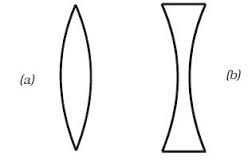
What type of lens or mirror is shown as figure b in this picture?
a)
Convex Mirror
b)
Concave Mirror
c)
Convex Lens
d)
Concave Lens
55.
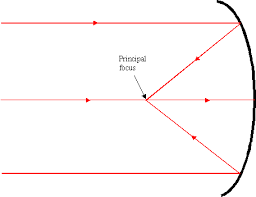
What type of lens or mirror is shown in this picture?
a)
Convex Lens
b)
Concave Lens
c)
Convex Mirror
d)
Concave Mirror
56.
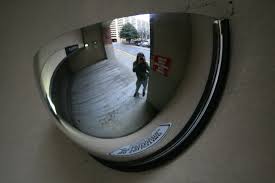
What type of lens or mirror is shown in this picture?
a)
Convex Lens
b)
Concave Lens
c)
Convex Mirror
d)
Concave Mirror
57.
The color that we perceive an object depends on the
a)
The light that is reflected by the object.
b)
The light that is absorbed by the object.
c)
The light that is transmitted by the object.
d)
The light that is created by the object.
58.
Why does an apple appear red?
a)
All colors are absorbed & none are reflected
b)
All colors are absorbed except for blue, which is reflected
c)
All colors are reflected and none are absorbed
d)
All colors are absorbed except for red, which is reflected
59.
Refraction is
a)
light bending
b)
light bouncing
60.
The unit used to measure work is the
a)
Watt
b)
Newton
c)
Joule
d)
meter
61.
A force exerted over a distance to move an object is ______________________.
a)
power
b)
work
c)
momentum
d)
Watt
62.
Work done = Force x _________
a)
a. distance
b)
b. acceleration
c)
c. velocity
d)
d. speed
63.
W=125 J
d=10 m
F=???
d=10 m
F=???
a)
12.5 N
b)
1250 N
c)
0.08 N
d)
135 N
64.
If 68 Joules were necessary to move a 4 Newton crate, how far was the crate moved?
a)
272 m
b)
17 m
c)
4.05 m
d)
272 cm
65.
A girl pushes a box across the floor. Did she do work?
a)
no
b)
yes
66.
Which situation is work not done?
a)
lifting a 20 pound box off the floor
b)
holding a 20 pound box above the floor
c)
sliding a 20 pound box across the floor
d)
sliding a 20 pound box up an inclined plane
67.
A compressed spring in a toy is used to launch a 5.00-gram ball. If the ball leaves the toy with an initial horizontal speed of 5.00 meters per second, the minimum amount of potential energy stored in the compressed spring was
a)
0.0125 J
b)
0.0250 J
c)
0.0625 J
d)
0.125 J
68.
A 10-newton force is required to hold a stretched spring 0.20 meter from its rest position. What is the potential energy stored in the stretched spring?
a)
1 J
b)
2 J
c)
5 J
d)
50 J
69.
A 5-newton force causes a spring to stretch 0.2 meter. What is the potential energy stored in the stretched spring?
a)
1 J
b)
0.5 J
c)
0.2 J
d)
0.1 J
70.
An unstretched spring has a length of 0.10 meters. When the spring is stretched by a force of 16 newtons, its length is increased to 0.18 meters. What is the spring constant of this spring?
a)
0.89 N/cm
b)
2.0 N/cm
c)
1.6 N/cm
d)
1.8 N/cm
71.
A spring with a spring constant (k) of 5 N/m is stretch 0.2 m. The spring force is
a)
1 N
b)
25 N
c)
5.2 N
d)
4.8 N
72.

How far is a spring with k = 9 N/m stretched when a 5 kg mass is attached?
a)
0.55 m
b)
5.5 m
c)
1.8 m
d)
18 m
73.

Diagram shows three arrangements of springs, X, Y and Z. All the springs are identical.
Which comparison is correct about the extension of X, Y and Z?
Which comparison is correct about the extension of X, Y and Z?
a)
Z < X < Y
b)
Z < Y < X
c)
X < Z < Y
d)
X < Y < Z
74.

Diagram shows three arrangements of springs, X, Y and Z. All the springs are identical.
Which comparison is correct about the extension of X, Y and Z?
Which comparison is correct about the extension of X, Y and Z?
a)
Z < X < Y
b)
Z < Y < X
c)
X < Z < Y
d)
X < Y < Z
75.

Which of the following graphs represents Hooke's Law
a)
A
b)
B
c)
C
d)
D
76.

Which comparison about springs X and Y is correct?
a)
Spring X is
softer than spring Y
b)
Spring Y has a
smaller spring constant, k
c)
The original length
of spring X is longer than spring Y
d)
To stretch 1 cm, work
done on spring X is smaller than on spring Y
77.
unit for gravitational force
a)
N
b)
J
c)
kg
d)
m/s2
78.
tendency of an object to resist any changes in its motion
a)
inertia
b)
gravity
c)
friction
d)
tension
79.
A wave has a frequency of 8 Hz and a wavelength of 4 meters. What is the period of the wave?
a)
16 sec
b)
2 m
c)
0.5 sec
d)
0.125 sec
80.
The number of complete oscillations a wave makes each second is the ____ of the wave.
a)
fortitude
b)
amplitude
c)
period
d)
frequency
100 %

