
 Worksheets
AP Psych Semester Review
Total questions: 105
Worksheet time: 1hrs 1mins
Name
Class
Date
1.
The Psychologist who would be least likely to develop tools for learning in the classroom would be
a)
experimental
b)
developmental
c)
school
d)
educational
2.
Which professional specialty focuses on the diagnosis and treatment of people with psychological disorders?
a)
personality psychology
b)
biological psychology
c)
clinical psychology
d)
developmental psychology
3.
The biological perspective in psychology would most likely emphasize that behavior is influenced by
a)
environmental circumstances
b)
memory processe
c)
unconscious conflicts
d)
blood chemistry
4.
Professor Reed attempts to assess the relative contributions of heredity and home environment on children's susceptibility to depression. Her research best illustrates the concerns of the ____ approach
a)
psychodynamic
b)
cognitive
c)
humanistic
d)
biopsychosocial
5.

Who had the first psychology laboratory in Leipzig, Germany?
a)
William James
b)
Edward Titchner
c)
Wilhelm Wundt
d)
G. Stanley Hall
6.
Dr. Lipka is involved in an applied research study of customer satisfaction with a newly developed line of facial cosmetics and other beauty aids. Dr. Lipka is most likely a(n) ________ psychologist.
a)
Clinical
b)
Industrial-Organizational
c)
Developmental
d)
Social
7.
Behaviorists dismissed the value of
a)
neuroscience
b)
reinforcement
c)
Introspection
d)
science
8.
Who would have been most likely to ignore mental processes and to define psychology as “the scientific study of observable behavior”?
a)
Edward Titchner
b)
Jean Piaget
c)
John B. Watson
d)
William James
9.
Which philosopher is most well known for theorizing that the mind at birth is tabula rasa or a “blank slate”?
a)
Rene Descarte
b)
John Locke
c)
George Berkeley
d)
Aristotle
10.
Which of the following psychologists most clearly rejected the value of introspection?
a)
Wilhelm Wundt
b)
Edward Titchner
c)
John B. Watson
d)
Sigmund Freud
11.
In Wilhelm Wundt's experiments, participants were asked to press a key as soon as they were consciously aware of perceiving a sound. By asking participants to examine and report their conscious experiences, Wundt was making use of which of the following?
a)
Introspection
b)
empiricism
c)
tabula rasa
d)
functionalism
12.
Which philosopher would have been most enthusiastic about modern empiricism?
a)
Rene Descartes
b)
Aristotle
c)
Plato
d)
Socrates
13.
Who is considered a Humanistic Psychologist?
a)
Freud
b)
Skinner
c)
Ivan Pavlov
d)
Maslow
14.
Who studied unconscious and conscious behavior?
a)
Sigmund Freud
b)
B.F. Skinner
c)
Ivan Pavlov
d)
John B. Watson
15.
Deafness can result from damage to the inner ear or damage to what area of the brain?
a)
Connections between the auditory nerve and the auditory cortex in the frontal lobe
b)
connections between the auditory nerve and the auditory cortex in the temporal lobe.
c)
connections between the left and right sensory areas of the cerebellum
d)
connections between the hypothalamus and the auditory cortex in the temporal lobe
16.
According to the theory of evolution, why might we call some parts of the brain the old brain and some parts the new brain?
a)
The old brain developed first, according to evolution
b)
Old brain parts are what exist in very young children, and the new brain develops later
c)
The old brain becomes more active as we get older
d)
The old brain is most affected by age deterioration while the new brain remains unaffected
17.
Which chemicals pass across the synaptic gap and increase the possibility the next neuron in the chain will fire?
a)
synaptic peptides
b)
potassium and sodium
c)
inhibitory neurotransmitters.
d)
Excitatory neurotransmitters
18.
You eat some bad sushi from Turk's and feel that you're slowly losing control over your muscles. The bacteria you ingested from the bad sushi most likely interferes with the use of
a)
serotonin
b)
insulin
c)
acetylcholine
d)
thorazine
19.
The three major categories researchers use to organize the entire brain are the
a)
old brain, new brain, cerebral brain
b)
lower brain, middle brain, upper brain
c)
hindbrain, midbrain, forebrain
d)
brain stem, limbic system, cerebral cortex
20.
Antidepressant drugs like Prozac are often used to treat mood disorders. According to what you know about their function, which neurotransmitter system do these types of drugs try to affect?
a)
serotonin
b)
adrenaline
c)
acetylcholine
d)
endorphins
21.
A neuron without terminal buttons would be unable to
a)
receive information from neighboring neurons
b)
generate an action potential
c)
direct the synthesis of neurotransmitters
d)
secrete neurotransmitters to post synaptic neurons
22.
Paul Broca found that the loss of the ability to speak intelligibly is associated with damage to a region of the brain in the
a)
left frontal lobe
b)
thalamus
c)
left temporal lobe
d)
right parietal lobe
23.
Of the following, the effect of adrenaline on the body is most similar to the effect of the
a)
parasympathetic nervous system
b)
cerebellum
c)
sympathetic nervous system
d)
parathyroids
24.
Of the following, which are located exclusively in the central nervous system?
a)
afferent neurons
b)
interneurons
c)
efferent neurons
d)
glial cells
25.
Which of the following glands interact(s) most directly with all of the others to help regulate body processes?
a)
pituitary
b)
adrenals
c)
parathyroids
d)
thyroid
26.
gunshot wounds, tumors, and strokes all result in
a)
infections
b)
pain
c)
lesions
d)
significant loss of function
27.
The part of the brain most closely associated with maintaining balance and the coordination of complex sequences of movements is the
a)
hypothalamus
b)
cerebellum
c)
medulla
d)
pons
28.
Which task is primarily a right cerebral hemisphere function in most people?
a)
understanding written language
b)
understanding spoken language
c)
processing visual information from the left eye
d)
recognizing faces
29.
Geoffrey White, a brain researcher, is investigating the connection between certain environmental stimuli and brain processes. Which types of scans will he most likely use?
a)
MRI and CT
b)
CT and EKG
c)
PET and EEG
d)
lesioning and MRI
30.
When brain researchers refer to "brain plasticity," they are referring to
a)
The brain's ability to quickly regrow damaged neurons
b)
The surface texture and appearance
c)
The brain's versatility caused by the millions of different neural connections
d)
new connections forming in the brain to take over for damaged sections
31.
When everybody has an equal chance of being included in a study, this process is called
a)
unbiased reporting
b)
survey
survey
c)
random sample
d)
reliability
32.
A mistaken belief that two factors or events are related when they are not is called
a)
the rule of falsifiability.
the rule of falsifiability.
b)
pseudoscience.
c)
an illusory correlation
an illusory correlation
d)
paranormal phenomena
paranormal phenomena
33.
Consistently, we find low self-esteem is often related with high levels of depression. This means
a)
low self-esteem causes depression
low self-esteem causes depression
b)
depression causes low self-esteem
depression causes low self-esteem
c)
low self-esteem and depression are caused by a third factor
low self-esteem and depression are caused by a third factor
d)
they are correlated but this does not prove causation
they are correlated but this does not prove causation
34.
The best way to assure the post-treatment differences found between the experimental and control groups is due to the treatment is by
a)
random assignment
random assignment
b)
training your subjects well
training your subjects well
c)
letting your subjects know which group they are in
letting your subjects know which group they are in
d)
using a placebo
using a placebo
35.
Which of the following describes an independent variable within an experiment?
a)
a measured factor within an experiment that the the researcher cannot change and depends on the independent variab
b)
variables that are eliminated or removed in order to see the relationship between the independent and dependent variables
c)
a measured factor within an experiment that the researcher can change
d)
a factor within an experiment that is considered extraneous, it also correlates with the dependent or independent variable
36.
Which of the following correctly describes a confounding variable within an experiment
a)
a variable that are eliminated or removed in order to see the relationship between the independent and dependent variables
b)
a factor within an experiment that is considered extraneous, it also correlates with the dependent or independent variable
c)
a measured factor within an experiment that the the researcher cannot change and depends on the independent variable
d)
a measured factor within an experiment that the researcher can change
37.
Which of the following correctly describes a dependent variable within an experiment
a)
a measured factor within an experiment that the researcher can change
b)
a variable that are eliminated or removed in order to see the relationship between the independent and dependent variables
c)
a factor within an experiment that is considered extraneous, it also correlates with the dependent or independent variable
d)
a measured factor within an experiment that the the researcher cannot change and depends on the independent variable
38.
The ____ is a measure of the degree of variation among a set of scores from each other.
a)
mean
b)
scatterplot
c)
standard deviation
d)
normal distribution
39.
A client whose improvement during therapy is the result of his or her expectation of improvement rather than the result of the therapy itself is showing
a)
a placebo effect
b)
catharsis
c)
negative transference
d)
tardive dyskinesia
40.
An experiment is performed to see if background music improves learning. Two groups study the same material, one while listening to music and another without music. The independent variable is
a)
learning
b)
size of group
c)
material studied
d)
presence of music
41.
A person displays a set of rare behaviors that psychologists had not known about previously, because nobody had ever shown them before. The best strategy to investigate the nature of those behaviors is
a)
an experiment
b)
a survey
c)
a case study
d)
cross sectional study
42.
Which is considered a disadvantage of naturalistic observation?
a)
it provides an overabundance of information
b)
it deals with behavior not tampered with by outside influences
c)
it limits biased observations through careful record keeping
d)
it doesn’t identify the cause of observed behavior
43.
Drawing a random sample of people for an interview study of social attitudes ensures that
a)
each person in town has the same probability of being chosen for the study
b)
an equal number of males and females are selected for interviews
c)
the study will uncover widely differing social attitudes among respondents
d)
sample will be large enough
44.
In order to prove a cause-and-effect relationship, we must use
a)
naturalistic observation.
b)
the experimental method
c)
human subjects
d)
correlation coefficients
45.
Neither the researcher nor the subjects knew whether or not they received the drug studied or a placebo. This is an example of
a)
expectancy effects
b)
pacebo effects
pacebo effects
c)
double blind
d)
nothing. It would be ridiculous
46.

the process of organizing and interpreting sensory information, enabling us to recognize meaningful objects and events.
a)
perception
b)
sensation
c)
bottom-up processing
d)
sensory adaptation
47.
The historical movement associated with the statement “the whole may exceed the sum of its parts” is:
a)
Parapsychology
b)
Psychophysics
c)
Functional psychology
d)
Gestalt psychology
48.
Figures tend to be perceived as whole, complete objects, even if spaces or gaps exist in the representation, thus demonstrating the principle of:
a)
Closure
b)
Proximity
c)
Continuity
d)
Similarity
49.
A binocular cue that allows for depth perception when images from the two eyes differ
a)
Relative size
b)
Color Constancy
c)
Linear perception
d)
Retinal Disparity
50.
Racial and ethnic stereotypes can sometimes bias our perceptions of others' behaviors. This best illustrates the impact of:
a)
retinal disparity
b)
interposition
c)
top-down processing
d)
perceptual adaptation
51.
If you move your watchband up your wrist an inch or so, you will feel it for only a few moments. This best illustrates:
a)
parallel processing
b)
accommodation
c)
sensory adaption
d)
Weber's Law
52.
The hammer, anvil, and stirrup are found in the:
a)
middle ear.
b)
inner ear.
c)
cochlea.
d)
outer ear.
53.
In observing a football game on TV we are immediately able to recognize the players as members of their respective teams, regardless of their positions on the field. Which Gestalt principle is most responsible for this ability?
a)
closure
b)
proximity
c)
continuity
d)
similarity
54.
Point on the retina where we see the best (Central FOCUS)
a)
Fovea
b)
Rods and Cones
c)
Pupil
d)
Optic Nerve
55.
The minimum amount of stimulation neededto detect stimulus 50 % of the time is called the
a)
Difference Threshold
b)
Absolute Threshold
c)
Change Threshold
d)
Subliminal Threshold
56.
Adjustable opening in the center of the eye isthe
a)
Pupil
b)
Cornea
c)
Blind Spot
d)
Retina
57.
The Young-Helmholtz Theory proposes that:
a)
There are three different types of color-sensitive cones
b)
Retinal cells are excited by one color and inhibited by its complementary color
c)
There are four different types of cones
d)
Rod, not cone, vision accounts for our ability to detect fine visual detail
58.
The cochlea is responsible for
a)
protecting the surface of the eye.
b)
transmitting vibrations received by the eardrum to the hammer, anvil, and stirrup.
c)
transforming vibrations into neural signals.
d)
coordinating impulses from the rods and cones in the retina.
59.
Smell & taste are called _____ because ____.
a)
energy senses; they send impulses to the brain in the form of electric energy.
b)
chemical senses; they detect chemicals in what we taste and smell
c)
flavor senses; they send impulses to the brain in the form of chemicals
d)
memory senses; they both have powerful connections to memory
60.
What behavior would be difficult without our vestibular sense?
a)
integrating what we see and hear
b)
writing our name
c)
Walking a straight line with our eyes closed.
d)
repeating a list of digits
61.
Which of the following is the measure of central tendency that would be most affected by a few extreme scores?
a)
A. mean
b)
B. range
c)
C. median
d)
D. mode
62.
Melanie is addicted to her cell phone. She can't sleep at night because she keeps checking all her social media apps and even wakes up in the middle of the night to check it. What neurotransmitter would be the main reason for Melanie's addiction?
a)
serotonin
b)
GABA
c)
dopamine
d)
Glutamate
63.
Paralysis of the left arm might be explained by a problem in the
a)
motor cortex in the frontal lobe in the left hemisphere
b)
motor cortex in the frontal lobe in the right hemisphere
c)
motor cortex in the parietal lobe in the left hemisphere
d)
motor cortex in the occipital lobe in the right hemisphere
64.
Which stimulate a muscle to contract?
a)
adrenal hormones
b)
receptors
c)
sensory neurons
d)
motor neurons
65.
In most people, which one of the following is a specific function of the left hemisphere that is typically not controlled by the right?
a)
producing speech
b)
spatial reasoning
c)
hypothesis testing
d)
abstract reasoning
66.
Blindness could result from damage to which cortex and lobe of the brain?
a)
visual cortex in the frontal lobe
b)
visual cortex in the temporal lobe
c)
sensory cortex in the parietal lobe
d)
visual cortex in the occipital lobe
67.
Mr. Jenkins suffered a "stroke" as a result of a brain injury. Although he can still move the fingers on his right hand, he has lost sensation in these parts. Of the following, the site of damage to his brain is most likely in the
a)
right frontal lobe
b)
left occipital lobe
c)
right temporal lobe
d)
left parietal lobe
68.
Circadian rhythm refers to .
a)
biological ryhtms that occure from 1 month to a year
b)
hibernation
c)
biological ryhtm that occurs within a 24 hour period
d)
hunger
69.

Consciousness
a)
our awareness of ourselves and our environments
b)
information hidden from the conscious mind
c)
Idk and I don't care
d)
a recurring sleep state during which dreaming occurs
70.

The hormone most closely related to one's sleep pattern is:
a)
Serotonin
b)
Dopamine
c)
Norepinephrine
d)
Melatonin
71.

What sleep disorder is characterized by the inability to sleep or stay asleep?
a)
Narcolepsy
b)
Apnea
c)
Insomnia
d)
Hypersomnia
72.

__________ refers to an increased percentage of time spent in REM sleep when we are deprived of REM sleep on the previous night.
a)
REM deprivation
b)
REM sleep
c)
REM rebound
d)
REM extension
73.
Which of the following NOT a characteristic of REM sleep?
a)
Delta waves
b)
Increased heart rate
c)
Vivid dreams
d)
Paralysis
74.

A relatively rare condition that involves irresistible attacks of sleepiness, brief periods of REM, and often muscle paralysis is called:
a)
Cataplexy
b)
Benzodiazepines
c)
Sleep Apnea
d)
Narcolepsy
75.

Which of the following is a form of altered consciousness in which people become highly suggestible to changes in behavior and thought?
a)
Hypnosis
b)
Narcolepsy
c)
Apnea
d)
Insomnia
76.

According to Freud: if I dream about falling down stairs, it really means that I feel my life is out of control. The underlying meaning of dreams is called
a)
latent content
b)
manifest content
c)
dualsim
d)
biological rhythms
77.
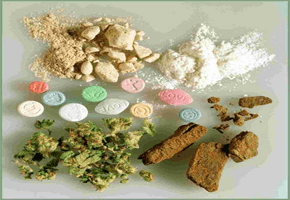
Drugs that heighten alertness, arousal, and decrease appetite, including: cocaine, caffeine, nicotine, and methamphetamine
a)
Hallucinogens
b)
Depressants
c)
Stimulants
d)
Opiate
78.

A drug that slows down body functions, especially in the nervous system (example-alcohol, barbiturates) is a(n)...?
a)
Hallucinogens
b)
Mood-altering drugs
c)
Stimulant
d)
Depressant
79.
The need for an increased amount of a drug to achieve the same effect as before is called
a)
tolerance
b)
withdrawal
c)
hallucinogen
d)
depressant
80.
What type of brain waves predominate in stage 3 sleep?
a)
Delta Waves
b)
Alpha Waves
c)
Theta Waves
d)
Beta Waves
81.

A person experiences blind panic, screaming, and thrashing around while sleeping. This episode is called:
a)
Nightmares
b)
A sleep terror
c)
Night terrors
d)
Dreaming
82.

Sleepwalking most commonly occurs during
a)
Stage 1
b)
Stage 2
c)
Stage 3
d)
REM
83.

What sleep disorder includes many periods or episodes during the night when the subject stops breathing? Some times hundreds of times per night.
a)
Sleep Apnea
b)
Insomnia
c)
Narcolepsy
d)
Night Terrors
84.
Lisa a stay-at-home mom has had four plastic surgeries in one year. During each recovery period, she has been taking codeine as prescribed by her doctor. Every time she goes off it the pain comes back and she can't function, so she gets another prescription. Lisa now finds herself faking illness and pain to just get another prescription because she can't handle any pain or anxiety without wanting more codeine. Lisa appears to be addicted to codeine, which is an opiate. What do opiates trigger the brain to stop making on their own?
a)
norepinephrine
b)
endorphins
c)
hormones
d)
epinephrine
85.
Your friend "Poor Choice Patty" from GBN made a poor choice after the homecoming dance and took some drugs offered to them by a hottie. They told you it was awful that they saw many colors that spun around them like a tunnel. Then, they relived their parents awful screaming matches as if they were still married. "Poor Choice Patty" told you that her parents fighting at the party seemed so real she started screaming "NOO" and crying. Patty even said she could smell cookies and felt like her clothes were on fire during her experience with the drug. What drug do you think your friend took at the party?
a)
heroin
b)
LSD
c)
meth
d)
cigarettes
86.

Which scan would give us a view of the brain waves occurring during sleep?
a)
EEG
b)
MRI
c)
PET
d)
CAT
87.
Generally speaking, heritability is the extent by which
a)
differences among people are accounted for by genes
b)
an individual's specific traits are accountable by genes
c)
differences are accounted by culture
d)
an individual's height is accountable to their parents height
88.
Julie appeared not to be surprised when the couple broke up. “I could have predicted that,” she said. Julie is demonstrating:
a)
ESP
b)
Hindsight Bias
c)
overestimation the extent to which others share her opinion.
d)
correlation proves causation
89.
A hypothesis is a(n):
a)
testable prediction that gives direction to research
b)
way to organize facts.
c)
process of linking facts to deeper principles
d)
set of principles that explains newly discovered facts
90.
Dr. Schulte wants to investigate if aggressive behavior in children is increased if they view violent videos. In this instance, the dependent variable is
a)
violent videos
violent videos
b)
aggressive behavior
aggressive behavior
c)
a placebo
a placebo
d)
the control condition
the control condition
91.
Texting or checking you social media is a __ schedule.
a)
Fixed-interval
b)
Fixed-ratio
c)
Variable-ratio
d)
Variable-interval
92.
Jimmy continues to go and play the slot machine at the casino, even though he never knows how many times he has to play to win. This is an example of a(n) __ schedule.
a)
Fixed-ratio
b)
Variable-ratio
c)
Fixed-interval
d)
Variable-interval
93.
Which of the following is the best shows discrimination?
a)
Being afraid of all dogs because one bit you when you were young
b)
Disliking only the dog that bit you
c)
Running at the sight of any dog
d)
Getting over your fear of dogs
94.
Who was associated with classical conditioning?
a)
John B. Watson
b)
John Garcia
c)
Wagner
d)
Ivan Pavlov
95.
In Pavlov's dog experiment, salivation was the...
a)
Unconditioned response
b)
Conditioned response
c)
Both
d)
Neither
96.
What is B.F. Skinner famous for?
a)
Bobo doll experiment
b)
Operant conditioning
c)
Taste aversion
d)
Classical conditioning
97.
What is Ivan Pavlov famous for?
a)
Bobo doll experiment
b)
Operant conditioning
c)
Taste aversion
d)
Classical conditioning
98.
When there is no longer a pairing of the US and CS it is called...
a)
Spontaneous Recovery
b)
Extinction
c)
Higher order conditioning
d)
Pairing
99.
Learning to respond to only one stimulus and to not responsed at all to other stimuli is...
a)
Extinction
b)
Discrimination
c)
Generalization
d)
Aquisition
100.
Which pychologist is most famous for the Little Albert expirement?
a)
John B. Watson
b)
Ivan Pavlov
c)
Albert Bandura
d)
John Locke
101.
John Watson and his colleague, Rosalie Rayner, offered a live white rat to Little Albert and then made a loud noise behind his head by striking a steel bar with a hammer. The white rat served as the _____________ in their study.
a)
discriminative stimulus
b)
conditioned stimulus
c)
unconditioned stimulus
d)
extinguished stimulus
102.
In Pavlov's experiment, the salivating to the sound of a bell is a(n)
a)
UCS
b)
UCR
c)
CS
d)
CR
103.
Mariah developed a fear of the water when she fell off a river raft last summer. This year she took swimming lessons and thought she had finally overcome her fear of water. She was eagerly looking forward to an upcoming rafting trip, however, as soon as she stepped onto the raft she was instantly terrified again.
a)
extinction
b)
generalization
c)
spontaneous recovery
d)
observational learning
104.
The stimulus that elicits no response before conditioning is the
a)
unconditoned stimulus
b)
neutral stimulus
c)
unconditioned response
d)
conditioned stimulus
105.
He is known for his Law of Effect that behaviors followed by favorable consequences become more likely, and behaviors followed by unfavorable consequences become less likely
a)
Skinner
b)
Thorndike
c)
John Watson
d)
Pavlov
100 %

