
 Worksheets
BTEC Science
Total questions: 54
Worksheet time: 39mins
Name
Class
Date
1.
Energy of motion is which type of energy?
a)
Potential
b)
Kinetic
c)
Sound
d)
Gravitational
2.
When plants convert the sun's energy into food, which type of energy is it?
a)
kinetic
b)
chemical
c)
thermal
d)
radiant
3.

What kind of energy is represented in this picture?
a)
Thermal
b)
Potential
c)
Nuclear
d)
Mechanical
4.

What kind of energy does this device use?
a)
Chemical
b)
Electrical
c)
Thermal
d)
Chemical
5.
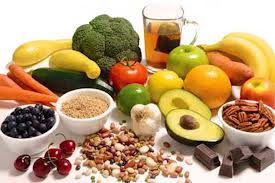
What kind of energy is represented in the picture?
a)
Thermal
b)
Chemical
c)
Sound
d)
Nuclear
6.

A battery converts what type of energy to another?
a)
sound to kinetic
b)
light to heat
c)
mechanical to electrical
d)
chemical to electrical
7.
Wind turbines and windmills convert what energy to another?
a)
Kinetic to electric
b)
Gravitational potential to electric
c)
Mechanical to potential
d)
Thermal to sound
8.
On a roller coaster, where is maximum potential energy?
a)
At the bottom of a big hill
b)
When going around a corner
c)
When going upside down
d)
At the top of a big hill
9.
On a roller coaster, where is maximum kinetic energy?
a)
At the bottom of a big hill
b)
When going around a corner
c)
When going upside down
d)
At the top of a big hill
10.
The faster an object moves, the ________ kinetic energy it has.
a)
more
b)
less
c)
none of the above
d)
all of the above
11.
Which one of the following is NOT a fossil fuel?
a)
oil
b)
solar
c)
natural gas
d)
coal
12.
Which of the following is NOT true about fossil fuels?
a)
can be used to generate electricity
b)
is non-renewable
c)
creates a risk of oil spills
d)
does not produce air pollution
13.
Fossil fuels are energy resources that
a)
can not be lost or destroyed in a closed system.
b)
are in abundance and will never run out.
c)
are formed from the buried remains of plants and animals that lived millions of years ago.
d)
All the above
14.
Which cell structure is found in plant and animals cells and controls what can come into or leave a cell?
a)
cell membrane
b)
cytoplasm
c)
nucleus
d)
vacuole
15.
What is the function of a cell wall?
a)
to protect and support the cell
b)
to perform different functions in each cell
c)
to prevent water from passing through it
d)
to prevent oxygen from entering the cell
16.
In what part of the plant cell does the process of photosynthesis take place?
a)
nucleus
b)
mitochondria
c)
chloroplasts
d)
vacuoles
17.
What controls the activity of a cell?
a)
nucleus
b)
cytoplasm
c)
cell membrane
d)
mitochondria
18.
Which cell does not have a cell wall?
a)
Animal cell
b)
Algae cell
c)
Plant cells
d)
Algal cells
19.
This structure absorbs light energy to make food
a)
cytoplasm
b)
chlorophyll
c)
chloroplast
d)
cell sap
20.
Most chemical reactions happen here:
a)
sytoplasm
b)
sitoplasm
c)
cytoplasm
d)
cytoplam
21.

the jelly like substance in the plant cell.
a)
cytoplasm
b)
choroplast
c)
vacuole
d)
nucleus
22.

What structure is in plant cells but not animal cells.
a)
cell membrane
b)
mitochondria
c)
cell wall
d)
vacuole
23.

Which organelle is responsible for releasing the stored energy within the plant cell.
a)
nucleus
b)
mitochondria
c)
chloroplasts
d)
vacuoles
24.

the most important part of a plant cell and coordinates the cells activates.
a)
vacuole
b)
cytoplasm
c)
nucleus
d)
chloroplast
25.
What are the reactants for the reaction of metal with water?
Metal + water ---> metal hydroxide + hydrogen
Metal + water ---> metal hydroxide + hydrogen
a)
Metal
b)
Water
c)
Metal and water
d)
Metal hydroxide and hydrogen
26.
What are the products for the reaction of metal with water?
Metal + water ---> metal hydroxide + hydrogen
Metal + water ---> metal hydroxide + hydrogen
a)
Metal
b)
Water
c)
Metal and water
d)
Metal hydroxide and water
27.
How can you tell that a metal is reacting with water?
a)
Colour change
b)
Bright light
c)
Fizzing
d)
It gets colder
28.
How can you test to show that when a metal reacts with water, hydrogen gas is produced?
a)
Relights a glowing splint
b)
A lit splint produces a squeaky pop
c)
Puts out a burning splint
d)
Is cold to the touch
29.
What metal hydroxide is produced when magnesium reacts with water?
a)
Copper hydroxide
b)
Magnesium oxide
c)
Magnesium
d)
Magnesium hydroxide
30.
What gas is always produced when a metal reacts with water?
a)
Oxygen
b)
Carbon dioxide
c)
Hydrogen
d)
Carbon monoxide
31.
What gas is produced when sodium reacts with water?
a)
Hydrogen
b)
Carbon dioxide
c)
Carbon monoxide
d)
Water vapour
32.
What gas is produced when a metal reacts with an acid?
a)
Water vapour
b)
Acidic gas
c)
Hydrogen
d)
Nitrogen
33.
Which metal is most likely to react with water or acid?
a)
Copper
b)
Potassium
c)
Magnesium
d)
Iron
34.
Which salt will be produced if magnesium react with hydrochloric acid?
a)
Magnesium oxide
b)
Magnesium sulfate
c)
Magnesium sulfide
d)
Magnesium chloride
35.
What are the reactants for the reaction of metal with acid?
Metal + acid ---> metal salt + hydrogen
Metal + acid ---> metal salt + hydrogen
a)
Hydrogen
b)
Metal salt
c)
Metal
d)
Metal and acid
36.
What are the products for the reaction of metal with acid?
Metal + acid ---> metal salt + hydrogen
Metal + acid ---> metal salt + hydrogen
a)
Metal salt and hydrogen
b)
Metal salt
c)
Metal
d)
Acid
37.
What can you conclude if a metal doesn't fizz when added to water or an acid?
a)
It has low reactivity
b)
It may react with a stronger acid
c)
It has high reactivity
d)
There is no metal present
38.
Carbon is considered an element while carbon dioxide is considered a compound. This is because carbon dioxide is –
a)
a gas at room temperature.
b)
made of two different elements.
c)
given off by green plants.
39.
Compounds are different than elements because compounds are -
a)
A combination of two or more elements.
b)
B)not able to be broken down into parts
B)not able to be broken down into parts
c)
made from the same type of atoms
d)
a pure substance, elements are not
40.
The smallest particle of any particular type of matter is known by which of the following terms?
a)
Element
b)
Chemical
c)
Atom
d)
Substance
41.
What is the difference between a compound and an element?
a)
Compounds are made up of elements and can be chemically separated. Elements cannot be separated.
b)
Elements make up compounds. Elements can be separated but compounds cannot be separated.
c)
Elements are found on the periodic table and compounds are found on the dining room table.
42.
compounds are chemically bounded together
a)
False
b)
true
c)
I don't know?
43.
This can be separated physically.
a)
mixture
b)
element
c)
compound
44.
These can only be separated by chemical means.
a)
element
b)
compound
c)
mixture
d)
stuff
45.
These contain only one kind of atom.
a)
element
b)
compound
c)
mixture
d)
water
46.
Water is a ___________.
a)
element
b)
mixture
c)
compound
47.
Elements can be broken down into simpler substances.
a)
false
b)
true
c)
sometimes
48.
These must be separated chemically.
a)
elements
b)
compounds
c)
mixtures
d)
homogeneous mixtures
49.
A compound is made of ________ atoms.
a)
big
b)
similar
c)
different
50.
Water is a _________.
a)
mixture
b)
element
c)
compound
51.
Carbon Dioxide is a ______
a)
compound
b)
element
c)
mixtures
d)
Battle of Bunker Hill
52.
If the environment gets cold, we will often shiver in order to:
a)
keep body temperature the same as the external temperature
b)
decrease body temperature
c)
increase body temperature
d)
regulate blood pressure
53.
chemical made by glands that tell cells to make something or respond in some way.
a)
acid
b)
enzyme
c)
perspiration
d)
hormone
54.
Maintaining a constant internal state in a changing environment.
a)
Homeostasis
b)
Active Transport
c)
Mitosis
d)
Photosynthesis
100 %

