
 Worksheets
Earth Science
Total questions: 50
Worksheet time: 38mins
Name
Class
Date
1.
This layer of Earth is the thickest part
a)
crust
b)
outer core
c)
mantle
d)
inner core
2.
What was the name given to all the continents when they were joined as one super continent?
a)
Supreme Continent
b)
Eurasia
c)
Plate tectonics
d)
Pangea
3.
Which of these layers is ALL solid iron and nickle?
a)
inner core
b)
outer core
c)
lithosphere
d)
mesosphere
4.
The layer that makes up most of the earth's mass and volume is the
a)
crust
b)
mantle
c)
core
d)
asthenosphere
5.
Which of the following occurs because of convection currents?
a)
Tectonic plates on the crust move.
b)
The mantle increases in size.
c)
Pressure in the crust increases.
d)
Pressure in the crust decreases.
6.

Scientists think that convection currents that move the plates flow in Earth's
a)
Continental crust
b)
Oceanic crust
c)
Asthenosphere
d)
Lithosphere
7.
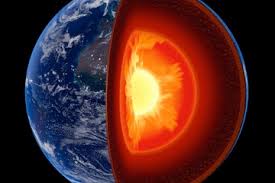
As you travel from the inner core to the crust, how would temperature, pressure and density of the material change?
a)
The would all increase
b)
The would all decrease.
c)
They would stay the same.
d)
Temperature would decrease, but pressure and density would increase.
8.

The physical layer of Earth made of solid rock and soil is called the ___________.
a)
mesosphere
b)
lithosphere
c)
asthenosphere
d)
mantle
9.
Where does the heat come from that drives this convection current in the mantle?
a)
The sun
b)
The crust
c)
the mantle
d)
the core
10.
What does the theory of continental drift state?
a)
The continents were once joined in a super-continent and have moved over time
b)
Continents are stationary and do not move
c)
The Earth is broken into lithospheric plates that move due to convection currents
d)
none of the above
11.

Name the boundary
a)
convergent boundary
b)
divergent boundary
c)
transform boundary
d)
sergent boundary
12.

Name the boundary
a)
convergent boundary
b)
divergent boundary
c)
transform boundary
d)
sergent boundary
13.

Name the boundary
a)
convergent boundary
b)
divergent boundary
c)
transform boundary
d)
sergent boundary
14.
During sea floor spreading, molten material rises up from the mantle...
a)
along the continents
b)
at the mid ocean ridges
c)
deep ocean trenches
d)
at north and south poles
15.
Which of the following is where one plate slides under another plate?
a)
submarine zone
b)
divergence zone
c)
subduction zone
d)
lower zone
16.
Associated with transform boundaries.
a)
Volcanoes
b)
mountains
c)
trenches
d)
earthquakes
17.
Mountains form from ...
a)
plates sliding past one another
b)
collision of plates
c)
plates moving away from each other
18.
Earth's plates are...
a)
constantly moving and changing the face of the earth
b)
Never moves
c)
Moves seldom and very fast
d)
Moves when it feels like it
19.
Which layer of the earth is under the highest pressure?
a)
Crust
b)
Mantle
c)
Outer Core
d)
Inner Core
20.
Less dense materials rise to the top.
a)
True
b)
False
21.
Oceanic crust is thicker than continental crust.
a)
True
b)
False
22.
What is the correct order (starting from the surface) of Earth's layers?
a)
crust, outer core, inner core, mantle
b)
mantle, outer core, inner core, crust
c)
crust, mantle, outer core, inner core
d)
outer core, inner core, crust, mantle
23.

Identify layer #20.
a)
mantle
b)
asthenosphere
c)
inner core
d)
outer core
24.
What are the two types of crust
a)
continental and oceanic
b)
ocean and upper
c)
lower and upper
d)
pizza and subway
25.
What is the name of the layer that contains the uppermost mantle and crust
a)
Asthenosphere
b)
Mesosphere
c)
Lithosphere
d)
Transosphere
26.
The asthenosphere makes up the?
a)
Upper portion of the mantel
b)
The lower portion of the crust
c)
Just the Athenosphere
27.
The thinnest layer of the Earth is?
a)
Mantle
b)
Lithosphere
c)
Athenosphere
d)
Crust
28.
The lithosphere combines what two layers?
a)
Athenosphere & Crust
b)
Crust & Upper Mantel
c)
Mantel & Athenosphere
29.
What layer is a semisolid and acts like a plastic?
a)
Lithosphere
b)
Mantle
c)
Asthenosphere
30.
Whenever a subduction zone is formed a ______ can form.
a)
Mountain
b)
Island Arc
c)
Rift
d)
Volcano
31.
What are mid-ocean ridges?
a)
A chain of underwater waterfalls
b)
A chain of underwater volcanos
c)
A chain of underwater mountains
d)
A chain of underwater rocks
32.

Who is the person credited with developing the theory of continental drift?
a)
Harry Hess
b)
Galileo
c)
Alfred Wegener
d)
Newton
33.
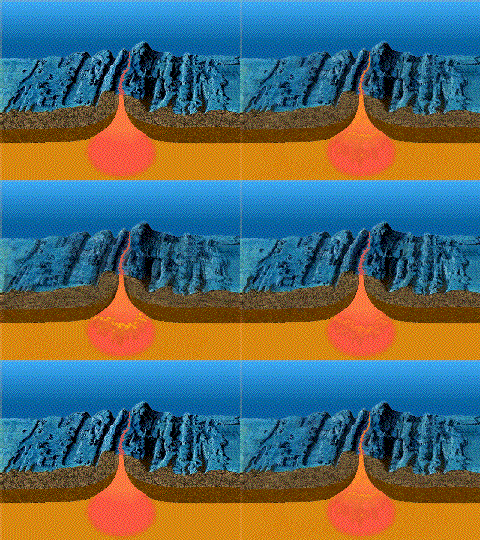
What type of boundary creates new seafloor?
a)
convergent ocean ocean
b)
convergent ocean continental
c)
convergent continental continental
d)
divergent
34.

What type of boundary creates a mountain chain?
a)
convergent ocean ocean
b)
convergent ocean continental
c)
convergent continental continental
d)
divergent
35.

Plates coming together would be
a)
convergent
b)
divergent
c)
transform
36.

Which crust is more dense?
a)
Oceanic Lithosphere
b)
continental Lithosphere
c)
They are the same
37.
A subduction zone is formed...
a)
when one tectonic plate sinks below another
b)
at all plate boundaries
c)
when plates diverge
d)
at transform boundaries
38.

1. What will happen if an igneous rock is put under an extreme amount of heat and pressure?
a)
it will melt into lava
b)
it will weather and erode
c)
it will become a metamorphic rock
d)
it will become a sedimentary
39.

The remains of living things that died long ago are often found in what type of rock?
a)
igneous rocks
b)
sedimentary rock
c)
metamorphic rock
d)
all rocks
40.

The cooled and hardened magma from volcanoes form what rocks?
a)
igneous
b)
sedimentary
c)
metamorphic
d)
fossils
41.

The earth is made up of mostly ...
a)
sand
b)
fossils and soil
c)
rocks
d)
grass
42.

Hot, molten rock inside the earth is called ...
a)
lava
b)
magma
c)
igneous rock
d)
minerals
43.

Once magma reaches the earth's surface, it is called __________.
a)
a vent
b)
minerals
c)
igneous rocks
d)
lava
44.

Large rocks can be broken down into smaller rocks by wind and water. These small rocks can break down into very tiny pieces called _______.
a)
minerals
b)
pebbles
c)
sediments
d)
chalk
45.

Rocks that are buried deep in the earth can be changed into an entirely new rock when it goes through what?
a)
weathering and erosion
b)
pressing and cementing
c)
heat and pressure
d)
cooling and hardening
46.

A never ending process by which rocks are changed from one type to another.
a)
weathering and erosion
b)
rock cycle
c)
heat and pressure
d)
pressing and cementing
47.

The process when rocks break into smaller pieces due to exposure to natural elements is called
a)
erosion
b)
weathering
c)
sediments
48.
The movement of weathered material (sediment) is called?
a)
weathering
b)
erosion
c)
deposition
49.
What is deposition?
a)
Dropping off sediment
b)
Movement of sediment
c)
Breaking down of sediment
50.
What are the 3 major types of rocks?
a)
Igneous, Metamorphic, Sedimentary
b)
Metamorphic, Igneous, Cementation
c)
Brown, Red, Gray
d)
Streak, Hardness, Breakage
100 %

