wayground logo

Free Printable Worksheets

NEW

Font size

S
M
L
XL
Worksheets

Science Final 6th Grade

Total questions: 50

Worksheet time: 38mins

Name
Class
Date
1.

How long does it take Earth to complete one revolution around the Sun?

a)

one year

b)

1 second

c)

24 hours

2.

__________ is described as the stored energy in an object due to its position or composition.

a)

Charcoal Energy

b)

Thermal Energy

c)

Super Energy

d)

Potential Energy

3.
 What scientific instrument uses two lenses to magnify small objects? 
a)
mirror
b)
kaleidoscope
c)
compound microscope
4.

Jacob is on the track team and runs the 200 meter dash. It takes him 25 seconds to reach the finish line. What was his average speed?

a)

8 m/s

b)

25 m/s

c)

16 m/s

5.
The piece of scientific equipment that is used to measure the mass of an object is a _________________.
a)
spring scale
b)
triple beam balance
6.

________________ lost its planet status in 2006

a)

Pluto

b)

Mercury

c)

Saturn

7.

The formula for calculating speed is:

a)

Distance - Time

b)

Distance x Time

c)

Distance ÷ Time

8.
Which of the following is a unit for speed?
a)
meter / second
b)
miles / meter
c)
Inches/footprint
9.
_________ is described as the energy of motion.
a)
Potential Energy
b)
Kinetic Energy
10.
When working in a science lab, you should report any accidents immediately to the teacher.
a)
True
b)
False
11.

How is Jupiter able to have so many moons orbiting it?

a)

It is a popular hangout spot

b)

It is made of magnets

c)

it's gravitational pull

d)

it's speed

12.
The sun is a...
a)
planet
b)
star
c)
Rockband located in Alaska
13.
A force of attraction between any two objects is called _____________.
a)
love 
b)
friction
c)
gravity
14.
Earth completes one full ___________ on its axis every 24 hours.
a)
rotation
b)
revolution
15.
What is the correct order of the planets from the sun? 
a)
Mercury, Venus, Earth, Mars, Jupiter, Saturn, Uranus, Neptune.
b)
Mercury, Earth, Venus, Mars, Jupiter, Saturn, Uranus, Neptune.
16.
Which planet is closest to the sun?
a)
Uranus
b)
Mercury
c)
Neptune
17.
The Sun is Made up of...
a)
Helium and Hydrogen
b)
Oxygen and Nitrogen
18.
Planets that are closer to the sun
a)
take more time to orbit
b)
take less time to orbit
19.
Dirty Snowball is another name given to
a)
a comet
b)
a meteor
c)
A White cats hairball
20.
Which layer of the Earth is the thinnest?  
a)
crust
b)
outer core
c)
upper mantle 
21.

What layer is a semisolid has convection currents and acts like a plastic?

a)

Lithosphere

b)

Mantle

c)

Asthenosphere

22.
The lithosphere combines what two layers?
a)
Athenosphere & Crust
b)
Crust & Upper Mantel
23.

This layer of Earth is the thickest part

a)

crust

b)

mantle

c)

outer core

24.
What are the two types of crust
a)
continental and oceanic
b)
ocean and dirt
c)
garlic & pretzel 
25.

Which layer of the Earth is divided into plates?

a)

The Table

b)

Crust

c)

Mantle

d)

Lithosphere

26.
Which of the following occurs because of convection currents?
a)
Tectonic plates on the crust move.
b)
The mantle increases in size.
27.
Name the boundary
a)
convergent boundary
b)
divergent boundary
c)
transform boundary
28.
Name the boundary
a)
convergent boundary
b)
divergent boundary
c)
transform boundary
29.
Name the boundary
a)
convergent boundary
b)
divergent boundary
30.
Associated with transform boundaries.
a)
Volcanoes
b)
Mountains
c)
Optimus Prime 
d)
Earthquakes
31.
Sedimentary rock is formed when grains of sediment undergo
a)
metamorphism
b)
compaction and cementation
32.

The type of rocks that forms when lava or magma cools and minerals crystallize underground

a)

Don't pick A

b)

sedimentary

c)

intrusive igneous

33.

Obsidian and pumice are extrusive igneous rocks and lack crystals. Why is it that these rocks do not have crystals?

a)

Don't pick A

b)

The lava cooled slowly, deep inside the Earth.

c)

The lava cooled too quickly above the Earth

34.

Where would you most likely find a metamorphic rock?

a)

Don't pick A

b)

in a volcano

c)

Deep in the earth

35.

What are the 3 major types of rocks?

a)

Don't pick A

b)

Metamorphic, Igneous, Cementation

c)

Metamorphic, Ignoreme, Sedimentary

d)

Igneous, Metamorphic, Sedimentary

36.

Two ways to describe types of igneous rocks are _____

a)

Don't pick A

b)

Magma and Lava

c)

Extrusive and Intrusive

d)

Foliated and Non-Foliated

37.

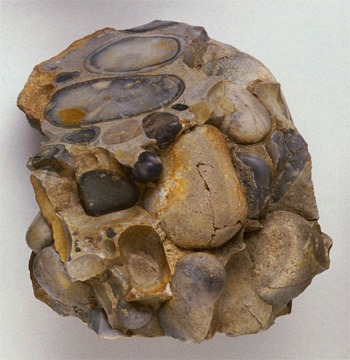
This rock was formed by smaller pieces of rock that settled at the bottom of a lake millions of years ago. What type of rock is this?

a)

Don't pick A

b)

Sedimentary

c)

Metamorphic

d)

Igneous

38.

What is deposition?

a)

Don't pick A

b)

Movement of sediment

c)

Dropping off sediment

39.

The force that resists the movement of one surface past another.

a)

Don't pick A

b)

force

c)

momentum

d)

friction

40.
A push or pull.
a)
force
b)
friction
c)
position
41.

Force is measured in newtons.

a)

Don't pick A

b)

Maybe

c)

True

d)

False

42.

what is the definition of chemical change?

a)

Don't pick A

b)

changes affecting the form of a chemical substance, but not its chemical composition.

c)

matter cannot be created or destroyed, only change form

d)

any change that results in the formation of new chemical substances.

43.

what is the definition of physical change?

a)

any change that results in the formation of new chemical substances.

b)

any property that is measurable, whose value describes a state of a physical system

c)

changes affecting the jelly of a chemical substance, but not its toastlike composition.

d)

changes affecting the form of a chemical substance, but not its chemical composition.

44.
what happens when water freezes?
a)
ice is formed; chemical property
b)
cold water is formed; physical change
c)
ice is formed; physical change
d)
cold water is formed; chemical change
45.
What is a name for an educated guess?
a)
Hypothesis
b)
Conclusion
c)
Problem
d)
Research
46.

Which of the following is a good example of a conductor

a)

Metal Key

b)

Rubber

c)

Plastic

d)

Paper

47.
Which of the following is an example of a insulator?
a)
Copper
b)
Lead
c)
Rubber
d)
Aluminum
48.

A metal spoon that gets warm when used to stir hot soup is an example of:

a)

Contraption

b)

Convection

c)

Radiation

d)

Conduction

49.

The force that resists the movement of one surface past another.

a)

Force

b)

momentum

c)

friction

50.

A push or pull.

a)

position

b)

friction

c)

force