
 Worksheets
FACS Review: MyPlate, Nutrients, Carbohydrates, Fats
Total questions: 32
Worksheet time: 56mins
Name
Class
Date
1.
Which nutrient helps build and repair muscles, cells and tissues in the body?
a)
Carbohydrates
b)
Protein
c)
Fats
d)
Minerals
2.
What are substances found in food that your body needs for survival, development, energy and growth? (Hint: There are 6 of them!)
a)
Carbohydrates
b)
Vitamins
c)
Proteins
d)
Nutrients
3.
Which nutrient is the main source of energy for our bodies?
a)
Water
b)
Grains
c)
Vitamins
d)
Carbohydrates
4.
Which nutrient is responsible for building and strengthening bones and teeth in the body, as well as maintaining body functions?
a)
Carbohydrates
b)
Water
c)
Vitamins
d)
Minerals
5.
Which nutrient helps cool the body down and remove liquid waste?
a)
Water
b)
Fats
c)
Vitamins
d)
Carbohydrates
6.
Which nutrient insulates and cushions the body while also storing energy for the body to use?
a)
Carbohydrates
b)
Fats
c)
Water
d)
Protein
7.
Which nutrient helps fight infections in the body and strengthen the immune system?
a)
Protein
b)
Minerals
c)
Vitamins
d)
Fats
8.
What is the substance found in carbs that helps digestion by pushing waste and bacteria through the system and out of the body?
a)
Sodium
b)
Cholesterol
c)
Fiber
d)
Sugar
9.
Which fat is the healthiest fat to consume in your daily diet?
a)
Unsaturated Fat
b)
Saturated Fat
c)
Trans Fat
d)
Butter
10.
A calorie measures the amount of
a)
fat in a food
b)
energy in a food
c)
calories from fat
d)
daily allowance
11.
Which of the following is not an essential nutrient?
a)
water
b)
vegetables
c)
protein
d)
fat
12.
Fish, nuts, oils and avocado are healthy sources of....
a)
Fiber
b)
Protein
c)
Minerals
d)
Fat
13.
Sugars are...
a)
cholesterol
b)
complex carbohydrates
c)
amino acids
d)
simple carbohydrates
14.
Starches are...
a)
complex carbohydrates
b)
simple carbohydrates
c)
cholesterol
d)
amino acids
15.
Breads, rice, and cereal are all...
a)
protein
b)
carbohydrates
c)
water
d)
who knows?
16.
When you don't drink enough water you can become:
a)
silly
b)
hyper
c)
intoxicated
d)
dehydrated
17.
You can only go a few days without which nutrient?
a)
Vitamin K
b)
Protein
c)
Fat
d)
Water
18.
Fiber is a type of which nutrient?
a)
Non Caloric
b)
Protein
c)
Fat
d)
Carbohydrate
19.

According to MyPlate ... the largest section of your plate should be
a)
Fruits
b)
Dairy
c)
Protein
d)
Vegetables
20.
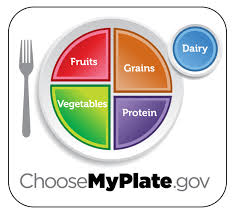
myplate has how many food groups?
a)
4
b)
5
c)
2
d)
6
21.

How much of your plate should consist of fruits and vegetables when following the myplate recomendations?
a)
All
b)
most
c)
half
d)
none
22.
How many of your grains should be whole grains?
a)
all of them
b)
a few of them
c)
half of them
d)
a third of them
23.
What is missing from the MyPlate recommendations?: Fruit, Vegetable, Grain, Protein, ___________.
a)
dairy
b)
oil
c)
water
d)
juice
24.
What happens if you eat more carbohydrates then your body needs?
a)
becomes DNA
b)
turns to fat
c)
creates extra energy
d)
becomes waste
25.
What is Hydrogenation? & Is it good for us?
a)
Hydrogen atoms converting a solid fat into liquid/NO
b)
Hydrogen atoms converting a solid fat into liquid/YES
c)
Hydrogen atoms converting an oil into a solid form/ NO
d)
Hydrogen atoms converting an oil into a solid form/ YES
26.
A stick of butter is what type of fat?
a)
Saturated Fat
b)
Polyunsaturated Fat
c)
Monounsaturated Fat
27.
How many calories are there in 1 gram of fat?
a)
4
b)
7
c)
9
d)
12
28.
The definition of an oil is
a)
Fat that is solid at room temperature
b)
Fat that is liquid at room temperature
c)
Any yellow or green liquid
d)
Greasy substance that only contains saturated fats
29.
Animal products are good sources of
a)
Monounsaturated fats
b)
Saturated fats
c)
Trans Fats
30.
_____ carbohydrates are a QUICK source of energy.
a)
Complex
b)
Simple
c)
Sugar
d)
White bread
31.
______ carbohydrates provide LONG-LASTING energy.
a)
Simple
b)
Complex
c)
Saturated
d)
Grain
32.
Consuming too much fat..
a)
Increases your risk of heart disease and stroke
b)
Makes you tired
c)
Helps you run faster
d)
Increases your risk of lung cancer
100 %

