
 Worksheets
Physical Fitness
Total questions: 55
Worksheet time: 38mins
Name
Class
Date
1.
What component would be most important to a long distance runner?
a)
Reaction time
b)
Cardiovascular endurance
c)
Agility
d)
Muscular Strength
2.
The range of motion through a joint is known as what?
a)
Stretching
b)
Flexibility
c)
Agility
d)
Balance
3.
The ability of muscles to exert force on an object.
a)
Strength
b)
Power
c)
Speed
d)
Endurance
4.
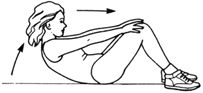
The muscle's ability to work over a long period of time is
a)
flexibility
b)
body composition
c)
intensity
d)
muscular endurance
5.
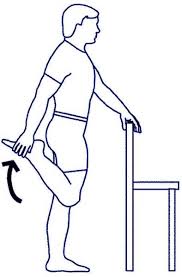
Static stretching involves
a)
helping another person by holding the body part in position during the muscle contraction
b)
moving parts of your body continuously while gradually increasing reach through a full range of motion
c)
stretching a muscle to the point of mild discomfort by holding it in a near maximal stretch for an extended period
d)
rapid bobbing, bouncing, or jerky movements that use your body's momentum to stretch
6.
When taking care of an injury, what does PRICE stand for ?
a)
The cost of how much something is
b)
Prognosis, Remove, Ice, Cold, Exercise
c)
Prevent, Reduce Impact, Carry Energy
d)
Protect, Rest, Ice, Compression, Elevation
7.

This is the ability of the heart and lungs to deliver oxygen to the body during long periods of moderate to physical activity?
a)
muscular endurance
b)
body composition
c)
cardiorespiratory endurance
d)
muscular strength
8.

The formula 220 - your age is used to determine?
a)
resting heart rate
b)
max heart rate
c)
target heart rate
9.

The number of times that your heart beats when your not participating in physical activity is known as?
a)
resting heart rate
b)
max heart rate
c)
target heart rate
10.

What is the ability to change body positions
quickly and keep the body under
control when moving?
a)
Strength
b)
Reaction Time
c)
Body Composition
d)
Agility
11.

What is the ability to combine strength with
speed while moving?
a)
Power
b)
Speed
c)
Strength
d)
Coordination
12.

What is the ability of body parts to work
together when you perform an
activity?
a)
Flexibility
b)
Balance
c)
Coordination
d)
Reaction Time
13.

What is the ability to get from one place to
another in the shortest possible time ?
a)
Reaction Time
b)
Agility
c)
Balance
d)
Speed
14.

What is the ability to move quickly once a
signal to start moving is received?
a)
Speed
b)
Reaction Time
c)
Power
d)
Body Composition
15.

What is the ability to keep the body in a
steady position while standing or
moving?
a)
Body Composition
b)
Coordination
c)
Muscular Strength
d)
Balance
16.

What is the combination of all the tissues
that make up the body such as
bones, muscles, organs, and body
fat?
a)
Body Composition
b)
Muscular Strength
c)
Agility
d)
Coordination
17.
Jogging, Swimming, and riding a bike are all examples of ________ exercise.
a)
aerobic
b)
anaerobic
18.
The best time to measure an accurate resting heart rate is right after exercising.
a)
False
b)
True
19.
Which of the following is NOT part of the mental and emotional benefits of being physically active?
a)
improved self-esteem
b)
stress relief
c)
greater muscle mass
d)
mood enhancement
20.
Aerobic exercise includes
a)
all activities that involve intense, short bursts of activity
b)
all exercises that lower your heart rate and decrease your body's use of oxygen
c)
all activities that make you tired and short of breath
d)
all rhythmic activities that use large muscle groups for an extended period of time
21.
Which choice is an intense exercise that involves short bursts of activity in which the muscles work so hard that they produce energy without using oxygen?
a)
cardiorespiratory exercise
b)
anaerobic exercise
c)
stretching exercises
d)
aerobic exercise
22.
Which choice is NOT a result of a warm-up before a workout?
a)
increased blood flow
b)
increased chance of injury
c)
increased body temperature
d)
increased pulse rate
23.
Which of the following is a low-level activity that prepares your body to return to a resting state?
a)
cool-down
b)
warm-up
c)
progression
d)
overload
24.
The F.I.T.T. Principle...
a)
Fast - Improvement - Training - Tips
b)
Fitness - Is - Too - Tough
c)
Fitness - Impact - Training - Target
d)
Frequency - Intensity - Time - Type
25.
Which of the following sentences best describes the Overload Principle ?
a)
Asking your body to do more than it normally does
b)
Backing off after doing too much physical activity so that you don't injure yourself
c)
Doing too much physical activity and causing injury to yourself
d)
Performing your 1RM
26.
"3 Days a Week" is an example of a...
a)
Frequency
b)
Intensity
c)
Time
d)
Type
27.
"80% of your max" is an example of an...
a)
Frequency
b)
Intensity
c)
Time
d)
Type
28.
"45 Minutes Total" is an example of a...
a)
Frequency
b)
Intensity
c)
Time
d)
Type
29.
"Soccer Dribbling Cone Drills" is an example of a...
a)
Frequency
b)
Intensity
c)
Time
d)
Type
30.
The best description of the Principle of Progression is...
a)
Gradually increase the time or intensity of your workout in order to see consistent results over time.
b)
Progressing from 115 lbs. to 310 lbs. on the bench press in one week.
c)
Going out into your community and getting members of your school to vote in the weeks leading up Election Day.
d)
Spring Break is 3 weeks away, I need to look like a supermodel by then. Better start doing some sit-ups.
31.
The best description for the Principle of Specificity is...
a)
The specific exercise you do, determines the specific result or benefit you will obtain.
b)
In order to strengthen a specific muscle in your body, you need to work out ALL of the muscles surrounding that muscle, but NOT the specific muscle.
c)
In order to be good at soccer, you need to be good at basketball.
d)
Coach White/Vincent, you trippin', specificity ain't a word. Ain't nobody got time for that, hide yo wife, hide yo kids.
32.
Sprains are injuries to:
a)
ligaments
b)
tendons
c)
bones
d)
skin
33.
Strains are injuries to:
a)
ligaments
b)
tendons or muscles
c)
bone
d)
skiin
34.
An injury that happens suddenly
a)
Rehabilitation
b)
RICE
c)
acute injury
d)
chronic injury
35.
an injury that develops over a period of time
a)
Rehabilitation
b)
RICE
c)
acute injury
d)
chronic injury
36.
discomfort that happens a day or two after hard exercise
a)
Rehabilitation
b)
PRICE
c)
muscle soreness
d)
chronic injury
37.
A small break in a bone that is caused by too much exercise or by not using the correct form when exercising is called
a)
tendinitis
b)
a strain
c)
a stress fracture
d)
fracture
38.
Exercise to improve fitness for sports
a)
Crosstraining
b)
Overload
c)
Physical Fitness
d)
Conditioning
39.
The F.I.T.T. Principle...
a)
Fast - Improvement - Training - Tips
b)
Fitness - Is - Too - Tough
c)
Fitness - Impact - Training - Target
d)
Frequency - Intensity - Time - Type
40.

How long do you exercise?
a)
Frequency
b)
Time
c)
Intensity
d)
Type
41.

How often do you exercise?
a)
Frecuency
b)
Intensity
c)
Time
d)
Type
42.

How hard you exercise?
a)
Frecuency
b)
Intensity
c)
Time
d)
Type
43.

The kind of exercise that you do in order to achieve the results you want
a)
Frecuency
b)
Intensity
c)
Time
d)
Type
44.

Gradually increasing resistance, increasing repetitions, increasing sets, increasing intensity
a)
Progression
b)
Overload
c)
Specificity
d)
Training
45.

A muscle forced to operate beyond its customary intensity by increasing the load
a)
Training
b)
Specificity
c)
Progression
d)
Overload
46.

Exercising a particular muscle for a certain task
a)
Training
b)
Overload
c)
Specificity
d)
Progression
47.

In order to experience progression you must gradually add intensity to ____________ the body
a)
Fatigue
b)
Overload
c)
Relax
d)
Exhaust
48.
Sports training should be adjusted according to each athlete's characteristics and needs, such as age, gender, rate of progress, and previous experience.
a)
Overload Principle
b)
Reversibility Principle
c)
Individualization Principle
d)
Recovery Principle
49.
This principle dictates that athletes need adequate time to recuperate from training and competition.
a)
Balance Principle
b)
Recovery Principle
c)
F.I.T.T. Principle
d)
Specificity Principle
50.
This principle dictates that athletes lose the beneficial effects of training when they stop working out.
a)
Recovery Principle
b)
Progression Principle
c)
Overload Principle
d)
Reversibility Principle
51.
In addition to fitness components, the Reversibility Principle also applies to sport skills
a)
True
b)
False
52.
Exercising too long, too intensely, or too frequently
a)
Overload
b)
Overexertion
c)
Progression
d)
Specificity
53.
Choosing the right type of activity to improve an element is what?
a)
Specificy
b)
Progression
c)
Overload
d)
Sedentary
54.
Exercises that last a long time and use oxygen to get energy
a)
Aerobic
b)
Anaerobic
55.
Short, powerful bursts of exercise or movement that does not use oxygen to get energy
a)
Aerobic
b)
Anaerobic
100 %

