
 Worksheets
Characteristics of the Universe
Total questions: 35
Worksheet time: 40mins
Name
Class
Date
1.
What information can we get about stars from their spectral lines?
a)
their size
b)
their names
c)
chemical composition
d)
the favorite food
2.
The main things we see in the universe are ________ and they are grouped in _______.
a)
galaxies, stars
b)
planets, solar systems
c)
galaxies, universe
d)
stars, galaxies
3.
What type of star is our sun?
a)
extremely large
b)
extremely small
c)
average
d)
its not a star
4.
A star is actually a star when it begins (the process of combining hydrogen) ...
a)
nuclear fission
b)
nuclear fusion
c)
moving
d)
shrinking
5.

Which star has the lowest temperature?
a)
A
b)
B
c)
C
d)
D
6.

Which star is considered a Main Sequence Star?
a)
A
b)
B
c)
C
d)
D
7.

What type of galaxy is this?
a)
Spiral
b)
Elliptical
c)
Irregular
d)
Irrational
8.
A light year is...
a)
The speed light travels
b)
How long it takes light to get to you from the sun
c)
The distance light can travel in a year
d)
How many years it takes light to be emitted
9.

Which star has the lowest luminosity?
a)
A
b)
B
c)
C
d)
D
10.

Look at the H-R Diagram. Where is Polaris?
a)
In the main sequence
b)
with the Super Giants
c)
with the Giants
d)
with the White Dwarfs
11.

Look at the H-R Diagram. Where is the sun?
a)
In the main sequence
b)
with the Super Giants
c)
with the Giants
d)
with the White Dwarfs
12.

Our solar system is located inside a galaxy called the _____________. The shape of our galaxy is ________.
a)
Local Group
b)
Milky Way, spiral
c)
Andromeda
d)
Milky Way, elliptical
13.

Red stars are the _____________.
a)
hottest
b)
coolest
c)
biggest
14.

Blue stars are the _____________.
a)
hottest
b)
coolest
c)
smallest
15.

Which galaxy is moving the fastest?
a)
Galaxy E
b)
Galaxy B
c)
Galaxy C
d)
Galaxy D
16.

Which galaxy is the farthest away from Earth?
a)
Galaxy B
b)
Galaxy C
c)
Galaxy E
d)
Galaxy D
17.

Stars are formed in a cloud of gas and dust called a
a)
nebula
b)
black hole
c)
white dwarf
d)
Super Giant
18.

What type of star is Betelgeuse?
a)
Super Giant
b)
Giant
c)
White Dwarf
d)
Main Sequence
Giants
Giants
19.

Which star is hotter than the Sun?
a)
Betelgeuse
b)
Antares
c)
Vega
d)
Rigel
Giants
Giants
20.
What are the shortest, most dangerous, wavelengths in the electromagnetic spectrum?
a)
radio waves
b)
microwaves
c)
gamma rays
d)
x-rays
21.
What are the longest and least dangerous of all the electromagnetic wavelengths?
a)
X-Rays
b)
radio waves
c)
microwaves
d)
gamma rays
22.
The color of a star will tell you its ________________.
a)
temperature
b)
brightness
c)
size
d)
mass
23.
Very massive stars die in a huge explosion called a ____________.
a)
solar flare
b)
super nova
c)
black hole
d)
neutron star
24.
Proxima Centauri is the closest star to Earth after the Sun and is located 4.3 light years away from Earth. How long does it take light from Proxima Centauri to reach Earth?
a)
1 year
b)
4.3 years
c)
43 years
d)
10 trillion years
25.
What are electromagnetic waves?
a)
sound waves
b)
electric & magnetic fields that travel through space very quickly
c)
Mrs. Geier's son's name
d)
things like longitudinal waves
26.
The event that marks the beginning of our known universe
a)
Theory of Evolution
b)
Big Bang Theory
c)
Cell Theory
d)
Blackhole theory
27.
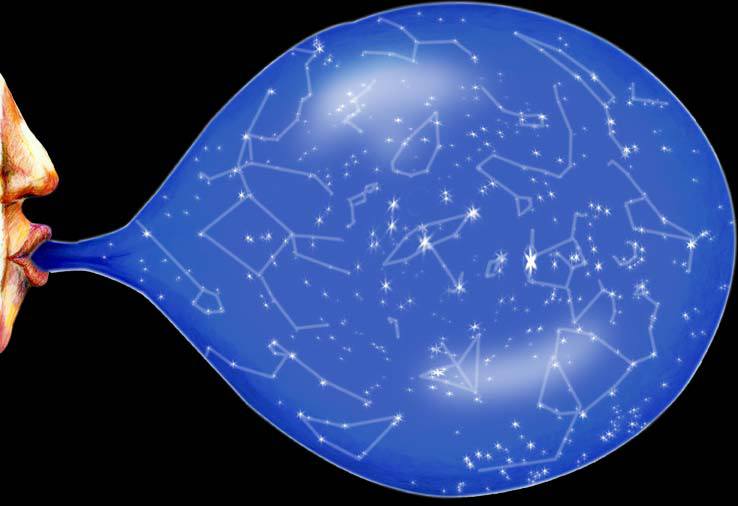
What does the Big Bang theory suggest?
a)
The universe was just there
b)
The Milky Way is the only solar system
c)
The universe is continually expanding
d)
The universe started as a point and is moving towards each other
28.
Where are stars that are both dim and cool located on the HR diagram?
a)
Bottom right
b)
bottom left
c)
top right
d)
top left
29.
What two characteristics are used to plot stars on the HR diagram?
a)
temperature and size
b)
temperature and brightness (luminosity)
c)
size and brightness
30.

Of visible light, which color has the longest wavelengths?
a)
red
b)
blue
c)
orange
d)
green
31.

Of visible light, which color has the shortest wavelengths?
a)
red
b)
green
c)
blue
d)
violet
32.
A star's life would follow which sequence?
a)
giant, main sequence, white dwarf
b)
white dwarf, main sequences, giant
c)
main sequence, white dwarf, giant
d)
main sequence, giant, white dwarf
33.
What characteristic determines the lifespan of a star?
a)
temperature
b)
brightness
c)
size
d)
limonosuty
34.
A light-year is
a)
365 days
b)
the distance light travels in a year
c)
the distance from Earth to Proxima Centauri
d)
the amount o flight the sun produces in a year
35.
Where in the Milky Way can our solar system be found?
a)
on one of the outer arms of the galaxy (near the edge)
b)
in the center of the galaxy
c)
on the very outer edge of the galaxy
d)
our solar system is not located in the Milky Way
100 %

