
 Worksheets
Earth Science Review
Total questions: 44
Worksheet time: 45mins
Name
Class
Date
1.
The process by which water, ice, wind or gravity moves weathered rock and soil from one place to another.
a)
weathering
b)
erosion
c)
deposition
d)
dumptruck
2.
Flood water pounding against a canyon wall and wearing it down
a)
Weathering
b)
Erosion
c)
Deposition
3.
Rain washing away soil from a hillside
a)
Weathering
b)
Erosion
c)
Deposition
4.
Layers of sediment forming at the bottom of the ocean floor
a)
Weathering
b)
Erosion
c)
Deposition
5.
Glaciers dropping rock and sand to form moraines (deposition of debris)
a)
Weathering
b)
Erosion
c)
Deposition
6.
Waves dropping sand on the beach
a)
Weathering
b)
Erosion
c)
Deposition
7.
Deltas forming at the mouths of rivers
a)
Weathering
b)
Erosion
c)
Deposition
8.
Water getting into cracks, freezing, and breaking the rocks or pavement apart
a)
Weathering
b)
Erosion
c)
Deposition
9.

What part of the water cycle does this picture show?
a)
condensation
b)
precipitation
c)
evaporation
10.
Which of these is an example of precipitation?
a)
snow
b)
air
c)
clouds
d)
vapor
11.

Does evaporation happen before or after condensation?
a)
before
b)
after
c)
during
12.

What is it called when plants give off water vapor as a waste product?
a)
condensation
b)
evaporation
c)
sublimation
d)
transpiration
13.
What is the water cycle?
a)
the 3 forms of water
b)
the movement of water on, above, or below the surface of the Earth
c)
when water melts
d)
when clouds form
14.
Which answer best defines evaporation?
a)
the process of changing from a liquid to a gas, usually caused by energy from the sun
b)
the process in which animals release water vapor
c)
the process of changing from a gas to a liquid, such as water vapor changing into water
d)
water falling to the surface of the Earth in the form of rain, hail, sleet, or snow
15.
which answer best defines condensation?
a)
the process of changing from a liquid to a gas, usually caused by energy from the sun
b)
the process in which animals release water vapor
c)
the process of changing from a gas to a liquid, such as water vapor changing into water
d)
water falling to the surface of the Earth in the form of rain, hail, sleet, or snow
16.
Which answer best defines precipitation?
a)
the process of changing from a liquid to a gas, usually caused by energy from the sun
b)
the process in which animals release water vapor
c)
the process of changing from a gas to a liquid, such as water vapor changing into water
d)
water falling to the surface of the Earth in the form of rain, hail, sleet, or snow
17.
Which answer best defines transpiration?
a)
the process of water vapor leaving a plant and entering the atmosphere
b)
the process in which animals release water vapor
c)
the process of changing from a liquid to a gas, usually caused by energy from the sun
d)
the change of water from one state to another as it travels from the Earth's surface to the atmosphere and back
18.

What does this symbol show?
a)
High pressure
b)
Low pressure
c)
Low humitidy
d)
Longing for someone (strong feelings)
19.

What does this image show?
a)
Hotness
b)
High altitude
c)
High pressure
d)
Hi five bro!
20.

What does this image show?
a)
A flag banner
b)
Blue alligator teeth
c)
Warm Front
d)
Cold Front
21.

What does this image represent?
a)
Cold front
b)
Red bulbous things
c)
Warm front
d)
Sarah Ju
22.
High pressure creates sunny, clear skies.
a)
True
b)
False
23.

What direction is the warm front moving?
a)
Northeast
b)
Northwest
c)
Southeast
d)
Southwest
24.

What direction is the cold front moving?
a)
Northwest
b)
Southeast
c)
Northeast
d)
Southwest
25.
What part of the moon do we see from Earth?
a)
all of it
b)
the same side
c)
none of it
d)
only one quarter
26.
The moon seems to change shape from day to day in a cycle that lasts about a month as it goes through _.
a)
revolutions
b)
phases
c)
rotations
d)
eclipses
27.
About how long does it take the moon to make one complete cycle around the earth?
a)
65 days
b)
8 days
c)
365 days
d)
28 days
28.
Which moon phase is when you can't see the moon at all?
a)
Waning crescent
b)
Full moon
c)
Waxing gibbous
d)
New moon
29.
Tides are caused by ___________
a)
wind
b)
gravitational pull of moon
c)
waves gravitation toward land
d)
rain
30.
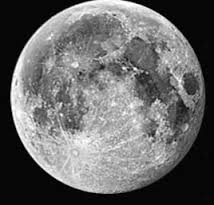
Name the moon phase
a)
First Quarter
b)
Last Quarter
c)
New Moon
d)
Full Moon
31.
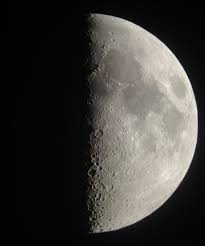
Name the moon phase
a)
First Quarter
b)
Last Quarter
c)
New Moon
d)
Full Moon
32.
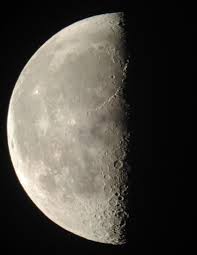
Name the moon phase
a)
First Quarter
b)
Last Quarter
c)
New Moon
d)
Full Moon
33.
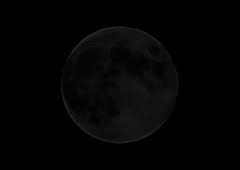
Name the moon phase
a)
First Quarter
b)
Last Quarter
c)
New Moon
d)
Full Moon
34.

What causes the seasons to change?
a)
The warming and cooling of Earth's core.
b)
The distance from the sun.
c)
Earth's tilt in relation to the sun.
d)
Earth's rotation on its axis.
35.

Which season is taking place in the Southern Hemisphere in Position 1?
a)
Winter
b)
Spring
c)
Summer
d)
Fall
36.

Which season is taking place in the Northern Hemisphere in Position 2?
a)
Winter
b)
Spring
c)
Summer
d)
Fall
37.

Which season is taking place in the Northern Hemisphere in Position 3?
a)
Winter
b)
Spring
c)
Summer
d)
Fall
38.
The bulge of water on the side of the Earth closest to the moon produces ___________.
a)
high tide
b)
low tide
c)
neap tide
d)
spring tide
39.
Water flows toward the high tides, halfway between them causing ____________.
a)
neap tide
b)
high tide
c)
spring tide
d)
low tides
40.
How does the Sun's position in the sky effect the length of a shadow?
a)
It determines the length of the shadow.
b)
It makes shadows appear super large.
c)
It helps you to see your shadow.
d)
It blocks all shadows, so you cannot see them.
41.

Look at the picture. Would the sun be low or high in the sky in the afternoon picture?
a)
The sun would be directly above.
b)
You would not be able to see the sun at all.
c)
The sun would be low in the sky.
d)
The sun has nothing to do with shadows.
42.
At ____ the length of a shadow is the shortest.
a)
8am
b)
5pm
c)
midday
43.
A shadow is the longest ________ .
a)
at midday
b)
in the morning
c)
in the evening
d)
in the morning and the evening
44.

When the Sun shines on the pole, a shadow of the pole is cast. At different times of the day _________ .
a)
the shadow will be at a different place
b)
the shadow will have a different length
c)
the shadow will be at a different place and have a different length
d)
the shadow will be at the same place and have the same length
100 %

