
 Worksheets
Cardiovascular System
Total questions: 50
Worksheet time: 13hrs 30mins
Name
Class
Date
1.
Gas exchange occurs in two places, what are they?
a)
in the right atrium and in the lung cells
b)
in the cells of the body and in the brain cells
c)
in the lung cells and all the intraventricular septum
d)
in the cells of body and in the lung cells
2.
Which order is correct?
a)
Superior and inferior vena cavas into the right atrium through the tricuspid valve
b)
Superior and inferior vena cavas into the left atrium through the bicuspid valve
c)
right ventricle through the tricuspid valve into the right atrium
d)
body cells and tissues to the aorta through the aortic valve
3.
How many chambers does the heart have ?
a)
4
b)
6
c)
3
d)
1
4.
What is the main function of the heart ?
a)
The heart circulates blood and oxygen throughout the body.
b)
The heart is the control centers for all body activities.
c)
The heart gets rid of the wastes in your body produced by homeostasis.
d)
The heart transports , protection and regulation. Blood transports the following substances:
5.
A blood vessel that carries blood TO the heart is called ...
a)
vein
b)
capillary
c)
blood vessel
d)
artery
6.
White blood cells (WBC’s), red blood cells (RBC’s), plasma, & platelets are the 4 parts of what?
a)
blood vessels
b)
organs
c)
heart disease
d)
blood
7.
The bottom chambers of the heart are called
a)
ventricles
b)
atria
c)
vena cava
d)
valves
8.
Which part of the heart pumps deoxygenated (oxygen-poor) blood?
a)
Left side
b)
Right side
c)
Top side
d)
Bottom side
9.
When looking at the heart, which side is the right?
a)
my right
b)
my left
c)
at the apex
d)
at the base
10.
Where is the bicuspid valve located?
a)
between right atrium & right ventricle
b)
between left atrium & left ventricle
c)
between left ventricle & aorta
d)
between right ventricle & pulmonary trunk
11.
The upper chambers of the heart are the...
a)
artery
b)
ventricle
c)
vesticle
d)
atrium
12.
How many valves are in the heart?
a)
3
b)
2
c)
4
d)
5
13.
Blood enters through ______ and leaves through the ________
a)
Left side, Right side
b)
Right Side, Left side
c)
Right side, Right side
d)
Left side, Left side
14.
heart rate greater than 100 bpm(beats per minute)
a)
tachycardia
b)
bradycardia
15.
Heart rate less than 60 bpm (beats per minute)
a)
tachycardia
b)
Bradycardia
16.
irregular heart rhythm
a)
Arrhythmia
b)
stroke
c)
Embolus
d)
MI
17.
Myocardium
a)
Middle
b)
outter
c)
inner
18.
Pericardium
a)
Outter
b)
middle
c)
inner
19.
Endocardium
a)
Middle
b)
outter
c)
inner
20.
What type of muscle do you find in the heart?
a)
smooth muscle
b)
Skeletal muscle
c)
cardiac muscle
21.

Identify
a)
Left atrium
b)
Right atrium
c)
Left ventricle
d)
Right ventricle
22.
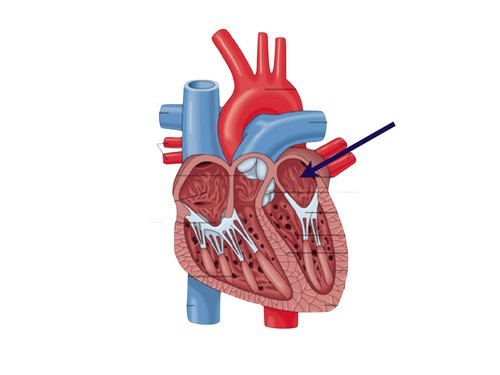
Identify
a)
Left atrium
b)
Right atrium
c)
Left ventricle
d)
Right ventricle
23.
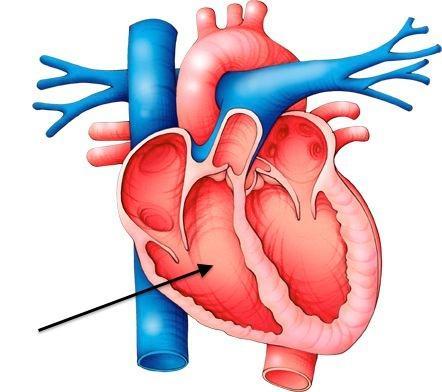
Identify
a)
Left atrium
b)
Right atrium
c)
Left ventricle
d)
Right ventricle
24.
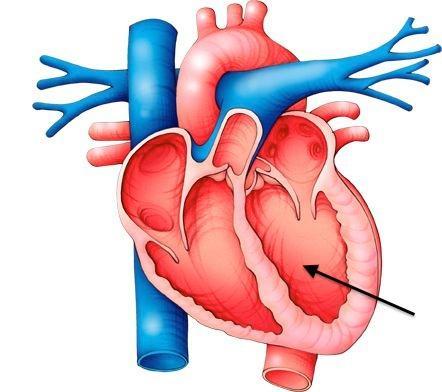
Identify
a)
Left atrium
b)
Right atrium
c)
Left ventricle
d)
Right ventricle
25.

What does Deoxygenated mean?
a)
Oxygen-rich
b)
Blood flow
c)
Oxygen-poor
d)
Water Flow
26.
Carry blood away from heart; mostly oxygen-rich
a)
Arteries
b)
Veins
c)
Capillaries
27.
arteries, veins, and capillaries are three types of __________
a)
heart valves
b)
blood vessels
c)
cells
d)
veins
28.

What does blood transport?
a)
Oxygen
b)
All of the answers provided are transported in blood
c)
wastes
d)
nutrients
29.
The circulatory system carries _______ & ______ to cells.
a)
nutrients and oxygen
b)
waste and carbon dioxide
c)
stomach acid and blood
30.
Blood becomes oxygenated in the lungs
a)
True
b)
False
31.
What is the aorta?
a)
the large vein leading back to the heart
b)
the large artery leading away from the heart
c)
A chamber of the heart
d)
The artery leading from the heart to the lungs
32.
The smooth layer of tissue that lines the inside of the heart
a)
Endocardium
b)
Pericardium
c)
Myocardium
d)
None of the Above
33.
This is the thick muscular layer of the heart
a)
Pericardium
b)
Endocardium
c)
Myocardium
d)
Epicardium
34.
Body cavity where the heart is found
a)
abdominal
b)
thorax (thoracic)
c)
cranial
d)
pelvic
35.
The smallest veins of the body are the ___________.
a)
vena cava
b)
arterioles
c)
venules
d)
capillaries
36.
The smallest blood vessels of the body are the _____________
a)
arterioles
b)
venules
c)
capillaries
d)
aorta
37.
The smallest arteries of the body are the __________.
a)
arterioles
b)
venules
c)
capillaries
d)
aorta
38.
Which of the following cells are responsible for fighting diseases?
a)
thrombocytes
b)
erythrocytes
c)
leukocytes
d)
platelets
39.
Gas exchange occurs in two places, what are they?
a)
in the right atrium and in the lung cells
b)
in the cells of the body and in the brain cells
c)
in the lung cells and all the intraventricular septum
d)
in the cells of body and in the lung cells
40.
When someone takes the blood of another person, it is called
a)
a retriever
b)
a donor
c)
an infusion
d)
a transfusion
41.
Which blood type is the universal donor?
a)
Type O
b)
Type A
c)
Type B
d)
Type AB
42.
What gas is a waste product carried by the blood?
a)
Oxygen (O2)
b)
nutrients
c)
Water (H2O)
d)
Carbon Dioxide (CO2)
43.
The liquid portion of the blood.
a)
red blood cells
b)
white blood cells
c)
plasma
d)
platelets
44.
Which part of the blood determines the blood type?
a)
red blood cells
b)
white blood cells
c)
plasma
d)
platelets
45.
What are the 4 blood types?
a)
A - B - AB - C
b)
A - B - AB - Z
c)
A - B - AB -O
d)
A - B - C - O
46.
The average blood pressure is
a)
120/80
b)
80/120
c)
115/180
d)
120/180
47.
Which of the following fights infection?
a)
Red Blood cells
b)
White blood cells
c)
Platelets
d)
Plasma
48.
An extra sound in the heartbeat is called?
a)
arrhythmia
b)
heart murmur
c)
opening in heart wall
d)
stroke
49.
The heart is a muscular organ that pumps blood throughout the body.
a)
True
b)
False
50.
Platelets
a)
help fight disease
b)
take up oxygen and deliver to cells
c)
help form blood clots
d)
help carries nutrients
100 %

