
 Worksheets
Cambridge Primary Checkpoint Science Review 3
Total questions: 131
Worksheet time: 3hrs 54mins
Name
Class
Date
1.
What is a PUSH or PULL of an object?
a)
Motion
b)
Force
c)
Friction
d)
Gravity
2.
What happens when one force PULLS an object toward another?
a)
Friction
b)
Motion
c)
Gravity
d)
Magnetism
3.
What is a force that works AGAINST MOTION?
a)
Force
b)
Motion
c)
Gravity
d)
Friction
4.
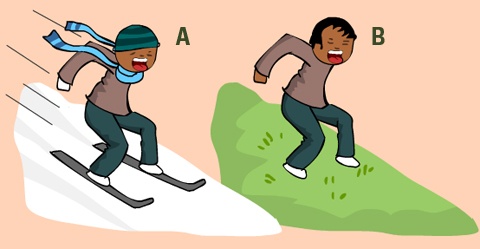
Why is it harder for the boy in Image B to get down the hill?
a)
Motion
b)
Friction
c)
Work
d)
Displacement
5.
How is gravity affected by mass?
a)
the larger the mass of the object, the greater the gravity
b)
small objects have no gravity
c)
gravity is not affected by mass of objects, whether large or small
6.
Which force produces a change in motion?
a)
unbalanced force
b)
balanced force
c)
gravitational force
d)
frictional force
7.
The amount of matter in an object
a)
weight
b)
force
c)
gravity
d)
mass
8.
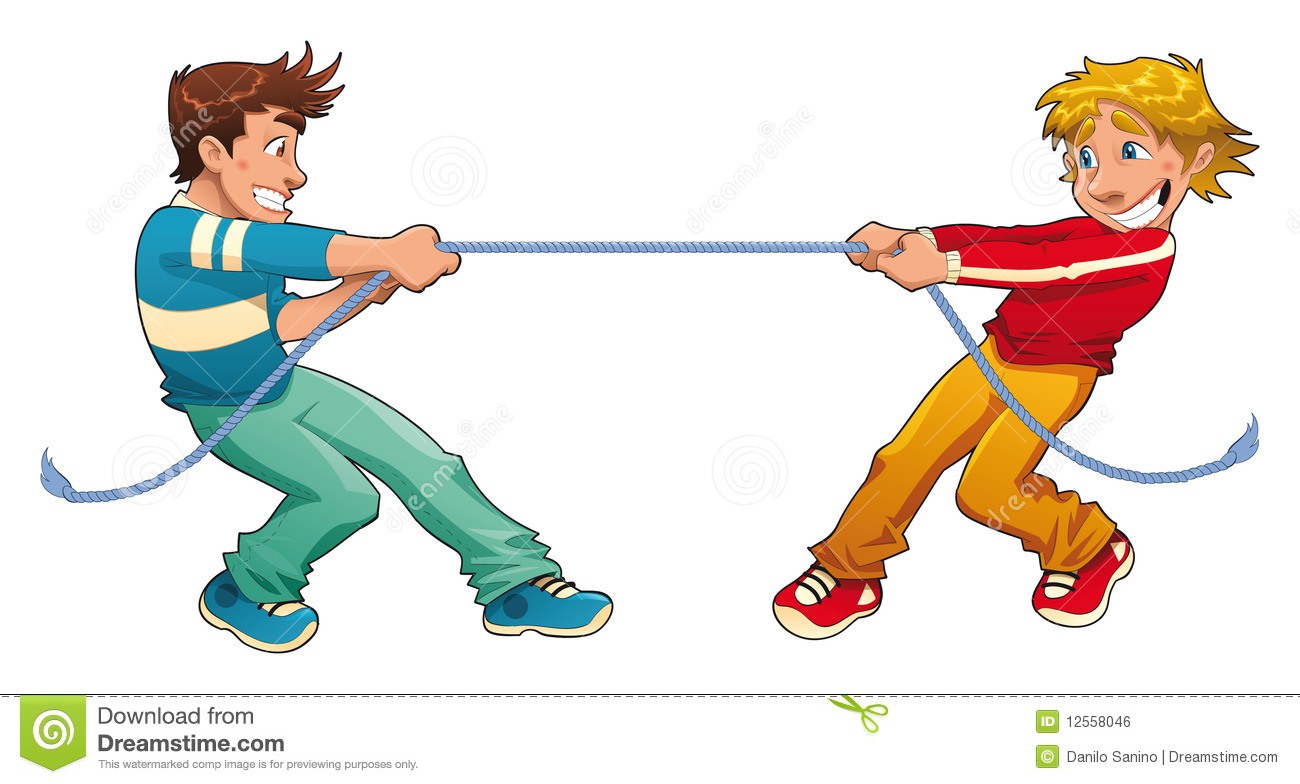
If these boys are pulling with the same amount of force. What will happen?
a)
The boy in blue will win.
b)
They will not move at all.
c)
The boy in red will win.
d)
Both will fall down.
9.
What is the standard unit force is measured in?
a)
Newtons
b)
pounds
c)
grams
d)
meters
10.
What happens when one object moves an object over a distance?
a)
Inertia
b)
Work
c)
Displacement
d)
Magnetism
11.

What type of energy is in this picture?
a)
Kinetic
b)
Potential
c)
Electromagnetic
12.
Consists of two circular objects; a central shaft and a wheel.
a)
wheel and axle
b)
screw
c)
pulley
13.
If an object is too heavy to move up a ramp, what is the best way to fix the problem?
a)
Increase the slope of the ramp
b)
Increase the elevation of the ramp
c)
Increase the length of the ramp
d)
Increase the friction of the ramp
14.
The tendency of an object to stay in motion or at rest is called
a)
velocity
b)
acceleration
c)
speed
d)
inertia
15.
Which of the following describes energy?
a)
the ability to remain in motion
b)
the ability to do work
c)
the ability to pull objects down
d)
the ability to change states
16.
A playground seesaw is a type of
a)
pulley
b)
lever
c)
wheel and axle
d)
compound machine
17.
When a ball rolls down a hill
a)
kinetic energy is created
b)
potential energy is created
c)
thermal energy is created
d)
none of these
18.

What is the law that states that energy cannot be created or destroyed only transform form one energy to another?
a)
Law of Conservation of Energy
b)
Law of Gravity
c)
Law of Inertia
d)
None of these
19.

At which point is potential energy greatest
a)
W
b)
X
c)
Y
d)
Z
20.
Which of the following does a simple machine do?
a)
allows the users to apply less force over a longer distance
b)
reduce the amount of force needed to do work
c)
Both of the above
21.

What is the net force?
a)
400 N Up
b)
400 N Down
c)
- 400 N Down
d)
800 N Down
22.

On the Picture the balloon pushes the air right. What is the second force in this interaction pair?
a)
The air pulls the ball left
b)
Gravity pulls the balloon down
c)
The air pushes the balloon left.
d)
The air pulls the balloon right.
23.

What is the net force
a)
10 N
b)
0 N
c)
25 N
d)
1 N
24.
If you slow down on your bicycle, you accelerate.
a)
True
b)
False
25.

When a heavy football player and a light one run into each other, who exerts more force?
a)
The heavy one
b)
The light one
c)
They are equal
d)
There is no such thing as force
26.
What is Newton's First Law of Motion?
a)
F = m x a
b)
Every action has an equal an opposite reaction
c)
An object at rests stays, an object in motion stays in motion
d)
Friction
27.
What is Newton's Second Law of Motion?
a)
F = m x a
b)
Action/Reaction
c)
Object in motion will stay in motion, object at rest will stay at rest
d)
Velocity
28.

The law in the picture represents---
a)
Newton's 1st law
b)
Newton's 2nd law
c)
Newton's 3rd law
d)
Newton's 4th law
29.

What Newton's law does this picture represent?
a)
Newton's 2nd law
b)
Newton's 1st law
c)
Newton's 3rd law
d)
Newton's 5th law
30.
1000 kg is the -----
a)
Force
b)
Mass
c)
Acceleration
d)
Weight
31.
20 N is the ----
a)
Mass
b)
Force
c)
Acceleration
d)
Weight
32.
Why is excretion an important life process?
a)
It helps organism maintain their temperature.
b)
It helps an organism break down food.
c)
It removes wastes and toxins from an organism.
d)
It allows organisms to produce energy.
33.
Produces new organisms identical to the parent.
a)
Sexual Reproduction
b)
Asexual Reproduction
c)
Digestion
d)
Cellular Respiration
34.
Combining of parent genetic information.
a)
Sexual Reproduction
b)
Asexual Reproduction
c)
Excretion
d)
Exchange of Gases
35.
What is ingestion?
a)
Breaking down food into molecules usable by cells.
b)
Taking in food. ex. endocytosis.
c)
Maintaining an stable internal environment.
d)
Taking in or releasing of oxygen or carbon dioxide.
36.
What is digestion?
a)
Breaking down food into molecules usable by cells.
b)
Taking in food. ex. endocytosis.
c)
Maintaining an stable internal environment.
d)
Taking in or releasing of oxygen or carbon dioxide.
37.
Which describes the life process, exchange of gases?
a)
Breaking down food into molecules usable by cells.
b)
Taking in food. ex. endocytosis.
c)
Maintaining an stable internal environment.
d)
Taking in or releasing of oxygen or carbon dioxide.
38.
Which describes the life process of reproduction?
a)
Changing throughout an organisms life
b)
Passing down genetic information to offspring.
c)
Maintaining an stable internal environment.
d)
Removal of toxins and waste.
39.
Which is NOT a way for organisms to respond to their environment to maintain stable internal conditions?
a)
Plants close their stomata to reduce water loss.
b)
Sweating to cool off.
c)
Animals grow and change throughout their lives.
d)
Produce urine to conserve water.
40.
What is something that plant and animal cells have in common?
a)
Both are multi-cellular
b)
Both carry out life functions
c)
Both have a nucleus
d)
All of the above
41.
Where organ of the plant does MOST photosynthesis occur?
a)
stem
b)
leaves
c)
flower
d)
roots
42.
The mouth, esophagus, stomach and intestines are part of what system?
a)
nervous
b)
digestive
c)
circulatory
d)
respiratory
43.
The brain, spinal cord, and nerves are part of what system?
a)
nervous
b)
digestive
c)
circulatory
d)
respiratory
44.
A person who has numbness in their hands might have a problem with which body system?
a)
respiratory
b)
circulatory
c)
digestive
d)
nervous
45.
The heart and blood vessels are part of what system?
a)
nervous
b)
digestive
c)
circulatory
d)
respiratory
46.
Mr. Stevens went to the doctor with a bad pain in his digestive system. What organ might be affected?
a)
toes
b)
brain
c)
large intestine
d)
heart
47.
The mouth, trachea, lungs and diaphragm are part of what system?
a)
nervous
b)
digestive
c)
circulatory
d)
respiratory
48.
What is happening in the body when your heart rate increases because a person is running a race?
a)
more carbon dioxide is produced in the lungs
b)
digestion is speeding up
c)
blood cells are dying
d)
more oxygen is delivered to the muscles by the blood
49.
What is the function of the circulatory system?
a)
exchange gasses
b)
break down food into molecules to be carried to the cells
c)
transport materials such as oxygen, carbon dioxide and nutrients to the body cells
d)
control and coordinate the body
50.
What is the function of the respiratory system?
a)
exchange gasses
b)
break down food into molecules to be carried to the cells
c)
transport materials such as oxygen, carbon dioxide and nutrients to the body cells
d)
control and coordinate the body
51.
What is the function of the nervous system?
a)
exchange gasses
b)
break down food into molecules to be carried to the cells
c)
transport materials such as oxygen, carbon dioxide and nutrients to the body cells
d)
control and coordinate the body
52.
What is the function of the digestive system?
a)
exchange gasses
b)
break down food into molecules to be carried to the cells
c)
transport materials such as oxygen, carbon dioxide and nutrients to the body cells
d)
control and coordinate the body
78.
Which is not a source of protein?
a)
Cookies
b)
Eggs
c)
Nuts
d)
Lean meats
54.
We need to have fat in our diets.
a)
True
b)
False
55.
Name the 5 food groups
a)
Fruits, Vegetables, Protein, Dairy, and Fat
b)
Fruits, Vegetables, Protein, Dairy, and Grains
c)
Food, Vegetables, Protein, Dairy, and Grains
d)
Fruits, Vegetables, Protein, Dairy, and Sweets
56.
The study of food and how it works in you is called
a)
Nutrition
b)
Fitness
c)
Food
d)
Diet
57.
Grains and Vegetables contain this mineral that helps keep you feeling full
a)
Fiber
b)
Calcium
c)
Fat
d)
Vitamin D
58.
Dairy (milk, yogurt, etc) is important because it contains calcium. Calciam is important for ...
a)
strong bones
b)
strong heart
c)
strong brain
d)
strong lungs
59.
This food group helps you build and maintain strong muscles
a)
Grains
b)
Protein
c)
Dairy
d)
Fat
60.
Grains are needed for ...
a)
Fullness
b)
Strong bones and teeth
c)
Energy
d)
A strong heart
61.

The food you eat must be broken down into a different form before your body can use it.
a)
True
b)
False
62.
These are examples of what?
Nutrition; Movement; Growth; Sensitivity; Respiration; Excretion; Reproduction.
Nutrition; Movement; Growth; Sensitivity; Respiration; Excretion; Reproduction.
a)
Life Processes
b)
Living Things
c)
Human Pronouns
d)
Life Pronouns
63.
What life process involves the food and water taken in and used to produce energy.
a)
Movement
b)
Energy
c)
Nutrition
d)
Sensitivity
64.
What life process involves looking for food and shelter, and escaping danger.
a)
Respiration
b)
Movement
c)
Excretion
d)
Sensitivity
65.
What life process involves becoming bigger and heavier?
a)
Sensitivity
b)
Growling
c)
Growth
d)
Reproduction
66.
What life process involves changing to changes in surroundings (cold, heat, etc) or to touch.
a)
Growth
b)
Sensitivity
c)
Respiration
d)
Excretion
67.
What life process involves producing seeds or young?
a)
Respiration
b)
Reproduction
c)
Growth
d)
Movement
68.
What life process involves releasing carbon dioxide through stomata on the bottom of leaves?
a)
Respiration
b)
Reproduction
c)
Movement
d)
Excretion
69.
What life process involves taking in oxygen to get the energy a plant needs?
a)
Respiration
b)
Reproduction
c)
Excretion
d)
Movement
70.
Living or Non-Living?
Grows, move on their own, respond to changes around them.
Grows, move on their own, respond to changes around them.
a)
Living
b)
Non-Living
71.
Living or Non-Living?
Does not need food or water, does not respire or excrete.
Does not need food or water, does not respire or excrete.
a)
Living
b)
Non-Living
72.
Where are stomata located?
a)
Top of leaves
b)
Bottom of leaves
c)
Stem
d)
Flower
73.
the energy in food is measured in
a)
grams
b)
carbs
c)
calories
d)
percentages
74.
Which nutrient is our body's MAIN source of energy?
a)
Carbohydrates
b)
Fats
c)
Water
d)
Minerals
75.
These nutrients are vital,but cannot be made by the body, so we get them from fruits and vegetables or in supplement pill form.......think A, C and OJ
a)
vitamins
b)
minerals
c)
proteins
76.
Which nutrient is essential for life, makes up 2/3 of our body and helps with digestion and bloodflow?
a)
water
b)
vitamins
c)
fats
77.
Which nutrient is a building block of your cells and can be found in meats and fish?
a)
protein
b)
carbohydrates
c)
water
78.
Which is not a source of protein?
a)
Cookies
b)
Eggs
c)
Nuts
d)
Lean meats
79.
Which one of these is considered the "good fats" that we get from foods?
a)
Unsaturated Fat
b)
Trans Fat
c)
Saturated
d)
Carbs
80.
The PRIMARY function of protein is
a)
to provide energy.
b)
to build and repair body tissues.
c)
to regulate body functions.
d)
to insulate and protect the body.
81.
What nutrient keeps our bodies hydrated?
a)
Vitamins and Minerals
b)
Protein
c)
Water
d)
Carbohydrates
82.
We need to have fat in our diets.
a)
True
b)
False
83.
Which type of fats are the "bad fats"?
a)
All fats are bad.
b)
Saturated fats
c)
Unsaturated fats
84.
What are compounds that help regulate body functions.
a)
Vitamins
b)
Minerals
c)
Carbohydrates
d)
Protein
85.
What are elements in foods that help your body work properly?
a)
Vitamins
b)
Minerals
c)
Proteins
d)
Carboydrates
86.
Which nutrient helps to build and repair cells?
a)
Vitamins
b)
Minerals
c)
Carbohydrates
d)
Proteins
87.
These nutrients help promote growth, give you energy and keep your skin healthy.
a)
Vitamins
b)
Minerals
c)
Fats
d)
Carboydrates
88.

Name the bone located at number 16.
a)
Clavicle
b)
Humerus
c)
Radius
d)
Ulna
89.

Name the bone located at number 12.
a)
Patella
b)
Clavicle
c)
Sternum
d)
Scapula
90.

Name the bone located at number 8.
a)
Humerus
b)
Radius
c)
Fibula
d)
Tibia
91.

This bone
a)
Pelvis
b)
Humerous
c)
Scapula
d)
Ischium
92.

What is #23?
a)
Tibia
b)
fibula
c)
ulna
d)
radius
93.

What is #12?
a)
Spenoid
b)
Sternum
c)
lumbar
d)
Cochlea
94.

What is #33?
a)
Ribs
b)
Fibula
c)
Phalanges
d)
Tarsals
95.
Whats all the little bones in your finger called
a)
Carpals
b)
Tiny Sticks
c)
Phalanges
d)
Spider Webs
96.

ID #12
a)
Tibia
b)
Fibula
c)
Femur
97.

a)
vertebrae
b)
tibia
c)
pelvis
d)
femur
98.

a)
ribs
b)
clavicle
c)
humerus
d)
vertebrae
99.

a)
fibula
b)
humerus
c)
femur
d)
rib
100.

a)
fibula
b)
tibia
c)
femur
d)
pelvis
101.

a)
clavicle
b)
ribs
c)
humerus
d)
ulna
102.

a)
rib
b)
spine
c)
scapula
d)
clavicle
103.

Tissue that connects bone to bone
a)
ligament
b)
tendon
c)
tissue
d)
muscle
104.
All of the following are muscles, EXCEPT
a)
biceps
b)
pectoral
c)
radius
d)
gluteus maximus
105.
Muscles always work in _____
a)
pairs
b)
groups of 3
c)
bones
d)
joints
106.
All of the following are types of muscles, EXCEPT _____
a)
skeletal muscles
b)
smooth muscles
c)
cardiac muscles
d)
spiny muscles
107.
Where are the pectoral muscles?
a)
Chest
b)
Back
c)
Legs
d)
Arms
108.
What major muscle do you sit on?
a)
latissimus dorsi
b)
quadricep
c)
bicep
d)
gluteous maximus
109.
Which muscle type is voluntary?
a)
Skeletal
b)
Smooth
c)
Cardiac
110.
Which muscle type is found in the heart?
a)
Skeletal
b)
Smooth
c)
Cardiac
111.
What do tendons do?
a)
attach skin to bones
b)
attach muscles to bones
c)
provide support for organs
d)
attach bones to other bones
112.

What is the main bone in this picture?
a)
maxillia
b)
mandible
c)
cranium
d)
jaw bone
113.
how many bones are in the skeleton?
a)
80
b)
206
c)
126
d)
260
114.
What's another name for your knee?
a)
Knee
b)
Nutella
c)
Patella
d)
Nee
115.
What protects the cardiac muscle (the heart)?
a)
Sternum
b)
Rib
c)
Pelvis
d)
Clavicle
116.
What is located on the back of the shoulder?
a)
Femur
b)
Ulna
c)
Clavicle
d)
Scapula
117.
attaches bone to bone
a)
tendon
b)
ligament
118.
Which of the following is a function of the skeletal system
a)
Protection of Organs
b)
Excretion
c)
Vitamin D Production
d)
Heat Production
119.

The person in this picture has what condition?
a)
hyper-kyphosis
b)
hypo-lordosis
c)
scoliosis
d)
normal spine
120.
Which of the following is a hinge joint?
a)
hip
b)
elbow
c)
shoulder
d)
neck
121.
Heart, blood vessels, blood
a)
Digestive system
b)
Excretory system
c)
Circulatory system
d)
Immune system
122.
Nose, trachea, lungs, alveoli
a)
Respiratory system
b)
Endocrine system
c)
Muscular system
d)
Skeletal system
123.
Kidneys, lungs, skin, nephrons
a)
Digestive system
b)
Excretory system
c)
Integumentary system
d)
Respiratory system
124.
Major organs of the muscular system
a)
Shoulder-blade, kneecap, triceps
b)
Muscles, tendons
c)
Bones, ligaments
d)
Heart, intestines, stomach
125.
Major organs of the digestive system
a)
Kidneys, nephrons
b)
Stomach, intestines, mouth
c)
Heart, blood vessels, blood
d)
Liver, kidneys, heart
126.
What is the good air we breathe?
a)
Carbon Dioxide
b)
Oxygen
127.

What do tissues form?
a)
Blood
b)
Organ Systems
c)
Organs
d)
Nails
128.
What part of blood is responsible for carrying oxygen and carbon dioxide to body cells?
a)
Red Blood Cells
b)
White Blood Cells
c)
Platelets
d)
Plasma
129.
What part of blood is responsible for fighting infections?
a)
Red Blood Cells
b)
White Blood Cells
c)
Platelets
d)
Plasma
130.
What part of blood is responsible for carrying wastes, nutrients, and minerals?
a)
Red Blood Cells
b)
White Blood Cells
c)
Platelets
d)
Plasma
131.
What does blood transport?
a)
Nutrients
b)
Oxygen
c)
Carbon Dioxide
d)
All of the above
100 %

