
 Worksheets
Minerals/Rocks and Summative
Total questions: 98
Worksheet time: 1hrs 11mins
Name
Class
Date
1.
1. Which of the layers listed below is rigid and composes the tectonic plates?
a)
asthenosphere
b)
lithosphere
c)
globergerina ooze
d)
geosphere
2.

The inner core is solid due to _.
a)
the rapidly flowing outer core
b)
the fact it is composed of iron and nickel
c)
the great pressure from the rest of Earth above it
d)
the fact it is spinning so rapidly
3.
What is the process that is thought to move the tectonic plates?
a)
Earth's rotation
b)
tidal forces from the Sun and Moon
c)
convection currents
d)
magnetic anomalies
4.
This process occurs when a denser oceanic plate sinks beneath a less dense plate.
a)
rifting or seafloor spreading
b)
subduction
c)
shearing
d)
uplift
5.
What is likely happening at point B?
a)
plates are diverging and volcanic activity is occurring making new crust
b)
plates are moving past each other at a transform boundary
c)
plates are converging and subduction is destroying old ocean crust
d)
plates are not moving at point B
6.

What is likely happening at point B?
a)
plates are diverging and volcanic activity is forming new ocean crust
b)
plates are moving past each other at a transform boundary
c)
plates are converging and subduction is destroying old ocean crust
d)
plates are not moving at point B
7.
In what layer are the convection currents, shown in the diagram, occurring?
a)
oceanic crust
b)
Moho discontinuity
c)
asthenosphere
d)
outer core
8.
At what point shown on the diagram would a deep-sea trench most likely occur?
a)
A
b)
B
c)
C
d)
D
9.

What features would you find at this type of plate boundary?
a)
volcanic island arcs and a deep-sea trench
b)
volcanic mountain range and a deep-sea trench
c)
continental mountain range
d)
mid-ocean ridge and rift valley
10.
What evidence showed that South America, India, and Africa were once located closer to the South Pole?
a)
Fossils of a tropical plant called Glossopteris were found in rocks in Antarctica.
b)
The continents look like they could fit together like puzzle pieces.
c)
Magnetic reversals of Earth’s magnetosphere were recorded in the basalt of the oceanic crust.
d)
Glacial striations and deposits were found in rocks on these landmasses that are now closer to the Equator.
11.

What feature occurs at the where a dense oceanic plate is pulled into the mantle?
a)
rift valley
b)
mid-ocean ridge
c)
deep-sea trench
d)
caldera
12.
Most earthquakes and volcanoes occur _.
a)
at plate boundaries
b)
randomly over Earth's surface
c)
in the middle of tectonic plates
d)
along transform boundaries
13.

The spinning of the inner core and the flowing of the outer core cause _.
a)
Earth's rotation
b)
Earth's magnetic field
c)
the ocean tides
d)
the seasons
14.
Boundaries like the San Andreas Fault where plates slide past each other are _.
a)
subduction zones
b)
divergent boundaries
c)
convergent boundaries
d)
transform boundaries
15.
Most scientists rejected Wegener’s claim of continental drift because _.
a)
Wegener was interested in what Earth looked like millions of years earlier
b)
Wegener could not identify the force that moved the continents
c)
Wegener used several different types of evidence to support his claim
d)
Wegener’s idea threatened the geocentric model of the Universe
16.
The Theory of Continental Drift states that Pangaea broke apart and the continents "drifted" away from each other
a)
True
b)
False
17.
Which piece of evidence did Wegener use to prove continental drift?
a)
The shape of the continents
b)
Similar fossils found on separate continents
c)
Tree fossils found in odd places
d)
All of the above
18.
Who suggested the Continental Drift theory?
a)
Aldrin Weiner
b)
Alfred Wegener
c)
George Williams
d)
IDK 😭
19.

What is this a picture of?
a)
plate tectonics
b)
continental drift
c)
pangea
d)
glacier scaring
20.
What does the theory of continental drift state?
a)
The continents were once joined in a super-continent and have moved over time
b)
Continents are stationary and do not move
c)
The Earth is broken into lithospheric plates that move due to convection currents
d)
none of the above
21.
Why did no one believe Wegener's thoery?
a)
He could not explain HOW the continents moved
b)
He didn't have evidence
c)
His data was wrong
d)
He didn't use the right technology to gather data
22.
What two specific continents fit together most noticeably?
a)
Africa and North America
b)
South America and Europe
c)
South America and Africa
d)
Antartica and Africa
23.

As you travel from the inner core to the crust, how would temperature, pressure and density of the material change?
a)
The would all increase
b)
The would all decrease.
c)
Nothing, the layers are made of the same material throughout
d)
Temperature would decrease, but pressure and density would increase
24.
Alfred Wegener's theory was not immediately accepted by scientists because:
a)
a. he was a meteorologist
b)
b. he was a geologist
c)
c. he could not explain how the continents moved
d)
d. both a and c
25.
The Theory of Continental Drift states that the continents drifted together to form Pangaea
a)
True
b)
False
26.
Alfred Wegener was not taken seriously as an Earth scientist because he was a meteorologist
a)
True
b)
False
27.
Which piece of evidence did Wegener use to prove continental drift?
a)
The shape of the continents
b)
Similar fossils found on separate continents
c)
Tree fossils found in odd places
d)
All of the above
28.

Name the boundary
a)
convergent boundary
b)
divergent boundary
c)
transform boundary
d)
sergent boundary
29.

Name the boundary
a)
convergent boundary
b)
divergent boundary
c)
transform boundary
d)
sergent boundary
30.

Name the boundary
a)
convergent boundary
b)
divergent boundary
c)
transform boundary
d)
sergent boundary
31.
The movement of Earth's crust along plate boundaries produces
a)
earthquakes
b)
volcanoes
c)
mountains
d)
All of these options.
32.

What is represented by the picture?
a)
Sea-floor spreading
b)
Pangea
c)
How the continents are arranged today
d)
Volcanoes
33.

This rock formed when bits of other rocks became pressed into a solid. What type of rock is it?
a)
Sedimentary Rock
b)
Metamorphic Rock
c)
Igneous Rock
34.

This rock was formed when magma cooled very slowly inside the Earth. What specific type of rock is it?
a)
Intrusive Igneous Rock
b)
Extrusive Igneous Rock
c)
Foliated Metamorphic Rock
d)
Clastic Sedimentary Rock
35.

This rock formed when lava cooled very quickly on Earth's surface. What specific type of rock is it?
a)
Extrusive Igneous Rock
b)
Intrusive Igneous Rock
c)
Non-Foliated Metamorphic Rock
d)
Biochemical Sedimentary Rock
36.
When you watch a volcano erupt molten rock, you are seeing _____
a)
Lava
b)
Magma
c)
Mineral Crystals
d)
Igneous Rocks
37.
When you are describing the sizes of the mineral grains in a rock, you are detailing the rock's _____
a)
Texture
b)
Composition
c)
Sedimentation
d)
Igneous-ness
38.
The individual particles that make up a rock are known as _____
a)
Grains
b)
Textures
c)
Metamorphs
d)
Lava
39.
What are the 3 major types of rocks?
a)
Igneous, Metamorphic, Sedimentary
b)
Metamorphic, Igneous, Cementation
c)
Brown, Red, Gray
d)
Streak, Hardness, Breakage
40.
Two ways to describe types of igneous rocks are _____
a)
Extrusive and Intrusive
b)
Foliated and Non-Foliated
c)
Clastic and Biochemical
d)
Black and Gray
41.
What process is used to form sedimentary rocks?
a)
Lava cools and hardens to form a rock.
b)
Bits of sand and gravel form layers that turn into rock from pressure.
c)
Extreme heat and pressure from inside the Earth turn rocks into new rocks.
d)
Magma trapped under the Earth's surface cools and solidifies.
42.
Which of the words below describe mud, sand, and tiny bits of rocks that cement together to form a type of rock?
a)
stalactites
b)
magmas
c)
metamorphs
d)
sediments
43.
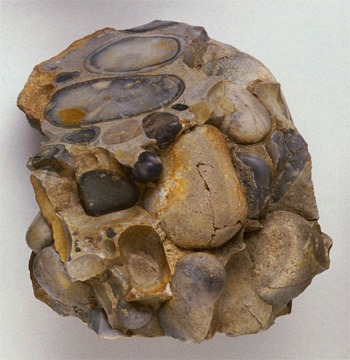
This rock was formed by smaller pieces of rock that settled at the bottom of a lake millions of years ago. What type of rock is this?
a)
Sedimentary
b)
Igneous
c)
Metamorphic
44.
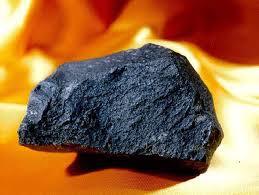
This rock was found near the mouth of a volcano. What type of rock is this?
a)
Sedimentary
b)
Igneous
c)
Metamorphic
45.
What is sedimentary?
a)
Formed by heat and pressure
b)
Formed by heat and cooling
c)
Layered rock formed by compaction
d)
All of the above
46.

When sediments are pressed together tightly, this is called ____________.
a)
Compaction
b)
Cementation
c)
Weathering
d)
Erosion
47.
Which of the following is NOT true of minerals?
a)
They are liquids
b)
They are formed in nature
c)
They are inorganic
d)
They have crystalline structure
48.
Atoms in a mineral are arranged___________________.
a)
In the order they land
b)
In a specific repetitive pattern
c)
In a circular pattern
d)
In a straight line
49.
What does inorganic mean?
a)
Something that is living
b)
Something that is dead, but was once living
c)
Something that was never living
50.
Flat sides and sharp edges with patterns that repeat over and over again
a)
Crystal Shape
b)
Inorganic Processes
c)
Definite Chemical Composition
d)
Solid
51.
A mineral is a living object
a)
True
b)
False
52.
What does solid mean?
a)
Definite shape and indefinite volume
b)
Indefinite shape and indefinite volume
c)
Indefinite shape and definite volume
d)
Definite shape and definite volume
53.
_____________________ means that the mineral was formed by nature, not by a human or machine
a)
Naturally Occurring
b)
Inorganic Processes
c)
Solid
d)
Crystal Shape
54.
Why is coal not a mineral?
a)
It's not a solid
b)
It is man-made
c)
It is not inorganic
d)
It is made of carbon
55.
A mineral's resistance to being scratched is called?
a)
streak
b)
luster
c)
hardness
d)
heft
56.

Which mineral property is being shown here?
a)
luster
b)
hardness
c)
cleavage
d)
streak
57.
Dull, silky, waxy, pearly, and earthy are terms that best describe which property of minerals?
a)
luster
b)
color
c)
streak
d)
cleavage
58.
Which of the following properties does the Mohs scale measure?
a)
Luster
b)
Hardness
c)
Density
d)
Streak
59.
Physical properties of minerals include all of the following EXCEPT
a)
hardness
b)
color
c)
streak
d)
specific gravity
60.

The mineral in the picture has a ____________ luster.
a)
Nonmetallic
b)
Metallic
c)
Pearly
d)
Earthy
61.
___________ is the color of powdered mineral.
a)
Luster
b)
Streak
c)
Fracture
62.
_________ is how easily something can be scratched.
a)
specific gravity
b)
luster
c)
hardness
63.
___________ describes how the mineral reflects light.
a)
cleavage
b)
magnetic
c)
luster
64.
Minerals are identified by observing their ___________.
a)
physical properties
b)
name
c)
location
65.

_____ is if something breaks into smooth flat layers.
a)
fracture
b)
cleavage
c)
streak
66.
Diamond has a hardness of ___ on Mohs Hardness Scale.
a)
1
b)
5
c)
8
d)
10
67.
A mineral can be formed from which of the following ways?
a)
Precipitation
b)
Magma cooling slowly
c)
breaking rocks
d)
rock being heated to form a liquid.
68.
What was the name given to all the continents when they were joined as one super continent?
a)
Supreme Continent
b)
Eurasia
c)
Plate tectonics
d)
Pangea
69.
Which of these layers is ALL solid iron and nickle?
a)
inner core
b)
outer core
c)
lithosphere
d)
mesosphere
70.
The layer that makes up most of the earth's mass and volume is the
a)
crust
b)
mantle
c)
core
d)
asthenosphere
71.
Which of the following occurs because of convection currents?
a)
Tectonic plates on the crust move.
b)
The mantle increases in size.
c)
Pressure in the crust increases.
d)
Pressure in the crust decreases.
72.

Scientists think that convection currents that move the plates flow in Earth's
a)
Continental crust
b)
Oceanic crust
c)
Asthenosphere
d)
Lithosphere
73.
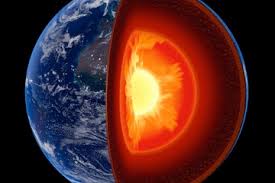
As you travel from the inner core to the crust, how would temperature, pressure and density of the material change?
a)
The would all increase
b)
The would all decrease.
c)
They would stay the same.
d)
Temperature would decrease, but pressure and density would increase.
74.

The physical layer of Earth made of solid rock and soil is called the ___________.
a)
mesosphere
b)
lithosphere
c)
asthenosphere
d)
mantle
75.
Where does the heat come from that drives this convection current in the mantle?
a)
The sun
b)
The crust
c)
the mantle
d)
the core
76.
What does the theory of continental drift state?
a)
The continents were once joined in a super-continent and have moved over time
b)
Continents are stationary and do not move
c)
The Earth is broken into lithospheric plates that move due to convection currents
d)
none of the above
77.

Name the boundary
a)
convergent boundary
b)
divergent boundary
c)
transform boundary
d)
sergent boundary
78.

Name the boundary
a)
convergent boundary
b)
divergent boundary
c)
transform boundary
d)
sergent boundary
79.

Name the boundary
a)
convergent boundary
b)
divergent boundary
c)
transform boundary
d)
sergent boundary
80.
During sea floor spreading, molten material rises up from the mantle...
a)
along the continents
b)
at the mid ocean ridges
c)
deep ocean trenches
d)
at north and south poles
81.
Which of the following is where one plate slides under another plate?
a)
submarine zone
b)
divergence zone
c)
subduction zone
d)
lower zone
82.
This land formation occurs at a divergent continental/ continental boundary.
a)
mid ocean ridge
b)
deep ocean trench
c)
pacific hot spot
d)
rift valley
83.
Mountains form from ...
a)
plates sliding past one another
b)
collision of plates
c)
plates moving away from each other
84.

A wide, flat land-form that results from repeated nonexplosive eruptions of lava that spread over a large area.
a)
magma chamber
b)
vent
c)
lava plateau
d)
crater
85.

A funnel-shaped pit near the top of the central vent of a volcano.
a)
vent
b)
crater
c)
caldra
d)
volcano
86.

An area of deep cracks that forms between two tectonic plates that are pulling away from each other
a)
rift zone
b)
crater
c)
caldera
d)
vent
87.

An instrument that records vibrations in the ground and determines the location and strength of an earthquake.
a)
seismograph
b)
seismogram
c)
seismic wave
d)
vibrato
88.

The point on Earth's surface directly above an earth quake's starting point, or focus
a)
focus
b)
epicenter
c)
fault
d)
earthquake
89.

The body of molten rock that feeds a volcano.
a)
magma chamber
b)
vent
c)
focus
d)
magma shift
90.

A volcanically active area of Earth's surface far from a tectonic plate boundary.
a)
hot spot
b)
rift zone
c)
relief zone
d)
gysser
91.

A large, semicircular depression that forms when the magma chamber below a volcano partially empties and causes the ground above to sink.
a)
crater
b)
caldera
c)
lava plateau
d)
magma chamber
92.

An opening at the surface of the Earth through which volcanic material passes.
a)
volcano
b)
vent
c)
magma chamber
d)
lava plataeu
93.

A vent or fissure in the Earth's surface through which magma and gases are expelled.
a)
volcano
b)
vent
c)
lava plataeu
d)
magma chamber
94.

A tracing of earthquake motion that is created by a seismograph.
a)
seismology
b)
focus
c)
seismograph
d)
seismogram
95.

A wave of energy that travels through the Earth, away from an earthquake in all directions.
a)
seismology
b)
seismogram
c)
seismic wave
d)
elastic rebound
96.

A seismic wave that causes particles of rock to move in a back and forth motion.
a)
P wave
b)
S wave
c)
seismology
d)
elastic rebound
97.

A seismic wave that causes particles of rock to move in a side by side motion.
a)
P wave
b)
S wave
c)
Rift zone
d)
focus
98.

The study of earthquakes.
a)
seismology
b)
volcanism
c)
seismogram
d)
deformation
100 %

