
 Worksheets
Rocks/Soil Review
Total questions: 93
Worksheet time: 2hrs 54mins
Name
Class
Date
1.
Which type of rock results from melting and cooling of magma?
a)
Igneous
b)
Metamorphic
c)
Sedimentary
d)
Extrusive
2.
Which type of rock forms from extreme heat and pressure?
a)
Igneous
b)
Sedimentary
c)
Organic
d)
Metamorphic
3.
A metamorphic rock changes into an igneous rock by what two processes?
a)
Melting and cooling
b)
Extreme heat and pressure
c)
Compaction and cementation
d)
Weathering and erosion
4.
Wind, water, and ice breaking down rock is called
a)
Erosion
b)
Deposition
c)
Compaction
d)
Weathering
5.
What is the MAIN way rocks are classified?
a)
Their color and shapes
b)
How they form
c)
Mineral bands
d)
Where they form
6.
True/False: Igneous rocks can only turn into metamorphic rocks.
a)
True
b)
False
7.
The process in which dissolved minerals crystallize and glue sediment together.
a)
compaction
b)
deposition
c)
organic rock
d)
cementation
8.
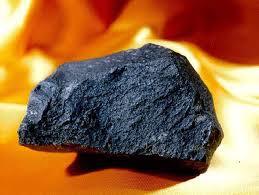
This rock was found near the mouth of a volcano. What type of rock is this?
a)
Sedimentary
b)
Igneous
c)
Metamorphic
9.

When sediments are pressed together tightly, this is called ____________.
a)
Compaction
b)
Cementation
c)
Weathering
d)
Erosion
10.
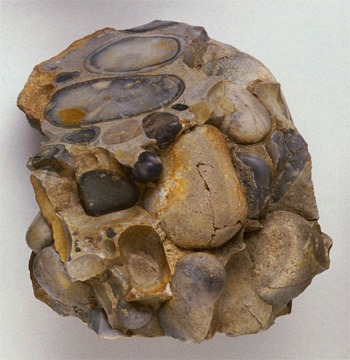
This rock was formed by smaller pieces of rock that settled at the bottom of a lake millions of years ago. What type of rock is this?
a)
Sedimentary
b)
Igneous
c)
Metamorphic
11.
What are the 3 major types of rocks?
a)
Igneous, Metamorphic, Sedimentary
b)
Metamorphic, Igneous, Cementation
c)
Brown, Red, Gray
d)
Streak, Hardness, Breakage
12.

This rock started as lava that cooled and then was heated and put under pressure over time. What type of rock is this?
a)
Sedimentar
b)
Igneous
c)
Metamorphic
13.

This rock started as molten magma. What type of rock is this?
a)
Sedimentary
b)
Igneous
c)
Metamorphic
14.

This rock is made from tiny pieces of other rocks that settled to the bottom of a valley millions of years ago. What type of rock is this?
a)
Sedimentary
b)
Igneous
c)
Metamorphic
15.

This rock was molten magma that slowly cooled under the ground. What type of rock is this?
a)
Sedimentar
b)
Igneous
c)
Metamorphic
16.

This rock cooled on the outside of a volcano and contained air bubbles when it was forming. What type of rock is this?
a)
Sedimentary
b)
Igneous
c)
Metamorphic
17.

After lots of time, pressure, and heat, you get this kind of rock. What type of rock is this?
a)
Sedimentary
b)
Igneous
c)
Metamorphic
18.

Each rock type can follow only one pathway of the rock cycle.
a)
True
b)
False
19.
Fossils are often found in ____________ because it is formed from the remains of once living things.
a)
metamorphic
b)
magma
c)
igneous
d)
sedimentary
20.
Fossils are often found in ____________ because it is formed from the remains of once living things.
a)
metamorphic
b)
magma
c)
igneous
d)
sedimentary
21.

This rock was formed by lots of fossils that settled on top of each other over time. What type of rock is this?
a)
Sedimentary
b)
Igneous
c)
Metamorphic
22.
Which type of igneous rock forms above ground?
a)
Intrusive
b)
Organic
c)
Extrusive
d)
Foliated
23.
Lava which cools on Earth's surface forms an
a)
metamorphic rock
b)
intrusive igneous rock
c)
extrusive igneous rock
d)
foliated metamorphic rock
24.
Magma cooling and hardening below Earth's surface forms an
a)
Intrusive igneous rock
b)
Extrusive igneous rock
c)
Foliated metamorphic rock
d)
Organic sedimentary rock
25.
What is the difference between and intrusive and extrusive igneous rock?
a)
Intrusive igneous rocks formed by magma cooling slowly inside the Earth where as extrusive is lava cooling above the Earth's surface.
b)
Extrusive igneous rocks formed by magma cooling slowly inside the Earth where as intrusive is lava cooling above the Earth's surface.
c)
Intrusive igneous rocks formed by lava cooling slowly inside the Earth where as extrusive is magma cooling above the Earth's surface.
d)
Fundamentally there is no difference between the two types of igneous rock other than interaction with the hydrosphere.
26.

The remains of living things that died long ago are often found in what type of rock?
a)
igneous rocks
b)
sedimentary rock
c)
metamorphic rock
d)
all rocks
27.

The cooled and hardened magma from volcanoes form what rocks?
a)
igneous
b)
sedimentary
c)
metamorphic
d)
fossils
28.

Large rocks can be broken down into smaller rocks by wind and water. These small rocks can break down into very tiny pieces called _______.
a)
minerals
b)
pebbles
c)
sediments
d)
chalk
29.
When you watch a volcano erupt molten rock, you are seeing _____
a)
Lava
b)
Magma
c)
Mineral Crystals
d)
Igneous Rocks
30.
Two ways to describe types of igneous rocks are _____
a)
Extrusive and Intrusive
b)
Foliated and Non-Foliated
c)
Clastic and Biochemical
d)
Black and Gray
31.
What is sedimentary?
a)
Formed by heat and pressure
b)
Formed by heat and cooling
c)
Layered rock formed by compaction
d)
All of the above
32.
The movement of weathered material (sediment) is called?
a)
weathering
b)
erosion
c)
deposition
33.

Which layer of soil has the BIGGEST pieces of rock in it?
a)
topsoil
b)
subsoil
c)
bedrock
d)
midsoil
34.

Which of the following is NOT one of the three layers of soil?
a)
topsoil
b)
undersoil
c)
subsoil
d)
bedrock
35.

Which of the following is NOT one of the three types of soil?
a)
clay
b)
sand
c)
silt
d)
mud
36.

Are there minerals in soil?
a)
Yes
b)
No
37.

True or false:
We end up eating the minerals that are in soil.
We end up eating the minerals that are in soil.
a)
true
b)
false
38.

Humus is.....
a)
the dead parts of plants and animals in soil.
b)
A food we eat with pretzels.
c)
The tiny particles inside of soil
d)
The roots that come off of a plant and live in soil.
39.
Many plants cannot grow in sandy soil. Why is this true?
a)
Sandy soil does not hold enough water.
b)
Oxygen cannot pass through sandy soil.
c)
Roots cannot easily push through clay soil.
d)
Sandy soil has too many nutrients.
40.
When plants, animals, and other organisms die, they break down and become part of the soil. What is this part of the soil called?
a)
sand
b)
silt
c)
clay
d)
humus
41.
When there are not enough plants to hold topsoil in place, water and _______ carry the topsoil away, leaving the subsoil exposed
a)
sunlight
b)
birds
c)
magnetic fields
d)
wind
42.

What is the layer of soil just below the topsoil?
a)
soil
b)
subsoil
c)
topsoil
d)
terrace farming
43.

Which layer of soil are these roots growing in?
a)
subsoil
b)
topsoil
44.

Layers of soil are also known as:
a)
Soil Profiles
b)
Soil Horizons
c)
Soil sheets
d)
Soil cores
45.

Which layer is the bottom of the soil profile?
a)
C - Partially Weathered Parent Material
b)
D - Separated rock
c)
R - Bedrock
d)
A - Topsoil
46.

Which layer of soil contains bedrock that has been cracked slightly?
a)
A - Topsoil
b)
B - Subsoil
c)
C- Partially Weathered Parent Material
d)
R - Bedrock
47.
Which layer of soil is best for plant growth?
a)
wet soil
b)
subsoil
c)
topsoil
d)
parent material
48.

Which layer of soil is on the bottom?
a)
topsoil
b)
subsoil
c)
bedrock
d)
bottomsoil
49.

What is plowing in curved rows that follow the shape of the land?
a)
contour plowing
b)
soil
c)
subsoil
d)
terrace farming
50.
Organic matter is made of materials that….
a)
Were once living
b)
Were once nonliving
c)
Were once living and nonliving
51.
Which of the following is NOT an organic material
a)
Worms
b)
Decayed animals
c)
Rocks
d)
Decayed plants
52.
Inorganic matter is made of materials that…
a)
Were once living and nonliving
b)
Were once nonliving
c)
Were once nonliving
53.
Soil formation begins with the weathering of_______.
a)
Humas
b)
Subsoil
c)
Litter
d)
Rock
54.
The movement of rocks and weathered materials is called_________.
a)
Chemistry
b)
Physical
c)
Weathering
d)
Erosion
55.
The process by which rocks break down as a result of chemical reactions/ common causes are water, weak acids, and air
a)
Mechanical Weathering
b)
Chemical Weathering
56.
What do we call the layers of soil?
a)
Deposits
b)
Horizons
c)
Minerals
d)
Rocks
57.
What is soil?
a)
A mixture of minerals
b)
A mixture of water, minerals, gases and organic matter
c)
A type of rock
d)
A type of bacteria
58.

What soil conservation is this?
a)
Cover Crops
b)
Soil Conservation
c)
Crop Rotation
59.
What conservation method refers to forming steps in a hill to prevent water erosion?
a)
windbreaks
b)
contour plowing
c)
terrace farming
d)
strip cropping
60.
What conservation method refers to growing crops perpendicular to the slope of a hill?
a)
windbreaks
b)
contour plowing
c)
terrace farming
d)
strip cropping
61.

What soil conservation technique is this?
a)
Crop Rotation
b)
Wind Breaks
c)
Contour Plowing
d)
No-Till Farming
62.

Which type of soil conservation strategy is being used in this picture?
a)
windbreakers
b)
contour farming
c)
planting of vegetation
d)
terracing
63.
What does it mean to conserve our resources?
a)
to use them up quickly
b)
to carefully use them
c)
to make more of them
d)
to use plastics instead
64.
Soil can be lost to erosion by
a)
only water
b)
only wind
c)
by both water and wind
65.
Which two farming techniques are best used on sloped land to slow the eroding effect of runoff?
a)
shelterbreaks and crop rotation
b)
crop rotation and cover cropping
c)
contour farming and terracing
d)
terracing and no-till
66.

What is HUMUS made from?
a)
Chick-Peas
b)
The remains of decayed plants and animals
c)
Beans
d)
Cheese
67.

Fertile soil is rich in _________.
a)
Conservation
b)
Bedrock
c)
Water
d)
Nutrients
68.
Which word means to rot or decompose?
a)
Decay
b)
Fertile
c)
Growth
d)
Nutrients
69.
Humus is bad for soil.
a)
True
b)
False
70.
All soils begin with what process?
a)
Nutrients
b)
Subsoil
c)
Weathering
d)
Fertile
71.
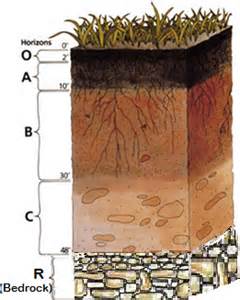
Which horizon is made up of partially weathered rocks?
a)
Horizon A
b)
Horizon B
c)
Horizon C
d)
Horizon D or R
72.
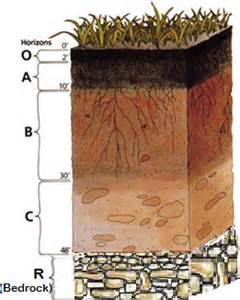
In which horizon is most of the HUMUS?
a)
Horizon A
b)
Horizon B
c)
Horizon C
d)
Horizon D or R
73.
Topsoil which contains the HUMUS is the soil layer best for growing plants.
a)
True
b)
False
74.
The best way to describe bedrock is
a)
composed of weathered parent rock
b)
composed mainly of decayed organic matter
c)
solid rock
d)
permeable
75.
Soil formation begins with the weathering of......
a)
Litter
b)
Rock
c)
Silt
d)
Soil
76.

The ___________ _______________ is the process of one type of rock transforming into a different type of rock.
a)
Weathering
b)
Erosion
c)
The Rock Cycle
77.

What is the rock cycle?
a)
Molten rock that is stored underground.
b)
Rock material that forms where rocks are broken down into smaller pieces.
c)
A process that changes one type of rock into another type of rock.
78.

This rock formed when lava cooled very quickly on Earth's surface. What specific type of rock is it?
a)
Extrusive Igneous Rock
b)
Intrusive Igneous Rock
c)
Non-Foliated Metamorphic Rock
d)
Biochemical Sedimentary Rock
79.

This rock was formed when magma cooled very slowly inside the Earth. What specific type of rock is it?
a)
Intrusive Igneous Rock
b)
Extrusive Igneous Rock
c)
Foliated Metamorphic Rock
d)
Clastic Sedimentary Rock
80.
Which of the words below describe mud, sand, and tiny bits of rocks that cement together to form a type of rock?
a)
stalactites
b)
magmas
c)
metamorphs
d)
sediments
81.

How should rock type 1 be labeled?
a)
sedimentary
b)
metamorphic
c)
igneous
d)
volcanic
82.

The arrows in the rock cycle diagram represent
a)
processes of formation
b)
changes in crystal shape
c)
similarities in mineral color
d)
variations of chemical composition
83.

What type of rock is A?
a)
sedimentary
b)
igneous
c)
metamorphic
84.

What type of rock is B?
a)
sedimentary
b)
igneous
c)
metamorphic
85.

What type of rock is C?
a)
sedimentary
b)
igneous
c)
metamorphic
86.
Which is an example of a metamorphic rock?
a)
sandstone
b)
basalt
c)
marble
87.
Which is an example of an igneous rock?
a)
sandstone
b)
basalt
c)
marble
88.
Which is an example of a sedimentary rock?
a)
sandstone
b)
basalt
c)
marble
89.
What is the step in the rock cycle in which liquid magma solidifies into solid rock?
a)
Heat and pressure
b)
Weathering
c)
Melting
d)
Cooling
90.
What is the step in the rock cycle in which a chemical reaction "glues" sediments together?
a)
Heat and pressure
b)
Compaction
c)
Cementation
d)
Erosion
91.
What did the metamorphic rock say during his test?
a)
This is tough.
b)
THIS IS TOO MUCH PRESSURE!!
92.
Where do rocks sleep?
a)
In the Topsoil
b)
In the Subsoil
c)
In the BEDROCK
93.
What did the sedimentary rock say to the lava??
a)
Don't pick this one.
b)
You need to cool down bro.
100 %

