
 Worksheets
Unit 2, Minerals & Rocks Review
Total questions: 98
Worksheet time: 2hrs 34mins
Name
Class
Date
1.
The color of a mineral in powder form is called the mineral's
a)
hardness
b)
specific gravity
c)
luster
d)
streak
2.
How light reflects off of a mineral is called the mineral's
a)
luster
b)
streak
c)
cleavage
d)
fracture
3.
Why is coal not a mineral?
a)
It's not a solid
b)
It is man-made
c)
It is not inorganic
d)
It is made of carbon
4.

The following image shows what mineral property?
a)
Hardness
b)
Streak
c)
Cleavage
d)
Density
5.
Diamond has a hardness of ___ on Mohs Hardness Scale.
a)
1
b)
5
c)
8
d)
10
6.
Dull, silky, waxy, pearly, and earthy are terms that best describe which property of minerals?
a)
luster
b)
color
c)
streak
d)
cleavage
7.

By definition, a mineral has which of the following characteristic(s)?
a)
definite chemical composition
b)
crystal structure
c)
naturally occuring
d)
all of the above
8.
How do you test the hardness of a mineral?
a)
Throw it against a wall
b)
Step on it
c)
Scratch Test
d)
Kick it until it breaks
9.

What mineral is used for pencils?
a)
Graphite
b)
Galena
c)
Magnetite
d)
Quartz
10.

What mineral is salt?
a)
quartz
b)
sulfur
c)
halite
d)
calcite
11.
A naturally occurring, inorganic solid with a crystal structure and a definite chemical composition is referring to
a)
density
b)
streak
c)
mineral
d)
non silicate mineral
12.
The solid, geometric form of a mineral produced by a repeating pattern of atoms
a)
crystal
b)
density
c)
element
d)
fracture
13.
What mineral is the softest mineral on Moh's Hardness Scale and the main ingredient in baby powder?
a)
feldspar
b)
talc
c)
gypsum
d)
kaolinite
14.
Which mineral smells like rotten eggs?
a)
talc
b)
sulfer
c)
mica
d)
pyrite
15.
A mineral's resistance to being scratched is called?
a)
streak
b)
luster
c)
hardness
d)
heft
16.
The mineral halite is formed by
a)
hot water solutions
b)
cooling of magma
c)
cooling of lava
d)
evaporation
17.

This narrow channel of gold intruding into the surrounding rock is called a
a)
sill
b)
dike
c)
volcanic neck
d)
vein
18.
Large crystals are going to form
a)
when lava erupts from a volcano
b)
when a shallow sea evaporates
c)
when magma underground cools off
d)
all of the above
19.
A rock which contains a useful mineral is call a/an
a)
gem
b)
quarry
c)
ore
d)
alloy
20.

The mineral in the picture has a ____________ luster.
a)
Nonmetallic
b)
Metallic
c)
Pearly
d)
Earthy
21.
What does inorganic mean?
a)
Something that is living
b)
Something that is dead, but was once living
c)
Something that was never living
22.

A mineral breaks into pieces like are shown in the picture. How would you describe its breakage?
a)
Fracture
b)
Cleavage
c)
Glassy
d)
Waxy
23.

A mineral breaks into pieces like are shown in the picture. How would you describe its breakage?
a)
Fracture
b)
Cleavage
c)
Glassy
d)
Waxy
24.
Minerals are identified by observing their ___________.
a)
physical properties
b)
name
c)
location
25.
The ________ measures how hard a mineral is.
a)
Miller Scale
b)
Dishong Scale
c)
Curly Scale
d)
Mohs Scale
26.

_____ is if something breaks into smooth flat layers.
a)
fracture
b)
cleavage
c)
streak
27.

__________ is if a mineral breaks apart in a jagged or rough layer.
a)
cleavage
b)
luster
c)
fracture
28.

When determining the color of a minerals powder, what tool would you need?
a)
streak plate
b)
hand lens
c)
microscope
d)
triple-beam balance
29.

Which mineral is number 6 on the hardness scale?
a)
Conrundum
b)
Topaz
c)
Quartz
d)
Orthoclase
30.
When determining which minerals will scratch other minerals, you would need to refer to the:
a)
Periodic Table of Elements
b)
Rocks Guide Book
c)
Moh's Hardness Scale
d)
Richter Scale
31.

Which indicator would not be good as the only indicator when identifying a mineral?
a)
Color
b)
Breaking Pattern
c)
Specific Gravity
d)
Hardness
32.

Which mineral would scratch calcite but not scratch apatite?
a)
fluorite
b)
gypsum
c)
talc
d)
topaz
33.

Which minerals would all scratch apatite?
a)
diamond, topaz, quartz
b)
quartz, calcite, gypsum
c)
fluorite, talc, calcite
d)
diamond, fluorite, corundum
34.
Geologists in search of diamonds are often tricked by quartz because they have similar color, luster, and texture. If they were to scratch the mineral on a tile and see the color of its powder, they they could determine if it was really diamonds. What property were they testing for?
a)
Hardness
b)
Fracture
c)
Crystal Structure
d)
Streak
35.
A student found a substance that he thought was a mineral. The substance fell out of the container and the liquid spilled all over the floor. Why is the substance not a mineral?
a)
It is man-made
b)
It is a liquid
c)
It is organic
d)
It is solid
36.
A scientist made an object in a lab that has a crystal structure and was solid. Why is the object not considered a mineral?
a)
It is a solid
b)
It is man-made
c)
It is inorganic
d)
It has a crystalline structure
37.
A naturally formed, inorganic solid with a crystalline structure is known as what?
a)
Rock
b)
Mineral
c)
Non Silicate Mineral
d)
Foliated Metamorphic Rock
38.
What is the relationship between a rock and a mineral?
a)
Rocks are made up of minerals.
b)
Minerals are made up of rocks.
c)
Rocks are on the Earth's surface. Minerals are found underground.
d)
Rocks and minerals are different names for the same thing.
39.
How many characteristics does an object have to have to be considered a mineral?
a)
2
b)
3
c)
4
d)
5
40.
_____________________ means that the mineral was formed by nature, not by a human or machine
a)
Naturally Occurring
b)
Inorganic Processes
c)
Solid
d)
Crystal Shape
41.
What does solid mean?
a)
Definite shape and indefinite volume
b)
Indefinite shape and indefinite volume
c)
Indefinite shape and definite volume
d)
Definite shape and definite volume
42.
Flat sides and sharp edges with patterns that repeat over and over again
a)
Crystal Shape
b)
Inorganic Processes
c)
Definite Chemical Composition
d)
Solid
43.
What does Definite Chemical Composition means?
a)
Random elements in indefinite proportions
b)
Certain elements in definite proportions
44.
How do you determine the density of a mineral?
a)
D=M/V
b)
D=V/M
c)
D=M x V
d)
D= V x M
45.
What tools do you need to find density
a)
Scale and ruler
b)
Ruler and graduated cylinder
c)
Triple beam balance and water
d)
Graduated cylinder and triple beam balance
46.
Which of the words below describe mud, sand, and tiny bits of rocks that cement together to form a type of rock?
a)
stalactites
b)
magmas
c)
metamorphs
d)
sediments
47.
What process is used to form metamorphic rocks?
a)
Lava cools and hardens to form a rock.
b)
Bits of sand and gravel form layers that turn into rock from pressure.
c)
Extreme heat and pressure from inside the Earth turn rocks into new rocks.
48.
What type of rock can turn into a metamorphic rock?
a)
Igneous only
b)
Sedimentary only
c)
Metamorphic only
d)
Any type of rock
49.
Which type of rock would you expect to find by a volcano?
a)
Ingenious
b)
Igneous
c)
Indigenous
d)
Indigo
50.

Which of the following rocks is metamorphic?
a)
Rock 1
b)
Rock 2
c)
Rock 3
d)
Rock 4
51.

How are all rocks related to one another based upon the rock cycle diagram?
a)
Igneous rocks only come from sedimentary and metamorphic rocks
b)
Sedimentary rocks cannot make other sedimentary rocks
c)
All rocks can create any other type of rock
d)
Heat and pressure must be applied to make sedimentary rock
52.
The process by which metamorphic rocks are formed...
a)
heat and pressure
b)
compaction and cementation
c)
melting and cooling
53.
The process by which igneous rocks are formed...
a)
heat and pressure
b)
melting and cooling
c)
compaction and cementation
54.
what is the rock cycle.
a)
molten rock that is stored underground.
b)
rock material that forms where rocks are broken down into smaller pieces.
c)
a process that changes one type of rock into another type of rock.
55.
When any rock type is _______ it will turn to magma.
a)
weathered
b)
compacted
c)
melted
d)
eroded
56.

This rock formed when bits of other rocks became pressed into a solid. What type of rock is it?
a)
Sedimentary Rock
b)
Metamorphic Rock
c)
Igneous Rock
57.

This rock was formed when magma cooled very slowly inside the Earth. What specific type of rock is it?
a)
Intrusive Igneous Rock
b)
Extrusive Igneous Rock
c)
Foliated Metamorphic Rock
d)
Clastic Sedimentary Rock
58.

This rock formed when lava cooled very quickly on Earth's surface. What specific type of rock is it?
a)
Extrusive Igneous Rock
b)
Intrusive Igneous Rock
c)
Non-Foliated Metamorphic Rock
d)
Biochemical Sedimentary Rock
59.
When you watch a volcano erupt molten rock, you are seeing _____
a)
Lava
b)
Magma
c)
Mineral Crystals
d)
Igneous Rocks
60.
What are the 3 major types of rocks?
a)
Igneous, Metamorphic, Sedimentary
b)
Metamorphic, Igneous, Cementation
c)
Brown, Red, Gray
d)
Streak, Hardness, Breakage
61.
Two ways to describe types of igneous rocks are _____
a)
Extrusive and Intrusive
b)
Foliated and Non-Foliated
c)
Clastic and Biochemical
d)
Black and Gray
62.
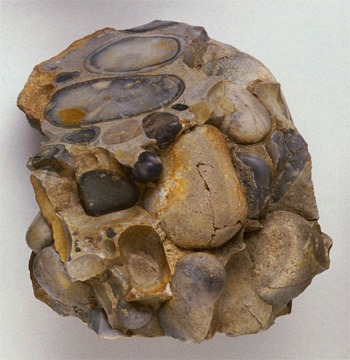
This rock was formed by smaller pieces of rock that settled at the bottom of a lake millions of years ago. What type of rock is this?
a)
Sedimentary
b)
Igneous
c)
Metamorphic
63.
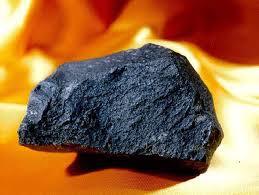
This rock was found near the mouth of a volcano. What type of rock is this?
a)
Sedimentary
b)
Igneous
c)
Metamorphic
64.
What is sedimentary?
a)
Formed by heat and pressure
b)
Formed by heat and cooling
c)
Layered rock formed by compaction
d)
All of the above
65.

When sediments are pressed together tightly, this is called ____________.
a)
Compaction
b)
Cementation
c)
Weathering
d)
Erosion
66.
The process in which dissolved minerals crystallize and glue sediment together.
a)
compaction
b)
deposition
c)
organic rock
d)
cementation
67.

The process when rocks break into smaller pieces due to exposure to natural elements is called
a)
erosion
b)
weathering
c)
sediments
68.
The movement of weathered material (sediment) is called?
a)
weathering
b)
erosion
c)
deposition
69.
This rock was formed when molten rock cooled into a solid. What type of rock is it?
a)
Igneous Rock
b)
Metamorphic Rock
c)
Sedimentary Rock
70.
What is deposition?
a)
Dropping off sediment
b)
Movement of sediment
c)
Breaking down of sediment
71.
Extreme Heat and Pressure creates a _________ rock.
a)
Igneous
b)
Metamorphic
c)
Sedimentary
d)
Mineral
72.

This rock started as lava that cooled and then was heated and put under pressure over time. What type of rock is this?
a)
Sedimentar
b)
Igneous
c)
Metamorphic
73.
What two processes make sediment?
a)
Weathering
b)
Erosion
c)
Weathering & Erosion
74.
Fossils are only found in
a)
Sedimentary rocks
b)
Foliated Metamorphic rocks
c)
Igneous Rocks
d)
Nonfoliated Metamorphic rocks
75.
What do scientists call the rock that is formed when magma cools below the surface
a)
extrustive igneous rock
b)
intrustive igneous rock
c)
erupitve rock
d)
volcanic
76.
True or False: Once a rock is sedimentary, it cannot become an igneous rock.
a)
True
b)
False
77.

This rock was formed by lots of fossils that settled on top of each other over time. What type of rock is this?
a)
Sedimentary
b)
Igneous
c)
Metamorphic
78.
An igneous rock can become ______.
a)
metamorphic
b)
sedimentary
c)
igneous
d)
all of these
79.

This rock was molten magma that slowly cooled under the ground. What type of rock is this?
a)
Sedimentary
b)
Igneous
c)
Metamorphic
80.

This rock was layers of fossils that were buried, heated, and put under pressure over millions of years. What type of rock is this?
a)
Sedimentary
b)
Igneous
c)
Metamorphic
81.
This rock was formed by lots of fossils that settled on top of each other over time. What type of rock is this?
a)
Sedimentary
b)
Igneous
c)
Metamorphic
82.
Three types of igneous rock
a)
gneiss, slate, quartzite
b)
oil, natural gas, coal
c)
sandstone, shale, limestone
d)
obsidian, basalt, granite
83.
What are 3 types of sedimentary rocks
a)
gneiss, slate, quartzite
b)
coal, natural gas, coal
c)
sandstone, shale, limestone
d)
obsidian, basalt, granite
84.
Three types of Metamorphic Rock
a)
gneiss, slate, quartzite
b)
sandstone, shale, limestone
c)
obsidian, basalt, granite
d)
oil, natural gas, coal
85.
Intrusive igneous rocks have large grains or crystals because they
a)
cool quickly
b)
cool slowly underground
c)
contain rare minerals
d)
have a rough mixture
86.
What is the rock cycle?
a)
molten rock that is stored underground.
b)
rock material that forms where rocks are broken down into smaller pieces.
c)
a process that changes one type of rock into another type of rock.
87.
Which type of rock as large crystals?
a)
extrusive igneous
b)
intrusive igneous
c)
metamorphic
d)
sedimentary
88.
Sediment goes through _________________ to become sedimentary rock.
a)
heat and pressure
b)
compacting and cementing
c)
weathering and erosion
d)
melting and cooling
89.
Metamorphic rocks go through __________________________ to become igneous rock.
a)
heat and pressure
b)
weathering and erosion
c)
compacting and cementing
d)
melting and cooling
90.
Rocks are classified by their method of
a)
destruction
b)
cooling
c)
layering
d)
formation
91.

This rock is made from tiny pieces of other rocks that settled to the bottom of a valley millions of years ago. What type of rock is this?
a)
Sedimentary
b)
Igneous
c)
Metamorphic
92.

After lots of time, pressure, and heat, you get this kind of rock. What type of rock is this?
a)
Sedimentary
b)
Igneous
c)
Metamorphic
93.
An example of an extrusive rock is:
a)
Formed inside Earth
b)
Formed outside Earth
94.
A rock is formed from shells. It is considered what?
a)
Clastic
b)
Organic
95.

Is this metamorphic rock foliated or non foliated?
a)
Foliated
b)
Non foliated
96.
If you can scratch a mineral with your nail, it must be
a)
Softer than your nail
b)
Harder than your nail
c)
Same hardness of your nail
97.
The individual particles that make up a rock are known as _____
a)
Grains
b)
Textures
c)
Metamorphs
d)
Lava
98.

Each rock type can follow only one pathway of the rock cycle.
a)
True
b)
False
100 %

