
 Worksheets
Ch. 18 - Chemical Bonds
Total questions: 113
Worksheet time: 2hrs 2mins
Name
Class
Date
1.
When two atoms share electrons, a chemical bond is formed. This type of bond is called:
a)
covalent bond
b)
ionic bond
c)
crystal bond
d)
polyatomic bond
2.
What is a double bond?
a)
a bond between two atoms
b)
one pair of electrons shared between two atoms
c)
two pairs of electrons shared between two atoms
d)
James Bond's brother
3.
A covalent bond in which electrons are shared unequally is:
a)
polar
b)
a double bond
c)
ionic
d)
polyatomic
4.
Fluorine (F₂) is a(n) _________________ molecule because the valence electrons are shared equally between the two fluorine atoms.
a)
polar
b)
nonpolar
c)
ionic
d)
crystal
5.
Because the electrons in a molecule of hydrogen fluoride (HF) are more strongly pulled toward the fluorine atom, the molecule is:
a)
polar
b)
nonpolar
c)
ionic
d)
charged
6.
How many valence electrons does hydrogen have?
a)
4
b)
3
c)
2
d)
1
7.
How many valence electrons does nitrogen have?
a)
3
b)
2
c)
5
d)
1
8.
Name CCl4
a)
carbon carbon tetraiodide
b)
carbon tetrachloride
c)
monocarbon tetrachloride
d)
water
9.

Which molecule would have this shape?
a)
BF3
b)
CH4
c)
PCl5
d)
CO2
10.

Who could this molecule be?
a)
CH4
b)
CO2
c)
PCl5
d)
BF3
11.
What is the basis of a metallic bond?
a)
the attraction of neutral metal atoms.
b)
the attraction between protons and neutrons.
c)
the attraction between positive metal ions and interlocking electrons.
d)
the attraction between positive metal ions and free floating electrons.
12.
There are more metals than non metals in the periodic table.
a)
True
b)
False
13.
At room temperature, most metals are
a)
liquid
b)
solid
c)
gas
d)
an alloy
14.
Metallic bonding is...
a)
a type of covalent bond.
b)
a type of ionic bond.
c)
an attraction between positive ions and electrons.
15.
What does malleable mean?
a)
able to be shaped
b)
will break easily
c)
can be used for wire
d)
is shiny
16.
An ionic bond contains _____________.
a)
Two metals
b)
A metal and nonmetal
c)
Two nonmetals
17.
Electrons are ______ in covalent bonds.
a)
Shared
b)
Transferred
c)
Given up
d)
Lost
18.
C6H12O6
a)
Ionic
b)
Covalent
c)
Metallic
19.
Hydrogen is classified as a ________.
a)
Metal
b)
Nonmetal
20.
NaCl
a)
Ionic
b)
Covalent
21.
A covalent compound contains _______.
a)
Alkali metals
b)
Two metals
c)
A metal and a nonmetal
d)
Nonmetals
22.
Copper (II) oxide
a)
Ionic
b)
Covalent
23.
Carbon dioxide
a)
ionic
b)
covalent
24.
Silver Nitride
a)
ionic
b)
covalent
25.
Which elements tend to lose electrons?
a)
metals
b)
nonmetals
26.
Which elements tend to gain electrons?
a)
metals
b)
nonmetals
27.
If Magnesium (Mg+2) and Fluorine (F-1) form an ionic bond, what is the chemical formula for that compound?
a)
Mg2F
b)
MgF2
c)
F2Mg3
28.
What is the chemical formula for carbon tetrachloride?
a)
CCl
b)
C4Cl
c)
CCl4
29.
What is the name of PF3?
a)
Monophosphorous trifluoride
b)
Phosphorous fluoride
c)
Phosphorous trifluoride
d)
Monophosphorous fluoride
30.
Cu
a)
Ion
b)
Ionic bonding
c)
Metallic bonding
d)
Covalent bonding
31.

According to the diagram below, how many bonds will this atom need to make to be stable?
a)
1
b)
2
c)
3
d)
4
32.
How many electrons are needed in the outer energy levels of most atoms to be stable?
a)
2
b)
4
c)
6
d)
8
33.
A charged particle that has gained or lost electrons is called a _____.
a)
molecule
b)
ion
c)
isotope
d)
element
34.
A anion will be a ____ ion.
a)
negative
b)
positive
c)
neutral
d)
ficticious
35.
A cation is a ____ ion.
a)
negative
b)
positive
c)
neutral
d)
ficticious
36.
Nitrogen will form which of the following ions?
a)
N
b)
N-3
c)
N-5
d)
N+5
37.
What will be the compound name of the following chemical formula?
NaCl
NaCl
a)
Chlorine Sodium
b)
Sodium Chloride
c)
Chlorine Sodide
d)
Sodium Chlorine
38.
Which group of elements are most likely to need a Roman numeral in an ionic compound name?
a)
alkaline earth metals
b)
transition metals
c)
halogens
d)
noble gases
39.
Which of the following contains a polyatomic ion?
a)
Cu2CO3
b)
MnO
c)
CrN
d)
BeCl2
40.
How do the following two elements bond together?
K1+ S2-
K1+ S2-
a)
KS
b)
K8S
c)
K6S3
d)
K2S
41.
How do the following two elements bond together?
Pb4+ O2-
Pb4+ O2-
a)
PbO
b)
Pb2O3
c)
PbO2
d)
Pb3O2
42.
How many TOTAL atoms are in this compound?
H2C3O4N5
H2C3O4N5
a)
5
b)
14
c)
15
d)
19
43.
Three pairs of electrons are shaired
a)
Single bond
b)
Double bond
c)
Triple bond
44.

What molecule could this be?
a)
BF3
b)
CH4
c)
H2O
d)
CO2
45.
Ionic Bonding involves...
a)
The transfer of protons
b)
The transfer of nuetrons
c)
The transfer of electrons
d)
None Of the above
46.
What usually forms the positive ion?
a)
Metal
b)
Non Metals
c)
None
47.
How are covalent bonds explained?
a)
When one atom takes the other atom's electron
b)
When the atom shares an electron with an another atom
c)
When the two nucleus merge
d)
When the neutrons leave the nucleus
48.
What is the charge of an aluminum ion that has 13 protons and 10 electrons?
a)
1+
b)
3+
c)
2+
d)
3-
49.
What is the chemical name for the binary compound listed:
Na2O
Na2O
a)
Sodium oxide
b)
Sodium (II) oxide
c)
Disodium monoxide
d)
Disodium oxide
50.
Ionic or covalent?
Na F
Na F
a)
Ionic
b)
Covalent
51.
Ionic or covalent?
N H
N H
a)
Ionic
b)
Covalent
52.
potassium triiodide
a)
KI
b)
K3I
c)
KI3
d)
3K3I
53.
dinitrogen tetrachloride
a)
N2Cl4
b)
NCl
c)
NCl3
d)
NClO4
54.
What is the little number after an element in a chemical equation called.
Example: H2
Example: H2
a)
Coefficient
b)
Subscript
c)
Atom
d)
Equation
55.
ammonium chloride
a)
NH3Cl2
b)
NH4Cl
c)
NH4ClO3
d)
NH4Cl2
56.
CaCO3
a)
calcium monocarbon trioxide
b)
calcium carbide
c)
calcium carbonite
d)
calcium carbonate
57.

Atoms gain or lose electrons because they ...
a)
are too full.
b)
want to lose weight.
c)
want a full outer shell.
d)
can
58.
If an atom gains one electron what charge will it have?
a)
-2
b)
-1
c)
+1
59.
Which group of elements have full outer shells?
a)
The alkali metals
b)
The full gases
c)
The halogens
d)
The noble gases
60.

If an atom loses an electron it will have a
a)
negative charge
b)
positive charge
c)
neutral charge
61.
If an atom gains an electron it will have a
a)
positive charge
b)
negative charge
c)
neutral charge
62.
How many Hydrogen atoms are in H2O?
a)
zero
b)
one
c)
two
d)
three
63.
How many atoms of carbon (C) are in C6H12O6?
a)
3
b)
6
c)
12
d)
24
64.
In making the molecule HPNa, which element is not used?
a)
Hydrogen
b)
Phosphorus
c)
Potassium
d)
Sodium
65.
What is the chemical formula for water?
a)
H2O
b)
H2O2
c)
KCl
d)
NaCl
66.
What element's don't have oxidation numbers?
a)
alkali metals
b)
noble gases
c)
halogens
d)
alkaline earth metals
67.
The sum of all oxidation numbers in a neutral compound is ___.
a)
0
b)
1
c)
-1
d)
depends on the compound
68.
What is the correct formula for phosphate ion?
a)
NH⁺₄
b)
NO₂⁻
c)
PO₄³⁻
d)
CN⁻
69.
What is the correct formula for cyanide ion?
a)
NH⁺₄
b)
NO₂⁻
c)
PO₄³⁻
d)
CN⁻
70.
What is the correct formula for carbonate ion?
a)
CO₃²⁻
b)
ClO⁻₃
c)
CrO₄²⁻
d)
HCO₃⁻
71.
What is the correct formula for chlorate ion?
a)
ClO⁻₂
b)
ClO⁻₃
c)
CrO₄²⁻
d)
HCO₃⁻
72.
What is the correct formula for chromate ion?
a)
CO₃²⁻
b)
ClO₂⁻
c)
CrO₄²⁻
d)
HCO₃⁻
73.
Name this ion: OH⁻
a)
hydroxide
b)
peroxide
c)
phosphate
d)
silicate
74.
Name this ion: PO₄³⁻
a)
hydroxide
b)
peroxide
c)
phosphate
d)
silicate
75.
Name this ion: NO₃⁻
a)
nitrate
b)
nitrite
c)
cyanide
d)
chlorite
76.
Name this ion: SO₄²⁻
a)
sulfate
b)
sulfite
c)
silicate
d)
sulfide
77.
Name this ion: SO₃²⁻
a)
sulfate
b)
sulfite
c)
silicate
d)
sulfide
78.
Na2CO3 · 10H2O is known as sodium sulfate ______
a)
Hydroxide
b)
Hydrate
c)
Decahydrate
d)
None of the above
79.

A New Hope is which movie?
a)
1
b)
2
c)
3
d)
4
80.

?
a)
11
b)
10
c)
9
d)
8
81.
What value does an X have?
a)
10
b)
it's a letter only
c)
2
d)
5
82.

Movie title?
a)
The second Jaws
b)
Three eyes
c)
Jaws the third
d)
Junior Jaws
83.
5
a)
I
b)
V
c)
X
d)
L
84.
1
a)
I
b)
X
c)
V
d)
L
85.
9
a)
VIIII
b)
IX
c)
XI
d)
XLI
86.
III
a)
30
b)
3
c)
10
d)
4
87.
Di-
a)
2
b)
1
c)
3
d)
4
88.
Tri-
a)
1
b)
2
c)
3
d)
4
89.
Tetra-
a)
6
b)
5
c)
3
d)
4
90.
Mono-
a)
1
b)
2
c)
3
d)
4
91.
Penta-
a)
9
b)
7
c)
6
d)
5
92.

Which member of One Direction quit the band in 2015?
a)
Niall Horan
b)
Harry Styles
c)
Liam Payne
d)
Zayn Malik
93.
Which of the following is not a name of Ninja Turtle
a)
Michelangelo
b)
Donatello
c)
Galileo
d)
Raphael
94.

Name this cartoon?
a)
Poke'mon
b)
Digimon
c)
Yu-Gi-Oh!
d)
Yu-Gi-Oh!Zexel
95.

What is the name of Kim and Kanye West’s daughter?
a)
North
b)
East
c)
South
d)
West
96.

Who is this?
a)
Mr. Wookiee
b)
Hans Solo
c)
Chewbacca
d)
Darth Vader
97.

What restaurant has this logo?
a)
Burger King
b)
McDonald's
c)
Carl's Jr
d)
In N Out
98.

Who won the world series in 2016?
a)
New York Yankees
b)
Boston Red Sox
c)
Chicago Cubs
d)
New York Mets
99.

Who lives in a Pineapple Under the Sea?
a)
Patrick
b)
Dory
c)
Nemo
d)
SpongeBob Squarepants
100.
What is your character limit when tweeting?
a)
260
b)
380
c)
280
d)
160
101.
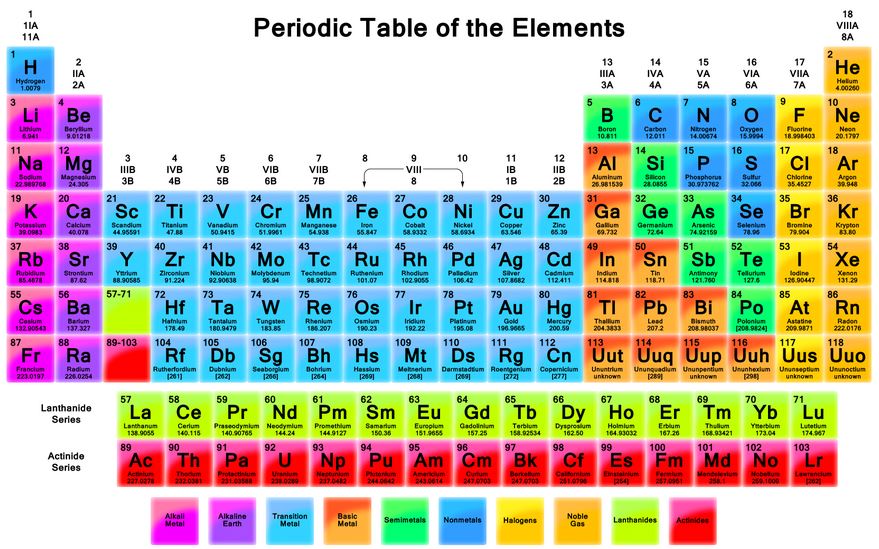
Elements on the LEFT side of the periodic table will most likely form:
a)
Positive ions
b)
Negative ions
c)
Neutral Ions
d)
None of these
102.

How many valence electrons in this structure?
a)
6
b)
5
c)
4
d)
7
103.

What elements generally make an ionic bond?
a)
metal and nonmetal
b)
2 or more nonmetals
c)
metal
d)
none of the above
104.

What elements generally make a covalent bond?
a)
metal and nonmetal
b)
2 or more nonmetals
c)
metal
d)
none of the above
105.

What type of bond is this?
a)
ionic
b)
covalent
106.

Which of these is covalent?
a)
NaCl
b)
Pb(NO3)2
c)
CO2
d)
AlCl3
107.
MgBr2
a)
Ionic Bond
b)
Covalent Bond
c)
Both bonds
d)
Neither bond
108.
H2O
a)
Ionic Bond
b)
Covalent Bond
c)
Both bonds
d)
Neither bond
109.
LiF
a)
Ionic Bond
b)
Covalent Bond
c)
Both bonds
d)
Neither bond
110.
The force that holds two atoms together is called a ___.
a)
chemical bond
b)
reaction
c)
chemical change
d)
physical change
111.
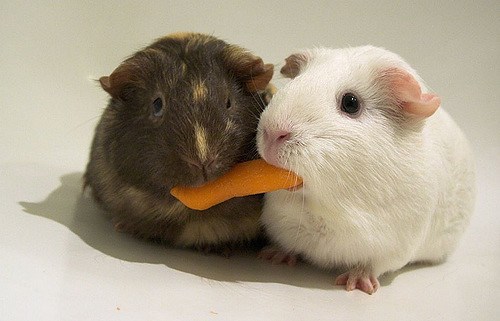
Which bond does this picture best represent?
a)
Metallic bond
b)
ionic bond
c)
covalent bond
d)
James Bond
112.
Which is the correct Lewis Structure for oxygen?
a)
b)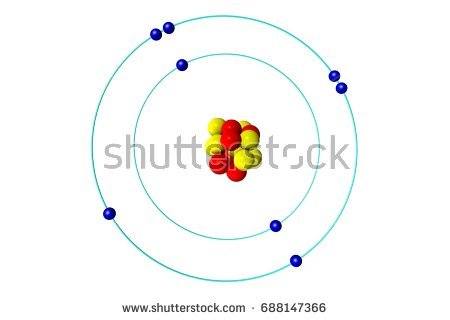
c)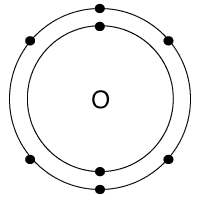
d)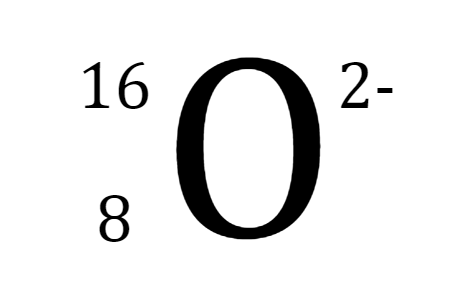
113.
What is the correct Lewis structure for BF3?
a)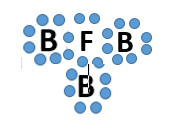
b)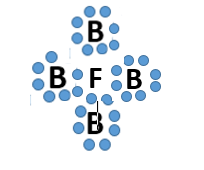
c)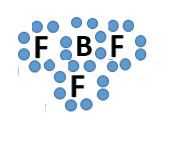
d)
BF3 (The formula is the Lewis Structure)
100 %

