
 Worksheets
Final Exam and STAAR Review
Total questions: 110
Worksheet time: 2hrs 52mins
Name
Class
Date
1.
All matter is made up of:
a)
energy
b)
atoms
c)
electrons
d)
compounds
2.

What does the word "subatomic" mean?
a)
Lots of electrons moving
b)
Atoms that go under water
c)
Atomic energy
d)
A small part of an atom
3.
True or False? Neutrons have a negative electrical charge.
a)
True
b)
False
4.
Atoms are the smallest unit of _____.
a)
light
b)
energy
c)
matter
d)
science
5.

The positive particles of an atom are called:
a)
electrons
b)
positrons
c)
neutrons
d)
protons
6.

The central region of an atom where its neutrons and protons are found is called the:
a)
nucleus
b)
electron cloud
c)
core
d)
center
7.
An atom with an Atomic Number = 6 would have _____ protons.
a)
6
b)
12
c)
3
d)
cannot be determined
8.
Particles in an atom that are neutral and have no charge are called:
a)
negatrons
b)
electrons
c)
neutrons
d)
protons
9.
What is the Atomic Number for an element with THREE protons?
a)
2
b)
1
c)
3
d)
6
10.
The subatomic particle that orbits around the nucleus is called a(n)...
a)
Proton
b)
Neutron
c)
Electron
d)
Quark
11.

What does the 1.00794 stand for in this image?
a)
Hydrogen
b)
The Atomic Number of the atom
c)
The Atomic Mass of the atom
d)
An atomic explosion
12.

Who is the scientist that created the atom model most commonly used today?
a)
Rutherford
b)
Dalton
c)
Bohr
d)
Rodriguez
13.

Which subatomic particles would you find in the nucleus of an atom?
a)
Neutrons and electrons
b)
Protons and electrons
c)
Protons and neutrons
d)
Protons and quarks
14.

What does APE tell us in the phrase APE MAN?
a)
A=P=E, Atomic Number = Protons= Electrons
b)
APE means Atomic Number proves Electrons
c)
APE means that Atomic Mass = Protons
d)
APE means that I subtract Electrons from Protons
15.
What does the MAN tell us in the phrase APE MAN?
a)
MAN equals Mass And Neutrons
b)
MAN equals Mass and Number of Electrons
c)
MAN equals Mass- Atomic Number = Neutrons
d)
MAN means, "Man, I'm tired."
16.

How do you know this image is showing an atom of Lithium?
a)
Count the protons. There are 3. Lithium's atomic number is 3.
b)
Count the nucleus. There are 7 particles inside. Lithium's atomic number is 7.
c)
Count the protons and electrons. There are 6 total. Lithium's atomic number is 6.
17.

What is the name of the element represented in the picture?
a)
Nitrogen
b)
Magnesium
c)
Sodium
d)
Hydrogen
18.
What is the mass of an atom with SEVEN protons, SEVEN neutrons, and SEVEN electrons?
a)
21
b)
14
c)
7
d)
Cannot determine
19.
In the blueberry atom video, you learned that most of an atom is made up of _____.
a)
neutrons
b)
water
c)
air
d)
empty space
20.
An atom can be identified by its ___.
a)
elements
b)
atomic number
c)
nucleus
d)
size
21.
Which statement below is FALSE?
a)
Protons and neutrons make up the atomic mass
b)
Protons and neutrons are located in the nucleus
c)
Protons make up the atomic number
d)
Neutrons have a negative charge
22.
An atom has 18 protons, 22 neutrons, and 18 electrons. What is the charge of the atom's nucleus?
a)
+18
b)
+40
c)
-18
d)
-40
23.
An atom has 36 protons, 36 electrons, and a mass number of 84. How many neutrons does this atom have?
a)
72
b)
36
c)
84
d)
48
24.
Which of the following correctly lists the pair of subatomic particles that balance the charge of an atom?
a)
protons and neutrons
b)
protons and electrons
c)
neutrons and electrons
d)
nucleus and electrons
25.
How many protons does a neutral atom of Oxygen have?
a)
8
b)
16
c)
6
d)
0
26.
In the modern periodic table elements are arranged by:
a)
atomic mass
b)
atomic number
c)
valence electrons
d)
number of isotopes
27.
Calcium is most like which of the following?
a)
Barium
b)
Potassium
c)
Cesium
d)
Nitrogen
28.
The Alkali metals (group 1) have how many valence electrons?
a)
1
b)
2
c)
7
d)
8
29.
The Noble Gases have how many valence electrons?
a)
1
b)
2
c)
7
d)
8
30.
Elements which are shiny, conduct electricity and heat are called
a)
metals
b)
nonmetals
c)
metalloids
d)
nonexistent
31.

The blue atoms are called
a)
metals
b)
nonmetals
c)
metalloids
d)
noble gases
32.

The atoms along the staircase are called
a)
metals
b)
nonmetals
c)
metalloids
d)
noble gases
33.
Which of the following is not a property of metals?
a)
brittle
b)
malleable
c)
lustrous (shine)
d)
conductors
34.
If a material can easily be stretched into the shape of a wire, it is called-
a)
Ductile
b)
Magnetic
c)
Malleable
d)
Reactive
35.
All the elements on the right side of the periodic table are called..
a)
Metals
b)
Metalloids
c)
Nonmetals
36.
How many valance electrons does Krypton have?
a)
6
b)
16
c)
8
d)
17
37.
What is the name of the group that never reacts--they are stable with a full outer ring.
a)
Noble Gases
b)
Transitions
c)
Halogens
d)
Borons
38.
You are pushing 30 N east and your friend is pulling in the opposite direction, 40 N west. What is your net force?
a)
10 N west
b)
10 N east
c)
70 N west
d)
70 N east
39.
A mouse is pulling a piece of cheese with the force of 40 N to the left. A rat sees him and trots over to grab the cheese too and pulls with a force of 60.5 N to the right. What is the net force?
a)
20.5 N Left
b)
20.5 N Right
c)
20 N Right
d)
20 N left
40.
Mr. L is pushing a car up a hill using 4,000 N and heading in the north direction. Mrs. Raulerson is pulling the car in a north direction at 100 N. What is the net force?
a)
4,000 N
b)
4,100 N north
c)
4,100 N up
d)
4,100 N
41.
8 N to the left , and 4 N to the right. Find the net force. Is this balanced?
a)
12 N Right No
b)
4 N Left No
c)
12 N Right Yes
d)
4 N Left Yes
42.
You and your dad are moving the couch from one side to another. Your dad pushes with a force of 35 N to the right and you push with a force of 25 N right. What is the net force on the couch?
a)
60 N right
b)
10 N left
c)
60 n right
d)
50 N left
43.

What is the net force?
a)
5000 N right
b)
4000 N right
c)
40 N left
d)
4000 N left
44.
True or False: The larger the arrow the more the net force.
a)
True
b)
False
45.
You and your friend are playing tug of war. Your friend pulls with a force of 55 N to the right. You pull with a force of 65 N to the left. What is the net force on the rope?
a)
10 n, to the left
b)
20 N
c)
10 N, to the left
d)
10 N, to the right
46.
What is the unit of measurement for force?
a)
AMP
b)
Seconds
c)
Newtons
d)
Miles
47.

Which one is balanced?
a)
top
b)
bottom
c)
both
48.

Is this an example of a balanced or unbalanced force?
a)
balanced
b)
both
c)
unbalanced
d)
neither
49.

What is the net force?
a)
17 N Right
b)
3 N Right
c)
3 N Left
d)
17 N Left
50.

What is the Net Force in this picture?
a)
40N, left
b)
40N, right
c)
20N, balanced
d)
0N, balanced
51.

Is it BALANCED?
a)
Yes
b)
No
52.
If there are two forces going in the same direction how would you find the net force?
a)
Subtract
b)
Add
c)
Neither
d)
Multiply
53.
Find the net force: 15 N to the right, and another 15 newtons to the right.
a)
0 N Right
b)
0 N Left
c)
30 N Left
d)
30 N Right
54.
You and someone else are moving a couch. You push with a force of 35 N to the right and the other person pushes with a force of 25 N right. What is the net force on the couch?
a)
60 N right
b)
10 N left
c)
60 n right
d)
50 N left
55.
All of these are chemical reactions EXCEPT-
a)
burning wood
b)
baking a cake
c)
a nail rusting
d)
tearing paper
56.

The student observed that the temperature changed from 25oC to 23oC when 2 solutions were combined and that a white substance rapidly formed and settled to the bottom of the container. What most likely happened to produce these results?
a)
The water froze.
b)
A chemical reaction happened, making a precipitate.
c)
A physical change happened.
d)
Nothing happened.
57.
Which of the following properties is determined by an atom's valence electrons?
a)
malleability
b)
reactivity
c)
identity
d)
type of atom
58.
NaNO3 + KCl --> KNO3 + NaCl
Is this equation balanced, following the law of conservation of energy?
Is this equation balanced, following the law of conservation of energy?
a)
Yes
b)
No
59.
A silver ring reacts with compounds containing sulfur in the air to form silver sulfide, a black substance that makes up the tarnish on the surface of silver objects. To remove the tarnish from the ring, students placed it in a pan lined with aluminum foil and added hot water. Baking soda was added to the hot water and stirred. Students made observations about the process.
Which observation of this process provides evidence of a chemical reaction?
Which observation of this process provides evidence of a chemical reaction?
a)
Hot water heated the foil.
b)
The solution changed color.
c)
The pan was lined with foil.
d)
The hot water cooled down.
60.
CH4 + 2O2 --> CO2 + 2H2O
Identify one compound that was yielded in this reaction.
Identify one compound that was yielded in this reaction.
a)
Water (H20)
b)
Methane (CH4)
c)
Oxygen (O2)
61.
6CO2 + 6H2O C6H12O6 + 6O2
How many Oxygen atoms are on the product side of this equation?
How many Oxygen atoms are on the product side of this equation?
a)
36
b)
12
c)
18
d)
30
62.

During which part or parts of the marble’s fall did the marble experience unbalanced forces?
a)
Part 1
b)
Part 2
c)
Part 3
d)
Part 1 & 2
63.

A magician pulls a tablecloth out from under dishes and glasses on a table without disturbing them.
a)
Newton's 1st Law
b)
Newton's 2nd Law
c)
Newton's 3rd Law
64.

Rockets are launched into space using jet propulsion where exhaust accelerates out from the rocket and the rocket accelerates in an opposite direction.
a)
The Law of Inertia
b)
The Law of Acceleration
c)
The Law of Conservation of Momentum
65.

A person not paying attention while skateboarding hits a rock. The skateboard stops...they don't.
a)
The Law of Inertia
b)
The Law of Acceleration
c)
The Law of Conservation of Momentum
66.

I crack an egg on the edge of a bowl. The force applied to the egg is the same as the force applied to the bowl.
a)
Law of Inertia
b)
Law of Acceleration
c)
Law of Conservation of Momentum
67.

Pushing a child on a swing is easier than pushing an adult on the same swing, because the adult has more inertia.
a)
Newton's 1st Law
b)
Newton's 2nd Law
c)
Newton's 3rd Law
68.

A soccer ball accelerates more than a bowling ball when thrown with the same force.
a)
Law of Inertia
b)
Law of Acceleration
c)
Law of Conservation of Momentum
69.

A football player kicks the ball through the goal posts with their foot and their toes are left stinging.
a)
Law of Inertia
b)
Law of Acceleration
c)
Law of Conservation of Momentum
70.

A student leaves a pencil on a desk and the pencil stays in the same spot until another student picks it up.
a)
Law of Inertia
b)
Law of Acceleration
c)
Law of Conservation of Momentum
71.

Two students are in a baseball game. The first student hits a ball very hard and it has a greater acceleration than the second student who bunts the ball lightly.
a)
Law of Inertia
b)
Law of Acceleration
c)
Law of Conservation of Momentum
72.

My cat eyeballs the christmas tree and decides to apply all of his mass directly to the center of the tree. This force causes the tree to accelerate down towards the ground.
a)
Law of Inertia
b)
Law of Acceleration
c)
Law of Conservation of Momentum
73.

This person bought coffee and put it on the seat next to them. If they stopped quickly and the coffee spilled which law would that represent?
a)
Newton's 1st Law
b)
Newton's 2nd Law
c)
Newton's 3rd Law
74.

When you step on a Lego. You push on the Lego and the Lego pushes back on you.
a)
Newton's 1st Law
b)
Newton's 2nd Law
c)
Newton's 3rd Law
75.

"For every action, there is an equal and opposite reaction."
a)
Newton's 1st Law
b)
Newton's 2nd Law
c)
Newton's 3rd Law
d)
Newton's 4th Law
76.

Force = Mass x Acceleration
a)
Newton's 1st Law
b)
Newton's 2nd Law
c)
Newton's 3rd Law
d)
Newton's 4th Law
77.

"An object in motion (or at rest) will to stay in motion (or at rest) until an outside force acts upon it."
a)
Newton's 1st Law
b)
Newton's 2nd Law
c)
Newton's 3rd Law
d)
Newton's 4th Law
78.

The force that opposes motion between two surfaces in contact with each other.
a)
inertia
b)
friction
c)
momentum
d)
gravity
79.
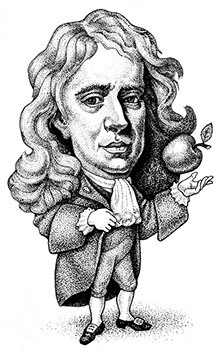
A Newton is a unit of...
a)
force
b)
inertia
c)
acceleration
d)
velocity
80.

An archer pulls the bowstring back, then releases the string and the arrow flies forward. Pulling the string back is the...
a)
action force
b)
reaction force
c)
net force
d)
inertia
81.

An archer pulls the bowstring back, then releases the string and the arrow flies forward. The arrow flying forward is the...
a)
action force
b)
reaction force
c)
net force
d)
inertia
82.

A cannonball with a mass of 10 kg is flying at an acceleration of 5 m/sec/sec. What is its force?
a)
50 Newtons
b)
5 Newtons
c)
20 Newtons
d)
9.5 Newtons
83.

A lack of evidence for continental drift prevented many scientists from believing a single supercontinent called _________ existed.
a)
Glossopteris
b)
Pangaea
c)
Gondwanaland
d)
Mesosaurus
84.

The theory of _______ states that Earth’s crust and upper mantle are broken into sections that are in constant, slow motion.
a)
plate tectonics
b)
continental drift
c)
seafloor spreading
d)
divergent boundaries
85.

Many scientists believe that molten rock in the mantle is forced upward toward the surface, cools, and sinks. This process is called a(n) _________.
a)
earthquake
b)
convergent boundary
c)
volcano
d)
convection current
86.

_______ are formed when two continental plates collide.
a)
Mountain ranges
b)
Transform faults
c)
Rift valleys
d)
Volcanoes
87.

The theory of continental drift was first proposed by __________.
a)
Thomas Edison
b)
Alfred Wegener
c)
Benjamin Franklin
d)
Harry Hess
88.

The theory of seafloor spreading was first proposed by __________.
a)
Thomas Edison
b)
Harry Hess
c)
Benjamin Franklin
d)
Alfred Wegener
89.

Which layer of Earth is made up partly of crust and partly of mantle material?
a)
lithosphere
b)
mantle
c)
asthenosphere
d)
crust
90.

Plates move apart at _________ boundaries.
a)
volcanic
b)
divergent
c)
convergent
d)
transform
91.

The San Andreas Fault in California is an example of a ________.
a)
divergent boundary
b)
convergent boundary
c)
transform fault
d)
subduction zone
92.

Which type of plate boundary occurs at B?
a)
convergent
b)
divergent
c)
transform
d)
country
93.

The feature labeled C represents some of the deepest spots on the ocean floor. These areas are called ___.
a)
mid-ocean ridge
b)
trenches
c)
deep-sea vent
d)
abyssal plain
94.

The feature labeled D is part of the continuous underwater mountain range that circles Earth. It is called ___.
a)
mid-ocean ridge
b)
trenches
c)
deep-sea vent
d)
abyssal plain
95.
About how many days does it take to moon to go through a complete cycle?
a)
7 days
b)
365 days
c)
29 days
d)
20 days
96.

When the visible (lit) portion of the moon is increasing, the moon is:
a)
waning
b)
full
c)
waxing
d)
new
97.

When the Earth is between the moon and sun, it is most likely a:
a)
new moon
b)
full moon
c)
waxing crescent
d)
waxing gibbous
98.

Approximately how much time passes between the new moon and full moon?
a)
one month
b)
two weeks
c)
3 days
d)
24 hours
99.
Changes in the moon's appearance are
a)
phases
b)
eclipses
c)
stages
d)
cycle
100.
What causes the moon's phases
a)
Where you are standing on Earth
b)
the amt of sunlight reflected onto the moon from the sun
c)
The tilt of Earth
d)
how fast the moon is moving
101.
Why do we always see the same side of the moon from Earth?
a)
because the phases change
b)
because it rotates and revolves at the same rate
c)
because half of the moon always receives sunlight
d)
The moon changes positions
102.

The Moon orbits Earth in a ________________ direction
a)
clockwise
b)
counterclockwise
c)
upwards
d)
downwards
103.
Define Gibbous
a)
Less than half of moon visible
b)
More than half of moon visible
c)
All of moon visible
d)
None of moon visible
104.
What is the correct order of the moon phases?
a)
new, full, 1st quarter, 3rd quarter
b)
new moon, 1st quarter, full moon, 3rd quarter
c)
1st quarter, 3rd quarter, new moon, full moon
d)
new, 1st quarter, 3rd quarter, full
105.
The Earth's axis is tilted _____ degrees.
a)
23.5
b)
25.3
c)
30.2
d)
24
106.

What happens when the area in which you live tilts away from the sun?
a)
It is summer.
b)
It is spring.
c)
It is winter.
d)
It is fall.
107.
The term equinox means....
a)
equal amount of day light and equal amount of night
b)
Equal amount of winter and summer
c)
Equal amounts of hot dogs for everyone
d)
The longest day of the year
108.
What is the longest day of the year?
a)
winter solstice
b)
summer solstice
c)
fall equinox
d)
spring equinox
109.
Why do we experience the changing of the season on the earth?
a)
distance from the sun
b)
rotation of the earth
c)
change in solar output
d)
tilt of the earth's axix
110.

Why is the Equator warmest?
a)
Because it is closest to the sun.
b)
Because it receives the most direct sunlight
c)
Because no clouds form here.
d)
Because it is far from the sun
100 %

