wayground logo

Free Printable Worksheets

Font size

S
M
L
XL
Worksheets

Science 8 Unit C review

Total questions: 105

Worksheet time: 5hrs 45mins

Name
Class
Date
1.
A ray of light is incident on a plane mirror and the angle of incidence is 25 degrees. What is the angle of reflection?
a)
A. 0 degrees
b)
B. 50 degrees
c)
C. 90 degrees
d)
D. 25 degrees
2.

________ reflection is when a surface bounces light rays in different directions.

a)

Convergent

b)

Diffuse

c)

Absorptive

d)

Regular

3.
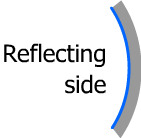
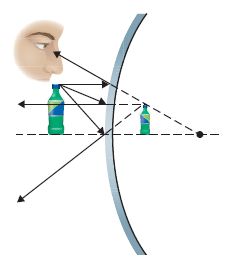
The following is a picture of what type of mirror? 
a)
Convex Mirror
b)
Concave Mirror
c)
Plane Mirror
d)
Flat Mirror
4.
The following is a picture of what type of mirror? 
a)
Convex Mirror
b)
Concave Mirror
c)
Plane Mirror
d)
Flat Mirror
5.

When light reflects off a completely smooth surface it has _____________ reflection.

a)

regular

b)

diffuse

c)

transmission

d)

divergent

6.
The Law of Reflection:
The angle of incidence is _________ the angle of reflection
a)
bigger than
b)
the same as
c)
smaller than
7.

The type of mirror in the picture is a __________ mirror.

a)

rough

b)

plane

c)

shiny

d)

plain

8.
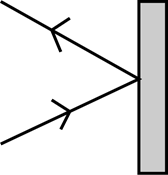
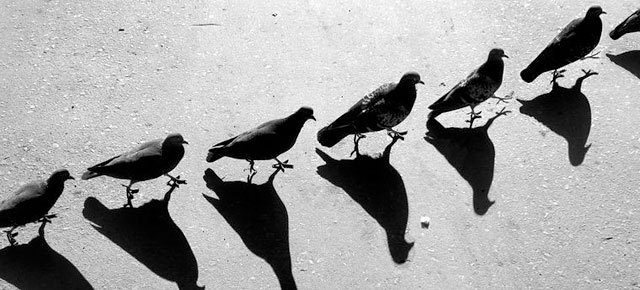
The illustration shows a light ray striking an object.
In the illustration, the light ray striking the object is-
a)
absorbed
b)
stopped
c)
reflected
d)
refracted
9.

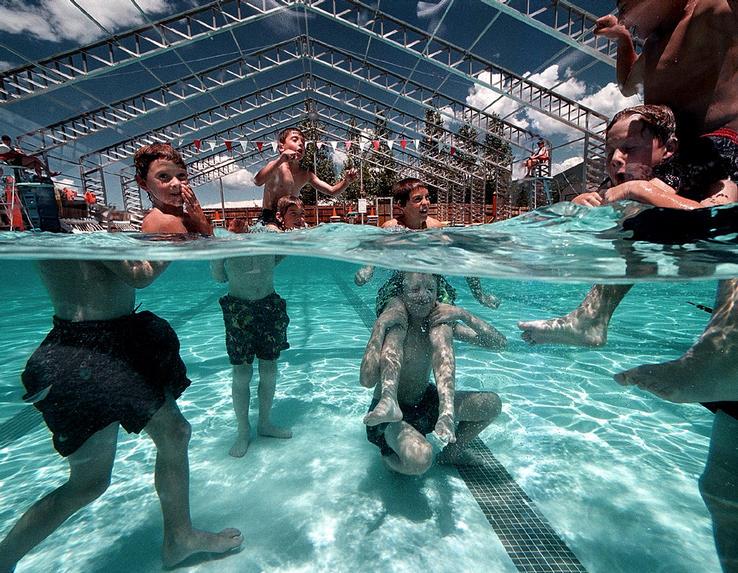
Why does the lower part of the child appear so much different in size from the upper part?

a)

The light rays that travel through water and then into air are refracted.

b)

The light rays that travel through water and then into air are enlarged.

c)

The light rays that travel through air and then into water are reflected.

d)

The light rays that travel through air and then into water are absorbed.

10.

A student placed a pencil in a cup of water. The pencil appears broken because light....

a)

can travel in curved lines

b)

bends when it passes through water

c)

makes the water denser than the glass

d)

reflects the pencil on the water's surface

11.

When you look in the convex part of the spoon, your image is upside-down.

a)

true

b)

false

12.

True or False: This diagram shows the correct position of the mirrors so that the light hits the target

a)

True

b)

False

13.
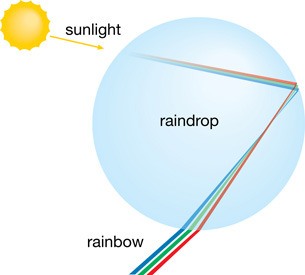
Light bending as it passes through a rain drop is an example of...
a)
Refraction
b)
Reflection
14.
Angles are always measured from the:
a)
Boundary
b)
Normal
c)
Incident Ray
d)
Reflected Ray
15.

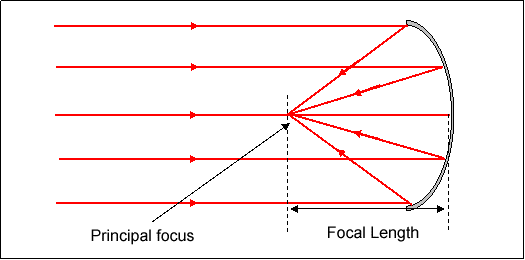
Where light rays converge is called the...

a)

image point

b)

luminous point

c)

origin point

d)

focal point

16.
What type of image is formed in a plane mirror?
a)
Real
b)
Virtual
c)
Enlarged
d)
Small
17.

To form an image, light rays must...

a)

Diverge

b)

Converge

c)

None of the above

18.

The center of convex lenses is __________ the outside edges.

a)

thinner than

b)

thicker than

c)

the same as

19.

If an image formed by a convex lens is inverted, it is most likely what type of image?

a)

Real

b)

Virtual

c)

None of the above

20.
A material that reflects or absorbs all of the light that strikes it is called which of the following? 
a)
Transparent
b)
Translucent
c)
Diffuse
d)
Opaque
21.
This is an example of a __________ mirror.
a)
Concave
b)
Convex
c)
Plane
d)
Magnifying
22.
Convex mirrors cause light to spread out.
a)
True
b)
False
23.
What kind of mirror is shown here?
a)
plane
b)
concave
c)
convex
d)
diffuse
24.
a mirror with a surface that curves inward like the inside of a bowl
a)
concave mirror
b)
convex mirror
c)
plane mirror
d)
flat mirror
25.

Which of the mirrors is used as passenger-side mirrors in vehicles?

a)

Concave

b)

Convex

c)

Plane

26.

Another name for light bending is ....

a)

Reflection

b)

Absorbtion

c)

Refraction

d)

Transmission

27.

When light does not transmit through an object ...

a)

it creates a shadow

b)

it becomes luminous

c)

it becomes intense

28.
Luminous means...
a)
Gives out its own light
b)
Reflects light from other things
29.

What Does a Convex Lens Do?

a)

Make things appear bigger

b)

Make things appear smaller

c)

Make things closer

d)

Make things move farther away

30.

After light passes through a convex lens the light will _____

a)

converge

b)

diverge

31.

What kind of lens is shown?

a)

Concave

b)

Convex

c)

Concord

d)

Plane

32.
What does the word "converging" mean?
a)
to separate
b)
to come together
c)
parallel 
d)
perpendicular
33.

Which type of lens is shown?

a)

Concave

b)

Convex

c)

Reflecting

d)

Absorbing

34.

Which type of mirror magnifies a close up image, like a cosmetic mirror.

a)

Concave

b)

Convex

c)

Plane

35.
What is happening in this picture?
a)
Reflection
b)
Refraction
c)
Diffraction
d)
Absorption
36.

Concave lenses __________ light rays.

a)

reflect

b)

converge

c)

diverge

d)

converge & diverge

37.
Which type of mirror is shown.
a)
Concave
b)
Convex
c)
Specular
d)
Plane
38.

Vocabulary Term: When light enters a new medium, but does not pass through

a)

Absorption

b)

Diffraction

c)

Transmission

d)

Refraction

39.
A real image...
a)
is produced by virtual rays and can be projected on a screen
b)
is produced by real rays and cannot be projected on a screen
c)
is produced by virtual images and cannot be projected on a screen
d)
is produced by real rays and can be projected on a screen
40.
Which one is a convex lens?
a)
A
b)
B
41.
convex or concave mirror?
a)
convex 
b)
concave
42.
Convex or concave mirror?
a)
convex
b)
concave
43.
Convex or concave lens?
a)
Convex 
b)
Concave 
44.

A medium ...

a)

transmits light.

b)

reflects all light rays

c)

is always opaque

d)

is always very dense

45.

Which medium will transmit light the fastest?

a)

ocean water

b)

oil

c)

diamond

d)

air

46.
A region that contains few or no particles
a)
Vacuum
b)
Velocity
c)
Velcro
d)
Volcano
47.
This occurs when parallel rays of light hit a smooth surface.
a)
Regular Reflection
b)
Diffuse Reflection
c)
Plane Mirror
d)
Focal Point
48.

Why do you not see an image when light reflects off a rough surface?

a)

because not enough light is reflected

b)

because the reflection is regular

c)

because the reflection is diffuse

d)

because the law of reflection does not apply

49.
Which mirror(s) have a focal point?
a)
plane only
b)
concave only
c)
plane, convex and concave
d)
concave and convex, but not plane
50.
What property of light waves can be observed as light waves pass from one medium to another and change speed?
a)
Diffraction
b)
Refraction
c)
Reflection
d)
Separation
51.

Vocabulary Term: light changes direction as it passes from one type of medium into another medium

a)

polarization

b)

regular reflection

c)

refraction

d)

diffuse reflection

52.
What is this
a)
opaque
b)
transparent
c)
translucent
53.
What is this
a)
translucent
b)
opaque
c)
transparent
54.
When ALL of the light goes though an object
a)
opaque
b)
transparent
c)
translucent
55.
What is this
a)
transparent
b)
translucent
c)
opaque
56.
What is this
a)
translucent
b)
transparent
c)
opaque
57.
Between Images A & B, which one would NOT produce a clear image?
a)
A would not because it is specular reflection
b)
A would not because it is diffused reflection
c)
B would not because it is specular reflection
d)
B would not because it is diffused reflection
58.
an image that forms when light rays actually meet
a)
virtual image
b)
real image
c)
diffuse reflection
d)
regular reflection
59.
Convex mirrors can create real images.
a)
True
b)
False
60.
Plane mirrors create real images.
a)
True
b)
False
61.
What happens when light passes from air into water?
a)
The light speeds up
b)
The light continues at the same speed
c)
The light slows down
d)
The light forms a mirage
62.
What occurs when parallel rays of light hit a rough or bumpy surface?
a)
Regular Reflection
b)
Diffuse Reflection
c)
Refraction
d)
Diffraction
63.
How can the bird see its image in the glass window?
a)
absorption 
b)
dispersion 
c)
reflection
d)
refraction
64.
Which of the following is correct about the brightness  of light? 
a)
The closer the light source is, the greater the brightness.
b)
The farther away the light source, the greater the brightness
c)
Brightness cannot be changed 
65.
How is light affected by an increase in the index of refraction?
a)
Its frequency increases
b)
Its frequency decreases
c)
Its speed increases
d)
Its speed decreases
66.
Glass has a _____________ index of refraction than air.
a)
Equal
b)
Greater
c)
Less
d)
Impossible to say
67.
Light has the lowest velocity in which medium?
flint glass n=1.70
barium glass n=1.60
crown glass n=1.523
water n=1.33
diamond n=2.45
a)
diamond
b)
water
c)
flint glass
d)
barium glass
68.
if an object gives off it's own light it is called....
a)
luminous
b)
transparent
c)
translucent
d)
opaque
69.
if all the light passes through a material it is called....
a)

transparent

b)

translucent

c)
opaque
d)
luminous
70.
_____ is a lens that is thicker in the middle.
a)
Convex
b)
Concave
71.
_____ is a lens that is thinner in the middle..
a)
Convex
b)
Concave
72.
Photoreceptors that detect gray tones in low light
a)
Rods
b)
Cones
73.
Photoreceptors that detect Color
a)
Cones
b)
Rods
74.
When the eyeball is too long causing Nearsightedness
a)
Myopia
b)
Hyperopia
c)
Asigmatism
d)
Presbyopia
75.

This structure is located behind the iris and bends light onto the retina.

a)

Retina

b)

Lens

c)

Optic Nerve

d)

Pupil

76.

This structure is the outer coating of the front of the eye ball.

a)

Cornea

b)

Lens

c)

Retina

d)

Optic Nerve

77.

This structure is the back of the eye and it sends images to the optic nerve.

a)

Cornea

b)

Lens

c)

Retina

d)

Pupil

78.

This structure sends images to the brain so we see the image correctly.

a)

Iris

b)

Optic Nerve

c)

Cornea

d)

Lens

79.

This structure is the black, center part of the eye. Light enters the eye here.

a)

Iris

b)

Optic Nerve

c)

Pupil

d)

Lens

80.

This structure is the colored part of the eye.

a)

Pupil

b)

Iris

c)

Retina

d)

Optic Nerve

81.

Cones help us see...

a)

color

b)

black, white, and grey

c)

only purple

d)

only with glasses on

82.

Cones help us see...

a)

color

b)

black, white, and grey

c)

only purple

d)

only with glasses on

83.

What is letter H pointing to?

a)

Lens

b)

Optic Nerve

c)

Iris

d)

Cornea

84.

What is letter I pointing to?

a)

Cornea

b)

Iris

c)

Optic Nerve

d)

Pupil

85.

What is letter F pointing to?

a)

Lens

b)

Iris

c)

Pupil

d)

Optic Nerve

86.

What is letter B pointing to?

a)

Optic Nerve

b)

Retina

c)

Iris

d)

Pupil

87.

What would happen to your pupils if its very bright outside?

a)

They would expand and become very large.

b)

They would contract and become very small.

88.
What is the name for a picture element?
a)
Pixel
b)
Dot
c)
Image
d)
Pixar
89.
Based on the human eye, the lens _______ light to the ______. 
a)
converges; photoreceptors
b)
converges; retina
c)
refracts; cones and rods
d)
All answers are correct
90.
What does farsighted mean?
a)
You can see far away well.
b)
You can see close up well.
c)
You have perfect sight.
d)
You are blind.
91.
What part of your eye sends the messages to and from your brain?
a)
retina
b)
optic nerve
c)
iris
d)
vitreous humor
92.
What is the colored part of the eye?
a)
cornea
b)
iris
c)
retina
d)
optic nerve
93.

the black part that light goes through

a)

pupil

b)

iris

c)

cornea

d)

retina

94.

the colored part of the eye

a)

pupil

b)

iris

c)

cornea

d)

retina

95.

What part of the eye does light go through?

a)

pupil

b)

retina

c)

iris

96.
An ommatidium is a small part of a ...
a)
camera eye
b)
compound eye
c)
digital image
d)
telescope
97.
Insects have ...
a)
compound eyes
b)
camera eyes
98.
A CCD is in a ...
a)
digital camera
b)
telescope
c)
microscope
d)
compound eye
99.
What is the effect of increasing the resolution of an image?
a)
The image has more white
b)
The image gets bigger
c)
The image quality improves
d)
The image gets smaller
100.
The camera’s aperture controls 
a)
the opening and closing of the lens
b)
amount of light entering a camera
c)
the recording of the image
d)
focusing of the image
101.
A characteristic of fish eyes is...
a)
a rigid lens
b)
a round lens
c)
5 cone types
d)
tapetum lucidum
102.
A characteristic of cat eyes is...
a)
a rigid lens
b)
a round lens
c)
5 cone types
d)
tapetum lucidum
103.
What type of lens do humans have in their eyes? 
a)
Concave Lens 
b)
Convex Lens 
104.
The blind spot in your eye is caused by the 
a)
blood vessels
b)
optic nerve
c)
cone cells
d)
rod cells
105.
The coordinates of a pixel determine the pixel's...
a)
resolution
b)
colour
c)
size
d)
location