wayground logo

Free Printable Worksheets

Font size

S
M
L
XL
Worksheets

Semester 2 Exam Prep Part B

Total questions: 110

Worksheet time: 1hrs 17mins

Name
Class
Date
1.
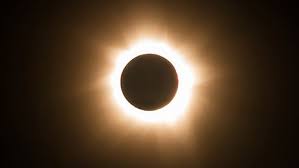
If the sun, moon, and Earth are lined up, what does this diagram represent?
a)
full moon
b)
new moon
c)
lunar eclipse
d)
solar eclipse
2.
If these three bodies are lined up with each other, what would this diagram represent?
a)
full moon
b)
new moon
c)
lunar eclipse
d)
solar eclipse
3.
For a solar eclipse to occur, what has to happen?
a)
The sun must be directly between Earth and the moon.
b)
The moon must be directly between Earth and the Sun.
c)
Earth must be directly between the Sun and the moon.
4.
When the Earth's shadow falls on the moon, the shadow causes what to happen?
a)
Lunar eclipse
b)
Solar eclipse
c)
Partial eclipse
5.
This type of eclipse occurs when the moon blocks the sunlight from reaching Earth?
a)
Solar eclipse
b)
Lunar eclipse
c)
Total eclipse
6.
During a solar eclipse...
a)
The sun is blocked
b)
The Earth is blocked
c)
The moon is blocked
d)
You are blocked
7.
Differences in the moon's and sun's pull on different sides of the Earth cause _________.
a)
gravity
b)
lunar phases
c)
tides
d)
dabbing
8.
The bulge of water on the side of the Earth closest to the moon produces ___________.
a)
high tide
b)
low tide
c)
neap tide
d)
spring tide
9.
Which body has the greater effect on Earth's tides?
a)
Sun
b)
Saturn
c)
Moon 
d)
Venus
10.
What causes tides?
a)
gravity
b)
wind
c)
spring
d)
neap
11.
What moon phase is this picture?
a)
This is the full moon phase.
b)
This is the waxing gibbous moon phase.
c)
This is the waning gibbous moon phase.
d)
This is the first quarter moon phase.
12.
What moon phase is this picture?
a)
This is the waning crescent phase.
b)
This is the waxing gibbous phase.
c)
This is the waning gibbous phase.
d)
This is the new moon phase.
13.
What is this moon phase?
a)
This is the waxing crescent phase.
b)
This is the full moon phase.
c)
This is the waxing gibbous phase.
d)
This is the last quarter moon.
14.
What is this moon phase?
a)
This is the waxing gibbous moon phase.
b)
This is the last quarter moon phase.
c)
This is the first quarter moon phase.
d)
This is the new moon phase.  
15.
What moon phase is this picture?
a)
This is the full moon phase.  
b)
This is the waxing crescent moon phase.
c)
This is the waning gibbous moon phase.
d)
This is the waning crescent moon phase.
16.
What moon phase is this picture?
a)
This is the new moon phase.
b)
This is the waxing crescent moon phase.
c)
This is the waxing gibbous moon phase.
d)
This is the waning crescent moon phase.
17.
What moon phase is this image?
a)
This is the full moon phase.
b)
This is the last quarter moon phase.
c)
This is the waxing gibbous moon.
d)
This is the new moon phase.
18.
What phase of the moon is this image?
a)
This is the last quarter moon phase.
b)
This is the full moon phase.
c)
This is the first quarter moon phase.
d)
This is the waxing gibbous moon phase.
19.

The moon seems to change shape from day to day in a cycle that lasts about a month as it goes through _.

a)

revolutions

b)

phases

c)

rotations

d)

eclipses

20.
As the moon's shape appears to get smaller, we say that the moon is _.
a)
swelling
b)
waxing
c)
waning
d)
disappearing
21.
Phases of the moon in which the moon appears to be getting larger are referred to as _.
a)
waxing
b)
waning
c)
new
d)
eclipse
22.

A giant landmass that most likely existed 200 million years ago, and was talked about by Alfred Wegener.

a)

Wegener

b)

Pangaea

c)

Archyopteryx

d)

Ammonite

23.
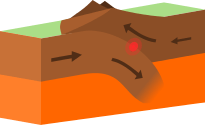
Name the boundary
a)
convergent boundary
b)
divergent boundary
c)
transform boundary
d)
sergent boundary
24.
Name the boundary
a)
convergent boundary
b)
divergent boundary
c)
transform boundary
d)
sergent boundary
25.
Name the boundary
a)
convergent boundary
b)
divergent boundary
c)
transform boundary
d)
sergent boundary
26.

The Pacific Ring of Fire is known for its many ...

a)

earthquakes

b)

volcanoes

c)

mountains

d)

All of these options.

27.
What is represented by the picture? 
a)
Sea-floor spreading
b)
Pangea
c)
How the continents are arranged today
d)
Volcanoes
28.
Which type of event often occurs along transform fault boundaries? 
a)
volcanoes
b)
earthquakes
c)
sea-floor spreading
d)
mountain building
29.
A collision between two pieces of continental crust at a converging boundary produces a
a)
mid ocean ridge
b)
deep ocean trench
c)
rift valley
d)
mountain range
30.

The Great Rift Valley in Africa and the Mid-Ocean Ridge were all created by this boundary

a)

Divergent

b)

Convergent

c)

Reform

d)

Transform

31.

Which type of plate boundary would cause mountains to form?

a)

Transform

b)

Convergent

c)

Divergent

d)

Reform

32.

Scientists think that convection currents that move the plates flow in Earth's

a)

Continental crust

b)

Oceanic crust

c)

Asthenosphere

d)

Lithosphere

33.

Which of the following occurs because of convection currents?

a)

Tectonic plates on the crust move.

b)

The mantle increases in size.

c)

Pressure in the crust increases.

d)

Pressure in the crust decreases.

34.

What type of plate boundary is this?

a)

Plate

b)

Divergent

c)

Subduction

d)

Transform

35.
Is a layer of week of soft mantle that is made of rock that flows slowly.  Tectonic plates move on top of this layer. 
a)
Inner Core
b)
Asthensophere
c)
Lithosphere
d)
Outer Core
36.

This is the outermost, rigid layer of the Earth, and is divided into pieces call tectonic plates.

a)

Inner Core

b)

Asthensophere

c)

Lithosphere

d)

Outer Core

37.

This "plastic" layer is responsible for convection currents.

a)

lithosphere

b)

inner core

c)

crust

d)

asthenosphere

38.
What is the shaking of the Earth’s crust caused by a release of energy?
a)
Earthquake
b)
Epicenter
c)
Fault
d)
Plate
39.
What are the puzzle pieces of the Earth's surface called?
a)
Tectonic plates
b)
Puzzles
c)
Earthquakes
40.
What occurs when two plates move, bump or slide past each other?
a)
An Earthquake
b)
Nothing
c)
Movement
41.
What is molten rock that has formed deep within the Earth?
a)
Hot Spot
b)
Magma
c)
Lava
d)
Volcano
42.
What is molten rock that has reached the Earth's surface?
a)
Aa
b)
Lava
c)
Magma
d)
Pahoehoe
43.
What is a volcano?
a)
A mountain that has lava all over it 
b)
A giant hill filled with magma
c)
A long high sea wave 
d)
A hole in the Earth where magma erupts
44.
Where are most volcanoes found?
a)
Southern Hemisphere
b)
Ring of Fire
c)
Mid-Atlantic Ridge
d)
Hot Spots
45.

A weak spot in the crust where molten material, or magma comes to the surface

a)

subduction zone

b)

hot spot

c)

convergent

d)

divergent

46.
Which type of plate boundaries occur at X?
a)
Divergent
b)
convergent
c)
transform
d)
subducting
47.
What is happening at Z?
a)
mid-ocean ridge
b)
subduction zone
c)
transform boundary
d)
sea floor spreading
48.
Volcanoes that are NOT found at plate boundaries occur in the middle of plates in areas called ___________. 
a)
hot spots
b)
mid-ocean ridges
c)
fissure volcanoes
d)
shield volcanoes
49.

What event started the Space Race?

a)

USSR launches Sputnik

b)

USA established NASA

c)

The Apollo program

d)

1st female Cosmonaut in space

50.

Which of the following is a good example of how Russian/US relations have evolved since the space race ended?

a)

Russia shut down its space programs in the 1970's.

b)

Russia has applauded the US since its takeover of the Russian Space Program in 1972.

c)

Americans/Russians work together on the International Space Station.

d)

Russia has signed a treaty with the US agreeing to never spy on the US using satellites.

51.

The main objective was to land a person on the moon. The program was called ___________.

a)

Gemini

b)

Mercury

c)

Apollo

d)

Redstone

52.

What was the name of the Space Shuttle that exploded less than 2 minutes after takeoff in 1986?

a)

Columbia

b)

Challenger

c)

Explorer

d)

Voyager

53.

What was the name of the Space Shuttle that exploded upon reentry into Earth's atmosphere in 2003?

a)

Columbia

b)

Challenger

c)

Explorer

d)

Voyager

54.
What does the "habitable zone" refer to?
a)
A place on Earth humans live in.
b)
A distance from the sun where planets could support life
c)
A term from a popular TV series about the stars
d)
None of the above.
55.
What was the MOST significant part to this recent discovery of planets?
a)
It showed scientists of new planets that could support life.
b)
It was a record number of new planets discovered.
c)
It showed how powerful the new telescope is.
d)
It wasn't significant.  It was just another discovery.
56.

Resources that are not able to be reproduced as quickly as they are used are called _____.

a)

renewable resources

b)

replaceable resources

c)

non renewable resources

d)

non replaceable resources

57.

Geothermal energy uses heat from ____ to produce electricity.

a)

the earth

b)

coal

c)

oil

d)

natural gas

58.

Coal is burned to heat water so that the _______ can turn turbines.

a)

fire

b)

steam

c)

water

d)

heat

59.

Renewable resources ...

a)

are not replaceable

b)

are used more frequently than non renewables

c)

are never going to run out

d)

going to run out

60.

What type of power plant uses the potential energy of water trapped behind a dam?

a)

nuclear power plant

b)

hydroelectric power plant

c)

solar station

d)

coal burning power plant

61.

What are fossil fuels?

a)

coal, oil, uranium

b)

oil, natural gas, uranium

c)

coal, oil, natural gas

d)

geothemals, coal, natural gas

62.

What type of power plant uses scraps from farming, waste products and wind to generate electricity?

a)

Hydroelectric Power Plant

b)

Geothermal Power Plant

c)

Biomass Power Plant

d)

Nuclear Power Plant

63.

Uranium atoms are split to create a tremendous amount of heat in a _____ power plant.

a)

biomass

b)

geothermal

c)

nuclear

d)

hydroelectric

64.

Which are non renewable resources?

(Choose all correct answers)

a)

natural gas

b)

coal

c)

water in a dam

d)

oil

e)

nuclear energy

65.

Which of these are renewable resources?

a)

coal

b)

wind

c)

geothermal

d)

water in a dam

e)

biomass

66.

What is one disadvantage of using wind power?

a)

It is renewable

b)

The wind is everywhere

c)

It is not always windy

67.
Our galaxy is called the
a)
Earth Nebula
b)
The Hubble Galaxy
c)
The Milky Way
d)
The Snickers
68.
Galaxies are composed of (best answer)
a)
stars
b)
stars and gas
c)
stars, dust, and gas
d)
stars, dust, and gas held together by gravity
69.
The Milky Way Galaxy is a 
a)
spiral
b)
lenticular
c)
elliptical 
d)
irregular
70.
What type of galaxy is this?
a)
Spiral
b)
Elliptical
c)
Irregular
d)
Irrational
71.
What type of galaxy is this?
a)
Spiral
b)
Elliptical
c)
Irregular 
d)
Irrational
72.
What type of galaxy is this?
a)
Spiral
b)
Elliptical
c)
Irregular
d)
Irrational
73.
True or False - A star's color is directly related to its temperature.
a)
True
b)
False
74.
A huge group of single star systems, star clusters, dust, and gas bound together by gravity.
a)
Nebula
b)
Milky Way
c)
Galaxy
d)
High-Mass Star
75.
What color of star is the hottest?
a)
Blue
b)
Red
c)
Yellow
d)
Orange
76.
What color of star is the coolest?
a)
Red
b)
Yellow
c)
Blue
d)
White
77.

What type of space technology is this?

a)

Radio Telescope

b)

Light Telescope

c)

Space Telescope

d)

Land Telescope

78.

What type of Space technology is this?

a)

Satellite

b)

Telescope

c)

Rover

d)

Probe

79.

What type of Space Technology is this?

a)

Telescope

b)

Satellite

c)

Rover

d)

Probe

80.

This space technology instrument is ...

a)

radio telescope

b)

U.F.O.

c)

satellite

d)

rover

81.

A fan shaped area where a river enters a larger body of water such as an ocean or lake is called a -

a)

Delta

b)

Canyon

c)

Coastline

d)

Dune

82.

Felix examined several photos of stars. To compare their temperatures, he looked at the colors of the stars. He organized the photos in order from coolest to hottest. Which of these answers shows the correct order?

a)

red, yellow, white, blue

b)

white, blue, yellow, red

c)

yellow, white, blue, red

d)

blue, yellow, white, red

83.

Which of the following statements best relates a star’s color to its surface temperature?

a)

blue stars have a relatively low temperature

b)

red stars have a relatively high temperature

c)

blue-white stars have a relatively low temperature

d)

yellow stars have a relatively low temperature

84.

What partial AND total eclipses happen at the SAME time?

a)

Solar Eclipse

b)

Lunar Eclipse

85.

What partial AND total eclipses happen at DIFFERENT times?

a)

Solar Eclipse

b)

Lunar Eclipse

86.

Which space telescope has discovered over 4,000 planets?

a)

Hubble

b)

Kepler

c)

James Webb

d)

Parker Probe

87.
A[n] ______________ tide occurs when the sun is at right angles to the line between Earth and the moon. 
a)
high
b)
neap
c)
low
d)
spring
88.
A[n] ___________ tide occurs when the sun, Earth, and the moon are nearly in a line. 
a)
spring
b)
high
c)
low
d)
neap
89.

High tides and low tides each happen _____ times per day.

a)

4

b)

2

c)

1

d)

24

90.

Neap tides happen at _________ and _________ phases of the moon.

a)

first quarter and new moon

b)

last quarter and full moon

c)

waxing and waning

d)

1st quarter and 3rd quarter

91.

What type of tide is evident when the moon is in the full moon phase?

a)

high tide

b)

low tide

c)

spring tide

d)

neap tide

92.

Which body has the 2nd greatest effect on Earth's tides?

a)

Sun

b)

Saturn

c)

Moon

d)

Venus

93.

What is the type of "poor man's oil" that is what MOST of the world uses for energy?

a)

Biomass

b)

Hydroelectric

c)

Wind

d)

Wood

94.

Solar energy harnesses energy from ...

a)

the ocean

b)

space

c)

the earth

d)

the sun

95.

When micro biotic organisms give off waste, it can be used as a form of ...

a)

biomass energy

b)

wood energy

c)

solar energy

d)

geothermal energy

96.
What do we call the center of the Earth?
a)
Mantle
b)
Crust
c)
Apple
d)
Core
97.
Which is the hottest part of the Earth?
a)
The core
b)
The mantle
c)
The crust
d)
The Asthenosphere
98.
What is the core made of?
a)
Molten rock
b)
Solid rock
c)
Molten metal
d)
Solid metal
99.
What layer is between the inner core and the mantle?
a)
asthenosphere
b)
crust
c)
outer core
d)
lithosphere
100.
Which is the coolest part of the planet?
a)
inner core
b)
outer core
c)
mantle
d)
crust
101.
Which of these layers is the largest?
a)
lithosphere
b)
asthenosphere
c)
outer core
d)
mantle
102.
What affects the strength of gravity between two objects?
a)
The density of the objects
b)
The mass of the objects
c)
The distance between the objects
d)
Both the mass and the distance between the objects
103.
Which layer of Earth is liquid metal?
a)
Outer Core
b)
Mantle
c)
Inner Core
d)
Asthenosphere
104.

What part of Earth's structure is the YELLOW part?

a)

Crust

b)

Mantle

c)

Outer Core

d)

Inner Core

105.

What part of Earth's structure is the ORANGE part?

a)

Crust

b)

Mantle

c)

Outer Core

d)

Inner Core

106.

What part of Earth's structure is the RED part?

a)

Crust

b)

Mantle

c)

Outer Core

d)

Inner Core

107.

What part of Earth's structure is the BLUE/GREEN part?

a)

Crust

b)

Mantle

c)

Outer Core

d)

Inner Core

108.

What causes tides?

a)

Gravity of the Earth

b)

Gravity of the Moon

c)

Wind from the Earth

d)

Wind from the Moon

109.

A neap tide occurs during which two lunar phases?

a)

Full Mooon and New Moon

b)

Waxing Crescent and Waning Crescent

c)

Waxing Gibbous and Waning Gibbous

d)

1st Quarter and 3rd Quarter

110.

A spring tide occurs during which two lunar phases?

a)

New Moon and Full Moon

b)

Waxing Crescent and Waning Crescent

c)

Waxing Gibbous and Waning Gibbous

d)

1st Quarter and 3rd Quarter