wayground logo

Free Printable Worksheets

Font size

S
M
L
XL
Worksheets

FME CCA Review

Total questions: 115

Worksheet time: 2hrs 32mins

Name
Class
Date
1.
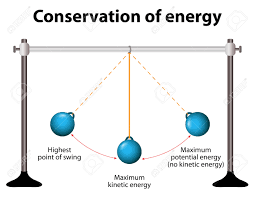
At which point is potential energy greatest?
a)
W
b)
X
c)
Y
d)
Z
2.
__________ is stored energy. 
a)
Potential
b)
Kinetic
c)
None of the above 
d)
All of the above 
3.
The faster an object moves, the ________ kinetic energy it has. 
a)
more
b)
less
c)
none of the above
d)
same
4.
What kind of energy is in a moving skateboard?
a)
Potential
b)
Kinetic
c)
Both potential and kinetic energy
d)
none of the above
5.
What kind of energy is in a rock at the edge of a cliff?
a)
Potential
b)
Kinetic
c)
Both potential and kinetic energy
d)
none of the above
6.
Which is the best example that something has kinetic energy?
a)
a. a car parked on a steep hill 
b)
b. a tennis ball rolling across the court
c)
c. a picture hanging on the wall 
d)
d. a piece of coal before it's burned 
7.
Energy due to motion is ____________ energy. 
a)
Potential 
b)
Energy
c)
Kinetic
d)
Friction
8.
Gravitational potential energy depends on the ________ and ________ of the object. 
a)
Height and mass
b)
Friction and movement
c)
Mass and Movement
d)
Height and Friction 
9.
What kind of energy is in a person climbing a ladder?
a)
Potential
b)
Kinetic
c)
Both
10.
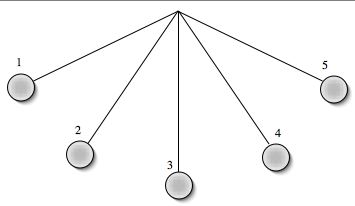
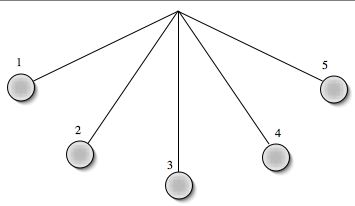
When a pendulum swings, at which point is kinetic energy highest?
a)
1
b)
2
c)
3
d)
4
11.
When a pendulum swings, at which point is potential energy at its greatest?
a)
1
b)
2
c)
3
d)
4
12.
Energy can be _____________ or changed from one type to another.
a)
destroyed
b)
transferred
c)
created
d)
ignored
13.
Gravitational potential energy depends on the ________ and ________ of the object. 
a)
Height and mass
b)
Friction and movement
c)
Mass and Movement
d)
Height and Friction 
14.
Conservation of energy states that energy cannot be ________ or ________, but can be altered from one form to another.
a)
created, destroyed
b)
gravity, force
c)
heat, created
15.
What are the two factors that affect kinetic energy?
a)
time and energy
b)
power and mass
c)
mass and speed
d)
time and work
16.
What is the unit of measurement for kinetic energy
a)
Newton
b)
Joule
c)
Watt
d)
Kilogram
17.
Which of the following is an exmaple of a change of kinetic energy into gravitational potential energy?
a)
a person parachuting out of a plane
b)
a car racing around an oval track
c)
a person skiing down a hill
d)
a person walking up a hill
18.
What would have the greatest kinetic energy?
a)
A car driving down a hill.
b)
A person running down a hill. 
c)
A ball rolling down a hill. 
d)
leaves rolling down a hill 
19.
Which is an example of potential energy?
a)
a roller coaster speeding down a hill
b)
the pulled back string on an archers's bow
c)
releasing the strings on a guitar
d)
an electric current lighting a light bulb
20.
Choose the BEST answer that is an example of an energy transformation from potential energy to kinetic energy.
a)
a ball rolling down a ramp
b)
a picture hanging on the wall
c)
a swing swaying back and forth
d)
a coat hanging on a hook
21.

The ______________ is the starting point used to locate another place or thing

a)

start

b)

reference point

c)

1st point

d)

position

22.

Which is location not described by?

a)

displacement

b)

reference point

c)

distance

d)

direction

23.

What is the difference between the starting point and the final position called?

a)

distance

b)

reference point

c)

position

d)

displacement

24.

The change of position is called _______________.

a)

displacement

b)

motion

c)

distance

d)

speed

25.

The distance an object moves in a unit of time is its _________.

a)

speed

b)

velocity

c)

movement

d)

displacement

26.

The speed of an object in a given direction is its ____________.

a)

motion

b)

displacement

c)

velocity

d)

acceleration

27.

When an object moves at the same speed and direction and does not change.

a)

distance

b)

acceleration

c)

certain speed

d)

constant velocity

28.

A measure of the change in velocity over a period of time.

a)

motion

b)

acceleration

c)

deceleration

d)

incline

29.

When an object accelerates in the same direction as its motion, it has ___________.

a)

negative acceleration

b)

deceleration

c)

positive acceleration

d)

positive force

30.

When the direction of acceleration is opposite the direction of motion, the object has ___________________.

a)

negative acceleration

b)

gravity

c)

positive acceleration

d)

circular acceleration

31.

The direction of acceleration of a n object on a circular path is toward the

a)

ground

b)

front

c)

outside

d)

center

32.

What kind of graph shows how distance and time are related?

a)

speed-time graph

b)

speed-distance graph

c)

distance-time graph

d)

time distance graph

33.

A distance-time graph shows how an objects __________ changes with time.

a)

position

b)

displacement

c)

path

d)

reference point

34.

When comparing two lines on a distance-time graph, the ________ line shows a greater average speed.

a)

smaller

b)

steeper

c)

lower

d)

shorter

35.

On a distance time graph, if the lines are straight the objects moved at a ____________ speed.

a)

variable

b)

fast

c)

slow

d)

constant

36.

Every time the line on a distance-time graph changes direction, the ___________________ changed.

a)

distance

b)

speed

c)

velocity

d)

motion

37.

A ____________________ relates speed and time

a)

speed-time graph

b)

speedometer

c)

time-speed graph

d)

speedograph

38.

The speed-time graph for an object at rest is ____________.

a)

y > 0

b)

y < 0

c)

y = 0

d)

x = 0

39.

A constant speed is shown by a _______________ line and y > 0.

a)

vertical

b)

horizontal

c)

slanted

d)

curved

40.

A line with a _________ on a speed-time graph shows that the speed of the object is changing.

a)

curve

b)

bend

c)

beginning

d)

slope

41.

A downward sloping line shows ______________ acceleration.

a)

negative

b)

positive

c)

variable

d)

no

42.

What does the slope of each line on the graph tell you?

a)

The speed of each runner

b)

The acceleration of each runner

43.
Which runner complete the 100 meter race in the least amount of time?
a)
Albert
b)
Bob
c)
Charlie
44.
Which runner complete the 100 meter race in the least amount of time?
a)
Albert
b)
Bob
c)
Charlie
45.
Which runner started out the fastest?
a)
Albert
b)
Bob
c)
Charlie
46.
What was Charlie doing between 8 seconds and 10.5 seconds?
a)
He was stopped
b)
He was accelerating
c)
He was returning to start
d)
He was traveling at a constant velocity
47.
What was Albert doing between 0 and 12 seconds?
a)
Traveling at a constant speed.
b)
Accelerating
c)
Stopped 
d)
Traveling back to start
48.
What is happening between 9am and 11am?
a)
The cyclist is traveling up a hill
b)
The cyclists is speeding up
c)
The cyclists is traveling at a constant speed
d)
The cyclist is slowing down
49.
What do you think the cyclist is doing between 11am and 1pm?
a)
The cyclist has stopped for lunch
b)
The cyclists is riding at a constant speed on flat ground
c)
The cyclist is practicing sprints
d)
The cyclist is riding up a hill
50.
What is the total distance covered by 2 pm?
a)
40 miles
b)
30 miles
c)
60 miles
d)
10 miles
51.
What was the average speed of the cyclist between 9am and 11am?  *Remember to divide distance by time
a)
10 mph
b)
30 mph
c)
3 mph
d)
3.3 mph
52.
What is the average speed from 11am to 4pm?
a)
12 mph
b)
6 mph
c)
15 mph
d)
10 mph
53.
Can speed ever be a negative number?
a)
yes
b)
no
54.
Between which two letters is the speed the fastest?
a)
B and C
b)
A and B 
c)
E and F
d)
C and D
55.
At which point on the graph is the object decelerating?
a)
A - B
b)
B - C
c)
C - D
d)
D - E
56.
At which point is the object accelerating?
a)
A - B
b)
B - C
c)
D - E
d)
E - F
57.
What was the total distance covered on the journey?
a)
24 meters
b)
55 meters
c)
24 seconds
d)
55 miles
58.
What is happening between points D and E?
a)
No Motion
b)
Acceleration
c)
Decceleration
d)
Going Fast
59.
What is the speed of the object at point A? *Distance/Time
a)
3 m/s
b)
12 m/s
c)
4 m/s
d)
6 m/s
60.
How fast is the object traveling at point D? *Distance/ Time
a)
1 m/s
b)
2 m/s
c)
1/2 m/s 
d)
4 m/s
61.
 Biomass, petroleum, natural gas, propane, and coal are examples.
a)
Chemical Energy
b)
Radiant Energy
c)
Stored Mechanical Energy
d)
Gravitational Energy
62.
Energy stored in the bonds of atoms and molecules. 
a)
Chemical Energy
b)
Radiant Energy
c)
Stored Mechanical Energy
d)
Gravitational Energy
63.
Stored energy 
a)
Thermal Energy
b)
Stored Mechanical Energy
c)
Kinetic Energy
d)
Potential Energy
64.
Energy stored in the nucleus of an atom-the energy that holds the nucleus together. The energy in the nucleus of a uranium atom is an example.
a)
Electrical Energy
b)
Nuclear Energy
c)
Radiant Energy
d)
Potential Energy
65.
Compressed springs and stretched rubber bands are examples.
a)
Potential Energy
b)
Stored Mechanical Energy
c)
Radiant Energy
d)
Kinetic Energy
66.
Energy stored in objects by the application of force. 
a)
Potential Energy
b)
Stored Mechanical Energy
c)
Radiant Energy
d)
Kinetic Energy
67.
Energy of place or position. 
a)
Gravitational Energy
b)
Mechanical Energy
c)
Thermal Energy
d)
Chemical Energy
68.
Motion Energy
a)
Stored Mechanical Energy
b)
Potential Energy
c)
Electrical Energy
d)
Kinetic Energy
69.
 Solar energy is an example.
a)
Sound Energy
b)
Thermal Energy
c)
Radiant Energy
d)
Gravitational Energy
70.
Electromagnetic energy that travels in transverse waves. 
a)
Sound Energy
b)
Thermal Energy
c)
Radiant Energy
d)
Gravitational Energy
71.
 Geothermal is an example.
a)
Radiant Energy
b)
Thermal Energy
c)
Chemical Energy
d)
Electrical Energy
72.
The internal energy in substances-the vibration or movement of atoms and molecules in substances. 
a)
Radiant Energy
b)
Thermal Energy
c)
Chemical Energy
d)
Electrical Energy
73.
Wind and hydropower are examples.
a)
Chemical Energy
b)
Gravitational Energy
c)
Mechanical Energy
d)
Sound Energy
74.
Movement of a substance from one place to another. 
a)
Chemical Energy
b)
Gravitational Energy
c)
Mechanical Energy
d)
Sound Energy
75.
Movement of electrons. 
a)
Nuclear Energy
b)
Radiant Energy
c)
Mechanical Energy
d)
Electrical Energy
76.
All energy transformations end in 
a)
electricity.
b)
thermal.
c)
mechanical.
d)
chemical. 
77.
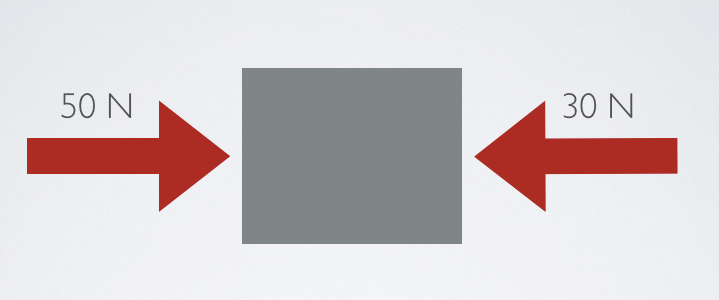
What is the net force?
a)
40 N left
b)
0 N Balalnced
c)
400 N right
d)
40 N right
78.
How will this object move? 
a)
It won't move. 
b)
It will move to the right. 
c)
It will move to the left. 
d)
It will move in both directions. 
79.
How will this object move? 
a)
It won't move. 
b)
It will move to the right. 
c)
It will move to the left. 
d)
It will move up. 
80.
What is the net force?
a)
30 N left
b)
25 N right
c)
5 N left
d)
55 N right
81.
Which could be an example of an unbalanced force?
a)
A plate sitting on a dining table
b)
A ball at the top of a hill that is not moving
c)
Earth orbiting the Sun 
d)
A baseball that has been thrown to home plate.
82.
You and your dad are moving the couch from one side to another. Your dad pushes with a force of 35 N to the right and you push with a force of 25 N right. What is the net force on the couch?
a)
60 N right
b)
10 N left
c)
60 n right
d)
50 N left
83.
What is the net force?
a)
400 N Up
b)
400 N Down
c)
- 400 N Down
d)
800 N Down
84.
Forces that have a net force of zero ( the object is still).
a)
Balanced force
b)
Unbalanced force
85.
The sum of all forces acting on an object and direction
a)
Contact Force
b)
Balanced Force
c)
Unbalanced Force
d)
Net Force
86.
8 N to the left , and 4 N to the right. Find the net force. Is this balanced 
a)
12 N Right  No
b)
4 N Left  No
c)
12 N Right  Yes
d)
4 N Left  Yes
87.
(T or F?) A balanced force is only an object that is not moving. 
a)
True 
b)
False
88.
Balanced or Unbalanced?
a)
Balanced 
b)
Unbalanced
89.
Are forces balanced or unbalanced when a car is moving at a constant speed in a straight line?
a)
Balanced
b)
Unbalanced
90.
Are forces balanced or unbalanced when a marble rolls down a ramp?
a)
Balanced
b)
Unbalanced
91.
Are forces balanced or unbalanced when skateboarding down a ramp?
a)
Balanced
b)
Unbalanced
92.
Which of the following energy transformations occur when a lamp that is plugged into a wall socket is functioning correctly?
a)
Chemical to light
b)
Electrical to chemical
c)
Electrical to light
d)
Chemical to electrical
93.
Which of the following shows an energy transformation from chemical energy to electrical to light energy?
a)
A bolt of lightning lights the night sky.
b)
A candle glows brightly in the dark.
c)
A fire in a fireplace lights up a room.
d)
A battery causes a flashlight to shine.
94.
What energy transformations take place when a battery-operated radio is in use?
a)
Electrical to chemical to light
b)
Sound to chemical to mechanical
c)
Chemical to electrical to sound
d)
Light to electrical to thermal
95.
People get energy from the food that they eat and transform that energy as they move. Which energy transformations occur as a student rapidly rubs the palms of his hands together?
a)
mechanical to thermal to electrical
b)
chemical to mechanical to thermal
c)
mechanical to chemical to sound
d)
chemical to sound to electrical
96.
Which of the following devices transforms electrical energy into mechanical energy?
a)
An e-reader
b)
a fan
c)
a manual pencil sharpener
d)
ipod
97.
The diagram shows a complete circuit with a battery and a buzzer making noise. This circuit works by transforming -
a)
chemical energy to electrical to sound.
b)
electrical energy to thermal to light.
c)
sound energy to electrical to chemical.
d)
mechanical energy to electrical to sound.
98.
A television works by transforming electrical energy into what other kinds of energy?
a)
Light, thermal, and sound
b)
Thermal, chemical, and solar
c)
Sound, mechanical, and electrical
d)
Light, chemical, and mechanical
99.

Which of the following best describes the energy transformations that occur when a flashlight that runs on batteries is turned on?

a)

chemical to mechanical to electrical to radiant

b)

radiant to electrical to sound

c)

chemical to radiant to mechanical to electrical

d)

electric to radiant to chemical

100.
Which of the following shows the correct order of the energy transformations that occur when green plants produce their food from the Sun’s energy?
a)
chemical to thermal
b)
light to chemical
c)
thermal to light
d)
chemical to electrical
101.
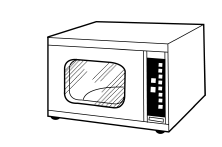
The picture shows a microwave oven. As a microwave oven is operated, electrical energy is transformed into all of the following types of energy EXCEPT —
a)
solar
b)
light
c)
thermal
d)
mechanical
102.
Which direction will the heat flow while this person holds a hot cup of tea?
a)
from the cup to her hand
b)
from her hand to the cup
c)
no heat is transferred
103.
Heat transfers from an area of ____temperature to an area of ___ temperature.
a)
high to low
b)
low to high
c)
high to high
104.
The faster molecules move, 
a)
the higher the temperature
b)
the less temperature
c)
the same temperature
d)
I don't know
105.
The slower molecules move, 
a)
the higher the temperature
b)
the less temperature
c)
the same temperature
d)
I don't know
106.
The kind of heat transfer that travels through space in electromagnetic waves is ______________________.
a)
insulation.
b)
Radiation
c)
Conduction
d)
Convection
107.
In heat transfer, heat always flows from the _______________ substance to the _______________ substance.
a)
Hotter to colder
b)
Colder to hotter
c)
Hotter to hotter
d)
Colder to colder
108.
The type of heat transfer that happens through direct contact of molecules or particles with each other is ___________________.
a)
Convection
b)
Conduction
c)
Radiation
d)
insulation.
109.
___________________ is the type of heat transfer that occurs in fluids, such as warm air rising and cold air sinking; creating wind.
a)
Convection
b)
Conduction
c)
Radiation
d)
insulation.
110.
Heat from warm sand at the beach moves through the atmosphere by what method of heat transfer?
a)
Convection
b)
Conduction
c)
Radiation
d)
insulation.
111.
A large house being heated by heater warms a house when the air is circulating.
a)
Convection
b)
Conduction
c)
Radiation
d)
insulation.
112.
Which of the following is the best example of conduction?
a)
A light bulb warming a lampshade
b)
An egg cooking in a frying pan
c)
Water boiling in a pot
d)
Gases circulating in the atmosphere
113.
Which statement is true about radiation?
a)
Radiation is the transfer of heat through electromagnetic waves
b)
Radiation is the transfer of heat through direct contact.
c)
Radiation is more dangerous than conduction.
d)
Radiation is the transfer of heat through liquids and gases
114.
Which situation best represents convection?
a)
Heat from a campfire
b)
A hot air balloon taking off
c)
Touching a hot piece of metal
d)
Getting sunburned
115.
Which situation best represents conduction?
a)
Heat from a campfire
b)
A hot air balloon taking off
c)
Touching a hot piece of metal
d)
Getting sunburned